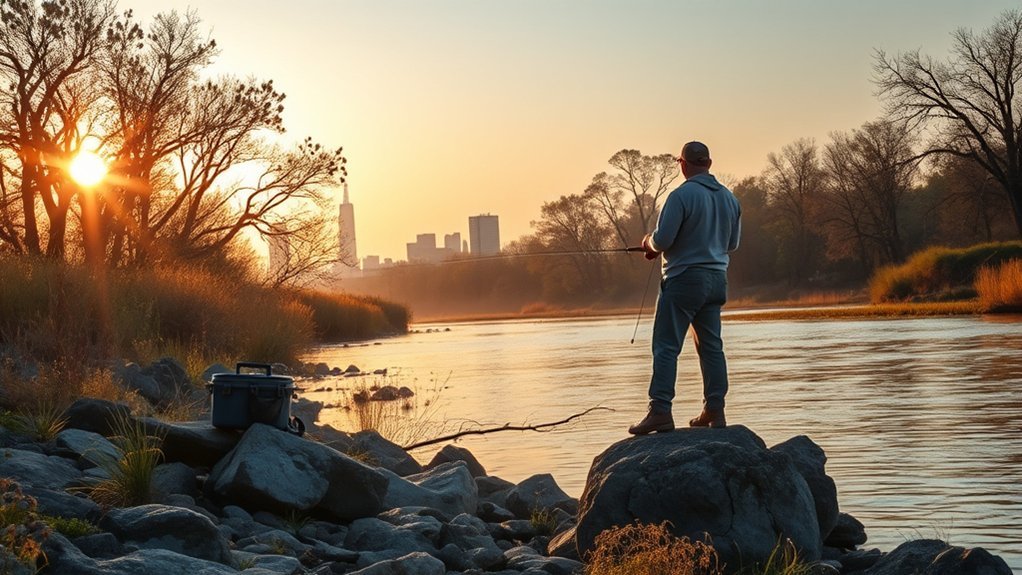
If you’re looking for the best fishing spots in Tulsa, you have several good options without making a long drive. Tulsa’s Close to Home Fishing ponds offer easy bank access and regularly managed fish populations, while Zink Lake gives you access to the Arkansas River corridor. For bigger-water fishing, Keystone and Skiatook lakes add bass, crappie, catfish, striped bass, and hybrid striped bass opportunities.
Quick Answer
Some of the best documented fishing spots in Tulsa are Turkey Mountain, Hunter Park Pond, Braden Park Pond, Mohawk Park ponds, and Zink Lake. For winter trout, try Veterans Pond in nearby Jenks. If you want a larger reservoir, Keystone Lake and Skiatook Lake provide many more species and boating opportunities.
Key Takeaways
- Turkey Mountain, Hunter Park, Braden Park, and Mohawk Park are part of Oklahoma’s Close to Home Fishing program.
- Close to Home ponds have special limits, including a maximum of three rods and an aggregate three-fish daily limit for panfish, channel catfish, and rainbow trout.
- Zink Lake allows fishing, but fishing from Williams Crossing and inside the whitewater flume is prohibited.
- Veterans Pond in Jenks provides a winter trout season from December 1 through February 28.
- For larger-water fishing, Keystone and Skiatook lakes offer a wider selection of bass, crappie, catfish, and other game fish.
- Always check current Oklahoma regulations and fishing reports before leaving home because water conditions, stocking, and special restrictions can change.
Top Fishing Locations in Tulsa You Shouldn’t Miss

Tulsa has a mix of small urban ponds, Arkansas River fishing, and larger reservoirs within an easy drive. The best choice depends on whether you want simple bank fishing, a family outing, winter trout, or a full day on a larger lake.
| Fishing Spot | Best For | Common Targets |
|---|---|---|
| Turkey Mountain ponds | Quick urban trips | Sunfish, catfish, bass depending on current stocking and pond conditions |
| Hunter Park Pond | Beginners and accessible bank fishing | Channel catfish, sunfish, largemouth bass |
| Braden Park Pond | Midtown convenience | Channel catfish, sunfish, largemouth bass |
| Mohawk Park ponds | Family fishing | Channel catfish, bluegill, redear sunfish, largemouth bass |
| Zink Lake | Arkansas River fishing | River species vary by season and flow |
| Veterans Pond, Jenks | Winter trout | Rainbow trout during the designated trout season |
| Keystone Lake | Large-reservoir fishing | Largemouth bass, crappie, white bass, striped bass, channel, blue, and flathead catfish |
| Skiatook Lake | Bass and hybrid fishing | Largemouth bass, smallmouth bass, hybrid striped bass, crappie, catfish, walleye |
Turkey Mountain Urban Wilderness Area
The ponds at Turkey Mountain Urban Wilderness Area are listed by the Oklahoma Department of Wildlife Conservation as Close to Home Fishing waters. That makes Turkey Mountain useful when you want a short trip without driving to a large reservoir.
The park covers a large natural area, so bring comfortable shoes and be prepared to walk. Fishing conditions can vary between ponds, and posted signs should always take priority over general guidance.
Hunter Park Pond
Hunter Park Pond at 5804 E. 91st St. is one of Tulsa’s managed Close to Home Fishing sites. Tulsa Parks lists channel catfish, green sunfish, bluegill, redear sunfish, and largemouth bass among the fish managed in its initial Close to Home ponds.
ODWC also identifies Hunter Park as one of the program locations with an accessible fishing dock, making it one of the more practical Tulsa choices for anglers who need easier shoreline access.
Braden Park Pond
Braden Park Pond at 5036 E. 7th St. gives Midtown anglers a convenient place for short bank-fishing sessions. It is another Tulsa Close to Home site managed for species such as channel catfish, sunfish, and largemouth bass.
A simple spinning setup, small hooks, worms, and a bobber make a good starting combination for families and beginners here.
Mohawk Park Ponds
Tulsa’s Mohawk Park includes two ponds in the Close to Home program. ODWC lists channel catfish, bluegill, redear sunfish, and largemouth bass as species of interest and notes that the ponds are stocked with channel catfish and hybrid sunfish.
This is a strong choice when you want straightforward urban fishing without needing a boat.
Zink Lake and the Arkansas River
Zink Lake provides an urban Arkansas River fishing option close to central Tulsa. Under current City rules, fishing is allowed from the banks and from permitted no-wake watercraft. Fishing from Williams Crossing and inside the Tulsa Wave Park whitewater flume is prohibited.
The City also restricts several fishing methods at Zink Lake, including bow fishing, set lines, trotlines, jug lines, gigs, and spears unless posted rules specifically provide otherwise. Review the City of Tulsa Zink Lake information before fishing.
Warning: Arkansas River and Zink Lake levels and currents can change with upstream releases. Stay away from restricted areas, follow posted signs, supervise children closely, and never assume yesterday’s water conditions still apply today.
What About Lake Yahola and Mingo Creek?
Lake Yahola contains fish and has been surveyed by City of Tulsa reservoir biologists, but the available official information does not establish it as a primary public angling destination comparable with Tulsa’s designated fishing ponds. Check current City access rules before planning a fishing trip there.
Mingo Creek supports aquatic life, but it is not listed among Tulsa’s Close to Home stocked fishing ponds. Creek access can also cross public and private property, so do not assume that every visible stretch is legally accessible.
Seasonal Fishing Patterns: What to Expect
Fishing around Tulsa can be productive throughout much of the year, but species, water temperatures, rainfall, and reservoir releases change where fish concentrate. The ODWC fishing reports are the best place to check current conditions before a trip.
Seasonal Trends Overview
Spring is one of Oklahoma’s busiest fishing periods. Largemouth bass move toward spawning areas as water warms, crappie become easier for bank anglers to reach, and white bass make spawning movements into tributaries and flowing-water areas.
Summer can be excellent for channel catfish and sunfish. During hot weather, early morning and evening sessions are often more comfortable for anglers, and fish may shift deeper during bright midday conditions.
Fall can bring another period of active bass and panfish feeding as water temperatures drop. Larger reservoirs remain productive, but changing fronts can quickly alter patterns.
Winter adds a special opportunity near Tulsa because rainbow trout are stocked at Veterans Pond in Jenks during its designated December-through-February trout season.
Weather Impact Insights
Weather affects every species differently, so avoid relying on one universal rule. Rain can improve a spring white bass run when it creates suitable tributary flow, but heavy rain can also produce dangerous currents, muddy water, debris, and temporary access problems.
- Spring rain: Moderate flow can help trigger white bass movement into tributaries.
- Hot summer weather: Fish may move toward deeper water, shade, vegetation, current, or other cooler habitat.
- Wind: Windblown banks and points can concentrate food and feeding fish, but strong wind can make boating unsafe.
- Cold fronts: Rapid weather changes can alter feeding behavior and require slower presentations.
Pro Tip: Check the latest ODWC fishing report the night before your trip, then check weather, water levels, and access again before leaving home. Current conditions are more useful than a fixed seasonal rule.
Species Availability Calendar
| Season | Good Tulsa-Area Targets | Useful Approach |
|---|---|---|
| Spring | Largemouth bass, crappie, white bass, catfish | Fish shallow cover, tributary mouths, riprap, and warming banks |
| Summer | Channel catfish, sunfish, bass | Try mornings, evenings, deeper cover, shade, and bottom presentations |
| Fall | Bass, crappie, catfish, panfish | Follow baitfish and work transition areas |
| Winter | Rainbow trout, catfish, panfish | Use smaller or slower presentations and target the Jenks trout season |
Best Times for Fishing Success
There is no single best hour for every Tulsa fishery. Your best time depends on the species, season, water clarity, weather, fishing pressure, and habitat.
Optimal Seasons for Fishing
- Spring: One of the strongest all-around periods for bass, crappie, white bass, and pre-spawn catfish activity.
- Summer: Good for catfish and sunfish, with dawn and evening often more comfortable than midday.
- Fall: Productive for bass and panfish as water cools and fish follow forage.
- Winter: The Tulsa area gains a dedicated trout opportunity at Veterans Pond in Jenks.
ODWC notes that March through June is the peak reporting period for many Oklahoma fisheries, which reflects how important spring and early summer are for anglers statewide.
Time of Day Considerations
Early morning and late evening are reliable starting points during warm weather because light levels are lower and shallow water is often cooler. Bass, hybrids, and white bass may also feed aggressively during low-light periods.
That does not mean afternoon fishing is automatically poor. Cloud cover, current, shade, depth, wind, and seasonal temperature can keep fish active throughout the day. In winter, the warmer part of the afternoon may occasionally be more comfortable and productive than dawn.
Weather Impact on Success
Instead of using a single “ideal fishing temperature,” match your approach to the species you want to catch. For example, Oklahoma largemouth bass spawning activity generally begins as water reaches the low-to-mid 60s Fahrenheit, while white bass spring movements can occur in cooler water.
Watch for:
- Changing water temperature
- Recent rainfall
- Reservoir releases
- Water clarity
- Wind direction and strength
- Thunderstorms and lightning
If lightning is nearby or water conditions look unsafe, stop fishing and leave exposed banks or open water.
Popular Fish Species in Tulsa Waters
Tulsa-area anglers can target a surprisingly broad range of fish, but not every species occurs at every location.
Largemouth Bass
Largemouth bass occur in Tulsa’s managed urban ponds as well as nearby reservoirs. Plastic worms, jigs, spinnerbaits, crankbaits, and topwater lures can all work depending on season and cover.
Channel Catfish
Channel catfish are routinely stocked in many Close to Home waters. Worms, prepared catfish bait, cut bait, and other scented baits fished near the bottom are practical choices.
Bluegill, Redear, and Other Sunfish
Sunfish are among the easiest fish for beginners to target. Small hooks, worms, light line, and a small bobber are usually enough to get started. Tulsa’s Close to Home ponds include bluegill, redear, green sunfish, and stocked hybrid sunfish.
Crappie
Crappie become especially popular during spring when fish move closer to shallow cover. Small jigs and live minnows are standard choices. Larger nearby reservoirs generally provide more crappie habitat than small urban ponds.
White Bass and Striped Bass
White bass are known for spring spawning runs in Oklahoma. Keystone Lake also supports striped bass, giving Tulsa-area anglers access to a fishery that is different from the small city ponds.
Hybrid Striped Bass
Skiatook Lake is a strong nearby choice for hybrid striped bass. Shad-patterned lures, swimbaits, jigs, crankbaits, and appropriate live bait can be effective depending on current regulations and conditions.
Rainbow Trout
For Tulsa-area urban trout fishing, Veterans Pond in Jenks has a designated season from December 1 through February 28. ODWC states that stocking can change with water conditions, fish availability, flooding, and other factors, so check the latest ODWC trout information before making a special trip.
Paddlefish
Paddlefish are a specialized Oklahoma fishing opportunity found in larger river and reservoir systems, including Keystone. They should not be treated like bass or crappie. Oklahoma anglers normally target them by regulated snagging with heavy tackle.
A free Oklahoma paddlefish permit is required in addition to the applicable fishing license before fishing for paddlefish. Special hook, snagging, harvest, tagging, and E-Check requirements apply.
Local Parks and Access Points for Easy Fishing
If easy access matters more than trophy-sized fish, start with Tulsa’s officially managed urban ponds rather than driving to distant Oklahoma cities.
- Turkey Mountain Urban Wilderness Area ponds: Convenient south Tulsa Close to Home option.
- Hunter Park Pond: Managed pond with an accessible fishing dock.
- Braden Park Pond: Useful Midtown option for short fishing trips.
- Mohawk Park ponds: Two managed ponds with channel catfish, sunfish, and largemouth bass.
- Veterans Pond in Jenks: Accessible fishing and Tulsa-area winter trout.
- Zink Lake: Urban Arkansas River access with additional site-specific restrictions.
Tulsa’s Close to Home program gives anglers managed public fishing opportunities inside the metro without requiring a boat or a full-day lake trip.
If you want more water and more species, Keystone Lake is one of the most versatile nearby choices. ODWC lists largemouth bass, crappie, white bass, striped bass, and channel, blue, and flathead catfish among its species of interest.
Skiatook Lake is another strong option, particularly for anglers interested in smallmouth bass and hybrid striped bass in addition to largemouth bass, crappie, catfish, and walleye.
What You Should Know About Fishing Regulations?
Fishing rules vary by water, so the most important step is identifying whether you are fishing a Tulsa Close to Home pond, Zink Lake, a larger reservoir, a trout water, or another specially regulated area.
Fishing License
Under current Oklahoma rules, a fishing license is generally required for residents and nonresidents 18 or older who take, attempt to take, or possess fish unless an exemption applies. Carry your license or valid electronic proof while fishing. Review current ODWC license requirements before your trip.
Close to Home Fishing Rules
Tulsa’s designated Close to Home Fishing ponds have special restrictions. Under current ODWC rules:
- Fishing is limited to no more than three rods and reels per person, except where trout rules impose a smaller limit.
- No more than three hooks per line are allowed. A treble hook counts as one hook.
- Other fishing methods are prohibited.
- The combined daily limit is three total fish from the panfish, rainbow trout, and channel catfish categories in any combination.
- Close to Home waters prohibit netting.
- Other species follow applicable statewide or site-specific regulations.
Note: The three-rod and three-fish aggregate rules above are Close to Home regulations. They are not the general daily limits for every lake and river in Oklahoma.
Statewide Limits Are Different
Oklahoma’s statewide limits vary by species. For example, current statewide regulations list different limits for bass, catfish, crappie, trout, striped bass, hybrids, paddlefish, walleye, sauger, and saugeye. Some individual waters then add stricter rules.
Use the current ODWC statewide daily and size limits rather than relying on a single number for every fishery.
Zink Lake Rules
Fishing is allowed at Zink Lake from the bank and appropriate no-wake watercraft, but fishing from Williams Crossing and in the whitewater flume is prohibited. Several alternative fishing methods are also restricted.
Paddlefish Rules
Paddlefish require extra preparation. You need a free paddlefish permit in addition to your fishing license unless otherwise exempt. When snagging, ODWC currently allows only one single hook or one treble hook, with barbs removed or fully closed. Harvest limits, tagging, and E-Check requirements also apply.
Always confirm the latest Oklahoma fishing regulations before fishing because regulations are updated and site-specific restrictions can change.
Fishing Events and Tournaments Around Tulsa
Tulsa Parks says its Close to Home program includes seasonal fishing clinics and tournament events for youth and adults. Event schedules change, so an evergreen article should not promise a tournament without confirming its current date and organizer.
For upcoming opportunities:
- Check the official Tulsa Parks fishing page and its announced events.
- Check the ODWC outdoor calendar for fishing clinics and educational events.
- Verify tournament dates directly with the organizing league before paying an entry fee or traveling.
- For reservoir tournaments, confirm the launch ramp, start time, species rules, boat requirements, and lake-specific limits.
Keystone and Skiatook regularly attract serious anglers, but individual tournament schedules can change because of weather, water conditions, and organizer decisions.
Recommended Fishing Gear for Tulsa Anglers
You do not need one heavy setup for every Tulsa fishing trip. Match your equipment to the water and species.
For Tulsa Ponds
- Light or medium-light spinning rod
- 4-10 lb line
- Small hooks
- Bobbers and split-shot weights
- Worms or other permitted bait
- Small jigs and soft plastics
This setup works well for sunfish, smaller bass, and many stocked channel catfish.
For Bass and Larger Reservoirs
- Medium spinning or baitcasting rod
- 8-15 lb line for many general bass situations
- Plastic worms
- Jigs
- Spinnerbaits
- Crankbaits
- Topwater lures
For Catfish
Use a medium-heavy setup when targeting larger catfish in reservoirs. Worms and prepared bait work for smaller channel catfish, while cut bait or shad are common choices for larger reservoir fish where legal.
For Trout
ODWC recommends ultralight tackle, roughly 4-6 lb line, and small hooks for trout. Small jigs, spinners, flies, and permitted prepared or natural bait can work depending on the water’s specific regulations.
For Paddlefish
Paddlefish require a completely different setup. ODWC describes stout rods, heavy line, and large barbless hooks for snagging during appropriate conditions. Do not assume ordinary bass tackle is suitable.
Safety and Convenience Gear
- Pliers or hook-removal tool
- Measuring device
- First-aid kit
- Drinking water
- Sunscreen
- Polarized sunglasses
- Weather-appropriate clothing
- Personal flotation device when boating
- Digital or physical fishing license
Local Fishing Guides: Expert Tips
A guide can make sense if you want to fish a large reservoir, target striped or hybrid bass, learn electronics, or try specialized paddlefish fishing. It is less necessary for an afternoon at a small Tulsa city pond.
The ODWC fishing-guide directory currently lists several services operating on Tulsa-area lakes, including:
- McBride Outside, which lists Oklahoma waters and offers trips on lakes including Keystone and Skiatook.
- Reel Good Time Guide Service, listed for waters including Keystone, Grand, Oologah, Kaw, Fort Gibson, and Skiatook.
- Rodney’s Guide Service, listed for Keystone, Skiatook, Fort Gibson, and Sooner lakes.
Before booking any guide, confirm the exact lake, target species, trip length, included tackle, cancellation policy, fishing-license responsibilities, and whether specialized permits such as the Oklahoma paddlefish permit are required.
Pro Tip: Tell your guide your experience level before the trip. A good guide can adjust tackle, techniques, and the target species for a first-time angler, family group, or experienced fisherman.
Frequently Asked Questions
What Is the 80/20 Rule in Fishing?
The 80/20 rule is an informal way of saying that a large share of your catches may come from a relatively small portion of the water. Instead of casting randomly, identify productive structure such as points, cover, drop-offs, current seams, docks, vegetation, or concentrations of baitfish and spend more time fishing those areas.
Where Can You Fish Near Tulsa, Oklahoma?
Good documented options include Turkey Mountain ponds, Hunter Park Pond, Braden Park Pond, Mohawk Park ponds, Zink Lake, and Veterans Pond in Jenks. For larger reservoirs, Keystone Lake and Skiatook Lake provide a wider range of species and boating opportunities.
What Is the 90/10 Rule in Fishing?
Like the 80/20 idea, the 90/10 rule is not a biological law. Anglers use it to describe how fish often concentrate in limited areas instead of spreading evenly across a lake. Locating productive habitat and bait can therefore matter more than simply covering a huge amount of water.
Do Fish Bite Better in the Morning or Afternoon?
Morning and evening are reliable starting periods during hot weather because shallow water and light conditions can be more favorable. Afternoon fishing can still be productive when fish move deeper, clouds reduce light, wind activates a shoreline, or cooler-season sunshine warms shallow water.
Do You Need a Fishing License in Tulsa?
Oklahoma generally requires residents and nonresidents age 18 or older to have a fishing license when taking, attempting to take, or possessing fish unless an exemption applies. Some specialized fishing, including paddlefish fishing, requires an additional permit.
When Can You Fish for Trout Near Tulsa?
Veterans Pond in Jenks has a designated urban trout season from December 1 through February 28. Stocking dates can change because of water conditions, weather, fish availability, and other factors, so check ODWC trout information and recent fishing reports before traveling.
Can You Fish at Zink Lake in Tulsa?
Yes. Fishing is permitted from the banks and permitted no-wake watercraft, but fishing from Williams Crossing and in the Tulsa Wave Park whitewater flume is prohibited. Additional restrictions apply to methods such as trotlines, jug lines, bow fishing, gigs, and spears.
Conclusion
Tulsa gives you several ways to fish without traveling far. For an easy urban trip, start with Turkey Mountain, Hunter Park, Braden Park, or Mohawk Park. Try Veterans Pond in Jenks for winter trout, Zink Lake for Arkansas River access, or Keystone and Skiatook when you want a larger lake and more species.
The most important part of planning your trip is checking the current rules and conditions for the exact water you intend to fish. Tulsa’s Close to Home ponds, Zink Lake, trout waters, paddlefish fisheries, and major reservoirs do not all follow the same restrictions. A few minutes spent checking ODWC and City information can make your trip safer, more productive, and legal.
Sources
- City of Tulsa: Fishing at Tulsa Parks — Tulsa fishing ponds, Close to Home fish populations, local rules, and program information.
- Oklahoma Department of Wildlife Conservation: Close to Home Fishing — Tulsa locations, rod limits, hook limits, harvest rules, and fishing-method restrictions.
- ODWC Statewide Daily and Size Limits — current species-specific Oklahoma fishing limits.
- ODWC Trout Information — trout seasons, stocking information, and current stocking guidance.
- City of Tulsa: Zink Lake — current Zink Lake access, rules, water information, and safety resources.
- ODWC Fishing Reports — current lake conditions, species activity, water temperatures, and fishing reports.