In [2026], a few full suspension mountain bike brands stand out for very different reasons. Ecarpat appeals to riders watching budget and practicality. TRIFOX brings carbon construction and lighter handling into focus. Canyon’s Spectral 125 CF 7 and Spectral CF 8 push harder toward trail performance and component quality. Each has clear strengths, but the real question is which one matches the terrain, riding style, and expectations best.
Key Takeaways
- Ecarpat offers an affordable full suspension option with 21-speed gearing, 100mm suspension, and mechanical dual disc brakes for everyday trail use.
- TRIFOX uses a lightweight T800 carbon frame, 140mm dual suspension, Shimano M6100 12-speed drivetrain, and hydraulic disc brakes for balanced all-mountain riding.
- Canyon Spectral 125 CF 7 is a lightweight aggressive-trail bike with 125mm rear travel, RockShox Pike Select+ fork, and SRAM GX Eagle shifting.
- Canyon Spectral CF 8 adds 160mm front and 150mm rear travel, GX Eagle AXS shifting, and tubeless-ready wheels for tougher descents.
- For 2026, prioritize suspension travel, carbon frame weight, hydraulic brakes, drivetrain quality, and easy assembly when comparing brands.
Ecarpat Dual Suspension Mountain Bike 21-Speed Disc Brake
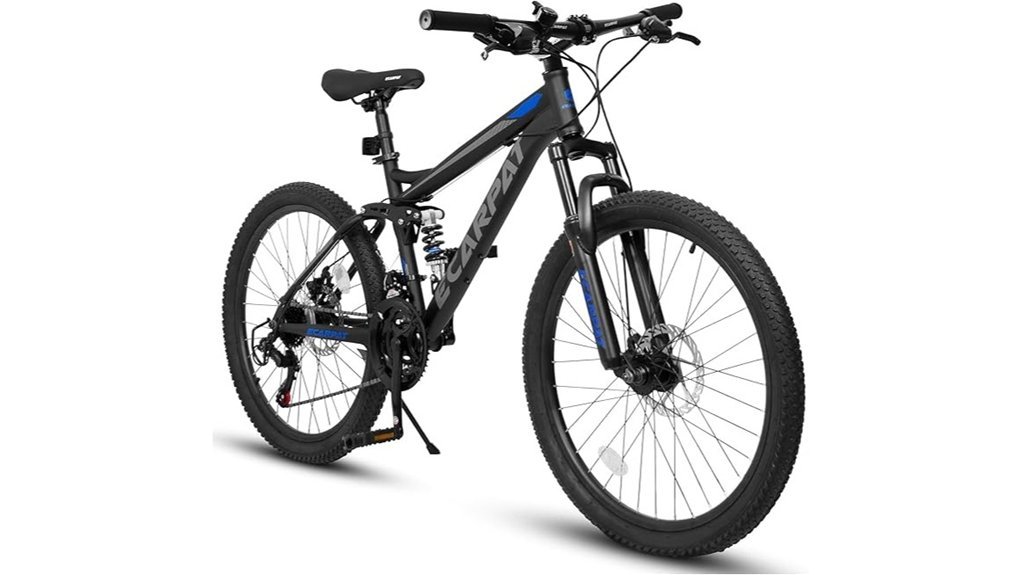
The Ecarpat Dual Suspension Mountain Bike 21-Speed Disc Brake is a practical fit for riders who want an affordable full suspension option for everyday use, especially students, commuters, and casual trail riders. It comes in 24, 26, and 27.5-inch sizes, with a 26 x 15-inch carbon steel frame suited to riders 54 to 62 inches tall. The 21-speed drivetrain supports varied terrain, while 100mm shock absorbers improve comfort. Mechanical dual disc brakes shorten stopping distance. High-grip 26-inch tires handle dirt, gravel, and pavement. Assembly is about 20 minutes.
Best For: Students, commuters, and casual trail riders who want an affordable full-suspension mountain bike for everyday riding and light off-road use.
Pros:
- Full suspension with 100mm shock absorbers adds comfort on rough roads and trails.
- Mechanical dual disc brakes improve stopping power and safety.
- 21 speeds and all-terrain tires make it versatile for dirt, gravel, and pavement.
Cons:
- Carbon steel frame may be heavier than aluminum alternatives.
- Assembly, while mostly complete, still requires some setup work.
- Best suited for riders 54 to 62 inches tall, so fit is limited.
TRIFOX Carbon Full Suspension Mountain Bike (Shimano M6100)
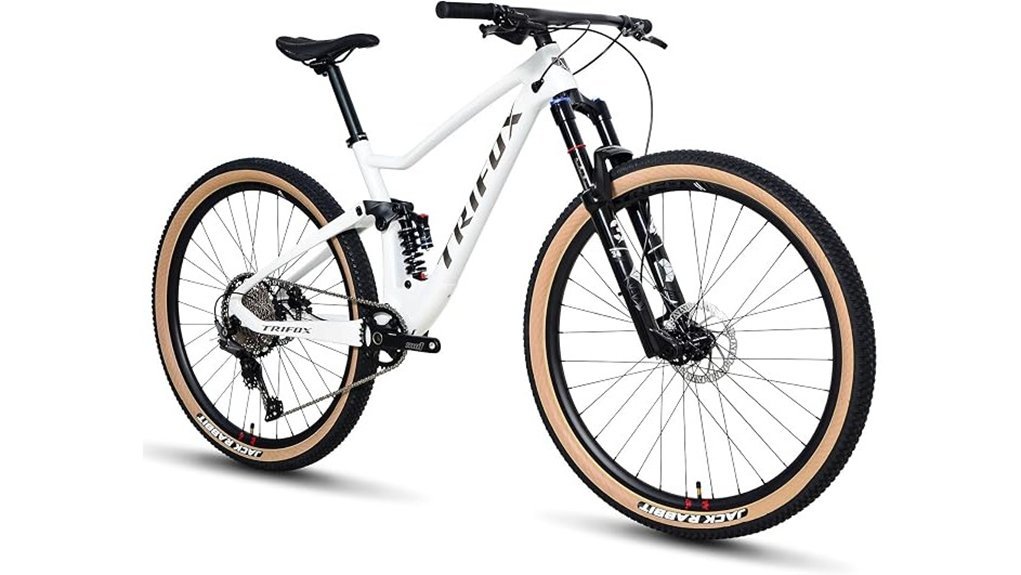
Built for intermediate trail riders, the TRIFOX Carbon Full Suspension Mountain Bike blends lightweight carbon construction with confident all-mountain control. Its T800 carbon frame and integrated bar keep weight near 12.6kg, while 140mm dual suspension with Free Floating Technology and an Active Braking Pivot improves absorption and reduces brake jack. A lower shock position helps stability on rough descents. Shimano M6100 Deore 12-speed drivetrain pairs with a trigger shifter and hydraulic disc brakes. 29er x 2.25 knobby tires, plus Descend, Traction Control, and Lockout modes, add versatility. It arrives 85% assembled with a 1-year labor warranty.
Best For: Intermediate trail riders who want a lightweight carbon full-suspension mountain bike with reliable Shimano 12-speed shifting, strong braking, and versatile all-mountain handling.
Pros:
- T800 carbon frame with integrated bar keeps the bike relatively light at about 12.6kg.
- 140mm dual suspension with Free Floating Technology and an Active Braking Pivot improves comfort and control on rough terrain.
- Shimano M6100 Deore 12-speed drivetrain and hydraulic disc brakes offer dependable performance.
Cons:
- May be overkill for casual riders or those who mostly ride smooth paths.
- 29er x 2.25 tires are versatile, but not the fastest choice for riders seeking maximum rolling speed.
- Arrives only 85% assembled, so some setup is still required.
Canyon Spectral 125 CF 7
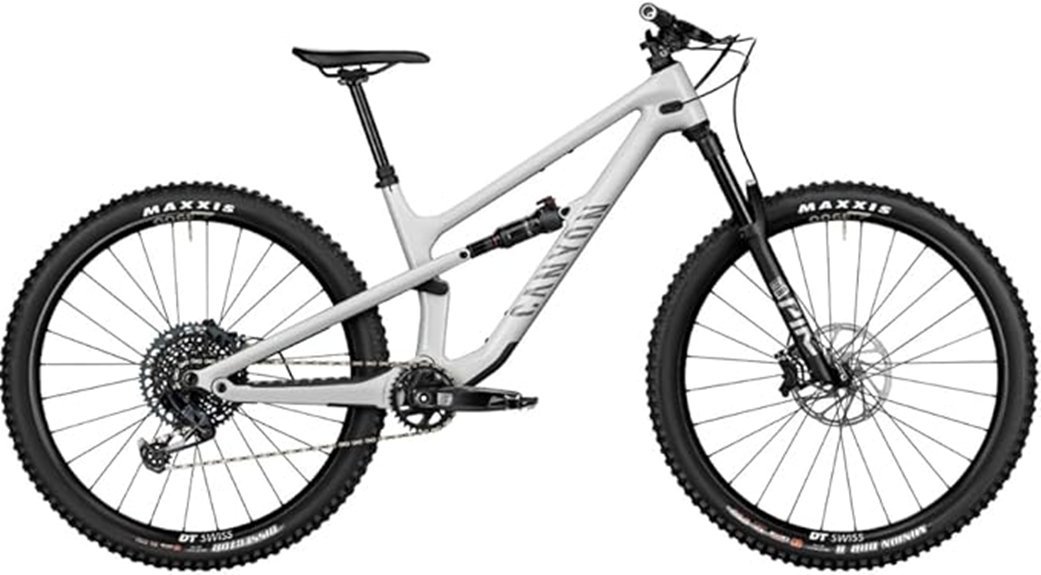
With a lightweight carbon frame and 125mm rear travel, the Canyon Spectral 125 CF 7 suits aggressive trail riders. Its carbon chassis adds stiffness and strength while keeping weight low for responsive handling on demanding climbs and descents. A RockShox Pike Select+ fork delivers 140mm up front, paired with a Deluxe Select+ shock to smooth technical trails. SRAM GX Eagle 12-speed shifting provides a broad gear range, while Code RS brakes supply confident stopping. Tubeless-ready wheels, a dropper seatpost, and balanced geometry help it stay fast, controlled, and enjoyable across varied terrain.
Best For: Aggressive trail riders who want a lightweight, responsive carbon bike with capable suspension for technical climbs and descents.
Pros:
- Lightweight carbon frame offers stiffness, strength, and responsive handling.
- RockShox Pike Select+ and Deluxe Select+ suspension help smooth rough trails.
- SRAM GX Eagle 12-speed drivetrain and Code RS brakes provide broad gearing and strong control.
Cons:
- 125mm rear travel may feel limited for riders seeking more downhill-focused capability.
- High-end components can make it more expensive than entry-level trail bikes.
- Aggressive trail geometry may be less ideal for casual riders or long, relaxed rides.
Canyon Spectral CF 8
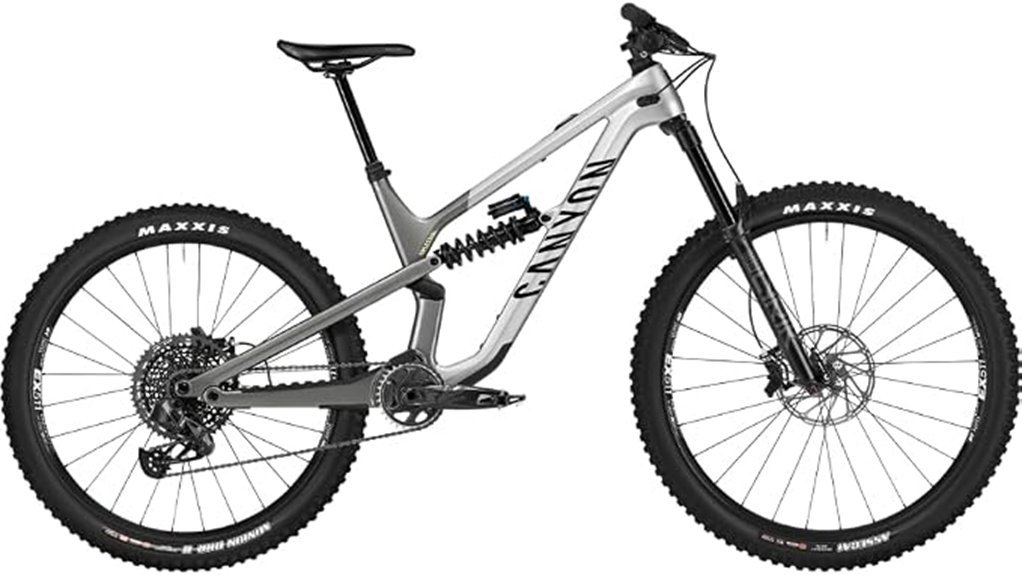
Canyon Spectral CF 8 suits aggressive trail riders who want carbon efficiency and confident handling. Its full carbon frame balances stiffness, strength, and low weight for sharp response on demanding terrain. RockShox suspension provides 160mm front and 150mm rear travel, pairing a Lyrik Select+ RC fork with a Super Deluxe Coil Select+ RT shock for traction and comfort. SRAM GX Eagle AXS delivers precise 12-speed shifting, while tubeless-ready wheels and SRAM Code R brakes support control. A dropper seatpost adds versatility on technical descents and climbs.
Best For: Aggressive trail riders who want a lightweight full-carbon enduro-style bike with confident handling, strong suspension performance, and precise electronic shifting.
Pros:
- Full carbon frame offers a strong, stiff, and lightweight ride feel.
- RockShox 160mm/150mm suspension setup delivers excellent traction and comfort on rough terrain.
- SRAM GX Eagle AXS drivetrain provides smooth, reliable 12-speed shifting.
Cons:
- Coil shock and long-travel setup may feel like overkill for casual or mellow trail riding.
- Premium components can mean higher maintenance and replacement costs.
- Heavier and less efficient than shorter-travel trail bikes on climbs and flat terrain.
Factors to Consider When Choosing Full Suspension Mountain Bike Brands
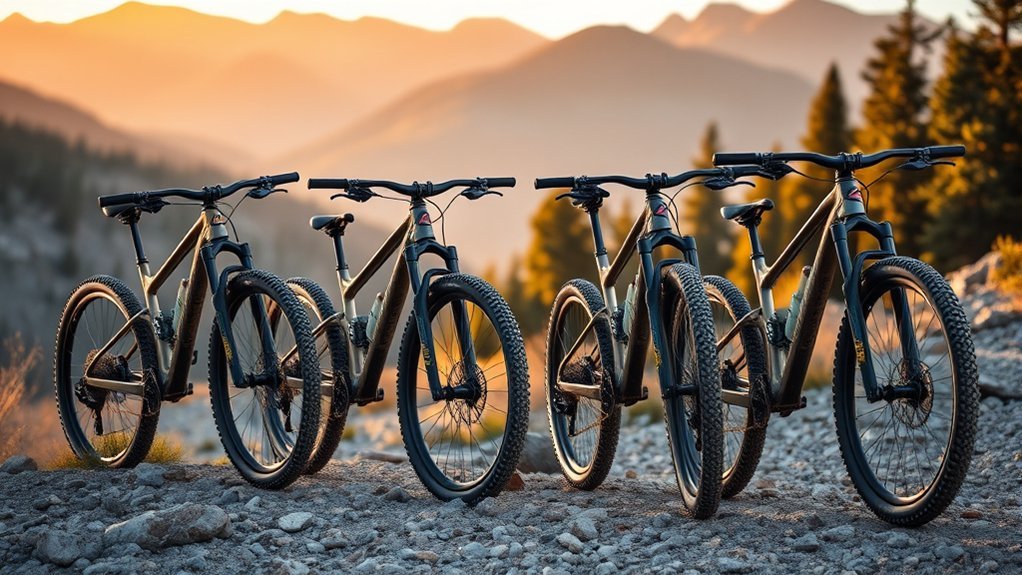
Choosing a full suspension mountain bike brand starts with suspension travel range and frame material quality, since both shape comfort, durability, and trail performance. Drivetrain and brakes also matter, as they affect control, shifting reliability, and stopping power in varied terrain. Weight, handling, assembly, and support complete the decision, especially for riders who value easy setup and dependable service.
Suspension Travel Range
Suspension travel range plays a major role in how a full suspension mountain bike performs over rough ground, since longer travel generally absorbs bigger impacts more effectively. Most models fall between 125mm and 160mm, giving riders options suited to different terrain and riding styles. Bikes with 140mm to 160mm of travel are often favored for aggressive trail riding and technical descents because they combine comfort with stability. Shorter travel systems usually feel lighter and more responsive, which can suit faster, less demanding routes. Travel choice should also reflect skill level and intended use. Beginners may prefer a more forgiving setup, while experienced riders often choose longer travel for challenging terrain and greater control.
Frame Material Quality
Frame material is a key factor in evaluating full suspension mountain bike brands because it directly affects weight, durability, and ride feel. Carbon frames are often favored for their lightweight construction, strong stiffness-to-weight ratio, and responsive handling, especially when made from high-quality layups such as T800 carbon. This advantage can improve control during aggressive riding while also helping reduce rider fatigue. Carbon also tends to damp vibrations more effectively, which increases comfort on rough terrain. Aluminum frames offer a practical alternative, combining corrosion resistance with dependable strength and lower cost. Steel frames remain durable, but their added weight and reduced responsiveness can limit efficiency. Overall, frame material shapes longevity, maintenance needs, and the bike’s overall performance on demanding trails.
Drivetrain And Brakes
A bike’s drivetrain and brakes are central to both efficiency and control, making them essential factors when comparing full suspension mountain bike brands. A quality drivetrain should deliver smooth, reliable shifts across varied terrain, and systems such as the Shimano M6100 Deore 12-speed stand out for their wide gear range and seamless shifts. Shifter style also matters, since a trigger shifter or alternative mechanism can influence comfort and ease of use on long or technical rides. Hydraulic disc brakes are preferred over mechanical systems because they provide stronger, more consistent stopping power, especially on descents or in emergencies. Some brands further improve performance with integrated suspension designs like Active Braking Pivot, which reduces brake jack and helps preserve drivetrain efficiency, resulting in better braking response and overall ride quality.
Weight And Handling
Weight is one of the most important factors in full suspension mountain bike handling, with most models falling between about 12.6kg (27.8lbs) and 14kg (30.8lbs). Lighter builds generally feel quicker in corners, easier to correct on rough lines, and less tiring over long rides, which suits aggressive trail and technical riding. Handling is also shaped by geometry: a lower center of gravity and well-balanced suspension layout can improve stability on descents and through sharp turns. Suspension travel, often between 125mm and 160mm, affects how well the bike absorbs impacts and preserves traction. Frame material matters too, since carbon and aluminum change overall weight and stiffness, influencing how precise or planted the bike feels across different terrain types.
Assembly And Support
Assembly and support can shape the overall ownership experience as much as trail performance. Most full suspension mountain bikes arrive about 85% pre-assembled, leaving roughly 20 minutes of final setup. Typical tasks include attaching pedals, mounting the front wheel, aligning the handlebars, and inflating tires. Brands that provide the needed tools and clear instructional videos make this process more manageable for buyers with limited mechanical experience. Proper assembly matters because an incorrect setup can reduce performance and compromise safety, especially on demanding trails. Warranty coverage, often around one year for labor, adds reassurance after purchase. Customer support is also valuable when questions arise during assembly or early use, helping riders resolve issues quickly and maintain confidence in the bike.
Frequently Asked Questions
How Often Should Full Suspension Bike Pivots Be Serviced?
Full suspension bike pivots should usually be serviced once or twice a year, or every 50 to 100 riding hours, depending on conditions. Frequent muddy, wet, or dusty rides justify more regular inspections and bearing maintenance. Signs such as creaking, play, or rough movement indicate immediate service. Regular cleaning and torque checks help extend pivot life and keep suspension performance smooth, safe, and responsive over time.
What Frame Material Lasts Longest for Aggressive Trail Riding?
For aggressive trail riding, a high-quality aluminum frame often lasts longest in practice, balancing durability, fatigue resistance, and cost. Carbon can be very stiff and strong, but it may crack from impacts and is harder to inspect. Steel is tough and repairable, yet heavier and more prone to corrosion. Titanium is exceptionally durable, but expensive. Frame longevity also depends heavily on design, suspension layout, maintenance, and riding impacts.
Are Full Suspension Bikes Harder to Pedal Uphill?
Yes—full suspension bikes can feel like a heavier song on steep climbs, but the tune depends on design and setup. Extra moving parts and rear shock movement may waste some energy, yet modern suspension and efficient pedaling platforms reduce the loss. On rough trails, the bike often claws forward more smoothly than a hardtail. For many riders, the comfort and traction outweigh the uphill penalty.
Which Suspension Travel Suits Cross-Country Riding Best?
For cross-country riding, 100 to 120 mm of suspension travel is usually best. It gives enough comfort and control for roots, rocks, and descents while staying efficient on climbs and smooth terrain. Shorter travel can feel faster and lighter, but may be harsher. Longer travel adds confidence, though it can reduce pedaling efficiency. The ideal choice depends on terrain, rider style, and whether racing or trail versatility matters most.
Can I Upgrade the Rear Shock Later?
Yes, the rear shock can often be upgraded later, though not always easily. A bike may seem complete at purchase, yet hidden standards—eye-to-eye length, stroke, mounting hardware, and frame clearance—decide compatibility. Some riders chase better sensitivity, others prefer firmer support, and the right shock can transform both. Still, the frame sets limits, so checking manufacturer specifications first avoids an expensive mismatch and preserves safe performance.