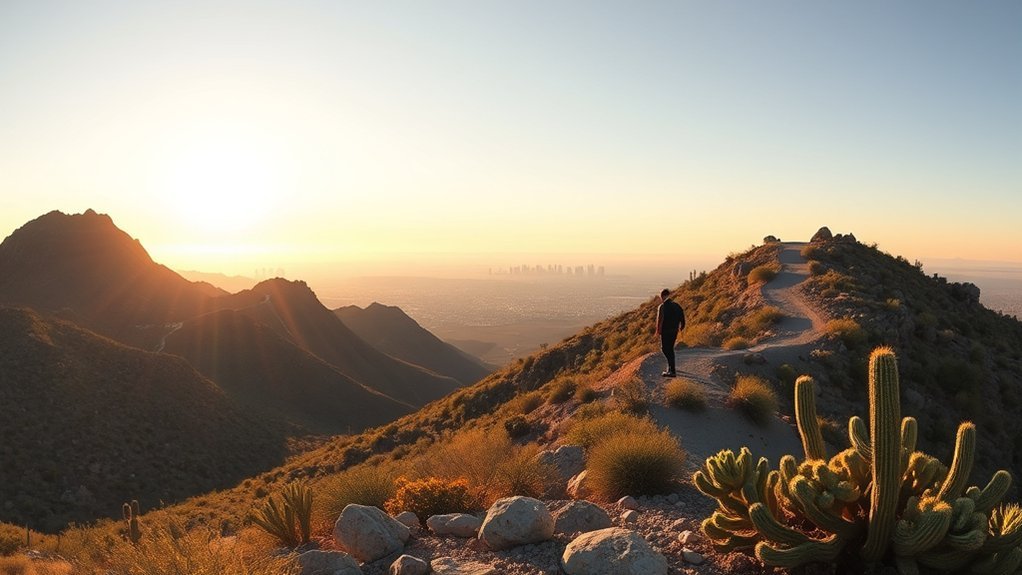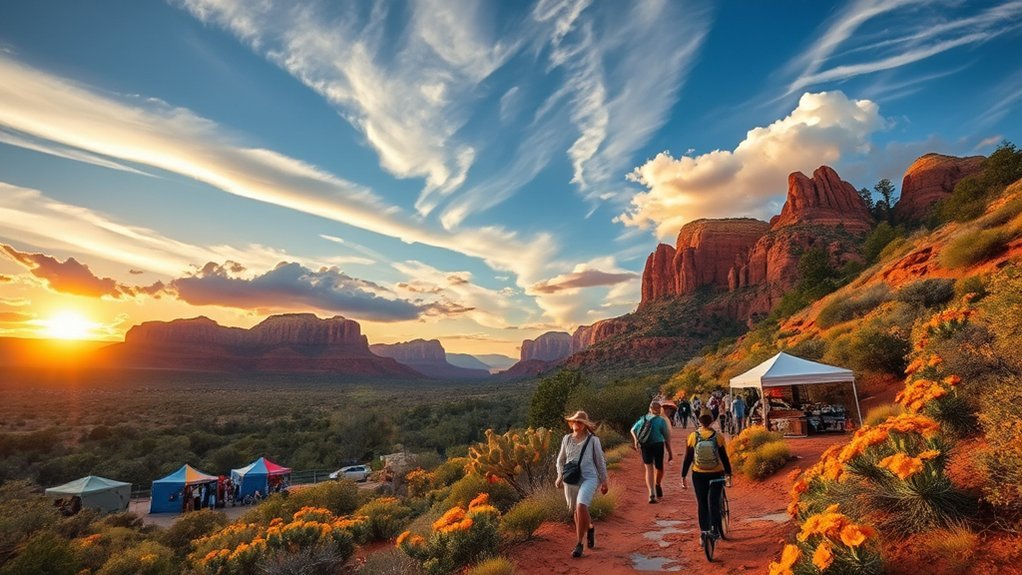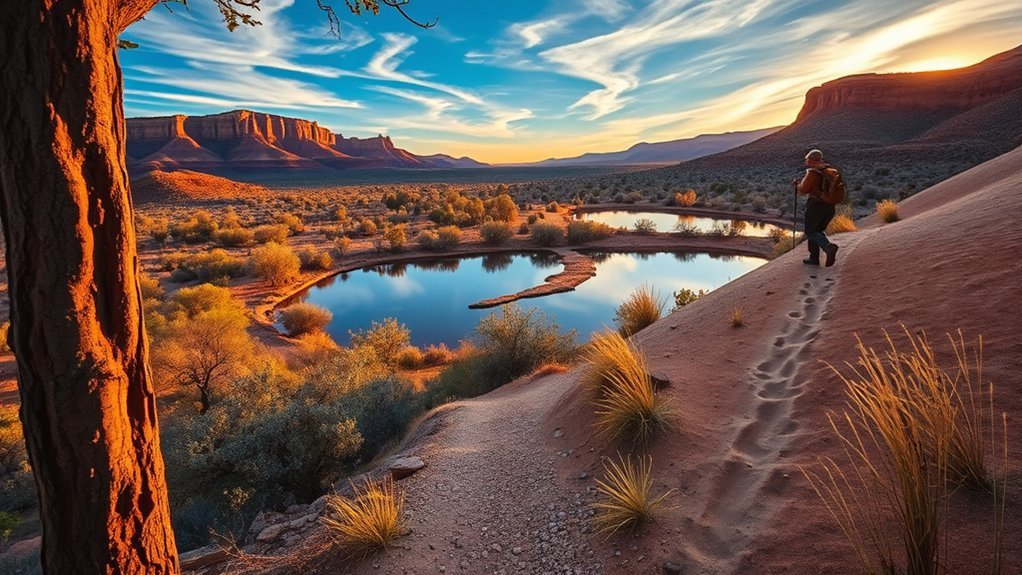
Nestled along the Verde River in Cottonwood, Arizona, Dead Horse Ranch State Park spans more than 423 acres of lush riparian forest, serene fishing lagoons, and high-desert limestone hills. The park’s versatile 20-plus-mile multi-use trail network offers something for everyone—from flat, tree-canopied paths ideal for birdwatching and family strolls to rugged backcountry routes that connect directly to Prescott and Coconino National Forests.
Quick Answer
The best hiking trails at Dead Horse Ranch State Park include the easy Verde River Greenway Trail and Canopy Trail for riparian birdwatching, the paved Lagoon Loop for strollers and accessible walking, and the rugged Lime Kiln and Mesa Trails for panoramic valley vistas. Day-use vehicle entry is $7, trails are dog-friendly on a 6-foot leash, and spring and fall offer peak hiking conditions.
Key Takeaways
- Trail Variety: Over 20 miles of shared multi-use trails accommodating casual walkers, trail runners, mountain bikers, and equestrians.
- Accessibility: Level, paved walking surfaces surround the park’s three fishing lagoons, providing barrier-free access for wheelchairs and strollers.
- Prime Birding Hotspot: Situated within the Verde Valley Important Bird Area (IBA), hosting over 200 resident and migratory bird species.
- Park Logistics: Open year-round; day-use park entrance fee is $7.00 per vehicle (1–4 adults). Dogs are permitted on all trails on a 6-foot leash.
At a Glance
| Time Required | 1 to 5 hours (depending on selected loops and connector routes) |
| Difficulty | Easy to Moderate (flat riverside strolls to rocky ridge climbs) |
| Essential Gear | Sturdy hiking shoes, 2+ liters of water, sun protection, binoculars, offline trail map |
| Park Entrance Fee | $7.00 per vehicle (1–4 adults); $3.00 per individual/bicycle |
Getting to the Trails: Park Access and Parking
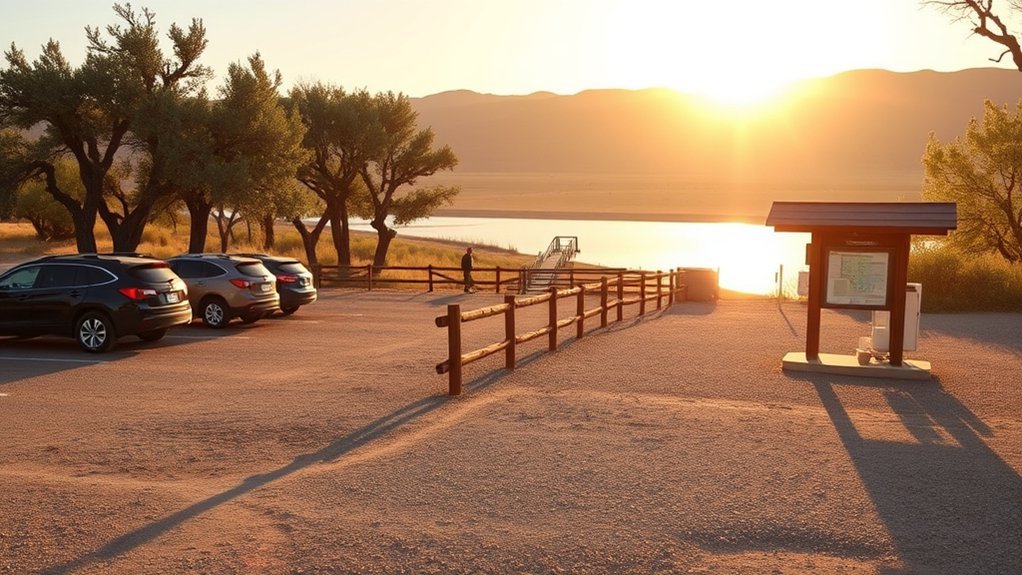
Reaching the trailheads at Dead Horse Ranch State Park is straightforward. The main park entrance is located right off North 10th Street in Cottonwood, just minutes from State Route 89A. Upon arrival, stop at the ranger contact station to pay the day-use entrance fee ($7 per vehicle) and pick up a printed park and trail map.
The park is intuitively arranged with designated day-use parking lots serving distinct trail hubs:
- River Day-Use Area: Best for accessing the Verde River Greenway, Canopy Trail, and Black Bridge Loop.
- Lagoon Parking Lots: Best for paved loops around the three fishing ponds, ADA-accessible paths, and the playground.
- West Trailhead / Equestrian Area: Best for longer upland routes, including the Lime Kiln Trail, Thumper Loop, and Raptor Hill.
Pro Tip: Parking near the lagoons fills quickly on weekend mornings between 9:00 AM and 1:00 PM due to local anglers and families. Arrive before 8:30 AM or park at the River Day-Use lot and walk the short connector path.
Verde River Trail: Riverside Strolls and Birding
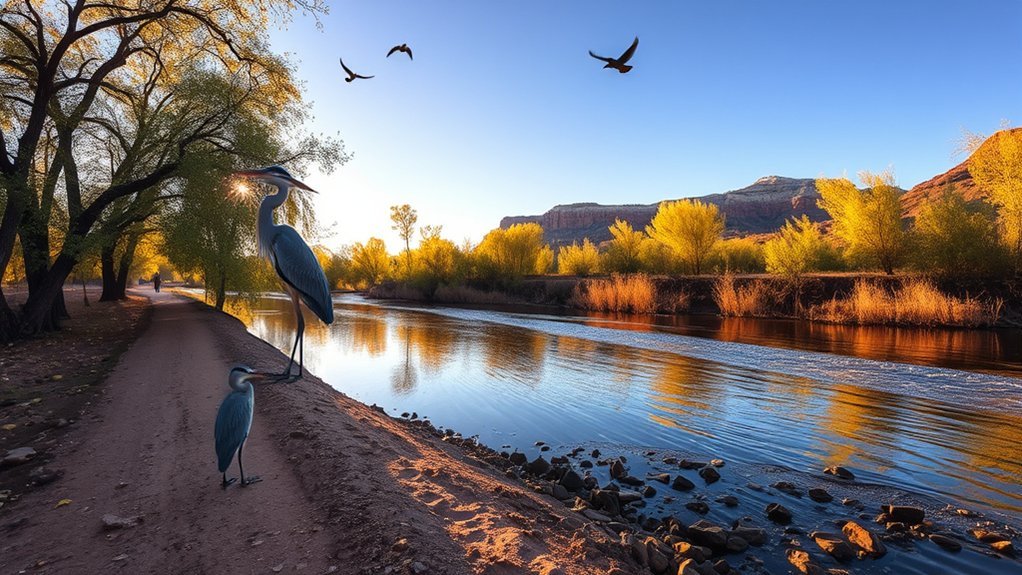
The Verde River Greenway Trail winds through one of Arizona’s most precious and endangered ecosystems: a perennial cottonwood-willow riparian corridor. Extending for roughly 2 miles along the riverbanks, this flat, dirt singletrack immerses hikers beneath a dense canopy of Fremont cottonwoods, Goodding’s willows, and box elders.
Because the trail stays close to the water table, temperatures along this path remain noticeably cooler than on the surrounding desert ridges. Frequent benches and river access points let you stop to watch the moving current or wade along sandy gravel bars during low-water periods.
This stretch is recognized as a vital component of the Tuzigoot / Dead Horse Ranch eBird Hotspot. Bring your binoculars to spot resident and migrant species:
- Waterbirds & Waders: Great Blue Herons, Green Herons, Belted Kingfishers, and Common Mergansers.
- Songbirds & Raptors: Summer Tanagers, Vermilion Flycatchers, Yellow Warblers, Abert’s Towhees, and nesting Common Black Hawks.
Note: Riparian soil is soft and easily eroded. Keep to the designated singletrack to safeguard fragile riverbank roots and ground-nesting songbird territory.
Black Bridge Loop: Easy Family-Friendly Circuit
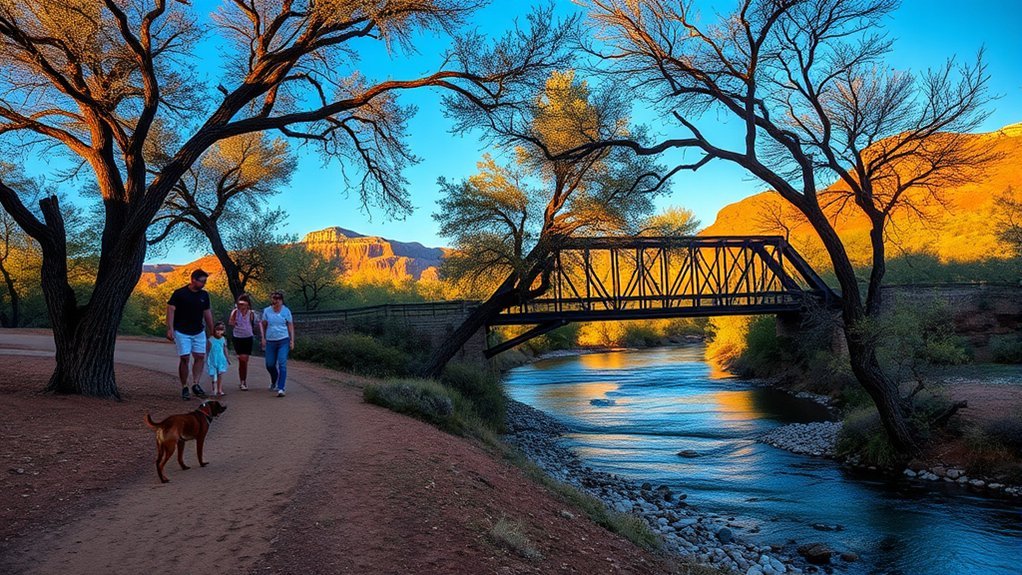
The Black Bridge Loop is a charming, low-intensity 2.1-mile circuit that bridges the park’s landscaped day-use zones with the wilder edges of the Verde River. With minimal elevation change, gentle grades, and clear directional posts at every junction, this route is widely considered the best introduction to the park for first-time visitors, young children, and casual trail walkers.
Trail Description and Terrain
The loop features a well-maintained surface composed predominantly of hard-packed soil, fine decomposed granite, and short timber boardwalks across seasonal marsh seeps. The pathway averages 4 to 6 feet in width along its multi-use sections, narrowing to comfortable singletrack as it approaches the riverbanks.
There are no technical obstacles, steep drop-offs, or demanding climbs on this route. While lightweight strollers with rubber wheels can manage most of the main loop, narrow riverside offshoots contain occasional exposed tree roots and shallow sandy drifts where all-terrain strollers perform best.
Wildlife and Birdwatching
The transition zone between the open manicured lawns and thick river willows concentrates wildlife activity throughout the day. Mule deer frequently feed along the grass margins during early morning hours, while desert cottontails, round-tailed ground squirrels, and gray foxes are regularly sighted near brush piles.
Birders walking the loop should scan both the high cottonwood branches for raptors and the lower willow thickets for Southwestern Willow Flycatchers and White-crowned Sparrows. A telephoto lens (300mm+) or a pair of 8×42 binoculars will help you view wildlife across the river channel without causing disturbance.
Picnic Spots and Facilities
One of the primary benefits of the Black Bridge Loop is its proximity to top-tier park amenities. The trail passes directly alongside the River Day-Use and Sycamore picnic ramadas, where hikers have access to:
- Covered ramadas with sturdy wooden picnic tables
- Charcoal burning barbecue grills
- Potable drinking water spigots
- Modern, plumbed flush restroom facilities
- Trash receptacles and pet waste disposal stations
Floating Island Trail: Cottonwood Grove Walk
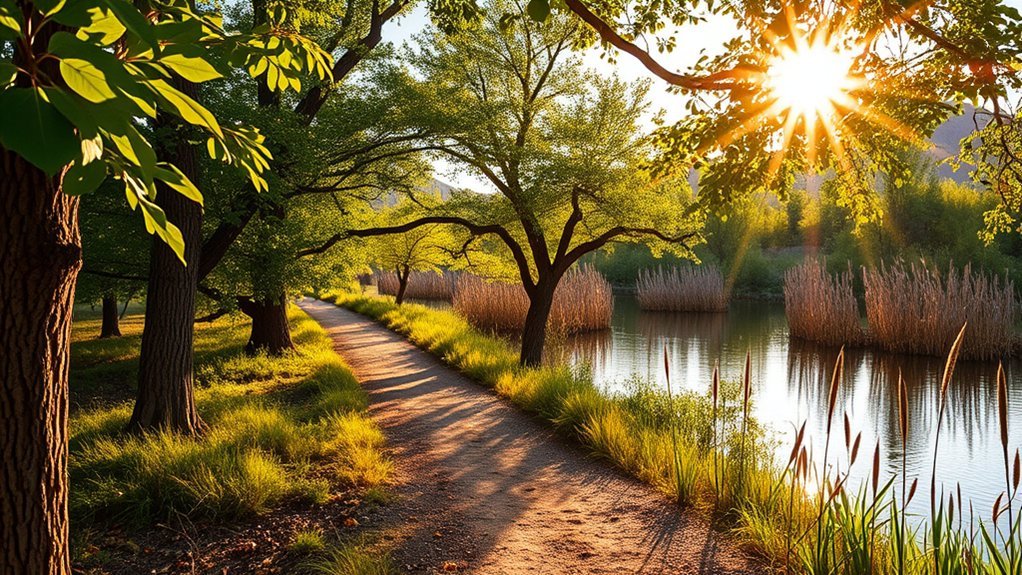
Branching off from the lagoon complex, the Canopy and Lagoon Grove Trails (often referred to locally as the shaded river loop) meander through a serene grove of mature, towering Fremont cottonwoods. This flat 0.5-mile path provides an immersive woodland stroll that feels completely secluded from the surrounding desert landscape.
Along this trail, interpretive educational markers detail the lifecycle of the Verde River watershed, the ecological role of decaying nurse logs, and the native flora utilized by indigenous Sinagua communities centuries ago. Shaded timber benches line the walkway every few hundred feet, providing peaceful resting spots overlooking quiet river eddies.
Pro Tip: Visit during mid-to-late November to experience peak autumn foliage. The towering cottonwoods turn brilliant hues of gold and amber, creating spectacular reflections across the calm lagoon waters.
Mesquite Creek Path: Desert Flora and Wildflowers
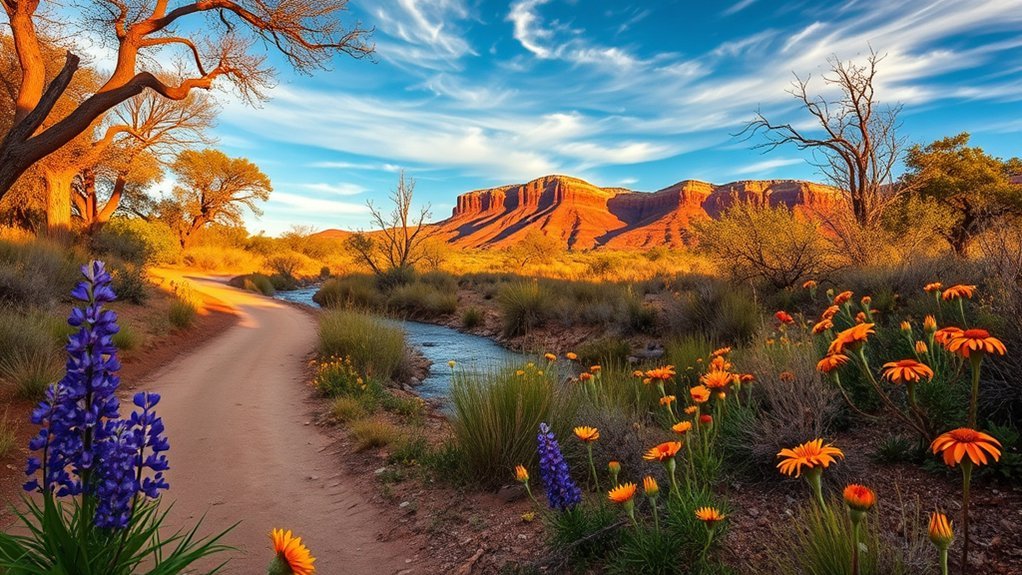
When you transition away from the river toward the park’s upland boundaries via the Creosote Loop and Quail Wash Trail, the lush green canopy gives way to classic Sonoran and Chihuahuan desert scrub. This sun-exposed landscape showcases how desert flora adapts to arid limestone benches and seasonal rain patterns.
Following spring showers (typically March through May), this zone transforms with colorful blooms of native wildflowers and desert succulents. Keep an eye out for these signature plant species along the path:
| Plant Species | Key Characteristics | Bloom / Identification Window |
|---|---|---|
| Creosote Bush (Larrea tridentata) | Resinous, aromatic evergreen leaves; petite yellow flowers and fuzzy white seed capsules. | Spring to late summer (pungent scent after rain) |
| Velvet Mesquite (Prosopis velutina) | Feathery compound leaflets, sharp thorns, and drooping nutritious yellow seed pods. | Blooms spring; seed pods mature late summer |
| Engelmann’s Prickly Pear (Opuntia engelmannii) | Flat, fleshy green pads with stout spines; brilliant yellow-to-orange bowl-shaped flowers. | April through June; purple fruit in autumn |
| Desert Marigold (Baileya multiradiata) | Dense, woolly silver-gray foliage topped by bright, daisy-like yellow blossoms. | March through November |
Sycamore Canyon Spur: Short Hike With Scenic Overlooks
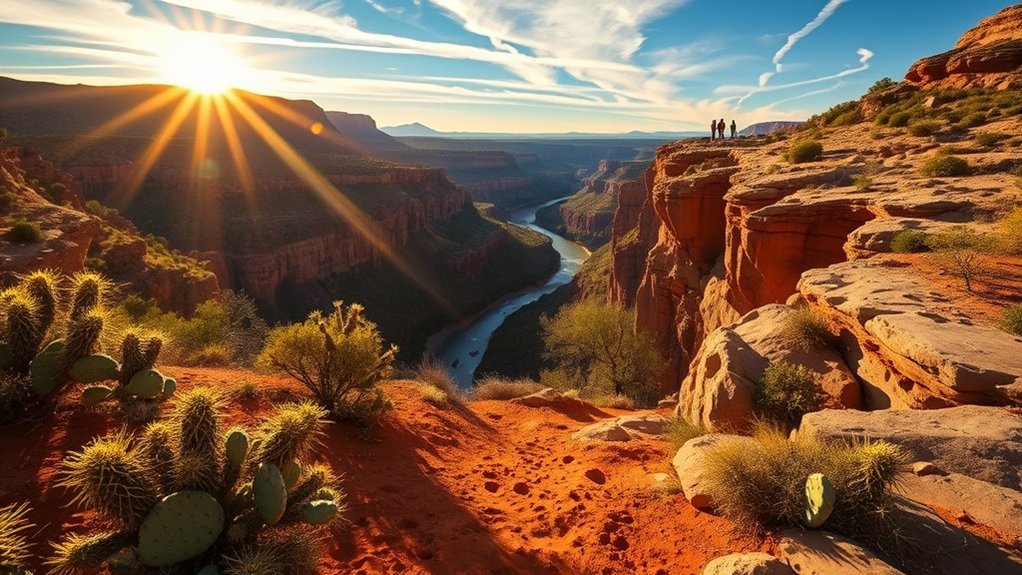
For hikers seeking elevated viewpoints without committing to an arduous half-day trek, the Mesa Trail and its associated overlook spurs deliver swift elevation gains and panoramic rewards. Climbing out of the river basin onto the elevated limestone mesa, this trail presents sweeping views across the Verde Valley toward the red sandstone bluffs of Jerome and Mingus Mountain.
Trailhead and Parking
Access the Mesa Trail directly from the West Trailhead or via the connector trail starting behind the Upper Restroom facility near the Quail Loop campground. The trailhead kiosk features detailed maps of the upland trail system and posted notices regarding shared equestrian use.
Parking here accommodates standard passenger cars and vehicles with horse trailers. Ensure your vehicle day-use pass is prominently displayed on your rearview mirror or front dashboard before starting up the trail.
Scenic Overlook Spots
As you ascend the mesa, several natural rock ledges provide commanding vantage points over the park and surrounding landmarks:
- Lower River Overlook (0.4 mi): A broad bench rock framing the green ribbon of cottonwoods winding through the arid valley floor.
- Verde Valley Panorama (0.8 mi): Clear sightlines toward the historic hillside mining town of Jerome clinging to Cleopatra Hill.
- Tavasci Marsh Vista (Spur Junction): An elevated perspective looking northeast over the vast 60-acre wetland of Tavasci Marsh and the ancient hilltop pueblo at Tuzigoot National Monument.
- Sunset Ledge (1.2 mi): A western-facing rim perch that captures golden-hour light reflecting across the Black Hills ridgelines.
Terrain and Difficulty
Rated as easy-to-moderate, the Mesa Trail climbs approximately 180 feet over a 1-mile stretch. The trail tread is well-defined but transitions from packed dirt to loose limestone gravel and exposed rock shelves. Sturdy footwear with grippy rubber outsoles is strongly recommended to maintain solid traction on descents.
Grassland Loop: Open Views and Wildlife Viewing
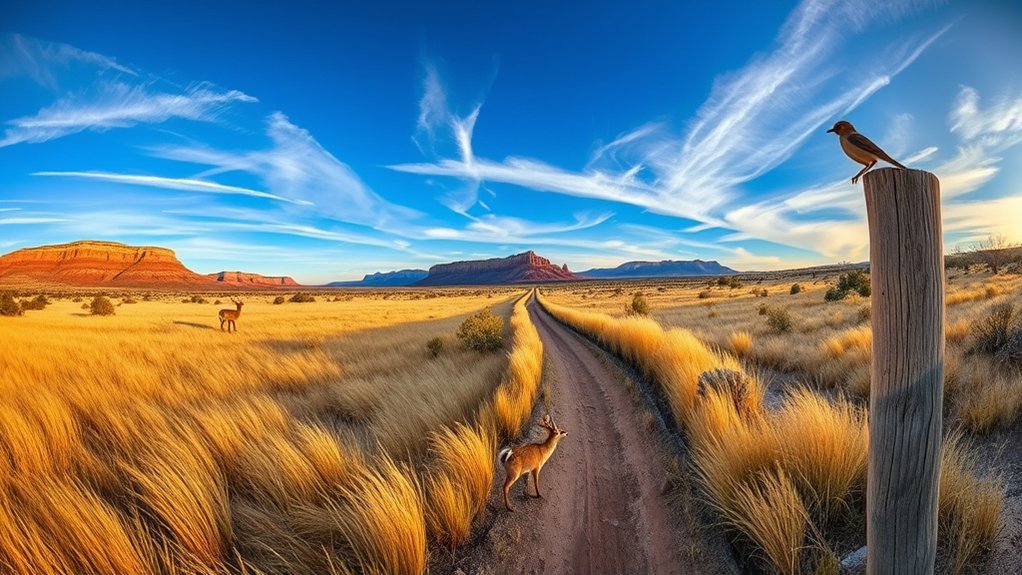
The Quail Loop and Grassland Paths encircle the park’s open meadow habitats and three lagoon perimeters, offering unobstructed sightlines beneath expansive Arizona skies. The flat, wide terrain makes this area an effortless stroll suitable for all physical conditioning levels.
“The open grassland loops offer sweeping views of the Black Hills and provide the park’s highest concentration of raptor and waterfowl sightings.”
To maximize your wildlife encounters along this open circuit, practice these simple trail habits:
- Early Morning Timing: Walk during the first two hours after sunrise when coyotes, javelina, and mule deer cross between the foothills and the river.
- Raptor Watching: Scan the perimeter fence lines and wooden utility poles for Red-tailed Hawks, Northern Harriers, and American Kestrels hunting meadow voles.
- Sun Preparedness: The meadow loops have virtually zero overhead tree shade. Wear a wide-brimmed hat, apply SPF 30+ sunscreen, and carry water even on cooler winter days.
- Leash Etiquette: Always maintain physical control of your dog on a 6-foot leash to avoid disturbing ground-nesting Gambel’s quail and roadrunners.
Hillside Ridge Trail: Steeper Climbs and Panoramas
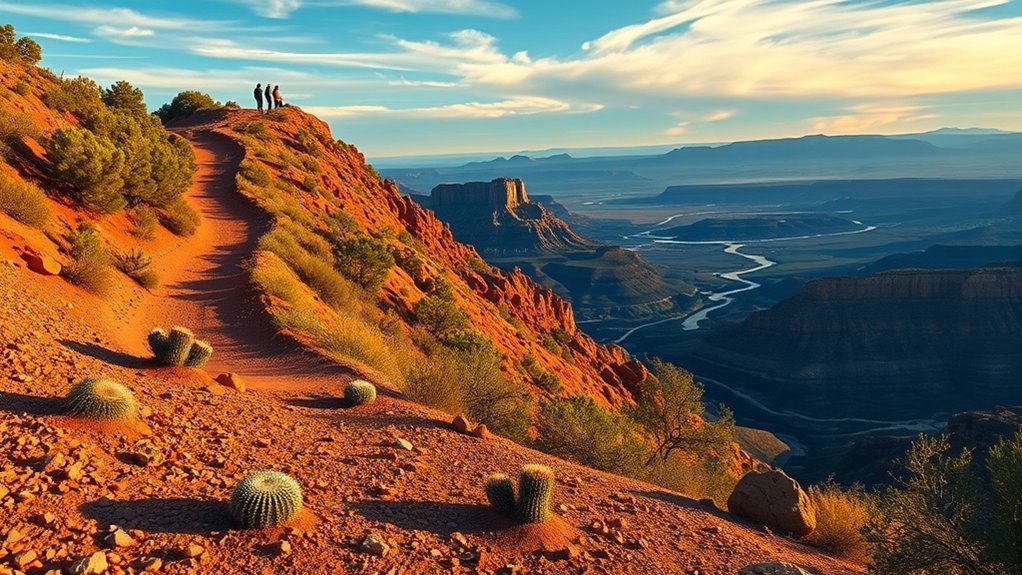
Hikers looking for a cardio workout and backcountry feel should head toward the Thumper Loop, Raptor Hill, and the historic Lime Kiln Trail. These higher-elevation routes climb the rocky limestone foothills bordering Prescott National Forest, offering rugged terrain and the most dramatic panoramic viewpoints in the park.
Gradient and Difficulty
Unlike the flat river paths, these upland hillside routes are rated moderate to strenuous. The trails feature steady elevation gains ranging from 300 to over 700 feet, punctuated by steep switchbacks, loose cobble, and off-camber limestone steps. Mountain bikers also share these singletracks, so stay alert on blind corners.
| Trail Name | Distance (One-Way / Loop) | Elevation Gain | Difficulty Rating |
|---|---|---|---|
| Thumper Loop | 2.7 miles (loop) | 340 feet | Moderate |
| Raptor Hill Trail | 1.4 miles (out-and-back) | 280 feet | Moderate |
| Lime Kiln Trail (Park Section) | 4.5 miles (to Forest boundary; 15 mi total to Red Rock SP) | 750+ feet | Strenuous |
Summit Viewpoints
Reaching the ridgelines along Thumper Loop rewards you with a 360-degree panorama encompassing the entire Verde Valley basin. To the northeast, the red rock escarpments of Sedona glow against the skyline; to the southwest, Mingus Mountain towers over the valley floor at nearly 7,800 feet elevation.
Because the limestone ridge is fully exposed to wind and sun, pack an extra windbreaker layer during winter and spring, and carry trekking poles to ease joint strain across loose rock descents.
Connector Routes: Combining Trails for Longer Outings
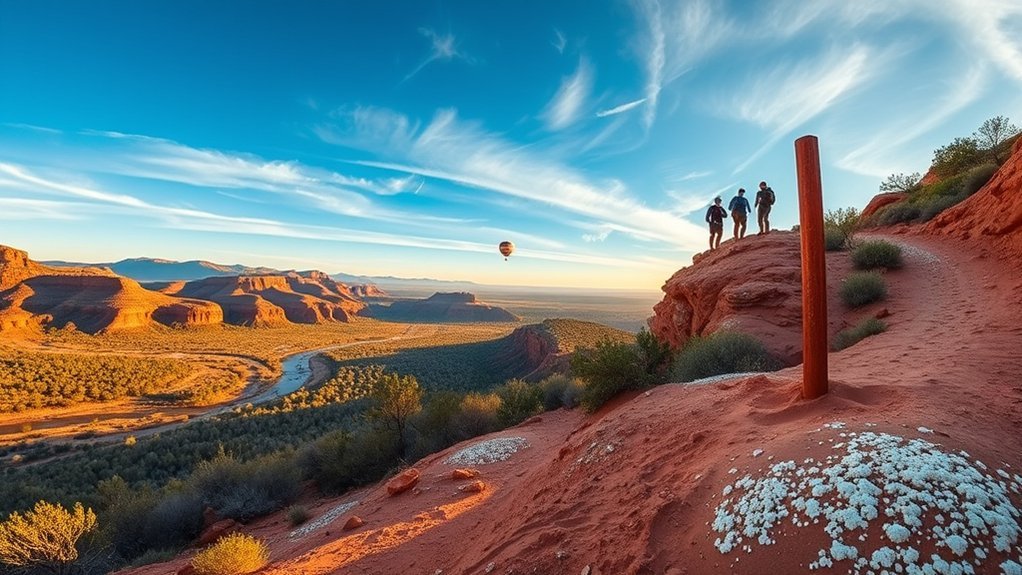
Because the trail network inside Dead Horse Ranch State Park is cleanly interconnected, hikers can link multiple shorter segments into personalized loops ranging from 3 to 10 miles. Utilizing connector trails allows you to experience diverse habitats—riparian woodlands, open lagoons, and desert scrub—in a single hike.
Here are three recommended trail combinations based on time and fitness level:
- The Grand Park Circuit (4.8 Miles — Moderate): Start at the River Day-Use lot, hike west along the Verde River Greenway Trail, link up to the Mesa Trail for elevated valley views, traverse across the Quail Wash singletrack, and return along the Lagoon Loop paths.
- Riparian & Lagoon Explorer (2.5 Miles — Easy): Combine the Canopy Trail, the Black Bridge Loop, and a complete perimeter circuit around Lagoons 1, 2, and 3 for maximum shade and birding.
- Backcountry Upland Challenge (7.2 Miles — Strenuous): Depart from the West Equestrian Trailhead, follow the historic Lime Kiln Trail into the upper foothills, loop across the technical switchbacks of Thumper Loop, and descend via Raptor Hill.
Trail Tips: Best Times, Safety, and What to Bring
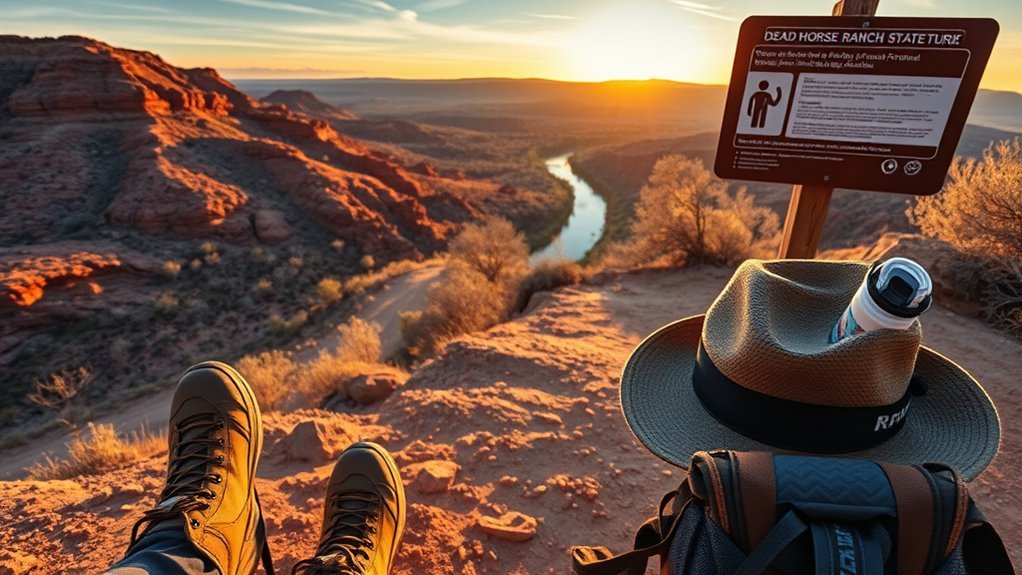
Proper preparation ensures a rewarding outing in the Verde Valley’s high-desert climate. While park trails are well maintained, seasonal temperature extremes require smart planning.
Warning: Summer afternoon temperatures in Cottonwood frequently exceed 100°F (38°C) from June through August. Heat exhaustion and dehydration can set in quickly. Complete all hiking before 10:00 AM during summer months, carry a minimum of 1 liter of water per hour of activity, and never hike without electrolyte replacement.
Follow these essential outdoor practices when visiting Dead Horse Ranch:
- Best Seasons: October through April offers ideal hiking weather, with daytime highs averaging 60°F to 75°F (15°C to 24°C). Spring brings vibrant wildflowers, while late autumn delivers stunning cottonwood foliage.
- Wildlife Awareness: Western Diamondback and Mojave rattlesnakes are active from April through October. Stay centered on cleared trails, watch where you place your hands and feet near rocks or logs, and keep dogs strictly on leash.
- Monsoon Safety: July and August afternoon thunderstorms can cause rapid flash flooding in dry desert washes. If you hear thunder or observe heavy rainfall upstream, avoid low wash crossings and move to higher ground immediately.
- Packing Checklist: Sturdy trail shoes, broad-spectrum sunscreen, wide-brimmed sun hat, polarized sunglasses, 2 to 3 liters of water per person, high-energy snacks, a compact first-aid kit, and a fully charged smartphone with offline maps downloaded.
Frequently Asked Questions
Are dogs allowed on all trails, and are leashes required?
Yes. Dogs are welcome on all hiking and multi-use trails at Dead Horse Ranch State Park. However, park regulations strictly require dogs to remain on a physical leash no longer than 6 feet at all times. Always carry sufficient water for your pet and pack out all pet waste.
Are the trails wheelchair- and stroller-accessible?
Yes. The paved walking paths surrounding the three fishing lagoons are ADA-accessible and suitable for wheelchairs, mobility aids, and standard strollers. Additionally, portions of the Black Bridge Loop and River Day-Use paths feature level, hard-packed surfaces suitable for all-terrain strollers.
Are there restrooms and water refill stations along the trails?
Restrooms with flush toilets and potable drinking water spigots are located at major trailheads, day-use picnic areas, and campground loops. However, there are no water stations along the outer backcountry trails (such as Lime Kiln or Thumper Loop), so carry all the water you need before leaving the trailhead.
Is camping permitted within the park near the trailheads?
Yes. Dead Horse Ranch State Park offers extensive camping facilities, including over 100 RV sites with electric hookups, dedicated tent camping areas, and one-room camping cabins with heating and air conditioning. Advance reservations are strongly recommended through the Arizona State Parks online reservation system.
Are permits or entrance fees required to hike or park?
No special hiking permit is required, but standard Arizona State Park day-use vehicle entrance fees apply ($7.00 per vehicle with 1–4 adults; $3.00 for individual walk-ins or cyclists). You can pay via credit card or cash at the ranger contact station upon entry. Arizona State Parks annual passes are also accepted.
Conclusion
Whether you are looking for a peaceful morning stroll beneath golden cottonwoods, an accessible family outing around calm fishing lagoons, or an invigorating ridge climb overlooking the Verde Valley, Dead Horse Ranch State Park delivers one of the most complete trail experiences in Central Arizona. With its rich wildlife habitat, well-maintained trailheads, and seamless connections to neighboring public lands, it stands out as an essential hiking destination just minutes from Old Town Cottonwood and Sedona. Pack ample water, check seasonal conditions, and hit the trails to discover this Verde River gem firsthand.
Sources
- Arizona State Parks & Trails — Dead Horse Ranch State Park Official Guide — Facility information, day-use entry fees, trail maps, and campground regulations.
- eBird — Dead Horse Ranch State Park Hotspot Species Checklist — Bird species records, biodiversity data, and seasonal avian migration patterns.
- National Park Service — Tuzigoot National Monument — Regional natural history, Tavasci Marsh ecosystem, and connecting trail networks.
- National Weather Service — Flagstaff / Verde Valley Forecast Office — Regional climate data, summer monsoon alerts, and temperature averages for Cottonwood, AZ.