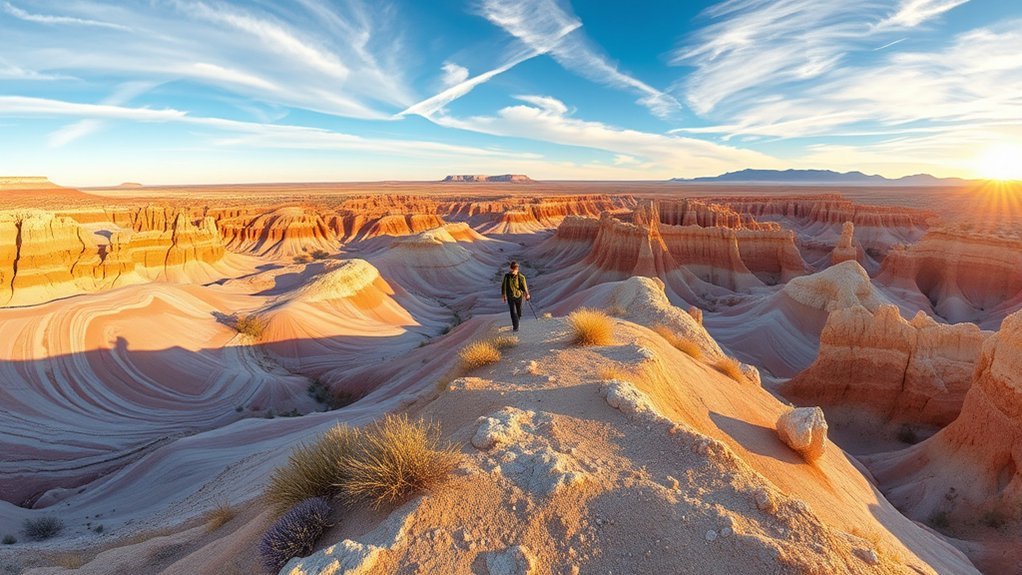
Petrified Forest National Park is much more than a collection of quick roadside stops. You can walk among massive petrified logs, descend into colorful badlands, visit Ancestral Puebloan sites, or leave the developed trails for route-finding adventures in the backcountry. The best hike depends on your time, mobility, experience, and the weather, so use this guide to choose the right Petrified Forest hiking trails and plan an efficient day.
Quick Answer
Petrified Forest National Park is best explored by combining short developed trails with the 28-mile park road. For easy scenery, choose Blue Mesa, Crystal Forest, Giant Logs, Puerco Pueblo, and Painted Desert Rim. Experienced hikers can add NPS Off the Beaten Path routes, but they require route-finding, water, weather awareness, and more time.
Key Takeaways
- Blue Mesa is a strong choice for dramatic badland scenery, while Crystal Forest and Giant Logs put you close to large concentrations of petrified wood.
- Do not assume every paved trail is stroller or wheelchair friendly. Giant Logs has stairs, while Blue Mesa begins with a steep grade.
- The main park road is about 28 miles long, so a full day gives you much more time for trails and viewpoints than a quick drive-through.
- Backcountry routes may have no maintained trail, water, or shade. Route-finding skills are important.
- Summer hikers should prepare for heat, lightning, monsoon storms, and possible flash flooding.
At a Glance
| Time Required | About 3–4 hours for selected highlights; a full day is better for several trails and major viewpoints. |
| Difficulty | Easy developed walks to strenuous off-trail backcountry routes. |
| Tools Needed | Water, sun protection, sturdy footwear, layers, and an offline map or NPS route guide for backcountry hikes. |
| Cost | Currently $25 per private vehicle for a 7-day entrance pass. The park is cashless. Check current NPS fees before your trip. |
Top Family-Friendly Trails to Explore
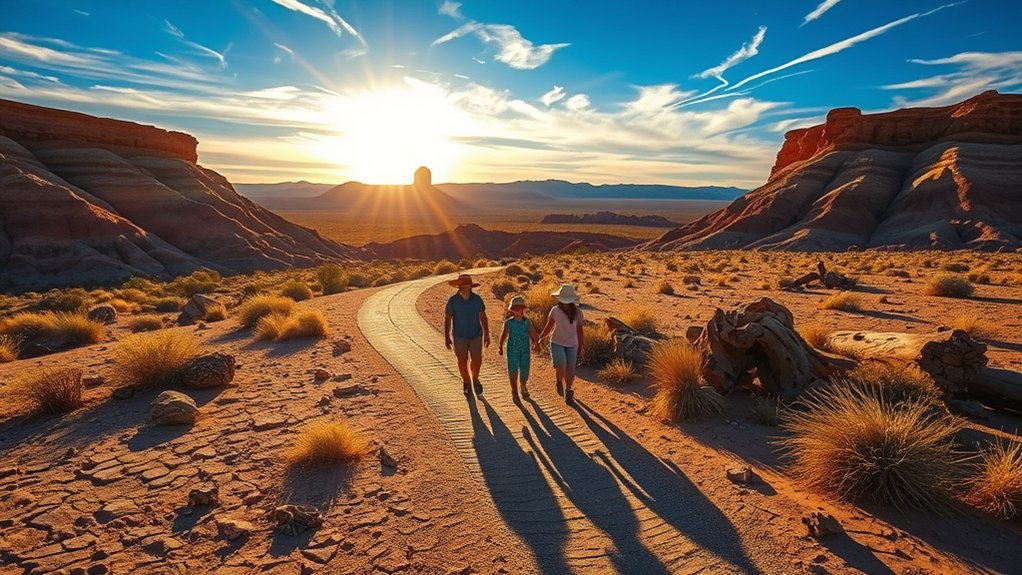
Petrified Forest National Park has several short developed trails that work well for families and visitors who do not want a long hike. However, trail surface and grade matter just as much as distance. The National Park Service notes that some developed trails have grades beyond normal accessibility standards, so check the details before assuming a short trail will work for a stroller or mobility device.
| Trail | Distance | What to Expect | Best For |
|---|---|---|---|
| Puerco Pueblo | 0.3-mile loop | Paved walk past pueblo remains and petroglyphs. Most of the route suits strollers and mobility equipment, except a short spur. | Culture and easiest short stop |
| Giant Logs | 0.4-mile loop | Huge, colorful petrified logs, including Old Faithful. Several sets of stairs may make it unsuitable for strollers or mobility equipment. | Large petrified logs |
| Crystal Forest | 0.75-mile loop | A paved route through one of the park’s best concentrations of exposed petrified wood, with some steep grades. | Petrified wood and photography |
| Blue Mesa | 1-mile loop | Alternately paved and gravel trail through blue, purple, and gray badlands. The beginning is steep. | Best dramatic scenery |
| Painted Desert Rim | 1 mile round trip | Unpaved rim walk between Tawa and Kachina Points with broad Painted Desert views. | Panoramic views |
For a longer south-end walk, consider Long Logs. The trail forms a 1.6-mile loop through a major concentration of petrified wood. The first half-mile is paved and suitable for strollers and mobility equipment, but the loop becomes rougher. Long Logs can also be combined with Agate House for about 2.6 miles round trip. Check the official NPS trail descriptions and accessibility details before your visit.
Best Scenic Drives and Short Walks
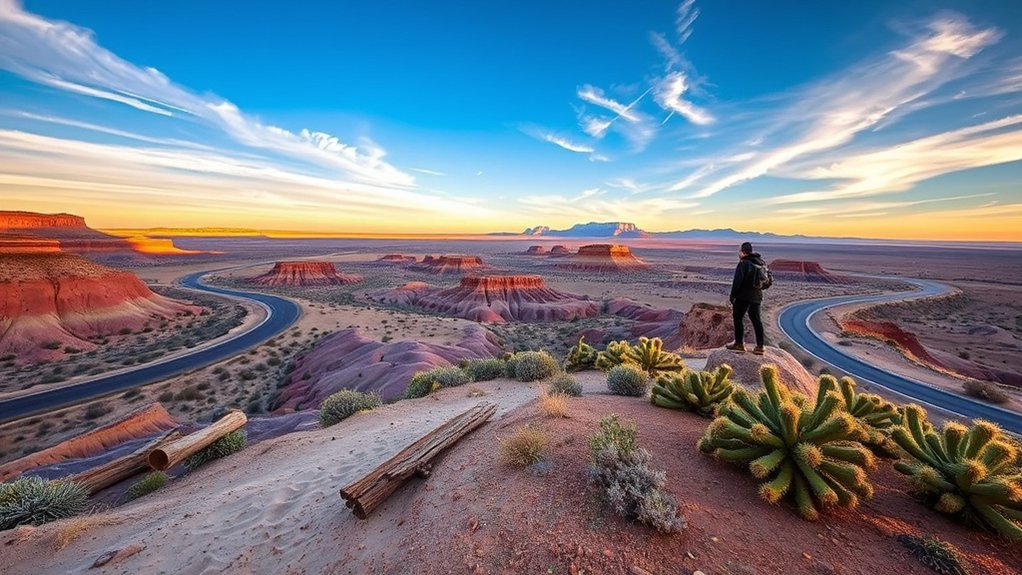
You can see many highlights without committing to a long hike. The main park road runs about 28 miles between the north entrance at Interstate 40 and the south entrance near Highway 180. Driving straight through takes roughly an hour, but stops at overlooks, historic sites, and trails can easily turn that drive into a half-day or full-day visit.
The National Park Service estimates that driving the park’s 28-mile main road from one end to the other takes about one hour without extended stops.
Good short stops include the 0.3-mile Puerco Pueblo loop, 0.4-mile Giant Logs loop, 0.75-mile Crystal Forest loop, 1-mile Blue Mesa loop, and 1-mile round-trip Painted Desert Rim Trail. Between walks, you can stop at overlooks, Route 66, Newspaper Rock, Jasper Forest, and other roadside viewpoints. The official NPS itineraries are useful when deciding how many stops fit your available time.
Longer Hikes and Backcountry Routes
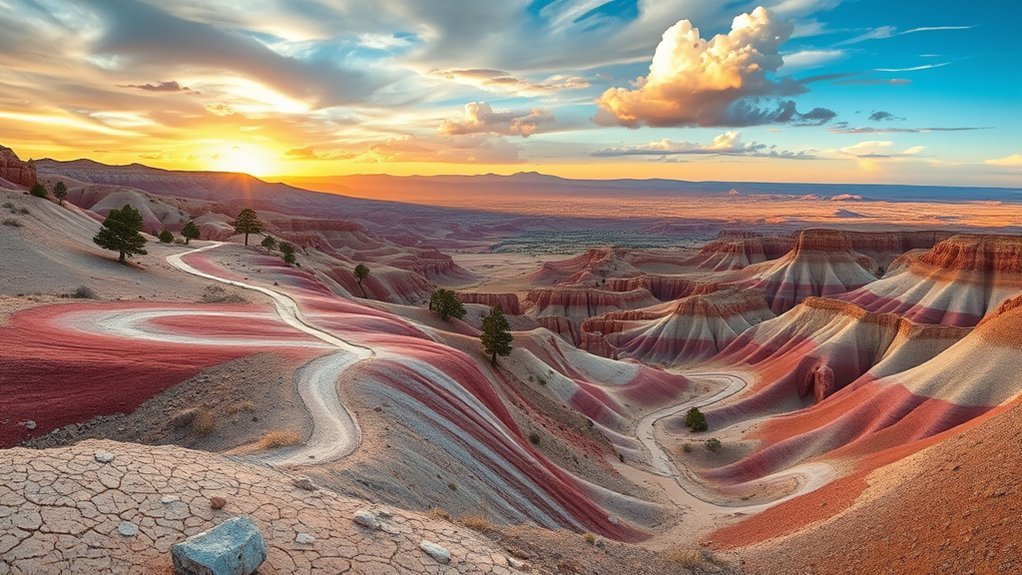
If you want more solitude, Petrified Forest has NPS-designated Off the Beaten Path routes. These are different from ordinary maintained trails. Distances are approximate, and some routes require navigation across open desert, washes, old roads, and badland terrain.
- Billings Gap: About 3 miles, following the steep edge of Blue Mesa toward viewpoints over badlands and broad valleys.
- Blue Forest Trail: About 3 miles round trip through blue and white badlands on a historic Civilian Conservation Corps route.
- Dead Wash Overlook: About 4 miles round trip, with grassland, boulder scrambling, washes, and a broad overlook. NPS rates it moderately difficult.
- First Forest Point: About 4.2 miles round trip from Jasper Forest to a prominent mesa.
- Jasper Forest: About 2.5 miles round trip along an old 1930s road through abundant petrified wood.
- Onyx Bridge: About 4 miles round trip into the wilderness to a large petrified log eroding from the Black Forest Bed.
- Red Basin Clam Beds: About 8.5 miles round trip through fossil-rich badlands and remote terrain.
- Wilderness Loop: About 7 miles round trip through remote areas containing petrified wood deposits.
Ask a ranger for current route information or a free route guide before attempting one of these hikes. The NPS specifically warns that route-finding skills may be necessary. You can review current options on the Off the Beaten Path page.
Note: A permit is generally not required for ordinary day hiking in the wilderness, but Devils Playground is an exception with controlled permit access. Day hikers must return to their vehicles before the park’s posted closing time.
Tips for Staying Safe and Comfortable on the Trails
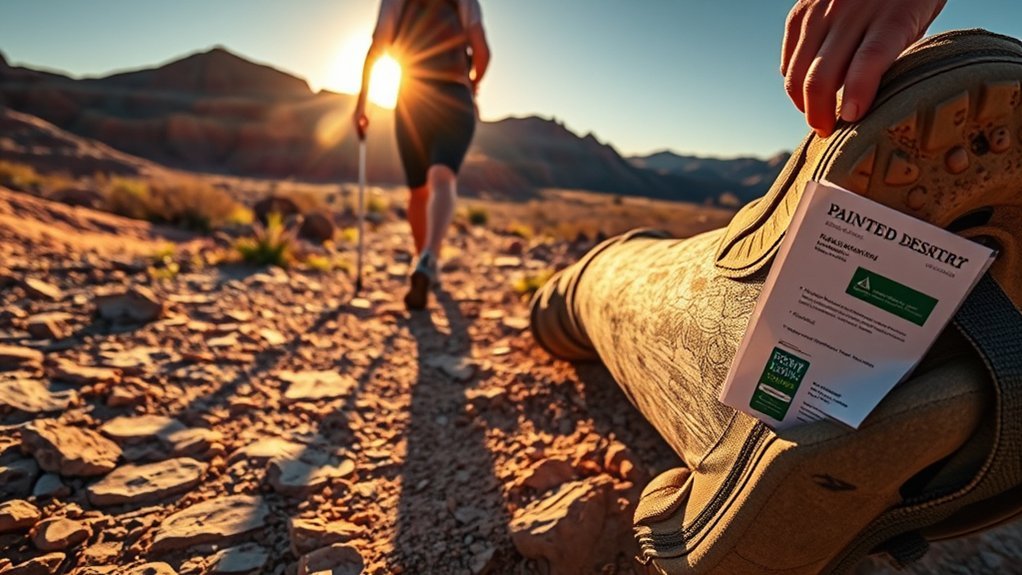
Petrified Forest is exposed, windy, and semi-arid, with little shade on many routes. Temperatures can change sharply, and the park averages about 5,800 feet in elevation. Carry enough water, use sunscreen, wear a hat and sturdy footwear, and bring layers for changing conditions.
The National Park Service recommends approximately one gallon of water per person per day for summer hiking. Drinking water is available at the Painted Desert Community Complex and Rainbow Forest Museum area, but there is no water at most stops along the park road and no water in the backcountry. See the park’s official safety guidance before setting out.
Warning: Summer monsoon storms can produce lightning and flash flooding with little warning. If lightning develops, return to a vehicle or building. Do not rely on the park’s metal-roof shade structures as lightning shelters, and never attempt to cross a flooded wash or roadway.
Stay on designated trails in developed hiking areas and behind barricades. In approved backcountry areas, avoid fragile resources and closed zones. Never dig for, move, or remove petrified wood, fossils, archaeological objects, or other natural materials. At Puerco Pueblo and other cultural sites, do not climb on walls, boulders, or archaeological structures.
Best Time and Conditions for Hiking
Conditions can vary greatly by season. Summer can bring extreme heat as well as afternoon thunderstorms. From fall through spring, cold weather, wind, ice, or snow are possible. Winter road conditions can occasionally delay the park’s morning opening.
Before driving into the park, check the current NPS conditions and alerts. Starting longer hikes early also gives you more time to return before the gates close.
How to Plan a One-Day Park Itinerary
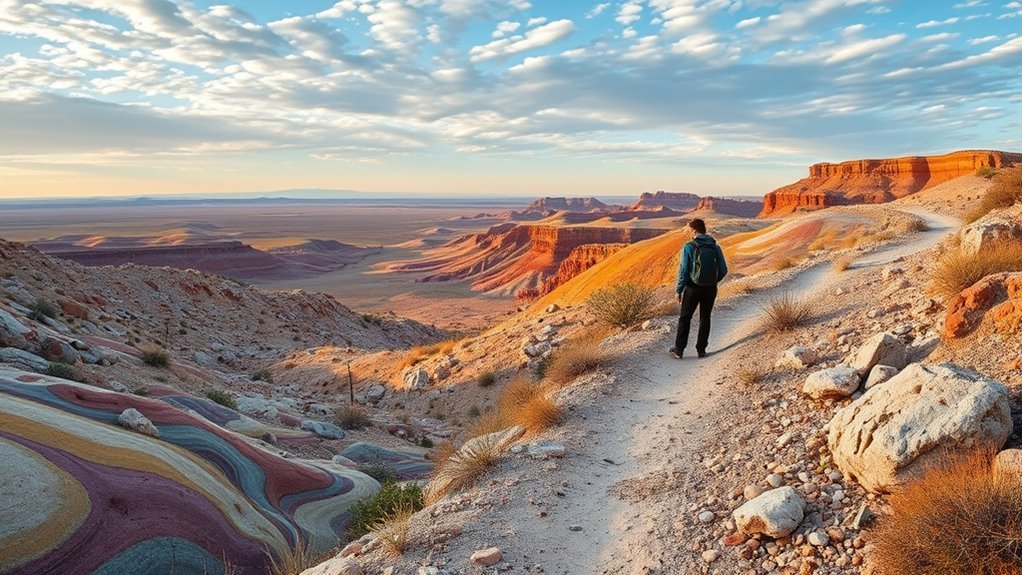
If you enter from the south near Highway 180, you can build an efficient route that avoids unnecessary backtracking. Start at Rainbow Forest Museum, where you can get orientation information and see paleontological exhibits. Giant Logs begins directly behind the museum, making it the logical first hike.
- Start: Rainbow Forest Museum and the 0.4-mile Giant Logs Trail.
- Next: Drive north to the 0.75-mile Crystal Forest Trail.
- Late morning: Explore the Blue Mesa scenic loop and hike the 1-mile Blue Mesa Trail if conditions are comfortable.
- Early afternoon: Stop at Puerco Pueblo for the short 0.3-mile cultural trail and petroglyph viewpoints.
- Later afternoon: Continue north through Route 66 and the Painted Desert overlooks.
- Finish: Walk part or all of the 1-mile round-trip Painted Desert Rim Trail between Tawa and Kachina Points.
Pro Tip: If you enter from Interstate 40 at the north entrance, simply reverse the itinerary. This lets you move through the park in one direction instead of repeatedly driving back to earlier stops.
Current posted park-road hours are generally 8 AM to 5 PM Mountain Standard Time, and the park is normally open year-round except Thanksgiving and Christmas. Hours and weather closures can change, so confirm the current operating hours before your visit.
Note: As of the National Park Service update dated July 21, 2026, the Painted Desert Visitor Center is closed for construction. The surrounding community complex remains open, and Painted Desert Inn is serving visitors at the north end. Rainbow Forest Museum remains available near the south entrance. Check current visitor-center information because construction status can change.
Frequently Asked Questions
What should I not miss in Petrified Forest National Park?
For a first visit, prioritize Blue Mesa, Crystal Forest or Giant Logs, Puerco Pueblo, several Painted Desert viewpoints, and the historic Route 66 area. These stops combine petrified wood, colorful geology, archaeology, and broad desert scenery without requiring a long backcountry hike.
What is the best trail in Petrified Forest National Park?
Blue Mesa is one of the strongest choices if scenery is your priority because its 1-mile loop descends among colorful badlands. Crystal Forest is better for seeing abundant petrified wood, Giant Logs is excellent for massive logs, and Puerco Pueblo is the better short walk for archaeology and petroglyphs.
How much time do you need at Petrified Forest National Park?
Three to four hours can cover several major stops, but a full day is better if you want multiple trails, museums, archaeological sites, and scenic overlooks. Driving the 28-mile park road alone takes about an hour without extended stops.
What state is ranked #1 for hiking?
There is no official nationwide ranking that establishes one U.S. state as the definitive number-one hiking state. Colorado often appears highly in editorial hiking rankings, but results depend on criteria such as trail mileage, scenery, public land, elevation, climate, and accessibility. Arizona offers its own distinctive hiking experiences, including Petrified Forest’s badlands and fossil landscapes.
Do you need a permit to hike at Petrified Forest?
You do not normally need a permit for developed trails or ordinary wilderness day hiking. Devils Playground is an exception and requires a limited permit. Overnight backcountry use has separate requirements, so check with the National Park Service before an overnight trip.
Can you take petrified wood from the park?
No. Do not remove petrified wood, fossils, rocks, archaeological objects, plants, or other natural or cultural materials from Petrified Forest National Park. Leave everything where you find it so the resource remains protected.
Are dogs allowed on Petrified Forest hiking trails?
Pets are allowed on developed trails and in many outdoor areas where visitors are allowed, but they must be kept on a leash. Keep pets away from wildlife, clean up after them, and follow all posted restrictions.
Conclusion
Petrified Forest National Park gives you an unusual mix of easy walks, colorful badlands, giant fossilized logs, archaeology, and remote backcountry. For a relaxed first visit, combine Giant Logs or Crystal Forest with Blue Mesa, Puerco Pueblo, and the Painted Desert viewpoints. If you head into the backcountry, carry enough water, know your route, watch the weather, and allow plenty of time to return before closing. Most importantly, leave petrified wood, fossils, petroglyphs, and archaeological sites exactly as you find them.
Sources
- National Park Service: Petrified Forest Trails — developed trail distances, surfaces, accessibility, and trail rules.
- National Park Service: Off the Beaten Path — current backcountry routes, approximate distances, and navigation guidance.
- National Park Service: Safety — water, heat, elevation, wind, wildlife, and hiking precautions.
- National Park Service: Current Conditions — monsoon storms, lightning, flooding, road conditions, and closures.
- National Park Service: Operating Hours & Seasons — current park-road and facility hours.
- National Park Service: Visitor Centers — current visitor-center services and construction status.