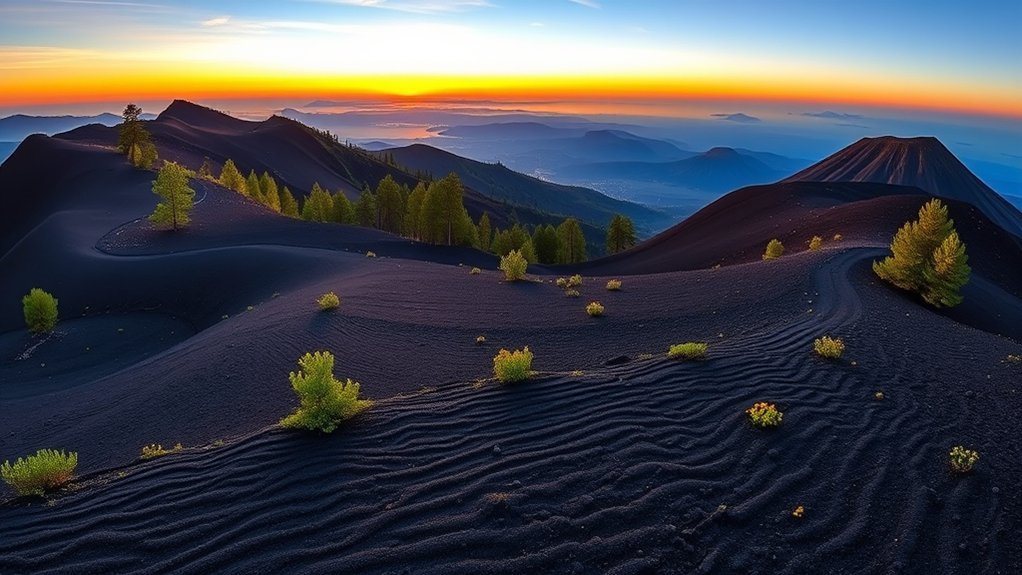
If you want the best Sunset Crater hikes, start with the five official trails inside Sunset Crater Volcano National Monument. Choose Lava Flow Trail for the main volcanic landscape, Bonito Vista Trail for the easiest accessible view, A’a Trail for a fast lava stop, Lenox Crater Trail for a cinder-cone climb, or Lava’s Edge Trail for the longest route. You cannot hike to the summit of Sunset Crater itself.
Quick Answer
The best Sunset Crater hike for most visitors is the 1-mile Lava Flow Trail. Bonito Vista is best for wheelchairs and strollers, A’a Trail is the quickest stop, Lenox Crater offers the best elevated views, and the 3.4-mile Lava’s Edge Trail provides the longest official hike.
Key Takeaways
- Best overall: Lava Flow Trail gives you the park’s main lava-field experience in about one hour.
- Best accessible option: Bonito Vista Trail is a 0.3-mile paved round trip; the upper 0.25-mile loop of Lava Flow Trail is also accessible.
- Best viewpoint climb: Lenox Crater Trail is a 1.6-mile moderately strenuous round trip.
- Important rule: Independent backcountry travel and hiking to the summit of Sunset Crater are prohibited.
- Plan ahead: Check NPS alerts, trail status, weather, fees, and ranger-program availability before driving from Flagstaff.
Last updated: July 23, 2026
Sunset Crater Trail Comparison
| Trail | Distance | Typical Time | Difficulty | Best For |
|---|---|---|---|---|
| Lava Flow Trail | 1-mile loop | About 1 hour | Easy | Main lava-flow experience |
| Bonito Vista Trail | 0.3-mile round trip | About 20 minutes | Easy and accessible | Wheelchairs, walkers, strollers, and quick views |
| Lenox Crater Trail | 1.6-mile round trip | About 1.5 hours | Moderately strenuous | Cinder-cone climb and San Francisco Peaks views |
| A’a Trail | 0.25-mile round trip | About 15 minutes | Easy | Fast lava-rock stop |
| Lava’s Edge Trail | 3.4-mile round trip | About 2.5 hours | Moderate | Longer walk with forest, cinders, and lava-edge terrain |
Before you go: Check the official NPS alerts and conditions page, hikes and trails page, accessibility page, and fees and passes page. Trail access can change because of snow, fire danger, storms, or other safety concerns.
Overview of the Park and Trails
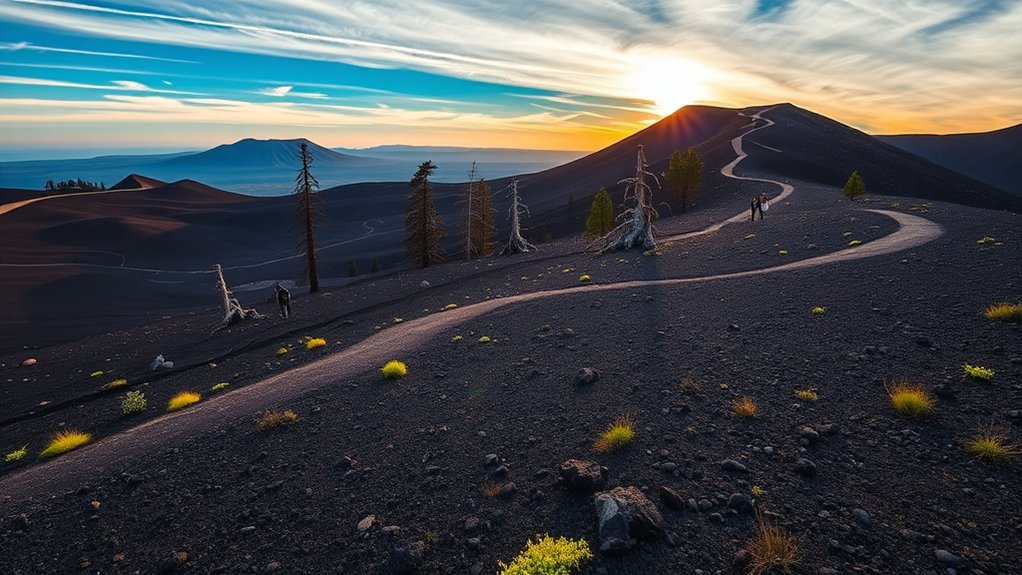
Sunset Crater Volcano National Monument has five designated hiking trails that show the park’s lava flows, cinder slopes, ponderosa pine forest, and volcanic views. Several hikes take only 15–60 minutes, so the park works well for a short stop. You can also build a half-day visit by combining two or three trails with the visitor center.
The key rule is simple: stay on marked trails. The National Park Service prohibits independent backcountry hiking to protect fragile geological and archeological features and the recovering volcanic landscape. Lava can be brittle, unstable, and sharp, while loose cinders can slide underfoot.
Warning: Do not climb Sunset Crater, cross closed lava fields, or create a shortcut between trails. Off-trail travel can damage fragile resources and expose you to unstable rock.
Ranger-Led Backcountry Hikes
NPS-guided programs are a limited exception to the normal backcountry closure. The park’s 2026 ranger-led hikes page says backcountry programs may be offered between Memorial Day and Labor Day. Reservations are required, group size is limited, and posted dates may change. These guided hikes are not a substitute for independent off-trail access.
Top Short Hikes for Families
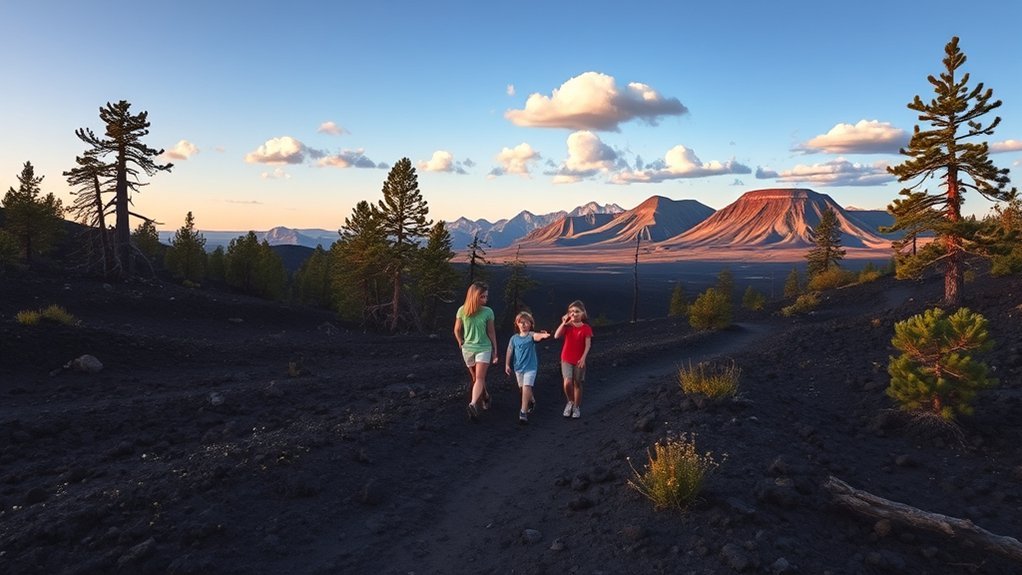
For families, mixed-ability groups, or visitors with limited time, start with the park’s shortest official trails. These routes keep distances low while still showing the black lava, cinder fields, and volcanic landscape that make Sunset Crater worth the stop.
- Lava Flow Trail: Choose this 1-mile loop for the main lava-flow experience. The upper 0.25-mile concrete loop is accessible for wheelchairs, walkers, and strollers. The lower portion continues over unpaved cinder terrain.
- Bonito Vista Trail: Pick this 0.3-mile paved round trip for an easy viewpoint across the Bonito Lava Flow and nearby volcanoes.
- A’a Trail: Use this 0.25-mile round trip as a fast stop to see rough basaltic a’a lava up close without committing to a longer hike.
If you have young children, start with Bonito Vista and A’a Trail as separate short stops. Add the Lava Flow Trail if everyone still has energy and the weather is comfortable. Keep children close because jagged lava can cut skin and loose cinders can make footing less predictable.
Pro Tip: Download or save the trail information before arrival. Public Wi-Fi is not available, cellular service is unavailable at the visitor center, and service near the Lava Flow parking area can be limited or intermittent.
Best Moderate Trails for Panoramic Views
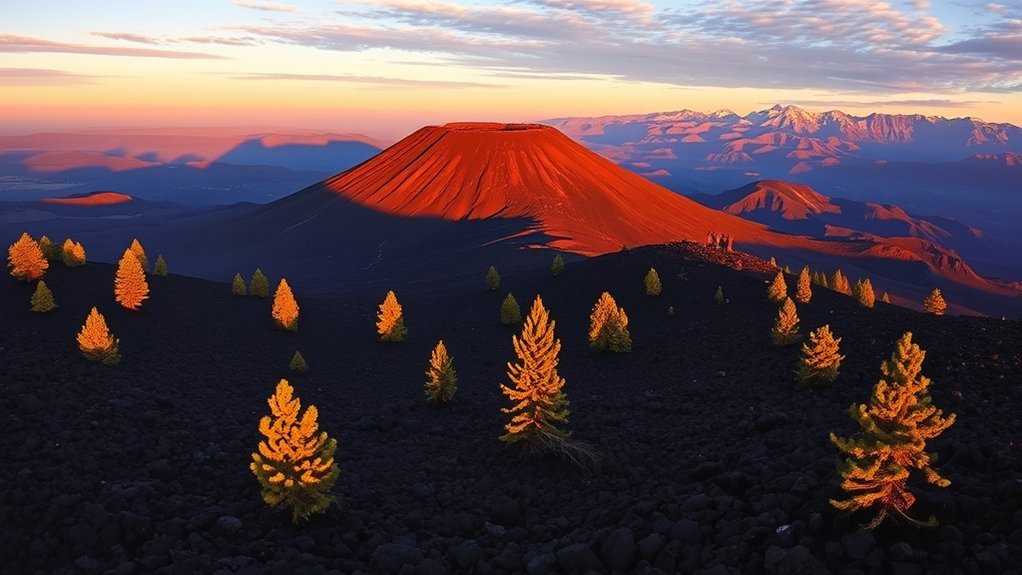
Lenox Crater Trail is the best Sunset Crater hike for visitors who want a short climb with a bigger payoff. The trail is 1.6 miles round trip, takes about 1.5 hours, and is rated moderately strenuous by the National Park Service. It climbs through ponderosa pine forest and gives views of Sunset Crater Volcano, the Bonito Lava Flow, O’Leary Peak, and the San Francisco Peaks.
Choose Lenox Crater if you want the feel of climbing a cinder cone without breaking park rules. It is the official alternative to climbing Sunset Crater itself. The loose surface and elevation gain can feel harder than the mileage suggests, so pace yourself and carry water.
Check the current NPS conditions page before relying on Lenox Crater as your main hike. Weather, fire restrictions, or resource-protection work can affect access.
Longer Routes and Loop Options
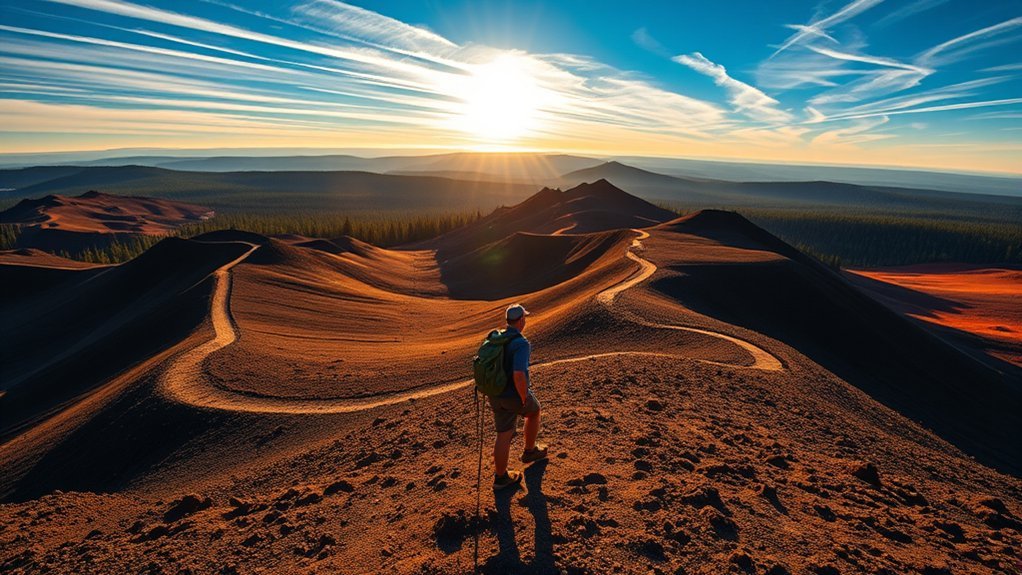
If you want the longest official hike in the monument, choose Lava’s Edge Trail. This 3.4-mile round trip takes about 2.5 hours and follows rougher terrain along the jagged edge of the Bonito Lava Flow. Expect loose cinders, rough basalt, forest shade in places, and more sustained walking than the short paved trails.
Do not create your own cross-country loop across the lava field. Independent backcountry hiking is not allowed inside the monument. For a fuller half-day route, stay on official trails and pair Lava’s Edge Trail with Bonito Vista Trail, A’a Trail, or Lava Flow Trail, depending on your time and energy.
- For distance: Lava’s Edge Trail gives you the most official trail mileage.
- For views plus effort: Lenox Crater Trail is shorter but steeper and provides a higher viewpoint.
- For a low-effort add-on: Bonito Vista Trail adds a paved viewpoint without much extra walking.
Pet owners should note that dogs are not allowed on the Lava’s Edge section inside the monument. The NPS allows leashed pets only on the U.S. Forest Service portion west of the monument boundary, which creates a 2-mile round trip. Ask a ranger for the correct turnaround point.
Accessible and Paved Trail Highlights
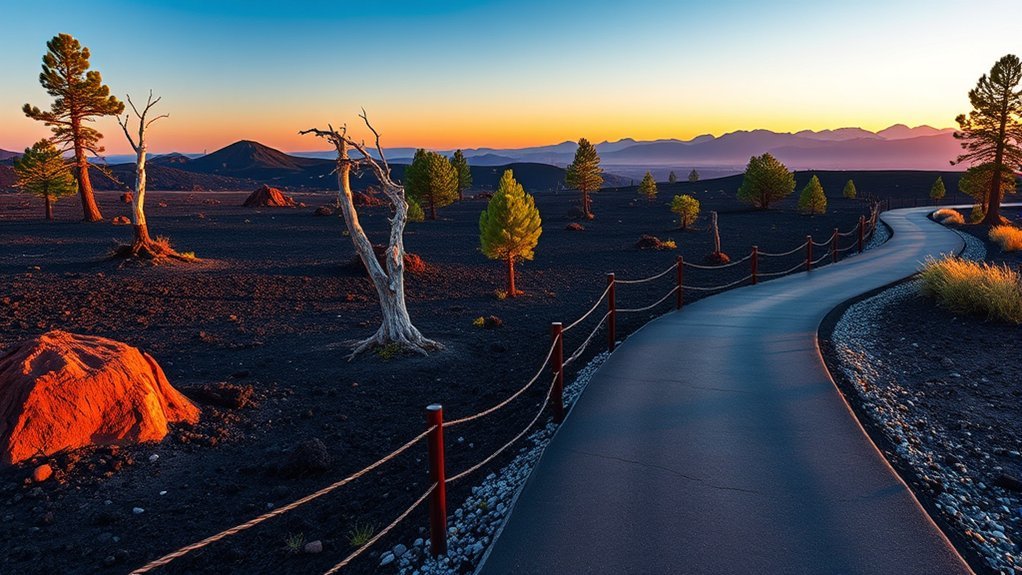
Sunset Crater has several good options if you need smoother surfaces. The visitor center, Bonito Vista Trail, and the upper section of Lava Flow Trail are accessible for wheelchairs, walkers, and strollers. Accessible restrooms are available at the visitor center and at the Lava Flow Trail parking area.
Bonito Vista Trail is the simplest accessible hike because it is paved, short, and scenic. The upper accessible section of Lava Flow Trail gives you a closer look at volcanic features, but the full 1-mile route includes unpaved cinder surfaces. Bring your own mobility aids because the park does not loan wheelchairs.
Pet note: Service animals are permitted in buildings and on trails. According to the park’s pet rules, leashed pets are allowed on the paved portion of Lava Flow Trail and on paved roads and parking areas. Pets are not permitted on A’a Trail, Bonito Vista Trail, Lenox Crater Trail, the unpaved outer Lava Flow loop, or the Lava’s Edge section inside the monument.
Note: Trail accessibility can change with snow, ice, maintenance, or debris. Contact the visitor center before your trip if surface conditions will determine whether your group can use a route safely.
Can You Hike to the Top of Sunset Crater?
No. You cannot hike to the top of Sunset Crater Volcano. The summit trail closed in 1973 because heavy foot traffic cut deep erosion trenches into the loose cinders. The old scars remain visible, and the National Park Service keeps the cone closed to protect the fragile volcanic landscape.
If you want a legal cinder-cone climb, hike Lenox Crater Trail instead. It gives you elevation, forest, and broad views without damaging Sunset Crater. For a higher route outside the monument, ask rangers about nearby U.S. Forest Service options such as O’Leary Peak and confirm current forest conditions before starting.
Sunset Crater’s closed summit is not an overlooked hiking opportunity. Keeping hikers off the cone is part of protecting a surface where decades-old erosion scars are still visible.
Trail Safety, Gear, and Seasonal Tips
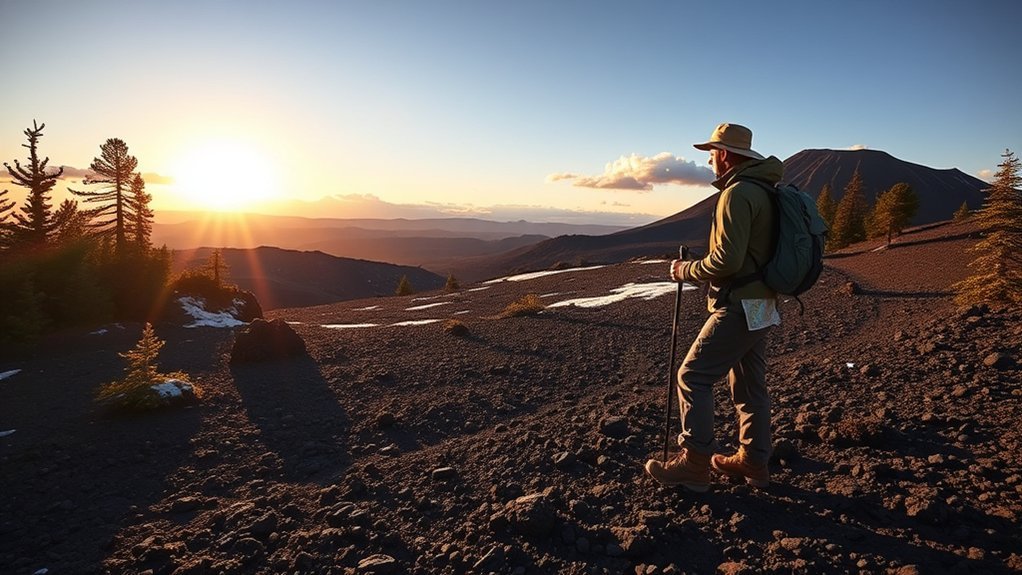
Sunset Crater’s trails look short on a map, but the volcanic surface can make your pace slower than expected. The visitor center area sits at roughly 7,000 feet above sea level, so dry air, sun, wind, and elevation may affect visitors who arrive from lower areas. Bring water, sun protection, layers, and shoes with grip.
Weather and Trail Conditions
Check the park’s weather page and current alerts before you drive out. Summer days can be warm, nights stay cool, high winds are possible, and severe thunderstorms can develop during the summer monsoon. Winter brings snow, ice, freezing temperatures, and occasional road or trail closures.
- Start early in warm weather, especially if you plan to hike Lava’s Edge Trail.
- Move away from exposed areas and follow ranger guidance when lightning threatens.
- Use paved or accessible trails when snow, ice, wind, or uncertain footing makes rough terrain unsafe.
- Avoid stepping off trail, even for photos, because lava is unstable and the landscape recovers slowly.
Essential Safety Gear
Pack for sharp rock, exposed sun, dry air, and quick weather changes. Even the easy trails can feel rough if you wear slick shoes or run low on water.
| Item | Purpose | Note |
|---|---|---|
| Grippy shoes | Traction on cinders and lava rock | Avoid smooth soles |
| Water | Hydration in dry air and at elevation | Bring extra for Lava’s Edge |
| Sun protection | Shade is limited on some trails | Use a hat, sunscreen, and sunglasses |
| Layers | Temperature and wind changes | Useful in every season |
| Saved map or NPS information | Trail and closure awareness | Download before arrival |
Seasonal Footwear Choices
For summer, wear breathable trail shoes with firm traction. For winter or shoulder-season mornings, choose warmer footwear with better grip if snow, ice, or mud is possible. Sandals and slick street shoes are poor choices because lava rock can be sharp and loose cinders can shift underfoot.
- Trail runners or light hiking shoes: best for Lava Flow, A’a, Lenox Crater, and Lava’s Edge in dry conditions.
- Water-resistant hiking shoes or boots: better after snow, rain, or freeze-thaw conditions.
- Accessible-route footwear: comfortable walking shoes work for Bonito Vista and the paved upper Lava Flow loop when surfaces are clear.
How to Plan Your Visit and Parking Options
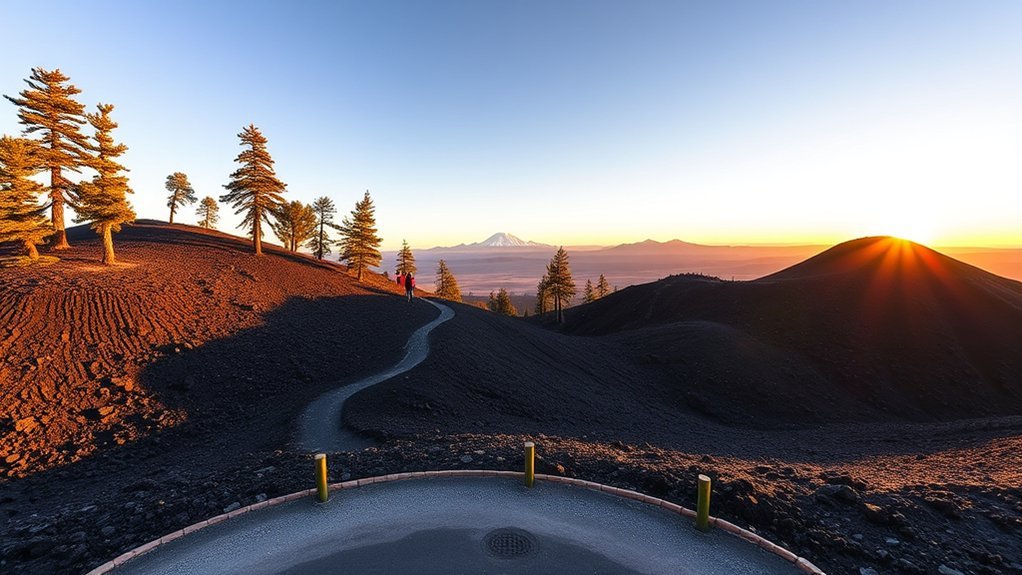
Plan your visit around your available time, the temperature, and the trail surface. If you have only 30–45 minutes, choose Bonito Vista Trail and A’a Trail as two short stops. If you have about 1–2 hours, choose Lava Flow Trail or Lenox Crater Trail. If you have half a day and want more walking, add Lava’s Edge Trail.
Directions From Flagstaff
The visitor center is at 6082 Sunset Crater Road, Flagstaff, Arizona 86004. From Flagstaff, drive north on U.S. Highway 89 for about 12 miles, turn right onto the Sunset Crater-Wupatki Loop Road, and continue about 2 miles to the visitor center. The drive usually takes about 30 minutes. The NPS warns that some GPS systems may suggest unsuitable unpaved forest roads, so follow the official directions.
There is no public transportation to or within the monument. Most visitors arrive by private vehicle and use the marked visitor-center and trailhead parking areas.
Best Time to Visit
Spring and fall often provide comfortable daytime hiking, but wind and sudden temperature changes are still possible. Summer mornings are usually easier than exposed afternoons. Winter can be quiet and beautiful, but snow and ice may cover cinders, affect traction, or close roads and trails.
- Arrive early for cooler temperatures and easier parking during busy periods.
- Use Bonito Vista Trail or the upper Lava Flow loop if you need accessible surfaces.
- Bring water and sun protection even for short stops.
- Check fire restrictions and thunderstorm risk during summer.
Parking Locations & Tips
Use the visitor center and marked trailhead parking areas as your planning anchors. Accessible restrooms are available at the visitor center and at the Lava Flow Trail parking area. Park only in designated spaces, display your pass when required, and do not stop on narrow road shoulders or block trailhead circulation.
If your group includes mobility needs, prioritize the visitor center, Bonito Vista Trail, and the Lava Flow Trail parking area. These provide the simplest access to paved or accessible trail sections.
Hours, Water, and Visitor Services
The monument’s roads and trails are generally open 24 hours a day throughout the year, although weather, snow, fire danger, or emergency conditions can cause closures. The Sunset Crater Volcano Visitor Center is normally open daily from 9:00 a.m. to 4:30 p.m. and closes on Thanksgiving, Christmas, and New Year’s Day. Verify hours before a holiday or during severe weather.
The visitor center has restrooms, exhibits, maps, a park store, and a water-bottle filling station. Fill your bottles before starting a longer trail, and do not assume drinking water is available at trailheads.
Entry Fees & Passes
Sunset Crater Volcano National Monument requires an entrance pass. The National Park Service lists a $25 private-vehicle pass, a $20 motorcycle pass, and a $15 per-person pass for visitors age 16 or older who enter without a vehicle. The private-vehicle and individual passes are valid for 1–7 days at both Sunset Crater Volcano and Wupatki National Monuments.
The Flagstaff Area National Monuments annual pass costs $45 and covers Sunset Crater Volcano, Wupatki, and Walnut Canyon for one year. A valid America the Beautiful pass is also accepted. Children age 15 or younger do not need an individual entrance pass when entering without a vehicle.
The park’s main fee page describes entrance-pass sales as cashless, with credit or debit cards accepted at the visitor center. Check the current fees and passes page before visiting because prices and payment procedures can change.
Frequently Asked Questions
How long should you spend at Sunset Crater Volcano National Monument?
Plan on 1–3 hours for most visits. In about one hour, you can stop at the visitor center and complete one or two short trails. In two to three hours, add Lava Flow Trail or Lenox Crater Trail. Lava’s Edge Trail takes about 2.5 hours by itself.
Can you hike to the top of Sunset Crater?
No. Hiking to the summit is prohibited. The old summit trail closed in 1973 because hikers caused deep erosion in the loose cinders. Lenox Crater Trail is the legal cinder-cone climbing alternative inside the monument.
Is Sunset Crater Volcano worth visiting?
Yes, especially if you want an easy-to-plan volcanic landscape near Flagstaff. The official trails show lava flows, cinder fields, ponderosa pine forest, and views of nearby volcanic peaks without requiring an all-day hike.
Is Sunset Crater the same as Meteor Crater?
No. Sunset Crater is a volcanic cinder cone, while Meteor Crater is an impact crater east of Flagstaff. At Sunset Crater, the word “crater” refers to the volcanic vent near the top of the cone.
Which Sunset Crater trail is best for wheelchairs and strollers?
Bonito Vista Trail is the simplest choice because it is paved, short, and accessible. The upper 0.25-mile section of Lava Flow Trail is also accessible, but the full loop continues over unpaved cinder terrain.
Are dogs allowed on Sunset Crater hiking trails?
Pet access is limited. Leashed pets are allowed on the paved portion of Lava Flow Trail and on paved roads and parking areas. They are not allowed on A’a, Bonito Vista, Lenox Crater, the unpaved Lava Flow loop, or the Lava’s Edge section inside the monument. Service animals follow separate rules.
Are Sunset Crater trails open year-round?
The roads and trails are generally open throughout the year, but snow, ice, fire danger, severe weather, or emergency work can cause temporary closures. Check NPS alerts and weather before leaving Flagstaff.
Do you need reservations to hike at Sunset Crater?
You normally do not need a reservation for the five self-guided trails, but you need an entrance pass. Seasonal ranger-led backcountry hikes require advance registration and have limited capacity.
Sources
- National Park Service: Hikes and Trails — official trail distances, times, difficulty ratings, surfaces, and hiking restrictions.
- National Park Service: Ranger-Led Hikes — seasonal guided backcountry access, reservations, group limits, and terrain.
- National Park Service: Accessibility — accessible trails, restrooms, mobility-aid information, and service-animal access.
- National Park Service: Pets — current pet restrictions for each trail and paved area.
- National Park Service: Weather — elevation, seasonal conditions, wind, thunderstorms, snow, and temperature changes.
- National Park Service: Fees and Passes — current entrance fees, pass validity, annual passes, and payment information.
Conclusion
The best Sunset Crater hike depends on your time and ability. Choose Bonito Vista Trail for the easiest accessible view, Lava Flow Trail for the main lava-field walk, A’a Trail for a fast stop, Lenox Crater Trail for a viewpoint climb, and Lava’s Edge Trail for the longest official route. Check NPS alerts, bring water and shoes with grip, and stay on designated trails to protect the fragile volcanic landscape.