

Like a map that leads you out the door, Prescott’s trails promise quick wins and quiet escapes you can pick by mood and time. You’ll find short, steep summits for sunrise views, lakeside loops with granite formations to scramble, and longer ridgelines that reward half‑day efforts. Bring water, sun protection, sturdy shoes, and leave room to choose—keep going to match a trail to what you want from the day.
Thumb Butte Trail
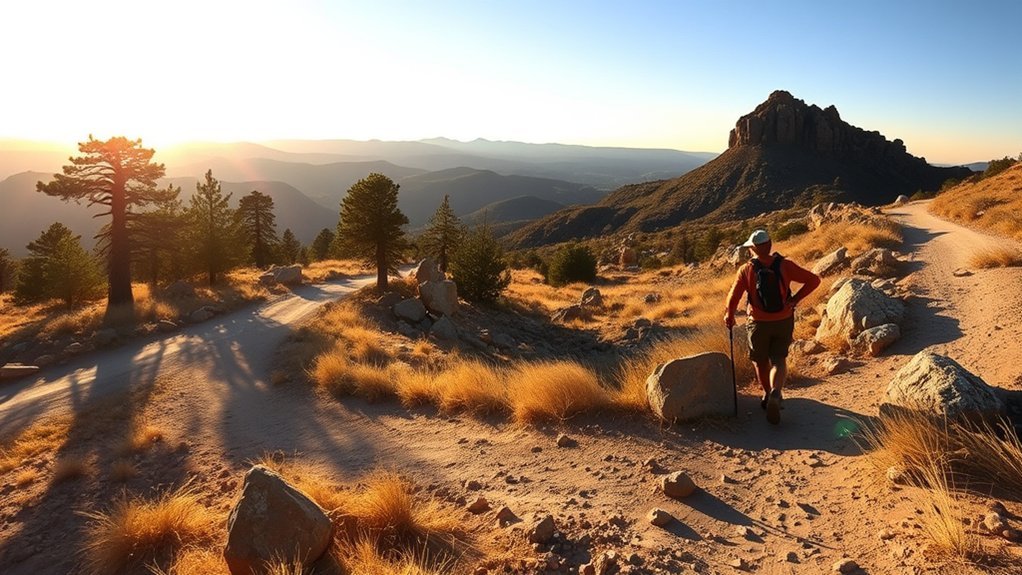
Tucked just west of downtown Prescott, Thumb Butte Trail delivers a quick, satisfying climb with panoramic views of Granite Dells and the surrounding pines — you can expect a steep but well-maintained 1.8-mile out-and-back that gains about 800 feet. You’ll start on firm dirt that switches to rocky steps; bringing sturdy shoes and trekking poles makes the ascent easier on knees. The route is well-signed and popular at sunrise, so plan early if you want solitude or later for warmer temps. Hydrate — a liter per hour in warm months — and layer; temperatures can shift between base and summit. Wildlife sightings are common: watch for jays, small mammals, and lizards, but keep distance. There are no water sources, restrooms, or trash services on the trail, so pack out what you bring. At the top, take a few minutes to enjoy 360-degree views and scout nearby trailheads for longer options if you want to extend your day.
Granite Mountain Trail
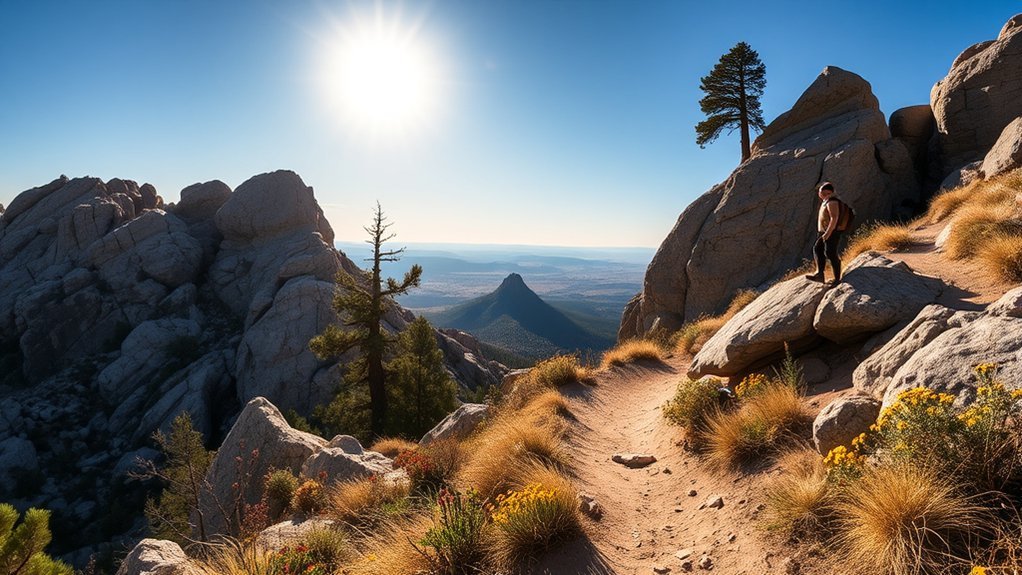
When you tackle Granite Mountain Trail you’ll find a well-marked route that gains steady elevation over rocky terrain. Expect a moderately strenuous climb with significant elevation change, so bring sturdy shoes and plenty of water. The summit rewards you with expansive Prescott Valley and Mingus Mountain views, plus interesting granite outcrops along the way.
Trail Overview
Although Granite Mountain rises sharply from the Prescott landscape, the trail itself offers a straightforward route that rewards steady effort with panoramic views. You’ll follow a clear, well-marked path that switches between packed dirt, rocky sections, and occasional talus fields; navigation is simple if you stay on the main track. Expect sparse shade early on, then juniper and manzanita as you gain exposure. There are several short, steeper pitches with handholds and cairns guiding the way; they’re manageable if you watch your footing. Bring layered clothing, sun protection, and plenty of water, and use trekking poles for balance on uneven stretches. Plan time at the summit to take in 360-degree views before a deliberate, steady descent.
Difficulty & Elevation
Because the trail gains about 1,200 feet over roughly 3.5 miles round-trip, you’ll feel a steady, sustained climb that tests endurance more than technical skill. The footing is mostly packed dirt with occasional loose rock; you’ll want sturdy shoes and a steady pace. Short breaks let your breathing recover and your legs reset. Hydrate early and often—heat and sun add perceived difficulty. If you hike with a partner, set a comfortable pace and watch for signs of fatigue. Altitude around Prescott isn’t extreme, but the sustained gain will make the last third feel harder. Plan for 2–3 hours depending on fitness. Below is a small emotional snapshot to motivate and ground you.
| Feel | Reality |
|---|---|
| Determined | 1,200 ft gain |
| Tired | 3.5 mi RT |
| Proud | Reached summit |
| Safe | Bring water |
Scenic Highlights
After you’ve handled the climb and caught your breath, Granite Mountain rewards you with striking panoramas that make the effort worth it. You’ll see rugged granite faces, sweeping Prescott Valley views, and layered ridgelines that shift color with the sun. Bring a camera but also pause to note wind-sculpted boulders and the distant Thumb Butte silhouette. Light changes quickly, so plan your timing for sunrise or late afternoon.
- Summit vista: 360° views of valleys and peaks.
- Rock formations: pockets, exfoliation sheets, photo ops.
- Vegetation contrast: juniper, pinyon, and sparse grasses.
- Wildlife glimpses: hawks, lizards, occasional mule deer.
Pack water, dress in layers, and allow time to sit and absorb the vistas.
Watson Lake Loop
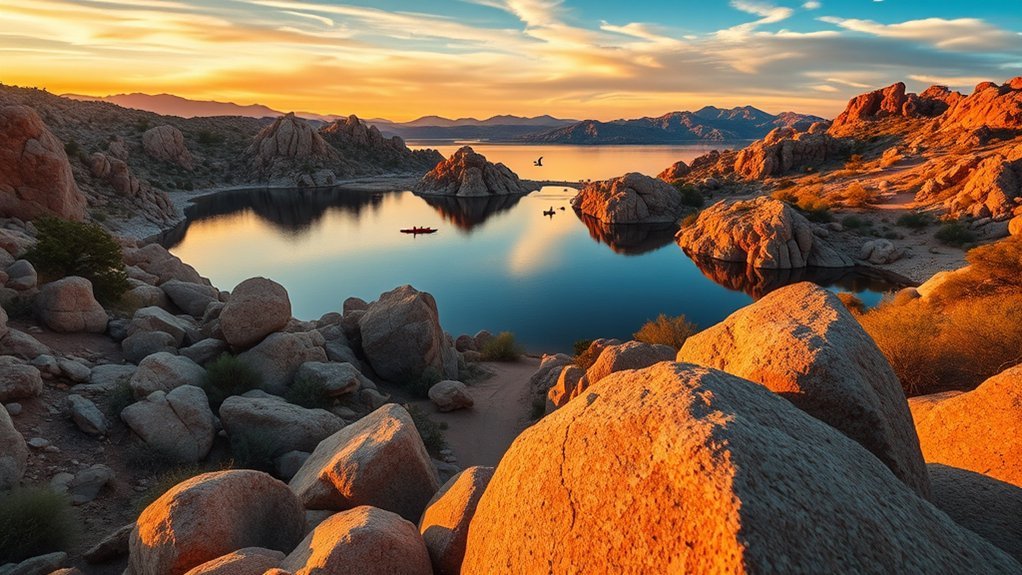
When you take the Watson Lake Loop you’ll walk among dramatic granite formations that make great spots for photos and short boulder-scrambles. The trail follows the lake shore for long stretches, so you’ll get steady water views and easy access to quiet coves. Bring sturdy shoes and a light snack—the terrain is varied but the route is very hikeable.
Scenic Granite Formations
Explore Watson Lake Loop to see Prescott’s iconic granite boulders up close—towering, weather-sculpted formations ring the clear blue water and create short, accessible trails and scramble spots that suit hikers of most abilities. You’ll navigate rounded domes, tight chutes, and sun-polished slabs that invite hands-on exploration without technical gear. Watch for lichens, honeycombed surfaces, and natural alcoves that make great photo frames. Move deliberately on uneven rock, choose footwear with good grip, and use your hands on steeper scrambles. Early morning or late afternoon light sharpens texture and reduces heat. Consider these quick tips:
- Pick stable lines on domes; test holds before trusting them.
- Carry water and sun protection; shade is limited.
- Leave no trace; pack out trash.
- Respect wildlife and nesting birds.
Lake Shore Trailways
Watson Lake Loop hugs the shoreline with easy-to-follow paths and short spur trails that let you circle the water, pause at granite overlooks, or scramble down to quiet coves for photos and rest. You’ll cover roughly two miles on packed dirt and rock, with several low, uneven sections—sturdy shoes help. The route’s mixed exposure means you’ll want sun protection and a light layer for breezy mornings. Bring water; there’s no reliable refill on the loop. Dogs are welcome on leash, and early mornings or late afternoons give the best light and fewer crowds. You can combine the loop with adjacent trails to lengthen your outing, or keep it short for a scenic workout. Expect clear route markers and excellent photo opportunities.
Granite Dells Overlook
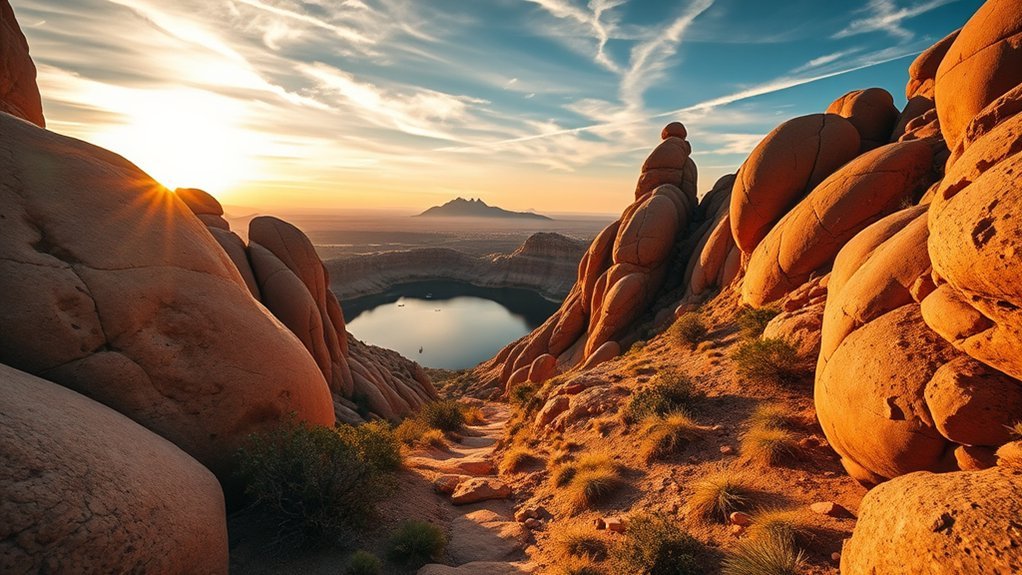
Granite Dells Overlook gives you a sweeping introduction to Prescott’s signature granite formations, where sculpted boulders and calm water pockets create a dramatic, photo-ready landscape just minutes from downtown. You’ll find short, well-marked paths and viewpoints that require minimal effort but deliver big payoff — ideal if you want striking photos, a quick nature fix, or a gentle stretch before a longer hike.
- Easy access: paved pull-offs and short walks from the parking area.
- Best light: sunrise and late afternoon highlight textures and colors.
- Wildlife & plant life: watch for lizards, ducks, and desert-adapted wildflowers.
- Safety tips: bring water, wear sturdy shoes on uneven rock, and use sun protection.
You can spend 30–90 minutes here, combining viewpoints and light scrambling between boulders. The overlook’s proximity to town makes it perfect for a flexible outing — plan for parking during peak times and respect posted private-property boundaries.
Castle Rock Loop
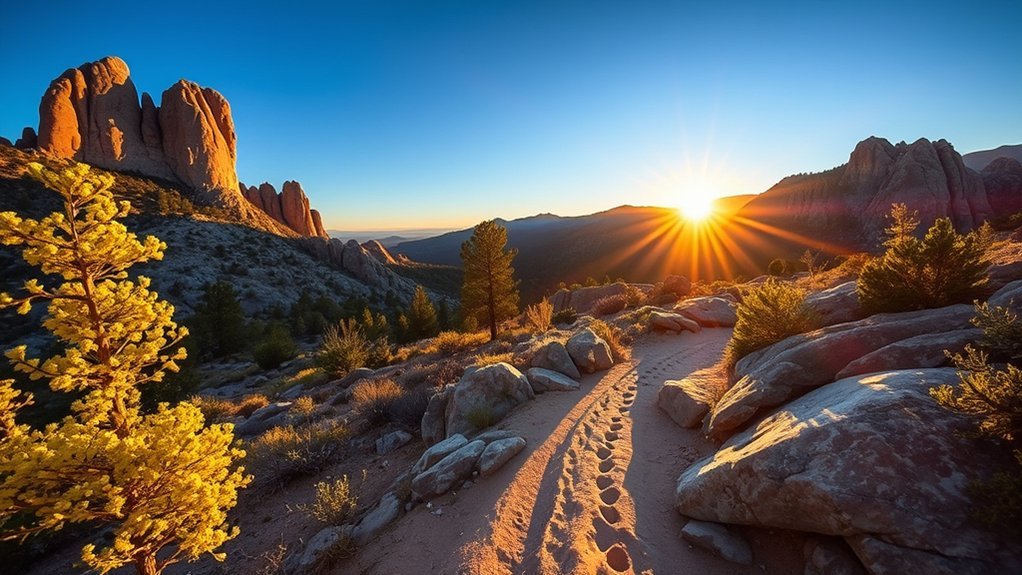
You’ll find the Castle Rock Loop is a moderate 3–4 mile circuit that tests your legs with rocky sections and short climbs. Expect sweeping granite formations and layered volcanic outcrops that make for excellent photo stops and steady viewpoints. Park at the small lot off Castle Rock Road or use the nearby trailhead on Forest Road for easy access to the loop.
Trail Length & Difficulty
Because the Castle Rock Loop mixes steep climbs with short, runnable stretches, you should expect a moderately challenging 4.5–5 mile circuit that typically takes 2 to 3 hours depending on pace and breaks. You’ll cover varied footing—packed dirt, loose gravel, and occasional rock steps—so plan accordingly. Use this quick checklist to gauge readiness:
- Pace: 2–3 hours for average hikers; faster if you push the runnable sections.
- Elevation gain: Moderate; expect repeated short climbs that raise heart rate.
- Technicality: Low-to-moderate; footing can be uneven but doesn’t require scrambling.
- Breaks: Multiple short rests recommended; one longer stop if you want snacks or photos.
Bring supportive shoes, poles if you use them, and water sized to your exertion level.
Scenic Views & Geology
After you’ve managed the climbs and footing, shift your attention outward—the Castle Rock Loop rewards effort with sweeping vistas and interesting geology that explain why Prescott’s landscape looks the way it does. You’ll see granite knobs, weathered basalt, and layered sedimentary exposures that tell a story of uplift, volcanism, and erosion. Stop at overlooks to note jointing patterns and exfoliation domes; they help you read slope stability and trail choices. Light changes fast—late afternoon highlights texture and casts dramatic shadows. Bring a hand lens and guide app if you’re curious, and stay on durable surfaces to protect fragile features.
| Feature | What to look for |
|---|---|
| Granite | Exfoliation sheets |
| Basalt | Columnar joints |
| Sediment | Layering & fossils |
| Soil crusts | Biological soil stability |
Parking & Trailheads
At the small pullout where the Castle Rock Loop starts, park carefully on the designated gravel area and lock your vehicle—spaces are limited, so carpooling or arriving early helps. From the pullout, the signed trailhead is obvious; you’ll pass a kiosk with map and rules, so take a quick look and note water sources and turnaround times. Trail junctions are well-marked but carry a map or GPS.
- Arrive early to snag a spot and avoid road congestion.
- Use the kiosk info to plan water, shade breaks, and timing.
- If trailhead lots are full, park legally on the shoulder only where allowed.
- Leave no trace: pack out trash, secure gear, and close gates.
This keeps your visit smooth and respectful.
Mingus Mountain Ridgeline
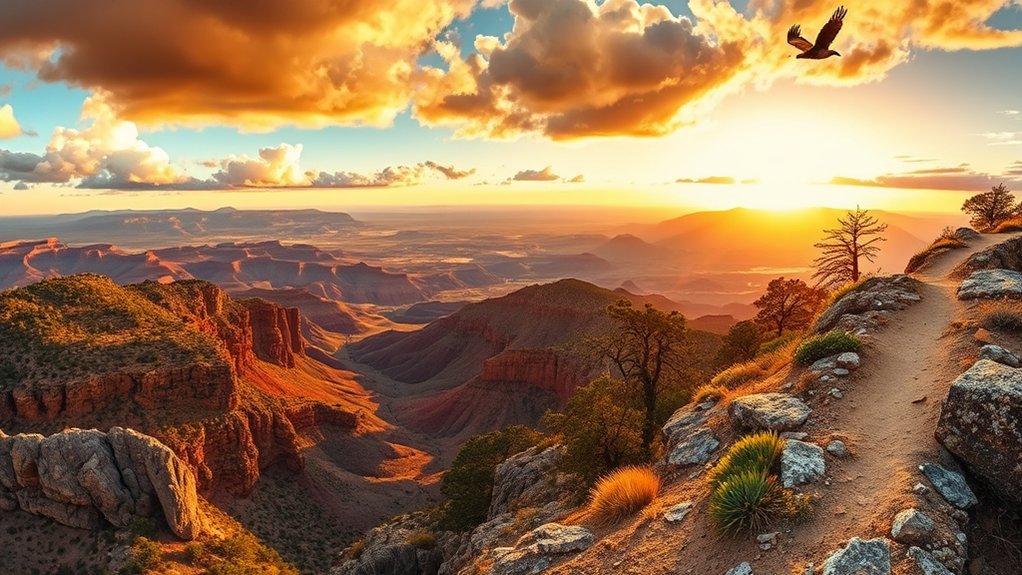
If you want a hike that rewards you with sweeping views and diverse terrain, the Mingus Mountain Ridgeline delivers both: rocky outcrops, dense pinyon-juniper stands, and open meadows unfold as the trail follows the crest. You’ll start with a steady climb that tests your legs but keeps gradients reasonable for fit hikers. Stay on the marked ridge route to avoid fragile vegetation and confusing side tracks. Expect variable footing—loose scree near rocks and firmer soil through meadows—so wear sturdy shoes with good traction. Bring layers: wind can be brisk along the crest even when valley temperatures are mild. Water is scarce; carry at least two liters and a filter if you plan to extend your route. Wildlife sightings are common—mule deer and raptors—so move quietly and keep distance. Plan for about half a day for a satisfying out-and-back; check weather and daylight, and let someone know your route and estimated return time.
Sycamore Canyon Trail
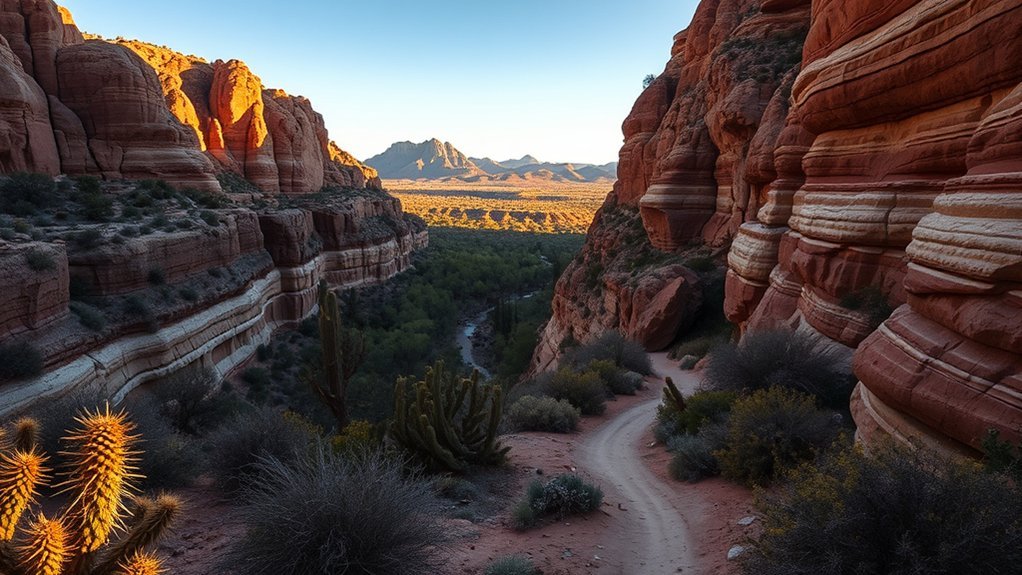
One of Prescott’s most invigorating outings, the Sycamore Canyon Trail winds through a shaded riparian corridor that feels worlds away from Mingus Mountain’s exposed ridgeline. You’ll follow a cool creek, step over roots and rocks, and spot cottonwoods, sycamores, and birdlife that make the hike feel restorative. Trail footing is mixed — compact dirt, some slick rock after rain — so you’ll want sturdy shoes and trekking poles if balance’s a concern.
- Distance: about 3–6 miles round trip depending on turnarounds.
- Difficulty: easy to moderate; short climbs, gentle grade.
- Water: bring your own; creek water needs filtering.
- Best time: spring and fall for comfortable temps and wildflowers.
You’ll find secluded spots for lunch and photography; keep dogs leashed and pack out waste. Navigation is straightforward but cellular service can drop, so download the trail map or carry a paper copy. Allow extra time to pause and enjoy the canyon’s quiet.
Willow Lake Path
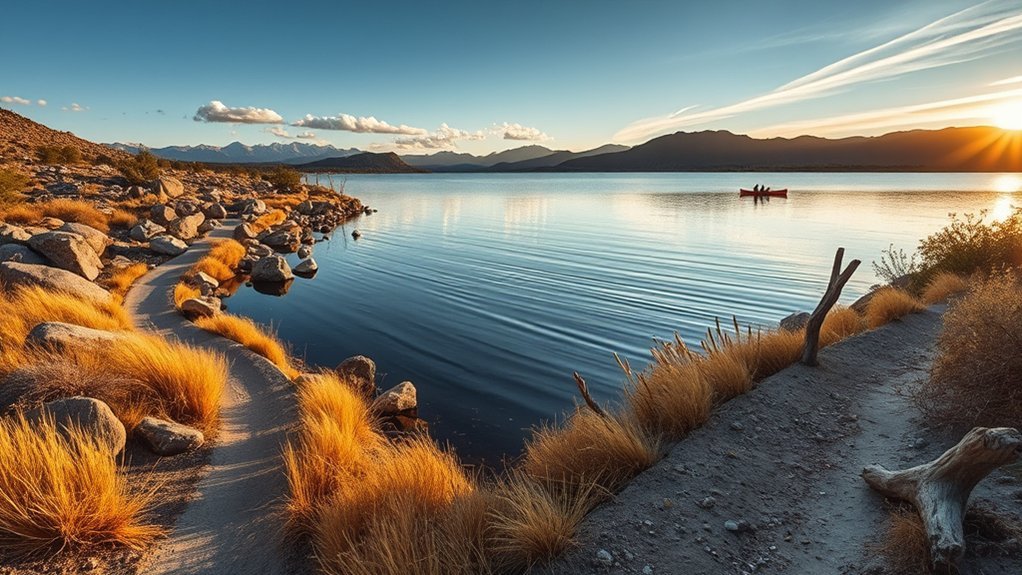
Strolling the Willow Lake Path gives you an easy, scenic loop that’s perfect for a morning walk, run, or gentle bike ride. You’ll circle the reservoir on mostly packed gravel and paved segments, with well-marked signage and benches spaced for rest or birdwatching. The grade is mild, so you can focus on views of the lake, cottonwoods, and occasional herons rather than footing. There are restroom facilities and a small parking area near the trailhead; arrive early on busy weekends to secure a spot. Dogs on leash are allowed, and trash receptacles help keep the route clean. If you want a quicker outing, cut across the shorter northern path; for a longer effort, combine loops and side trails toward the dam. Bring water, wear sunscreen, and expect some wind off the water in afternoon hours. The path’s accessibility and predictable surface make it a dependable option for mixed-ability groups and steady conditioning workouts.
Watson Woods Riparian Preserve Trail
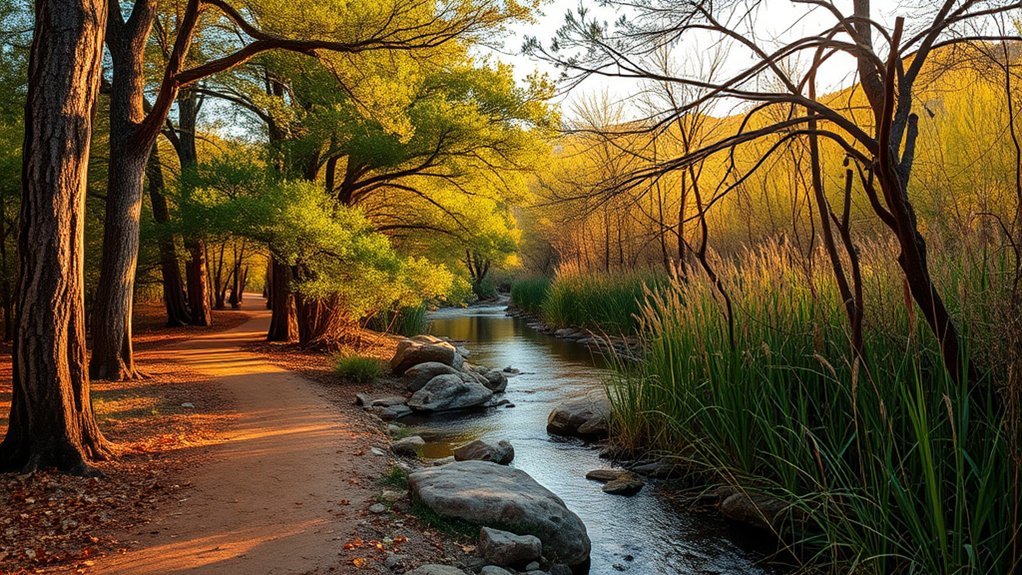
Watson Woods Riparian Preserve Trail winds you through a rare, shaded corridor of cottonwoods and sycamores along Granite Creek, offering cool relief and abundant birdlife just minutes from downtown Prescott. You’ll follow a flat, well-maintained trail that’s ideal for an easy walk, stroller, or relaxed birding session. Expect interpretive signs, benches, and multiple creek-side viewpoints that make stops rewarding.
- Trail length: about 0.9–1.5 miles round-trip depending on route.
- Difficulty: easy — packed dirt and boardwalk sections.
- Best time: early morning or late afternoon for birds and cooler temps.
- Facilities: parking, restrooms nearby, informational kiosks.
You can bring binoculars and a small field guide to ID warblers, kingfishers, and raptors. Stay on marked paths to protect native vegetation and nesting sites. Dogs are allowed on leash; pack out waste. If you want a short, restorative nature break without driving far, Watson Woods gives you shade, wildlife, and accessible trails in a compact preserve.
Peavine Trail
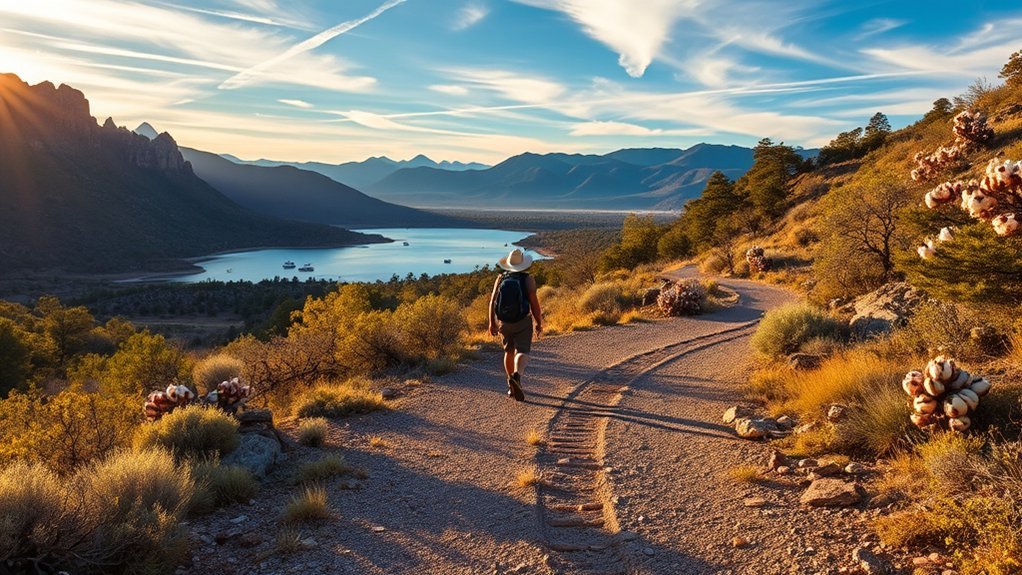
Following the old railroad grade, Peavine Trail takes you on a mostly shaded, easy-to-moderate trek that links Prescott’s neighborhoods with broader desert and juniper country; it’s popular with hikers, runners, and mountain bikers who want a steady, well-graded route. You’ll find multiple trailheads—Peavine Trailhead on Iron Springs Road is common—and the route is well-signed with gentle grades, making it a good choice for steady aerobic workouts or casual outings. Expect varied surfaces: packed dirt, gravel, occasional rocky sections; good shoes handle it. Water’s scarce past the neighborhood portions, so carry enough, especially on hot days. Watch for wildlife—lizards, rabbits, and birds—and be prepared for exposed stretches where sun protection matters. The trail connects to side routes if you want longer mileage or loop options; check a map before you go. Parking can fill on weekends, so arrive early. Leave no trace and share the corridor courteously with cyclists and runners.
Frequently Asked Questions
Are Dogs Allowed on All Prescott Trails Mentioned?
No — you won’t find dogs allowed on every Prescott trail mentioned; many welcome leashed dogs, but some preserve-sensitive or wilderness areas prohibit them. Check specific trail rules, trailhead signs, or Prescott National Forest and park websites before heading out.
What Are Typical Winter Conditions for These Hikes?
You’ll encounter cold, snowy, and icy trails with occasional muddy sections; higher elevations get deeper snow and wind, so pack layers, traction devices, waterproof boots, trekking poles, and check forecasts and trail reports before heading out.
Are Any of These Trails Wheelchair or Stroller Accessible?
Some sections are accessible, but most trails aren’t fully wheelchair or stroller friendly; you’ll find short paved or hard-packed segments suitable for sturdy strollers or mobility devices, while rocky, steep paths remain challenging or impassable.
Where Are the Nearest Public Restrooms or Water Refill Stations?
You’ll find restrooms and refill stations at trailheads like Watson, Fain, and Granite Mountain, plus Watson Lake Park; they’re lifesavers louder than a thunderclap. Check park maps, arrive early, and carry a backup bottle.
Do Any Trails Require Permits or Fees to Hike?
Some trails require parking fees or day-use passes, and backcountry camping may need permits; you’ll pay for state parks, trailhead lots, or managed recreation areas—check specific trailhead signs or the managing agency’s website before you go.
Conclusion
Think of Prescott’s trails as a well-worn map in your palm: each path is a different conversation. You’ll climb Thumb Butte for quick perspective, test grit on Granite Mountain, drift around Watson Lake, and wander shaded riparian halls. Pack water, sturdy shoes, sun protection, and leave no trace. As you choose your route, let the landscape answer—practical, honest, and ready to teach—so every hike becomes a small, clear lesson you can carry home.