

Like stepping into a Western painting, you’ll find red rock spires and wide desert skies that beg to be explored—yet there’s more here than postcard views. You’ll want routes that match your energy, from quick scrambles to full-day climbs, with shady creek walks when the sun gets fierce. I’ll point out the trails, what to expect, and smart tips so you can pick the best hike for your day.
Cathedral Rock Trail
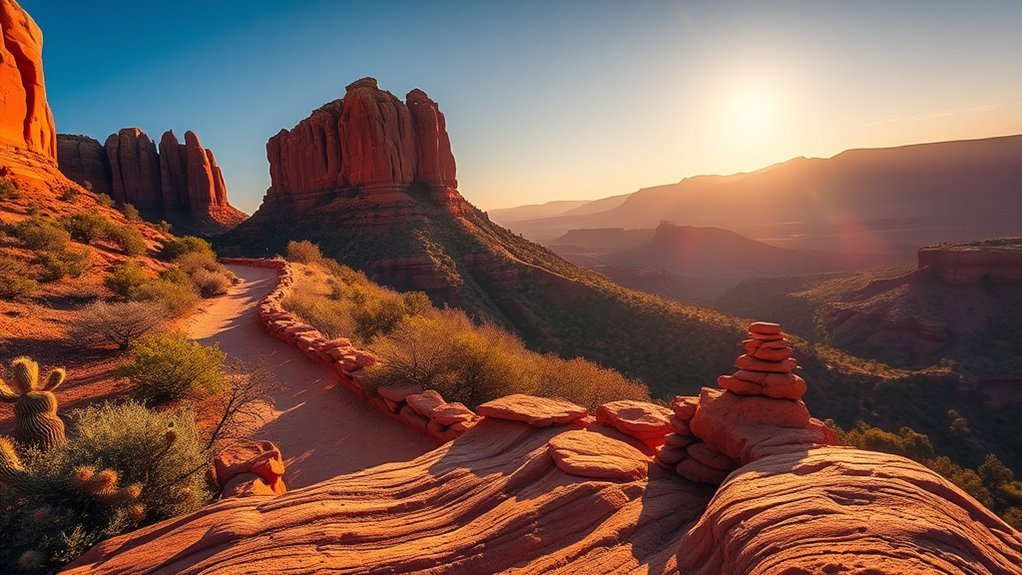
A short but steep climb, Cathedral Rock Trail delivers dramatic red-rock views and a rewarding summit in under an hour if you move steadily; you’ll scramble up sandstone steps and use short iron rungs as you gain elevation, so wear good shoes and be ready for a workout. You’ll leave the parking area on a well-marked path that tightens into a series of angled slabs and narrow ledges, so keep a firm footing and pace yourself. The exposure feels thrilling but manageable; hands-on scrambling makes the ascent engaging. Bring water, sun protection, and a light jacket for wind at the top. Once you reach the saddle, you’ll get expansive views of the surrounding canyons and the Verde Valley below — a great spot for photos and a short rest. Descend carefully, watching for loose rock and other hikers. The whole route rewards effort with compact, unforgettable scenery that’s quintessential Sedona.
Bell Rock and Courthouse Butte Loop
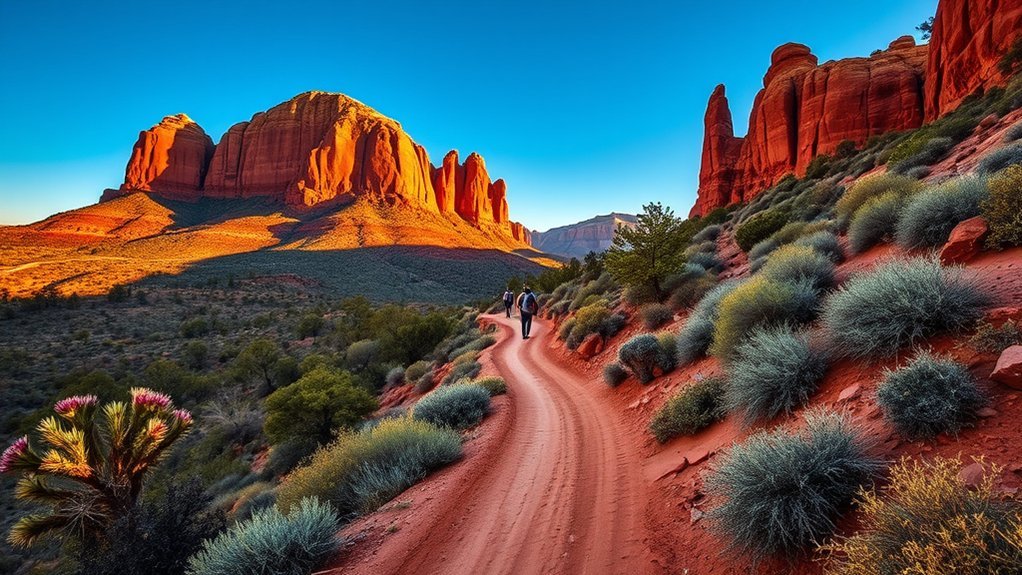
You’ll start on a well-marked loop that circles both Bell Rock and Courthouse Butte, so it’s easy to follow the route and gauge your distance. Expect varied terrain—packed dirt, slickrock steps, and a few short, steady climbs—making the hike moderate but accessible for most fit walkers. Bring your camera: sweeping red-rock panoramas, close-up spires, and viewpoints back toward Sedona reward every turn.
Trail Overview and Route
Though the loop is short, it delivers big views—Bell Rock’s sloping red face and Courthouse Butte’s blocky mass rise close enough to inspect, with a well-marked trail that keeps navigation simple. You’ll start at the parking area, follow the clear signed path that skirts Bell Rock, then join the loop around Courthouse Butte. The route mixes singletrack and wider dirt paths, so you’ll spot junctions and cairns guiding you.
- Begin clockwise for smoother ascents and photo ops of Bell Rock’s flank.
- Pause at the saddle between formations to take in the panorama and hydrate.
- Finish along the western side to catch late-day light on the buttes.
You’ll enjoy consistent views and easy route-finding throughout.
Difficulty and Terrain
Because the loop stays relatively short and well-marked, you won’t face technical scrambling, but expect uneven sandstone, short rocky steps, and some loose gravel underfoot that require steady footing. The grade is mostly moderate with a few steeper pitches where the trail skirts ledges; you’ll feel your quads on those inclines but won’t need climbing gear. Trails narrow in places, so single-file passage is common; watch your step and give way on tight sections. After rain, slick rock patches demand careful foot placement and slower pacing. Sturdy shoes with good tread and ankle support make the hike far more comfortable. Bring trekking poles if you prefer extra balance. Overall, the terrain rewards steady attention without being overly punishing.
Scenic Highlights and Views
After keeping your footing through the uneven sandstone and occasional narrow ledges, the reward is a series of postcard-ready views that make the effort worth it. You’ll circle Bell Rock’s warm red face, watch light carve shadow across Courthouse Butte, and catch the valley’s layered mesas fading into blue. The loop keeps surprises: sudden amphitheaters, spiny ocotillo silhouettes, and broad desert panoramas perfect for a pause.
- Sunrise glow — colors intensify on the buttes; aim to arrive early.
- Midday clarity — distant formations sharpen; bring sun protection and water.
- Golden hour — long shadows and rich hues make photos sing.
You’ll want a camera, steady footing, and a moment to just breathe it in.
Devil’s Bridge Trail
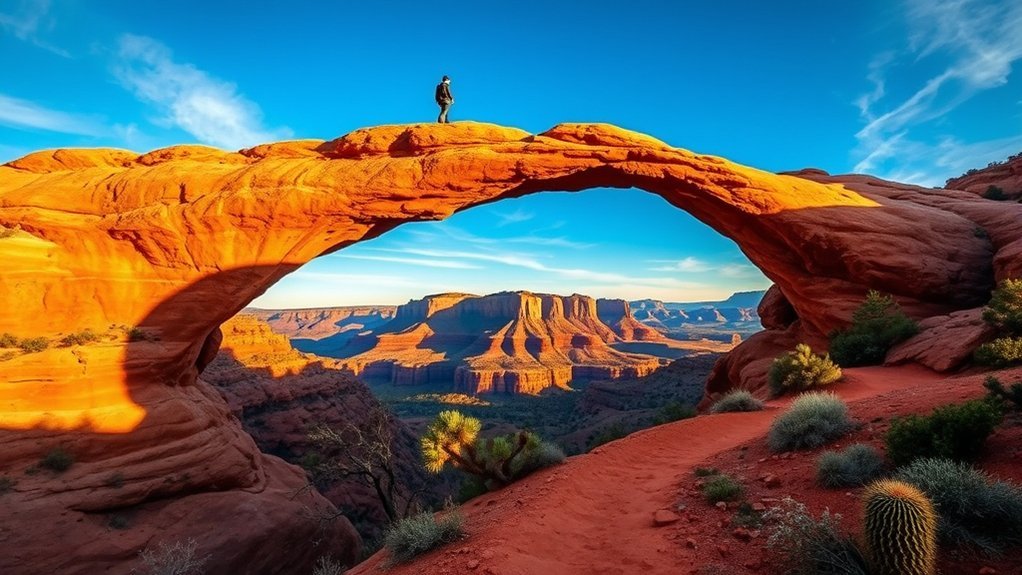
When you hike the Devil’s Bridge Trail, you’re treated to one of Sedona’s most iconic sandstone arches that’s both photogenic and surprisingly accessible for most moderately fit visitors. The path climbs through red-rock slickrock and piñon-juniper, offering steady but manageable grades. You’ll follow a well-marked route—often starting from a short dirt road or a longer trailhead—so plan parking or shuttle logistics in advance to avoid crowds. Bring sturdy shoes; sections get sandy and uneven. Morning or late afternoon light makes the arch glow, and you’ll want a wide-angle for photos and a steady footing when you step onto the bridge itself. Expect a social atmosphere near the span; people pause, pose, and watch the valley below. Water, sun protection, and a light jacket for windy days keep you comfortable. If you move at a relaxed pace and respect other hikers, the reward—standing on that natural bridge with sweeping canyon views—is unforgettable.
West Fork Oak Creek Trail
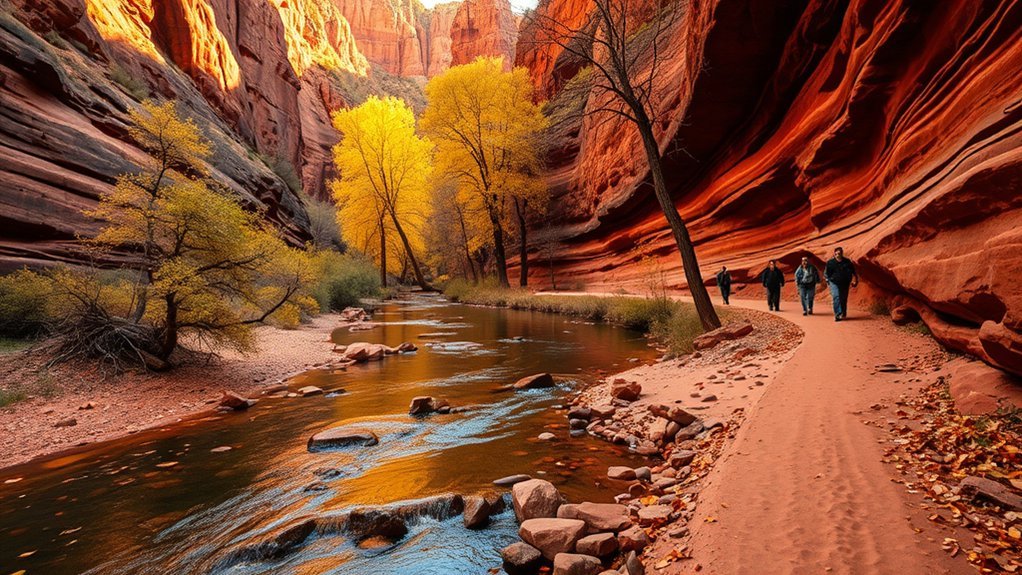
You’ll find West Fork Oak Creek Trail is a shaded, winding canyon trail that’s perfect for a relaxed, scenic hike. Expect towering red-rock walls, cool creek crossings, and abundant fall color that make for great photo stops. Bring sturdy shoes, water, and a permit or parking pass during peak season to stay safe and comfortable.
Trail Overview
Although the West Fork Oak Creek Trail winds gently through a narrow, red-rock canyon, it feels like stepping into a different world — cool shade, dripping creek crossings, and towering sycamores framing every view. You’ll follow a mostly flat, well-marked path that’s ideal for steady walking and easy navigation. Expect multiple creek fords — waterproof shoes help — and variable footing from packed dirt to smooth stones. The trail’s length is flexible, so you can turn around whenever you want. Bring water, sun protection for open stretches, and a light jacket for cooler canyon pockets. Practical points to remember:
- Distance: pick a turnaround to match your energy and daylight.
- Terrain: mud, rocks, shallow water crossings.
- Facilities: limited parking and restrooms at trailhead.
Scenic Highlights
As sunlight filters down through the towering sycamores, you’ll find the West Fork’s scenery changes with every bend, from narrow red-rock walls dripping with moss to wide, reflective pools that mirror the canyon sky. You’ll notice dappled light on the creek, fallen logs forming natural bridges, and ferns clinging to moist ledges. Colors shift from deep rust to soft green, and sandstone striations create miniature cliffs and alcoves begging to be explored. Birdsong and the creek’s whisper punctuate the quiet; occasional shafts of light spotlight wildflowers or a sunlit pool perfect for photos. The trail rewards steady attention: each turn offers a new composition of rock, water, and vegetation that keeps your senses engaged.
Practical Tips
After soaking in the canyon’s light and textures, gear up for a safe, comfortable hike along West Fork Oak Creek. You’ll want sturdy, quick-drying shoes for creek crossings and a daypack with layers—the shade can be cool, sun-exposed stretches warm. Carry at least 2 liters of water, a map or downloaded trail route, and snacks to keep energy up. Expect muddy sections after rain; trekking poles help with balance. Leave no trace: pack out trash and stay on the creek corridor to protect riparian plants. Arrive early in high season to claim parking and enjoy quieter pools. Finally, check flash flood forecasts—the narrow canyon funnels water quickly, so turn back if conditions look risky.
- Footwear: waterproof or quick-dry
- Essentials: water, map, snacks
- Timing: early start, monitor weather
Soldier Pass Trail (including Devil’s Kitchen and Seven Sacred Pools)
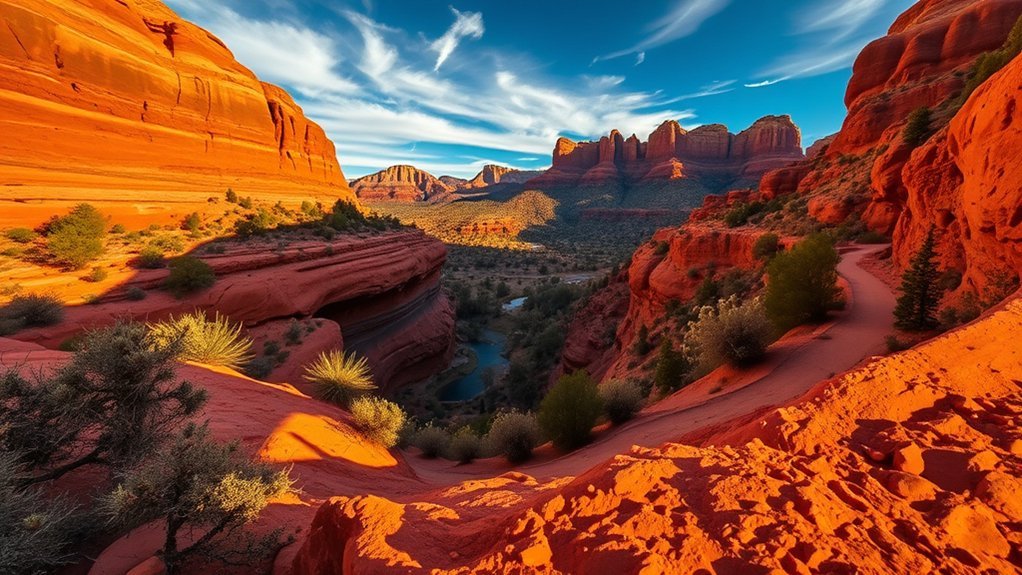
If you want a compact hike that delivers red-rock views, a mysterious sinkhole, and a series of natural pools, Soldier Pass is your go-to trail. You’ll start on a well-marked path that climbs modestly through slickrock and juniper, opening onto sweeping vistas of red mesas and spires. Keep an eye out for the sign and scramble down to Devil’s Kitchen, a dramatic sinkhole with layered sandstone walls that feels otherworldly. Beyond that, follow the wash to the Seven Sacred Pools—shallow, terraced basins that collect water after rains and sparkle against the red stone. The route is roughly 4–5 miles round-trip depending on your turns, with some loose rock and short steep sections; wear sturdy shoes and bring water. Morning or late afternoon light makes the colors pop and crowds thin. You can combine this with nearby trails if you’re ambitious, but Soldier Pass alone rewards you with variety, geology, and approachable adventure.
Fay Canyon Trail

You’re in for a scenic, family-friendly walk along Fay Canyon Trail, where a gentle, well-marked path winds through red-rock walls and easy boulder sections. To get there, head west of Sedona toward Boynton Pass Road and park at the small Fay Canyon lot—trailhead signs are clear but spaces fill fast on weekends. Bring water, sun protection, sturdy shoes for short rock scrambles, and be mindful of flash floods and loose footing near the canyon narrows.
Trail Description and Terrain
While the Fay Canyon Trail is short and accessible, it delivers striking red-rock walls, a narrow wash, and surprising pockets of shade that make the hike feel more adventurous than the mileage suggests. You’ll follow a gentle dirt path that winds under juniper and cottonwood, with sandy sections and compacted rock underfoot. The canyon narrows in places, forcing you to pick your footing and enjoy close-up views of sculpted sandstone. Expect mild elevation changes, easy scrambling near the upper alcove, and occasional loose stones after rain. Pack good shoes and water; the terrain rewards careful steps with dramatic photo ops and quiet rock alcoves.
- Trail surface: sandy wash, packed dirt, occasional rock
- Grade: mostly flat to gentle inclines
- Technical moves: brief, easy scrambles
How to Get There
Because Fay Canyon sits just west of Sedona’s main loop, getting there is straightforward and quick: head south from Highway 89A onto Dry Creek Road, follow it about 2.5 miles, then turn right onto Schnebly Hill Road and continue roughly 1.5 miles to the small parking area and trailhead on your left. From the lot, you’ll spot the trail cutting into red-rock walls; a clear, signed path leads you in. Parking fills fast on weekends, so arrive early or plan for nearby pullouts. A short dirt spur brings you to the wash where the canyon trail begins. You’ll appreciate the easy-to-follow route markers and the sense of stepping immediately into classic Sedona scenery as you set off.
Tips and Safety Considerations
If you plan to hike Fay Canyon, come prepared for heat, sun and quick weather shifts—bring plenty of water (at least 1 liter per hour in hot months), sun protection, and layered clothing for sudden wind or cool pockets in the shade. You’ll want sturdy shoes for rocky sections and a small first-aid kit for blisters or scrapes. Stay on the trail to protect fragile desert plants and avoid getting lost in side gullies. Check the forecast and start early to beat midday heat; cell service can be spotty, so tell someone your plans.
- Bring 2–3 liters, hat, sunscreen.
- Wear boots, carry map/GPS.
- Respect wildlife, pack out trash.
Boynton Canyon Trail
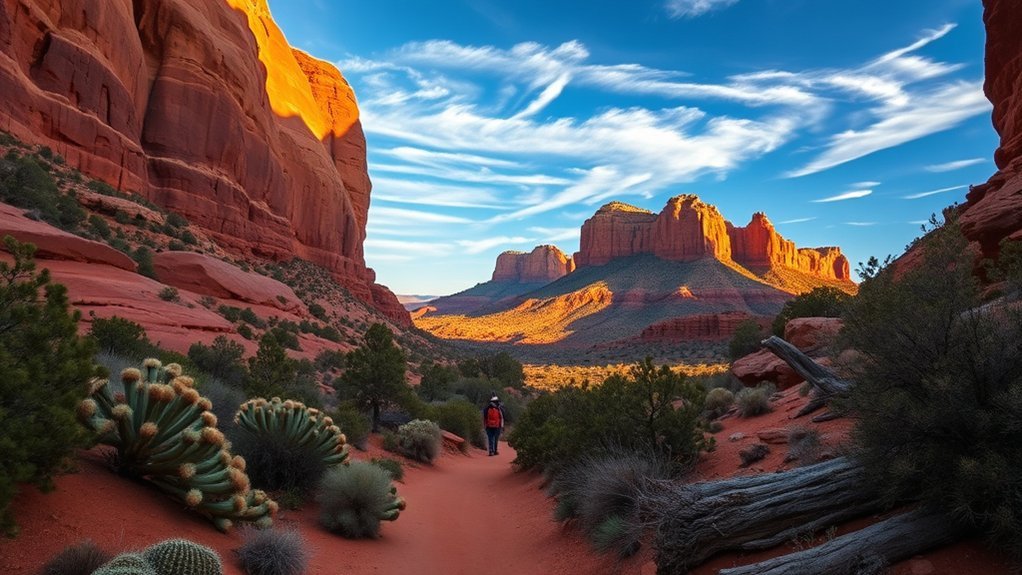
Boynton Canyon Trail delivers a mix of red-rock scenery, shady riparian sections, and wide canyon vistas that make it one of Sedona’s most rewarding hikes. You’ll start on a gentle path that climbs toward a dramatic box canyon, passing juniper, piñon, and occasional trickles of water. The trail feels varied—sunny ridgelines give way to cooling shade—so bring layers, sun protection, and water. Keep an eye out for colorful rock formations and panoramic overlooks that invite short rests and photos.
| Segment | Distance | What to Expect |
|---|---|---|
| Trailhead to wash | 0.5 mi | Open views, easy footing |
| Wash to canyon narrows | 1.5 mi | Shade, riparian plants |
| Canyon narrows | 0.7 mi | Dramatic walls, cool air |
| Return | 1.7 mi | Rolling terrain back to trailhead |
Follow cairns on steeper sections, respect signage, and plan for 2–3 hours round trip. You’ll leave feeling recharged and inspired by Sedona’s iconic red rocks.
Schnebly Hill Road Overlook and Pink Jeep Trail Hike
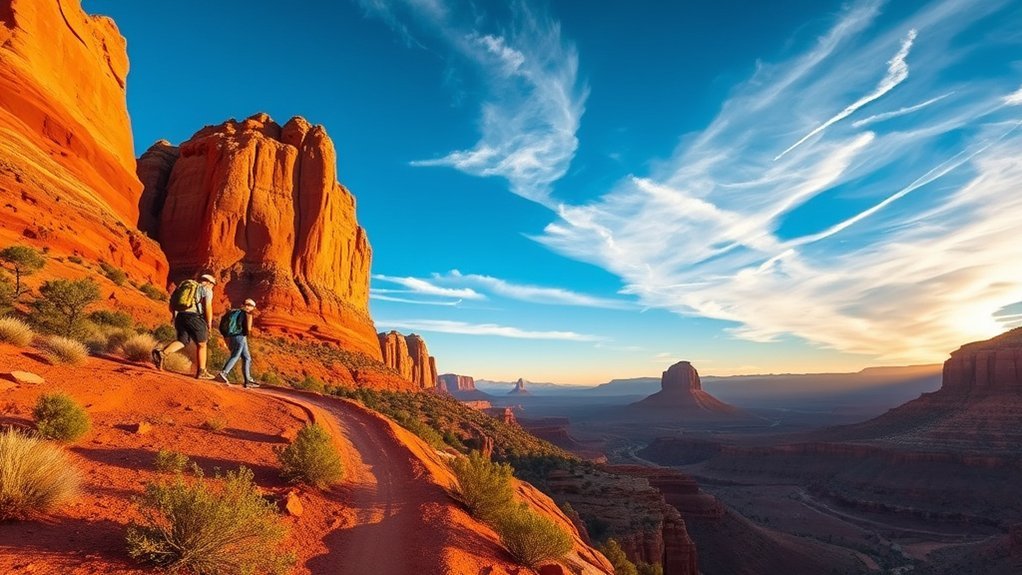
After soaking in Boynton Canyon’s cool shade, head east toward Schnebly Hill for a contrasting dose of wide, sunlit panoramas and iconic red-rock spires. You’ll pull up to the Schnebly Hill Road overlook and be struck by layered sandstone walls, vast valley views, and the way light sculpts every ridge. The Pink Jeep Trail splits off for a short, runnable route that threads among buttes; you can follow it for a modest adventure without committing to a long, technical climb.
- Plan — pack water, sun protection, and sturdy shoes; trails are exposed and rocky.
- Timing — aim for morning or late afternoon to avoid heat and catch the best colors.
- Access — a high-clearance vehicle helps on rough sections, but the main overlook is reachable on foot from parking.
You’ll enjoy photography spots, easy scrambling options, and immediate payoffs in scenery — an efficient, memorable Sedona excursion.
Bear Mountain Trail

When you’re ready for a strenuous climb that rewards effort with sweeping, uncrowded views, tackle the Bear Mountain Trail — a steep, rocky route that gains about 2,000 feet in roughly three miles. You’ll start on a narrow path that quickly pitches upward, negotiating loose rock and exposed sections where footing matters. Move at a steady pace, use trekking poles if you have them, and take short breaks to catch your breath and hydrate. Vegetation thins as you climb, revealing layered red sandstone, distant mesas, and startlingly clear sky. The summit feels earned: wide panoramas stretch across Oak Creek Canyon and the surrounding high country, perfect for a snack and photos before heading down. On descent, watch for slick rock and maintain controlled steps; the steep grade can tax knees. Plan for morning starts to avoid afternoon heat, pack sun protection and plenty of water, and expect solitude compared with busier Sedona trails.
Munds Wagon Trail
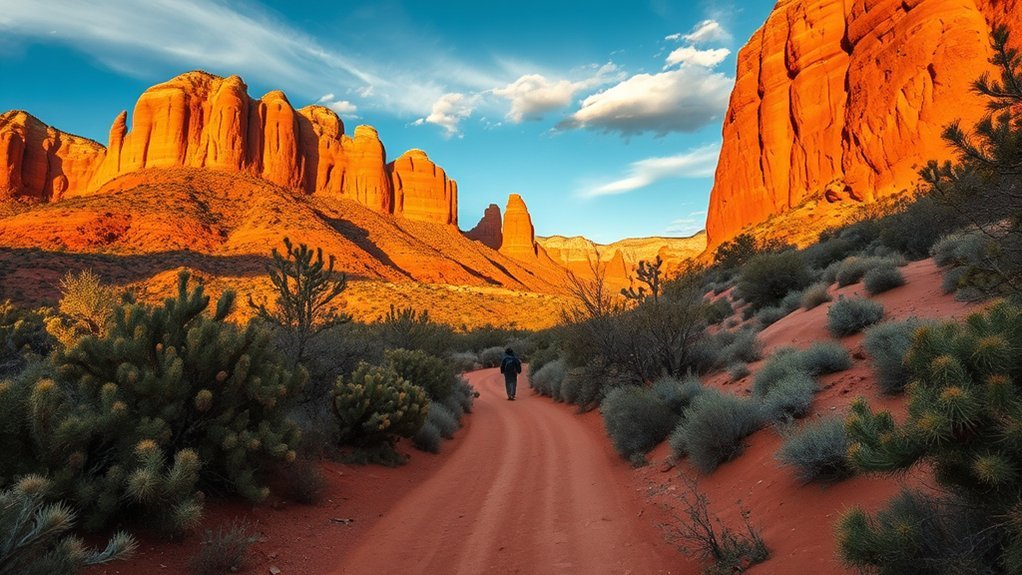
Tackling the Munds Wagon Trail gives you a classic Sedona experience—wide, well-graded switchbacks that climb steadily through piñon and juniper to open vistas of red-rock spires and the Verde Valley below. You’ll follow a historic wagon route that’s popular but never crowded, with a steady incline that rewards you with panoramic overlooks and interesting rock formations. The trail surface is firm, making it a good choice for hiking or trail running when temperatures are moderate.
Classic Sedona switchbacks through piñon and juniper to wide vistas—firm trail, steady climb, rewarding overlooks.
- Gear: Bring layered clothing, sun protection, sturdy shoes, and 1–2 liters of water per person.
- Timing: Start early to catch the morning light on the cliffs and avoid afternoon heat; consider late afternoon for golden-hour photos.
- Difficulty: Moderate effort—steady elevation gain over several miles; suitable for fit beginners who pace themselves.
You’ll enjoy varied terrain, clear views, and a satisfying summit feel without technical scrambling—just steady, scenic work.
Frequently Asked Questions
Are Dogs Allowed on These Trails?
Yes — you can bring dogs on many trails, but they must stay leashed, you’ll pick up after them, bring plenty of water, and avoid hot midday hikes; check trailhead signs and local regulations for any specific restrictions.
What Is the Best Season to Visit Sedona for Hiking?
Spring and fall are best — you’ll enjoy mild temperatures, blooming desert flora in spring, vivid foliage and stable weather in fall. You’ll hike comfortably, avoid summer heat and winter chill, and find full trail access.
Are Permits or Fees Required for Any Hikes?
Think big: you’ll usually only need a Red Rock Pass or pay parking fees at popular trailheads, and some wilderness areas require permits; check trail-specific rules, hours, and seasonal closures before you head out enthusiastically.
How Crowded Do Trails Get on Weekends and Holidays?
They get very busy on weekends and holidays, so you’ll encounter crowded trailheads, limited parking, and slower pace; plan early starts, midweek visits, shuttles, or less-popular routes to enjoy quieter, more scenic experiences.
What Safety Gear Should I Bring for These Hikes?
Bring water, sun protection, sturdy shoes, map/GPS, headlamp, first-aid kit, multitool, trekking poles, and extra layers; be prepared for heat, wind, and scramble sections, stay aware of wildlife, and check conditions before you go.
Conclusion
You’ve seen Sedona’s best trails—each twist promising a new postcard: Cathedral Rock’s scramble, Bell Rock’s gentle loop, Devil’s Bridge’s triumphant arch, shaded West Fork crossings, Soldier Pass’s hidden chasms, Boynton’s red-wall hush, pink-hued Schnebly overlooks, Bear Mountain’s grueling crest, Munds Wagon’s sweeping views. Lace up, grab water and sun protection, and go early; every step could open into a sudden canyon hush or a sunrise that steals your breath—keep walking. There’s one more turn.