Choosing among the best home builders in Norman is less about finding one company that is best for everyone and more about finding a builder that fits your lot, plans, budget, and expectations. Start with verifiable basics such as insurance, a written warranty, recent local work, clear contracts, and experience with Norman permits. Then compare builders on the same scope instead of relying only on ratings or sales claims.
Quick Answer
The best home builder in Norman is one with proven local work, adequate insurance, a clear written warranty, transparent pricing, reliable communication, and a contract that defines allowances, changes, payments, and completion responsibilities. Compare several builders, inspect finished homes, contact recent clients, and verify who will obtain permits and manage licensed trade contractors.
Last checked: September 30, 2026. Dates and figures were verified against official sources.
Key Takeaways
- Oklahoma does not currently require a statewide general-contractor license, so insurance, references, contracts, trade credentials, and local permit experience deserve extra attention.
- Norman-specific zoning, floodplain, drainage, utility, and code requirements can affect what you can build and what the project costs.
- A lower initial price is not automatically a lower final price. Compare allowances, exclusions, site work, change-order terms, and warranty coverage.
- Custom, pre-designed, and modified-plan homes can all work well; the right choice depends on how much design flexibility, cost certainty, and preconstruction time you want.
How to Choose the Best Home Builders in Norman
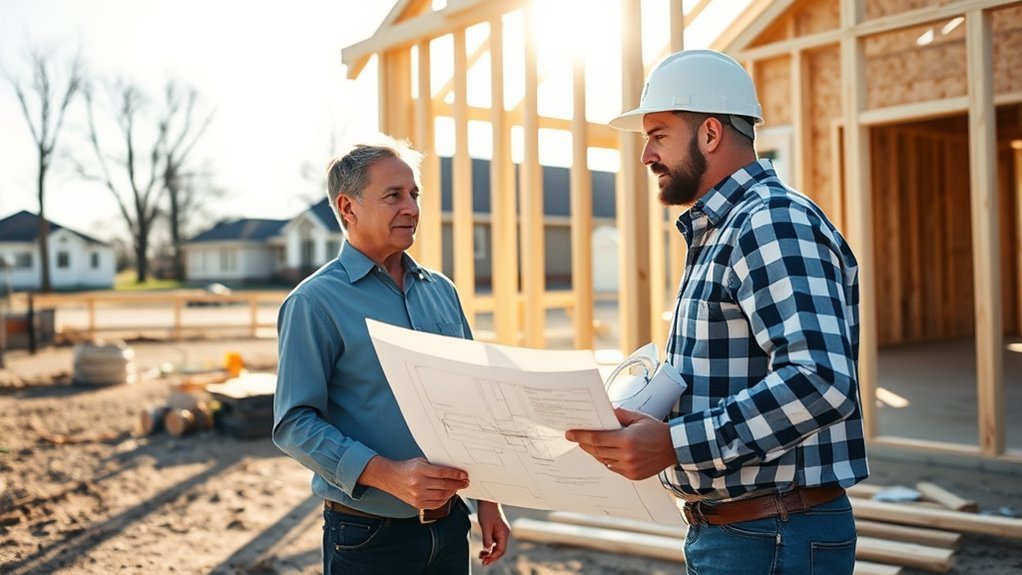
The strongest way to choose a builder is to verify the company first and compare its actual work second. A polished model home or impressive review score can help your research, but neither replaces references, documentation, a detailed proposal, and a careful contract review.
A useful starting point is the Central Oklahoma Home Builders Association member directory. COHBA lists builders serving the region, including companies based in Norman, but membership should be treated as one screening factor rather than a guarantee that a builder is right for your project.
For each builder you are seriously considering, ask to see two or three recently completed homes similar to the size and quality level you want. If possible, also look at a project that is still under construction. Finished surfaces show appearance; an active job can tell you more about framing, site organization, material protection, and supervision.
Contact recent clients and ask specific questions. Did the final cost stay close to the signed contract? Were change orders priced before the work was done? Did the builder respond quickly when problems appeared? How were warranty items handled after closing?
What Questions Should You Ask Potential Builders?
Ask questions that reveal how the builder controls cost, schedule, quality, and responsibility. The goal is not simply to hear reassuring answers; you want answers that can be confirmed in the proposal, warranty, specifications, and contract.
- How many homes have you built in Norman recently? Local work helps demonstrate experience with the city’s permitting, inspections, subcontractor market, and development requirements.
- Can I contact recent clients? Ask for customers whose projects are similar to yours, not only the builder’s showcase projects.
- What insurance do you carry? Request current certificates and understand who is responsible for subcontractor coverage.
- What warranty is included? Ask what is covered, what is excluded, how long each part lasts, and exactly how a warranty request is submitted.
- What is included in the quoted price? Separate included work from allowances, owner-supplied items, upgrades, site costs, utility work, landscaping, and other exclusions.
- How are change orders handled? The contract should explain how changes are approved, priced, documented, and added to the schedule.
- Who supervises my project? Find out whether you will communicate with the owner, a project manager, a superintendent, or several people.
- Who obtains permits and coordinates inspections? Responsibility should be clear before construction starts.
Also ask how often you will receive progress updates and when selections must be finalized. A builder who has a clear system for decisions, approvals, and documentation is easier to compare with other candidates.
Choosing a Home Style and Floor Plan
Your home’s architectural style matters, but the floor plan, lot, budget, zoning, and neighborhood restrictions usually have a greater effect on whether the design can actually be built. Decide how you want the home to function before spending too much time on exterior details.
Popular Architectural Styles
Norman-area builders offer homes in many styles, and custom builders can often combine elements from more than one. Common starting points include Craftsman-inspired homes, modern farmhouse designs, traditional homes, and contemporary designs.
- Craftsman-inspired: Often emphasizes visible detailing, porches, and natural-looking materials.
- Modern farmhouse: Typically combines traditional forms with simpler finishes and open interior spaces.
- Contemporary: Often favors clean lines, large windows, and simpler exterior detailing.
Before finalizing an exterior, confirm that the plan fits the lot and any applicable development or neighborhood restrictions. Norman’s zoning information explains that different districts and overlay areas can impose location-specific requirements.
Plan the Interior Around Daily Life
Interior finishes can change later; circulation, room placement, ceiling heights, window locations, and structural decisions are much harder to change. Prioritize the permanent parts of the design first.
Think through kitchen storage, bedroom privacy, laundry access, furniture placement, garage use, natural light, and how family needs may change. Energy-efficient equipment and smart-home features can also be planned during design, but ask the builder to identify exactly what is included instead of assuming every technology shown in a model home is standard.
Custom vs. Pre-Designed Plans: Which Is Right for You?
A custom plan gives you the most control, while a pre-designed plan usually reduces design decisions and preconstruction uncertainty. A third option is to start with an existing plan and make approved modifications, which can offer a practical middle ground.
| Option | Main Advantage | Main Tradeoff | Best Fit |
|---|---|---|---|
| Fully custom | Maximum control over layout and details | More design decisions and greater potential for revisions | Unique lots, unusual needs, or highly specific priorities |
| Pre-designed | Fewer design decisions before construction | Less flexibility in layout and structure | Buyers who already like a builder’s established plans |
| Modified existing plan | Balances personalization with an established starting point | Changes may still affect engineering, price, and schedule | Buyers who like most of a plan but need targeted changes |
Customization Flexibility
Ask what the builder means by “custom.” Some builders will redesign structural walls, room sizes, elevations, and mechanical layouts. Others mainly let you choose finishes from a defined catalog.
Get the customization limits in writing before choosing a plan. A seemingly small structural change can affect engineering, material quantities, permits, and several subcontractors.
Cost Considerations
Compare total scope, not just the headline price. One proposal may include site preparation, upgraded finishes, appliances, driveway work, or landscaping that another proposal lists as an allowance or excludes entirely.
Norman’s April 2026 residential permit fee summary states that the building permit fee for one- and two-family dwellings is calculated at $0.14 per square foot of total project area. The plan-review fee is 20% of that building permit fee, with a $50 minimum. Actual fees are determined when the application is submitted.
The same city document lists a wastewater system new-development excise tax of $850 for a residence up to 1,200 square feet of living area, plus $2 per square foot of living area above 1,200 square feet. These municipal charges are only part of the overall project budget.
Pro Tip: Ask each builder to price the same written scope and allowance schedule. That makes differences in materials, site work, fixtures, and exclusions much easier to spot.
Timeline Expectations
Construction time varies with design complexity, permitting, site conditions, material availability, subcontractor scheduling, weather, and changes made after work starts. Avoid choosing a builder based only on the shortest promised completion date.
Instead, ask for a written construction schedule with major milestones. Also ask what can extend the schedule, how delays are communicated, and whether owner-requested changes automatically move the completion date.
Why Local Norman Experience Matters
Local experience is valuable because a builder needs to coordinate Norman’s permits, zoning, inspections, drainage requirements, utilities, and site conditions. A builder familiar with these processes may be better prepared to identify issues before they turn into expensive changes.
Floodplain status deserves particular attention when evaluating land. According to the City of Norman’s flood hazard protection guidance, new construction within the regulatory floodplain requires a floodplain permit in addition to a building permit. The city also requires an accepted Elevation Certificate before final acceptance and issuance of a Certificate of Occupancy for applicable floodplain projects.
Lot restrictions can also come from zoning and overlays. Before committing to a design, confirm setbacks, permitted use, easements, drainage areas, utilities, and any private subdivision covenants that apply to the parcel.
What Credentials Should Norman Home Builders Have?
Do not rely on a vague statement that a builder is “licensed and insured.” Oklahoma does not currently require general contractors to hold a statewide general-contractor license, according to the Oklahoma Construction Industries Board.
That does not mean credentials are irrelevant. The CIB regulates skilled trades including plumbing, electrical, mechanical, roofing, and building and home inspection. Ask your builder who will perform regulated trade work and how those credentials are verified.
Also request proof of general liability insurance and, where applicable, workers’ compensation coverage. If you use COHBA membership as a screening tool, note that its builder membership requirements state that applicants must provide a copy of a one-year warranty, certify liability and workers’ compensation insurance, and provide three customer references.
Membership or insurance alone does not prove craftsmanship. Review the builder’s portfolio, inspect completed work, call recent references, and read the actual warranty before signing.
How to Compare Builder Pricing and Contracts
A useful building contract should make it clear what you are buying, how much you will pay, when payments are due, and what happens when something changes. If important details exist only in conversations or sales brochures, ask for them to be incorporated into the written documents.
Review these areas closely:
- Scope of work: Plans, specifications, materials, fixtures, appliances, site work, exterior features, and other included work.
- Allowances: The dollar amounts reserved for items you have not selected yet and what happens when selections exceed them.
- Exclusions: Work or products that are specifically outside the contract price.
- Payment schedule: When deposits, draws, or milestone payments become due.
- Change orders: Who can approve them and how cost and schedule changes are documented.
- Completion terms: How substantial completion, final inspection, punch-list work, and closing are handled.
- Warranty: Covered items, exclusions, claim procedure, and the responsibilities of the builder and manufacturers.
- Disputes and cancellation: The process that applies if the project or relationship breaks down.
Warning: Do not assume an allowance is a fixed price. If your actual selections exceed the allowance, the difference can increase the final contract amount. Make sure the contract explains markups and change-order charges before you sign.
Why Communication Matters During Your Build
Good communication keeps decisions, costs, and expectations visible to everyone. It also creates a record of selections and approvals if questions arise later.
Before construction, decide how routine communication will work. Ask whether the builder uses email, phone calls, meetings, or a project-management portal and who has authority to approve changes.
During the build, focus updates on decisions that affect the next stage of work. Confirm important selections and changes in writing rather than relying on memory. If a problem develops, ask what happened, what the proposed fix is, whether it changes the price, and whether it affects the schedule.
Next Steps After Choosing Your Builder
Once you have selected a builder, move from comparison to documentation. Finalize the plans, specifications, allowances, responsibilities, and payment terms before construction begins.
Norman’s Development Services Division publishes its locally adopted building-code information. Its posted page lists the 2018 International Residential Code with state and local amendments among the codes adopted by Norman effective June 22, 2023.
There is an important 2026 transition to discuss with your builder and the city. The Oklahoma Uniform Building Code Commission’s IRC adoption record says Oklahoma’s adoption of the 2024 International Residential Code, with state amendments, became effective September 14, 2026. Because Norman’s public city page still displays its earlier local adoption, confirm which state and local amendments apply to your specific permit date before finalizing technical plans.
| Step | Action | Purpose |
|---|---|---|
| Initial Consultation | Confirm goals, lot, plan, budget, and responsibilities | Align expectations |
| Contract Review | Check scope, allowances, exclusions, changes, payments, and warranty | Reduce cost and responsibility disputes |
| Permit Confirmation | Identify required approvals and applicable codes | Avoid preventable approval delays |
| Open Communication | Set a regular update and decision process | Keep selections and changes documented |
| Site Visits | Review progress at agreed milestones | Catch questions before work is covered |
| Document Collection | Keep contracts, change orders, warranties, manuals, and final documents | Protect your records after closing |
Frequently Asked Questions
Which home builder in Norman has the best reputation?
There is no single builder that can objectively be called the best choice for every Norman project. Compare recent projects, client references, warranty terms, insurance, communication, contract detail, and experience with homes similar to yours. Association directories and reviews can help create a shortlist, but verify the underlying information yourself.
Is $300,000 enough to build a house in Norman?
It may be enough for some projects, but $300,000 is not a reliable universal building budget. Land, site preparation, square footage, design, materials, utilities, permits, financing, landscaping, allowances, and builder pricing can change the total substantially. Ask builders for proposals based on the same lot, plan, specifications, and exclusions before deciding whether the budget is workable.
What are the best neighborhoods in Norman, OK, for building a home?
The best location depends on your lot needs, commute, schools, utilities, budget, and preferred type of neighborhood. For a new build, also compare zoning, overlay districts, floodplain status, drainage, available utilities, subdivision covenants, and whether the lot can support the house you want. Evaluate a specific parcel before committing to a neighborhood based only on reputation.
What should I consider when choosing a home builder?
Choose a builder based on comparable experience, recent references, documented insurance, warranty coverage, quality of completed work, contract clarity, and communication. Compare what each price actually includes and confirm how allowances, changes, permits, inspections, payments, delays, punch-list work, and post-closing warranty requests will be handled.
Conclusion
The best home builders in Norman earn your confidence through verifiable work, clear paperwork, realistic pricing, and consistent communication. Compare several builders on the same project scope, inspect their work, speak with recent clients, and resolve permit, code, contract, and warranty questions before construction begins.
Sources
- Central Oklahoma Home Builders Association Member Directory: Builder research and Norman-area member listings.
- Central Oklahoma Home Builders Association Membership Requirements: Builder warranty, insurance, and reference requirements.
- Oklahoma Construction Industries Board FAQ: State general-contractor and skilled-trade licensing information.
- City of Norman Building Codes: Locally posted adopted construction codes.
- Oklahoma Uniform Building Code Commission IRC Adoptions: 2024 IRC state adoption effective September 14, 2026.
- City of Norman Code and Zoning Information: Zoning districts and overlay requirements.
- City of Norman Flood Hazard Protection: Floodplain permit and Elevation Certificate requirements.
- City of Norman 2026 Residential Permit Fee Summary: Building permit, plan-review, and wastewater development fee information.