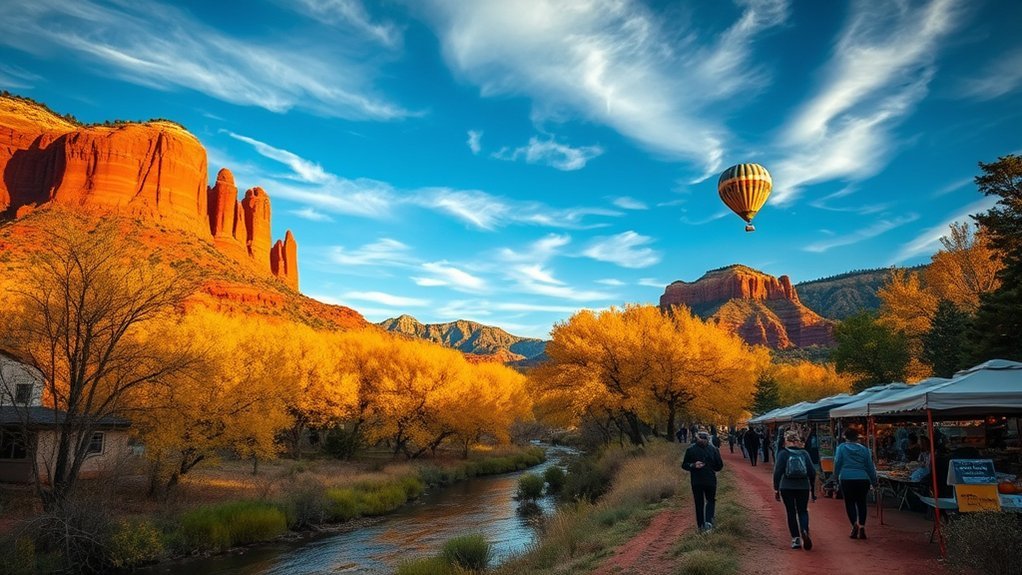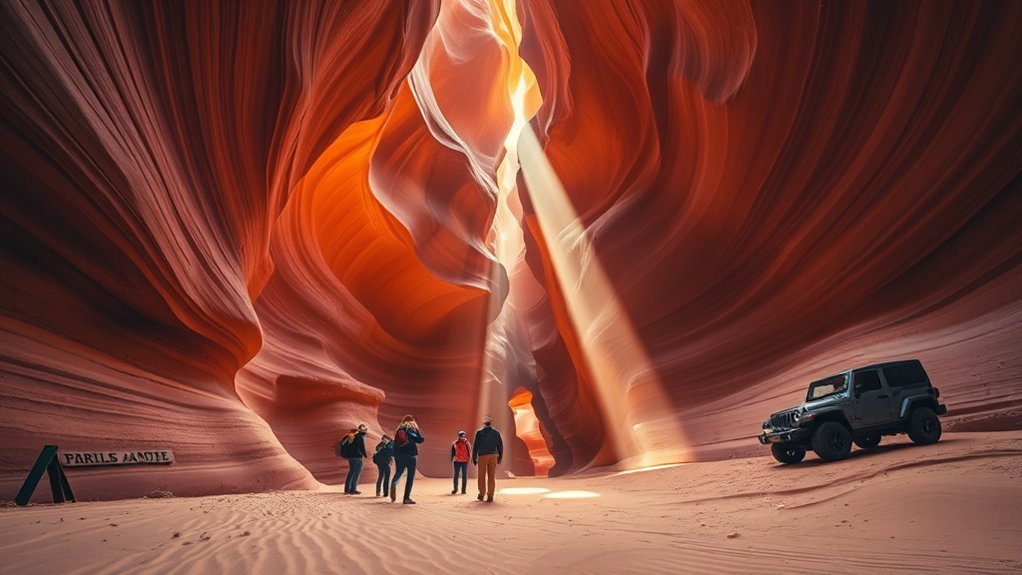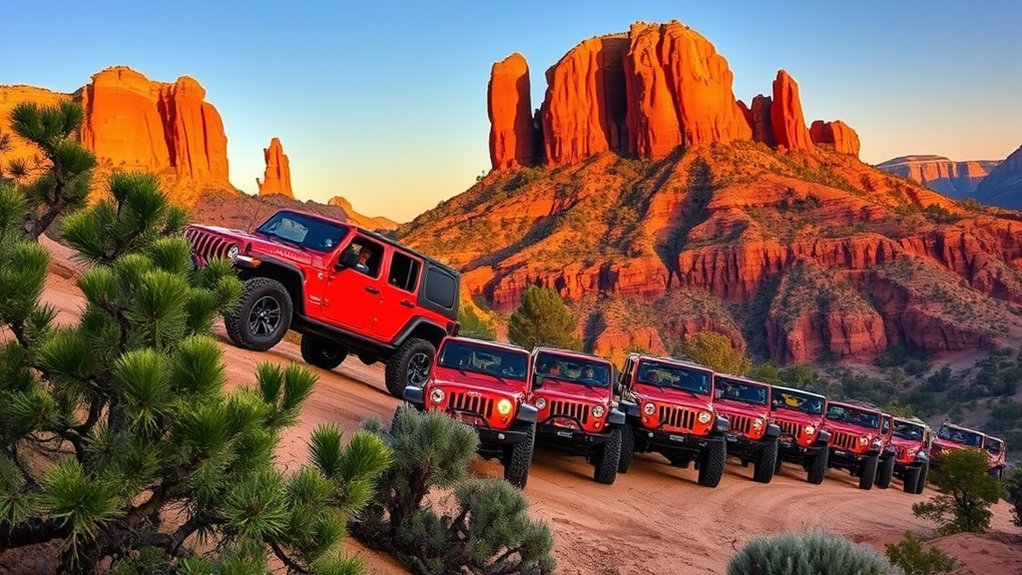
Choosing the best Jeep tour in Sedona comes down to matching your desired thrill level with the right red-rock trail, vehicle setup, and guide expertise. Whether you want an extreme rock-crawling descent over the sandstone ledges of Broken Arrow or a smooth, scenic sunset drive along historic Schnebly Hill Road, understanding trail difficulty, vehicle capabilities, age restrictions, and local permits ensures a safe and unforgettable adventure in Arizona’s high desert.
Quick Answer
The best Sedona Jeep tour depends on your thrill preference: choose Broken Arrow for steep, adrenaline-heavy rock crawling; Soldier Pass or Diamondback Gulch for moderate 4×4 ruggedness with rich desert geology; and Schnebly Hill Road or paved vortex routes for scenic, family-friendly panoramic photography with minimal physical jarring.
Key Takeaways
- Trail terrain dictates ride comfort: Slickrock ledges provide severe technical drops, while unpaved forest service roads offer milder, panoramic cruising.
- Permits matter: Specific backcountry trails (like Broken Arrow) operate under exclusive commercial permits managed by the U.S. Forest Service.
- Safety and legal limits: Arizona car-seat laws apply to children under 8, and technical off-road routes are restricted for pregnant passengers or those with spinal issues.
- Golden hour is prime: Early morning and late afternoon tours deliver the best photography lighting and avoid the intense midday desert heat.
At a Glance: Sedona Jeep Tour Planning
| Average Duration | 1.5 to 3.5 hours (full-day custom charters available) |
| Difficulty Levels | Mild (Scenic/Paved), Moderate (Rough Dirt Ruts), Rugged (Extreme Rock Crawling) |
| Typical Cost | $90–$175 per adult (public); $450–$950+ (private vehicle buyout) |
| Essential Gear | Strap-secured sunglasses, sunblock, layered windbreaker, closed-toe shoes, reusable water bottle |
Why Choose a Jeep Tour in Sedona
Sedona’s rugged geography spans over 1.8 million acres of the Coconino National Forest, characterized by soaring sandstone buttes, steep canyon washes, and elevated wilderness rims. While standard passenger rental cars are restricted to paved routes like Highway 89A and State Route 179, an off-road Jeep tour provides safe, guided access to remote backcountry terrain that would otherwise require hours of strenuous technical hiking.
Beyond accessing hidden ridgelines, guided tours provide deep cultural and geological context. Professional guides interpret the region’s 300-million-year-old rock layers—including Schnebly Hill Formation sandstone, Fort Apache Limestone, and Supai Group siltstones—while highlighting native Sinagua archaeological history, high-desert botanical medicine, and the world-famous Sedona energy vortexes.
Types of Jeep Tours: Popular Trails and Thrill Levels
Sedona off-road excursions fall into three primary categories: extreme rock-crawling, moderate backcountry routes, and scenic panorama drives. Matching your party’s comfort level with the correct trail profile prevents unexpected physical strain while ensuring you get the exact views you want.
| Trail / Route | Thrill Level | Terrain Characteristics | Best For |
|---|---|---|---|
| Broken Arrow | Rugged / Extreme | Steep slickrock ledges, technical rock obstacles (The Road of No Return, Devil’s Dining Room) | Adrenaline seekers, active adults, technical off-road enthusiasts |
| Soldier Pass | Moderate / Technical | Arroyo crossings, slickrock steps, Devil’s Kitchen Sinkhole, Seven Sacred Pools | History buffs, intermediate adventurers, balanced photography |
| Diamondback Gulch / Outlaw | Moderate | Rugged dry washes, rolling desert gullies, deep western canyon vistas | Families with older kids, open desert scenery, western film history |
| Schnebly Hill Road | Mild / Bumpy | Rocky unpaved historical stagecoach wagon road, 2,000-foot Mogollon Rim elevation gain | Panoramic landscape photography, sunset watchers, all ages |
How to Evaluate Guide Experience and Credentials
Because navigating technical sandstone shelves requires specialized vehicle maneuvering and off-camber driving skills, the experience of your guide directly impacts passenger safety and tour quality. When evaluating an outfitter, look for formal commercial licensing, land management compliance, and medical training standards.
| Presence | Credentials | Vibe |
|---|---|---|
| Local roots | Wilderness First Responder (WFR) / CPR | Grounded, safety-conscious |
| Years guiding | USFS Commercial Outfitter Permitted | Bold, engaging curiosity |
| Cultural knowledge | Leave No Trace (LNT) Master Educator | Calm, authoritative interpretation |
| Mechanical skills | Commercial Driver Certification | Trustworthy trail command |
Reputable operators hold commercial operating permits issued by the Red Rock Ranger District. These permits mandate comprehensive liability insurance, vehicle safety inspections, regular driver drug testing, and strict adherence to designated trail paths to prevent cryptobiotic soil destruction.
Understanding Trail Difficulty and Safety Ratings
Off-road trail rating systems communicate the mechanical demand placed on the 4×4 rig and the physical jostling experienced by passengers inside. Ratings typically scale from 1 (easy graded dirt) to 5 (extreme technical rock crawling).
Warning: Technical Level 4 and Level 5 trails (such as Broken Arrow) involve steep 35-degree slickrock descents, sharp drop-offs, and continuous vertical jolts. These trails are strictly unsuitable for pregnant women, individuals with acute neck or back injuries, or people recovering from recent joint surgeries.
Before booking, review the outfitter’s trail description. Level 1–2 scenic runs stick to washboard dirt roads with minimal incline, offering comfortable panoramic sightseeing. Level 3–5 routes require four-wheel-drive low range (4L), active passenger bracing, and locking differentials to clear tall rock steps.
Vehicle Types, Capacity, and Comfort Features
The vehicle platform shapes visibility, shade, and ride dynamics throughout the tour:
Custom-engineered open-air 4x4s offer unobstructed 360-degree views of towering red-rock spires, while enclosed or canopy-topped SUVs provide essential shade during high-temperature desert summers.
- Open-Air Custom Jeeps (e.g., Modified Wrangler Rubicons): Built with custom stadium bench seating and heavy-duty steel roll cages. They maximize photo angles and wind-in-your-hair immersion, though they expose passengers to full sun and trail dust.
- Canopy-Topped 4×4 Rigs: Equipped with fabric or hard-top roofs that shield riders from high midday UV exposure while keeping sides open for unobstructed photography.
- Enclosed Heavy-Duty 4WD SUVs: Feature sealed, climate-controlled cabins. Ideal for travelers sensitive to extreme heat, cold winter mornings, or airborne dust and pollen.
- Heavy Rock Crawlers: Fitted with heavy-duty solid axles, pneumatic suspension, and oversized off-road tires designed specifically to absorb violent impacts on rocky ledges.
Group Size, Private Tours, and Family Options
Deciding between a shared public tour and a private buyout depends on your party’s dynamic, budget, and desired itinerary flexibility.
Group Size Matters
Standard public Jeep tours seat 6 to 9 passengers in tiered stadium configurations. Shared tours offer a fun social dynamic and lower per-seat costs, but your group must adhere to standard stops and predetermined trail pacing. Smaller groups allow the driver to answer questions easily, while full vehicles leave less elbow room for bulky camera equipment.
Private Tour Benefits
Booking a private vehicle charter grants total control over the outing. You can instruct your guide to spend extra time at specific photography vantage points, focus the narrative on geology or spirituality, or adjust trail speed to accommodate sensitive passengers.
Pro Tip: If traveling with a group of 5 or more, compare total per-ticket prices against a flat-rate private vehicle buyout. Private charters often cost only 10% to 15% more than individual public seats at that party size while delivering a fully customized experience.
Family-Friendly Options
When booking with multigenerational families, choose trails that balance visual excitement with smooth ride mechanics. Young children and seniors often enjoy routes like the Lil’ Rattler or Diamondback Gulch, which offer dynamic desert washes without violent slickrock drops.
Accessibility, Age Limits, and Mobility Considerations
Safety regulations and physical requirements vary significantly depending on the outfitter and trail rating.
Wheelchair & Scooter Access
Most commercial open-top Jeeps sit on lifted suspensions (2 to 4 inches above factory height), requiring passengers to step up 18 to 24 inches onto side stirrups to board. However, several top Sedona operators offer transfer-assist boards, portable step stools, and collapsible wheelchair storage at their base depots. Call in advance to ensure the terminal can provide transfer support.
Age Restrictions & Legal Restraints
Under Arizona Revised Statutes § 28-907, children under 8 years of age or shorter than 4 feet 9 inches must be secured in a dedicated child safety seat or booster seat. Most Sedona tour operators require children to be at least 2 years old for gentle scenic excursions and at least 5 years old for technical routes like Broken Arrow.
| Passenger Category | Typical Age / Requirement | Safety & Operational Policy |
|---|---|---|
| Toddlers (Ages 2–4) | 2+ Years | Restricted to mild scenic/paved routes; must use parent-provided or company car seat. |
| Young Children (Ages 5–7) | Under 4’9″ Height | Booster seat legally required by AZ state law; eligible for moderate backcountry trails. |
| Youth & Adults (Ages 8–64) | No Age Max | Eligible for all technical routes; must be able to grip safety handrails independently. |
| Seniors / Mobility-Limited | Independent Seating | Mild-to-moderate trails recommended to minimize joint impact and lower-back strain. |
Terrain & Mobility Needs
Backcountry routes feature abrupt off-camber tilts where the vehicle leans sideways along slickrock benches. Riders must possess sufficient upper-body strength to brace themselves using padded passenger grab bars during sudden descents.
What’s Included: Inclusions, Photography, and Timing
Tour packages typically include commercial land access permits, parking fees, bottled water, and guide narration. Full-day private charters may also include boxed artisan lunches or combined vineyard and helicopter excursions.
Note on Inclusions & Tipping: Commercial tour rates do not include driver gratuities. In Sedona, standard tipping for exceptional guide performance ranges between 15% and 20% of your total tour cost, payable via cash or terminal checkout.
Every major tour schedules dedicated 10- to 20-minute disembarkation stops at iconic rock formations (such as Submarine Rock, Chicken Point, or the Seven Sacred Pools). Guides regularly assist passengers by framing high-quality group portraits against the red-rock horizons.
Booking Tips, Cancellation Policies, and Best Times to Go
Sedona hosts millions of visitors annually, making prime morning and sunset tour slots sell out days or weeks in advance during peak spring and autumn travel windows.
- Reserve Early for Golden Hour: Sunset tours scheduled 2 hours prior to dusk deliver rich red and gold hues across the rock faces without the harsh shadows of midday sun.
- Review 24- to 48-Hour Cancellation Windows: Most Sedona outfitters offer full refunds if cancellations are made at least 24 to 48 hours before scheduled departure.
- Dress for Temperature Shifts: High desert temperatures fluctuate dramatically. Morning and sunset open-air tours can feel 15°F to 20°F cooler when moving at speed, so pack a light windbreaker or fleece layer.
- Track Summer Monsoon Alerts: Between July and September, brief afternoon monsoon thunderstorms can create sudden runoff. Reputable outfitters monitor live radar and reroute trips away from low-lying canyon washes when flash flood watches take effect.
Frequently Asked Questions
Do Jeep tours allow pets in the vehicle?
Generally, no. Due to strict passenger safety requirements, vehicle vibrations, and open-air configurations, public Sedona Jeep tours do not permit pets. However, fully certified service animals (as defined under the Americans with Disabilities Act) are legally accommodated, and select operators permit small pets on private, custom vehicle buyouts if booked in advance.
Are meals or snacks provided during multi-hour tours?
Standard 1.5- to 2.5-hour Jeep tours provide complimentary cold bottled water, but meals are not included. Specialty full-day excursions (4+ hours), combination winery excursions, or private VIP charters often include pre-ordered boxed lunches or snack platters. Always confirm meal inclusions during checkout if booking a multi-hour package.
Can I bring a drone to film from the trail?
No. Recreational and commercial drone flights are strictly prohibited in federally designated Wilderness Areas—including the Red Rock-Secret Mountain and Munds Mountain Wilderness bordering Sedona—under Forest Service and FAA regulations. Additionally, commercial tour operators forbid drone operation during excursions to protect wildlife and passenger privacy.
Is there cell service or emergency communication on backcountry tours?
Cell service is notoriously spotty or completely absent once vehicles enter deep canyon washes and remote red-rock gullies. However, permitted commercial tour vehicles are equipped with two-way satellite communication systems, land-mobile radios, and comprehensive first-aid kits connected directly to local emergency dispatch.
Do tours run during extreme weather (lightning, flash floods, snow)?
Tours run rain or shine, but operations are temporarily paused, rerouted, or canceled during severe weather emergencies such as active cloud-to-ground lightning or flash flood warnings in low-lying arroyos. In the event of an operator-initiated weather cancellation, guests receive a full refund or free rescheduling.
Conclusion
A Sedona Jeep tour is one of the most rewarding ways to experience the towering cliffs, hidden arroyos, and rich geology of Arizona’s red-rock country. By selecting a trail matching your physical comfort, verifying the outfitter’s commercial safety credentials, and booking an early morning or sunset departure slot, you guarantee an adventure that is as safe and seamless as it is breathtaking.
Sources
- USDA Forest Service — Coconino National Forest — Outfitter-guide commercial special use permits, trail access, and resource conservation regulations.
- Arizona Department of Transportation (ADOT) — Arizona Revised Statutes § 28-907 child passenger safety and booster seat requirements.
- Federal Aviation Administration (FAA) — Unmanned Aircraft Systems — Airspace flight restrictions and wilderness area drone prohibitions.
- Sedona Chamber of Commerce & Tourism Bureau — Regional visitor guidelines, climate patterns, and responsible recreation standards.