Large camping tents for [2026] aim to balance space, setup speed, and weather protection for families and groups. Models such as the KTT family cabins, Core instant shelters, and FanttikOutdoor’s roomy designs show how far convenience has come. Yet size alone does not decide the best choice. The real difference often appears in the details that matter once the trip begins.
Key Takeaways
- Choose tents by capacity, from 6-person family cabins to 12–14-person group shelters.
- Prioritize floor space, straight walls, and room dividers for comfortable sleeping and living areas.
- Look for fast setup models, including instant tents that pitch in under two minutes.
- Check weather protection features like 1000mm+ waterproofing, strong poles, and reliable rainflies.
- Value ventilation and privacy through mesh roofs, large windows, multiple doors, and separate rooms.
KTT Extra Large Family Cabin Tent for 6-14 People
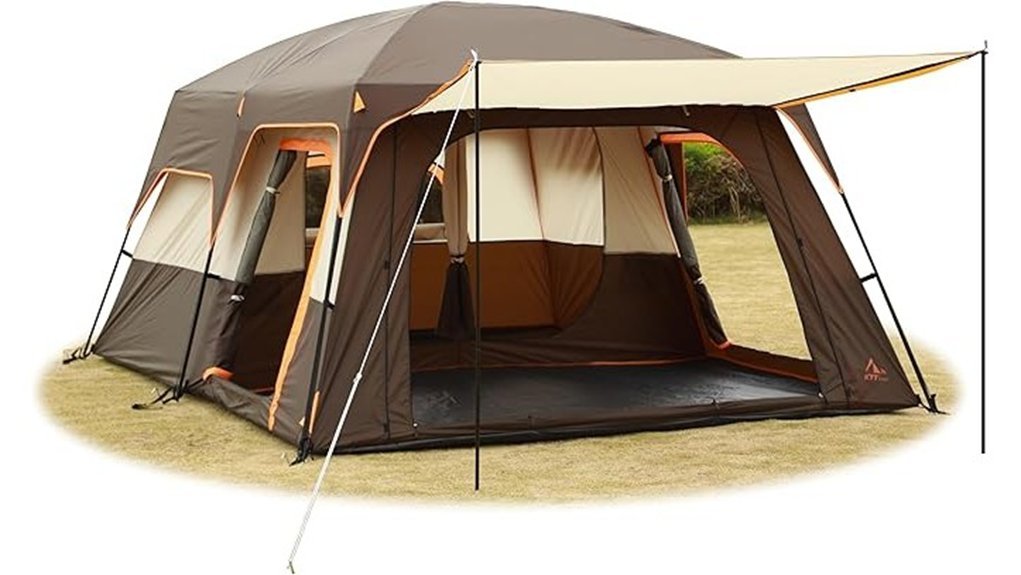
The KTT Extra Large Family Cabin Tent for 6-14 People is best suited for large families or group campers who need a roomy, practical shelter with two interior spaces, three mesh doors, and 141 square feet of floor area. Its rectangular, straight-wall design provides usable height, while waterproof Oxford polyester and a PE floor add protection in three-season conditions. Setup is manual but straightforward, taking about 15 minutes for those comfortable with hands-on assembly. The tent includes stakes, guylines, repair patches, and awning-capable door poles. It is less appropriate for severe wind, heavy rain, or snow.
Best For: Large families or group campers who want a spacious, practical three-season cabin tent with separate interior areas and straightforward manual setup.
Pros:
- Roomy 141 sq. ft. rectangular design with 2 rooms, 3 doors, and 3 mesh windows for good livability and ventilation.
- Waterproof Oxford polyester body plus PE floor provides solid protection in spring, summer, and fall camping conditions.
- Includes useful extras like stakes, guylines, repair patches, and awning-capable door poles for added versatility.
Cons:
- Manual setup is not ideal for beginners or anyone wanting a quick pop-up tent.
- Not suitable for strong winds, heavy rain, or heavy snow.
- At 34 lbs, it is relatively heavy and less convenient to carry for longer hikes.
KTT Large Family Cabin Tent, 2 Rooms
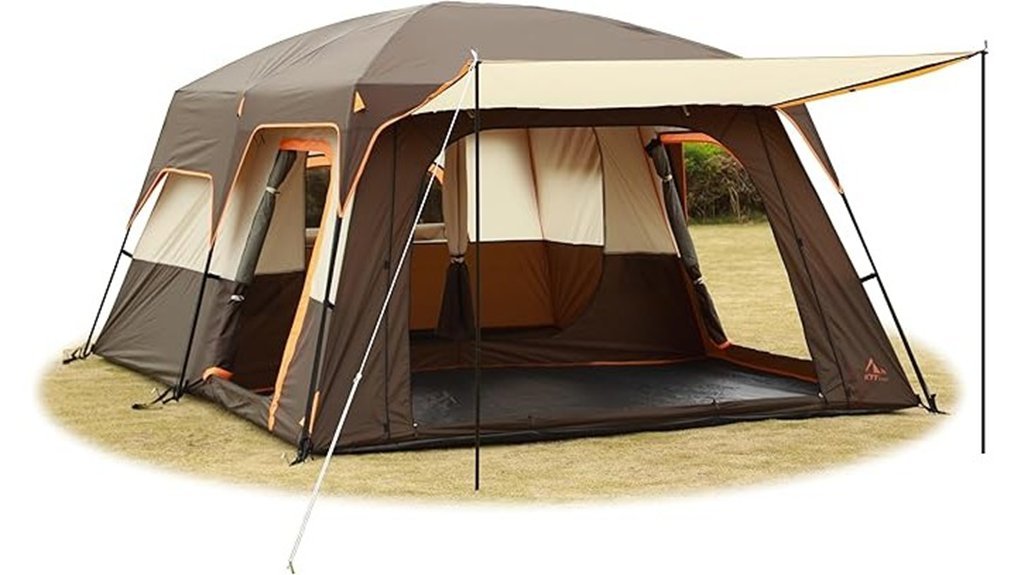
With two rooms and straight walls, the KTT Large Family Cabin Tent suits bigger family groups. The KTT Extra Large Tent measures 14.1 by 10 feet and stands 6.58 feet tall, offering space for 6 to 14 people or four full air mattresses. A separation curtain divides the interior, while three doors and three mesh windows improve airflow. Oxford polyester and a PE-coated floor provide durability. Fiberglass roof rods, plus awning poles, support the structure. It is a manual, three-season tent that needs stakes, wind ropes, and careful setup.
Best For: Families or camping groups who want a spacious, two-room cabin tent with good ventilation and awning-style outdoor shade for 3-season use.
Pros:
- Large interior with straight walls, two rooms, and room for up to 6–14 people or four full air mattresses.
- Good airflow from 3 doors and 3 mesh windows, plus added convenience from top hooks and an awning option.
- Durable materials and practical construction, including Oxford polyester, a PE-coated floor, and fiberglass support rods.
Cons:
- Requires manual setup and careful installation with stakes and wind ropes, so it is not a quick pop-up tent.
- Best used in good weather and is not ideal for severe conditions or open-flame use.
- Large size may be less convenient for solo campers or those needing a lightweight, compact tent.
Nice Inflatable Camping Tent for 6/8/10 People
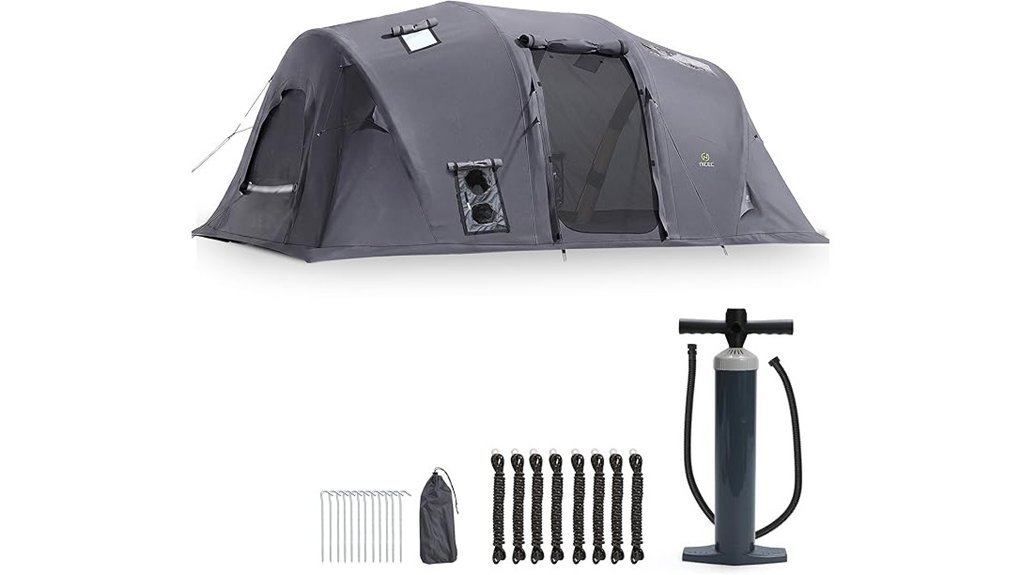
This inflatable tent suits families and groups needing roomy, fast-setting shelter. Sized for 6, 8, or 10 campers, it measures 161.42 by 94.49 by 73.62 inches and offers a standing center height of 73.62 inches. Its 40.12-pound build uses reinforced air beams and a tunnel structure for reliable support. Water-resistant fabric, a rainfly, guy lines, and sealed seams improve weather defense. Mesh screens, dual skylights, and a chimney vent promote airflow. The interior accommodates sleeping bags, furniture, and gear, making it practical for camping, festivals, road trips, and glamping.
Best For: Families and groups of 6 to 10 people who want a spacious, quick-to-set-up inflatable tent for camping, festivals, road trips, or glamping.
Pros:
- Fast inflatable setup with reinforced air beams for easier pitching and solid support
- Roomy interior and standing center height make it comfortable for sleeping, gear, and outdoor living
- Weather-ready features like water-resistant fabric, rainfly, guy lines, sealed seams, and ventilation openings
Cons:
- At 40.12 lbs, it may be bulky and less convenient to carry than smaller tents
- Larger size may require more campsite space and be harder to position in tight areas
- Inflatable structure can require extra care to avoid punctures or air-leak issues
GoHimal 8 Person Waterproof Family Camping Tent
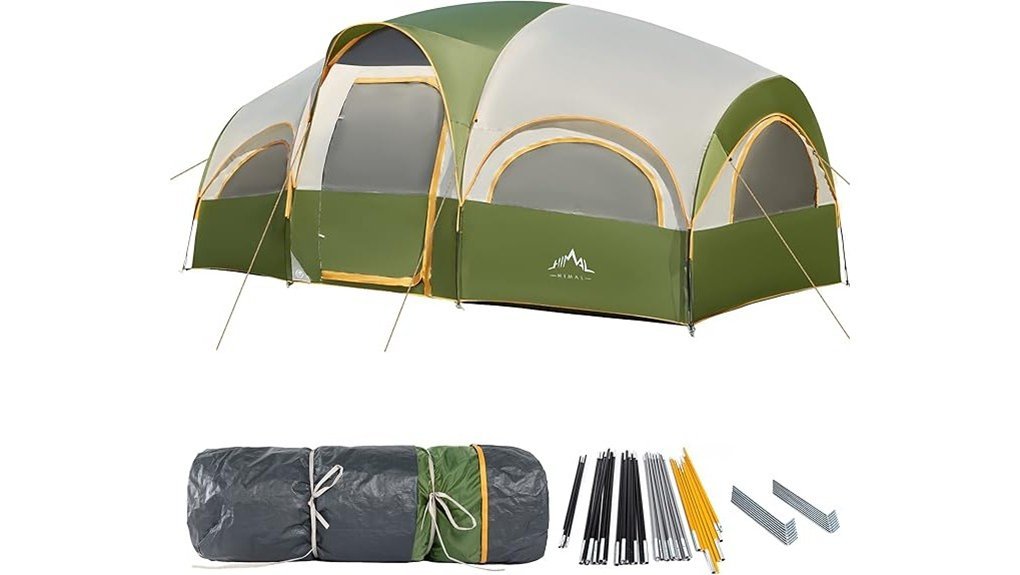
GoHimal’s spacious 8-person layout suits families needing room for multiple sleepers and gear. Measuring 169 by 95 by 76 inches, it can hold three queen air mattresses or eight sleeping bags. The 190T ripstop polyester shell with PU2000 mm coating adds dependable waterproof protection, while fiberglass poles provide steady support. A large mesh door and four mesh windows improve airflow and daylight. Divided curtains create private zones inside. Setup takes about 10 minutes with two people, and the tent folds into a carry bag for camping, hiking, or car trips in changing weather.
Best For: Families, car campers, and group campers who want a large, waterproof tent with room for multiple sleepers, decent ventilation, and easy setup.
Pros:
- Spacious 8-person design fits 3 queen air mattresses or up to 8 sleeping bags.
- PU2000 mm waterproof coating and ripstop polyester help protect against wet weather.
- Mesh door, mesh windows, and divided curtains improve airflow and privacy.
Cons:
- Best set up with two people, so solo assembly may be less convenient.
- Large size may be bulky to carry compared with smaller tents.
- Fiberglass poles are sturdy, but may not be as durable as higher-end pole materials.
Core 9 Person Instant Cabin Tent – 14′ x 9′, Green (40008)
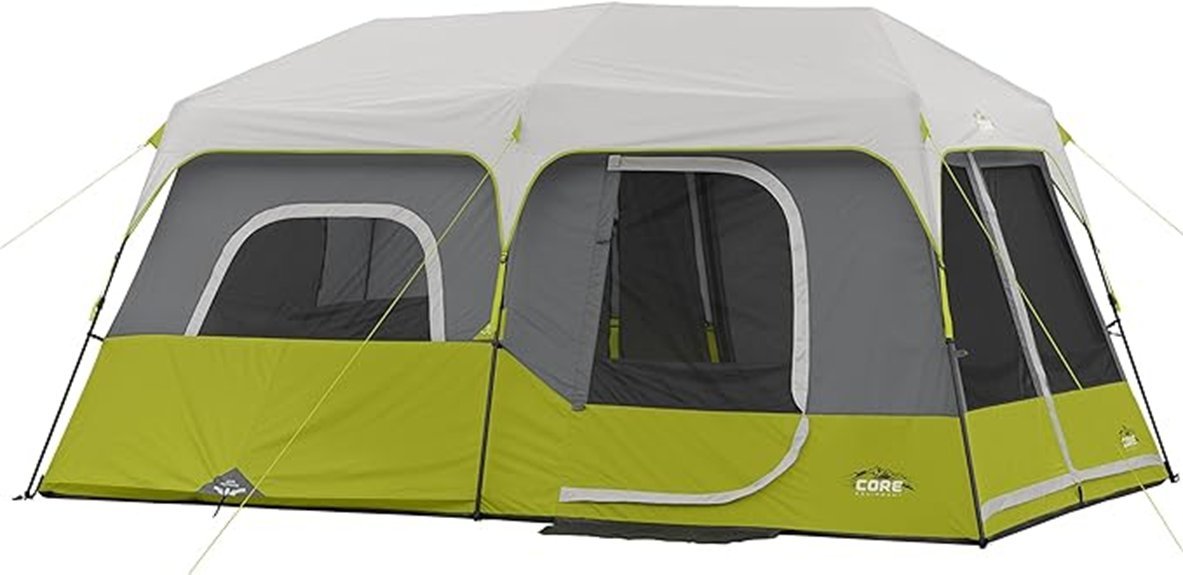
The Core 9 Person Instant Cabin Tent suits groups needing fast setup and roomy shelter. Measuring 14 by 9 feet with 78-inch height, it offers 126 square feet of floor space and a 12-square-foot vestibule. The instant pop-up design with pre-attached alloy steel poles assembles in under two minutes. Its 68D polyester shell, polyethylene floor, taped rainfly, and sealed seams provide H20 Block protection. Lower vents and a mesh ceiling support airflow, while zipped windows add coverage. Two-room organization, storage pockets, and free-standing stability enhance practical camping use for nine without gear or two queen air beds.
Best For: Groups, families, or campers who want a spacious 9-person tent with ultra-fast setup, solid weather protection, and simple interior organization.
Pros:
- Sets up in under 2 minutes thanks to the instant pop-up design with pre-attached poles.
- Spacious interior with 126 sq. ft. of floor area, 78-inch height, and two-room organization.
- Good weather protection and airflow with H2O Block fabric, taped rainfly, sealed seams, vents, and a mesh ceiling.
Cons:
- At 27.6 pounds, it may feel heavy for campers prioritizing lightweight gear.
- Best suited for car camping rather than long-distance backpacking or hiking.
- Fits 9 people only without gear, so capacity drops significantly when storing equipment inside.
UNP 10-Person Family Camping Tent, Waterproof, 2-Room
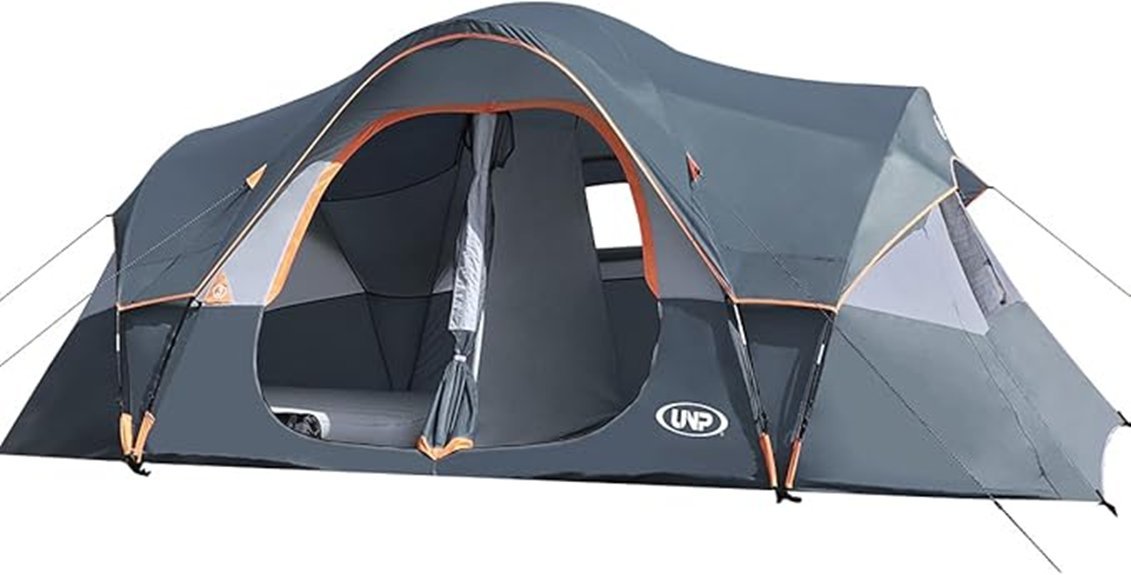
UNP’s 10-person tent suits large families or groups needing two-room privacy and quick setup. Measuring 18 by 9 feet with 162 square feet of floor space, it offers two doors, five windows, and a privacy divider curtain. Two people can pitch it in about 10 to 15 minutes, and its 21-pound frame packs into a manageable carry bag. The 185T polyester shell with PU1000mm waterproofing and an extended awning supports four-season use. Mesh roof and side windows improve airflow. It also adapts easily to camping, festivals, or an outdoor cinema setup.
Best For: Large families, group campers, and festival-goers who want a roomy 2-room tent with quick setup, good ventilation, and basic weather protection.
Pros:
- Spacious 18 x 9 ft layout with 162 sq ft of floor area and a privacy divider for two-room use.
- Quick and easy setup for two people in about 10 to 15 minutes, plus a manageable carry bag.
- Mesh roof and large windows improve airflow, and the extended awning adds rain protection.
Cons:
- At 21 lbs, it may be a bit heavy for campers who prioritize ultralight portability.
- PU1000mm waterproofing is decent, but not as robust as higher-rated heavy-rain tents.
- Fiberglass poles are less durable than aluminum poles over long-term, rugged use.
CAMPROS 12-Person Family Camping Tent with Rainfly
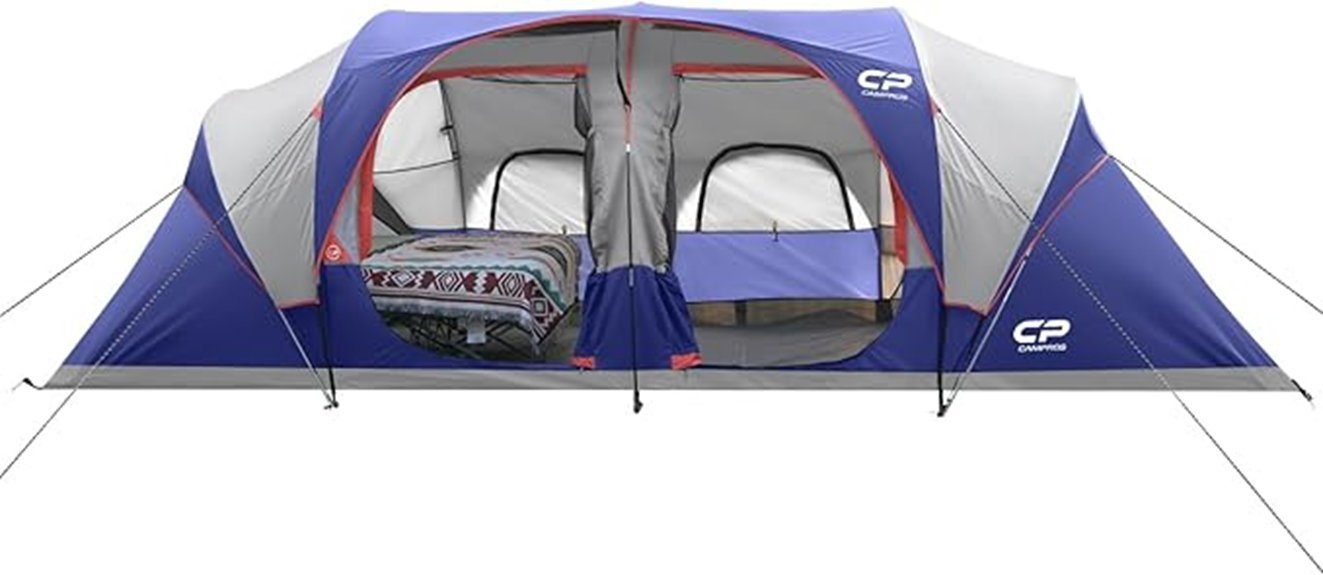
With 180 square feet and room for 12, CAMPROS suits large families and group campers. The CP Tent measures 20 by 9 feet with a 72-inch center height, offering enough floor space for three queen or five full air mattresses. Two removable curtains create either three private zones or one open shared area. Setup is straightforward, taking under 10 minutes with color-coded poles and no tools. Waterproof 185T polyester, sealed seams, rain strips, and a PU1000mm rating help resist wet weather. Mesh panels improve airflow, reduce condensation, and keep interiors cooler.
Best For: Large families or group campers who want a spacious, easy-to-set-up tent with good weather protection and airflow.
Pros:
- Sleeps up to 12 people and fits 3 queen or 5 full air mattresses
- Quick setup in under 10 minutes with color-coded poles and no tools
- Waterproof construction with sealed seams, rain strips, and mesh ventilation
Cons:
- Large footprint may be too big for smaller campsites
- Best suited for car camping rather than backpacking due to its size
- Bulkier design may take more effort to pack and transport
CAMPROS CP 8 Person Weather Resistant Family Tent
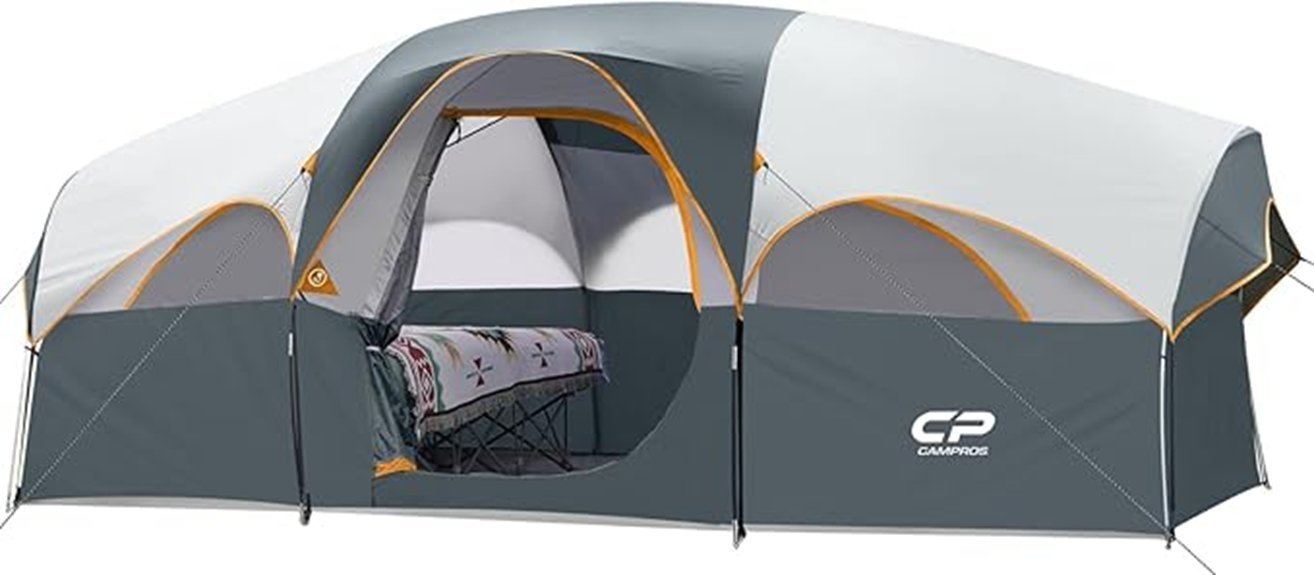
CAMPROS CP suits families needing a roomy, easy-to-pitch tent for weekend camping trips. This 8-person polyester model uses a straight-wall design with a 72-inch center height, giving occupants space to stand and change comfortably. Two people can assemble it in about five minutes, and a carry bag improves portability. Weather protection comes from a high-tech coating, sealed seams, and a waterproof strip. Inside, a divided curtain can create separate rooms or serve as a projector screen. Five mesh windows, plus mesh doors and roof, support airflow and clear views.
Best For: Families or group campers who want a roomy, easy-to-set-up tent with good ventilation and weather protection for weekend trips.
Pros:
- Spacious 8-person interior with a 72-inch center height for standing and changing
- Quick setup for two people in about five minutes, plus a carry bag for portability
- Weather-resistant features, including sealed seams, waterproof strip, and high-tech coating
Cons:
- Best suited for casual camping rather than extreme weather conditions
- Larger size may be less convenient for solo campers or small packs
- Polyester construction may not feel as durable as heavier-duty tent materials
EVER ADVANCED 10 Person Blackout Camping Tent
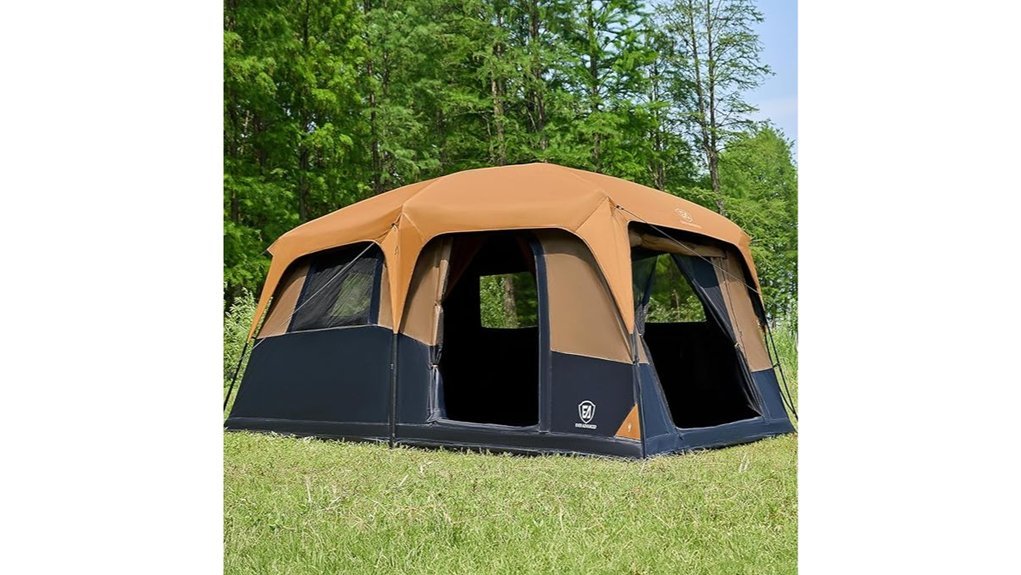
The EVER ADVANCED 10 Person Blackout Camping Tent suits families wanting a roomy, dark, and private shelter. Measuring 14 by 10 feet with an 84-inch center height, it fits up to three queen air mattresses and offers true stand-up comfort. Its multi-room layout, two doors, and divider improve privacy, while Dark Rest Technology helps block light and reduce heat. Polyester fabric with 4000MM water resistance, UV protection, and four-season suitability adds confidence. Four mesh windows, overhead vents, a skylight, and an awning-ready side door support airflow and versatility for camping, beaches, or parks.
Best For: Families and groups who want a spacious, dark, private, and easy-to-ventilate camping tent for multi-season outdoor trips.
Pros:
- Blackout design helps keep the interior cooler and darker for better sleep.
- Spacious layout fits up to three queen air mattresses with stand-up headroom.
- Multiple windows, two doors, a skylight, and an awning-ready side door improve airflow and versatility.
Cons:
- Large size may make setup and site placement more challenging in tight campsites.
- Best suited for car camping rather than backpacking due to its bulk.
- The dark interior may feel too enclosed for campers who prefer lots of natural light.
Wakeman Outdoors 10 Person Camping Tent with Rainfly
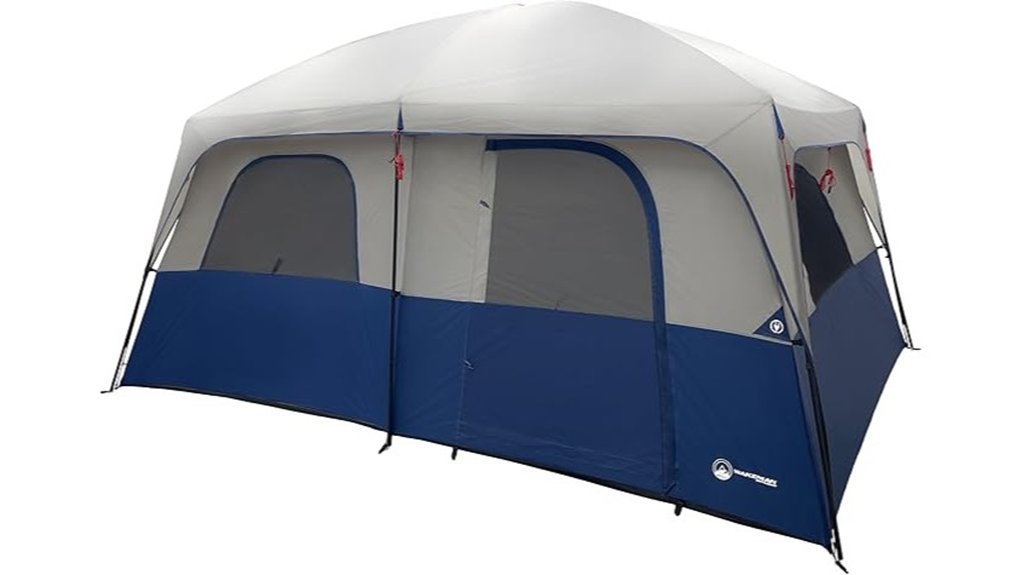
Designed for big groups, the Wakeman Outdoors 10 Person Camping Tent suits family trips and festival camping. It holds up to 10 adults or four queen-size mattresses, offering 168 by 120 inches of floor space and 84 inches of center height. A room divider adds privacy, while two D-style doors, four screened windows, and organizer pockets improve convenience. The removable rainfly and water-resistant build help in wet weather. Made from taffeta, mesh, PE sheet, steel, and fiberglass, it weighs 31.3 pounds and packs to 25 by 12 by 12 inches.
Best For: Large families, group campers, and festival-goers who need a spacious tent with privacy, ventilation, and basic weather protection.
Pros:
- Sleeps up to 10 adults or fits 4 queen-size mattresses
- Room divider, 2 doors, 4 screened windows, and organizer pockets add convenience
- Removable rainfly and water-resistant materials help in wet conditions
Cons:
- At 31.3 lbs, it’s fairly heavy to carry
- Large size may be cumbersome to set up and pack away
- Hand washing is recommended for care, which is less convenient
CORE Family Camping Tent for 10-12 People
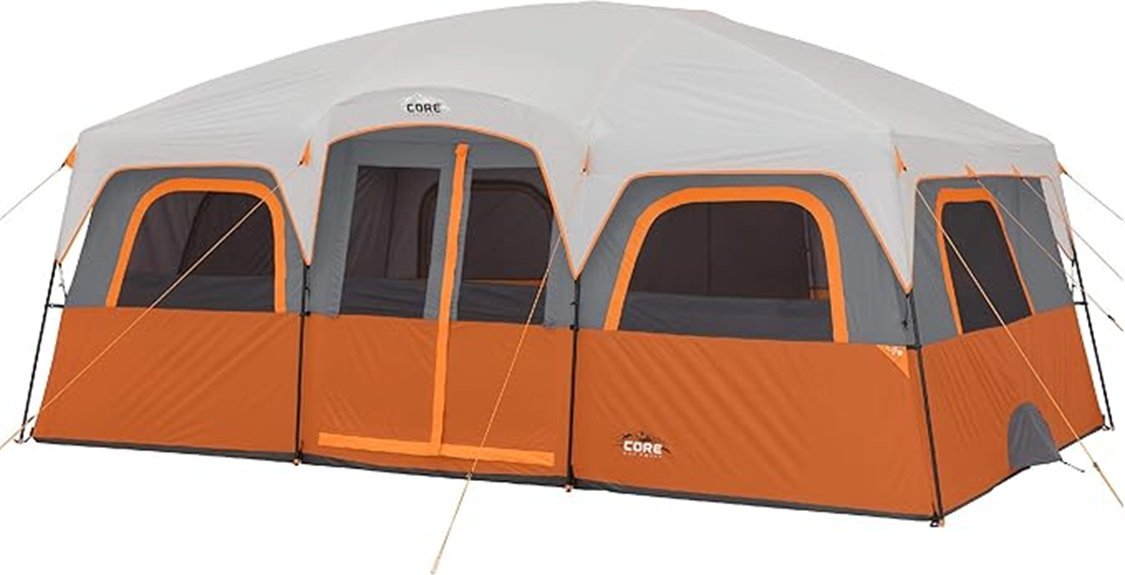
CORE’s family tent suits campers needing a roomy, budget-friendly shelter for group trips. Offered in 10-, 11-, and 12-person sizes, it measures 16 by 11 feet with an 86-inch center height and fits four queen air beds. Nearly straight walls improve standing room, while the room divider creates two private areas. H20 Block Technology, 1200mm fabric, taped rainfly, and sealed seams help manage weather. Nine windows and adjustable ventilation support airflow. Storage pockets, gear lofts, steel stakes, guylines, and a free-standing setup add convenience.
Best For: Families or group campers who want a roomy, budget-friendly tent with good interior space, privacy options, and weather protection.
Pros:
- Spacious 16 x 11 ft layout with 86-inch center height and nearly straight walls for easy standing and movement
- Room divider, 9 windows, and adjustable ventilation improve privacy, airflow, and comfort
- H20 Block Technology with 1200mm fabric, taped rainfly, sealed seams, stakes, and guylines add weather resistance and stability
Cons:
- Large size may be cumbersome to transport, set up, and store for some campers
- Best suited for car camping rather than backpacking due to its overall size and weight
- Budget-friendly design may not offer the premium durability or features of higher-end tents
UNP 10-Person Family Camping Tent, 2-Room Waterproof
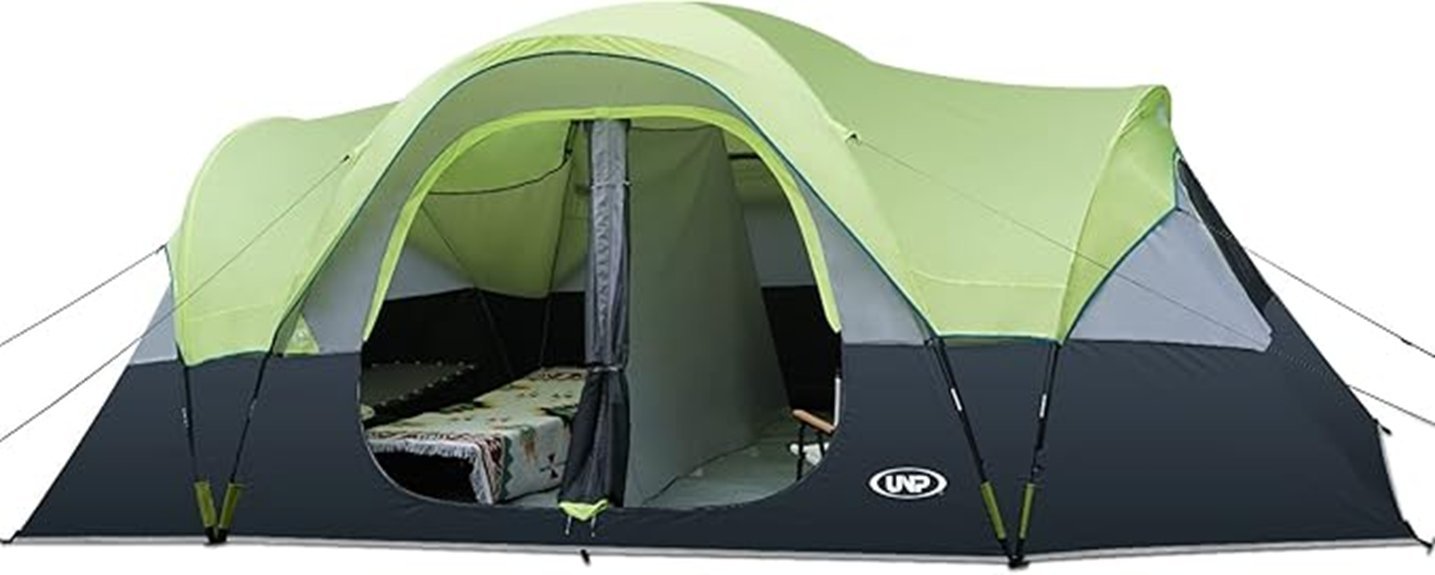
With room for 10 sleepers, the UNP family tent suits large groups needing simple, budget-friendly space. Measuring 18 feet by 9 feet by 78 inches, it holds 10 sleeping bags or three queen air mattresses. Two people can pitch it in about 10 minutes, and the packed carry bag stays reasonably compact for transport. A large mesh roof and five mesh windows improve airflow and permit stargazing. Its two-room layout includes a privacy divider, while 185T polyester with PU1000mm waterproofing, a vestibule, and extended awning help keep rain out.
Best For: Large families or groups who want a spacious, affordable 2-room camping tent with good ventilation and basic weather protection.
Pros:
- Fits up to 10 people or three queen air mattresses, making it ideal for group camping.
- Quick and easy setup for two people in about 10 minutes.
- Large mesh roof, five mesh windows, and a divider curtain add airflow, stargazing, and privacy.
Cons:
- PU1000mm waterproofing is decent but not ideal for very heavy or prolonged rain.
- Large size may be less practical for solo campers or small trips.
- Carry bag is still fairly large, so it may be cumbersome to transport over long distances.
FanttikOutdoor Instant Cabin Tent with Rainfly & Carry Bag
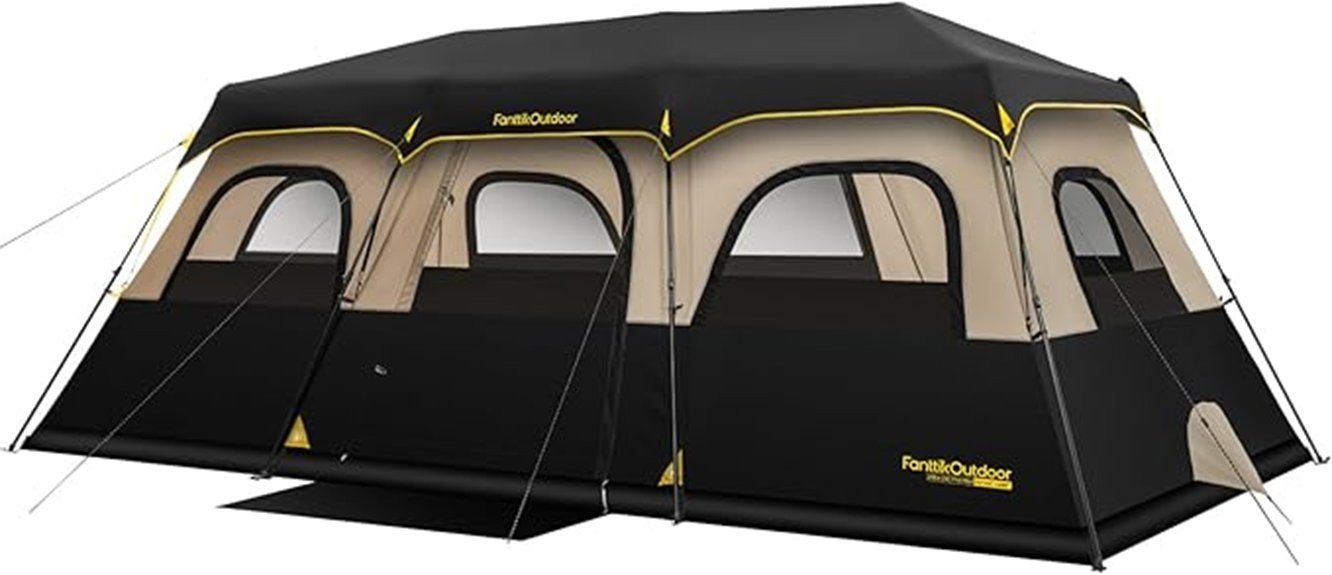
The FanttikOutdoor Instant Cabin Tent suits large groups needing fast setup and roomy comfort. It accommodates 12 people across 180 square feet, measures 216 by 120 inches, and stands 80 inches tall. Three separate spaces with a zippered divider improve privacy. Pre-installed poles allow a 90-second, free-standing setup, making it beginner-friendly. Its 3-season build includes 1500mm water resistance, a rainfly, strong pegs, and adjustable ropes for weather protection. Mesh windows, floor vents, and ceiling mesh support airflow, while polyester, carbon fiber poles, SBS zippers, storage pockets, and a power cord entrance enhance usability.
Best For: Large groups, families, or beginner campers who want a spacious, fast-to-set-up tent with good weather protection and ventilation.
Pros:
- Sets up in about 90 seconds with pre-installed poles, making it very beginner-friendly.
- Spacious 12-person, 180 sq. ft. design with 3 separate areas for added privacy.
- Strong all-around features like 1500mm water resistance, mesh ventilation, and convenient storage pockets.
Cons:
- At 41.8 pounds, it may be heavy to carry for long distances.
- Best suited for 3-season use rather than harsh winter conditions.
- Large size may require a roomy campsite and can be cumbersome for solo travelers.
Factors to Consider When Choosing Large Camping Tents
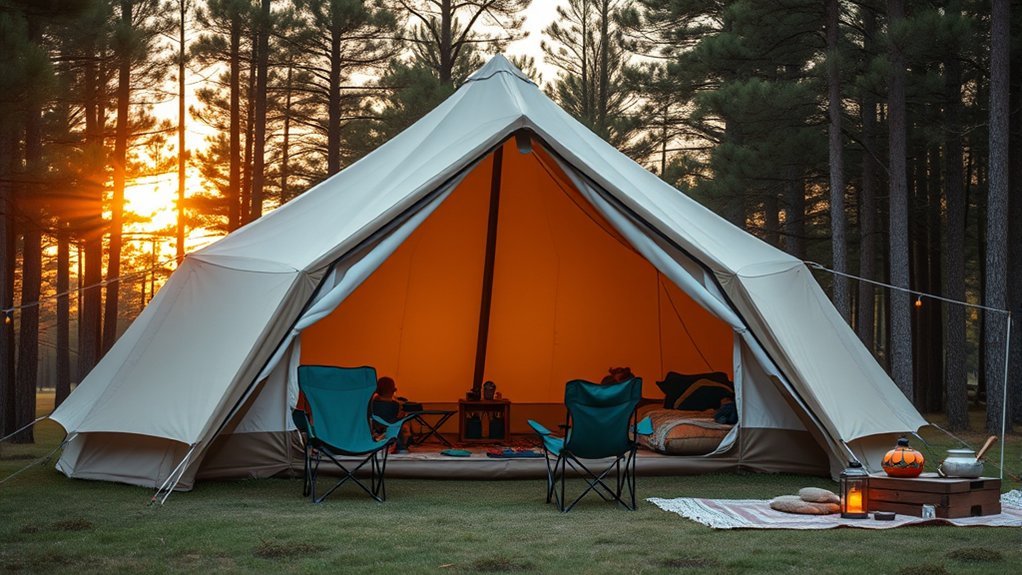
Choosing a large camping tent starts with matching tent capacity to the actual number of campers and their gear. Floor space layout, setup difficulty, weather protection, and ventilation features also shape how comfortable and practical the tent will be in real use. These factors together help narrow options to models that fit both the trip and the conditions.
Tent Capacity Needs
Capacity is the starting point when selecting a large camping tent, since these models can serve small groups of six or expand to family-sized setups for 12 to 14 people. The right choice depends on how many sleepers will use it and what type of bedding they plan to bring. Some tents accommodate multiple queen air mattresses, while others fit only a few full-size options or sleeping bags. A room divider can improve privacy by separating sleeping and shared areas, which is useful for larger parties. Buyers should also verify floor area, since many large tents range from about 126 square feet to more than 180 square feet. Center height matters too; models over 6 feet tall make standing and moving around easier for groups.
Floor Space Layout
Floor space layout becomes the next priority once capacity is set, because a large tent must do more than simply list enough sleepers on paper. A practical large tent should offer enough square footage for people, air mattresses, and gear without forcing constant rearrangement. Around 180 square feet is a useful benchmark for groups of about ten, since it reduces crowding and leaves room to move. Straight walls often improve usable space compared with sloped designs, making sleeping setups and walking lanes easier to manage. Multi-room layouts can add privacy and keep belongings organized, while also separating sleeping and communal areas. Clear zones for storage, rest, and shared activity help the interior stay orderly and comfortable, especially on longer camping trips with larger groups.
Setup Difficulty
Setup difficulty can make or break the appeal of a large camping tent, especially when time, weather, and group size all matter. Some models demand manual assembly that can take up to 15 minutes, while instant pop-up designs may be ready in under 2 minutes. For many family tents, two people are needed to manage poles, fabric, and alignment efficiently. Color-coded poles can reduce confusion and help inexperienced users finish faster. Clear instructions also matter, since proper assembly depends on following the guide and using included stakes and guylines correctly. Setup conditions should be considered as well; some manufacturers advise avoiding installation in high winds or heavy rain. In general, simpler systems save effort and reduce frustration, especially during repeated campsite changes.
Weather Protection
Weather protection becomes a major factor once a tent is pitched and the forecast turns uncertain. A waterproof rating of at least 1000mm helps large camping tents resist rain and ground moisture. Ripstop polyester adds durability and water resistance, making the shelter better suited to rough conditions. Fully taped seams and a reinforced rainfly reduce leak points and improve overall coverage during storms. Wind resistance also matters, especially in exposed campsites. Strong poles and secure guylines help the structure stay stable when gusts rise. Features that limit condensation, such as mesh windows and vents, can further support comfort in damp weather. Together, these elements create a tent that performs reliably when conditions turn wet, windy, and unpredictable.
Ventilation Features
Ventilation features play a key role in keeping large camping tents comfortable, especially when temperatures rise or moisture builds inside. Multiple mesh windows and roof vents help maintain steady airflow and limit condensation, which is especially important in crowded sleeping areas. A mesh ceiling can let hot air escape while admitting natural light, improving the interior environment without requiring extra lighting during the day. Large mesh screen doors also support circulation while allowing easy entry and exit. Adjustable ventilation systems are valuable because they let users adapt to changing weather, balancing airflow with rain protection. Some tents include chimney vents or roll-up windows, adding flexibility for climate control. Effective ventilation helps reduce stuffiness and supports a more pleasant camping experience overall.
Material Durability
Beyond airflow, the material quality of a large camping tent strongly affects how well it holds up over repeated use and changing conditions. Denier rating is a useful indicator of toughness; higher-denier fabrics usually resist abrasion better. Waterproof performance also matters, and ratings above 1000 mm are generally suitable for light to moderate rain. Polyester and nylon are both common, but they behave differently: polyester resists UV exposure better, while nylon is lighter and stronger yet more vulnerable to UV degradation over time. Durability also depends on reinforced seams and reliable zippers, which help prevent leaks and maintain function. Finally, fiberglass or aluminum poles support structure, with aluminum typically offering greater durability and strength than fiberglass.
Weight And Portability
Weight and portability are key considerations in a large camping tent, especially since models can range from about 21 lbs to more than 40 lbs, affecting how easily they can be carried to a campsite. Carry bags also matter, since compact packed sizes, such as 25.6 x 10.2 x 10.2 inches, make storage in a vehicle far simpler. Setup weight should not be overlooked; lighter tents are generally easier to handle during assembly, particularly for less experienced campers. Some large models include instant setup systems that can be ready in as little as 90 seconds, reducing effort before camp is established. Tent capacity is another clue, because shelters built for 12 or more people often weigh more and demand stronger transport planning.
Privacy And Rooms
Privacy becomes a major advantage in large camping tents, especially when multiple rooms or built-in dividers create separate sleeping and living areas for families or groups. Separate zones help reduce noise, organize gear, and give each camper more personal space. Room dividers can be moved or adjusted to suit changing needs, allowing the interior to shift from one open gathering area to several private sleeping sections. More doors and windows also support privacy by creating distinct entry points and limiting outside visibility. Straight-wall designs improve usable space, making it easier to divide the tent without losing headroom. These layouts often fit queen air mattresses or several sleeping bags, so larger parties can sleep comfortably while still maintaining a sense of separation and order inside.
Frequently Asked Questions
How Do I Safely Pitch a Large Tent on Uneven Ground?
The safest approach is to select the flattest available spot, clear rocks and roots, and orient the tent so sleeping areas rest on the highest side. Uneven ground should be leveled only slightly with soil or gear, never by digging deep. Use a footprint, tighten guy lines evenly, and stake securely. If the slope is severe, the tent should be moved, since stability and drainage matter more than convenience.
Which Tent Shapes Handle Strong Wind Best?
Low, sleek profiles stand firm while tall, boxy walls strain in the gusts. Dome and geodesic tents usually handle strong wind best because their curved shapes shed airflow and distribute pressure evenly. Tunnel tents can also perform well when pitched nose-first into the wind and secured properly. By contrast, cabin-style tents catch more wind and flex more. Stability depends on shape, setup, and anchoring, not size alone.
How Can I Improve Ventilation in a Crowded Family Tent?
Ventilation in a crowded family tent improves by opening roof vents, side panels, and any mesh windows to create crossflow. The tent should be oriented into the wind when safe, and gear should be kept away from vent openings. Damp clothes and wet boots belong outside or in a vestibule. A battery fan can help circulate air. If condensation persists, sleeping arrangements should be spaced out more evenly.
What Accessories Help Organize Gear Inside Large Camping Tents?
Mesh gear lofts, hanging organizers, and caddy-style storage bins help keep equipment sorted inside large camping tents. A detached observer would note that clip-on pockets, shoe mats, and lantern hooks reduce floor clutter and improve access to essentials. Packing cubes also make clothing easier to manage, while small waterproof tubs protect electronics and toiletries. Strategic placement near tent walls preserves central living space and supports smoother movement throughout the shelter.
How Do I Store a Large Tent to Prevent Mold?
To prevent mold, a large tent should be stored completely dry, clean, and loosely packed. Any dirt or moisture left behind can spoil it like milk in summer. The tent should be aired out after use, then folded only when all fabric, seams, and zippers are dry. It should be kept in a breathable storage sack in a cool, dark place, away from damp basements, garages, and direct sunlight.