Lightweight inflatable kayaks are becoming a practical choice for paddlers who want portability without giving up performance. In [2026], the market offers everything from rugged solo models to compact packrafts built for travel and quick launch. Each option serves a different kind of outing, and the differences can matter more than expected. The best fit is not always the most obvious one.
Key Takeaways
- Lightweight inflatable kayaks in 2026 prioritize portability, compact storage, and easy transport without sacrificing stability.
- Best options include INTEX Excursion Pro K1, AQUAGLIDE Noyo, Sevylor QuickPak, Retrospec’s Coaster, and a TPU packraft.
- Choose INTEX for solo fishing and touring, Noyo for beginners, and QuickPak for relaxed lake outings.
- For backpacking or bikepacking, the TPU packraft offers the lightest carry and exceptional compactness.
- Compare weight capacity, material durability, tracking, and warranty before choosing the best kayak for your needs.
INTEX Excursion Pro K1 Inflatable Kayak Set
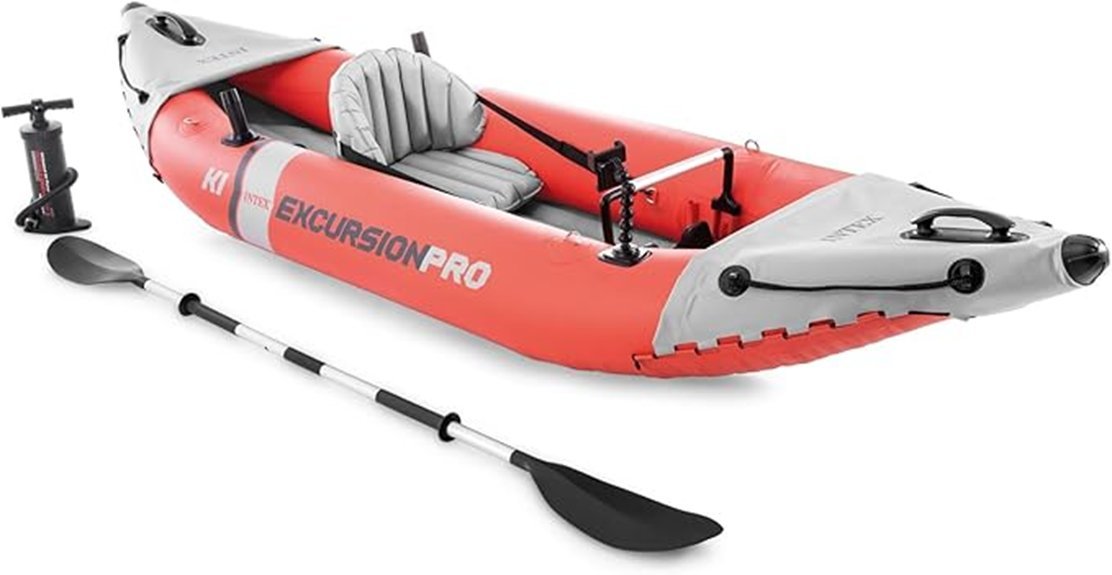
The INTEX Excursion Pro K1 Inflatable Kayak Set is a strong pick for solo paddlers who want a lightweight, compact kayak with enough stability for fishing or casual touring. It measures 10 feet by 3 feet, weighs 31.2 pounds, and supports up to 220 pounds. Built from SuperTough PVC with 3-ply laminate construction, it is designed for abrasion, impact, and UV resistance. High-pressure inflation adds rigidity, while two removable skegs help tracking. Storage space, rod holders, paddles, a pump, a phone mount, and a carry bag round out the package for practical use.
Best For: Solo paddlers who want a lightweight, compact inflatable kayak for casual touring or fishing, with solid stability and useful included accessories.
Pros:
- Durable SuperTough PVC 3-ply construction with abrasion, impact, and UV resistance
- High-pressure inflation and removable skegs improve rigidity, stability, and tracking
- Comes with paddles, fishing rod holders, a phone/GoPro mount, pump, repair patch, and carry bag
Cons:
- Limited to one paddler with a 220-pound weight capacity
- At 31.2 pounds, it is still relatively heavy for an inflatable solo kayak
- 90-day manufacturer warranty is fairly short
AQUAGLIDE Noyo
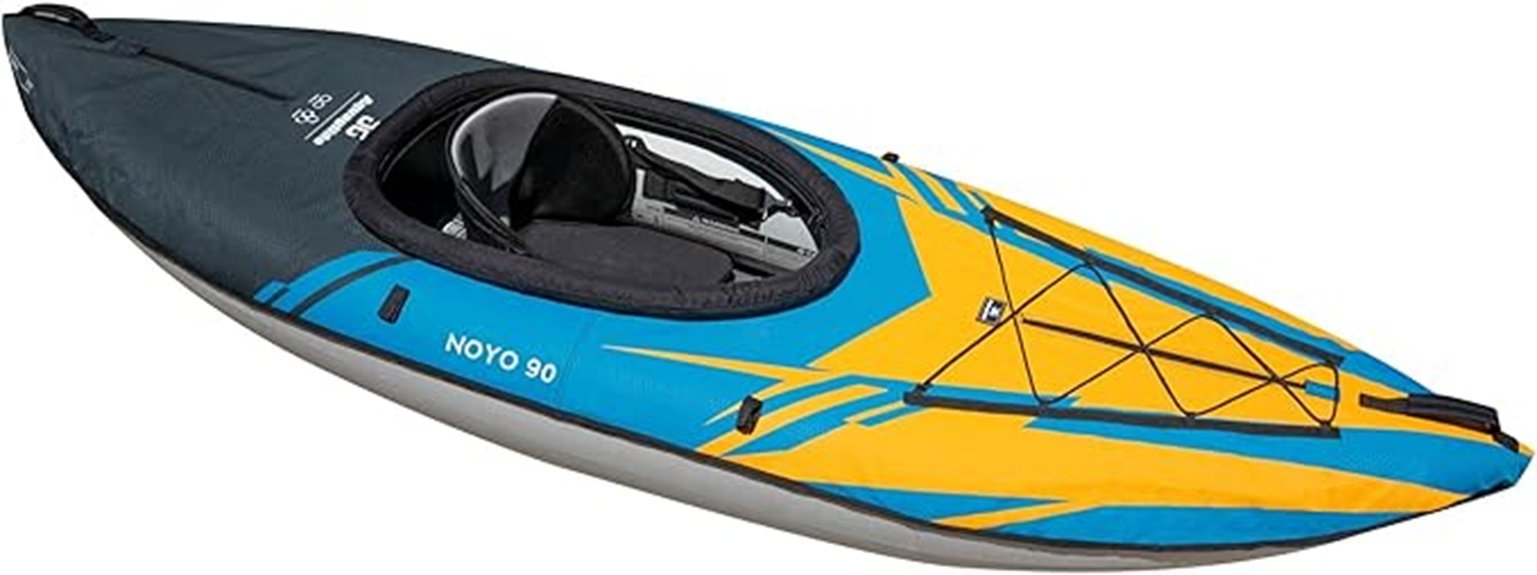
Weighing just 21 pounds, the AQUAGLIDE Noyo suits beginners seeking a stable, portable solo kayak. Its 9-foot length and 35-inch width provide reassuring balance, while the enclosed cockpit helps keep paddlers dry and secure. A zip-open dry compartment, accessory strap, molded handle, D ring, drain plug, Boston valve, and quick-release fin add practical utility. With a 250-pound capacity, it handles recreational outings on rivers and other waterways. AQUAGLIDE backs the Noyo with a one-year limited warranty, reinforcing its appeal for casual paddlers wanting dependable performance and easy transport.
Best For: Beginners and recreational paddlers who want a lightweight, stable, easy-to-transport solo inflatable kayak for casual outings on rivers and other waterways.
Pros:
- Very lightweight at 21 lbs, making it easy to carry and transport
- Stable 9-foot by 35-inch design with an enclosed cockpit for a secure, dry ride
- Handy features like a dry compartment, quick-release fin, molded handle, and drain plug
Cons:
- Solo seating only, so it’s not suitable for paddling with a partner
- 250 lb capacity may be limiting for larger paddlers or extra gear
- Better suited for recreational use than more demanding performance paddling
Lightweight TPU Inflatable Packraft for Water Adventures
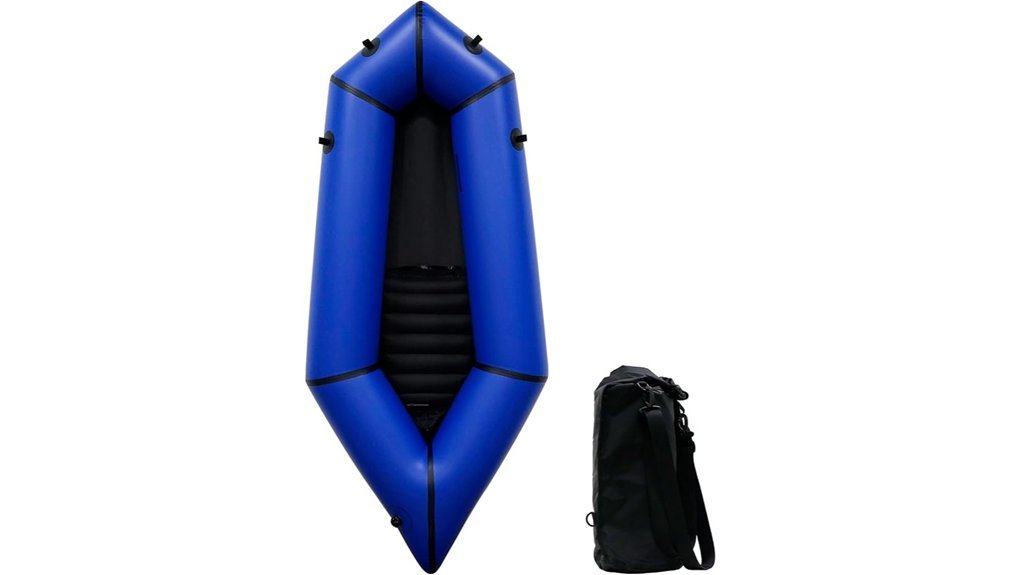
Built for adventurers needing portability, this TPU packraft suits backpackers, bike rafters, and anglers. Its 210D TPU body, reinforced by a 420D TPU bottom, offers strong abrasion and impact resistance while staying flexible in cold conditions. A double airtight design helps prevent leaks. Weighing 7.4kg and folding to 45x32cm, it packs easily into a backpack. The arrow-shaped hull, tail fin, and upgraded valves improve speed, stability, and inflation. With a 660-pound capacity, it carries bikes, luggage, and pets comfortably. An ergonomic seat reduces fatigue.
Best For: Backpackers, bike rafters, anglers, and other adventurers who need a lightweight, portable, and durable packraft for carrying gear, pets, or bicycles on the water.
Pros:
- Tough 210D TPU construction with a reinforced 420D TPU bottom for strong abrasion and impact resistance.
- Lightweight and compact at 7.4kg with folded dimensions of 45x32cm, making it easy to transport.
- Arrow-shaped hull, tail fin, and upgraded valves improve speed, stability, and inflation efficiency.
Cons:
- At 7.4kg, it may still feel heavy for some ultralight backpacking setups.
- Inflatable design can require setup time and regular checking for proper air pressure.
- Best suited for calm to moderate water use rather than highly technical whitewater conditions.
Sevylor QuickPak Inflatable Kayak
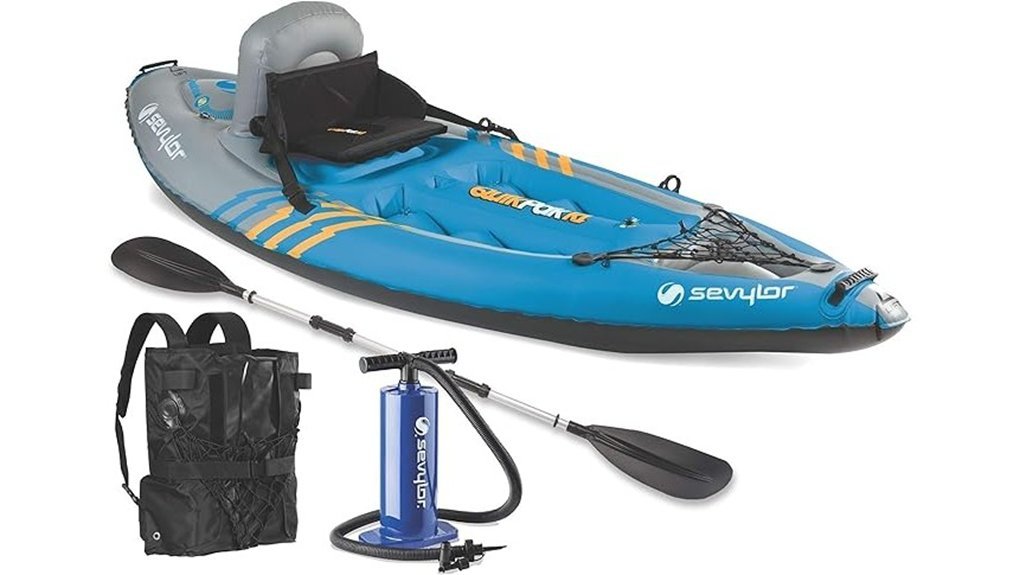
Sevylor QuickPak suits solo paddlers who want portable lake-ready performance. Its 21-gauge PVC build, tarpaulin bottom, and multiple air chambers provide practical durability, while the airtight system and Double Lock valves support straightforward setup and deflation. The backpack-style seat converts for carrying, then adjusts for back support on the water. A multi-position footrest and bungee-secured storage add convenience. At 20.3 pounds, it stays manageable, yet supports up to 400 pounds. Backed by a 90-day limited warranty, the blue, one-person K1 targets relaxed lake outings with compact transport and reliable stability.
Best For: Solo paddlers who want a lightweight, portable inflatable kayak for relaxed lake use with easy setup and compact storage.
Pros:
- Backpack-style seat converts into a carry system for added portability.
- 21-gauge PVC construction with a tarpaulin bottom and multiple air chambers helps improve durability and safety.
- Supports up to 400 pounds while weighing just 20.3 pounds, making it manageable to transport.
Cons:
- Designed for one person only, so it’s not suitable for tandem paddling.
- Best suited for calm lake outings rather than rougher water conditions.
- The 90-day limited warranty is relatively short.
Inflatable Touring Kayak with Waterproof Seat & Accessory Kit
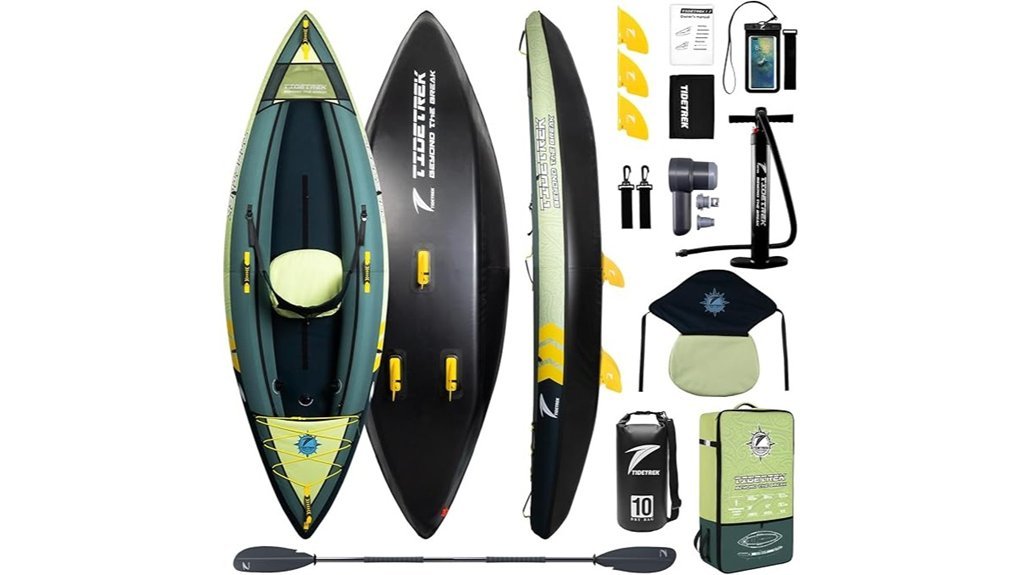
The inflatable touring kayak suits paddlers who want portability without sacrificing stability. Its reinforced PVC bladder sits inside 600D waterproof polyester with high-elastic PVC backing, while a 4-inch drop-stitch floor boosts rigidity and resists impacts and cross-leak issues. At 29.1 pounds in solo form, or 36.6 pounds as a tandem, it carries 220 or 330 pounds. A handheld electric pump and dual-action manual pump speed setup and pack-down. The lightweight paddle and triple-fin layout improve control and tracking. Waterproof seat, backpack, and 1-year warranties add practical value.
Best For: Paddlers who want a portable inflatable touring kayak with strong stability, easy setup, and useful included accessories for solo or tandem trips.
Pros:
- Reinforced PVC bladder and 4-inch drop-stitch floor provide solid rigidity, impact resistance, and improved stability.
- Dual pump system makes inflation and deflation faster and more convenient.
- Triple-fin tracking and included waterproof seat/backpack add control and practical value.
Cons:
- At 29.1 lbs solo and 36.6 lbs tandem, it may still feel heavy for some users compared with ultralight inflatables.
- Weight limits of 220 lbs solo and 330 lbs tandem may be restrictive for larger paddlers or extra gear.
- Requires assembly, inflation, and pack-down, which is less convenient than a hard-shell kayak.
Packraft TPU Inflatable Travel Kayak for 1 Person
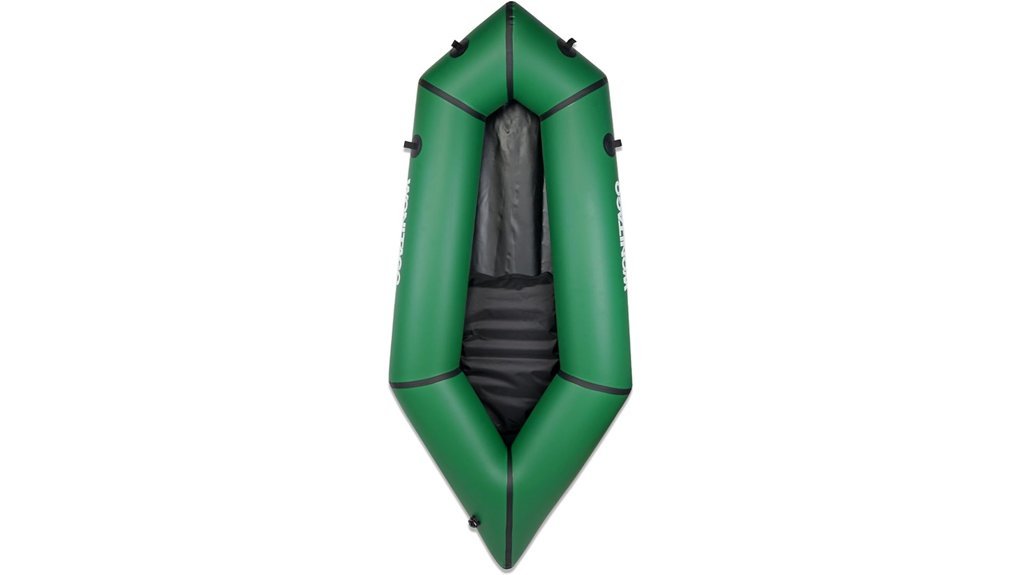
Weighing just 6 pounds, the WONITAGO Packraft-6.8ft Green suits solo adventurers who value portability. Built from 210D TPU on the sides and 420D TPU on the bottom, the PackRaft-6.8ft Green uses a dual-layer airtight construction for dependable, leakproof use. An upgraded air valve supports faster inflation, while the arrow-shaped profile improves handling on lakes and rivers. The inflatable soft seat adds comfort and steadiness. Designed for one person, it packs down small for backpack storage and works well for flat-water rafting, fishing, camping, bicycle drifting, and light dinghy trips.
Best For: Solo outdoor enthusiasts who want a lightweight, packable inflatable kayak for lakes, rivers, fishing, camping, and other calm-water adventures.
Pros:
- Very lightweight at just 6 lbs, making it easy to carry and transport.
- Durable TPU construction with dual-layer airtight design for reliable leakproof performance.
- Packs down small and includes a comfortable inflatable soft seat for added stability.
Cons:
- Designed for only one person, so it is not suitable for group paddling.
- Best suited for flat water and light use rather than rough or fast-moving conditions.
- Requires inflation before use, which adds setup time compared with hard-shell kayaks.
Retrospec Inflatable Kayak with Paddle, Pump & Carry Bag
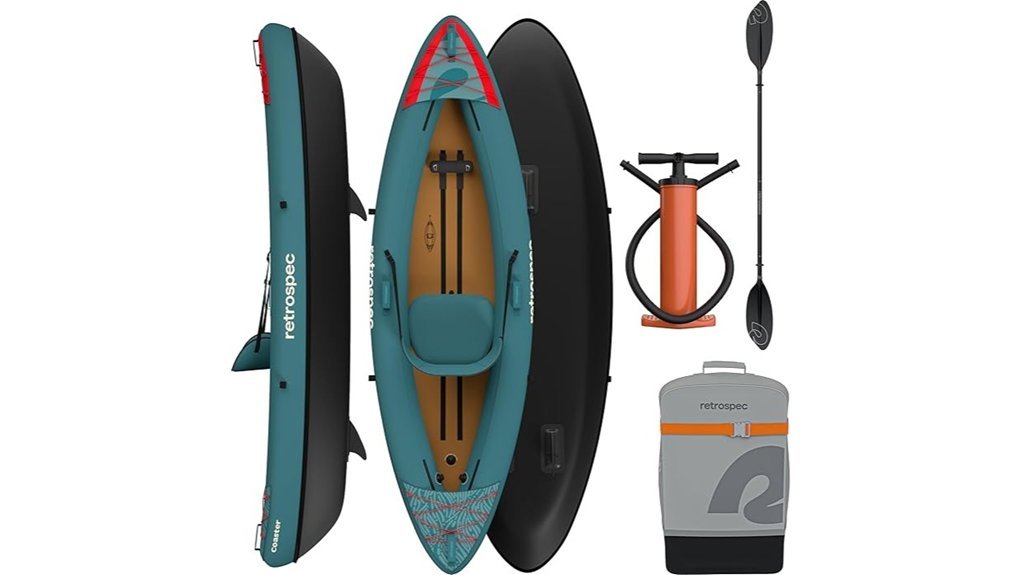
Retrospec’s Coaster suits solo paddlers wanting a lightweight, easy-to-transport kayak with included gear. The Coaster Single and Tandem Inflatable Kayak is built for adults, with 220-pound solo capacity and 440 pounds in tandem mode. At 23 pounds, it packs down into a compact carry bag after use. Its 900-denier puncture-resistant fabric and heavy-duty Tarpaulin hull support durability and stability. Setup takes minutes with the included dual-action pump, paddle, removable fins, and footrest. The roomy 9-foot-10-inch frame can also accommodate a pet. A USCG-approved PFD remains recommended for paddler and dog.
Best For: Solo paddlers or tandem users who want a lightweight, easy-to-store inflatable kayak that includes the essentials for quick setup and casual outings.
Pros:
- Lightweight at 23 lbs and packs into a compact carry bag for easy transport.
- Includes a dual-action pump, paddle, removable fins, and footrest for convenience.
- Durable 900-denier puncture-resistant fabric and Tarpaulin hull add stability and longevity.
Cons:
- Solo capacity is limited to 220 lbs, which may not suit larger paddlers or heavy gear loads.
- Inflation and setup still take a few minutes, so it’s not as instant as a rigid kayak.
- Best used with a USCG-approved PFD, adding an extra safety item to buy or carry.
Factors to Consider When Choosing a Lightweight Inflatable Kayak
When choosing a lightweight inflatable kayak, weight and portability are central, since the best option should be easy to carry and store without sacrificing performance. Material durability, weight capacity, stability and tracking, and the inflation system also shape how well the kayak handles regular use and different water conditions. A balanced design helps guarantee the kayak remains practical, reliable, and efficient on the water.
Weight And Portability
Weight and portability are among the most important factors in choosing a lightweight inflatable kayak, since total kayak weight can range from about 6 pounds to more than 31 pounds and directly affects transport and handling. A lighter model is easier to carry from a car to the shoreline, lift overhead, and manage alone. Compact deflation dimensions also matter, because many kayaks pack into a backpack for easier storage and travel. Weight capacity should not be overlooked; suitable models typically support 220 to 400 pounds, allowing room for paddlers and gear. Quick-release fins and ergonomic layouts can simplify setup and packing, making launching faster. In practice, the best choice balances low carry weight, compact stowage, and enough capacity for real-world use.
Material Durability
Durability is the backbone of a dependable lightweight inflatable kayak. Material thickness and composition strongly shape resistance to punctures, with 21-gauge PVC and 900-denier fabric offering solid protection in rougher water. Multi-ply laminate builds, including SuperTough PVC, add abrasion resistance and help shield against UV damage, extending service life. A drop-stitch floor improves rigidity and stability, letting the kayak absorb impacts while preserving performance. Airtight, dual-layer constructions reduce leakage risk and maintain structural integrity over time. For colder conditions, flexible materials such as upgraded TPU are advantageous because they resist cracking and stay resilient as temperatures fall. Together, these material choices determine how well a kayak endures repeated use, changing weather, and contact with abrasive surfaces.
Weight Capacity
A kayak’s construction only matters if it can safely carry the load intended for it. Weight capacity should be checked before purchase, because every model lists a maximum limit that includes the paddler, gear, and any pets. Single-person lightweight inflatable kayaks typically support about 220 to 400 pounds, though the right figure depends on actual trip needs. Packing extra equipment, food, or accessories can quickly add up and affect how the kayak performs on the water. Staying within the specified limit helps maintain safety and preserves efficiency. Exceeding that limit can cause poorer handling, reduced performance, and greater risk during use. Selecting a kayak with capacity matched to the intended load gives a more reliable, comfortable paddling experience.
Stability And Tracking
Stability and tracking are key factors in choosing a lightweight inflatable kayak, especially for newer paddlers or longer trips. Wider models generally provide better balance and greater resistance to tipping, which can boost confidence on calm water or in choppy conditions. Rigidity also matters: high-pressure construction and reinforced bottoms help the kayak hold its shape, while abrasion-resistant PVC supports durability. For tracking, multiple fins or a defined hull shape can help the kayak stay on line and cut down on constant corrective strokes. Removable skegs may further improve directional control and handling. Capacity should be respected as well, since carrying too much weight can reduce stability, hurt performance, and increase the chance of capsizing during use.
Inflation System
Inflation systems play a major role in how a lightweight inflatable kayak performs once it is on the water. A high-pressure system increases rigidity and stability, helping the kayak feel more responsive during use. Quick-release valves, including Boston valves, make inflation and deflation faster, which shortens setup and takedown time. Dual-action pumps are another useful feature because they move air on both the upstroke and downstroke, reducing effort and speeding inflation. Airtight construction, especially dual-layer designs, helps prevent leakage so the kayak holds pressure reliably. Spring-loaded valves can further improve convenience by limiting accidental air loss while still allowing efficient inflation and deflation. Together, these features determine how practical, dependable, and ready to use the kayak will be.
Storage And Accessories
Storage can make the difference between a kayak that simply floats and one that works smoothly on the water. Buyers often benefit from zip-open dry compartments or extra room in the bow and stern for gear, since these spaces help keep essentials organized and within reach. D-rings and bungee cords add flexibility by securing dry bags, small cases, and other accessories during travel. Included items such as paddles, pumps, or fishing rod holders can improve convenience and reduce the need for separate purchases. When the kayak is deflated, it should pack into a compact carry bag for easy transport and storage at home or in a vehicle. Accessible layouts matter too, especially when quick gear access is needed mid-paddle on busy outings.
Warranty Coverage
Warranty coverage is an important factor because it signals how much protection a buyer may have after purchase, and a longer term often suggests greater manufacturer confidence in the kayak’s durability and performance. For inflatable kayaks, coverage typically lasts 90 days to one year, varying by brand and model. Many warranties are limited, protecting against manufacturing defects rather than normal wear, accidental damage, or misuse. Buyers should read the terms closely, since some warranties require product registration or specific maintenance to stay valid. Customer service support also matters, because prompt assistance can help resolve defects, replacement parts, or claim questions during the kayak’s life. A clear warranty can reduce risk and improve long-term ownership value.
Frequently Asked Questions
How Long Do Lightweight Inflatable Kayaks Typically Last?
Well cared for, they often last 5 to 10 years, sometimes longer. Lightweight inflatable kayaks typically hold up best when stored dry, cleaned after use, and protected from UV exposure and sharp surfaces. Cheaper materials may wear sooner, while reinforced fabrics and quality seams extend life. As the saying goes, “An ounce of prevention is worth a pound of cure,” especially where punctures, abrasion, and heat are concerned.
Can I Use a Lightweight Inflatable Kayak in Saltwater?
Yes, a lightweight inflatable kayak can be used in saltwater if it is rinsed thoroughly after each trip and dried completely. Saltwater can damage valves, seams, and accessories over time, so regular maintenance matters. Corrosion-resistant hardware and UV protection help extend life. It is wise to check the manufacturer’s guidance, since some models are better suited to marine conditions than others and may need extra care.
How Do I Patch a Puncture on an Inflatable Kayak?
A puncture on an inflatable kayak is patched by cleaning and drying the damaged area, lightly sanding around the hole, and applying the manufacturer’s recommended adhesive and patch. The patch should be pressed firmly, smoothed to remove air, and left to cure for the advised time. Afterward, the kayak can be reinflated and checked for leaks in water or with soapy solution before use.
Are Lightweight Inflatable Kayaks Allowed on Airplanes?
Yes, lightweight inflatable kayaks are generally allowed on airplanes, provided they are fully deflated, clean, and packed within airline size and weight limits. Airline rules vary, so confirmation with the carrier is necessary before travel. Lithium batteries, CO2 cartridges, or inflators may face restrictions in checked or carry-on bags. A carry bag helps with screening. Some airlines may require sporting equipment fees or special handling.
What Storage Conditions Help Prevent Material Damage?
Cool, dry, shaded storage helps prevent material damage. It is best to fully clean and dry the item before packing it away, since trapped moisture can promote mold, mildew, and adhesive failure. Avoid direct sunlight, heat sources, sharp edges, and cramped spaces that can crease or abrade the fabric. Slightly inflated, loosely folded storage is often preferable, with occasional checks to guarantee no pests, chemicals, or heavy objects are pressing on it.