The best camping tents in this roundup cover very different needs: roomy family camping, fast instant setup, and lighter short-trip use. The right pick depends less on the printed person count and more on usable floor space, peak height, setup effort, ventilation, and how much weather protection you actually need. This guide compares the five tents already featured here, then shows you how to choose a campsite that suits the tent.
Quick Answer
Choose the Wenzel Klondike 8 if screened living space matters most, the FanttikOutdoor Zeta C6 Pro if you want very fast setup, or the CAMPROS CP 4-person dome if lower weight and a compact pack are higher priorities. For any model, leave room for gear instead of relying only on the advertised sleeper count.
Key Takeaways
- Advertised capacity is a maximum sleeping count, not a promise of roomy comfort with bags, shoes, and other gear inside.
- Instant and pre-attached-pole tents save setup time, but they can be heavier and bulkier to transport.
- Waterproof ratings are only part of rain performance; fly coverage, seam construction, floor design, staking, and site drainage also matter.
- A level, durable tent pad with good drainage is usually more useful than a scenic low spot that can collect water.
- In lightning, a tent is not safe shelter; move to a substantial building or hard-topped vehicle when one is available.
| Tent | Listed capacity | Key size or setup detail | Best fit |
|---|---|---|---|
| Wenzel Klondike 8 | 8 people | 16 x 11 ft; 98 sq. ft. main area plus 60 sq. ft. screen room | Family car camping with extra living space |
| Hewolf 2-4 Person Pop Up | 2-4 people | Instant hexagonal design; two doors | Campers who prioritize quick setup and ventilation |
| FanttikOutdoor Zeta C6 Pro | 6 people | 120 x 108 in.; 66 in. high; under-60-second claimed setup | Beginners and fast-pitch car camping |
| CAMPROS 6/8 Person | Up to 8 people | 108 sq. ft.; tall cabin-style interior | Larger families wanting standing room |
| CAMPROS CP 4-Person Dome | 4 people | 8 x 7 x 50 in.; 8.2 lb; about 5-minute setup | Couples or small groups with gear |
Wenzel Klondike 8 Person Water Resistant Tent
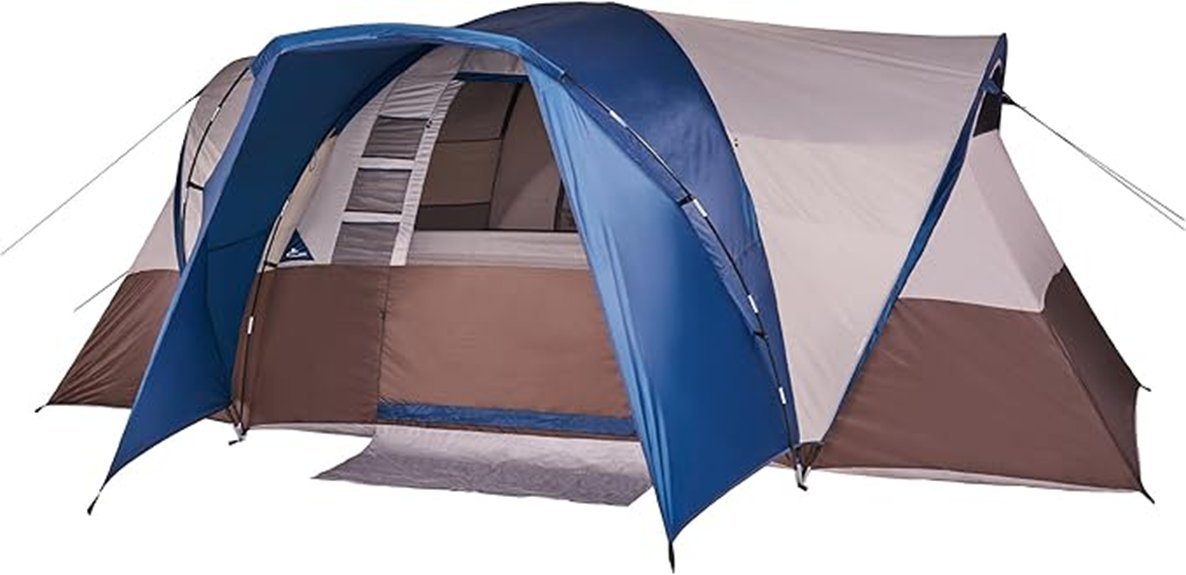
The Wenzel Klondike 8 is the roomiest option here for campers who want a separate screened area for sitting, gear, or extra sleeping space. According to Wenzel’s Klondike 8 specifications, the tent measures 16 by 11 feet, provides 98 square feet of main floor area, and adds a 60-square-foot screen room.
Its 78-inch peak height gives most adults standing room. The Weather Armor polyester fabric uses a polyurethane water-resistant coating, while the welded polyethylene floor, removable seam-sealed fly, mesh roof vents, side windows, and rear vent balance protection with airflow. Fiberglass roof poles work with steel uprights and corner elbows.
Best For: Family car campers and small groups who value living space, standing height, and a screened room more than compact packed size.
Pros:
- Large 16 ft. x 11 ft. footprint with a 98 sq. ft. main area and 60 sq. ft. screen room
- Full mesh roof, windows, and rear vent support airflow in mild weather
- Removable rainfly, welded floor, and treated seams improve protection from rain and ground moisture
Cons:
- The large footprint needs a campsite with plenty of clear, level space
- At 27.3 lbs., it may be bulky for campers who need a lighter shelter
- The fiberglass-and-steel frame is better suited to car camping than weight-sensitive travel
Hewolf 2-4 Person Pop Up Camping Tent
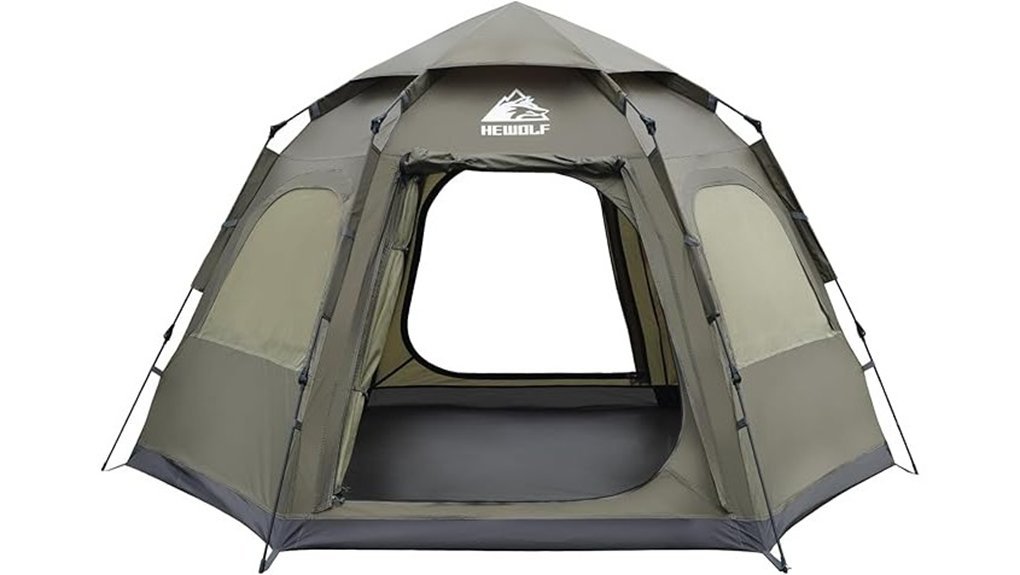
The Hewolf 2-4 Person Pop Up Camping Tent is built for campers who would rather spend less time assembling poles. Its instant mechanism uses a lift-and-lock process, while the hexagonal floor plan, two doors, mesh screens, pockets, and lantern hooks make the interior easier to use for a couple, small family, or group.
The listing for this model describes 4500mm waterproofing, sealed seams, Oxford cloth, SBS zippers, a rainfly, four poles, and two vestibules. It also lists a 5 kg weight. That makes it far more realistic for car camping and short carries than for ultralight backpacking, despite broad marketing language that also mentions hiking and backpacking.
Best For: Campers who want quick setup, two-door access, and a flexible 2-to-4-person layout for three-season trips.
Pros:
- Instant setup reduces the amount of pole assembly at camp
- Two doors and mesh screens help with entry, exit, and cross-ventilation
- Storage pockets and lantern hooks add useful organization inside
Cons:
- At about 5 kg, it is heavy compared with purpose-built backpacking tents
- The hexagonal footprint can be harder to fit on small or narrow tent pads
- The 4500mm waterproof claim is difficult to confirm from a current manufacturer page, so buyers should verify the exact listing before purchase
FanttikOutdoor Instant Cabin Camping Tent with Rainfly
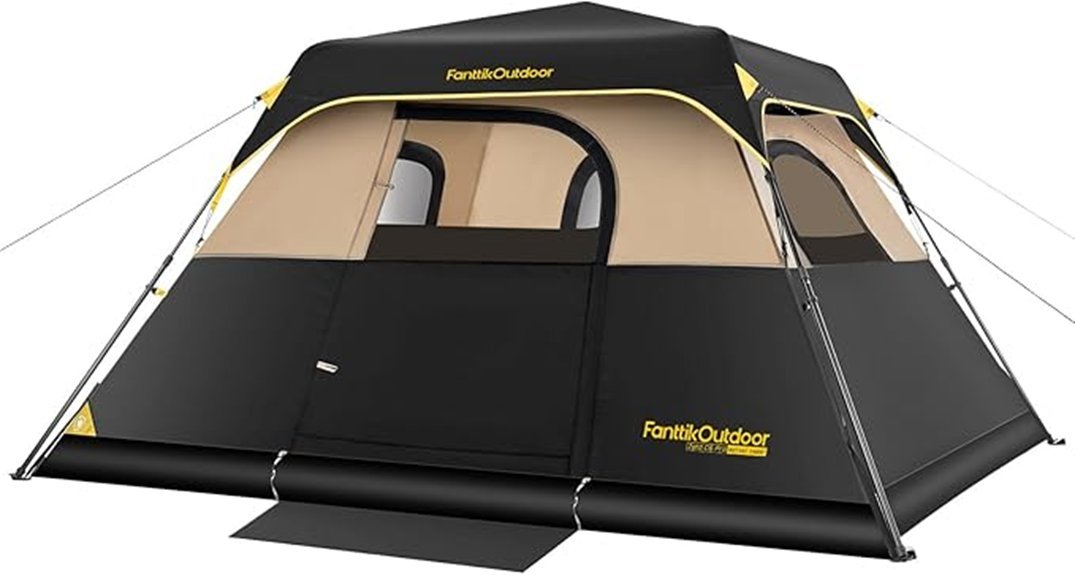
The FanttikOutdoor Zeta C6 Pro stands out for very fast setup. The FanttikOutdoor Zeta C6 Pro product page says its pre-installed poles allow setup in under 60 seconds and lists a 120-by-108-inch floor with a 66-inch maximum height.
Four mesh windows, a mesh ceiling, a ground vent, an electrical-cord entrance, and internal storage help with day-to-day livability. The brand describes the tent as a six-person model, but a six-person label is best treated as a maximum sleeping capacity. Allowing room for bags and bedding usually makes a smaller group more comfortable.
One specification needs extra care: the same official product page says 16.8 pounds in its marketing copy but shows 19.03 pounds in its comparison table. If packed weight matters to you, confirm the exact variant before ordering.
Best For: Beginner campers and families who want a cabin-style tent with pre-attached poles and minimal setup time.
Pros:
- Under-60-second claimed setup with pre-installed poles
- Four mesh windows, ceiling mesh, and a ground vent improve airflow
- 90-square-foot listed floor area gives a small family room to spread out
Cons:
- Only one door, which is less convenient than two-door family tents
- The brand’s own page currently shows conflicting weight figures
- A six-person sleeping claim leaves less room for gear than a smaller group would have
CAMPROS 6/8 Person Waterproof Family Camping Tent
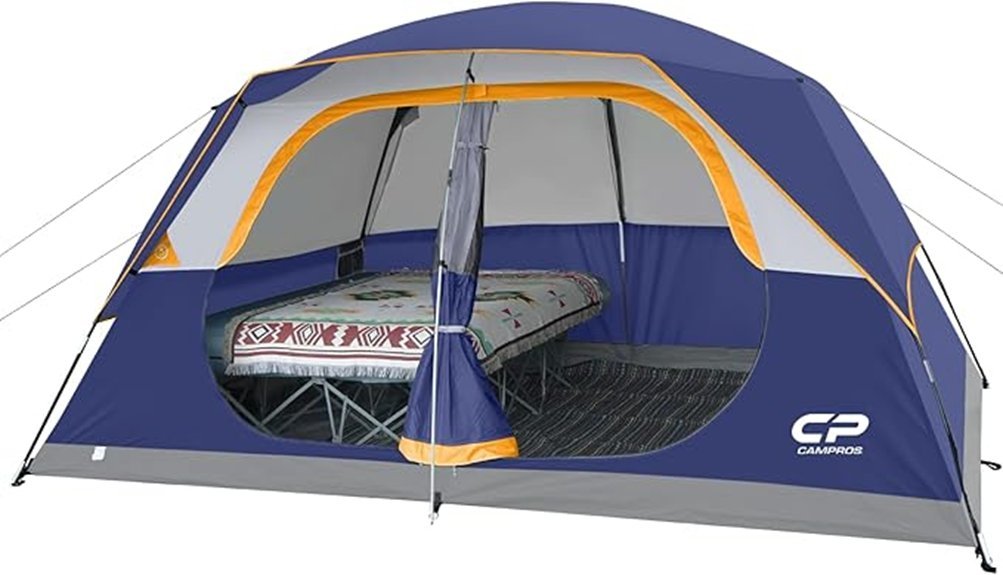
The CAMPROS 6/8 Person Waterproof Family Camping Tent is the large-group option in this list. Its stated 108-square-foot floor area, near-vertical walls, and tall interior give families more usable standing and changing space than a low dome with the same advertised capacity.
The listing describes pre-attached poles for setup in about five minutes, 1000mm waterproof fabric, taped seams, a full rainfly, a vestibular awning, mesh roof panels, and reinforced stakes. Those features are practical for three-season family camping, but the size and listed 9.89 kg weight make it a car-camping shelter rather than a tent you would want to carry far from the vehicle.
Best For: Larger families and groups who need floor space and standing room and expect to camp close to the car.
Pros:
- 108 sq. ft. of stated floor area gives a group more space for sleeping pads and gear
- Near-vertical walls make the usable interior feel larger than a sloped dome
- Mesh roof and door panels improve ventilation in mild conditions
Cons:
- Large footprint may not fit smaller campground tent pads
- At 9.89 kg, it is cumbersome for long carries
- The exact height and waterproof specifications for this ASIN are not easy to confirm from a current manufacturer page
CAMPROS Waterproof Dome Camping Tent for 2-6 People
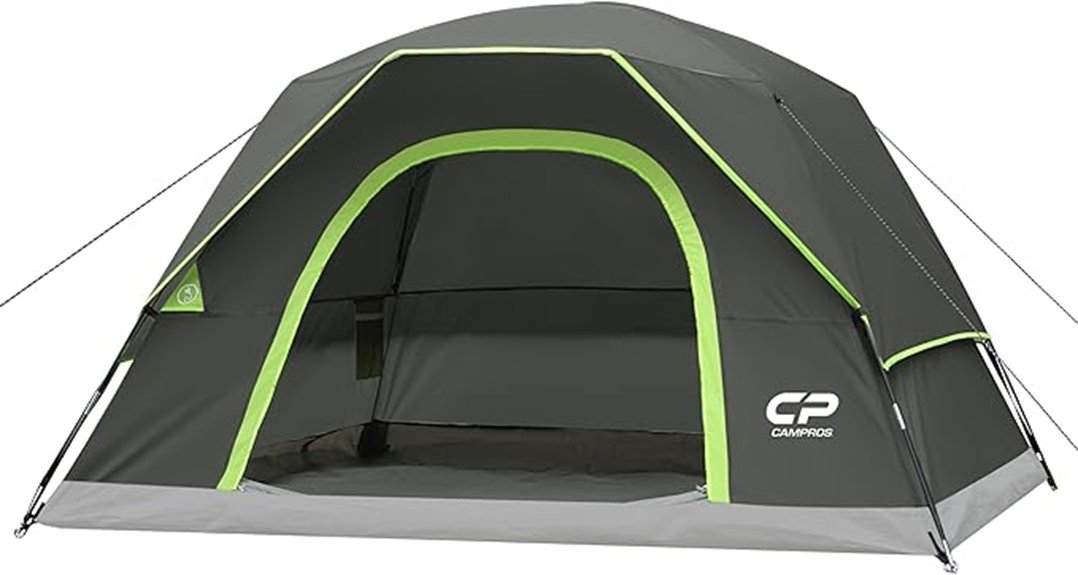
The CAMPROS CP dome is the most compact option in this roundup. For the 4-person version, the CAMPROS CP official specifications list an 8-by-7-foot floor, 50-inch center height, 8.2-pound weight, 1500mm polyurethane coating, and about a five-minute setup.
The 185T polyester shell, PE floor, mesh roof, large mesh window, wide door, rainfly, and storage pockets suit ordinary three-season car camping. CAMPROS itself notes that the four-person version is more comfortable for two to three campers plus gear, which is a useful reminder not to treat capacity labels as comfort ratings.
Best For: Couples, small families, or occasional campers who want a lighter dome tent without moving to a backpacking-specific shelter.
Pros:
- 8.2-pound listed weight is easier to move around camp than the larger family tents here
- About five-minute setup keeps the pole system straightforward for beginners
- Mesh roof and window improve airflow and allow stargazing when the rainfly is removed in dry weather
Cons:
- 50-inch center height does not provide adult standing room
- The 4-person label is tight once you add normal camping gear
- It is designed for ordinary three-season use, not severe winter or expedition conditions
How to Choose the Best Camping Tent and Campsite
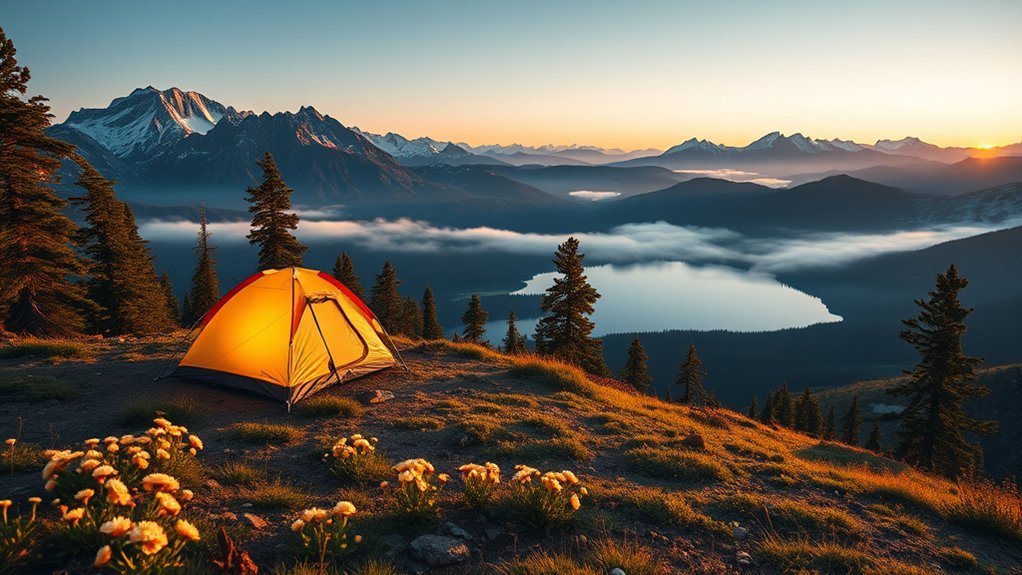
A good tent can still feel miserable on a bad campsite. Match the shelter to your group first, then make sure the site offers enough room, level ground, drainage, ventilation, and a safe position away from obvious hazards. The five checks below cover the biggest differences between a comfortable setup and an avoidable problem.
Weather Conditions
Choose your tent for the conditions you reasonably expect, but do not rely on one waterproof or wind number. Rain performance also depends on rainfly coverage, seam construction, the floor, staking, guylines, and whether the site drains well.
For thunderstorms, shelter choice matters more than the tent’s fabric. The National Weather Service lightning guidance says a tent is not safe lightning shelter. If you hear thunder and a substantial building or hard-topped vehicle is available, move there and wait at least 30 minutes after the last thunder before returning.
Site Size and Layout
Check the tent’s actual footprint before you book or choose a site. A large family tent needs clear space beyond the floor dimensions for the door, stakes, and guylines, while an instant cabin can be awkward on a narrow tent pad even if its sleeping capacity looks suitable.
In established campgrounds, use the designated tent pad when one is provided. In the backcountry, Leave No Trace recommends durable surfaces and, where local rules allow dispersed site selection, camping about 200 feet from lakes and streams to protect shorelines and leave wildlife access to water.
Ground Surface Quality
Flat, durable ground usually gives you the best sleep and the least stress on the tent floor. Avoid depressions, drainage channels, exposed roots, sharp rocks, and dead trees or branches that could fall.
The National Park Service campsite guidance recommends level ground that is not in a low spot and warns against ravines that can flood. On an established site, do not dig trenches or clear living vegetation just to make the pad flatter.
Water Resistance Needs
A higher hydrostatic-head rating can indicate that a fabric resists more water pressure, but it does not tell you how the whole tent will perform in a storm. A well-pitched fly, sealed or protected seams, a bathtub-style floor, and smart site drainage can matter just as much.
That is why the numbers in this roundup should be read as material specifications, not guarantees. Before a wet-weather trip, pitch the tent at home, confirm the fly orientation, inspect seams and zippers, and make sure all guylines and stakes are present.
Setup Ease and Space
Fast setup is most valuable when you arrive late, camp with children, or move often. Instant models such as the FanttikOutdoor and Hewolf reduce pole work, while conventional dome tents can pack smaller and use simpler parts.
Space deserves the same attention. Compare floor dimensions, peak height, doors, vestibules, and your sleeping-pad layout rather than choosing by person count alone. If everyone fits only shoulder to shoulder with no place for bags, the tent may technically meet its capacity rating but still be a poor fit for the trip.
Frequently Asked Questions
What Permits Are Needed for Tent Camping in National Parks?
There is no single permit that covers tent camping in every national park. Developed campgrounds may require reservations, while overnight backcountry trips often require a separate wilderness or backcountry permit. For example, Grand Canyon National Park requires backcountry permits for overnight use outside developed campgrounds and certain other areas.
How Do I Keep Bears Away From My Campsite?
Keep food, trash, toiletries, and other scented items out of your tent and store them exactly as the local campground requires. The National Park Service bear-food guidance notes that rules vary by park and may require lockers, vehicles, bear-resistant containers, or approved food hangs. Clean cooking areas and pack out food scraps.
What Foods Are Easiest to Pack for Camping Trips?
Lightweight, shelf-stable foods are usually the easiest to pack when refrigeration is limited. Trail mix, jerky, oatmeal packets, instant noodles, granola bars, dried fruit, peanut butter, tortillas, tuna pouches, and canned beans are simple options. Pre-portioning meals also reduces packaging, makes food storage easier, and can shorten cleanup at camp.
How Can I Find Campsites With Reliable Cell Service?
Start with your carrier’s coverage map, then compare it with recent campground reviews and the campground’s own notes about connectivity. Reception can change within the same park because of ridges, valleys, trees, distance from towers, and network congestion. Download maps and reservation details before arrival instead of assuming a coverage-map color guarantees service.
What Weather Apps Help Predict Camping Conditions?
Windy, AccuWeather, Weather Underground, and NOAA or National Weather Service forecast tools can all help you watch rain, wind, temperature, radar, and thunderstorm risk. Use the forecast for the actual campsite area, not your home city. In mountains and remote terrain, conditions can change quickly, so keep an offline backup when cell service is uncertain.
Sources
- Wenzel Klondike 8: floor area, screen room, height, materials, ventilation, and frame details.
- FanttikOutdoor Zeta C6 Pro: setup claim, dimensions, ventilation, capacity, and the conflicting published weight figures.
- CAMPROS CP 4-Person Tent: size, weight, setup time, materials, and 1500mm coating.
- Leave No Trace: Travel and Camp on Durable Surfaces: durable-site selection and the 200-foot water guideline.
- National Park Service: Finding and Setting Up a Campsite: level-ground, flooding, tree, fire, and campsite-safety guidance.
- National Weather Service: Lightning Safety Outdoors: tents are not safe lightning shelter and the 30-minute waiting guidance.
- Grand Canyon National Park: Permits and Reservations: developed-campground and backcountry permit distinctions.
- National Park Service: Bear Safety and Food Storage: scented-item storage and bear-country food rules.