Arizona packs an extraordinary range of landscapes and experiences into one state, from the mile-deep Grand Canyon and Sedona’s red-rock country to giant saguaros, historic Western towns, mountain forests, and Navajo Nation landmarks. The best places to visit depend on your season, interests, and how much time you have, because several of Arizona’s most famous attractions require advance reservations or careful weather planning.
Quick Answer
The best places to visit in Arizona include Grand Canyon National Park, Sedona, Monument Valley, Antelope Canyon, Saguaro National Park, Tombstone, Havasu Falls, Scottsdale, Prescott, and Flagstaff. Choose Grand Canyon and Sedona for scenery, Antelope Canyon for photography, Saguaro for desert landscapes, Tombstone for history, and Flagstaff for mountain adventures and stargazing.
Key Takeaways
- Grand Canyon, Sedona, Monument Valley, and Antelope Canyon are standout choices for dramatic landscapes and photography.
- Antelope Canyon requires a guided tour, while Havasu Falls requires an advance Havasupai reservation and is normally an overnight trip.
- Southern Arizona is generally most comfortable during the cooler months, while northern Arizona is especially popular from late spring through fall.
- Arizona’s summer heat and monsoon storms can make hiking dangerous, so check current conditions before entering canyons or exposed desert trails.
- Most travelers get around most efficiently by car because the major destinations are spread across the state.
Best Places to Visit in Arizona at a Glance
| Place | Best For | Planning Note |
| Grand Canyon National Park | Iconic views and hiking | Do not treat a river-and-back hike as a casual day hike. |
| Sedona | Red rocks, hiking, art | Popular trailheads can be busy, especially on weekends. |
| Monument Valley | Southwest scenery and Navajo culture | The scenic loop is a rough dirt road; guided tours are available. |
| Antelope Canyon | Slot-canyon photography | A guided tour is mandatory. |
| Saguaro National Park | Sonoran Desert scenery | Visit early or late during hot weather. |
| Tombstone | Old West history | Easy to combine with a southern Arizona trip. |
| Havasu Falls | Waterfalls and backpacking | Advance Havasupai reservations are required. |
| Scottsdale | Dining, resorts, art, desert trails | Use the McDowell Sonoran Preserve for in-city hiking. |
| Prescott | History, lakes, Granite Dells | A strong choice for a cooler central-Arizona getaway. |
| Flagstaff | Mountains and stargazing | Expect a much cooler climate than Phoenix. |
Grand Canyon National Park
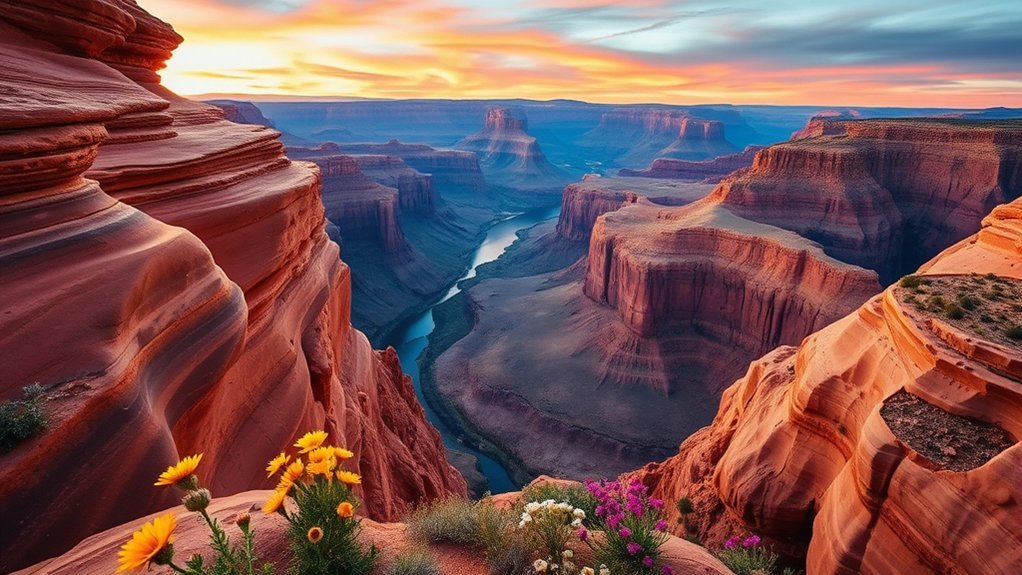
Grand Canyon National Park is Arizona’s signature natural attraction. From overlooks along the South Rim, immense layers of red, orange, tan, and brown rock descend toward the Colorado River, creating one of the most recognizable landscapes in the United States.
First-time visitors do not need to hike deep into the canyon to enjoy it. Walk part of the Rim Trail, stop at overlooks, watch sunrise or sunset, or take a carefully planned hike a short distance below the rim. The South Rim is open year-round, while North Rim access is seasonal and can be affected by weather, wildfire, and trail conditions.
Warning: Do not attempt to hike from the rim to the Colorado River and back in one day as a casual sightseeing trip. The National Park Service specifically advises against a rim-to-river-and-back day hike, and summer inner-canyon temperatures can become life-threatening. Check current trail, water, and weather conditions before hiking below the rim.
For current hiking guidance, trail conditions, and entrance information, use the National Park Service Grand Canyon hiking guide. Entrance fees apply, and fee rules can change, so check the official park site before your visit.
Sedona
After the scale of the Grand Canyon, Sedona offers a more intimate red-rock landscape. Massive sandstone formations rise around town, while hiking and mountain-biking trails lead through canyons, mesas, and high viewpoints.
Cathedral Rock and Bell Rock are among the best-known landmarks, but Sedona is also worth exploring beyond the trailheads. Galleries, local shops, restaurants, scenic drives, and quiet viewpoints give you options when you want a break from hiking.
Sunrise and late afternoon often bring softer light to the rocks, making those times especially appealing for photography. Popular trailheads can become crowded, so build flexibility into your schedule rather than trying to rush from one famous trail to another.
Pro Tip: Start outdoor activities early. You can avoid some of the day’s heat and crowds while leaving the afternoon open for galleries, restaurants, or scenic stops.
Monument Valley
Monument Valley Navajo Tribal Park is famous for its isolated sandstone buttes and broad desert views. The landscape appears in generations of Western films and photographs, but its importance goes far beyond scenery: the park is on Navajo Nation land and should be visited with respect for local rules and culture.
You can view famous formations from the visitor area and explore the designated scenic drive when conditions allow. The loop is an unpaved road with rough sections and deep sand, so conditions and vehicle suitability matter. Navajo-guided tours are also available and can provide cultural interpretation and access to areas not experienced on a basic sightseeing drive.
Check current hours, entrance rules, road conditions, and tour information through Navajo Nation Parks & Recreation before making the trip.
Antelope Canyon
Antelope Canyon near Page is a narrow sandstone slot canyon known for smooth, flowing walls shaped by erosion. Sunlight entering through openings above can create shifting highlights, shadows, and warm colors that make the canyon especially popular with photographers.
Note: Antelope Canyon is on Navajo Nation land and cannot be explored independently. Navajo Nation Parks states that a guided tour is mandatory for Antelope Canyon locations. Tour prices and tribal entry charges are separate, so reserve with an authorized operator and confirm the total cost before booking.
Why Antelope Canyon’s Formations Are Special
The canyon’s wave-like walls were shaped by repeated erosion through narrow sandstone passages. As you move through the canyon on your guided visit, curves, textures, and changing light create a different view around almost every turn.
The enclosed setting also comes with a serious natural hazard: flash flooding. Heavy rain does not have to fall directly overhead for water to move rapidly through a slot canyon. Follow your guide’s instructions and never attempt to enter closed canyon areas.
Photography at Antelope Canyon
The canyon’s reflected light and sculpted sandstone offer excellent photography opportunities even without specialized equipment. Instead of concentrating only on famous light beams, look for curves, contrasting shadows, narrow openings, and color changes along the walls.
Tour formats and photography rules can differ by operator. Check what equipment is permitted before arriving. For current authorized operators and entry rules, see Navajo Nation Parks’ Antelope Canyon tour information.
Saguaro National Park
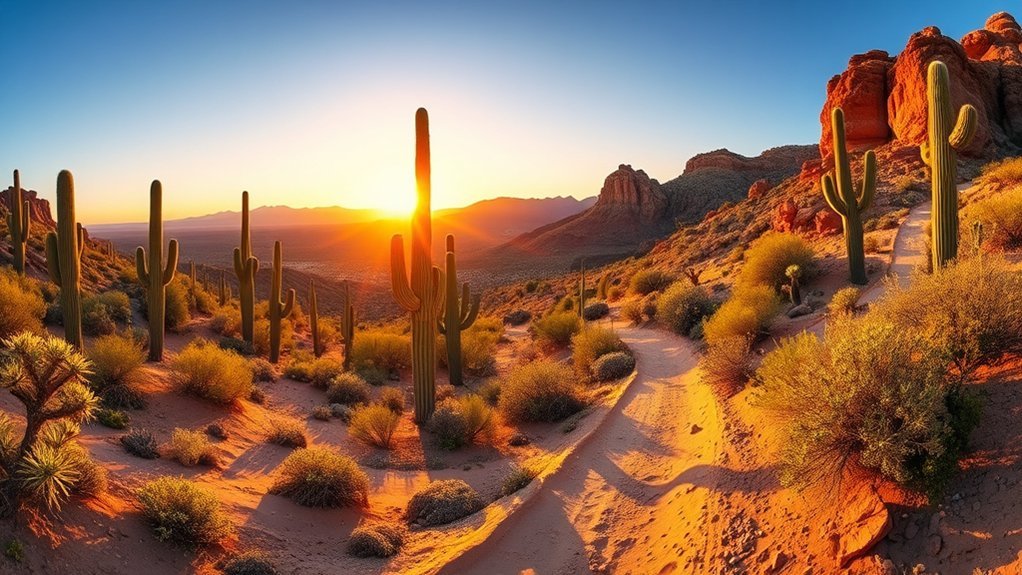
At Saguaro National Park near Tucson, giant saguaro cacti rise above the Sonoran Desert alongside palo verde, cholla, ocotillo, and mountain scenery. The park is divided into the Tucson Mountain District to the west and Rincon Mountain District to the east.
- Drive scenic park roads for an easy introduction to the desert.
- Hike designated trails ranging from short walks to demanding backcountry routes.
- Look for desert wildlife while keeping a safe distance.
- Visit near sunrise or sunset for cooler temperatures and softer light.
- Stay on established trails and never damage or remove desert plants.
A standard entrance pass covers both districts for seven days. Current fees and conditions are available through the National Park Service Saguaro National Park fee page.
Summer temperatures can become dangerous quickly on exposed desert trails. Carry adequate water, use sun protection, and choose a hike suited to the weather and your experience.
Tombstone
Tombstone offers a very different side of Arizona. Instead of canyons and cactus forests, this southeastern Arizona town focuses on the history and mythology of the American West.
Walk the historic district, visit the O.K. Corral, and learn about figures such as Wyatt Earp and Doc Holliday. The Bird Cage Theatre and other preserved or reconstructed attractions add context to the mining-boom era and the events that made Tombstone famous.
Reenactments, museums, shops, restaurants, and period-style streets make Tombstone easy to explore at a relaxed pace. Treat the entertainment as an introduction to the town, then use museum displays and historical interpretation to separate documented history from the legends that grew around it.
Havasu Falls
Havasu Falls is known for brilliant blue-green water falling over red canyon walls, but reaching it requires much more planning than visiting a normal roadside attraction. The falls are on the Havasupai Reservation, and visitors must follow Havasupai Tribe reservation and access rules.
For 2026, the Tribe’s official reservation system sells campground and lodge permits as three-night reservations. This means Havasu Falls should normally be planned as a dedicated multi-day trip rather than a spontaneous Grand Canyon detour.
- Obtain your reservation before traveling to the trailhead.
- Prepare for a long hike into and back out of the canyon.
- Carry appropriate water, food, footwear, and weather protection.
- Follow all Havasupai rules while visiting the village, trails, campground, and waterfalls.
- Check official conditions before departure because flooding and trail damage can affect access.
Current permit prices, reservation instructions, and visitor rules are published by the Havasupai Tribe.
Scottsdale
Scottsdale combines Sonoran Desert scenery with resorts, restaurants, galleries, shopping, and nightlife. Old Town is a convenient place to walk between restaurants, shops, art spaces, and cultural attractions, while the city’s outdoor areas provide a completely different experience.
For hiking within Scottsdale, the McDowell Sonoran Preserve offers an extensive network of desert trails. Choose a route appropriate for your ability, carry water, and start early during warm weather.
Camelback Mountain is another famous hike nearby, but it is in Phoenix, not Scottsdale. Its Echo Canyon and Cholla trails are strenuous, and the City of Phoenix can restrict them during Extreme Heat Warnings. Check the Phoenix Trail Heat Safety Program before attempting the climb in hot weather.
When you want a break from hiking, Scottsdale’s Old Town, art galleries, restaurants, and resorts make it one of Arizona’s strongest destinations for travelers who want both outdoor recreation and city amenities.
Prescott
Prescott blends Old West history with pine-covered high country, granite formations, lakes, and a walkable downtown. Its higher elevation also gives it a different climate from the low desert around Phoenix.
Historic Downtown Prescott
Start around Courthouse Plaza and Whiskey Row, where historic buildings, shops, restaurants, and public events create a lively center for exploring on foot. Museums and preserved sites add background on Prescott’s territorial-era history.
The plaza remains a focal point for community gatherings throughout the year, making downtown worth visiting even if you are not attending a major event.
Outdoor Recreation Opportunities
Watson Lake is one of Prescott’s most distinctive outdoor areas. Granite formations surround the water, and the city lists activities including kayaking, canoeing, hiking, rock climbing, fishing, camping, and picnicking.
Nearby trails through the Granite Dells provide additional hiking and mountain-biking opportunities. Goldwater Lake offers another quieter option for picnicking and recreation.
For current hours and parking information, check the City of Prescott’s Watson Lake information.
Cultural Events and Festivals
Prescott has a busy annual events calendar. Well-established examples include:
- Prescott Frontier Days: The annual rodeo and related Western events are a major summer tradition.
- Prescott Bluegrass Festival: Live bluegrass performances bring musicians and visitors to downtown Prescott.
- Whiskey Off-Road: A major mountain-biking event centered around downtown and surrounding trails.
- Arts and craft events: Courthouse Plaza hosts multiple seasonal fairs and community gatherings.
- Holiday events: Downtown celebrations and light displays make Prescott especially active late in the year.
Event dates change from year to year, so check the City of Prescott special-events calendar when planning your visit.
Flagstaff
Flagstaff replaces the low-desert scenery found around Phoenix and Tucson with ponderosa pine forest, volcanic landscapes, and views of the San Francisco Peaks. Its cooler mountain climate makes it a valuable addition to an Arizona trip, particularly when lower elevations are hot.
You can hike and mountain bike around the surrounding forest, explore downtown and Route 66, or visit Lowell Observatory for astronomy programs and telescope viewing.
Stargazing is more than a tourist slogan here. Flagstaff became the world’s first International Dark Sky Community in 2001 and continues to be recognized for protecting its night skies.
That combination of mountain recreation, astronomy, local restaurants, history, and a cooler climate makes Flagstaff a particularly versatile base in northern Arizona.
Planning Your Arizona Trip
The distances between Arizona’s major attractions are easy to underestimate. A place may appear relatively close on a map but still require hours of driving, especially when you account for park roads, mountain routes, construction, weather, and scenic stops.
A rental car or personal vehicle is the most practical transportation choice for most statewide trips. Public transportation exists within larger cities, but it does not provide convenient access to many remote parks, trailheads, tribal lands, and canyon destinations.
Choose the Season by Region
There is no single perfect month for the entire state. Phoenix, Scottsdale, Tucson, Saguaro National Park, and other lower-elevation destinations are generally most comfortable during the cooler months. Flagstaff and much of northern Arizona have colder winters and are especially popular from late spring into fall.
According to Visit Arizona, Phoenix and southern Arizona are generally ideal from October through April, while northern Arizona destinations are especially popular from May through October.
Take Heat and Monsoon Weather Seriously
Warning: Arizona heat can turn a moderate hike into an emergency. During summer, hike early, avoid strenuous exposed routes during the hottest hours, carry enough water, and turn around before you are exhausted. During monsoon storms, avoid slot canyons, washes, and flooded roads because flash flooding can occur quickly.
Weather can differ dramatically across the state on the same day. Check the forecast for the exact destination rather than relying on conditions in Phoenix, Flagstaff, or another city several hours away.
Know Which Places Need Advance Planning
National parks, city recreation areas, Navajo Nation parks, and the Havasupai Reservation operate under different rules. A federal recreation pass does not automatically cover tribal attractions.
- Grand Canyon National Park: Entrance fees apply; overnight backcountry trips require appropriate permits.
- Antelope Canyon: Guided tours are mandatory.
- Monument Valley: Navajo Nation entry fees and rules apply; guided tours are optional for many visits but useful for deeper access and interpretation.
- Havasu Falls: Advance Havasupai reservations are required.
- Saguaro National Park: A park entrance pass covers both districts for its validity period.
Arizona rewards travelers who plan for its extremes: desert heat, mountain weather, long driving distances, remote trailheads, tribal-land rules, and some of the most dramatic scenery in the Southwest.
Frequently Asked Questions
What is the best time of year to visit Arizona?
It depends on where you are going. October through April is generally more comfortable for Phoenix, Scottsdale, Tucson, and other southern desert destinations. Late spring through fall works well for Flagstaff and much of northern Arizona, although summer monsoon storms can affect outdoor plans.
Are there entry fees for these Arizona attractions?
Yes. Grand Canyon and Saguaro national parks charge entrance fees, while Monument Valley and Antelope Canyon use Navajo Nation fee systems. Antelope Canyon tour charges are additional. Havasu Falls requires a Havasupai reservation rather than a normal park entrance ticket. Always verify current prices before traveling.
How do I get around Arizona efficiently?
Driving is usually the most practical option for a trip covering several Arizona destinations. Major attractions are spread far apart, and many parks, tribal attractions, lakes, and trailheads have limited or no useful public transportation. Build extra time into each driving day for weather, construction, fuel, and scenic stops.
What outdoor activities are available in Arizona?
Arizona offers hiking, mountain biking, rock climbing, kayaking, camping, scenic drives, wildlife viewing, photography, and stargazing. Conditions vary sharply by elevation and season, so match each activity to the weather, trail difficulty, and your experience level.
Are guided tours available for these locations?
Yes. Guided experiences are available at many Arizona attractions. At Antelope Canyon, a guided tour is mandatory. Navajo-guided tours are also available at Monument Valley. Other destinations offer optional ranger programs, historical tours, jeep tours, astronomy programs, and outdoor excursions.
Which Arizona attractions require reservations?
Antelope Canyon requires booking with an authorized guided-tour operator, while Havasu Falls requires an advance Havasupai reservation. Overnight backcountry trips at the Grand Canyon can also require permits. Lodging, popular tours, and campsites may sell out well in advance even where general park entry does not require a reservation.
How many days do I need for an Arizona trip?
A long weekend is enough for one region, but five to seven days gives you more time to combine several major destinations without spending most of each day driving. If Havasu Falls is part of your plans, account for its required multi-night reservation separately.
Is it safe to hike in Arizona during summer?
Summer hiking can be dangerous at lower elevations and inside desert canyons. Start early, avoid strenuous exposed hikes during extreme heat, carry adequate water, and check official trail restrictions. Monsoon thunderstorms can also create lightning and flash-flood hazards, particularly in slot canyons and normally dry washes.
Conclusion
Arizona’s best destinations are memorable for very different reasons. The Grand Canyon delivers unmatched scale, Sedona surrounds you with red-rock trails, Monument Valley and Antelope Canyon introduce landscapes on Navajo Nation land, and Saguaro National Park showcases the Sonoran Desert. Tombstone adds Old West history, Scottsdale mixes city comforts with desert recreation, Prescott combines lakes and heritage, Flagstaff offers mountain scenery and dark skies, and Havasu Falls rewards travelers who secure the required reservation and prepare for the hike. Choose stops that fit your season and pace, check official conditions before leaving, and give Arizona’s landscapes enough time to enjoy them safely.
Sources
- Grand Canyon National Park, National Park Service — day-hiking difficulty, heat safety, and rim-to-river guidance.
- Navajo Nation Parks & Recreation: Antelope Canyon — mandatory guided-tour access and tribal entry information.
- Navajo Nation Parks & Recreation: Monument Valley — park access, hours, and visitor information.
- Official Havasupai Tribe Website — Havasu Falls permits, reservations, and visitor requirements.
- Saguaro National Park, National Park Service — current entrance passes and district coverage.
- Visit Arizona — statewide seasonal and travel-planning guidance.