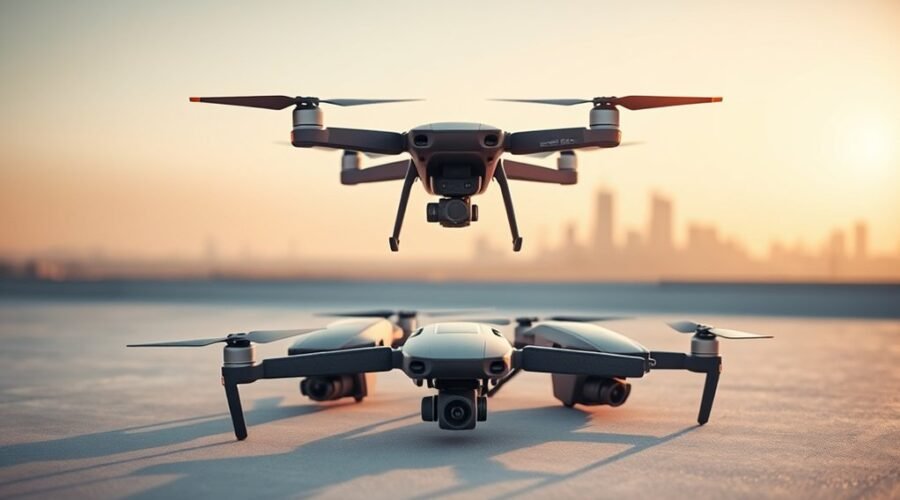
By 2027, three DJI drones remain central to professional aerial photography: the Mavic 4 Pro, Air 3S, and Mavic 3 Classic. Each serves a different need, from flagship image quality to low-light reliability and compact versatility. The differences are not minor, especially when camera hardware and flight features begin to shape real-world results. What separates them becomes clearer only when the details are compared side by side.
Key Takeaways
- DJI Mavic 4 Pro is a top aerial photography choice, with a 100MP Hasselblad camera and 6K/60fps HDR video.
- DJI Air 3S offers a 1-inch CMOS sensor, 4K/60fps HDR video, and 14-stop dynamic range for strong image quality.
- DJI Mavic 3 Classic delivers a 4/3 CMOS Hasselblad camera, 5.1K video, and excellent low-light performance.
- Long flight times matter, and these models offer up to 45–51 minutes for longer shooting sessions.
- Advanced obstacle sensing and reliable transmission improve safety and control during professional aerial photography missions.
DJI Air 3S (RC-N3), 4K Dual-Camera Drone
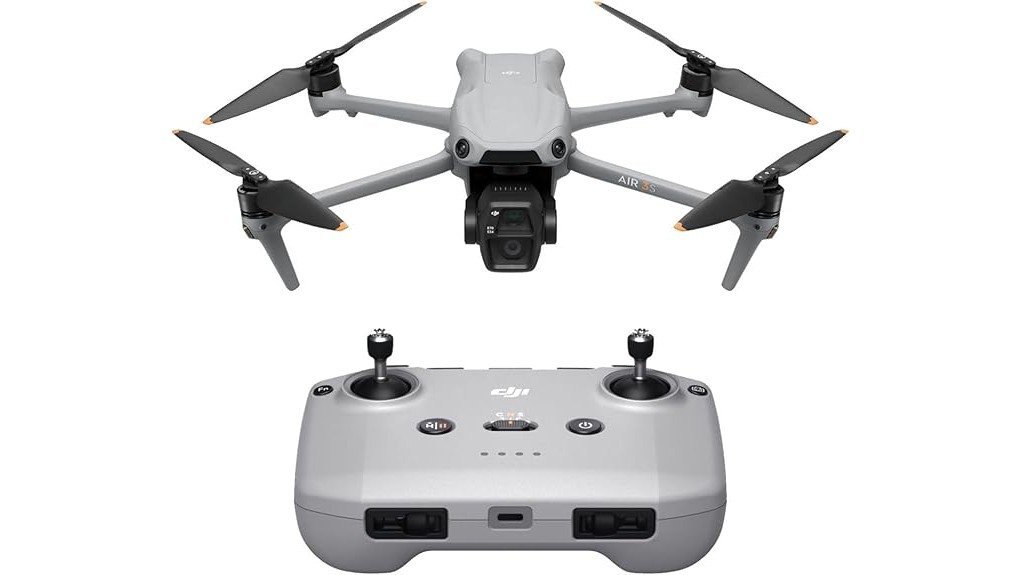
The DJI Air 3S (RC-N3) stands out for aerial photographers who want a versatile, travel-friendly drone with serious imaging power, thanks to its 1-inch CMOS camera, 4K/60fps HDR video, and dual-camera system. Its 14-stop dynamic range and seamless panorama mode support detailed landscapes and wide compositions. Flight performance is equally practical, with up to 45 minutes of airtime, 20 km transmission, and forward-facing LiDAR plus omnidirectional sensing. Smart Return-To-Home improves reliability in weak GPS areas. The package includes the RC-N3 controller, battery, propellers, gimbal protector, and cables.
Best For: Aerial photographers and travelers who want a versatile, high-quality drone with strong imaging performance, long flight time, and reliable obstacle avoidance.
Pros:
- 1″ CMOS sensor with 4K/60fps HDR delivers sharp, detailed footage.
- Up to 45 minutes of flight time and 20 km transmission range.
- Forward-facing LiDAR plus omnidirectional sensing improves safety and obstacle detection.
Cons:
- 724 g weight may feel bulky compared with smaller travel drones.
- RC-N3 setup may be less convenient than controller models with a built-in screen.
- Premium imaging and flight features can make it a higher-cost option.
DJI Mavic 3 Classic Drone with DJI RC
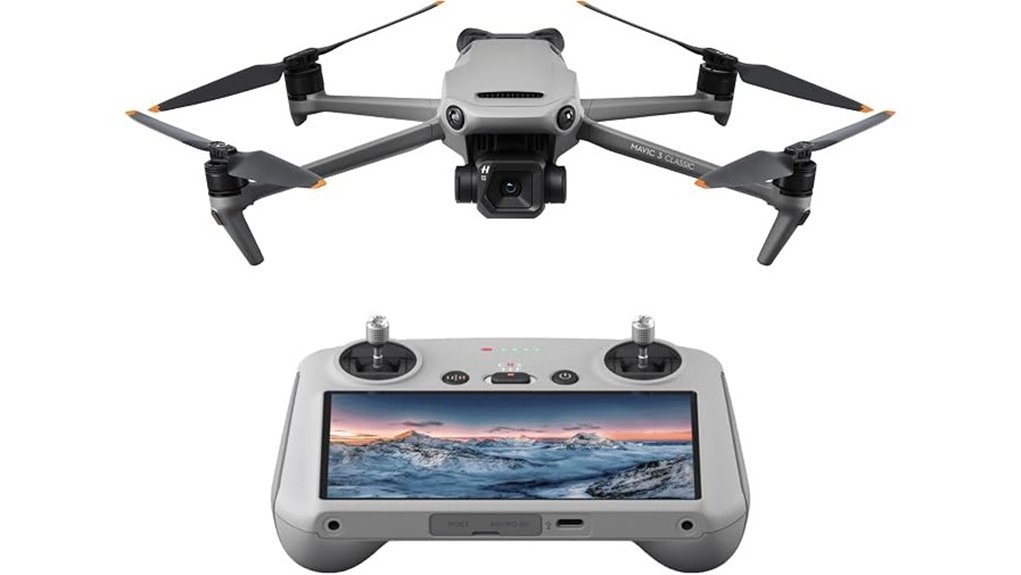
Built for serious aerial photographers, the DJI Mavic 3 Classic pairs a 4/3 CMOS Hasselblad camera with 5.1K video. It records 20 MP stills in JPEG or RAW DNG, delivering detailed results for demanding workflows. Flight endurance reaches up to 46 minutes, while HD transmission extends to 15 km under ideal conditions. The DJI RC includes a built-in 5.5-inch HD display and DJI Fly app support. Omnidirectional sensing with APAS 5.0 helps avoid obstacles, and advanced RTH improves recovery. FAA Remote ID compliance supports lawful operation.
Best For: Serious aerial photographers and drone users who want a high-end camera drone with long flight time, strong obstacle avoidance, and an integrated controller display.
Pros:
- 4/3 CMOS Hasselblad camera with 5.1K video and 20 MP stills for high-quality imaging
- Up to 46 minutes of flight time and 15 km HD transmission range
- Omnidirectional obstacle sensing with APAS 5.0 plus advanced Return-to-Home for safer flights
Cons:
- Premium features may come at a higher price than entry-level drones
- Best performance depends on ideal weather and low-interference conditions
- Limited to FAA-compliant operation, which may require extra setup depending on location
DJI Mavic 4 Pro Drone With DJI RC 2, Flagship Tri-Camera Drone
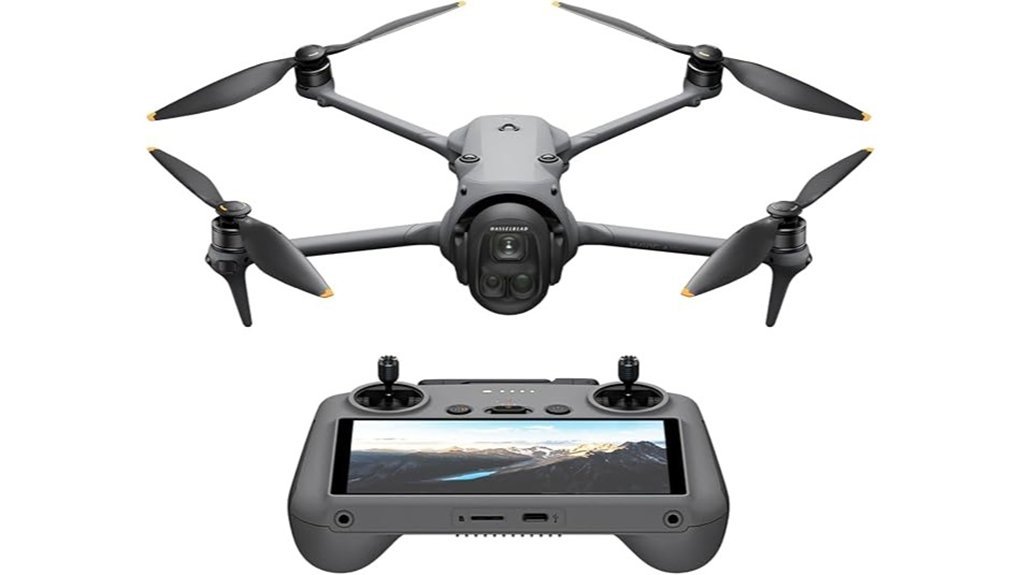
With its 100MP Hasselblad camera and 6K/60fps HDR video, it suits serious aerial photographers. The DJI Mavic 4 Pro adds dual tele cameras for sharp zoom shots and an Infinity Gimbal for smooth 360-degree movement. Its 0.1-lux omnidirectional obstacle sensing supports safer night flights, while up to 51 minutes of endurance helps cover extended scenes. O4+ transmission reaches 30 km, maintaining reliable monitoring. The DJI RC 2 controller provides a compact, portable interface with a bright rotating display. Together, the system targets professionals needing imaging versatility, long-range control, and efficient field operation.
Best For: Professional aerial photographers, filmmakers, and advanced drone users who want high-end imaging, long flight time, and reliable long-range control in a portable package.
Pros:
- 100MP Hasselblad main camera with 6K/60fps HDR video for excellent image and video quality
- Dual tele cameras and Infinity Gimbal provide versatile zoom and smooth 360° creative movement
- Up to 51 minutes of flight time with O4+ transmission up to 30 km for extended, reliable operation
Cons:
- Premium feature set likely comes with a high price tag
- Advanced capabilities may be more than casual users need
- Larger, more complex system may require more setup and learning than simpler drones
Factors to Consider When Choosing Professional Drones of 2026: Field-Tested for Aerial Photography, Mapping & Inspections
Choosing a professional drone in 2026 requires close attention to image sensor size, flight time range, obstacle sensing systems, transmission and control, and the balance between payload capacity and portability. These factors shape performance in aerial photography, mapping, and inspection work, where reliability and image quality are essential. A field-tested model should be judged by how well it handles real-world conditions while remaining efficient to deploy and operate.
Image Sensor Size
Sensor size remains one of the most important specifications in a professional drone, because it directly shapes image quality, low-light performance, and dynamic range. Larger sensors capture more light, which helps preserve shadow detail, reduce noise, and improve color accuracy in demanding aerial conditions. A 1″ CMOS sensor can outperform smaller formats in dim environments, making it valuable for photography and videography where clean files matter. For higher-end work, larger options such as 4/3 CMOS sensors add better depth of field control and more creative flexibility. Sensor size also affects effective still resolution: a 100MP sensor can produce far greater detail for large prints, mapping, and inspections, where precise, reliable image data is essential.
Flight Time Range
Flight time is another major specification in professional drones, because it determines how long they can stay in the air for photography, mapping, and inspections. Longer durations, reaching up to 51 minutes on advanced models, reduce battery swaps and support broader survey areas in a single sortie. For inspection work, a 45 to 51 minute range is especially useful, since uninterrupted operation helps capture complete and consistent data. Payload also matters, because added cameras or accessories can shorten endurance and lower efficiency. The best choice balances flight time with operational range, so the drone can return safely before power falls too low. Models with advanced battery technology typically deliver steadier performance, making them more reliable for demanding aerial photography, mapping, surveying, and inspection assignments.
Obstacle Sensing Systems
Robust obstacle sensing systems have become a defining feature of professional drones, especially for aerial photography, mapping, and inspections in complex environments. Advanced platforms often combine LiDAR with multiple vision and proximity sensors to deliver omnidirectional awareness, helping pilots navigate tight spaces with greater confidence. Real-time detection can identify hazards and trigger autonomous avoidance, reducing collision risk during demanding maneuvers. Some models also use upgraded algorithms to improve return-to-home behavior, which supports safer recovery when GPS signals are weak or inconsistent. Low-light sensing extends reliable operation after dark, broadening usefulness for nighttime photography and inspection work. Buyers should also confirm FAA Remote ID compliance, since regulatory adherence remains essential for professional use in regulated airspace and commercial operations.
Transmission And Control
Equally important as sensing is how a professional drone communicates with its operator. Bluetooth and Wi-Fi remain common for remote control, giving crews immediate command response and stable link management during routine flights. For longer missions, advanced video transmission matters more: professional systems can stream live footage and telemetry over distances reaching 30 km, supporting aerial photography, mapping, and inspections with minimal interruption. Control units with built-in displays further improve situational awareness by placing flight data and live video in view without requiring a separate device. Reliable transmission pairs well with high-capacity batteries, often above 4000 mAh, because extended airborne time is only useful when the operator can monitor the aircraft clearly and react quickly to changing conditions throughout the mission.
Payload And Portability
Payload and portability often determine how practical a professional drone will be in the field. A strong weight-to-payload ratio matters, because lighter airframes can still support cameras, sensors, or battery upgrades without sacrificing maneuverability or endurance. The DJI Mavic 4 Pro, for example, weighs 2372 g yet accommodates multiple battery options and a 6654 mAh pack for longer missions. Compactness also improves usability: foldable arms reduce storage volume and make transport simpler for aerial photography, mapping, and inspections. Smaller dimensions, such as the DJI Air 3S at 10.48 x 12.81 x 4.17 cm, fit easily in a backpack. Flight time remains equally important, and models reaching 51 minutes help crews complete more work between battery changes.
Frequently Asked Questions
What Insurance Do Professional Drone Operators Need?
Professional drone operators typically need liability insurance, hull coverage for equipment damage, and sometimes workers’ compensation and privacy or cyber policies. Requirements vary by country, client, and operation type, so compliance should be verified locally.
How Often Should Drone Batteries Be Replaced?
Drone batteries should typically be replaced every 200 to 300 cycles, or sooner if capacity drops noticeably, swelling appears, or flight time shortens. Replacement frequency depends on usage, storage habits, and charging discipline.
Can Drones Fly Safely in Coastal Winds?
Drones can fly safely in coastal winds only if wind speeds stay within the aircraft’s rated limits and gusts are moderate. Near shore, turbulence, salt exposure, and sudden shifts raise risk, so caution remains essential.
Which Software Best Edits Drone RAW Photos?
Lightroom remains the strongest choice for editing drone raw photos, offering robust color, lens, and exposure tools; Capture One suits advanced tethering and detail work, while DxO PhotoLab excels at noise reduction.
How Do You Maintain Sensors in Dusty Environments?
Sensors are maintained in dusty environments by using protective covers, gentle air blowers, and microfiber cleaning after each flight. Regular inspections, sealed storage, and avoiding takeoff in heavy dust reduce contamination and performance loss.
Conclusion
In 2027, the DJI Mavic 4 Pro, DJI Air 3S, and DJI Mavic 3 Classic remain standout choices for professional aerial photography. The Mavic 4 Pro leads with its 100MP Hasselblad camera and 6K video, while the Air 3S excels in low-light conditions thanks to its 1-inch CMOS sensor. The Mavic 3 Classic offers a balanced blend of portability and image quality. Together, these drones show how far compact aerial imaging has advanced.