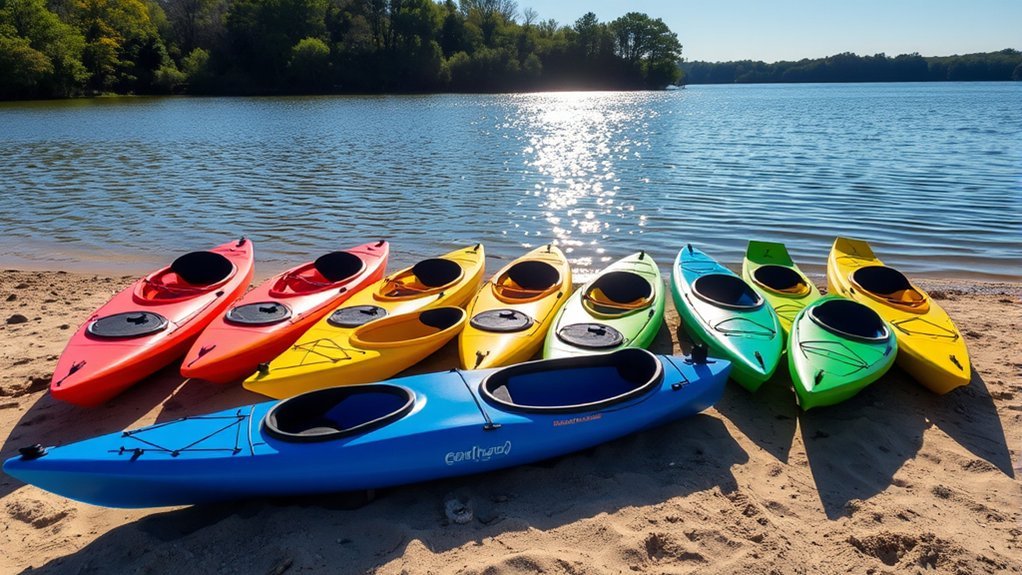
Choosing the right fishing kayak in [2026] depends on more than just price or size. Stability, comfort, and on-water control can shape the entire experience, whether the goal is solo trips, tandem outings, or hands-free fishing. Some models favor portability, while others lean into rod storage and stand-up confidence. A few stand out for features that seem ideal at first glance, but the real differences are more revealing than they appear.
Key Takeaways
- Stable fishing kayaks in 2026 include wide, sit-on-top, and tunnel-hull models for better balance and stand-up confidence.
- Best solo options are the Pelican Sentinel 100X Angler, Pelican Argo 100X Angler, and BKC Brooklyn 9.2 for lightweight portability.
- Best hands-free fishing kayaks are the Albott Modular Fishing Kayak and Pelican Catch HDII, both using pedal-drive systems.
- Best tandem and inflatable choices are the VEVOR 2-Person Inflatable Kayak and INTEX Excursion Pro K2 for calm-water stability and space.
- Key buying factors are weight capacity, rod holders, storage, durability, and transport weight for your vehicle and fishing style.
Pelican Sentinel 100X Angler Fishing Kayak
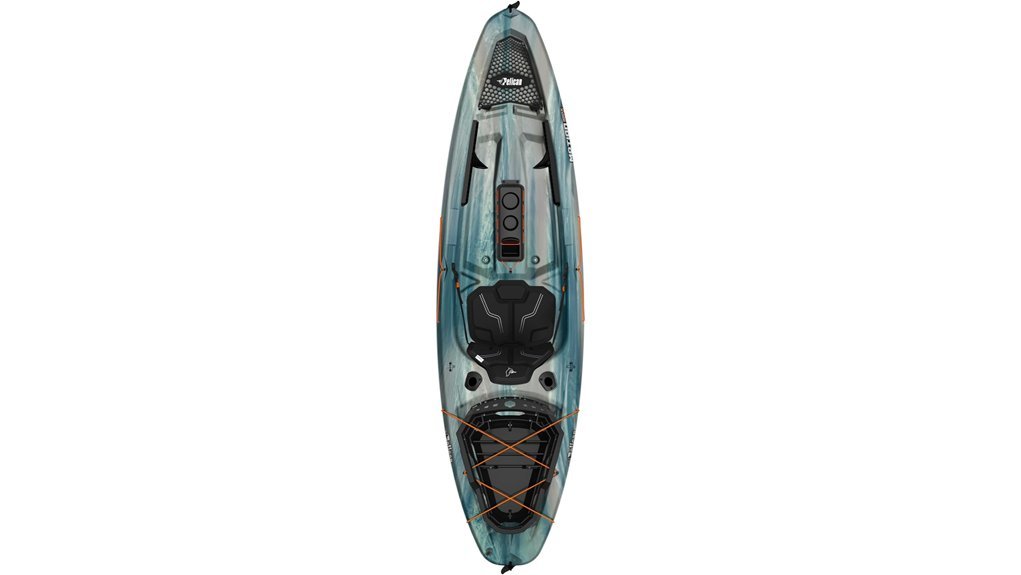
The Pelican Sentinel 100X Angler is a strong fit for solo anglers who want a compact, stable sit-on-top kayak with practical storage and comfort. At 114 inches long and 44 pounds, it remains easy to move, store, and launch. The polyethylene hull supports up to 275 pounds, while molded side handles improve carrying. Ergolounge seating adds thick cushioning and a padded backrest for longer outings. Four rod holders and the removable ExoPak help organize tackle. A lifetime limited warranty covers defects, with parts and accessories protected for one year.
Best For: Solo anglers looking for a compact, stable, and easy-to-transport sit-on-top fishing kayak with comfortable seating and useful storage.
Pros:
- Lightweight 44 lb design and molded side handles make it easy to carry, store, and launch.
- Ergolounge seating provides extra cushioning and a padded backrest for better comfort on longer trips.
- Four rod holders plus the removable ExoPak offer practical gear organization and storage.
Cons:
- At 275 lbs, the weight capacity may be limiting for heavier paddlers or lots of gear.
- The 114-inch length is compact, but it may not track as efficiently as longer kayaks.
- Included accessories are limited, so some anglers may need to add extra gear separately.
Albott Modular Fishing Kayak with Drive System
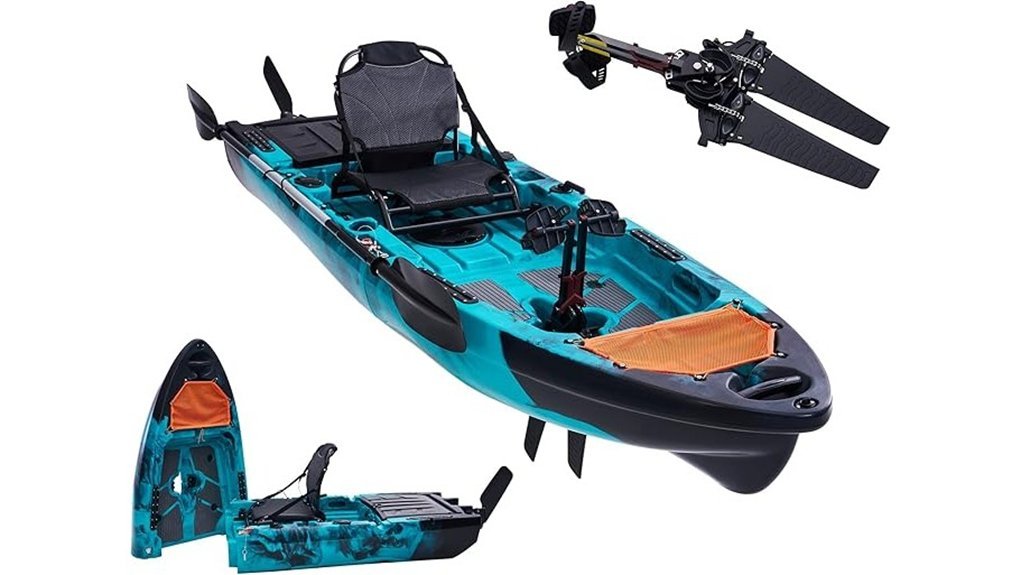
Built for anglers who want hands-free control, the Albott Modular Fishing Kayak suits stealthy shallow-water fishing. Its 11-pound pedal fin drive is weed-resistant and smooth, helping users move quietly while keeping both hands available for casting. The sit-on-top platform supports up to two people and 420 pounds, with durable HDPE construction for long-term wear resistance. Measuring 113.04 inches long and 34.68 inches wide, it balances stability with portability. A cable-operated stern rudder, quick four-step assembly, adjustable seating, and modular storage make it adaptable for solo trips, family outings, or rental fleets.
Best For: Anglers, families, and rental users who want a stable, hands-free, shallow-water fishing kayak with easy transport and modular versatility.
Pros:
- Weed-resistant 11 lb pedal fin drive enables quiet, hands-free fishing.
- Supports up to 2 people and 420 lbs, with durable HDPE construction for long-term use.
- Quick 4-step assembly plus modular storage and adjustable seating improve convenience.
Cons:
- At 102.4 lbs, it may be heavy for some users to carry alone.
- Length and width offer stability, but storage and transport can still be challenging for smaller vehicles or spaces.
- Best suited to fishing and calm-water use, so it may be less ideal for fast-moving or rough conditions.
VEVOR 2-Person Inflatable Kayak with Accessories
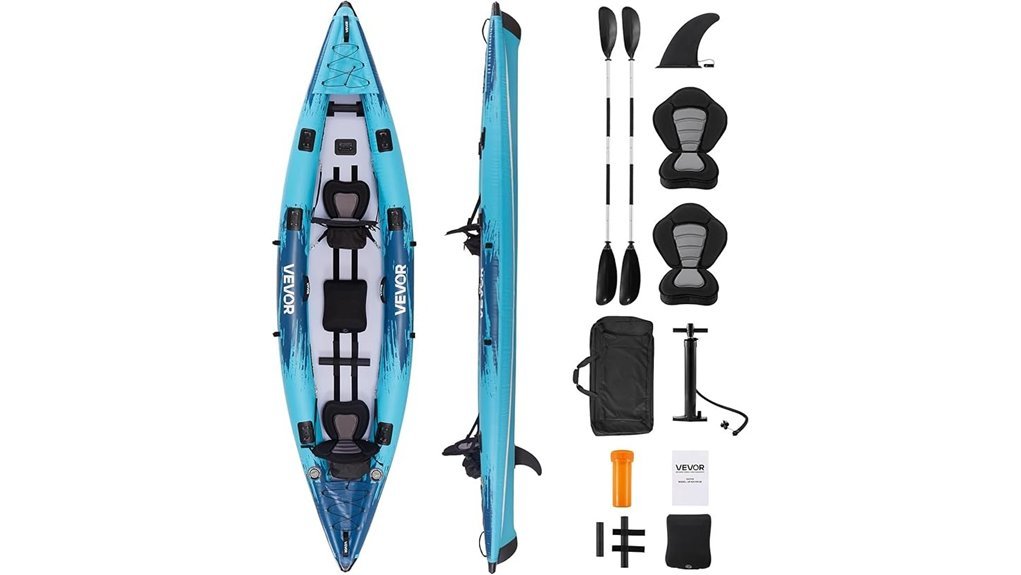
With room for two adults and a large dog, VEVOR’s inflatable kayak suits anglers seeking stability and space. At 14’4″ long, it supports up to 700 pounds while weighing 59.97 pounds, and its puncture-resistant PVC construction adds durability. A high-strength drop-stitch floor, three-chamber safety layout, and protective bumpers improve confidence on calm lakes and gentle rivers. Padded EVA seats, adjustable backrests, and footrests enhance comfort. Quick-drain holes help keep the cockpit dry. Seven mounting points, two paddles, a fin, and a dual-action pump make it practical. A USCG-approved PFD remains essential for every occupant, including pets.
Best For: Anglers, couples, and outdoor adventurers who want a stable, spacious inflatable kayak for calm lakes or gentle rivers, especially if they plan to bring gear or a large dog.
Pros:
- Seats two adults plus a large dog comfortably with a roomy 14’4″ layout.
- Stable and durable thanks to the drop-stitch floor, three-chamber design, and puncture-resistant PVC.
- Comes with helpful extras like paddles, a tracking fin, a dual-action pump, and seven mounting points for fishing accessories.
Cons:
- At nearly 60 lbs, it may be bulky to carry and maneuver compared with lighter kayaks.
- Best suited for calm water, so it’s not ideal for rough conditions or fast-moving rapids.
- Requires proper inflation, setup, and ongoing maintenance to get the best performance.
Lifetime Manta Angler Stand-Up Fishing Kayak (6 Rod Holders)
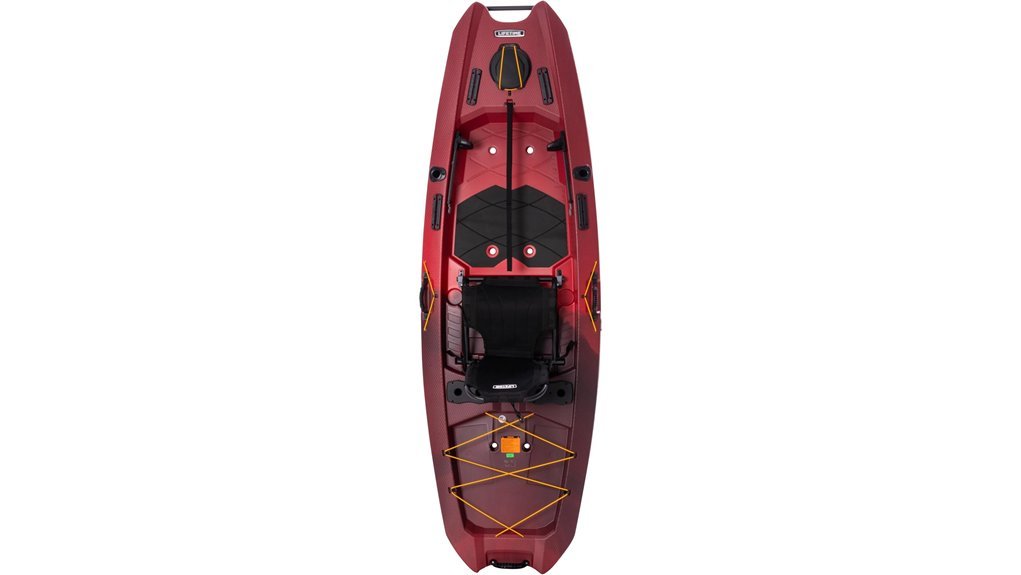
Designed for anglers who want platform-like steadiness, the Lifetime Manta Angler supports confident standing. Its wide double-beam catamaran hull delivers strong balance for standing, sitting, or kneeling, while the included stability strap adds reassurance. Six flush-mounted rod holders, split between front and rear, support varied rigging. Universal accessory mounts and a paddle keeper expand utility. Storage includes a bow hatch with bucket, rear tankwell bungees, and dual bottle holders. An adjustable framed seat, footrests, EVA padding, UV-resistant polyethylene, and scupper drainage improve comfort, durability, and deck dryness.
Best For: Anglers who want a highly stable stand-up fishing kayak with plenty of rod holders, customizable gear options, and useful storage for all-day fishing trips.
Pros:
- Catamaran-style hull provides excellent stability for standing, sitting, or kneeling.
- Six flush-mounted rod holders plus accessory mounts offer versatile fishing setups.
- Comfortable and practical features like an adjustable seat, EVA padding, storage compartments, and scupper drainage.
Cons:
- Paddle is not included, so an additional purchase is required.
- Heavier, wider fishing kayaks can be less convenient to transport and maneuver than smaller models.
- Designed more for stability than speed, so it may feel slower on the water.
Pelican Catch Mode 110 Kayak
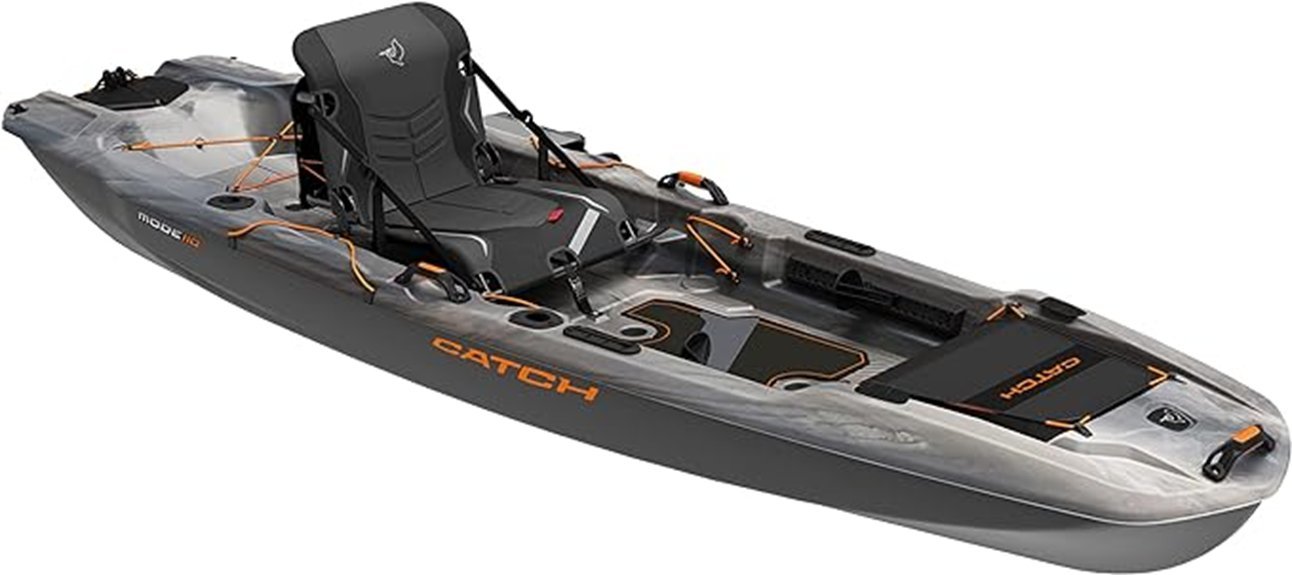
The Pelican Catch Mode 110 suits anglers who value exceptional stability and standing confidence. Its tunnel hull, wide flat deck, and anti-slip carpeting support secure movement and easy entry or exit. The ERGOBOOST seat raises visibility, while the EVA pad and under-seat storage improve comfort on longer outings. Fishing setup is straightforward with two 4 rigging tracks, three flush mount rod holders, and paddle or rod tie-downs. Front and rear tank wells, plus bottle holders, add utility. Built from high molecular weight polyethylene, it weighs 63 lb and carries 375 lb.
Best For: Anglers who want a highly stable, stand-friendly fishing kayak with solid gear organization and comfort for longer trips.
Pros:
- Tunnel hull and wide deck provide excellent stability and confidence when standing.
- ERGOBOOST seating, EVA pad, and under-seat storage improve comfort and convenience.
- Strong fishing setup with rigging tracks, rod holders, tie-downs, and multiple storage areas.
Cons:
- At 63 lb, it may still be cumbersome for some users to carry alone.
- 10 ft 8 in length may limit speed and tracking compared with longer kayaks.
- Best suited for calm-water fishing, so it may not be ideal for more demanding conditions.
Perception Outlaw 11.5 Fishing Kayak with Rod Holders
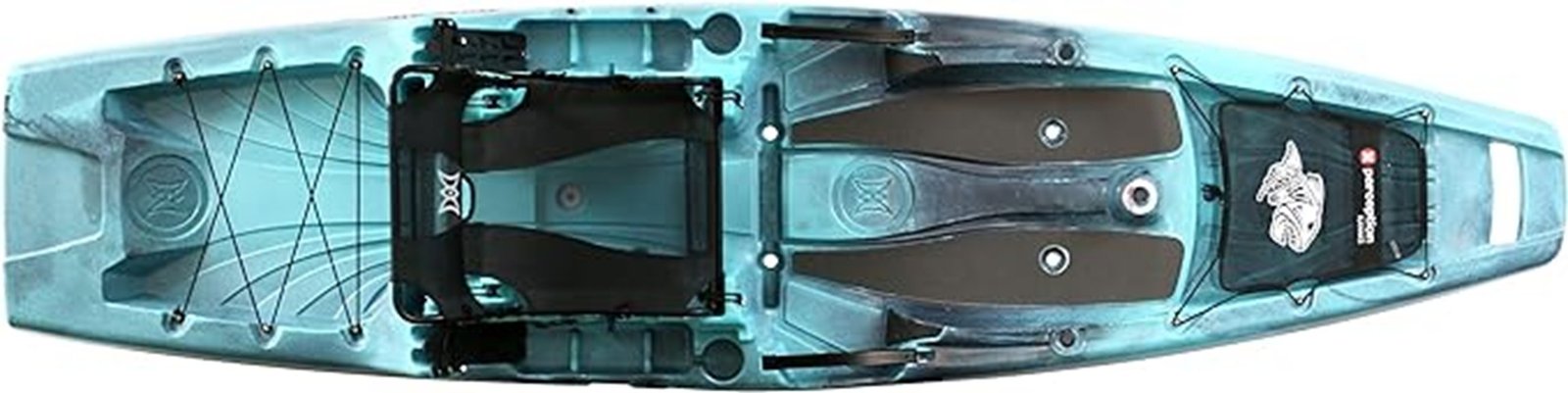
Perception Outlaw 11.5 suits anglers who want stability, storage, and four rod holders in one kayak. The sit-on-top design measures 11 feet 6 inches and supports up to 425 pounds, giving it a broad, confidence-inspiring platform. A fold-away lawn chair seat adds comfort during long sessions, while integrated tackle trays keep gear within reach. Large rear tankwell and front storage accommodate coolers, crates, or dry bags. Built from durable polyethylene in the USA, it targets beginners and experienced anglers alike, and carries a five-year hull warranty.
Best For: Anglers of all experience levels who want a stable, comfortable sit-on-top fishing kayak with plenty of storage and four rod holders for organized multi-rod setups.
Pros:
- Stable 11’6″ platform with a 425 lb weight capacity for confident fishing.
- Four integrated rod holders plus tackle trays keep gear organized and accessible.
- Fold-away lawn chair seat and generous storage areas add comfort and convenience.
Cons:
- At 11’6″, it may be less maneuverable than shorter kayaks in tight waters.
- Larger size can make transportation and storage more challenging.
- Fishing-focused design may be more than casual paddlers need.
INTEX Excursion Pro K2 Inflatable Kayak Set
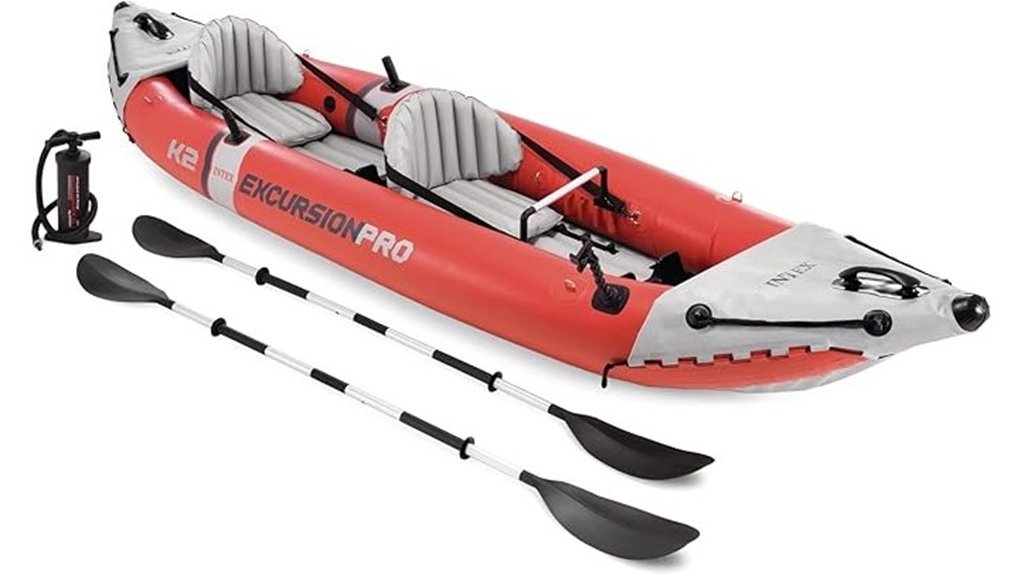
With a 400-pound capacity, the INTEX Excursion Pro K2 suits anglers who want a stable two-person fishing kayak. The 12.7-foot inflatable design uses SuperTough PVC with a 3-ply laminate for abrasion, impact, and sun resistance. High-pressure inflation adds rigidity, while spring-loaded valves speed setup and deflation. Two removable skegs help tracking in deep or shallow water. Storage space sits in the bow and stern, with stainless steel D-rings for gear. It includes two paddles, two rod holders, a GoPro and phone mount, an air pump, and a repair kit.
Best For: Anglers or outdoor pairs looking for a stable, durable inflatable fishing kayak with useful accessories and good storage for day trips on calm to moderate waters.
Pros:
- 400-pound capacity comfortably supports two people and gear
- Durable SuperTough PVC construction resists abrasion, impact, and sun damage
- Includes helpful extras like paddles, rod holders, a camera/phone mount, pump, and repair kit
Cons:
- At 44.67 pounds, it may be cumbersome to carry and transport
- Inflatable design may not match the speed or performance of a hard-shell kayak
- 90-day limited warranty is relatively short
Pelican Argo 100X Angler Sit-In Fishing Kayak
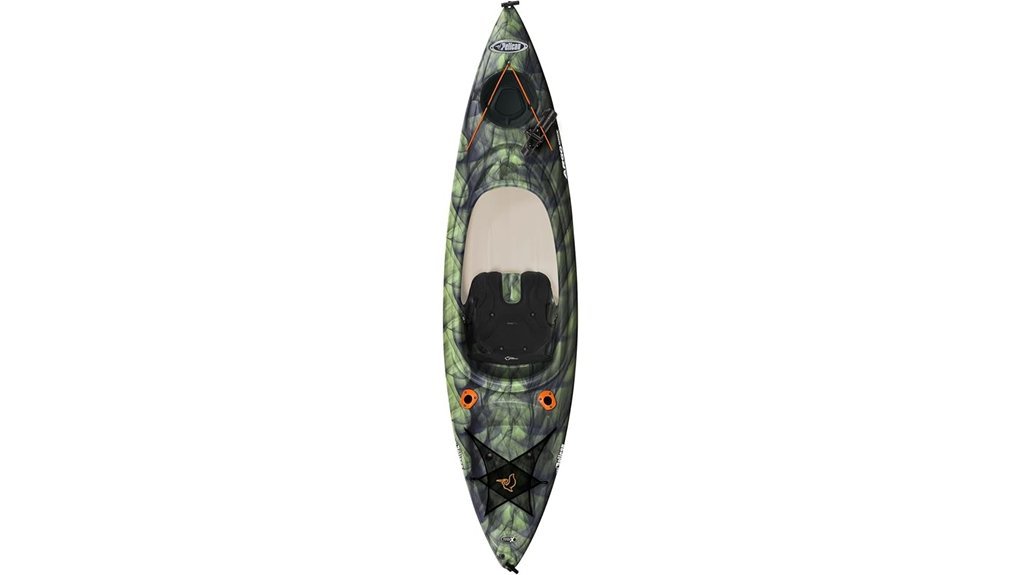
Designed for casual anglers, the Pelican Argo 100X Angler offers stable, easy paddling in a lightweight sit-in frame. At 10 feet and 36 pounds, it is simple to carry, launch, and store. The Ram-X™ hull adds impact resistance, while the adjustable footrests help improve control and comfort. An Ergoform™ padded seat supports longer outings, and the front hatch, rear tank well, and cockpit table provide practical storage. Fishing setup includes one swivel rod holder and two flush-mount holders. With a 275-pound capacity, it suits average paddlers and families.
Best For: Casual anglers, average paddlers, and families who want a lightweight, stable sit-in fishing kayak that’s easy to carry, launch, and store.
Pros:
- Lightweight at 36 lb, making transport and solo handling easier
- Comfortable and practical setup with an Ergoform™ seat, adjustable footrests, and useful storage areas
- Fishing-ready with a swivel rod holder and two flush-mount rod holders
Cons:
- 275-lb weight capacity may be limiting for larger paddlers or extra gear
- Sit-in design offers less open access than a sit-on-top kayak for gear changes
- Best suited for casual use rather than more advanced or high-performance fishing trips
Pelican Catch HDII Fishing Kayak with Pedal System
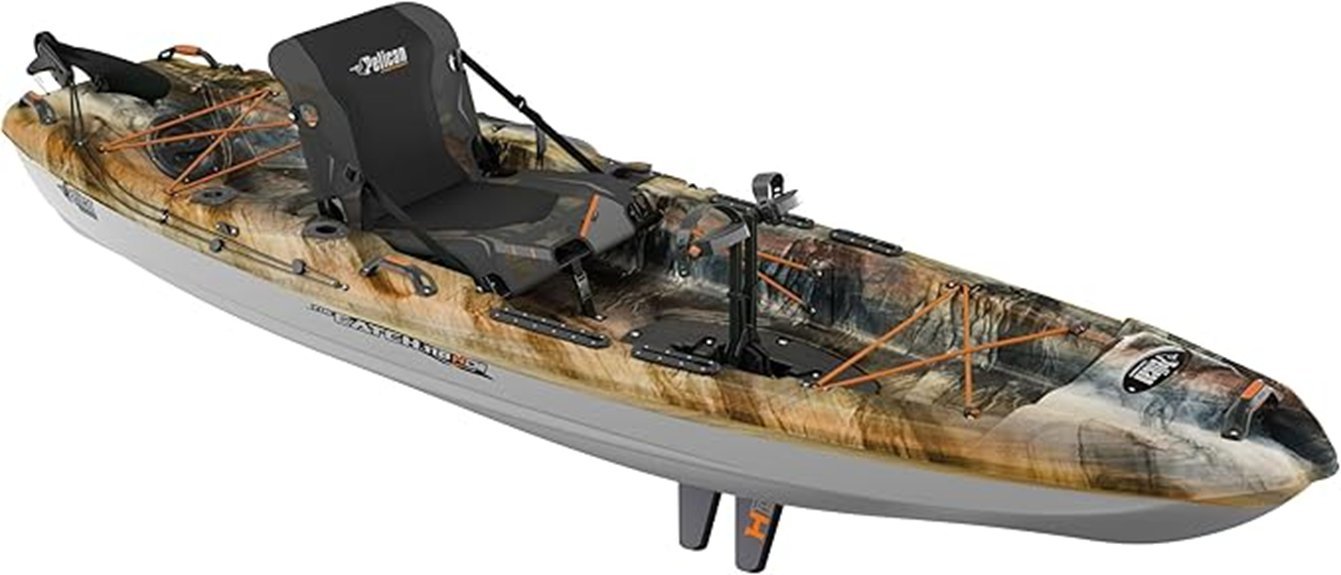
The Pelican Catch HDII suits anglers who value shallow-water mobility and hands-free fishing. Its HyDryve II pedal system supports smooth movement through shallow areas and around aquatic plants, helping maintain position without constant paddle use. The Ergocast G2 seat adds comfort during long sessions on the water. Four accessory rails allow customization for fishing, filming, or added gear. Three flush-mount rod holders secure rods while keeping them within reach. A rudder with hand controls improves steering, and its skeg function helps the kayak track more steadily in open water.
Best For: Anglers who want a comfortable, customizable fishing kayak with hands-free pedal propulsion for shallow water and weed-filled areas.
Pros:
- HyDryve II pedal system provides easy, hands-free movement in shallow water and around aquatic plants.
- Ergocast G2 seat offers added comfort for longer fishing sessions.
- Four accessory rails and three flush-mount rod holders make it easy to tailor and organize gear.
Cons:
- Pedal-driven kayaks can be heavier and more complex than simpler paddle kayaks.
- The added features may make it pricier than basic fishing kayaks.
- Rudder and pedal systems may require more maintenance over time.
BKC Brooklyn 9.2 Sit-On-Top Fishing Kayak
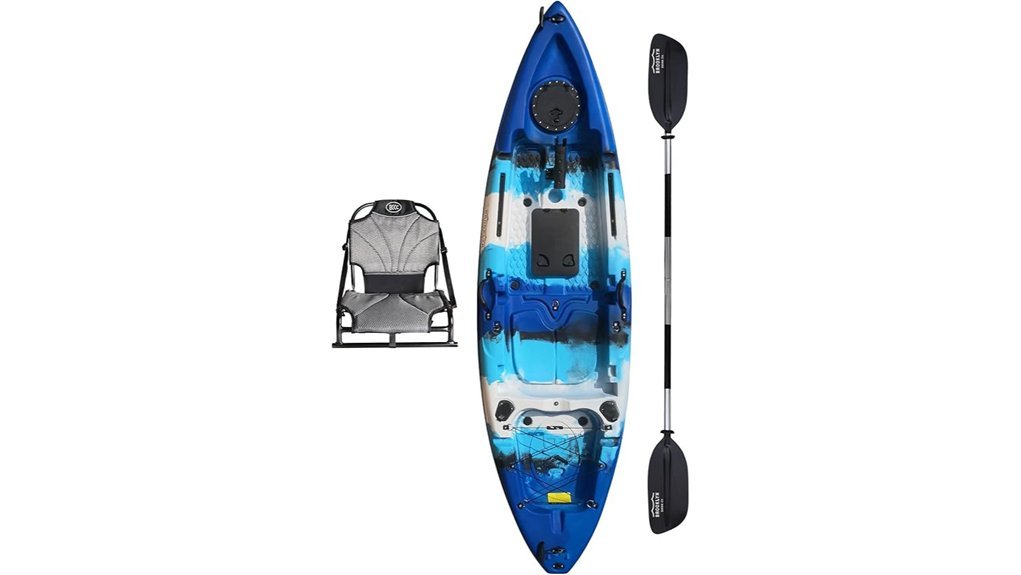
BKC’s Brooklyn 9.2 suits solo anglers who want stability in a compact kayak. At just over 9 feet and 46 pounds, the HDPE sit-on-top design is easy to move and launch. Its wide beam supports steady casting, reeling, and paddling, while the aluminum frame upright seat or memory foam option improves posture and sightlines. Anglers get flush-mount rod holders, an articulating rod holder, accessory rails, and paddle parks. Front and center hatches protect gear, and the rear cargo area secures tackle. With a 330-pound capacity, it fits beginner and casual fishing trips.
Best For: Solo beginner and casual anglers who want a stable, compact, easy-to-manage fishing kayak for calm-water trips.
Pros:
- Wide sit-on-top design offers dependable stability for casting, reeling, and paddling.
- Lightweight 46 lb build makes it easier to transport, launch, and handle solo.
- Fishing-friendly features include rod holders, accessory rails, paddle parks, and useful storage hatches.
Cons:
- 330 lb weight capacity may be limiting for heavier paddlers or extra gear.
- At just over 9 feet, it may not track or cover distance as efficiently as longer kayaks.
- Single-seat layout is not suitable for tandem use or bringing a second person.
Factors to Consider When Choosing a Stable Kayak for Fishing
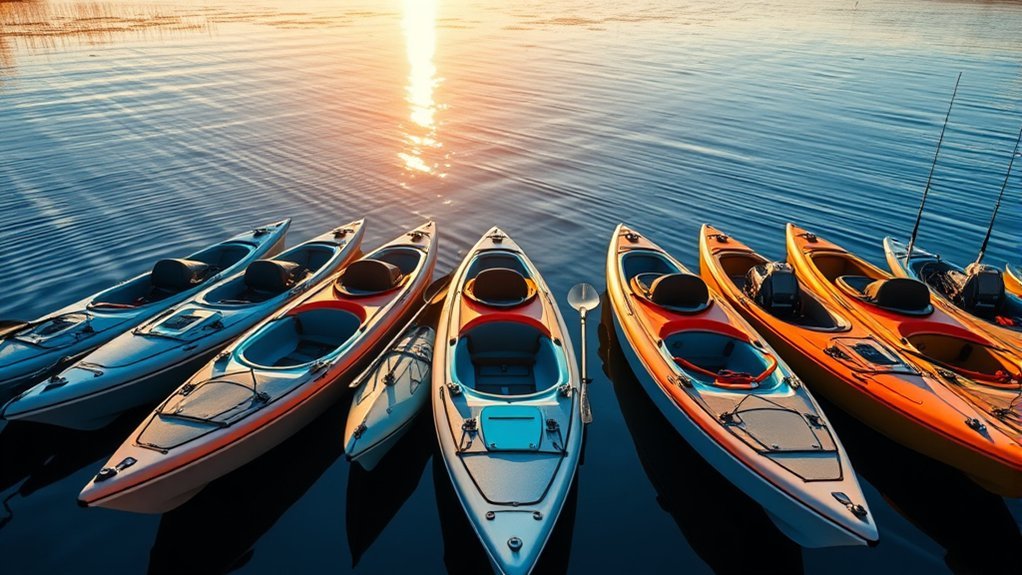
A stable fishing kayak is often judged by hull shape and width, since these features strongly affect balance on the water. Seat height and support, along with weight capacity, also influence comfort and overall stability during long outings. Storage layout, rod holders, and rigging further shape how well the kayak supports organized and efficient fishing.
Hull Shape and Width
Hull shape and width are key determinants of kayak stability for fishing. Wider hulls usually deliver greater steadiness, which helps when standing to cast or working in choppy water. Flat-bottomed hulls offer the highest primary stability and suit calm conditions and beginners. V-shaped hulls, by contrast, are faster and track better, but they can feel less secure. Catamaran-style hulls, with two parallel pontoons, add notable stability and can support standing positions, making them appealing to anglers. Width matters as well: kayaks wider than 30 inches generally feel more balanced and easier to control. At the same time, a well-formed hull should still move efficiently, preserving maneuverability and tracking around structure, obstacles, and productive fishing spots.
Seat Height and Support
Seat height can play a major role in kayak stability for fishing, as a lower seat generally lowers the center of gravity and reduces the chance of tipping. A seat positioned closer to the deck often feels steadier during casting, retrieving, and subtle body shifts on the water. Support also matters, since adjustable backrests and cushioned materials help maintain posture and comfort through long outings. When the seat distributes weight evenly, the angler experiences less fatigue and better control. Adjustable height settings can improve visibility and make gear easier to reach without awkward movement. For added stability, seat design should work with a wide beam hull, creating a secure, balanced platform that supports fishing efficiency and confidence.
Weight Capacity and Balance
Weight capacity and balance are key when selecting a stable fishing kayak, because the boat should comfortably handle the paddler, gear, and any extra load without sitting too low or feeling unstable. The listed capacity should exceed the combined weight by a safe margin; for instance, a 275-pound kayak performs best when loaded to about 220 pounds. That buffer helps preserve trim and responsiveness on the water. Weight placement also matters, since uneven loading can increase the risk of tipping. A balanced setup keeps the kayak level during casting and reeling. Wider beams generally improve steadiness, giving anglers more confidence in movement. Material and design matter too, and high-density polyethylene models often provide a durable, planted feel that supports stable fishing.
Storage and Gear Layout
Storage layout can make a stable fishing kayak far more practical on the water, since front hatches, rear tank wells, and integrated tackle storage keep gear organized and within easy reach. A well-planned deck helps anglers separate tackle, tools, and personal items without cluttering the cockpit. Modular layouts add flexibility, allowing the kayak to be arranged for different fishing styles and trip lengths. Bungee cord systems are useful for securing loose items so they remain stable during transport and on the water. Capacity also matters because storage only helps if the hull can safely support the angler and loaded equipment. Many fishing kayaks offer weight ratings from 275 to 700 pounds, making it important to match storage needs with overall carrying ability.
Rod Holders and Rigging
A stable fishing kayak should provide multiple rod holders, ideally combining flush-mounted and vertical styles for flexible rod placement and quick access. This mix supports different techniques and helps keep rods secure while casting, trolling, or landing fish. Some models include as many as six holders, allowing anglers to manage several lines at once without clutter. Strategic placement matters, since poorly positioned holders can interfere with reeling efficiency and reduce comfort during long sessions. Rigging options also play a major role. Accessory rails make it easier to add fish finders, tackle boxes, and other gear. Integrated storage, including tackle trays and dedicated rod compartments, further improves organization and keeps essential equipment within reach throughout the trip.
Frequently Asked Questions
How Do I Transport a Stable Fishing Kayak on a Small Car?
A stable fishing kayak can be transported on a small car using a roof rack, foam blocks, or a J-cradle system, depending on the kayak’s width and weight. A secure bow and stern tie-down is essential, along with cam straps over the hull. If the kayak is too heavy or long, a trailer or hitch rack may be safer. Padding the contact points helps protect both the kayak and the vehicle.
Are Pedal-Drive Kayaks Harder to Maintain Than Paddle Kayaks?
Like gears in a watch, pedal-drive kayaks usually need more upkeep than paddle kayaks. The drivetrain, chains, fins, and moving parts can collect grit, need rinsing, and sometimes require adjustment or replacement. Paddle kayaks are simpler, with fewer components to service, so maintenance is generally lighter. However, pedal models offer hands-free propulsion, and owners who clean and inspect them regularly often find the extra effort manageable.
Can I Stand and Fish Safely in Windy Conditions?
Standing and fishing safely in windy conditions is possible, but only when the kayak is highly stable, the angler is experienced, and the wind remains moderate. Gusts increase sway, make balance corrections harder, and can quickly turn a simple cast into a fall. A seated position is usually safer. If standing, using calm water, a low center of gravity, and a personal flotation device is strongly advised.
What Safety Gear Is Essential for Stable Kayak Fishing?
Essential safety gear for stable kayak fishing includes a properly fitted PFD, whistle, paddle leash, bilge pump or sponge, and a waterproof communication device. A bright visibility flag and navigation lights help in low light. Sun protection, a knife, dry bag with first aid supplies, and appropriate clothing are also important. For colder water, a spray skirt, thermal layers, and a reentry plan increase safety further.
How Do I Store a Fishing Kayak During Winter?
Like a hibernating beast, a fishing kayak should rest dry, shaded, and supported through winter. It is best stored indoors or under a breathable cover, away from sun, snow, and freezing temperatures. The hull should be cleaned, emptied of gear, and kept off the ground on padded racks or straps. Batteries and electronics should be removed. Periodic checks help prevent hidden cracks, mildew, or warping from taking hold.