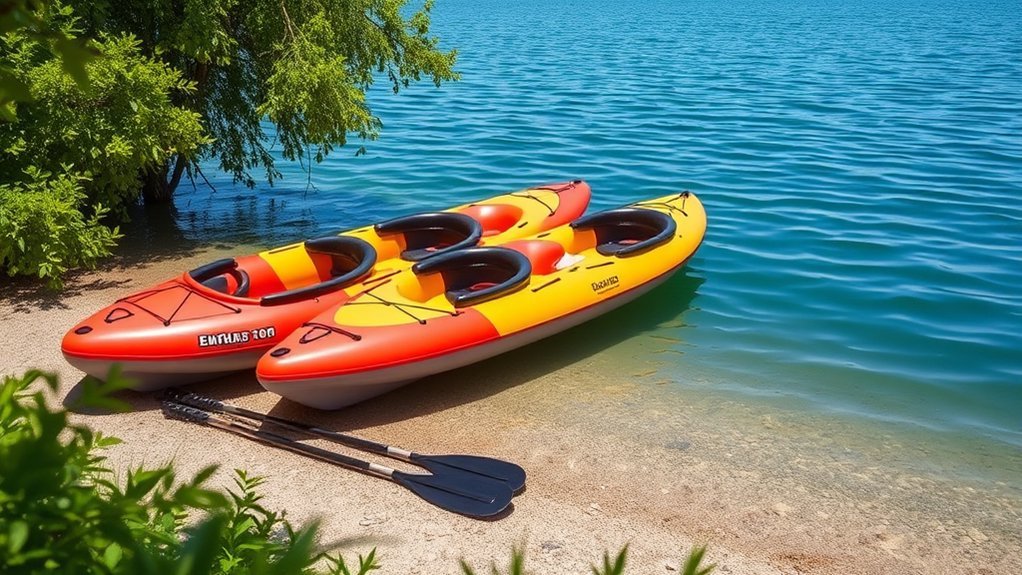
The landscape of recreational kayaking is evolving, with new models offering enhanced stability and performance for paddlers of all skill levels. Among the top contenders for 2026, options range from inflatable designs to spacious fishing kayaks. Each model emphasizes durability and comfort, ensuring a rewarding experience on the water. As outdoor enthusiasts consider their next adventure, understanding the unique features of these kayaks becomes essential. What factors should one weigh before making a decision?
Key Takeaways
- The INTEX Challenger is lightweight and ideal for solo paddlers on calm lakes and mild rivers.
- Pelican Argo 100X offers enhanced stability and comfort, making it suitable for paddlers of all experience levels.
- Pelican Seek 100X features adjustable seating and convenient storage, perfect for beginners on day trips.
- Lifetime Tamarack Pro 103 is designed for fishing enthusiasts with ample storage and a stable design.
- Perception Sound 10.5 combines a tri-keel hull and ergonomic seating, making it excellent for fishing with added stability.
INTEX Challenger Inflatable Kayak with Paddles and Pump
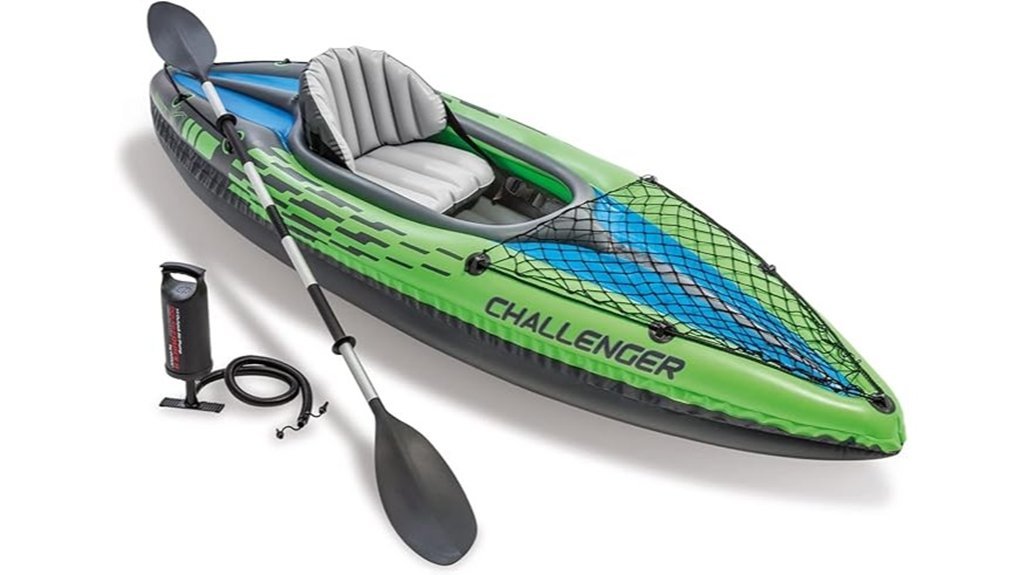
The INTEX Challenger Inflatable Kayak stands out as an ideal choice for solo adventurers seeking a blend of portability and durability. Constructed from SuperStrong PVC, it offers high impact and abrasion resistance, ensuring longevity on various water bodies. The kayak measures 9 feet in length and accommodates up to 220 pounds, making it spacious yet lightweight at just 26 pounds. Its streamlined design promotes easy paddling in lakes and mild rivers, while the removable skeg enhances directional stability. Included components, such as deluxe paddles and a high-output pump, further enhance the overall experience, making it a top pick for recreational outings.
Best For: Solo adventurers looking for a portable and durable kayak for recreational outings on lakes and mild rivers.
Pros:
- Lightweight and Portable: Weighs only 26 pounds and easily fits into a carry bag for transport.
- Durable Material: Made from SuperStrong PVC with high impact and abrasion resistance for long-lasting use.
- Spacious Design: Features a roomy cockpit with removable and adjustable seats for optimal comfort.
Cons:
- Weight Capacity Limitation: Maximum capacity of 220 pounds may not suit larger users or additional gear.
- Limited to Calm Waters: Best for lakes and mild rivers; not designed for rough or turbulent conditions.
- 90-Day Warranty: Short warranty period may not provide sufficient reassurance for long-term use.
Pelican Argo 100X Recreational Sit-in Kayak
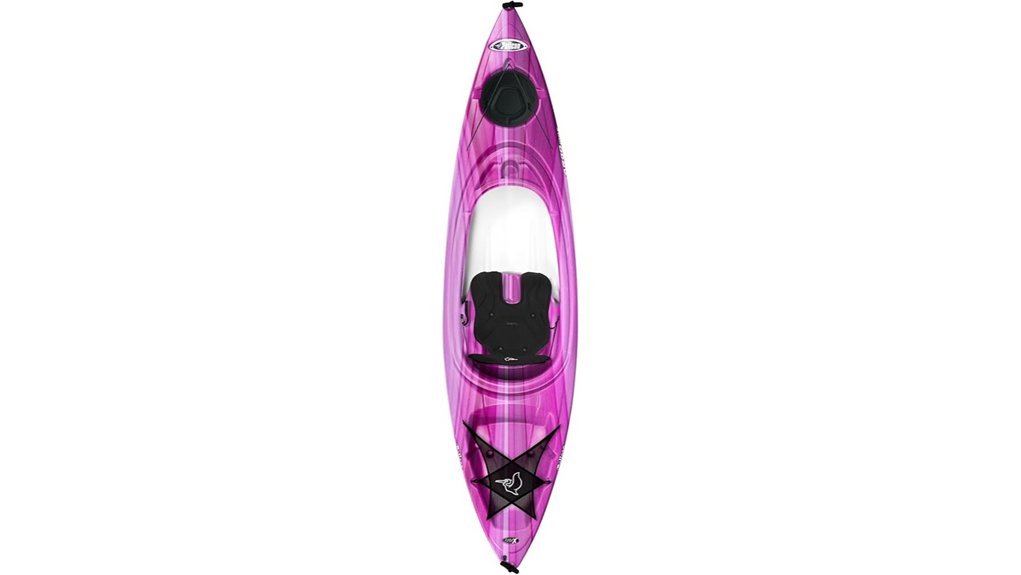
Designed for versatility, the Pelican Argo 100X Recreational Sit-in Kayak excels for paddlers of all experience levels. Measuring 10 feet in length, it features patented Ram-X material, ensuring a strong yet lightweight structure. The twin-arched multi-chine hull enhances stability, making it safe for various water conditions. Comfort is prioritized with the Ergoform seating system, which includes an adjustable backrest and spacious seat cushion. Additionally, molded footrests accommodate paddlers of all sizes, providing necessary support. The Pelican Argo 100X is an excellent choice for those seeking a reliable and enjoyable kayaking experience.
Best For: The Pelican Argo 100X is best for paddlers of all experience levels looking for a reliable and comfortable kayaking experience.
Pros:
- Strong and lightweight construction thanks to patented Ram-X material, making it easy to transport and maneuver.
- Enhanced stability with the twin-arched multi-chine hull, providing safety in various water conditions.
- Comfortable seating with an adjustable backrest and spacious seat cushion, plus molded footrests for support.
Cons:
- Limited storage space may not accommodate longer trips or extensive gear.
- Sit-in design might not be ideal for those who prefer an open cockpit for easier entry and exit.
- Weight capacity might be restrictive for larger paddlers or additional gear.
Pelican Seek 100X Recreational Sit-on-Top Kayak
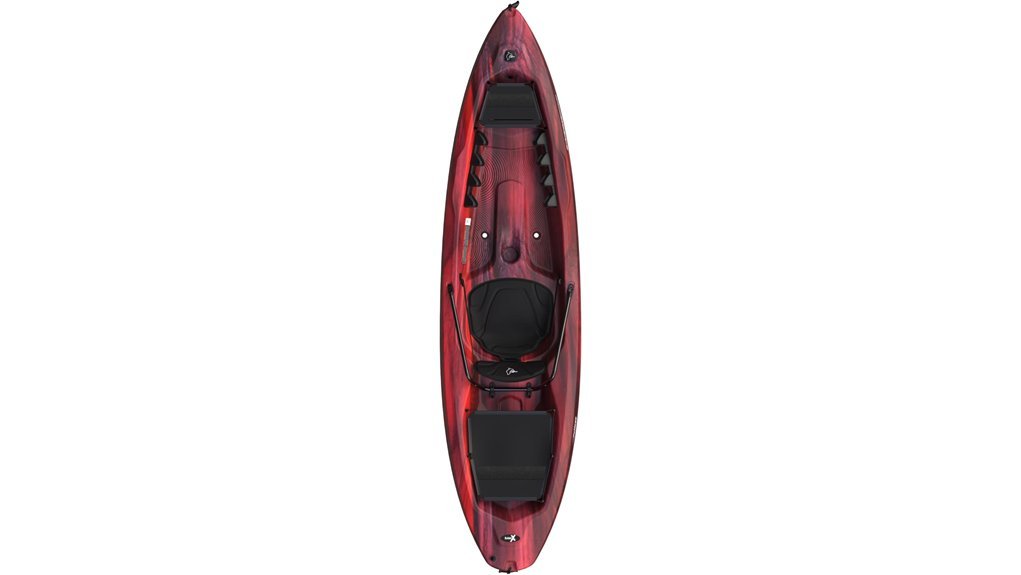
For beginners and casual paddlers, the Pelican Seek 100X Recreational Sit-on-Top Kayak offers an ideal blend of stability and comfort. Measuring 10 feet long and weighing 43.1 pounds, it supports a weight capacity of 300 pounds. The twin-arched multi-chine hull design guarantees a smooth ride, while the adjustable Ergoform seating provides soft cushioning for enhanced comfort. Its innovative Ergobar System allows for easy entry and exit, and the textured standing area enhances stability when needed. Additionally, thoughtful storage solutions, including a ripstop tankwell cover and dual-position bottle holder, make it a practical choice for day trips.
Best For: Beginners and casual paddlers seeking a stable and comfortable recreational kayak for day trips.
Pros:
- Stable and smooth ride thanks to the twin-arched multi-chine hull design.
- Comfortable seating with adjustable Ergoform system for personalized fit.
- Convenient storage options including a ripstop tankwell cover and dual-position bottle holder.
Cons:
- Weight may be cumbersome for some users when transporting.
- Limited advanced features for experienced kayakers seeking performance.
- Storage capacity may be insufficient for extended trips.
Lifetime Tamarack Pro 103 Sit-On-Top Kayak, Lightning Fusion, 10 ft. 3 in.
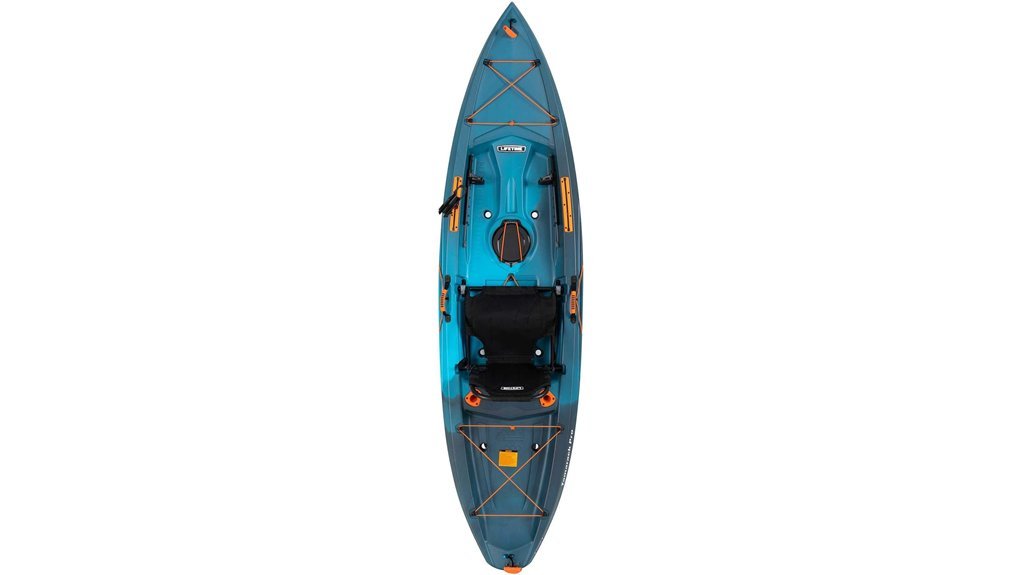
Versatile and user-friendly, the Lifetime Tamarack Pro 103 Sit-On-Top Kayak is ideal for both novice and experienced paddlers. Measuring 10 ft. 3 in. and weighing 57.5 lbs, it supports a weight capacity of 300 lbs. The vibrant Lightning Fusion color enhances visibility on the water. Designed for fishing, it features an adjustable rod holder, multiple storage options, and a ruler for measuring catches. Comfort is prioritized with an adjustable framed seat and footrests. Its flat bottom and deep hull channels provide stability, while bungee cords secure gear. The kayak also includes a paddle keeper for added convenience.
Best For: The Lifetime Tamarack Pro 103 Sit-On-Top Kayak is best for beginner to intermediate paddlers looking for a stable and versatile fishing kayak.
Pros:
- Stable design with a flat bottom and deep hull channels enhances tracking on the water.
- Ample storage options including a center hatch, tackle box storage, and bungee cords for securing gear.
- Comfortable seating with an adjustable framed seat and footrests for personalized positioning.
Cons:
- Weight may be cumbersome for some users when transporting or loading.
- Limited seating capacity as it accommodates only one person.
- Plastic material may be less durable compared to other materials like fiberglass.
Pelican Argo 100X EXO Recreational Sit-in Kayak
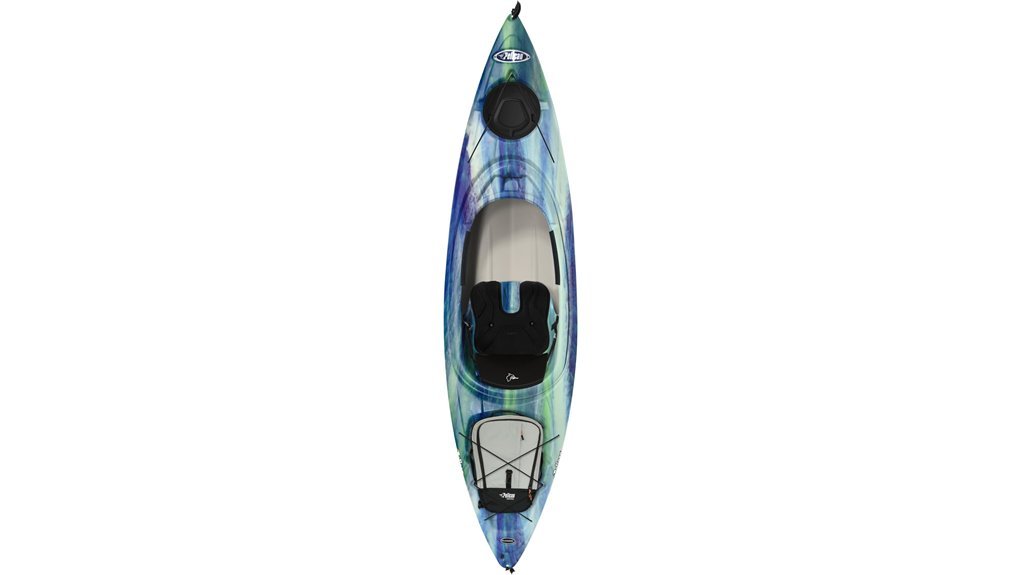
The Pelican Argo 100X EXO stands out as an excellent choice for beginner and casual paddlers. Measuring 10 feet in length and weighing just 36 pounds, this sit-in kayak offers a weight capacity of 275 pounds, making it both lightweight and sturdy. Its twin-arched multi-chine hull enhances stability, while the Ergobreeze™ seating system guarantees comfort with an adjustable backrest. The portable ExoChill storage compartment keeps belongings safe from splashes. Crafted from patented Ram-X™ material, the kayak is built for durability. Pelican backs this model with a lifetime limited warranty against manufacturer defects, providing peace of mind for users.
Best For: The Pelican Argo 100X EXO is best for beginner and casual paddlers looking for a lightweight and stable kayak.
Pros:
- Lightweight design makes it easy to transport and maneuver.
- Ergobreeze™ seating system offers comfort with an adjustable backrest for long paddling sessions.
- Durable Ram-X™ material ensures longevity and resistance to impacts.
Cons:
- Limited weight capacity may not accommodate larger paddlers or additional gear.
- Sit-in design might not appeal to those who prefer sit-on-top kayaks for easier entry and exit.
- Storage space may be insufficient for extended trips or larger equipment.
Pelican Catch Mode 110 Kayak
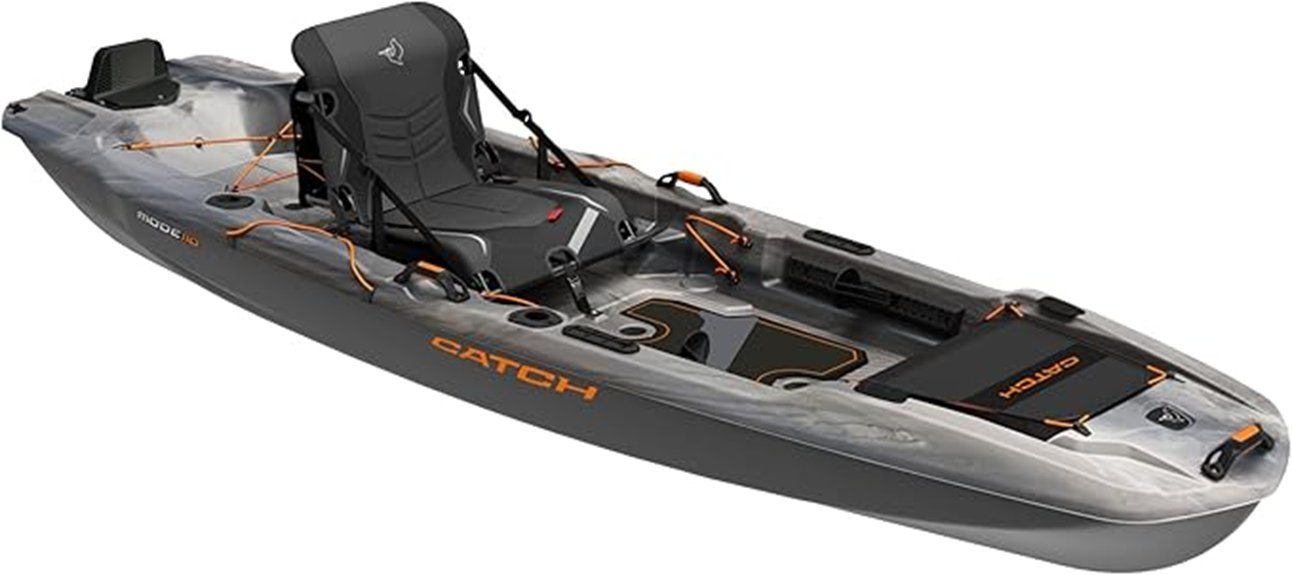
Designed with stability in mind, the Pelican Catch Mode 110 Kayak is an ideal choice for anglers seeking a secure fishing experience. Its tunnel hull design and wide, flat deck platform guarantee exceptional stability, allowing users to stand comfortably while casting. The ERGOBOOST seating system, featuring an EVA seat pad, enhances comfort, while convenient under-seat storage adds practicality. Constructed from durable high molecular weight polyethylene, this lightweight kayak weighs only 63 lb and has a maximum weight capacity of 375 lb. Additionally, it includes three flush-mount rod holders for easy access to fishing gear, making it a versatile option for outdoor enthusiasts.
Best For: Anglers seeking a stable and comfortable kayak for fishing with convenient gear storage.
Pros:
- Exceptional stability due to the tunnel hull design and wide deck, allowing for safe standing while casting.
- Comfortable seating with the ERGOBOOST system and EVA seat pad, enhancing long hours on the water.
- Lightweight construction makes it easy to transport and load, weighing only 63 lb.
Cons:
- Limited storage space aside from under-seat storage, which may not accommodate all gear.
- Weight capacity of 375 lb may not be sufficient for larger individuals or extra gear.
- Shorter length of 10 ft 8 in might not be ideal for covering larger bodies of water quickly.
Perception Sound 10.5 Sit Inside Fishing Kayak
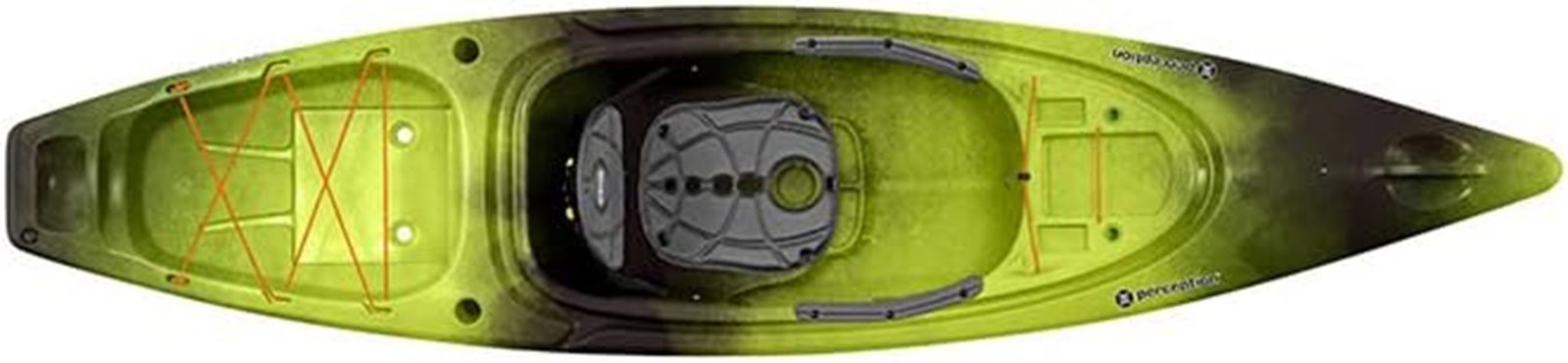
For anglers seeking a reliable fishing kayak, the Perception Sound 10.5 stands out with its tri-keel hull, ensuring stability and smooth steering. Measuring 10 feet 6 inches long and 29.5 inches wide, this sit-inside kayak is designed for both fishing and recreational activities. Weighing 46 lbs, it has a maximum capacity of 335 lbs. Features include an ergonomic Zone Seat with adjustable backrest, quick-adjust footrests, and two molded-in fishing rod holders. Additionally, its large rear storage area offers easy gear access, while the dashboard supports accessory mounting. Built in the USA, it comes with a five-year limited warranty on the hull.
Best For: Anglers and recreational paddlers seeking a stable and comfortable sit-inside kayak for fishing trips.
Pros:
- Stable tri-keel hull provides smooth steering and excellent stability on the water.
- Ergonomic Zone Seat with adjustable backrest enhances comfort during long fishing sessions.
- Large rear storage area allows easy access to gear, making it convenient for anglers.
Cons:
- Weight of 46 lbs may be cumbersome for some users during transport.
- Limited accessory compatibility requires purchasing additional mounting systems separately.
- Sit-inside design may not be preferred by those who favor open-top kayaks for easier entry and exit.
Factors to Consider When Choosing a Stable Recreational Kayak

When selecting a stable recreational kayak, several critical factors come into play. Key stability features, hull design types, and weight capacity considerations greatly influence performance and safety on the water. Additionally, material durability and comfort options can enhance the overall paddling experience, making them essential aspects to evaluate.
Key Stability Features
Stability is an essential factor in selecting a recreational kayak, influencing the overall paddling experience. Key stability features include hull design, weight distribution, and width. A twin-arched multi-chine hull increases water contact area, enhancing stability and providing a smoother ride in varying conditions. A well-balanced kayak guarantees even weight distribution, minimizing the risk of tipping and improving control. Wider kayaks generally offer greater stability, making them ideal for beginners seeking security. A low-profile design reduces wind resistance, allowing for easier navigation in choppy waters. Additionally, an adjustable seating system enhances comfort while lowering the center of gravity, further contributing to overall stability. These features collectively enhance confidence while paddling, guaranteeing a positive experience on the water.
Hull Design Types
Choosing the right hull design is essential for ensuring a stable and enjoyable kayaking experience. The Twin-Arched Multi-Chine Hull increases water contact area, enhancing stability across diverse conditions. For beginners, the Flat Bottom Hull is ideal, providing excellent tracking and a smooth ride on calm waters. Meanwhile, the Tri-Keel Hull promotes both stability and smooth steering, facilitating better control during paddling. Although the V-Shaped Hull offers improved speed and efficiency, it may sacrifice some stability, making it better suited for longer distances. Finally, incorporating Chine Rails enhances stability, allowing kayaks to manage rough water effectively. Each design serves different needs, so selecting the right hull type is vital for a fulfilling recreational kayaking adventure.
Weight Capacity Considerations
Selecting a recreational kayak involves more than just hull design; weight capacity is a significant factor that impacts overall performance. To guarantee stability and safety on the water, the kayak’s weight capacity must exceed the combined weight of the paddler and any gear. Typically, kayaks have capacities ranging from 220 to 375 pounds, making it vital to take into account both personal weight and additional cargo. Exceeding the recommended weight can compromise stability, increasing the risk of tipping and reducing maneuverability. Moreover, careful weight distribution within the kayak enhances balance; placing heavier items closer to the center is advisable. It is essential to factor in extra gear, such as fishing or camping supplies, when evaluating a kayak’s weight capacity for an enjoyable paddling experience.
Material Durability Factors
Material durability plays an essential role in the performance and longevity of recreational kayaks. The molecular formulation of kayak materials, such as enhanced PVC, provides high impact and abrasion resistance, making them suitable for rough waters. Patented materials like Ram-X offer a balance of strength and lightweight construction, enhancing durability across various paddling experiences. Polyethylene (PE) is a popular choice due to its resistance to UV rays and impacts, ensuring the kayak maintains its integrity over time. Additionally, the weight of the kayak can influence durability; while lighter materials may sacrifice strength, heavier ones often perform better in challenging conditions. Regular maintenance, including proper storage and cleaning, can greatly extend a kayak’s lifespan and performance.
Comfort and Seating Options
When considering comfort and seating options, the design and features of a recreational kayak play an essential role in enhancing the paddling experience. Adjustable seating systems, such as Ergoform or Ergobreeze, allow users to customize back support for extended outings. Spacious seat cushions contribute to overall comfort and help reduce fatigue on the water. Molded footrests that accommodate various leg lengths guarantee a secure paddling position. Additionally, a wide, flat deck enhances stability, making it easier to stand, which is particularly advantageous for fishing or maneuvering through rough conditions. Finally, evaluating cockpit design is critical; larger cockpits facilitate easier entry and exit, while ergonomically designed options improve comfort during use. These factors collectively contribute to a more enjoyable kayaking experience.
Transportability and Storage
Transportability and storage are essential considerations for recreational kayakers looking to maximize their experience both on and off the water. The weight of the kayak plays a significant role; lighter models, typically under 40 pounds, are easier to transport and load onto vehicles. Kayaks that are foldable or come with a carry bag enhance portability and simplify storage when not in use. It’s important to check the dimensions of the kayak when deflated or disassembled to verify it fits in the vehicle or storage space. Additionally, evaluating the kayak’s design for built-in handles can facilitate lifting and carrying, while opting for models with compact storage options increases overall usability. These factors collectively enhance the overall experience for kayakers.
Purpose and Intended Use
Choosing the right recreational kayak hinges on understanding its purpose and intended use. The type of water maneuvering is vital; some kayaks are tailored for calm lakes and mild rivers, while others handle turbulent waters or fishing environments. Potential buyers should consider whether a sit-in or sit-on-top design aligns with their preferences, as each affects stability and comfort differently. Additionally, appraising the kayak’s weight capacity guarantees it accommodates both the paddler and any gear. Hull design is another key factor; options like twin-arched multi-chine hulls enhance stability and paddling ease. Finally, reviewing storage options is essential, particularly for those planning to bring fishing equipment or other accessories on their adventures.
Frequently Asked Questions
What Is the Weight Capacity of These Kayaks?
The weight capacity of recreational kayaks generally ranges from 250 to 400 pounds, depending on the model and design. Most manufacturers provide specifications that detail the maximum load each kayak can safely carry, which includes the paddler, gear, and any additional equipment. It is essential for users to evaluate this capacity, as exceeding it can affect stability, performance, and safety on the water, impacting the overall kayaking experience.
How Do I Properly Maintain My Kayak?
Properly maintaining a kayak involves regular cleaning, inspecting for damage, and storing it correctly. Surprisingly, neglecting these tasks can lead to costly repairs or diminished performance. After each use, rinsing the kayak with fresh water prevents salt and dirt buildup. Checking for cracks or leaks guarantees safety on the water. Finally, storing it in a cool, dry place, preferably elevated, protects it from UV damage and prolongs its lifespan.
Can I Use These Kayaks in Ocean Waters?
Yes, these kayaks can be used in ocean waters, but caution is advised. While many recreational kayaks are stable and suitable for calm coastal conditions, they may struggle in rough seas or strong currents. It’s crucial for the user to assess weather conditions and their skill level before venturing into the ocean. Additionally, using appropriate safety gear and being aware of tides and waves can enhance the experience and guarantee safety on the water.
What Safety Gear Should I Bring While Kayaking?
As the sun glistens on the water’s surface, safety becomes paramount for the adventurer. A personal flotation device (PFD) is essential, ensuring buoyancy like a trusty life raft. A whistle, sharp as a siren’s call, can summon help if needed. Additionally, a first-aid kit offers peace of mind, while a waterproof dry bag protects valuables. Finally, a map or GPS, guiding like a lighthouse, helps navigate unfamiliar waters.
Are These Kayaks Suitable for Beginners?
Yes, these kayaks are suitable for beginners. Their design typically emphasizes stability and ease of use, providing new paddlers with a secure experience on the water. Features such as wider hulls and user-friendly controls enhance comfort and confidence, allowing novices to focus on mastering basic skills. Additionally, many models include safety features and instructional resources, making them an ideal choice for those just starting their kayaking journey.
Conclusion
In the quest for the perfect recreational kayak, stability, comfort, and versatility reign supreme. Whether gliding across serene lakes or traversing gentle rivers, each kayak offers unique features to elevate the experience. By embracing the joy of paddling with confidence, adventurers can forge unforgettable memories on the water. With the right kayak, every stroke becomes a celebration of freedom, every journey a symbol of exploration, and every moment a chance to connect with nature’s beauty.