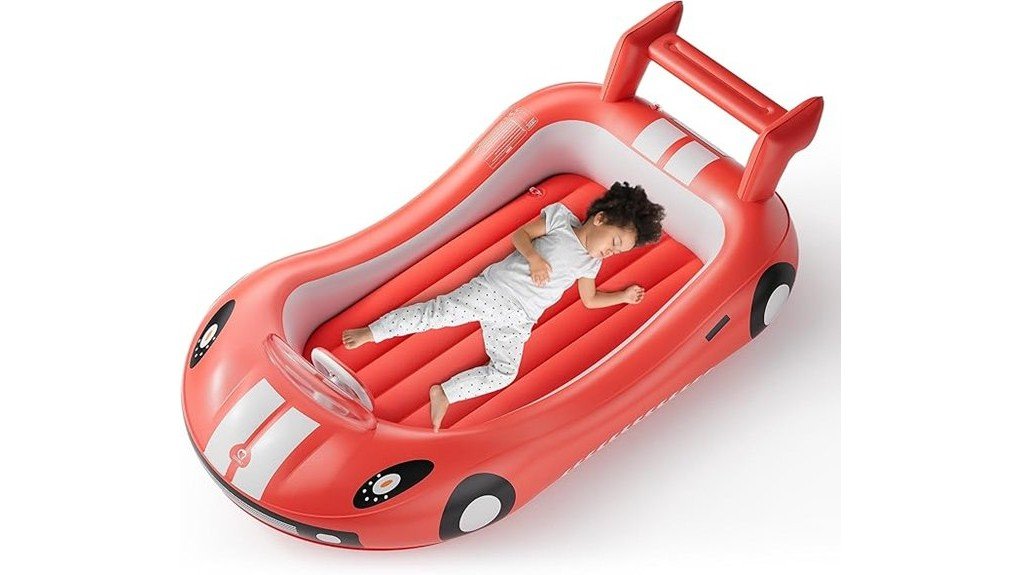
Travel pillow materials affect how a pillow supports your neck, handles heat, packs, and cleans. Memory foam offers shaped support, microfiber and polyester keep weight down, velvet adds a plush surface, and stuffable shells turn spare clothing into adjustable cushioning. The right choice depends on your support needs, temperature preference, cleaning routine, and luggage space.
Quick Answer
Choose memory foam when shaped neck support matters most; choose microfiber or polyester-filled designs for low weight and easy care; and choose velvet-covered stuffable pillows when adjustable firmness and packing space matter more than fixed cushioning. Warm sleepers should prioritize a breathable cover, while frequent travelers should favor removable, easy-clean surfaces.
What Matters Most in Travel Pillow Materials
Key Takeaways
- The fill and the pillow shape work together: a supportive material can still feel wrong if the height, opening, or contour does not suit your neck.
- Memory foam gives more structured contouring, but the foam core and removable cover may have different cleaning instructions.
- Stuffable travel pillows save luggage space and let you adjust firmness, although support changes with how evenly you pack the clothing inside.
- Microfiber and polyester are practical for light weight and easy care; velvet adds a plush surface but does not determine the pillow’s support by itself.
- For sensitive skin, prioritize a washable cover and clear material information rather than relying only on broad terms such as “hypoallergenic.”
Travel Pillow Materials Compared
The best travel pillow material depends on what you want the pillow to do. Memory foam is the most support-focused option in this group, while microfiber and polyester designs emphasize low weight and easier care. Velvet is mainly a cover texture, and stuffable shells let your clothing become the adjustable fill.
| Material or construction | Main strength | Main trade-off | Best fit |
|---|---|---|---|
| Memory foam | Contours around the head and neck and keeps a defined shape. | Can feel warmer and bulkier; the foam core may need different care from the cover. | Travelers who want steadier neck support. |
| Microfiber or polyester fill | Soft, lightweight cushioning that is often easy to wash. | Usually offers less defined neck stabilization than molded foam. | Light packers and travelers who value simple care. |
| Polyester velvet cover | Soft, plush feel against the skin. | The plush surface can feel warmer; support still depends on the fill. | Travelers who prioritize surface comfort. |
| Polystyrene microbeads | Lightweight fill that shifts around the neck. | Less fixed than foam and requires care if the shell is damaged. | Travelers who like flexible, medium support. |
| Stuffable fabric shell | Uses clothing as fill, so firmness and storage are adjustable. | Comfort depends on what you pack and how evenly you distribute it. | Budget-airline and carry-on travelers. |
SweetSlubr Small Travel Pillows 2-Pack for Airplane Travel
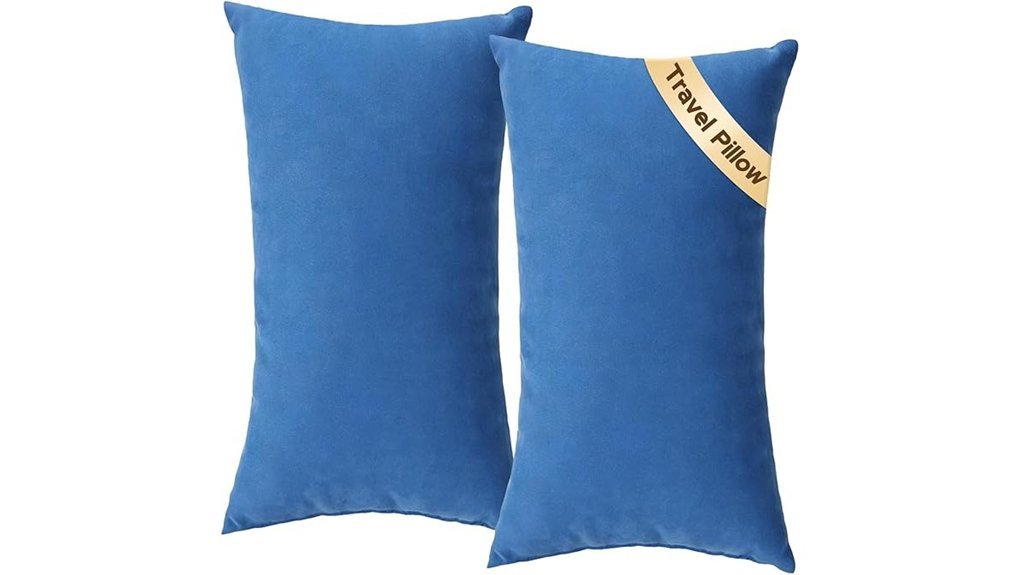
The SweetSlubr two-pack is a good fit if you want a small, soft pillow rather than structured neck support. The current listing describes a 100% microfiber cover with down-alternative fill, correcting the earlier description of microfiber as the fill itself. Each pillow is about 11 by 7 inches, and the listing gives an item weight of 11.36 ounces for the two-count product.
The pillows are designed for airplanes, cars, camping, office breaks, and home use. Their biggest material advantage is simple care: the listing says to machine wash cold on a gentle cycle and tumble dry low. That makes this style practical if washability matters more than firm contouring.
Best For: Travelers and commuters who want a compact, extra-soft pillow that is easy to pack and wash.
Pros:
- Small 11 x 7 inch format fits easily in a backpack or carry-on.
- Microfiber cover and down-alternative fill create a soft, low-structure feel.
- Machine-washable construction simplifies cleaning after trips.
Cons:
- The small rectangular shape offers less neck stabilization than a contoured travel pillow.
- Extra-soft cushioning may not suit travelers who want firmer support.
- The blue rectangular design offers fewer fit and style choices than adjustable neck pillows.
Stuffable Travel Neck Pillow with Hood
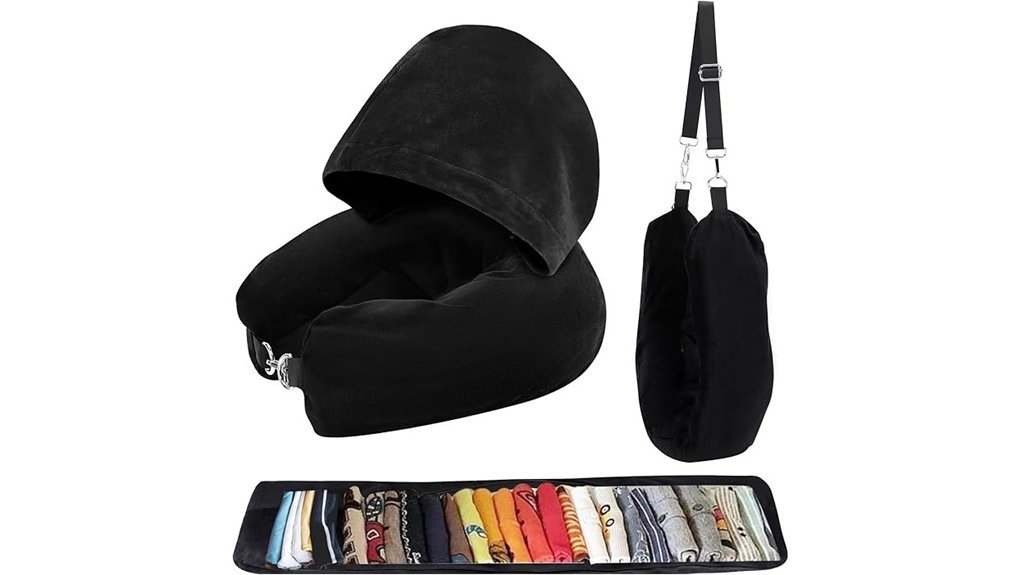
The Lulttihy Stuffable Travel Neck Pillow with Hood is built around a polyester velvet shell that you fill with your own clothing. The current product listing identifies the fill as clothes, so the earlier description of a built-in polyester fill was inaccurate. This design lets you change firmness by changing what and how much you pack inside.
An adjustable neck opening, luggage straps, hood, zipper, and aluminum D-ring add travel utility. The hood can reduce light around the face, while the stuffable cavity saves space that would otherwise be taken by a fixed pillow insert. The listing also identifies the product as machine washable.
Best For: Travelers who want a neck pillow that doubles as clothing storage and lets them adjust firmness by packing differently.
Pros:
- Stuffable construction combines a neck pillow with extra packing space.
- Velvet fabric gives the outer surface a soft feel.
- Adjustable sizing, luggage straps, and a hood add practical travel features.
Cons:
- You must supply the clothing that creates the pillow’s shape and support.
- Firmness can become uneven if the contents are lumpy or loosely packed.
- It does not provide the consistent molded shape of a dedicated memory foam pillow.
Stuffable Travel Neck Pillow with Clothes Storage
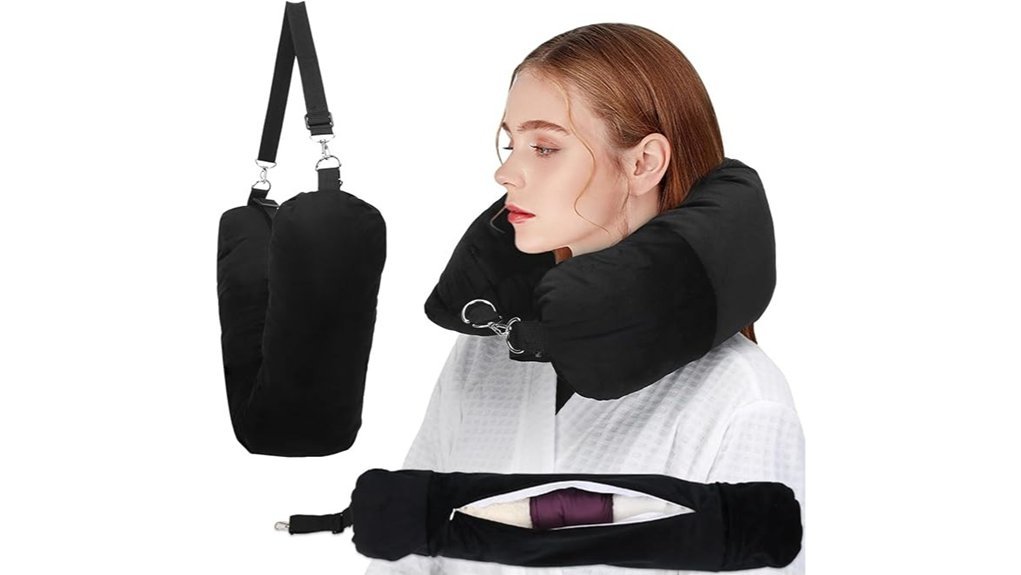
This stuffable travel pillow uses a soft velvet cover and your packed clothing as the fill. That makes it more flexible than a fixed-fill pillow: you can add or remove clothes to change loft and firmness while freeing space inside your main bag.
The self-filling cavity, zipper closure, and adjustable shoulder strap are aimed at frequent flyers and road-trippers who want one item to handle both neck support and light storage. Because support depends on the contents, smoother items such as folded shirts usually create a more even surface than hard or irregular objects.
Best For: Frequent flyers and road-trippers who value adjustable support and extra clothing storage over a fixed cushion.
Pros:
- Velvet surface feels soft against the neck.
- Stuffable design saves luggage space and lets you change firmness.
- Shoulder strap and zipper improve portability and containment.
Cons:
- Support depends on how evenly the pillow is packed.
- Storage space is more limited than a dedicated packing organizer.
- Travelers who want an instantly ready pillow may prefer a pre-filled design.
DreamShore Stuffable Travel Neck Pillow for Carry-On
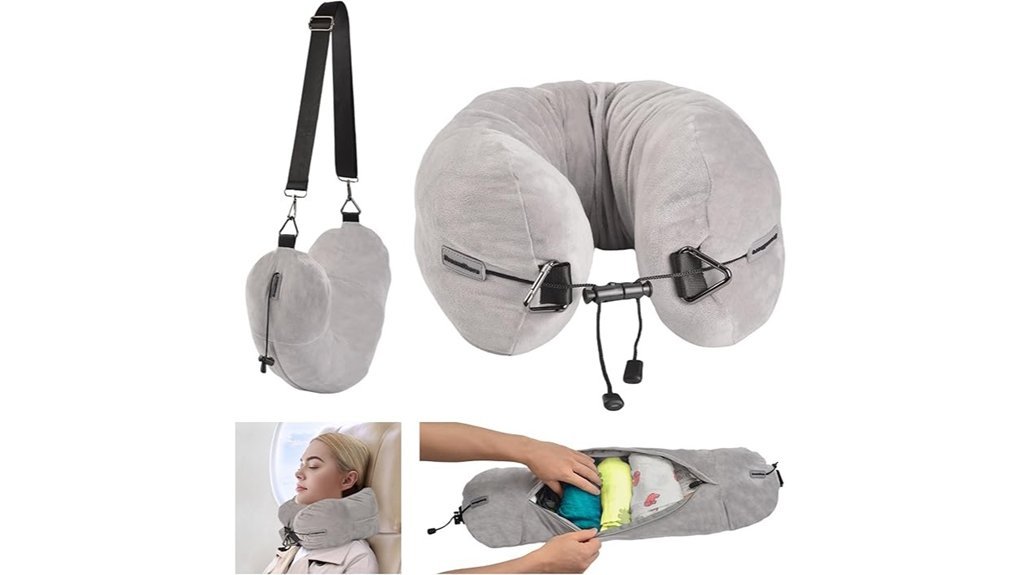
DreamShore is another no-filler, stuffable design, so its main material is the cover rather than a permanent inner cushion. The current listing describes a 100% polyester velvet shell, a medium-soft feel, and space for roughly three days of travel essentials.
A side zipper lets you load clothing, and the empty shell folds into its own pocket when not in use. An adjustable neck size and shoulder strap make it easier to carry between trips. The listing also states that the pillow is machine washable, which is useful because the fabric sits directly against your neck and face.
Best For: Short-trip travelers who want a soft neck pillow shell that can also carry clothing or small essentials.
Pros:
- No permanent filler, so clothing becomes both storage and adjustable cushioning.
- Polyester velvet cover provides a plush surface with a medium-soft feel.
- Folds into its own pocket and includes adjustable neck sizing plus a shoulder strap.
Cons:
- Support changes with the amount and type of clothing inside.
- Three-day storage is a listing estimate, not a fixed capacity for every packing style.
- It lacks the predictable contour of molded foam.
Stuffable Neck Pillow for Travel, Adjustable Storage Pillow
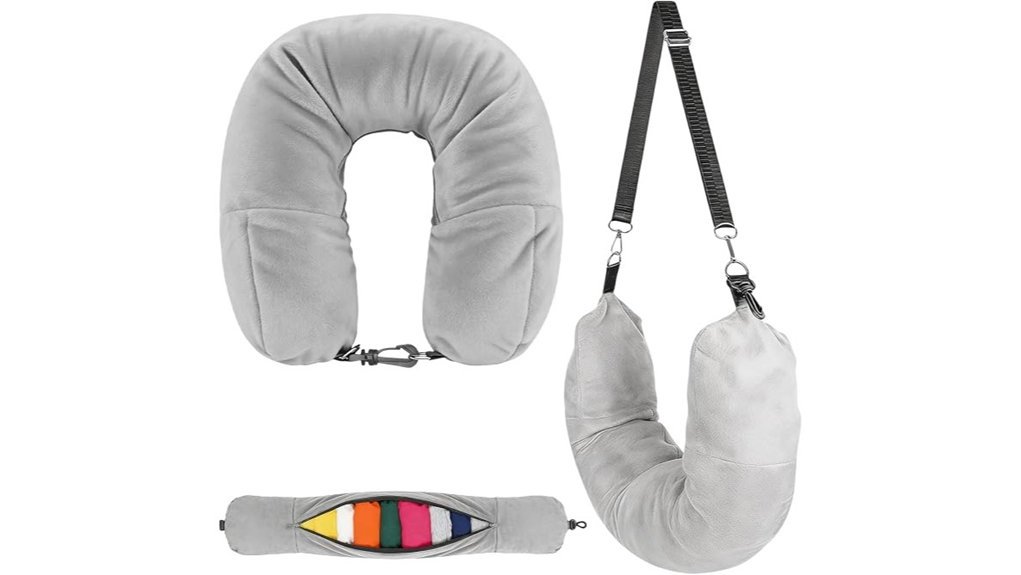
The Asofelk 245702-US is a lightweight stuffable shell for travelers who want adjustable firmness without carrying a dedicated foam insert. The current listing gives an item weight of 3.2 ounces and says the cover can hold clothing for roughly three to five days, depending on what you pack.
You create the support by filling it with items such as T-shirts and socks. A heavy-duty buckle lets the packed pillow attach to luggage or ride cross-body, and the empty cover folds flat. The hidden zipper also keeps the closure away from the most exposed surface while you travel.
Best For: Carry-on travelers who want very low empty weight and the ability to tune firmness with clothing.
Pros:
- 3.2-ounce empty weight adds little bulk before you stuff it.
- Clothing fill lets you adjust the pillow’s firmness and loft.
- Buckle system supports hands-free carrying on luggage or across the body.
Cons:
- You need spare clothing to make the pillow usable.
- Support can vary from trip to trip as the packed contents change.
- It takes more setup than a pre-filled neck pillow.
Stuffable Travel Pillow Luggage Storage Bag
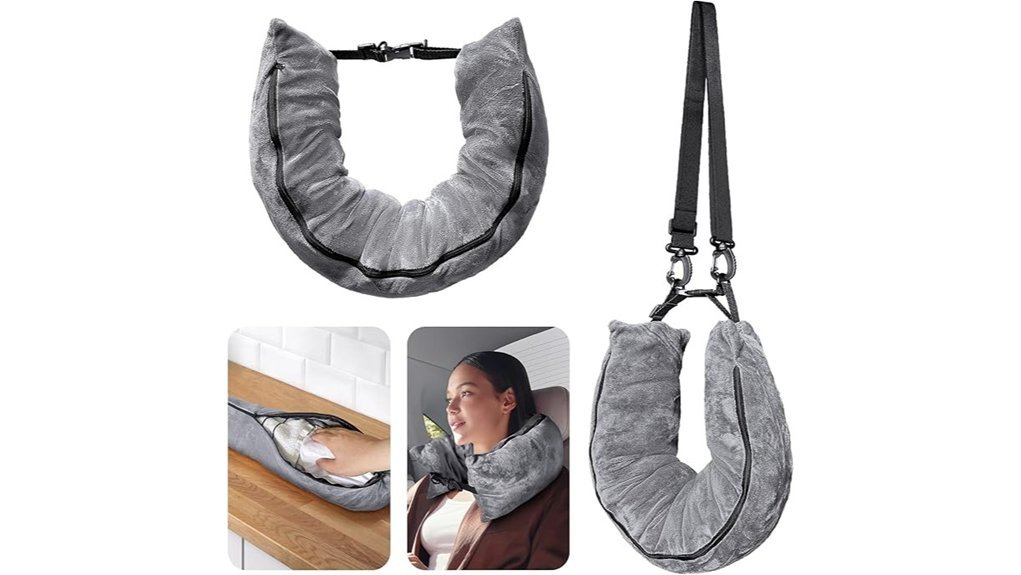
This velvet stuffable travel pillow is designed for soft surface comfort plus hidden clothing storage. The listing says it measures about 31 by 7 inches when flat and can hold four adult T-shirts comfortably, or up to six when packed more tightly.
The adjustable neck opening helps change the fit, while the long zipper and side access make loading easier. Because the contents become the cushion, the same shell can serve as neck or lumbar support when packed appropriately. Its hands-free carrying design also helps keep the main bag less crowded.
Best For: Travelers who want a plush stuffable pillow and enough extra space for several lightweight shirts.
Pros:
- Velvet exterior provides a soft surface against the skin.
- Adjustable opening makes the neck fit less fixed than a one-size horseshoe pillow.
- Stuffable cavity can carry roughly four to six adult T-shirts, according to the listing.
Cons:
- Actual storage and support depend on clothing thickness and packing technique.
- A tightly packed shell can become lumpy if items are not distributed evenly.
- It is intended for soft items rather than heavy or rigid cargo.
SAIREIDER Memory Foam Travel Neck Pillow (Black)
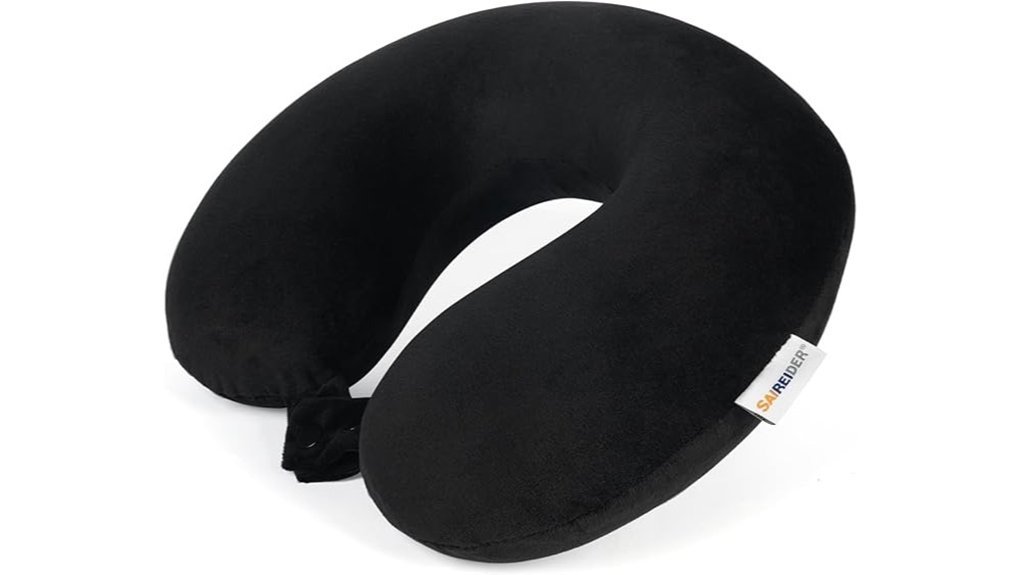
SAIREIDER is the first option here with a fixed memory foam core, so its support is more consistent than a stuffable shell. The current listing describes the firmness as soft, not firm, and gives dimensions of 11.8 x 11.4 x 3.9 inches. It also lists a 100% polyester fabric and a removable cover.
The semicircular shape is designed to support the head, neck, and chin around the seat. Three fit settings help change how closely it wraps, while the compressible foam makes storage easier between trips. A removable cover is especially useful because it lets you clean the surface that touches your skin without treating the foam core like ordinary fabric.
Best For: Travelers who want soft memory foam contouring with an adjustable wraparound fit.
Pros:
- Memory foam provides a consistent molded cushion instead of relying on packed clothing.
- Three adjustable fit positions help accommodate different neck sizes.
- Removable cover makes routine surface cleaning more practical.
Cons:
- The current listing describes the pillow as soft, which may not suit people seeking a very firm hold.
- Foam is bulkier than an empty stuffable shell.
- The semicircular shape may not suit every seat position or sleeping posture.
Napfun Memory Foam Travel Neck Pillow
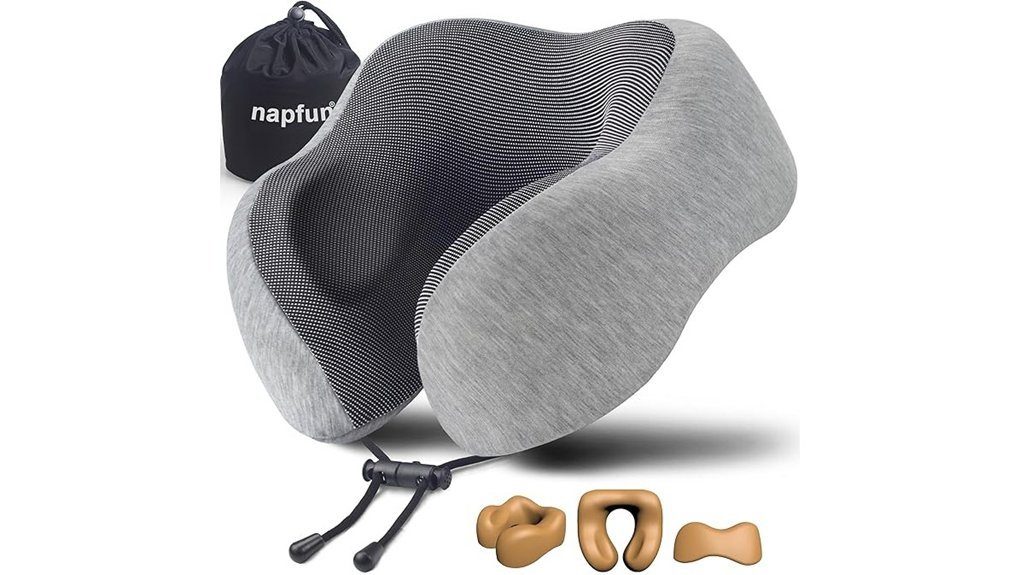
Napfun uses a 100% memory foam core with a chin-supporting wrap, making it better suited to travelers who want a defined neck shape rather than loose cushioning. The current listing says body heat helps the foam contour to the user and describes the front wrap as a way to limit the head falling forward.
Raised side lobes cradle the neck and shoulders, while a drawstring changes the fit. The pillow is intended for airplanes, cars, trains, and buses. The earlier article also cited “five-second return technology”; that wording was not visible on the current listing checked for this edit, so it is not used as a deciding claim here.
Best For: Travelers who want memory foam contouring plus adjustable chin and side support on long seated trips.
Pros:
- Memory foam creates a more repeatable support shape than clothing-filled designs.
- Front wrap helps limit forward head drop while seated.
- Drawstring and raised sides let you tune how closely the pillow sits around the neck.
Cons:
- Memory foam takes more packed space than an empty stuffable cover.
- A close wrap can feel restrictive if you prefer an open neck area.
- Foam warmth and firmness are personal preferences, so fit matters as much as the material.
Classic Bean Sleeper Travel Neck Pillow
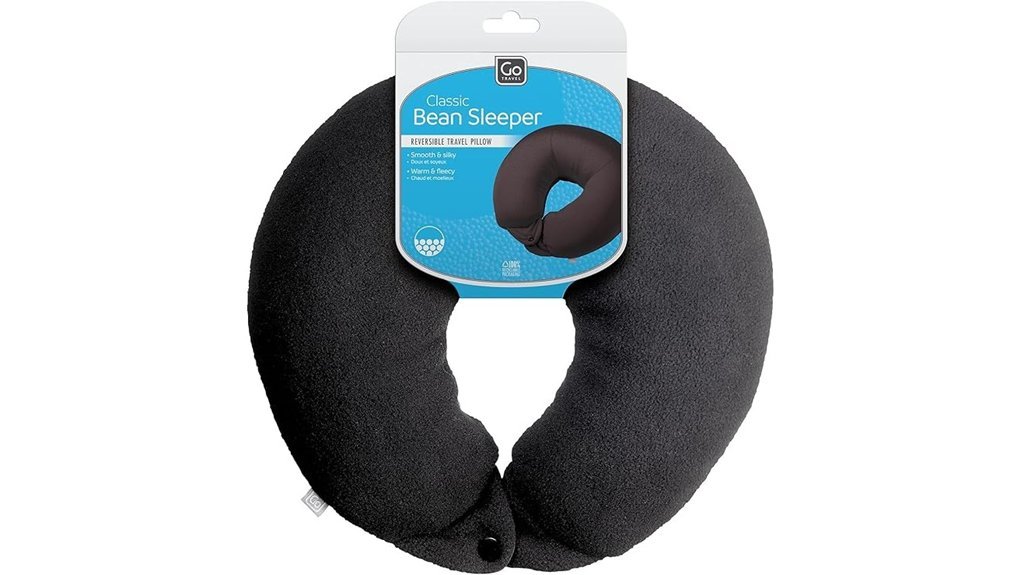
The Go Travel Classic Bean Sleeper uses polystyrene microbeads instead of foam, so the fill shifts more freely around the neck. Its reversible cover pairs a smooth knit side with warm fleece, giving you two different surface feels without changing the fill.
The current Go Travel specifications list a 94% polyester/6% elastane knit, 100% polyester fleece, and 100% polystyrene bead inner. The pillow weighs 145 g, about 5.1 ounces, and the official care instruction is wipe clean only. Go Travel also warns that loose beads are dangerous to children if swallowed or inhaled, so replace the pillow if its shell is damaged.
Best For: Travelers who want lightweight, medium support and a reversible cool-feel/warm-feel surface.
Pros:
- Reversible knit and fleece surfaces suit different cabin temperatures.
- Microbead fill shifts around the neck instead of holding one rigid contour.
- At 145 g, it remains light enough for carry-on travel.
Cons:
- Wipe-clean-only care is less convenient than a removable machine-washable cover.
- Medium support may be too flexible for travelers who want firm stabilization.
- A damaged shell requires prompt attention because the small beads should not be swallowed or inhaled.
Stuffable Neck Pillow for Travel and Clothes Storage
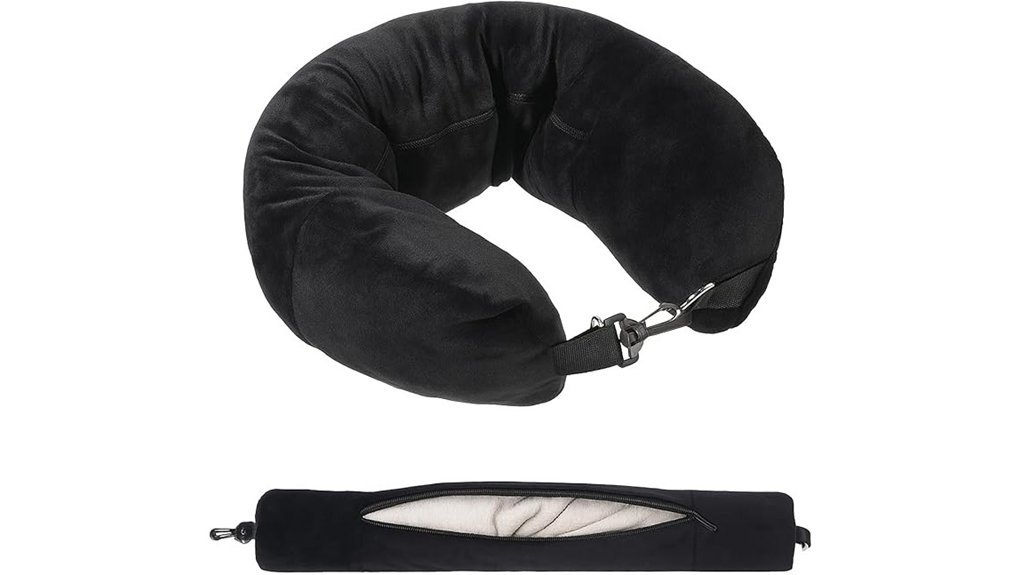
This stuffable neck pillow replaces permanent fill with three to five days of clothing and travel essentials, according to its current listing. That makes the empty shell compact and lets you alter firmness by changing both the amount and arrangement of the contents.
A discreet side zipper makes loading easier, and the shell folds into its own pocket when empty. Plush fabric softens the contact surface, while reinforced stitching, an upgraded zipper, adjustable neck sizing, and a shoulder strap are intended to handle repeated travel use.
Best For: Short-trip and budget travelers who want clothing storage, adjustable firmness, and a shell that packs down when empty.
Pros:
- Uses clothing as fill, saving space that a fixed insert would occupy.
- Firmness and loft can be changed by adding, removing, or redistributing items.
- Folds into its own pocket and includes reinforced stitching, a zipper, and shoulder strap.
Cons:
- Comfort depends on packing the contents smoothly and evenly.
- Support is less consistent than a fixed foam core.
- Soft clothing works better as fill than bulky or hard objects.
Factors to Consider When Choosing Travel Pillow Material
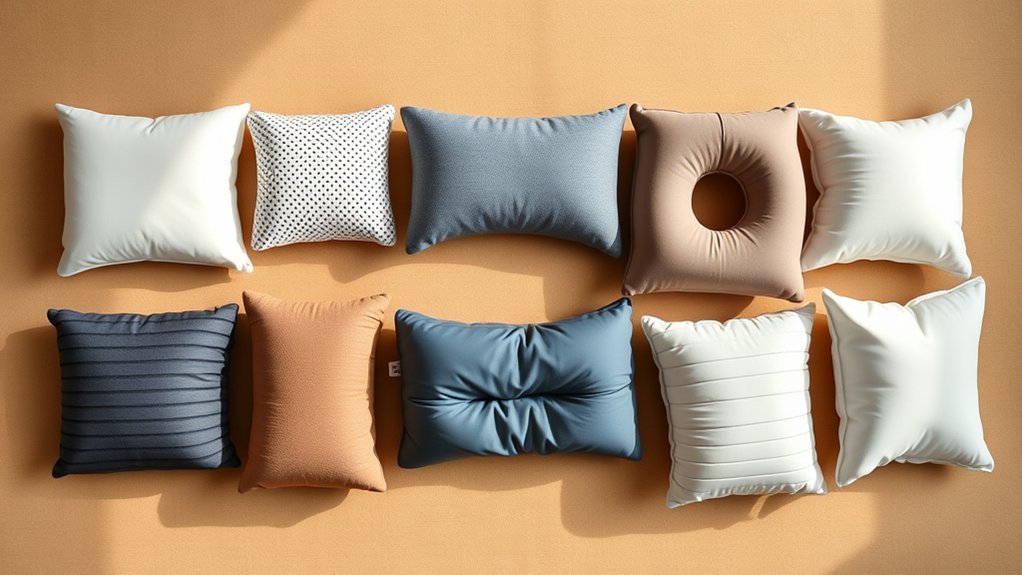
Choose travel pillow material by looking at support, temperature, durability, weight, cleaning, loft, and skin contact together. A soft cover can feel pleasant but still sit over a firm core, while a supportive fill can perform poorly if the pillow is the wrong height or shape for you.
Material Softness
Softness describes surface feel and initial cushioning, not the whole support system. Velvet and microfiber can feel gentle against the skin, while memory foam changes shape under pressure and then recovers. A pillow can therefore have a soft cover but still give substantial support underneath.
Shape matters alongside the material. A small randomized pillow study indexed by PubMed found that pillow design and content affected cervical alignment, temperature, and comfort. The study was not about airline travel specifically, but it supports a useful rule: do not choose by fabric name alone.
Breathability Matters
Breathability depends on the whole construction: fiber type, weave or knit, thickness, foam ventilation, and how closely the pillow wraps your neck. A thin fabric can move air better than a dense plush surface even when both are made from polyester.
Cotton can absorb perspiration, while many polyester fabrics dry faster; however, “moisture-wicking” is a performance feature, not something every synthetic fabric automatically provides. If you sleep hot, look for a lighter cover, exposed airflow around the neck, and a removable cover you can wash and dry easily.
Durability Levels
Durability comes from the core, cover, seams, and closures working together. Check whether foam returns to shape, whether the zipper runs smoothly, and whether high-stress seams are reinforced. Stuffable pillows deserve extra attention at the zipper because repeated loading puts stress in the same area.
If a memory foam product claims independent certification, check what that certification actually covers. CertiPUR-US certification applies to flexible polyurethane foam and includes requirements for content, emissions, and durability; it does not certify the entire finished pillow or guarantee how long a specific product will last.
Weight And Portability
The easiest pillow to travel with is the one you can carry without sacrificing the support you need. Stuffable shells are light when empty and can replace part of your packing volume. Compressible memory foam is heavier and bulkier, but it gives you the same core shape each time you use it.
Also consider how the pillow travels when you are not wearing it. A shoulder strap, luggage buckle, built-in pocket, or compressible storage bag can matter as much as a few ounces of weight, especially if your personal-item space is limited.
Easy Cleaning
Follow the care label for each part of the pillow rather than assuming the whole product is washable. A removable polyester or microfiber cover may be machine washable even when the foam core is not. Stuffable fabric shells are simpler because there is no permanent insert, but zippers and straps still need the care method specified by the maker.
For frequent travel, a removable cover is especially useful because skin oils, sweat, and cabin grime collect on the outside first. Quick drying also matters: a clean pillow that stays damp in a bag can develop odors before the next use.
Pro Tip: Before washing, separate any removable cover from the core and read both care instructions. “Machine washable” may apply to the cover or shell rather than to a memory foam insert.
Support And Loft
Loft is the pillow’s effective height, and it should match the gap between your neck and the support surface. Memory foam offers a fixed core with contouring, while stuffable pillows let you change loft by adding or removing clothing. Microbeads move more freely and create a less rigid feel.
More loft is not automatically better. If a pillow pushes your head too far forward or sideways, the extra material can become uncomfortable. Look for enough structure to limit unwanted head movement without forcing your neck into an awkward position.
Skin-Friendly Fabrics
For skin comfort, prioritize a smooth surface, breathability, washability, and clear material information. Terms such as “skin-friendly,” “non-toxic,” or “hypoallergenic” can be broad marketing language unless the maker explains what was tested.
Independent textile labels can provide more specific information. OEKO-TEX STANDARD 100 tests textile components for harmful substances, with stricter requirements for products that have more direct skin contact. For foam, use a foam-specific certification rather than assuming a textile label covers the core.
Frequently Asked Questions
Which Travel Pillow Materials Dry Fastest After Washing?
Thin synthetic covers such as polyester microfiber and nylon usually dry faster than absorbent cotton fabrics. The exact drying time depends on fabric thickness, airflow, and humidity. A memory foam core is different from its cover, so do not soak or machine-wash the foam unless the manufacturer’s care label specifically allows it.
Are Natural or Synthetic Materials Better for Hot Sleepers?
Neither natural nor synthetic material is automatically best for every hot sleeper. Cotton can absorb moisture, while engineered polyester fabrics can dry quickly and may be designed to wick sweat; weave, thickness, and ventilation matter just as much as fiber type. A thick plush cover or close-fitting foam shape can still feel warm regardless of the label.
Do Hypoallergenic Materials Reduce Travel Pillow Skin Irritation?
A “hypoallergenic” label may reduce concern about some common triggers, but it does not guarantee that a pillow will never irritate your skin. Washable covers, low-friction fabrics, and avoiding materials you already react to are more practical checks. Natural rubber latex can cause a true allergy in some people, as explained by Mayo Clinic.
Which Materials Are Most Durable for Frequent Airline Use?
Durability depends more on construction quality than on one material name. A resilient foam or bead fill needs a strong shell, and a stuffable pillow needs reinforced seams and a reliable zipper. For frequent flights, choose a cover that can be cleaned as directed and inspect the seams and closure before trips.
How Do Pillow Materials Affect Odor Retention During Long Trips?
Odor builds when sweat, skin oils, moisture, and other soils remain in the pillow or cover. A removable washable cover and thorough drying make odor control easier, while a non-washable core depends more heavily on keeping its outer cover clean. Breathable construction can also reduce the damp conditions in which smells linger.
Can You Machine Wash a Memory Foam Travel Pillow?
Usually, you should not machine-wash a memory foam core unless the care label explicitly says you can. Many travel pillows pair foam with a removable washable cover, so the two parts need separate care. Check the sewn-in label or manufacturer instructions before adding water, detergent, heat, or mechanical agitation.
Sources
- Go Travel — Classic Bean Sleeper: current materials, weight, care, support level, and bead safety information.
- PubMed — randomized comparative pillow study: evidence that pillow shape and content can affect cervical alignment, temperature, and comfort.
- CertiPUR-US: scope of flexible polyurethane foam certification for content, emissions, and durability.
- OEKO-TEX STANDARD 100: textile testing for harmful substances and skin-contact product classes.
- Mayo Clinic — Latex allergy: symptoms and risks of natural rubber latex allergy.