Learning how to keep bugs out of a tent when camping is mostly about layers: block entry points, use the netting correctly, keep food and odors under control, and protect exposed skin when biting insects are active. A pop-up mosquito net can add another barrier, but it works best as part of that system rather than as the only defense.
Quick Answer
Keep tent doors zipped, repair holes in mesh, avoid obvious standing water when you can, and use a properly fitted mosquito net or inner bug shelter. For personal protection, choose an EPA-registered repellent and consider 0.5% permethrin-treated clothing or gear where the product label allows it.
Key Takeaways
- Physical barriers come first: intact mesh, closed zippers, and a net that seals around the sleeping area.
- Do not sleep pressed against mosquito netting; mosquitoes can still bite through openings in the mesh.
- A clean campsite reduces insects attracted by food scraps and odors.
- EPA-registered repellents offer a more evidence-based choice than relying only on essential-oil bracelets.
- Match the bug shelter to your cot, mattress, chair, or ground setup so gaps do not defeat the barrier.
How to Keep Bugs Out of a Tent When Camping
The most reliable approach is to stop insects before they get inside, then add personal bite protection for the time you spend outside the tent. No single product can guarantee a bug-free campsite, so use the following steps together.
- Inspect the tent before the trip. Set it up at home and check mesh panels, seams, vents, and zipper tracks for holes or gaps. Repair damage before you depend on the tent overnight.
- Choose the driest practical site. If you have a choice within the designated camping area, avoid obvious standing water where mosquitoes may breed. Keep normal drainage and campsite rules in mind rather than moving into fragile vegetation just to escape insects.
- Use strict zipper habits. Open the door only as long as needed to enter or exit, then close it completely. Before sleeping, run the zipper around the full opening and look for folded fabric that may create a gap.
- Set mosquito netting so it actually seals. The CDC recommends checking nets for holes or tears, tucking bed nets under the mattress when appropriate, and avoiding direct contact with the net while sleeping.
- Use a proven skin repellent when needed. The EPA advises following the repellent label, applying only as directed, and looking for an EPA registration number when you want a product whose effectiveness data have been reviewed.
- Add treated clothing or gear for higher-exposure trips. The CDC includes 0.5% permethrin-treated clothing and camping gear among mosquito-bite prevention measures. Permethrin is for clothing and gear, not direct use on skin.
- Keep food and trash out of the sleeping area. The National Park Service recommends airtight storage and a clean campsite because food odors and scraps can attract insects and wildlife.
Warning: Do not apply permethrin directly to skin. Follow the product label for any pesticide or repellent, and do not spray skin-applied repellents inside an enclosed tent.
Pop Up Mosquito Net Tent for Twin Bed
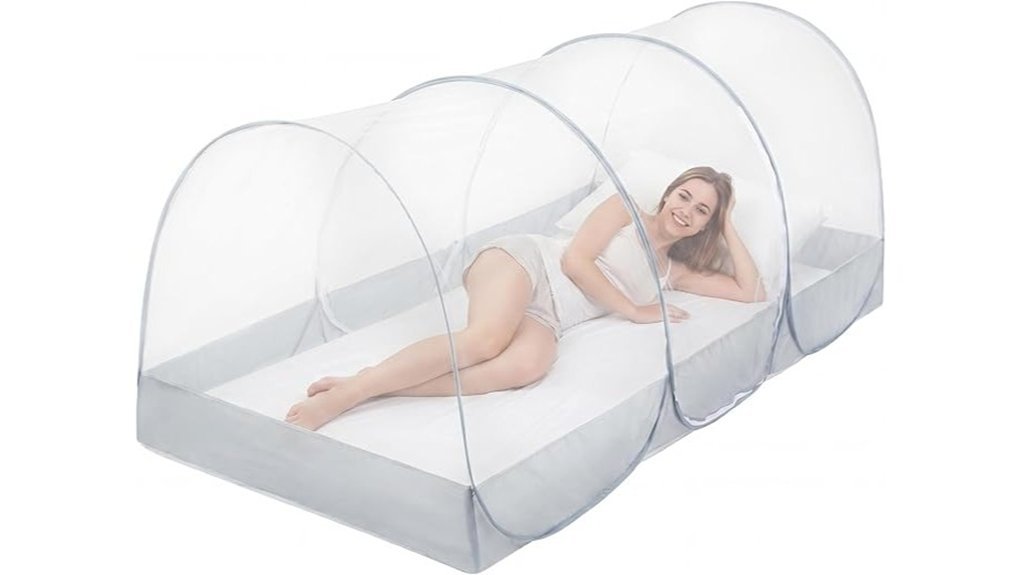
The WYBITNY pop up mosquito net tent gives a twin-size sleeping area its own enclosed bug barrier. It pops open after the elastic strap is removed and has two zippered doors with dual-sided zippers. The listed size is 78.7 by 39.4 by 35.4 inches, which suits sleepers under about 78 inches tall.
At roughly 1 pound, the net folds to about 13 by 13 by 2 inches for travel. It can be used over a twin bed, cot, sleeping pad, hammock setup, or similar compact rest area. Because it is a mesh enclosure rather than a weather tent, pair it with a proper shelter whenever rain, wind, or cold is a concern.
Best For: Campers, travelers, and indoor sleepers who want a lightweight, instant-setup mosquito barrier for a twin-size bed or compact sleeping surface.
Pros:
- Pops open in seconds with no complicated assembly.
- Fully closed design with two zippered doors for easier access.
- Lightweight and compact enough for luggage or car camping.
Cons:
- Best suited to sleepers under 78 inches tall.
- Twin-size dimensions can feel cramped if you want more side-to-side room.
- Provides insect protection, not the weather protection of a conventional tent.
Pop Up Mosquito Tent with High-Density Mesh
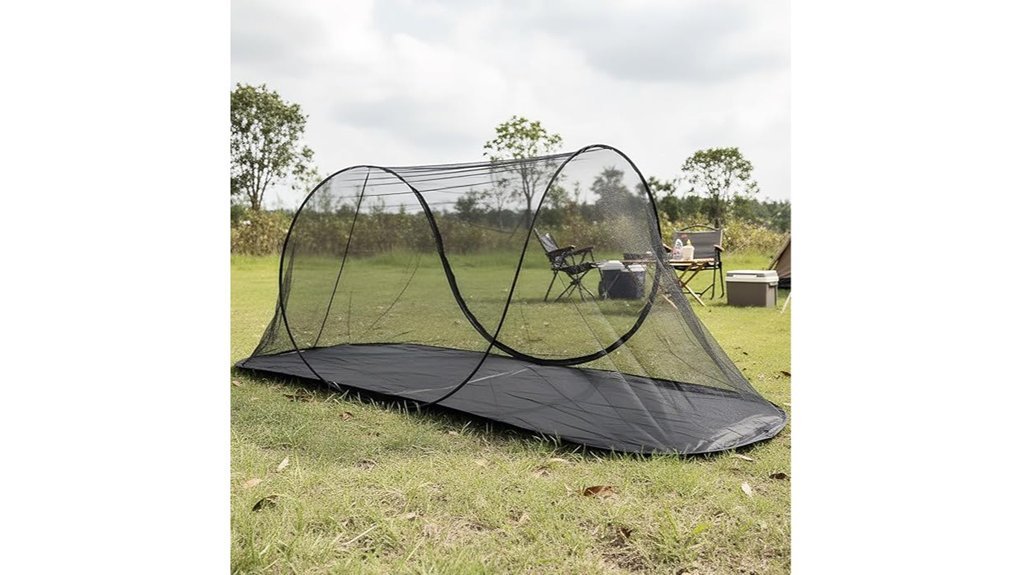
The emopaw FYRY70844 is a lightweight high-density mesh mosquito tent designed for cots, beds, picnic blankets, and similar sleeping or resting setups. Its rectangular footprint is listed at 79 by 28 inches, while the fully enclosed mesh and zipper create the main insect barrier.
The tent pops open from its storage bag without tools and is listed at 0.95 pounds. It folds into a compact 13-inch disc, so it is easier to carry than a full camping tent. Use it as a bug screen inside or under appropriate weather shelter rather than as a substitute for a rain-resistant tent.
Best For: Campers, travelers, and outdoor sleepers who want a light, quick-deploying mosquito barrier for a cot, bed, or picnic rest area.
Pros:
- High-density mesh is intended to block mosquitoes and smaller flying insects.
- Pop-up design avoids poles and complicated assembly.
- Low listed weight and compact packed shape suit travel.
Cons:
- The narrow rectangular footprint may not fit larger sleeping systems.
- It is designed mainly for insect protection rather than weather resistance.
- A close-fitting enclosure may feel restrictive if you prefer more headroom.
Onewind Camping Mosquito Net for Cot Room
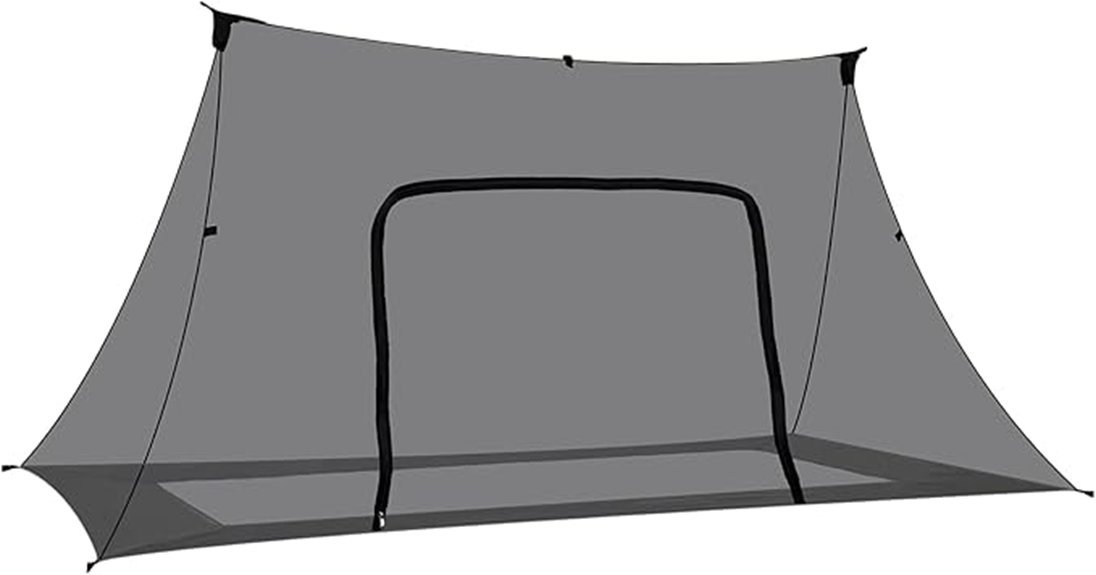
Onewind’s ultralight cot bug net is aimed at campers who want a breathable screen around a cot, tarp, shelter, or similar sleep system. The current Onewind product page lists the floorless version at about 0.35 kg, with 1,600-hole-per-square-inch polyester mesh, reinforced tie-outs, a double-sided zipper, and space for two people.
This is a bug net rather than a full weather tent. It needs a compatible support or shelter arrangement, and the version described by the linked listing does not have a sewn-in floor. That makes careful setup important: keep the lower edge tucked or sealed around the sleep area so insects do not simply enter from below.
Best For: Ultralight backpackers, campers, and hikers who want a packable mosquito net for a cot, tarp, poncho, or shelter setup.
Pros:
- Lightweight listed weight of about 0.35 kg.
- Dense 1,600-hole-per-square-inch mesh balances insect screening with airflow.
- Reinforced tie-outs and a double-sided zipper support flexible pitching.
Cons:
- No sewn-in floor on the linked bug-net version, so the lower edge must be secured carefully.
- Requires suitable tie-out or support points rather than instant freestanding setup.
- It should be paired with weather protection when rain or wind is expected.
CMINGJ Large Pop Up Mosquito Tent for Bed
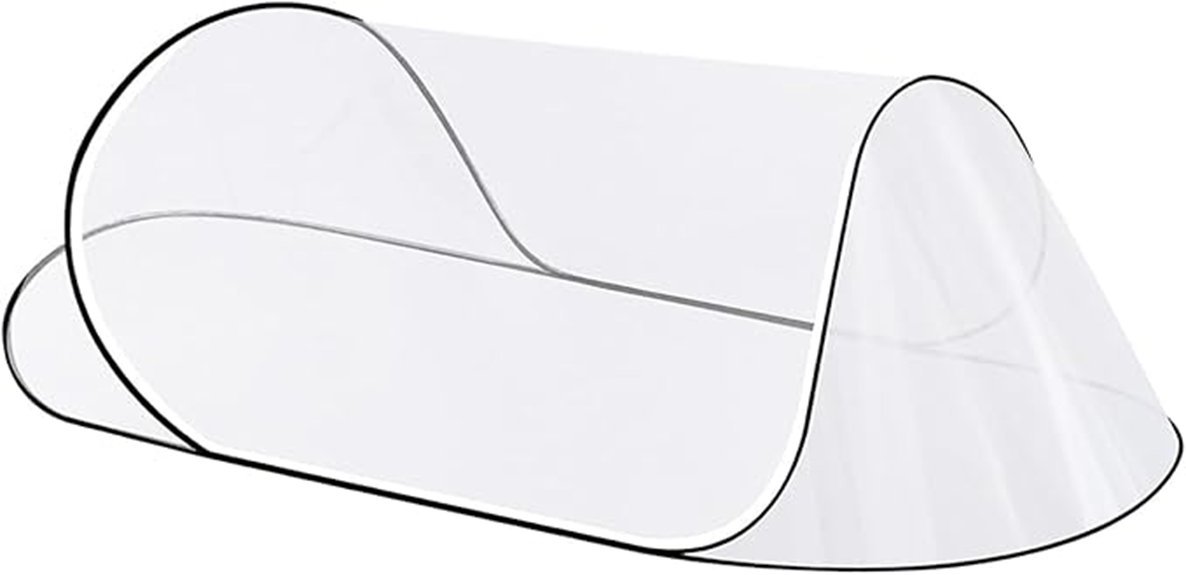
CMINGJ’s pop-up mosquito tent is designed for sleepers who want quick bug protection without assembling poles. The version described in the original listing measures 78.74 by 31.49 by 22.04 inches and uses breathable polyester and nylon mesh with a double zipper.
It is listed at 12 ounces and folds into a circular travel shape. The low profile makes it best for one adult or a small child who does not need much sitting height. It can work for beds, naps, camping, or travel as long as the sleeping surface and enclosure fit without leaving open edges.
Best For: Solo sleepers, small children, and travelers who want a portable mosquito barrier for beds, naps, or protected camping setups.
Pros:
- Pops open without a conventional pole setup.
- Light listed weight makes it easy to carry.
- Breathable mesh and a double zipper support airflow and controlled entry.
Cons:
- Limited interior room compared with taller bug shelters.
- Hand washing may be less convenient than machine-washable gear.
- Not sized as a family sleeping enclosure.
Sportneer Pop-Up Mosquito Net Tent for Camping
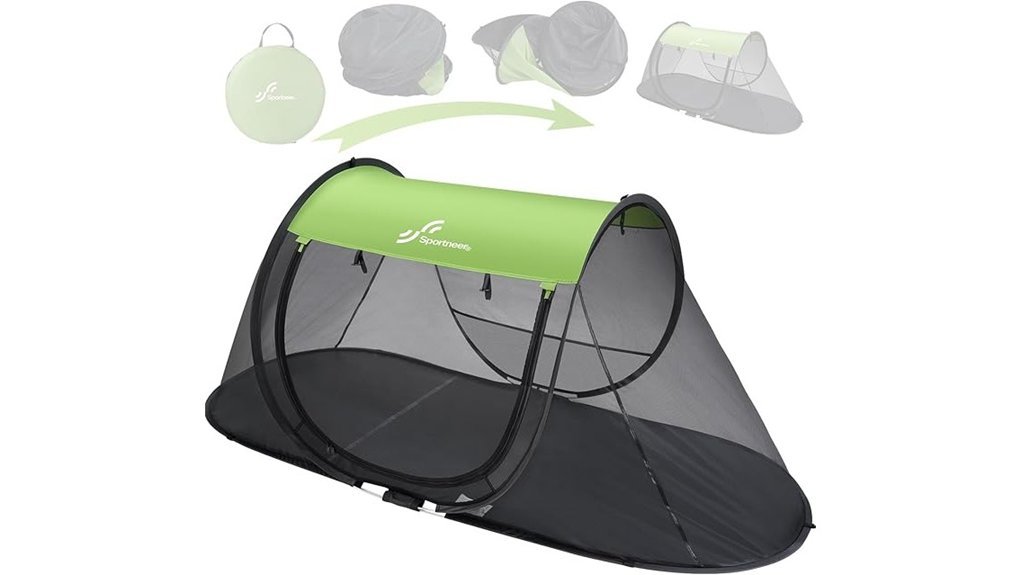
The Sportneer Pop-Up Mosquito Net Tent is a one-person, freestanding bug shelter that can sit on the ground, over a cot, or over a bed indoors. Its listed dimensions are 86.6 by 33.5 by 35.4 inches, and the listed weight is 2.8 pounds.
High-density polyester mesh forms the bug screen, while a 210D Oxford base with a waterproof coating helps isolate the sleeping area from damp ground. It opens without pole assembly, but folding it back into its round storage shape uses a figure-eight technique that may take practice.
Best For: Solo campers or travelers who want a freestanding, instant-set-up mosquito net with a fabric floor.
Pros:
- Pops open quickly without conventional assembly.
- Fully enclosed mesh helps block mosquitoes and other flying insects.
- Can be used on the ground, over a cot, or indoors as a bed canopy.
Cons:
- Folding the frame for storage takes practice.
- Designed for one person, so interior space is limited.
- The waterproof-coated base does not turn it into a full rain tent.
1-Person Camping Chair Pop-Up Bug Net Tent
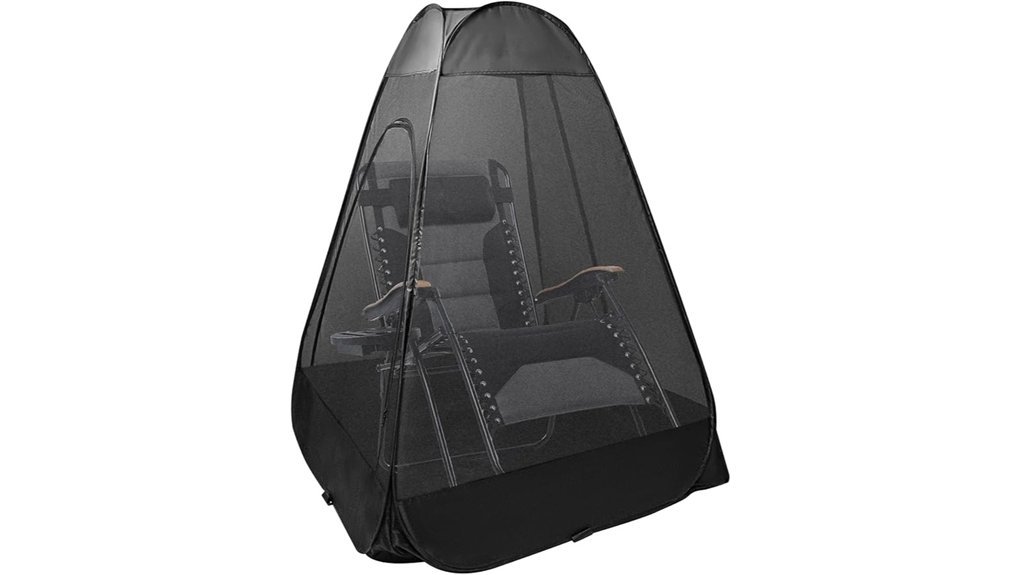
This 1-person camping chair pop-up bug net is built around seated use rather than sleeping. The 47 by 47 by 59-inch enclosure gives one adult space for a chair and small personal items, while mesh walls provide airflow and an unobstructed view.
High-density screening creates the insect barrier. Steel wire support holds the pop-up form, and panels at the top and bottom add shade and light-weather coverage. Two zipper doors give different entry points, including an arched opening for chair access and a side opening that can suit fishing use.
Best For: Solo campers, anglers, and outdoor spectators who want a bug-screened seated shelter.
Pros:
- Mesh walls provide ventilation and broad visibility.
- Screened enclosure gives a physical barrier against mosquitoes.
- Pop-up format and storage bag simplify transport and setup.
Cons:
- Only fits one seated user comfortably.
- Not intended for standing or moving around inside.
- Top and bottom panels provide limited weather coverage rather than full storm protection.
Cliganic Mosquito Repellent Bracelets for Adults & Kids
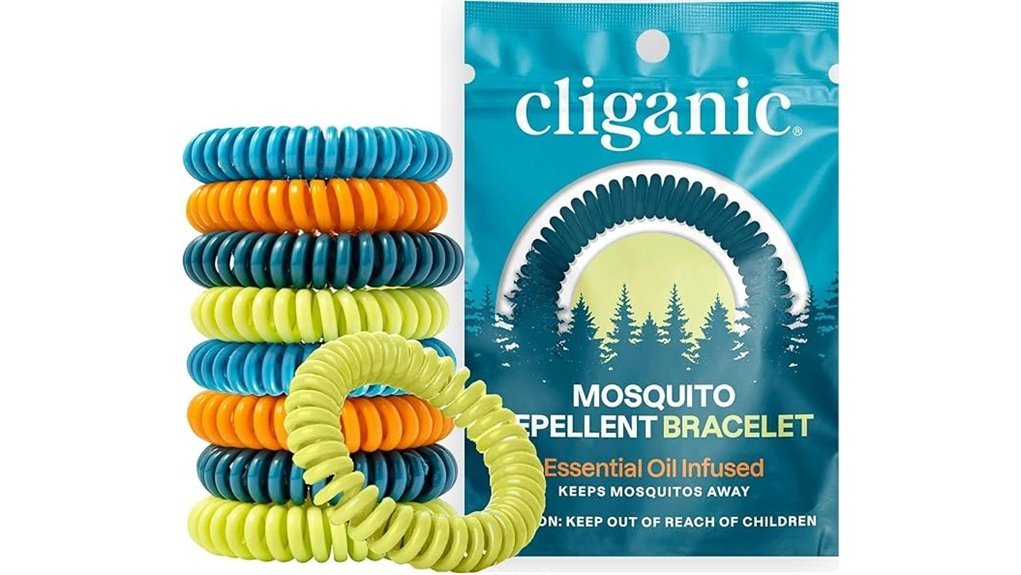
Cliganic’s mosquito repellent bracelets are a DEET-free wearable option made with plant-derived active ingredients, including geraniol, lemongrass oil, geranium oil, and citronella oil. The 10-count version is individually wrapped, stretchy, and intended for adults and children when used as directed.
The current Cliganic directions say to wear up to three bracelets on each exposed limb and replace them every three hours for maximum protection. The company currently advertises a 60-day satisfaction guarantee. Because these bracelets are not a substitute for a screened tent or an EPA-registered skin repellent, treat them as an optional extra rather than your only protection in mosquito-heavy areas.
Best For: Families, campers, hikers, and travelers who want a wearable, DEET-free supplement to physical barriers and other bite-prevention measures.
Pros:
- DEET-free formula using plant-derived active ingredients.
- Stretchy, one-size design for adults and children when used as directed.
- Ten individually wrapped bracelets are easy to divide among family members or pack for short trips.
Cons:
- It is not an EPA-registered skin-applied repellent, so it should not be treated as equivalent protection.
- The citronella and essential-oil scent may not suit everyone.
- Brand directions call for regular replacement, which can use several bracelets on a long outing.
Factors to Consider When Choosing a Way to Keep Bugs Out of Tent When Camping
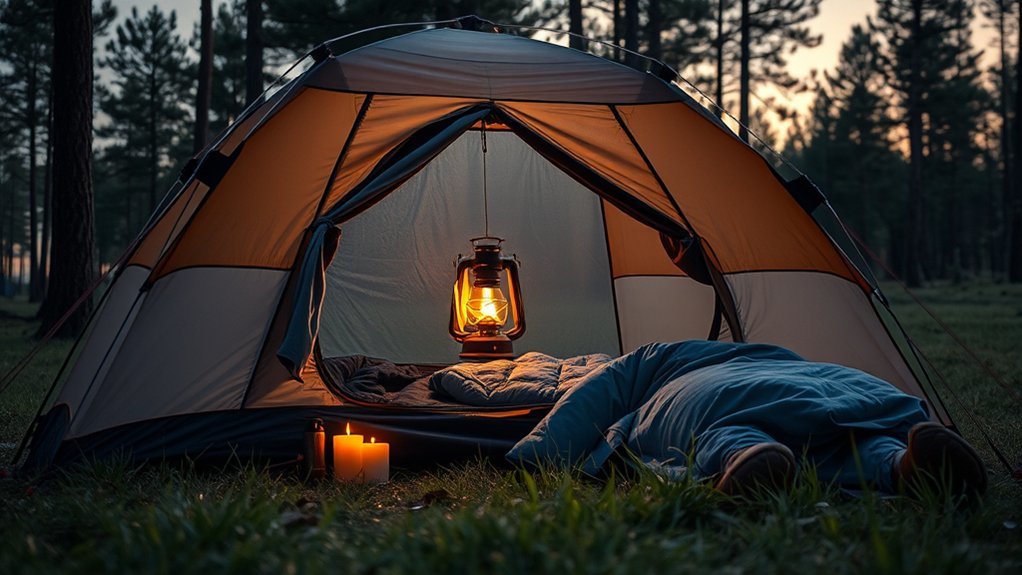
Choose a bug barrier by matching it to the insects, sleep system, and weather protection you already have. Mesh density, fit, closure design, setup, packed size, and weather limits matter more than marketing terms such as “bug-proof.”
Mesh Density
Finer mesh can block smaller insects, but density is only useful if the net stays intact and closes without gaps. The CDC’s travel guidance describes a mosquito bed net with 156 holes per square inch as one suitable benchmark and also advises checking for holes or tears.
Some camping bug nets use much denser no-see-um mesh. That can help with tiny insects, but airflow may feel different from one material to another. Check the actual mesh specification rather than assuming every “high-density” screen performs the same way.
Setup Ease
A bug barrier works only if you can close it correctly every time. Pop-up models are useful when you want fast setup, while suspended nets can pack smaller but require tie-out points, poles, branches, or a compatible shelter.
Also think about takedown. Several pop-up designs open almost instantly but need a specific folding motion to fit back into the storage bag. Practice that at home before relying on the shelter after dark.
Portability Needs
Weight and packed shape matter most for backpacking, air travel, and small vehicles. A net that compresses into a narrow stuff sack is easier to fit into a backpack, while circular pop-up shelters may be thin but wide when folded.
For car camping, a slightly heavier freestanding design may be worth carrying if it gives you a floor, more headroom, or easier setup. Compare the packed dimensions with the space you actually have, not just the listed weight.
Tent Size Fit
The net needs enough room for your body, mattress, cot, or chair without pulling open the zipper or lifting the lower edge. A too-small enclosure can also push the mesh against your skin. The CDC advises not sleeping directly against mosquito netting because mosquitoes may still bite through openings in the net.
Measure your sleeping surface before buying. For cot setups, check length, width, and the height needed above the cot. For bed nets, make sure the edge can be tucked or otherwise sealed as the design requires.
Weather Protection
Bug protection and weather protection are not the same thing. Mesh shelters can keep insects away while still needing a separate rainfly, tarp, tent body, or other weatherproof layer.
A waterproof floor can help with damp ground, but it does not make exposed mesh rainproof. Keep ventilation available to reduce condensation, and follow the shelter’s intended use instead of relying on a mosquito net for wind or storm protection.
Repellent Type
If biting insects are a health concern, choose repellents by active ingredient and label directions rather than by scent alone. The EPA lists registered skin-repellent active ingredients that include DEET, picaridin, IR3535, oil of lemon eucalyptus, PMD, 2-undecanone, and others.
Natural or essential-oil products may still have a role for personal preference, but the CDC says the effectiveness of non-EPA-registered repellents is not known in the same way. In areas with mosquito-borne disease risk, prioritize proven bite-prevention measures.
Frequently Asked Questions
Can Bug-Proof Tents Still Get Condensation Inside?
Yes. Bug mesh blocks insects, but condensation comes from moisture, temperature differences, and limited airflow. Keep vents open when conditions allow, avoid pressing bedding against wet tent walls, and use the rainfly and ventilation system as the tent maker intends.
Do Natural Repellents Work Better Than Chemical Sprays?
Not generally. For protection against mosquito-borne disease, CDC and EPA guidance favors EPA-registered repellents because their safety and effectiveness have been reviewed. Plant-derived options can be registered too, but an essential-oil product is not automatically equivalent to a registered repellent.
How Often Should Tent Zippers Be Checked for Gaps?
Check them before each trip and whenever a zipper starts snagging, separating, or leaving fabric caught in the track. At camp, make a quick visual check when you close the door for the night. Small zipper gaps can defeat otherwise good mesh protection.
Will Bug Protection Affect Tent Ventilation at Night?
It can. Fine mesh and extra liners can reduce airflow compared with a wide-open door, but screened vents let you ventilate without giving insects a direct entrance. Keep designed vents open when safe and avoid blocking mesh panels with gear.
Are There Camping Locations With Fewer Insects Year-Round?
Some dry, windy, or cold locations can have fewer biting insects at certain times, but there is no universal year-round rule. Insect activity changes with species, temperature, rainfall, standing water, vegetation, and season. Check local conditions for your destination instead of assuming one landscape type will always be bug-free.
Should I Spray Insect Repellent Inside My Tent?
Do not spray a skin-applied repellent around an enclosed tent unless its label specifically allows that use. EPA guidance says not to spray repellents in enclosed areas and to avoid breathing spray. Apply products to exposed skin or clothing only as the label directs.
Can I Treat a Tent With Permethrin?
Yes, if the permethrin product label allows treatment of tents or camping gear. CDC guidance includes 0.5% permethrin-treated tents and other gear as a mosquito-bite prevention measure. Never apply permethrin directly to skin, and always follow the label for treatment and drying instructions.
Sources
- CDC: About Mosquito Nets: Net selection, setup, tear checks, and avoiding direct contact while sleeping.
- CDC: Preventing Mosquito Bites While Traveling: EPA-registered repellents, protective clothing, mosquito nets, and 0.5% permethrin-treated gear.
- U.S. EPA: Using Insect Repellents Safely and Effectively: Label use, enclosed-area precautions, reapplication, and EPA registration numbers.
- U.S. EPA: Skin-Applied Repellent Ingredients: Registered active ingredients used in skin repellents.
- National Park Service: Cooking in Camp: Food storage, campsite cleanliness, and reducing food odors that attract insects and wildlife.
- Onewind: Dyad Shelter Inner Tent Mosquito Net: Current weight, mesh density, occupancy, floor options, zipper, and tie-out details.
- Cliganic: Mosquito Repellent Bracelets: Current ingredients, directions, pack size, and satisfaction-guarantee information.