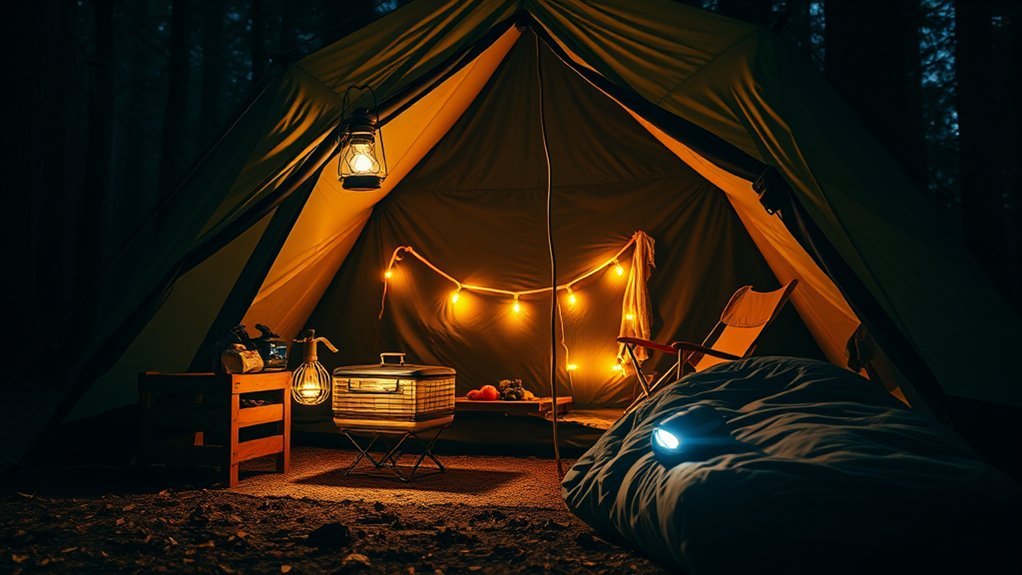
Good camping tent organization starts with one goal: keep the floor clear while making the gear you use most easy to reach. Large bags handle bulky equipment, small pouches control loose parts, and hanging or foldable storage uses space that would otherwise go to waste. The right mix depends on your tent size, trip style, and how much gear you bring.
Quick Answer
For practical camping tent organization, use a large duffle for bulky gear, hanging storage or a foldable shelf for small essentials, and a separate drying or lighting solution where needed. Keep the sleeping area clear, place frequently used items within reach, and keep food, trash, and scented items out of the tent where wildlife rules require it.
Key Takeaways
- Use large duffles for bulky shelter gear and smaller pouches for stakes, cords, tools, and repair items.
- Move lightweight essentials off the floor with hooks, hanging straps, shelves, or built-in tent pockets.
- Keep wet or muddy gear separated from bedding and dry clothing so the sleeping zone stays usable.
- Choose foldable organizers when packed space matters, and check load limits before hanging heavier gear.
- Store food, trash, and scented items according to campground wildlife rules rather than treating the tent as a pantry.
Camping Tent Organization Options at a Glance
These products solve different storage problems, so the best choice depends on what is creating clutter in your setup. The figures below are the listed specifications used in this article; check the linked product page before buying if size or load capacity is critical.
| Option | Best use | Key listed detail |
|---|---|---|
| 47" extra-large duffle | Bulky tents, tarps, and mats | 102L; 47 x 11 x 12 in |
| Canvas stake bag | Stakes, tools, and small hardware | 40 cm long; 15 cm diameter |
| ECOSHIRE magnetic hooks | Hanging light gear on magnetic metal | Up to 11 lb per listed capacity |
| 3-tier folding shelf | Vertical campsite storage | 17.6 lb per tier; 7.9 lb shelf weight |
| 52L foldable duffle | Mixed camping and cooking gear | 52L; 27.56 x 9.45 x 12.2 in |
| Ayaport storage strap | Tree-based hanging storage | 20 loops; about 20 ft span |
| Portable clothesline | Drying light clothing and towels | 10-12 ft stretch; 12 clips |
| ALPS tent bag | Replacement tent carry bag | Large: 28 x 11 x 11 in |
| Wall-mount bag holder | Storing clean empty plastic bags | 22.5 x 9 in; holds 50+ bags |
| Brightz guy-line lights | Making guy-lines easier to see at night | Listed glow time: up to 4 days |
47″ Heavy Duty Extra Large Duffle Bag
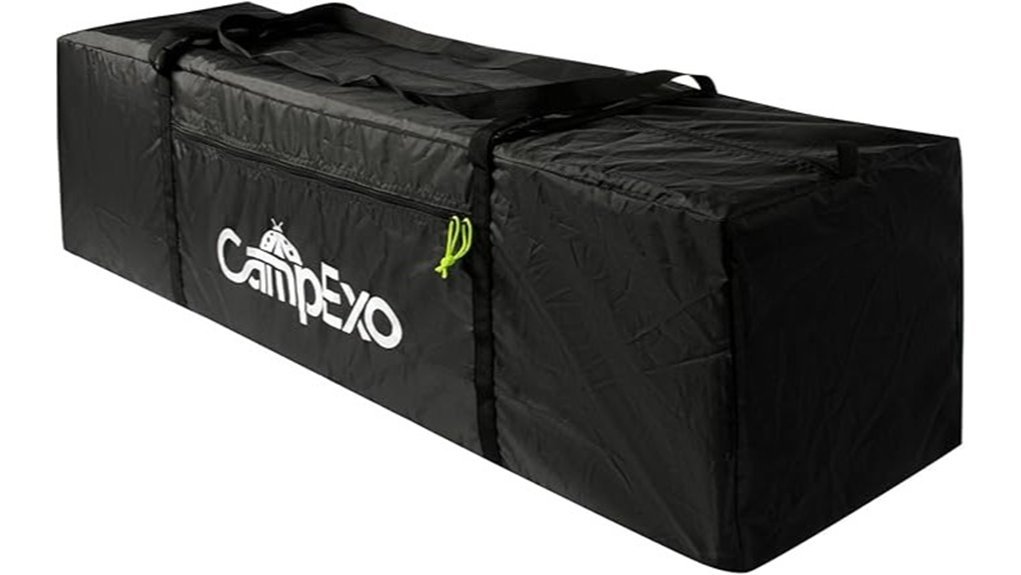
This extra-large duffle is built for campers who want one simple container for bulky shelter gear. The listing describes a 102L capacity, 47 x 11 x 12-inch dimensions, Oxford cloth construction, a zipper closure, and a foldable body. It is most useful for car camping, where a long bag can hold tents, tarps, mats, or other awkward items together.
Best For: Campers who need one lightweight bag for tents, tarps, mats, sports gear, or other bulky equipment.
Pros:
- Large 102L listed capacity reduces the need for several small bags.
- Oxford cloth is suited to repeated packing and abrasion from general outdoor use.
- Foldable construction takes up little space when the bag is empty.
Cons:
- The listing says it is not water-resistant, so it should not be relied on for rain protection.
- A single large compartment makes small items easier to lose unless you use pouches inside.
- The 47-inch length can be awkward in compact vehicles or small tents.
Tent Stakes Canvas Camping Storage Bag (Black 40CM)
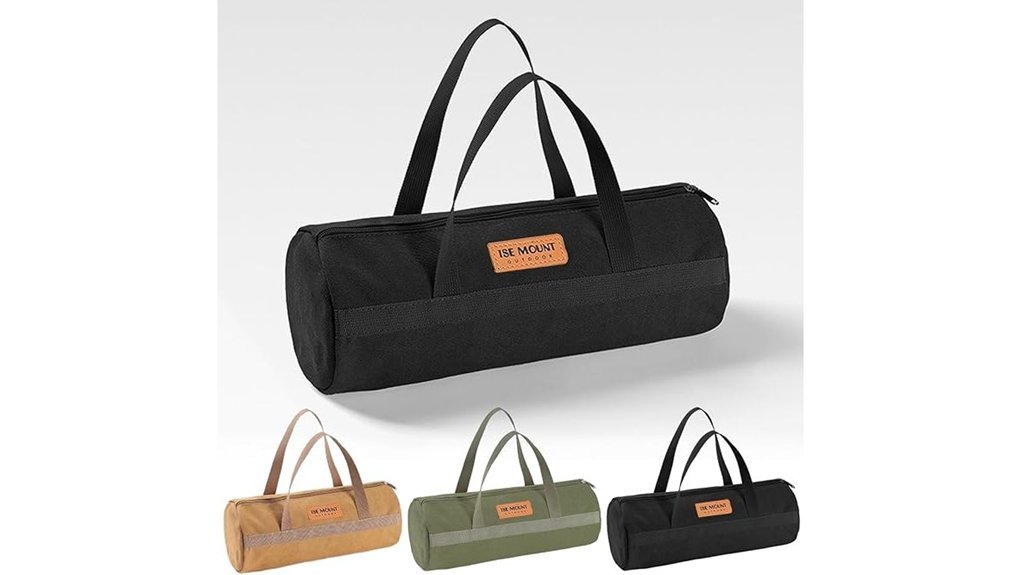
This canvas storage bag gives stakes, hand tools, cords, and repair items a fixed place instead of leaving them loose in a large gear bin. The listing describes a 40 cm length, 15 cm diameter, 14 cm handle, washed-canvas construction, double-thick fabric, fine stitching, and a zipper closure. Its narrow shape is better for long tools and tent hardware than for bulky soft gear.
Best For: Campers and DIY users who want a dedicated pouch for stakes, pliers, screwdrivers, wrenches, cords, or similar small gear.
Pros:
- Compact shape keeps long, narrow items grouped together.
- Canvas construction is described as wear-, scratch-, and tear-resistant.
- Carry handle and zipper make the bag easy to move and open at camp.
Cons:
- The 40 cm size limits what can fit inside.
- Canvas is not the same as a fully waterproof dry bag.
- The single-compartment layout still benefits from small inner pouches for tiny parts.
Magnetic Hooks for Camping Tent Canopy
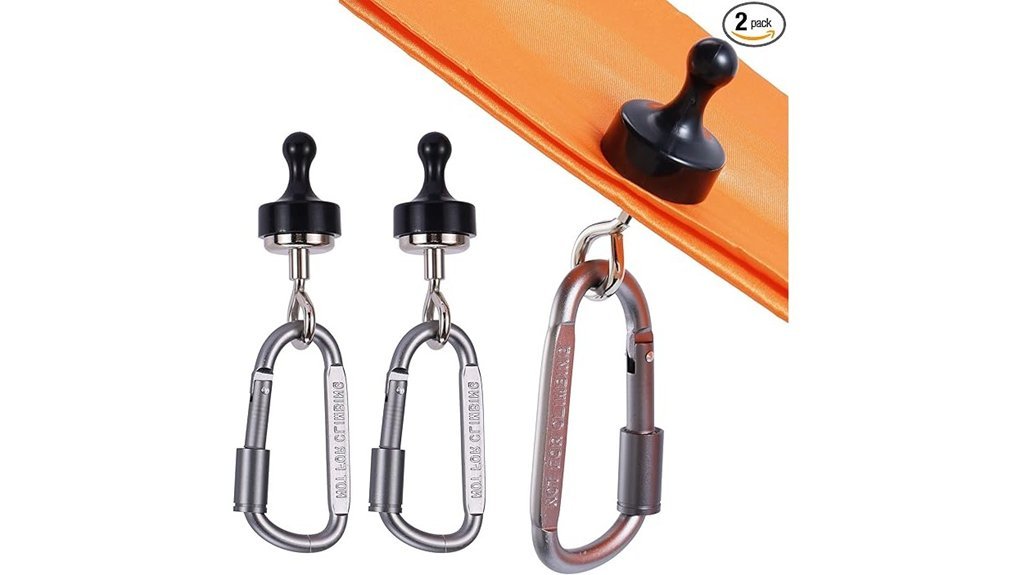
ECOSHIRE magnetic hooks add hanging points without drilling or adhesive, but they only work where a suitable magnetic metal surface is available. The listing for model cxgg02 describes neodymium magnets, spring-loaded carabiners, an iron body, a two-hook pack, and a maximum listed capacity of 11 pounds. That makes them more suitable for light gear than for heavy storage. The original listing also states a 30-day Amazon return guarantee.
Best For: Canopies, metal frames, cabins, or other setups where a strong magnetic surface is available for temporary hanging storage.
Pros:
- Tool-free installation makes them easy to reposition.
- Spring-loaded carabiners help keep small hanging items from slipping off.
- Compact size is convenient for lanterns, hats, cords, and light accessories.
Cons:
- They will not work on fiberglass, aluminum, fabric, or other non-magnetic surfaces.
- The listed 11 lb maximum makes them unsuitable for heavy loads.
- A two-pack may not provide enough hanging points for a large family setup.
Folding 3-Tier Storage Shelf Rack for Indoor Outdoor
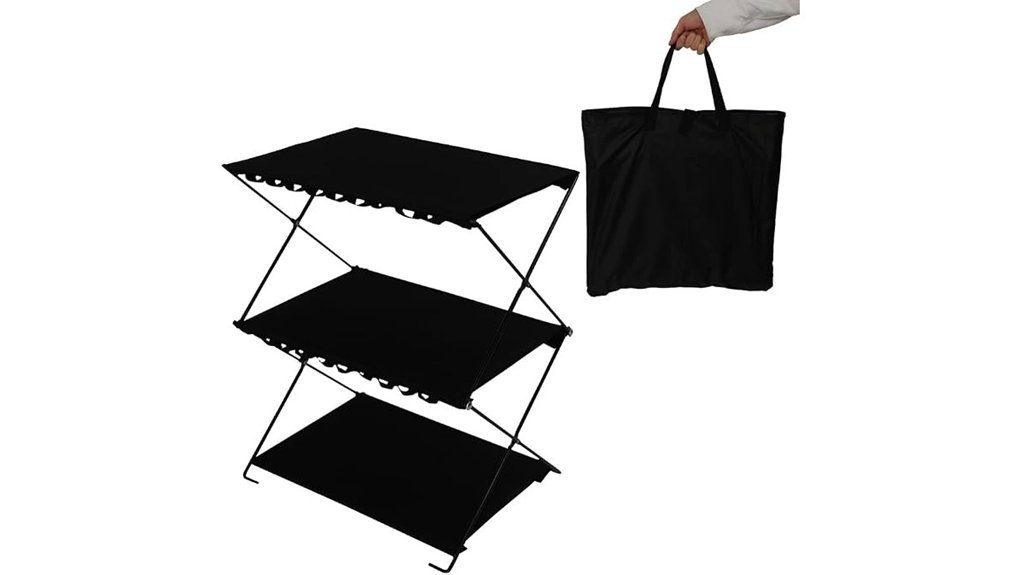
This three-tier shelf is the most furniture-like option in the list. The listing gives an unfolded size of about 18.1 x 12.2 x 22.4 inches, a weight of 7.9 pounds, and a load limit of 17.6 pounds per tier. It arrives pre-assembled and is designed to fold or unfold in under a minute, so it suits car camping better than weight-sensitive backpacking.
Best For: Car campers, picnickers, and camp kitchens that need vertical storage for cups, utensils, lights, or other frequently used items.
Pros:
- Three tiers turn a small footprint into more usable storage.
- Pre-assembled frame avoids tool-based setup.
- Folds flat and includes a carry bag for transport.
Cons:
- At 7.9 pounds, it is relatively heavy for hikers.
- Open shelves do not protect gear from rain, dust, insects, or spills.
- The per-tier load limit rules out heavier water containers or dense gear.
Extra Large Heavy Duty Foldable Duffle Bag
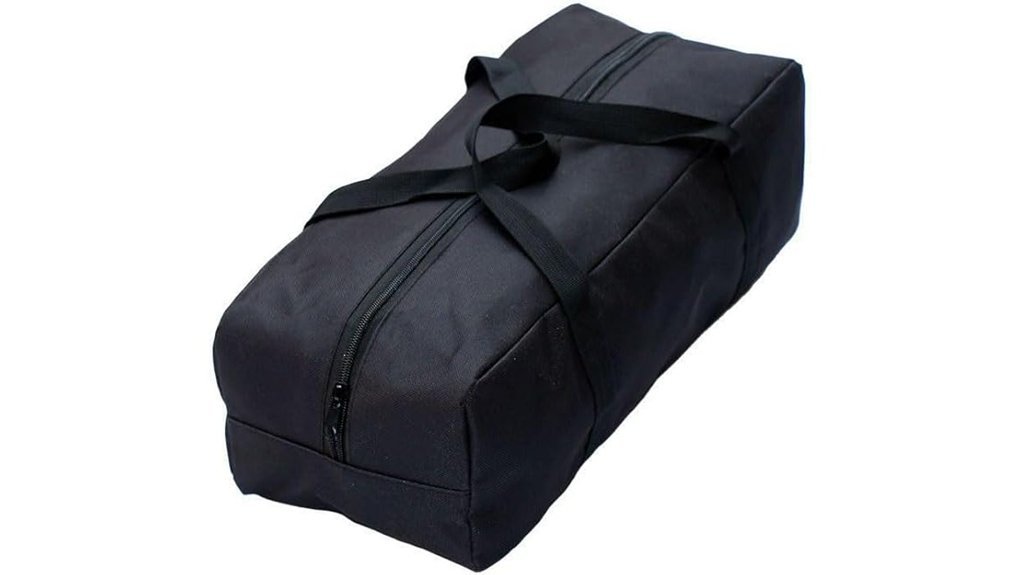
This 52L duffle is smaller than the 102L option but adds more internal organization. The listing gives dimensions of 27.56 x 9.45 x 12.2 inches and describes abrasion-resistant Oxford fabric plus compartments for tools and accessories. That combination makes it useful when you want one bag for mixed camping, grilling, fishing, or garden gear without turning everything into one loose pile.
Best For: Campers and grillers who want a medium-size gear bag with separate spaces for tools and accessories.
Pros:
- 52L capacity is easier to handle than an extra-long gear bag.
- Compartments help separate long utensils and smaller accessories.
- Foldable construction is convenient between trips.
Cons:
- Soft sides provide less crush protection than a rigid case.
- The shape may not suit very large tents or oversized chairs.
- It is designed more for utility storage than formal travel.
Ayaport Campsite Storage Strap with Carabiner Hooks
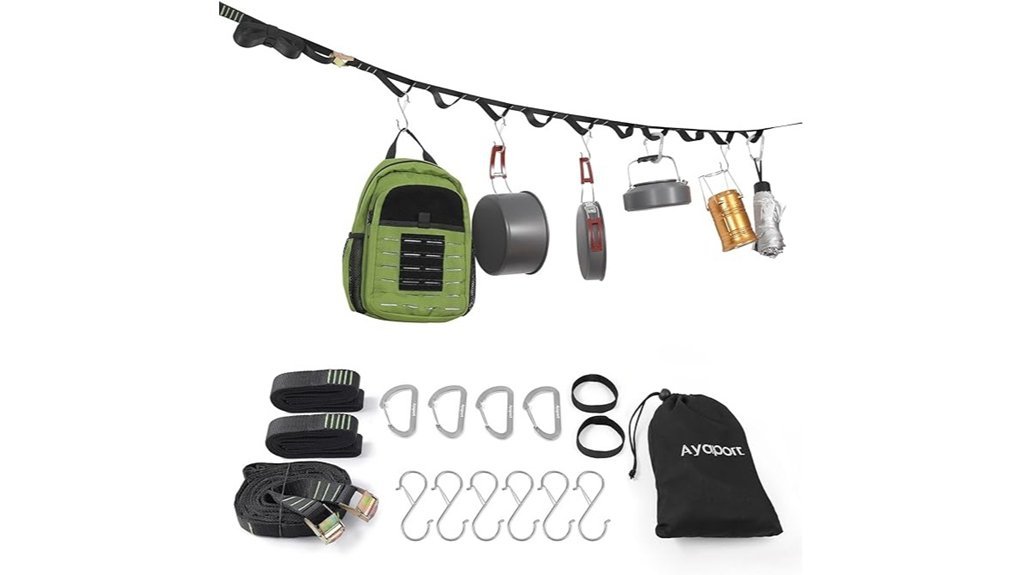
Ayaport’s campsite strap turns a tree or similar anchor point into a hanging gear line. The listed kit includes a double cam-buckle strap, two wrap straps, four carabiner hooks, six stainless-steel S hooks, two hook-and-loop straps, 20 separated loops, and a storage bag. The combined strap length is 25 feet, with an advertised span of about 20 feet depending on the tree circumference. The original listing also states a 1-year warranty and 30-day return policy.
Best For: Family campsites where cookware, lanterns, towels, or small accessories can be hung outside the sleeping area.
Pros:
- Twenty loops provide many attachment points from one strap.
- Metal cam buckles and multiple hook types support flexible layouts.
- Wrap-and-tighten setup is simple once you have suitable anchor points.
Cons:
- It depends on trees or other strong, permitted anchor points.
- More hooks and straps mean more small pieces to keep track of.
- Do not hang food or scented items from it unless that method complies with the rules for your campsite and wildlife area.
Retractable Portable Clothesline with 12 Clips
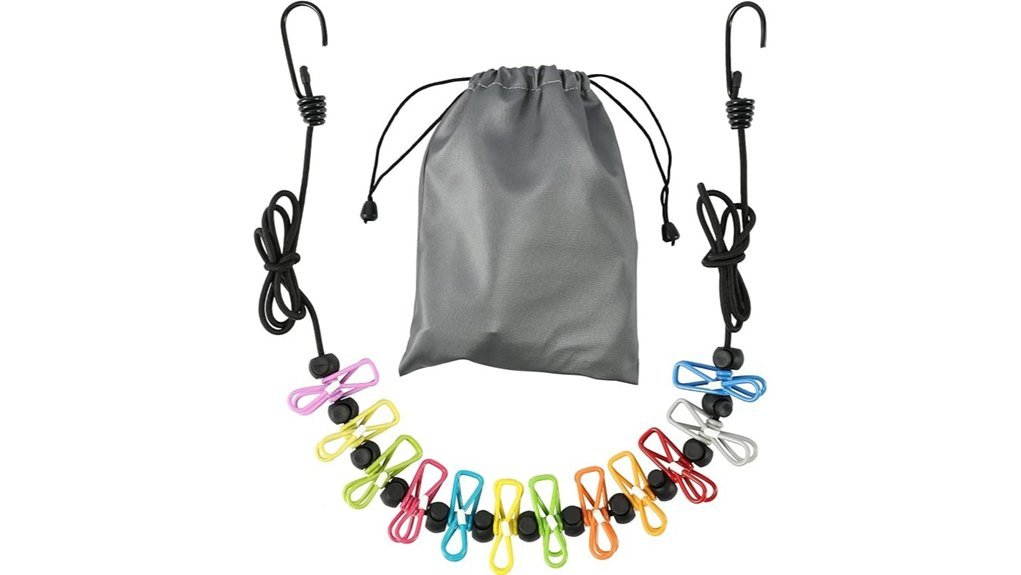
This portable clothesline gives wet towels and light clothing a separate drying zone instead of draping them over bedding or tent fabric. The product listing describes a stretchable polyester rope that extends about 10 to 12 feet, 12 clothes clips, 13 anti-skid positioning supports, and stainless-steel hooks at the ends. It is compact enough for campsites, RVs, hotel rooms, or balconies. The original listing also mentions a satisfaction guarantee.
Best For: Campers and travelers who need a lightweight line for towels, socks, underwear, diapers, or other small garments.
Pros:
- Clips and positioning supports help keep small items separated on the line.
- The 10-12 ft stretch gives useful drying length without a rigid frame.
- Hooks make it easy to attach where secure anchor points are available.
Cons:
- It is better for light laundry than for heavy, waterlogged garments.
- Wind can increase strain on clips, anchors, and the elastic line.
- The full length still requires two suitable attachment points.
ALPS Mountaineering Zippered Tent Replacement Bag with Carry Straps
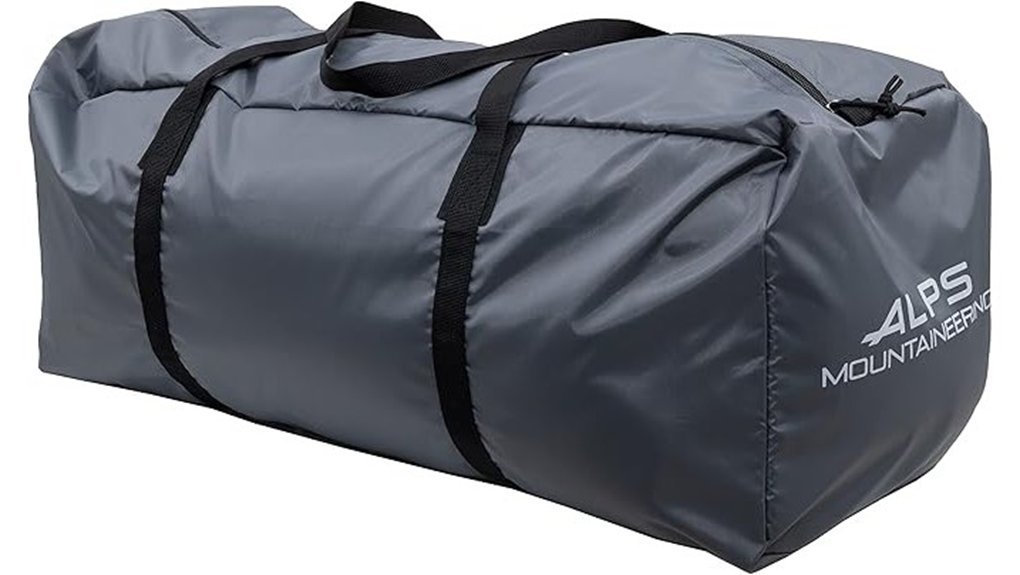
The ALPS Mountaineering Zippered Tent Bag is a straightforward replacement carrier for a lost or damaged tent sack. For the large model linked here, the official ALPS product page lists 28 x 11 x 11 inches and 150D Poly Oxford fabric. The bag uses a zipper closure and carry straps, and ALPS also positions it for extra tent accessories. The original listing states a limited lifetime warranty.
Best For: Campers who need a large replacement tent bag with a simple single-compartment layout.
Pros:
- Large size is intended for many 4-, 5-, and 6-person tent setups.
- 150D Poly Oxford provides a durable fabric shell for transport and storage.
- Zipper and carry straps make it simpler to load and move than an open sack.
Cons:
- One compartment does not separate poles, stakes, and fabric.
- It is a replacement carry bag, not a waterproof dry bag.
- Oversized or unusually packed tents may still require a larger carrier.
Camping Wall Mount Trash Bag Holder Organizer
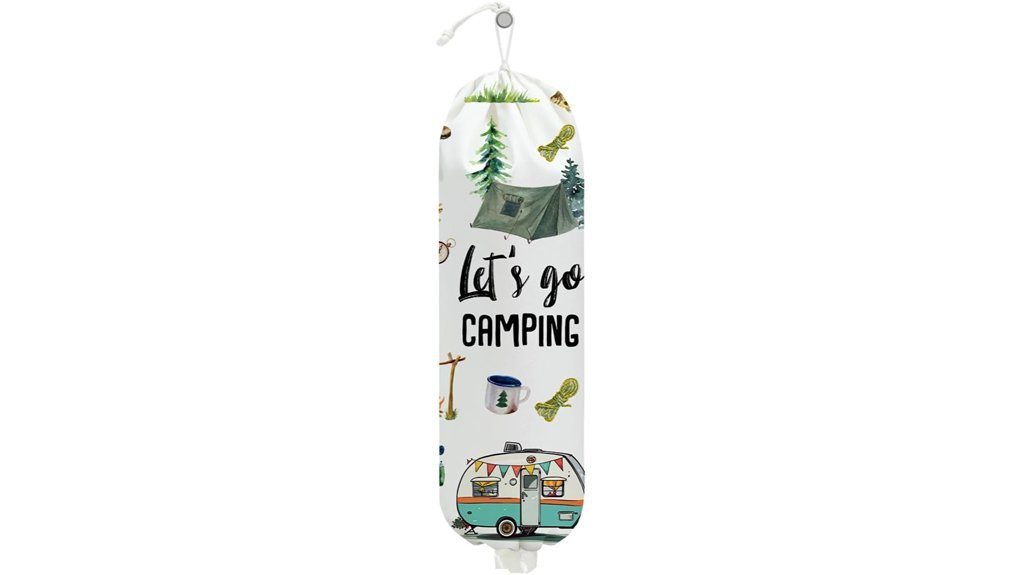
This wall-mount organizer is better understood as a holder for clean, empty plastic bags, not as a place to keep campsite garbage inside your tent. The listing describes a 22.5 x 9-inch fabric holder that can store 50 or more bags, with an adjustable drawstring top, elastic lower opening, and machine-washable material. It can also hold light items such as socks, rags, or small toys.
Best For: Campers and RV users who want a compact dispenser for clean reusable bags or other lightweight supplies.
Pros:
- Slim hanging design keeps empty bags off counters and tent floors.
- Bottom opening allows quick one-at-a-time access.
- Machine-washable fabric is easy to refresh after dusty trips.
Cons:
- It is only suitable for lightweight contents.
- You need a hook, door, cabinet, or other appropriate hanging point.
- Food waste and scented trash should not be stored in a tent in wildlife areas.
Brightz LED Tent String Lights for Guy-Lines
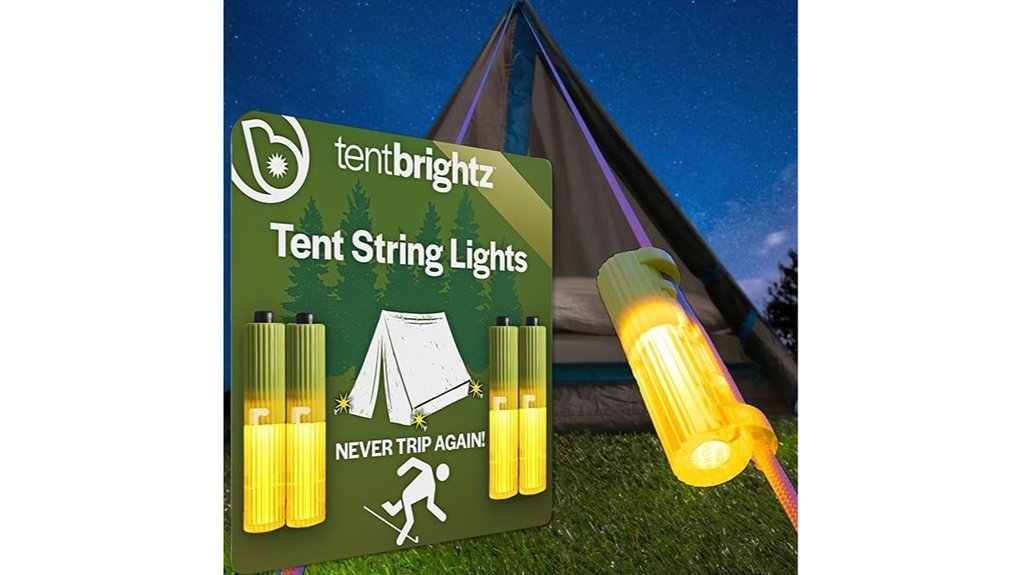
Brightz TentBrightz lights are designed to make tent guy-lines easier to see after dark. The listing describes a bright green LED glow lasting up to four days, tool-free attachment to modern tent securing lines, and weather-resistant construction. They do not organize gear directly, but they can make the perimeter of an organized campsite easier to move around at night.
Best For: Campers who use guy-lines and want a visible marker near lines and ground anchors after dark.
Pros:
- Bright green light makes guy-lines easier to notice at night.
- Tool-free attachment is quick to add during tent setup.
- Weather-resistant construction is intended for outdoor use.
Cons:
- They are unnecessary on tents that do not use exposed guy-lines.
- The listed glow time is finite, so they are not a permanent marker.
- They improve visibility but do not replace careful guy-line placement or normal campsite lighting.
Factors to Consider When Choosing a Way to Organize Your Camping Tent
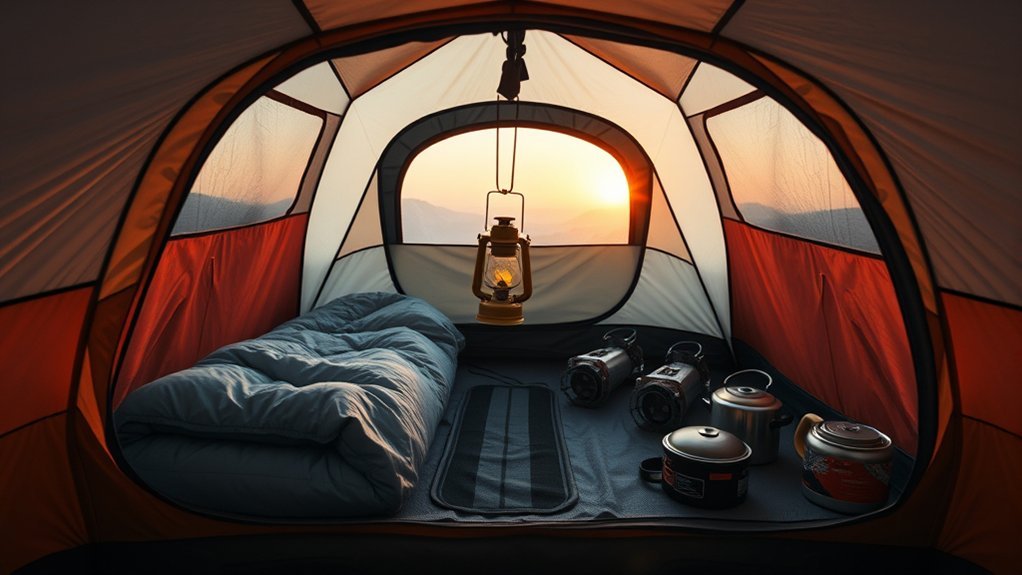
A good organizer should solve a specific space problem without creating a new one. Capacity, tent footprint, durability, access, portability, weather protection, setup time, and multi-use value all matter. A recent REI camp organization guide also emphasizes using bins, pouches, cubes, and hanging systems according to the type of gear being stored.
Storage Capacity
Match storage capacity to the gear category, not just the total amount you own. Bulky tents and mats need large bags, while stakes, repair kits, and cords are easier to manage in smaller pouches. A huge single compartment can save space, but it works best when smaller items are grouped inside it.
Tent Space
Protect the sleeping zone first, then use the remaining floor and vertical space. Shelves and hanging organizers can free walking room, but only if the tent has safe attachment points and enough headroom. Keep the entrance clear so people can get in and out without stepping over gear.
Warning: Do not keep food, trash, or scented items in your tent where wildlife rules prohibit it. The National Park Service food-storage guidance says to secure these items immediately and not store food in a tent or backpack.
Gear Durability
Look at the part most likely to fail first: fabric, seams, zipper, buckle, hook, or frame. Abrasion-resistant fabric helps with repeated loading, while rust-resistant metal matters for damp camps. If an organizer will sit outside, weather resistance is more important than it is for a bag kept in a vehicle.
Easy Access
Store by frequency of use. Headlamps, keys, medication, and nighttime essentials should be reachable without unpacking everything else. Less-used repair gear can sit deeper in a duffle. Assigning each item a fixed location also makes it easier to notice when something is missing before you leave camp.
Portability
Weight and packed size matter most when you have to carry gear beyond the car. Foldable bags, straps, and clotheslines pack smaller than shelves, while rigid or framed storage can be easier to use once camp is set up. Choose the lightest solution that still holds the gear safely.
Weather Resistance
Do not assume every outdoor organizer is waterproof. Water-resistant fabric may handle light moisture, while a true waterproof container is better for electronics, dry clothing, and other items that cannot get wet. Keep vulnerable gear in sealed bags or containers even if the larger organizer offers some weather protection.
Setup Simplicity
Fast organizers are more likely to get used. Zippers, clips, hooks, and pre-assembled folding frames reduce setup time, especially when you arrive late or in bad weather. Before a trip, test any strap or hanging system at home so you know how it fits and what it can safely hold.
Multi-Use Functionality
Multi-use gear earns its space when it can handle more than one job without becoming awkward. A duffle can transport shelter gear, a clothesline can separate wet items, and a hanging strap can organize tools outside the sleeping area. The goal is fewer loose items, not simply more accessories.
Frequently Asked Questions
How Do I Keep My Tent Organized During a Rainy Trip?
Keep wet gear separate from bedding and dry clothing. Use a vestibule, waterproof or sealed bags, and hanging storage for damp layers when your tent allows it. Put a small towel or mat at the entrance for shoes, and dry the tent and organizers fully after the trip before long-term storage.
What Should I Store Outside Versus Inside the Tent?
Keep sleeping bags, dry clothing, headlamps, and personal essentials inside. Muddy footwear and wet rain gear can stay in a vestibule or protected outside area, while food, trash, toiletries, and other scented items should follow local wildlife-storage rules rather than being left in the tent.
How Can I Prevent Tent Gear From Getting Muddy?
Use a footprint, tarp, or small entrance mat as a clean transfer zone. Keep shoes near the entrance, isolate dirty tools in a dedicated bag, and place wet items in a separate bin or dry bag. Cleaning gear before it crosses into the sleeping area prevents most tracked-in mud.
What’s the Best Way to Organize a Tent for Kids?
Give children a few clear zones for sleeping, clothing, and personal items. Low bins or visible pockets work well because kids can reach them without climbing over gear. Keep shoes near the entrance, secure lights and cords, and use simple labels so each child knows where items belong.
How Do I Maximize Tent Space With Limited Storage?
Use vertical storage first, then use compact bags or cubes to group small items by purpose. Keep the center and exit path clear, move bulky gear to a vestibule or vehicle when safe, and place only frequently used essentials inside. Foldable or multi-use organizers help when packed space is limited.
Sources
- REI Co-op Expert Advice: Perfect Kit for Camp Organization: Supports the use of bins, pouches, cubes, and hanging systems for organized camp gear.
- ALPS Mountaineering: Zippered Tent Bag: Confirms the large bag dimensions, 150D Poly Oxford fabric, and replacement-bag purpose.
- National Park Service: Bear Safety – Storing Food: Supports keeping food, garbage, and scented items secured and out of tents.