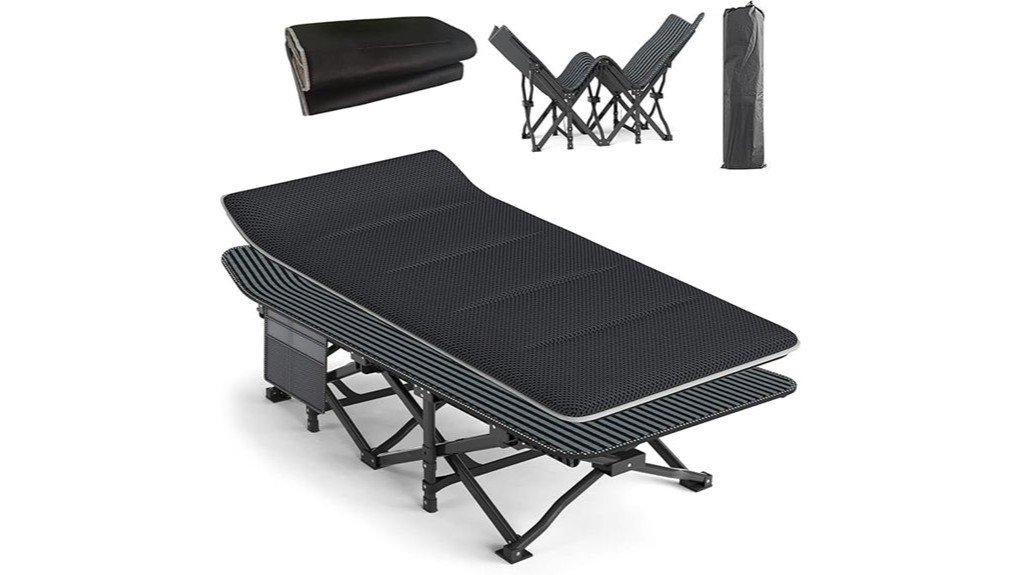
If you are wondering how to pack pillows for travel, choose the method by pillow fill first, then by luggage space. Vacuum or roll-up bags work best for compressible soft fills, while foam pillows need gentler handling. A stuffable neck pillow or inflatable model is often easier when you want to save suitcase space without forcing a full-size pillow into the bag.
Quick Answer
Check the pillow’s care label first. For a soft, compressible pillow, use a vacuum bag or roll-up compression bag, then pack it flat. For solid foam, use only the maker-approved pouch or gentle rolling method. Compression saves volume, not weight, so measure and weigh the finished bag before flying.
Key Takeaways
- Vacuum bags give the most volume reduction for pillows that are safe to compress, while roll-up bags are easier when you will not have a vacuum at your destination.
- Airtight PA+PE bags, double zippers, and secure valves help keep a dry pillow protected from dirt and moisture during transit.
- Stuffable neck pillows replace the usual filling with soft clothing, so they can provide both storage and neck support.
- Airline rules vary. A compressed pillow still has to fit the carrier’s size, weight, and item-count limits.
How to Pack Pillows for Travel Step by Step
The safest packing method starts with the pillow’s construction. Do not assume every pillow can be folded, rolled, or vacuum sealed the same way. Use the care label and the manufacturer’s storage instructions before applying heavy compression.
- Check the fill and care label. Identify whether the pillow is inflatable, synthetic fiber, down or feather, shredded foam, solid memory foam, latex, or another material.
- Make sure the pillow is clean and fully dry. Sealing a damp pillow traps moisture and can create odor or mildew problems.
- Choose the compression method. Use a vacuum bag for a compressible pillow when the maker allows it, a roll-up bag when you need a no-pump option, or the supplied travel pouch for a pillow designed to roll or fold.
- Compress evenly. Keep the zipper, seams, and valve clear. Stop if the pillow is being sharply creased or the bag seal is under obvious strain.
- Pack, measure, and weigh the bag. Put the compressed pillow where it will not be punctured. Remember that removing air reduces bulk but does not reduce the pillow’s weight.
Warning: Do not tightly vacuum-compress solid foam for extended periods unless the manufacturer allows it. For example, Tempur-Pedic’s travel NeckPillow care guidance says not to keep the pillow tightly compressed for an extended period.
Which Pillow Packing Method Should You Use?
Pick the method that gives enough space savings without stressing the pillow. The most aggressive compression is not automatically the best choice, especially for solid foam or a pillow you need to use as soon as you arrive.
| Pillow or Packing Type | Best Method | Main Tradeoff |
|---|---|---|
| Soft synthetic, down, or feather pillow | Vacuum or roll-up compression, if the care label permits it | Good space savings, but the pillow needs time to regain loft |
| Solid memory foam or latex | Maker-approved pouch or gentle rolling only | Usually takes more room and needs protection from deep creases |
| Inflatable travel pillow | Deflate fully and store in its pouch | Packs very small but does not feel like a full-size bed pillow |
| Stuffable neck pillow cover | Fill with soft clothing | Firmness and comfort depend on what you put inside |
Pro Tip: Plan the return trip before you leave. If you use a household vacuum at home, bring a hand pump or choose a roll-up bag so you can recreate the same compact pack at your destination.
UPGOGO Travel Vacuum Storage Bags Combo (6 Pack)
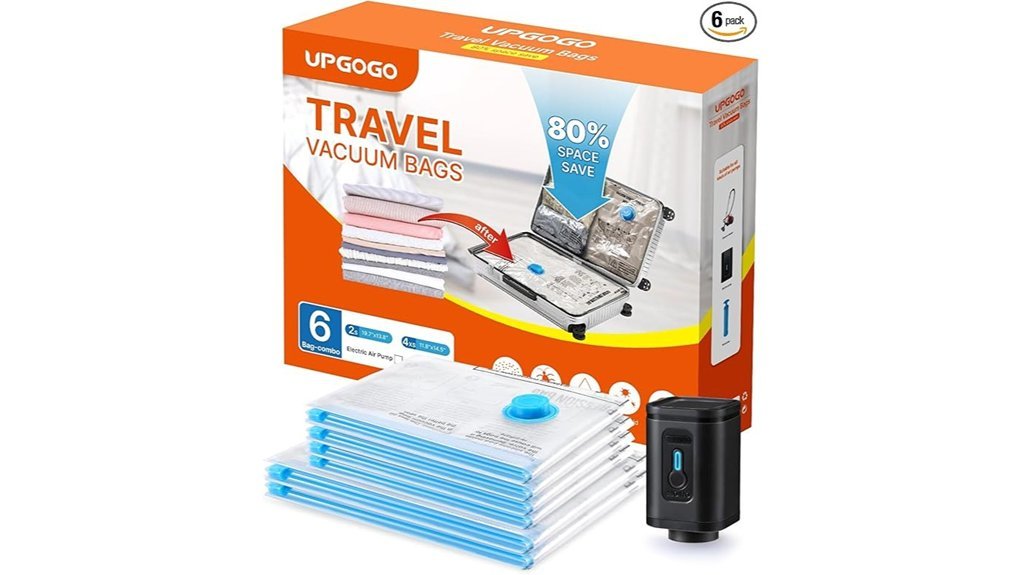
The UPGOGO Travel Vacuum Bags Combo 6 Pack is designed for travelers who want strong compression without relying on a hotel vacuum. It includes two small bags, four extra-small bags, and a cordless electric pump, making it most useful for soft pillows, clothing, and other compressible items.
The pump is listed with a 1200mAh battery, a 3.88-ounce weight, about one minute of air-removal time, and up to 20 minutes of working time. The PA+PE bags use a screw-seal valve and double zipper, claim up to 80% volume reduction, and list a 25-pound load capacity.
Best For: Travelers who want portable powered compression for pillows and clothing.
Pros:
- Includes a cordless electric pump for packing away from home.
- Claims up to 80% volume reduction and a 25-pound load capacity.
- PA+PE construction, a screw-seal valve, and double zipper are designed for repeated travel use.
Cons:
- The small and extra-small bag sizes may be too compact for larger bed pillows.
- The pump may need recharging during repeated packing sessions.
- A battery-powered pump adds another device to manage while flying.
If you fly with the pump, review the FAA’s passenger battery guidance. Lithium-battery devices have specific carry-on and checked-bag rules, and spare lithium batteries must stay in carry-on baggage.
2-Pack Stuffable Velvet Travel Neck Pillow (Blue)
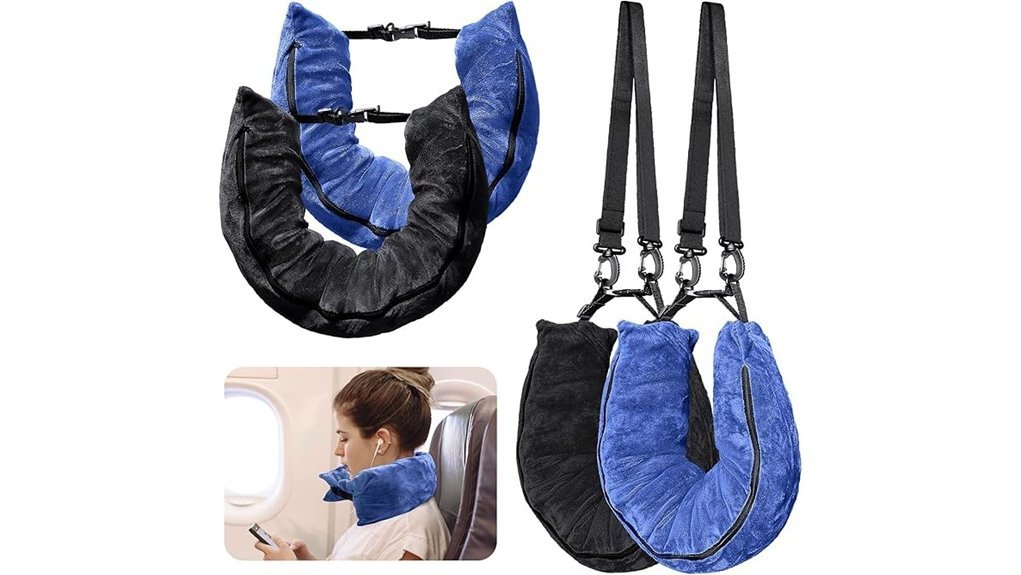
This 2-Pack Stuffable Velvet Travel Neck Pillow is a storage-first option for travelers who prefer to carry soft clothing around the neck instead of compressing a separate pillow in the suitcase. The source listing describes Eppyyo’s cylindrical travel pillow-22 as a two-count set with an adjustable fit.
Each pillow is listed at about 7 inches by 31 inches when flat, with a long zipper and discreet side access. The listing also states a 0.24 kg weight, cotton fill, a velvet exterior, and capacity for up to six adult T-shirts when fully packed.
Best For: Adults who want a soft neck pillow that doubles as clothing storage on planes, cars, trains, or bikes.
Pros:
- Soft velvet exterior gives the pillow a comfortable surface.
- Can hold up to six adult T-shirts according to the listing.
- Adjustable sizing and a long zipper make filling and fit easier to control.
Cons:
- You have to pack it manually before it provides full support.
- Comfort depends on how evenly the clothing is arranged.
- A filled cylindrical pillow can still be bulky outside your luggage.
SpaceAid Vacuum Storage Bags (Large 3 Pack)
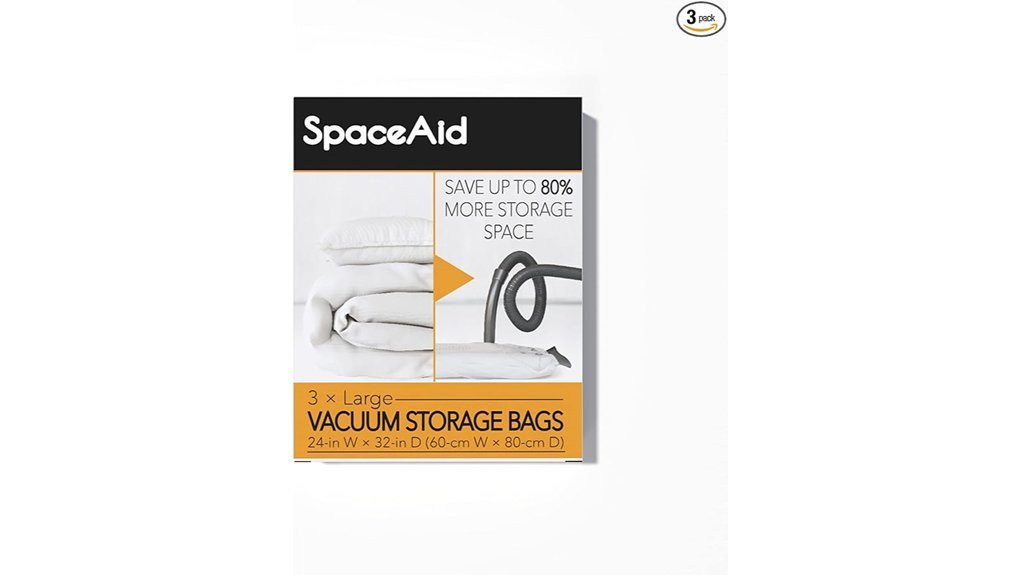
SpaceAid Vacuum Storage Bags are one of the clearest choices here for standard bed pillows because each large bag measures 24 x 32 inches. SpaceAid’s product page says each bag can hold two standard pillows or several clothing items.
The bags use thick PA and PE construction, double-zip seals, and a triple-seal turbo valve. The original listing also gives a 10-pound load limit and a 30-day return guarantee. To use one, place the dry pillow inside, close the zipper fully, remove air with a standard vacuum, then secure the valve lid.
Best For: Travelers, students, and households packing standard pillows, bedding, or seasonal clothing.
Pros:
- The 24 x 32-inch size is large enough for two standard pillows.
- Double-zip seals and a triple-seal valve support an airtight closure.
- Reusable PA and PE material works for travel and home storage.
Cons:
- You need access to a vacuum to get full compression.
- The listed 10-pound load limit may restrict denser items.
- A three-bag set may be too small for a large household move.
UPGOGO Vacuum Travel Bags Combo 6 Pack
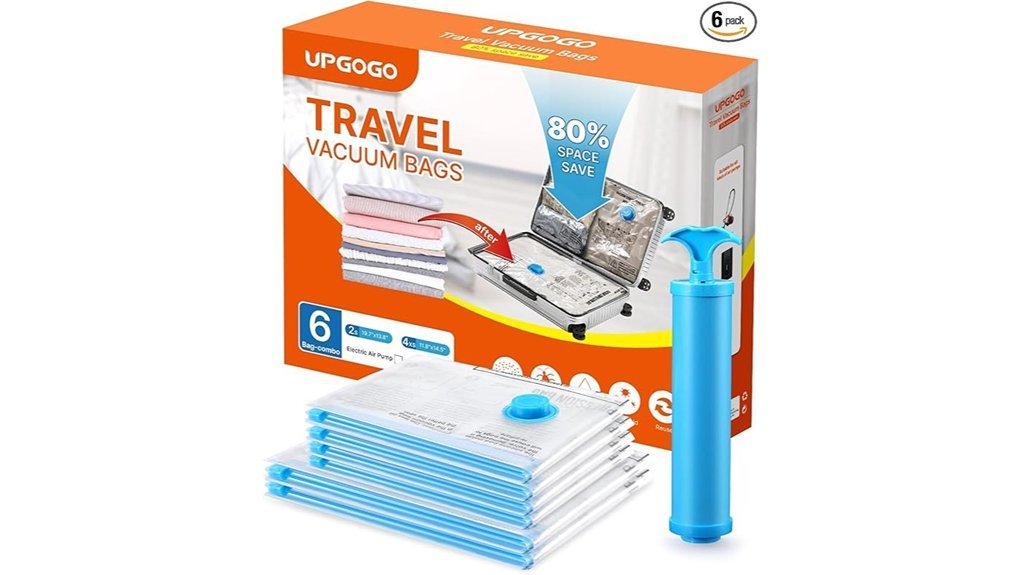
UPGOGO’s hand-pump vacuum travel bags are better suited to travelers who want compression without carrying an electric pump. The 6-pack includes two small bags at 19.7 x 13.8 inches and four extra-small bags at 11.8 x 14.5 inches.
A hand pump is included, and the bags are also listed as compatible with a standard vacuum cleaner. The screw-seal valve, double zipper, PA+PE construction, and waterproof design are intended for repeated use, while the listing claims up to 80% volume reduction.
Best For: Travelers who want reusable manual vacuum bags for clothing and smaller compressible pillows.
Pros:
- Includes a hand pump, so no battery is needed.
- Offers two bag sizes for organizing smaller soft items.
- PA+PE material, a screw valve, and double zipper help protect contents in transit.
Cons:
- The small sizes may not fit a full-size bed pillow.
- Manual pumping takes more effort than powered compression.
- The seal has to be closed carefully for the bag to stay compact.
MEIQIHOME Vacuum Storage Bags for Clothing and Bedding
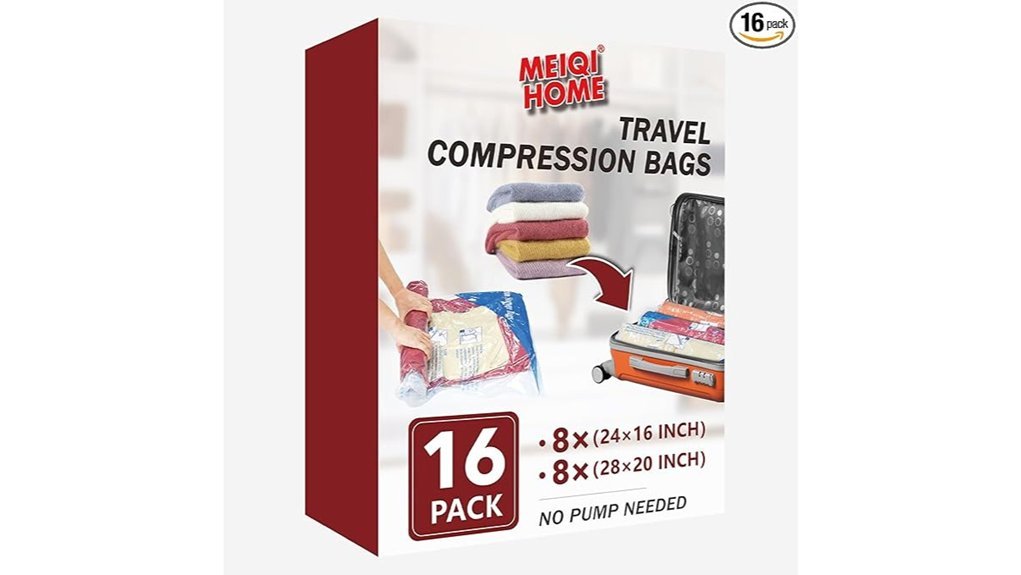
MEIQIHOME Vacuum Storage Bags use a roll-up design, so they are practical when you do not want to bring a pump. The 16-bag set includes eight medium and eight large bags for clothes, pillows, comforters, blankets, and bedding.
The bags are listed as PA+PE with tear-resistant construction and an airtight zipper closure. To compress them, close the bag and roll it so air exits through the built-in valve. This is convenient for return trips because no vacuum cleaner or pump is required.
Best For: Travelers, movers, and home organizers who want reusable no-pump compression bags.
Pros:
- Includes 16 bags in two sizes for clothing and bedding.
- Roll-up compression works without a vacuum or pump.
- PA+PE construction is designed for repeated use and moisture protection.
Cons:
- Manual rolling may not remove as much air as a powered vacuum system.
- Large or irregular pillows can be harder to roll evenly.
- Airtight performance depends on fully closing the zipper and valve.
Stuffable Travel Neck Pillow with Clothes Storage
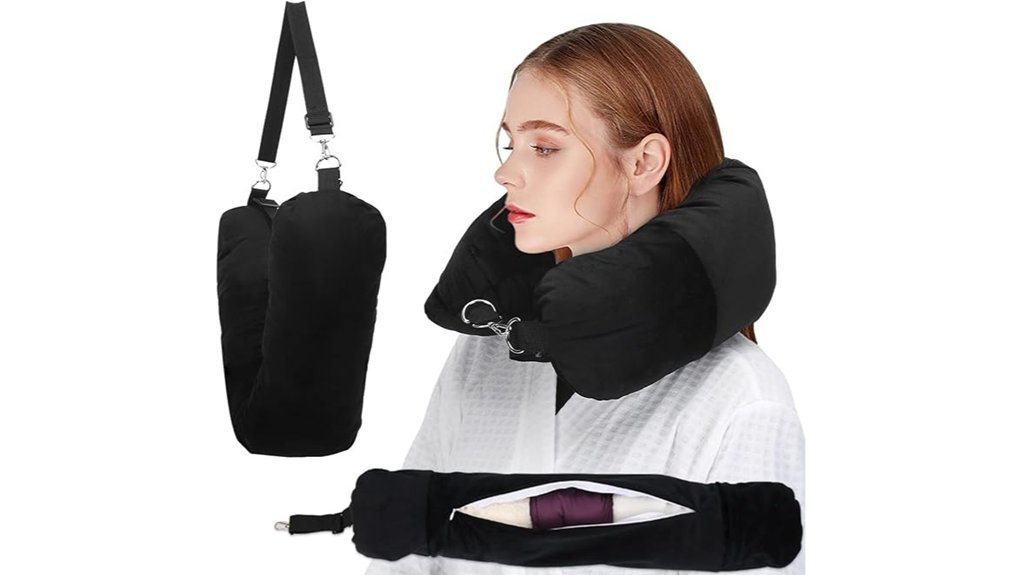
This stuffable neck pillow is useful when you want to turn soft clothing into the pillow filling instead of giving a separate pillow suitcase space. Its velvet cover, zipper closure, and adjustable shoulder strap make it easy to carry or attach to luggage.
You control firmness by how tightly and evenly you pack the contents. The ergonomic neck shape can support the head or neck, while the storage cavity holds clothing and small soft items. Keep hard, sharp, or uncomfortable objects out of the area that will rest against your body.
Best For: Frequent flyers and road-trippers who want neck support plus clothing storage in one item.
Pros:
- Soft velvet material provides a comfortable outer surface.
- Self-filling design uses clothing that would otherwise take suitcase room.
- Adjustable shoulder strap and zipper closure improve portability.
Cons:
- It has to be filled before it provides full pillow shape and support.
- It may feel less cushioned than a conventional filled travel pillow.
- Storage is best suited to soft, relatively small clothing items.
Ultra Space Saving Comforter Storage Bag (Gray, X-L)
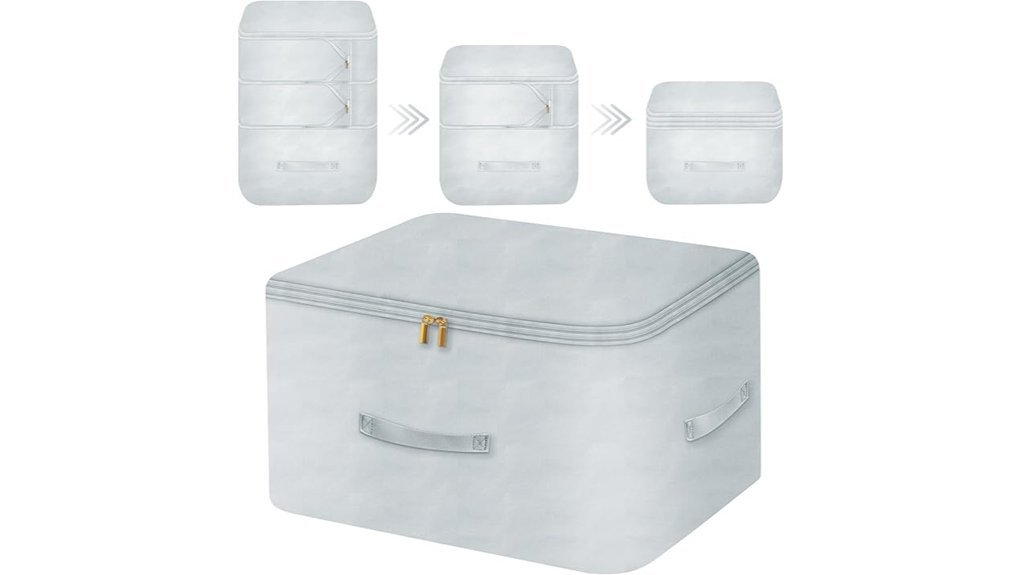
The Gray X-L comforter storage bag is better for organizing bulky bedding than for true air-removal compression. Its roomy design suits comforters, winter blankets, duvets, quilts, sweaters, and sheets when you have enough luggage or vehicle space.
The top-opening design uses double zippers for access, while reinforced handles with two layers of thick fabric support carrying. The source describes the outer fabric as heavy-duty, smooth, stain resistant, and waterproof, with enough structure to stack in closets, attics, or basements.
Best For: Car trips, moves, checked-luggage situations, or home storage where organization matters more than maximum compression.
Pros:
- Large capacity works well for bulky bedding and clothing.
- Top opening and double zippers make packing and retrieval easier.
- Reinforced handles and waterproof fabric improve handling and protection.
Cons:
- It does not remove air like a vacuum bag.
- The large packed size may be awkward for air travel.
- Soft-sided fabric offers less crush protection than a rigid container.
Stuffable Travel Neck Pillow Storage Bag
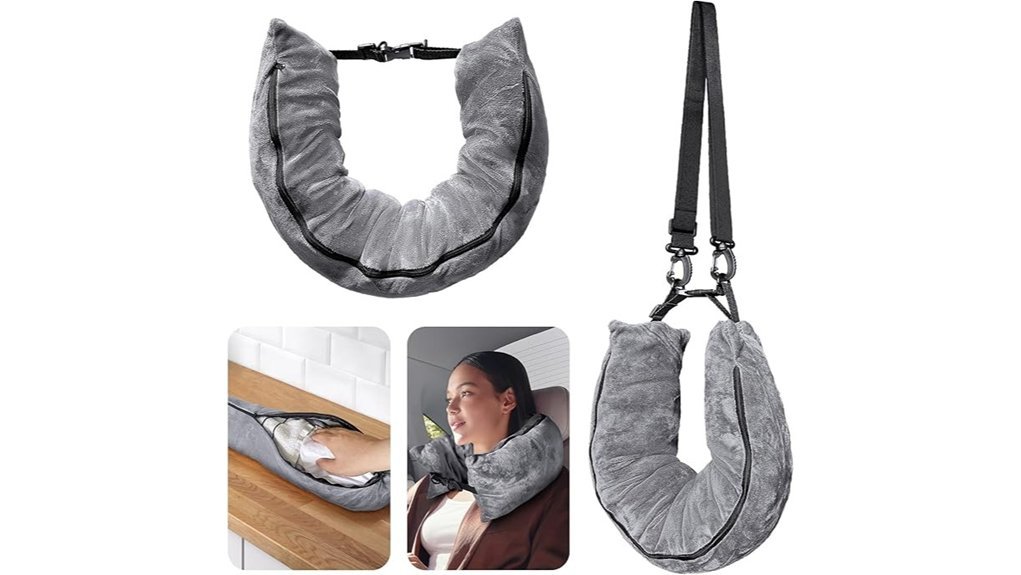
This stuffable travel neck pillow combines adjustable neck sizing with hidden clothing storage. When flat, it is listed at about 7 inches by 31 inches, and the seller says it holds about four adult T-shirts comfortably or up to six when fully packed.
A long zipper and side access simplify loading, while the backpack-style carrying setup keeps your hands free. You can also position the filled pillow for lumbar support on flights, trains, road trips, bikes, or motorcycles, though comfort depends on how evenly you distribute the contents.
Best For: Travelers who want a soft neck pillow, hands-free carrying, and hidden storage in the same accessory.
Pros:
- Soft velvet fabric is comfortable against the skin.
- Holds about four adult T-shirts comfortably and up to six when tightly packed, according to the listing.
- Long zippers and backpack-style carrying make it easier to load and transport.
Cons:
- It becomes bulkier as you add clothing.
- The storage cavity is not a substitute for a full suitcase on longer trips.
- Unevenly packed clothes can create pressure points around the neck or back.
Cozy Essential Vacuum Storage Bags, 20 Combo
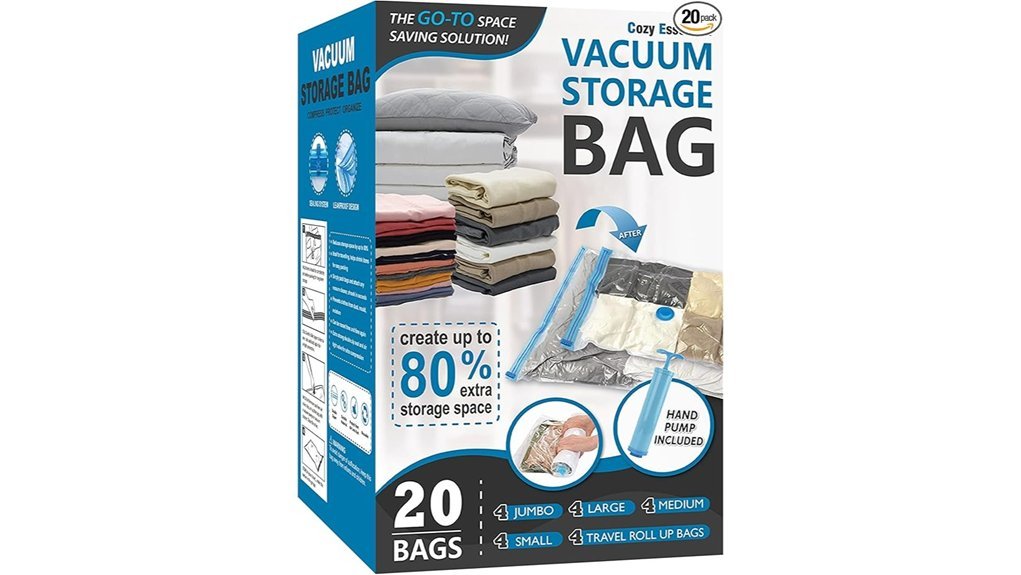
Cozy Essential Vacuum Storage Bags are the broadest mixed-size set in this article. The 20-piece combo includes jumbo, large, medium, small, and travel roll-up bags, plus a hand pump, so it can cover pillows, clothing, blankets, and other soft goods.
The listing claims up to 80% compression. Thick plastic, a triple-seal turbo valve, and double-zip closure are designed to keep air out during storage. The vacuum-style bags can use the hand pump or a standard vacuum, while the travel roll-up sizes give you a no-vacuum option.
Best For: Families, students, frequent travelers, and movers who need several bag sizes in one set.
Pros:
- Includes multiple sizes for both travel and home storage.
- Hand pump and vacuum compatibility give you two compression options.
- Triple-seal valves and double zippers support repeated use.
Cons:
- Compression varies with bag fill, pillow material, and seal quality.
- Vacuum bags add packing steps compared with a simple stuff sack.
- A 20-piece set may be excessive for an occasional traveler.
12 Space Saver Storage Bags for Clothes
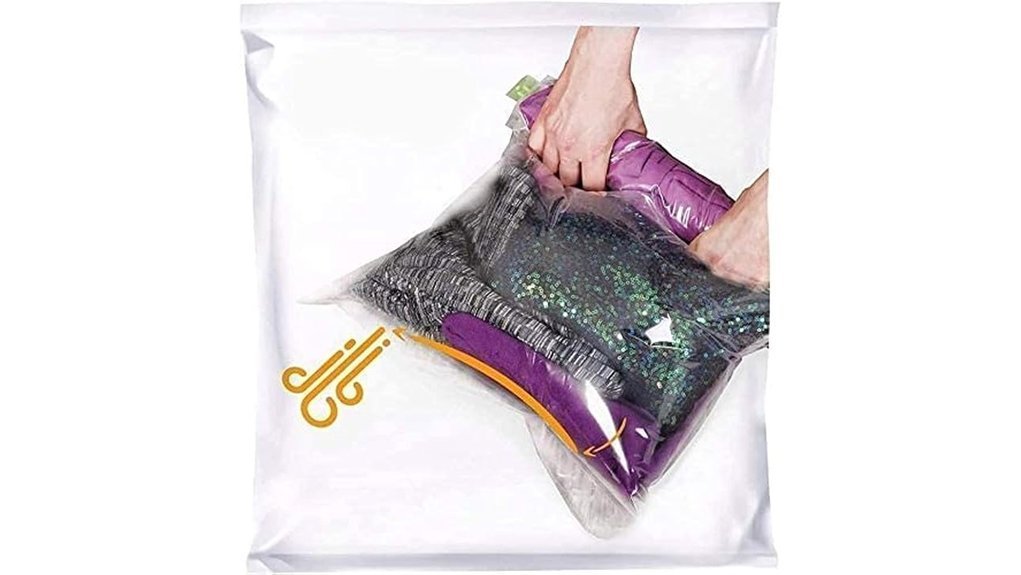
These 12 space saver bags are a simple no-pump option for travelers who want to press air out by hand. The set includes four large 28 x 20-inch bags and eight medium 24 x 16-inch bags for clothing, towels, sheets, pillowcases, and other soft items.
The airtight bags are designed to reduce odors, dirt, dampness, bugs, and moth exposure during storage. You close the zipper, roll the bag, and push air through the small valves at the bottom. Because there is no pump, this method is easier to repeat during a trip.
Best For: Travelers, students, and home organizers who want reusable compression without extra equipment.
Pros:
- Includes 12 bags in two useful sizes.
- No vacuum or pump is required.
- Reusable airtight construction helps protect soft goods from dirt, odors, and dampness.
Cons:
- Not ideal for very bulky pillows that need maximum compression.
- Manual rolling takes effort when a bag is packed tightly.
- The fixed bag sizes work best with soft, flexible contents rather than rigid items.
Factors to Consider When Choosing the Way to Pack Pillows for Travel
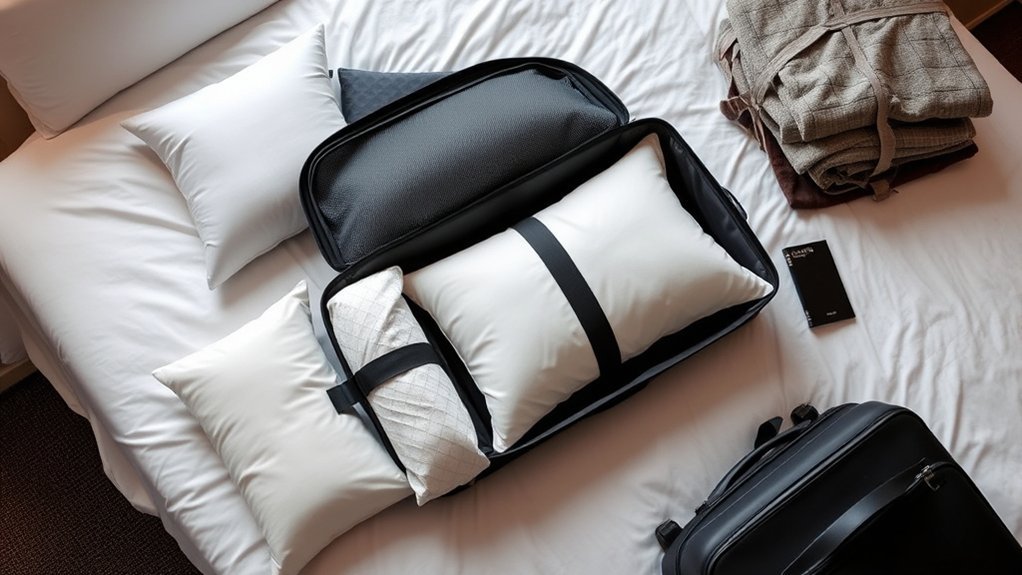
The best way to pack a pillow for travel depends on more than how small you can make it. Match the method to the pillow’s fill, the bag you are using, the airline allowance, and whether you can reproduce the same packing method for the return trip.
Pillow Size and Bulk
Start with the pillow’s actual dimensions and how much it can flex. A large bed pillow may use most of a carry-on even after folding, while an inflatable or stuffable travel pillow can occupy very little suitcase space.
If the pillow is rigid or dense, forcing it into a smaller bag can stress the fill or seams. For limited luggage, a slimmer pillow or one designed to fold into its own pouch is usually easier to manage.
Compression Method
Choose between vacuum compression, manual roll-up compression, a compression sack, or a stuffable pillow based on what you can use at both ends of the trip. Vacuum systems usually remove the most air, while roll-up bags are more convenient when no pump is available.
A valve and double zipper can help maintain compression, but the seal only works if the zipper is clean and fully closed. Leave enough clear plastic around the opening so the seal is not fighting against an overstuffed pillow.
Material Protection
Keep the pillow dry and protect it from punctures, dirt, and spills. PA+PE vacuum bags and other sealed compression bags can create a useful barrier, but thin film can tear if it rubs against shoes, zippers, or hard-edged items.
For delicate covers, place the pillow inside a clean pillowcase before compression if doing so does not interfere with the valve or seal. Avoid packing damp fabric inside an airtight bag.
Carry-On Space
Airline limits are not universal, so do not assume one carry-on size applies everywhere. American Airlines, for example, limits its standard carry-on to 22 x 14 x 9 inches and its personal item to 18 x 14 x 8 inches.
Southwest allows a larger 24 x 16 x 10-inch carry-on and says neck pillows do not count toward its carry-on limit. That exception is airline-specific, so a pillow that is free to carry on one airline may be treated differently on another.
Note: Compression can help a pillow fit inside your approved bag, but it does not guarantee that a pillow carried separately will be exempt from the airline’s item count.
Weight Limitations
Vacuum compression reduces volume, not weight. A pillow weighs essentially the same after the air is removed, and the compression bag or pump adds a little more weight to your luggage.
Checked-bag limits also vary by fare and cabin. For example, Delta’s checked-baggage policy lists a 50-pound standard limit for Delta Main and Delta Comfort bags and a 70-pound allowance for Delta One and Delta First. Weigh the finished bag instead of assuming compression creates extra weight capacity.
Ease of Use
Pick a system you can repeat without frustration. A vacuum bag may compress a bulky pillow more, but a roll-up bag is easier if you will not have a vacuum cleaner at your destination.
Stuffable neck pillows simplify packing in another way: the clothing becomes the pillow filling. They are quick to reopen, but comfort depends on arranging the contents evenly.
Reusability and Durability
For repeated trips, pay attention to the zipper, valve, seams, and film thickness. Tear-resistant PA+PE bags with double zippers are generally better suited to repeated packing than very thin disposable plastic.
Before every trip, check for pinholes, cracked valves, split seams, and debris in the zipper. A bag that slowly reinflates inside the suitcase can take back the space you planned to save.
Travel Comfort Needs
Space savings should not make the pillow uncomfortable when you need it. Stuffable neck pillows let you change firmness by adding or removing clothing, while an inflatable pillow lets you control firmness with air pressure.
If you rely on a specific foam or bed pillow for sleep, preserving its shape may matter more than maximum compression. In that case, use a larger bag, the maker’s travel pouch, or a gentler method instead of forcing the pillow as flat as possible.
Frequently Asked Questions
Can I bring a compressed pillow in carry-on luggage?
Yes, if the compressed pillow fits within your airline’s baggage allowance and contains no restricted item. Compression changes the pillow’s size, not its status as baggage. Airlines count pillows differently, so a full-size pillow attached outside your bag may still be treated as a personal item or extra carry-on.
Do vacuum bags damage pillow filling?
They can, depending on the fill and how long it stays compressed. Soft synthetic or loose-fill pillows are generally easier to compress than solid foam, but the care label should control the method. Tempur-Pedic specifically says its travel NeckPillow should not be tightly compressed for an extended period.
How long can a pillow stay compressed safely?
There is no single safe time for every pillow material. Keep travel compression as short as practical, release the pillow after you arrive, and follow the manufacturer’s care instructions. Solid memory foam and latex deserve extra caution because prolonged or extreme compression can affect shape and support.
Are stuffable neck pillows allowed on airplanes?
They are commonly carried on flights, but whether they count toward your baggage allowance depends on the airline. Southwest currently lists pillows as personal items and says neck pillows do not count toward its carry-on limit. Other airlines may apply different rules, especially to bulky or overfilled pillows.
Which pillow type packs smallest for travel?
An inflatable travel pillow usually packs smallest because you can release nearly all of its air. A stuffable pillow cover can also take little space when empty and doubles as storage when filled. Memory foam, microbead, and full-size bed pillows normally need more room unless their maker approves compression.
Sources
- American Airlines carry-on baggage: carry-on and personal-item size limits.
- Southwest carry-on baggage policy: carry-on size and treatment of pillows and neck pillows.
- Federal Aviation Administration battery guidance: lithium-battery rules for passenger baggage.
- Tempur-Pedic travel NeckPillow: care guidance on extended tight compression.
- SpaceAid Large 3 Pack vacuum seal bags: bag size, materials, seals, and standard-pillow capacity.
- Delta checked-baggage policy: example standard and premium-cabin checked-bag weight limits.