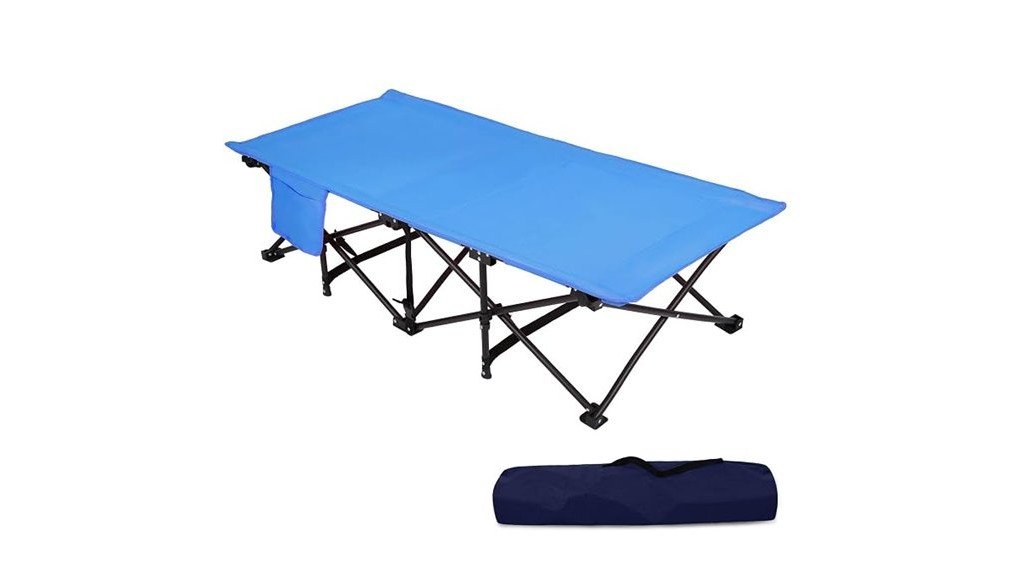
Knowing how to stay warm in a tent is mostly about slowing heat loss, not trying to heat the whole shelter. Ground insulation, a properly rated sleeping bag, dry clothing, and ventilation do more for overnight comfort than any single gadget. The five products below can add warmth or emergency backup, but each fits a different role.
Quick Answer
To stay warm in a tent, build the sleep system first: use an insulated sleeping pad, a temperature-appropriate sleeping bag, dry layers, and good ventilation. Of the five products below, the WildCall and KingCamp blankets add flexible insulation, the QIO CHUANG Mylar blankets are emergency backup, and the heated cover adds controlled powered warmth.
Key Takeaways
- An insulated sleeping pad is essential because blankets above you cannot stop heat loss into cold ground.
- Wearable camping blankets work best as supplemental insulation around camp rather than as replacements for cold-rated sleeping bags.
- Emergency Mylar blankets are compact backup gear for unexpected exposure, not a comfortable everyday sleep system.
- Ventilation still matters in cold weather because damp insulation and condensation can make you feel colder.
- Follow warmer and heater instructions carefully; some heat products must not be used against bare skin or while sleeping.
WildCall Hooded Camping Blanket with 3M Thinsulate Insulation
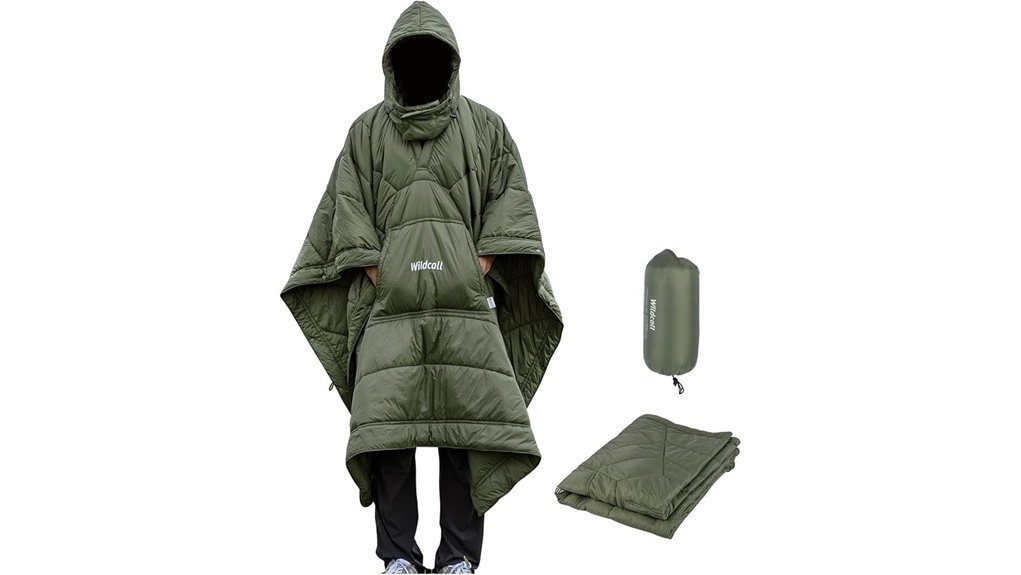
The WildCall Hooded Camping Blanket is a practical choice when you want portable insulation around camp without carrying another full sleeping bag. Its oversized design, detachable hood, and wearable modes make it especially useful before bed, during cool mornings, or while sitting outside the tent.
The blanket uses 80g/m² 3M Thinsulate insulation and measures 78 by 57 inches. 3M explains that Thinsulate microfibers trap insulating air while allowing moisture to escape, which is why the material is used where warmth without excessive bulk is useful.
Buttons, snaps, and straps let the blanket convert into a poncho, shawl, quilt, or temporary sleeping layer. The water-resistant nylon shell helps with light moisture and wind, while the blanket packs into a compact carry bag that can double as a pillow.
It is also machine washable and is described with a limited lifetime warranty. Treat it as supplemental insulation rather than a substitute for a properly rated sleeping bag in freezing or severe winter conditions.
Best For: Campers, travelers, and outdoor users who want a lightweight hooded blanket that works around camp in several configurations.
Pros:
- 80g/m² 3M Thinsulate insulation adds warmth without the bulk of heavier bedding.
- Converts into a poncho, shawl, quilt, or temporary sleeping layer.
- Oversized coverage, detachable hood, machine-washable construction, and compact storage.
Cons:
- Water-resistant rather than fully waterproof.
- Not designed as a stand-alone solution for freezing temperatures.
- Provides less enclosed insulation than a dedicated cold-weather sleeping bag.
QIO CHUANG Emergency Mylar Thermal Blankets (4-Pack)
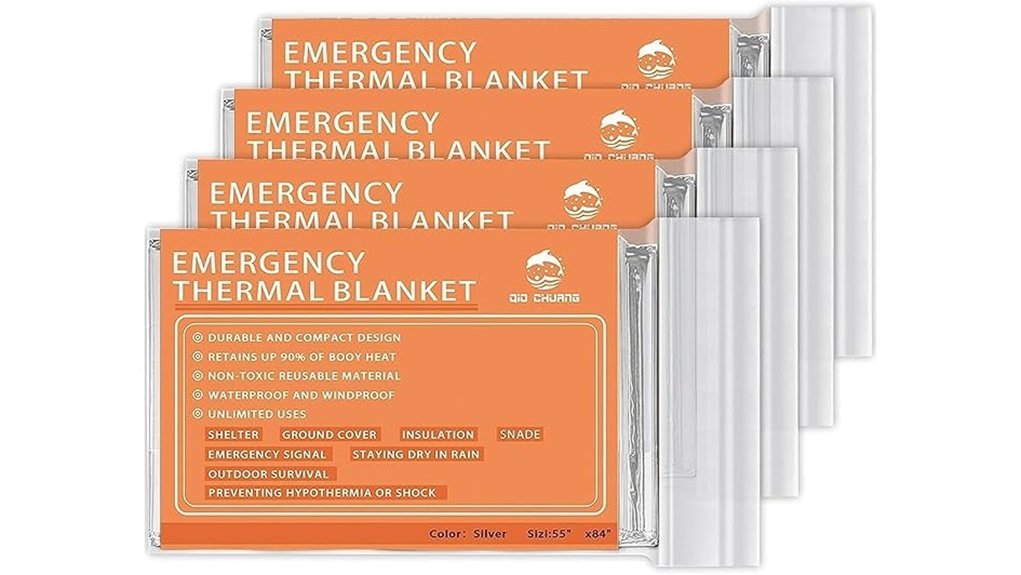
QIO CHUANG Emergency Mylar Thermal Blankets are best treated as compact emergency heat-loss protection, not normal bedding. Their biggest advantage is how little room they take in a backpack, vehicle kit, or emergency pouch.
The four blankets are individually folded, wrapped, and sealed. The aluminized Mylar material is waterproof and windproof, and the product listing states that it can reflect up to 90% of body heat.
That reflective surface can help limit heat loss during an unexpected cold or wet situation. However, thin Mylar does not provide the loft or ground insulation of a sleeping bag and insulated pad, and it can become uncomfortable during prolonged use because it is crinkly and minimally breathable.
The material can also serve as a temporary rain barrier, ground cover, shelter layer, signal panel, backpack cover, or improvised poncho. Handle it carefully because thin reflective film can puncture or tear around sharp objects.
Best For: Campers, hikers, and motorists who want lightweight emergency warmth and weather protection that takes almost no pack space.
Pros:
- Product listing states that the reflective material can retain up to 90% of body heat.
- Waterproof, windproof, compact, and easy to distribute between emergency kits.
- Can serve several emergency roles beyond use as a blanket.
Cons:
- Does not replace an insulated sleeping pad or cold-rated sleeping bag.
- Thin Mylar can be noisy, slippery, and vulnerable to punctures or tears.
- Low breathability makes it less comfortable for routine overnight use.
KingCamp Ultralight Wearable Camping Blanket with Snap Buttons
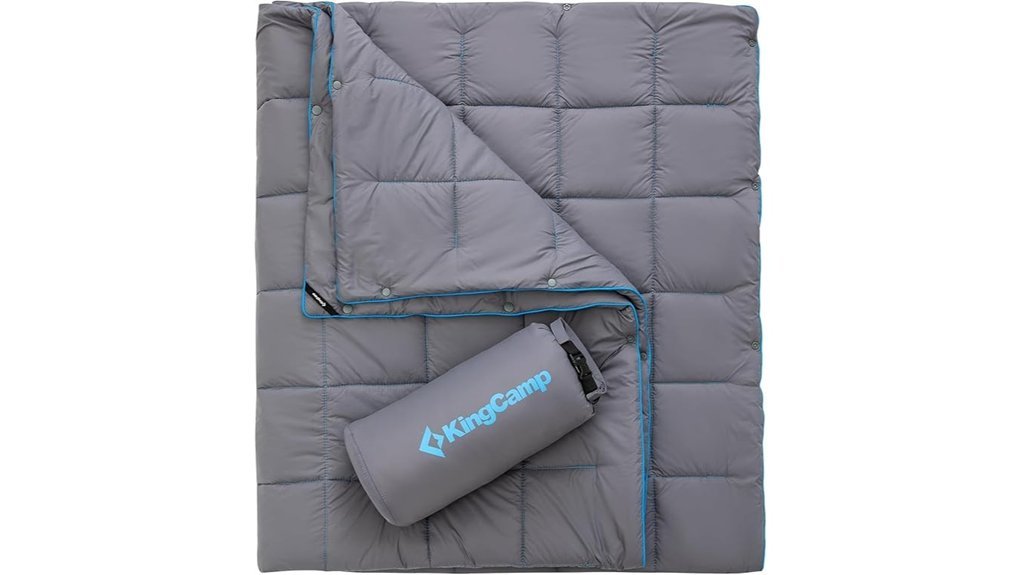
The KingCamp Ultralight Wearable Camping Blanket suits campers who want a packable blanket that leaves their hands free. Snap buttons let you wear it as a shawl or cape, while the rectangular shape still works as a normal blanket around camp.
The listed single-person version measures 69 by 53 inches, weighs 1.32 pounds, and compresses into a 13.78 by 6.3 by 6.3-inch stuff sack. Its 20D nylon shell is designed to resist wind and light moisture, while 150G/㎡ Warm Loft fiberfill provides the insulating layer.
The same blanket can be used as a picnic mat, travel pillow, extra sleeping layer, or temporary emergency sleeping bag. Reinforced seams improve durability, and the smooth fabric is designed to be easier to clean than fuzzy fleece-style blankets.
Like the WildCall blanket, this is most useful as part of a layered system. A wearable blanket can add comfort around camp, but its open edges and relatively light fill do not offer the same draft control as a properly fitted sleeping bag.
Best For: Campers, hikers, and travelers who want lightweight, packable insulation that can also be worn hands-free.
Pros:
- Lightweight design compresses into its own stuff sack.
- Snap buttons convert the blanket into a shawl or cape.
- Water-resistant shell and machine-washable construction simplify outdoor use.
Cons:
- May not provide enough insulation for extreme cold.
- The full blanket still takes more space than a Mylar emergency sheet.
- Designed for light moisture rather than prolonged heavy rain.
Inflatable Sleeping Pad Heated Cover for Camping Mattress
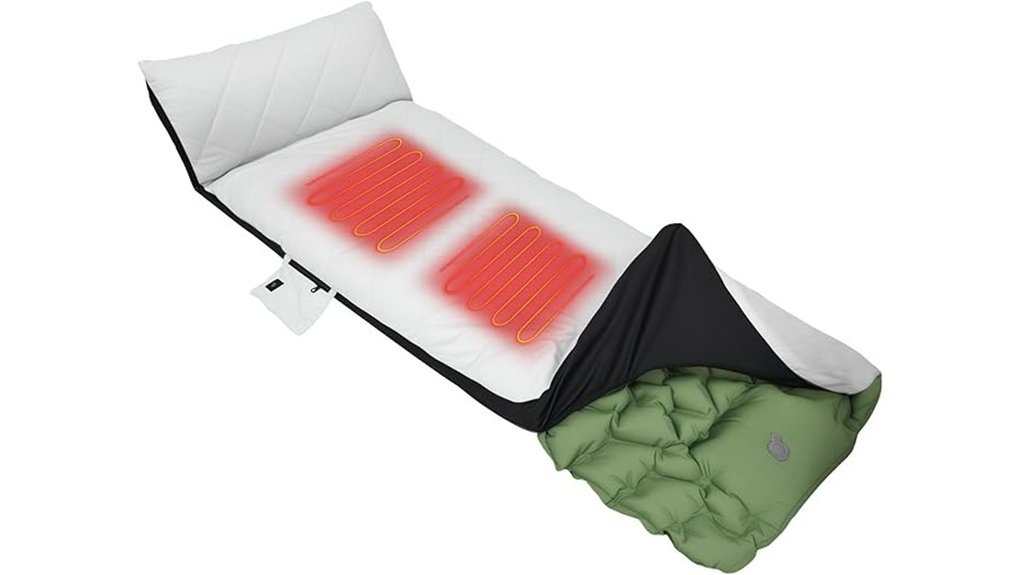
This heated sleeping-pad cover is the most direct option here for campers who want adjustable powered warmth beneath or around the body. It can add comfort to an existing single-person mattress without requiring another bulky blanket.
The listed size is 78 by 28 by 5 inches, intended for many single-person inflatable or memory-foam camping mattresses. The suede-style surface is designed to feel soft and breathable while also protecting the sleeping surface from dirt.
A USB power connection supplies three heat settings. The side pocket holds the switch away from your face during sleep and can also store the power bank that supplies electricity.
The main limitation is dependence on external power. Runtime and heat output depend on the connected power bank, so a heated cover should support a well-insulated sleep system rather than compensate for an inadequate pad or sleeping bag.
Keep the USB connection and power source dry, inspect the cable before use, and follow the supplied electrical and washing instructions. Do not use damaged powered bedding.
Best For: Campers with a compatible single sleeping pad who want adjustable USB-powered warmth without adding thick bedding.
Pros:
- Three adjustable heat settings provide controllable warmth.
- Soft, breathable surface adds comfort while covering the sleeping pad.
- Side pocket keeps the control and power bank organized.
Cons:
- Requires a separate USB power source.
- Designed mainly around single-person sleeping setups.
- Heat duration depends entirely on power-bank capacity and operating conditions.
HotHands Largest Lap Warmer, 16″ x 10
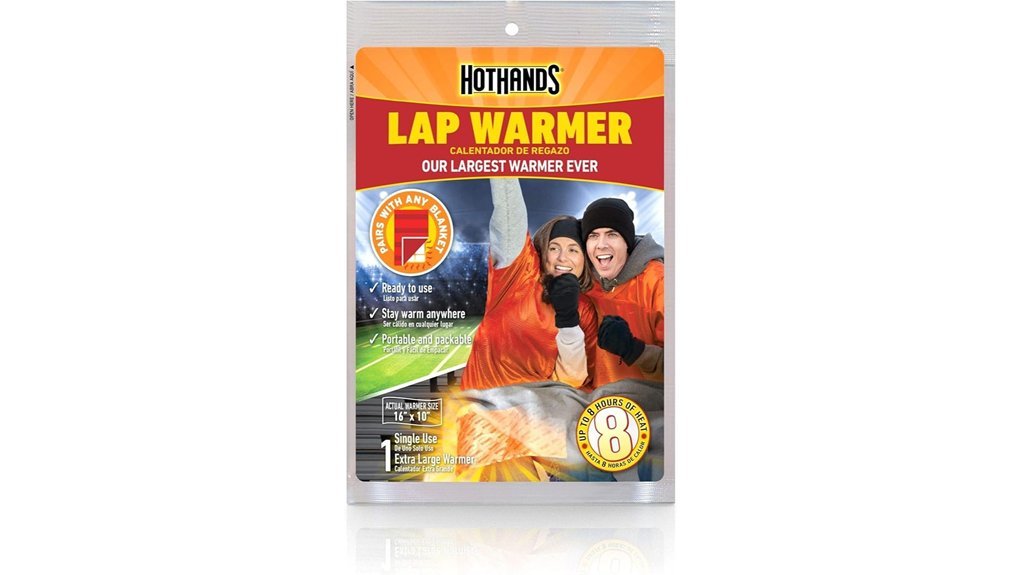
The HotHands Lap Warmer provides air-activated localized heat without batteries or charging. It is useful for outdoor sitting, spectating, camping activities, and other situations where you remain awake and can monitor the warmer.
The 16 by 10-inch warmer is single-use and can provide up to eight hours of heat. According to the official HotHands product information, it activates when exposed to air and is intended for outdoor activities including camping.
The product’s detailed instructions state that it normally warms within 15 to 30 minutes and may reach a maximum temperature of 163°F. Place it over clothing rather than against bare skin.
Do not use this lap warmer while sleeping or inside a sleeping bag. The manufacturer also instructs users not to place it directly on skin, apply pressure to it, or combine it with another heating device.
After use, the warmer is designed to be discarded with regular household garbage. HotHands also describes the product as suitable for air travel, although individual airport or airline requirements can still vary.
Best For: Awake campers and outdoor users who want portable, single-use heat across the lap or body area while following the manufacturer’s placement instructions.
Pros:
- Provides up to eight hours of air-activated heat.
- No battery, charger, or electrical connection is required.
- Large 16 by 10-inch format covers more area than a normal hand warmer.
Cons:
- Single-use rather than rechargeable.
- Can take 15 to 30 minutes to reach operating warmth.
- Must not be used directly on skin, while sleeping, or inside a sleeping bag.
How the Five Warmth Options Compare
These products solve different problems. Wearable blankets provide reusable insulation, Mylar is emergency backup, the heated cover adds powered warmth, and the HotHands warmer provides temporary localized heat while you are awake.
| Option | Main Role | Power Needed | Main Limitation |
|---|---|---|---|
| WildCall Hooded Blanket | Wearable supplemental insulation | No | Not a freezing-weather sleeping bag |
| QIO CHUANG Mylar | Emergency heat-loss protection | No | Thin and minimally breathable |
| KingCamp Blanket | Packable wearable warmth | No | Limited protection in severe cold |
| Heated Pad Cover | Adjustable powered warmth | USB power bank | Runtime depends on available power |
| HotHands Lap Warmer | Localized heat while awake | No | Single-use and not for sleeping |
Warning: Do not rely on a fuel-burning heater, lantern, or stove while sleeping in a tent. The U.S. Consumer Product Safety Commission warns about carbon monoxide poisoning from portable camping heaters, lanterns, and stoves in enclosed tents.
Factors to Consider When Choosing a Way to Stay Warm While Tent Camping
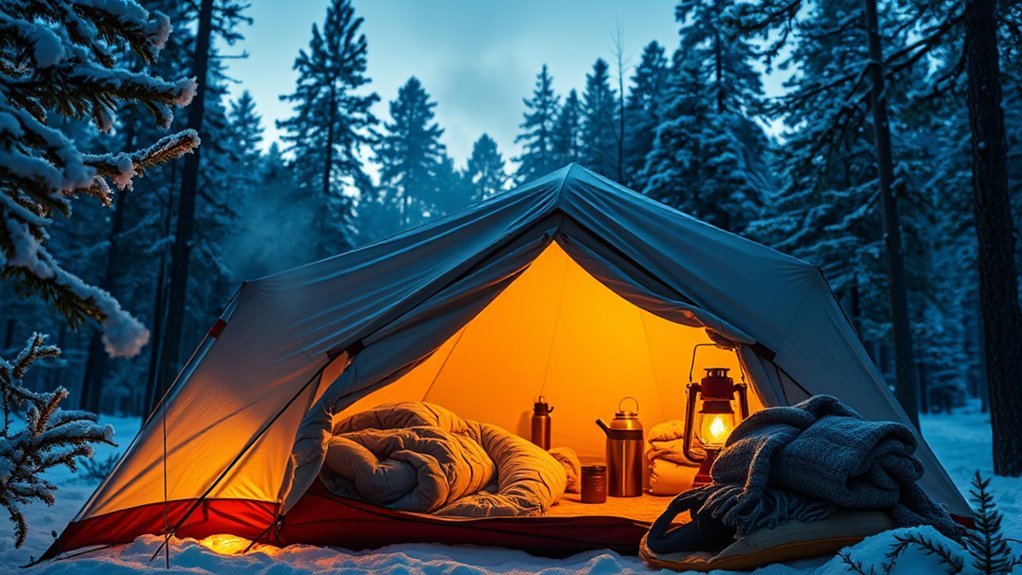
The best warmth setup combines ground insulation, top insulation, moisture control, and safe supplemental heat. A blanket or warmer can help, but it should fit into a complete sleep system rather than compensate for unsuitable gear.
Insulation Level
Insulation should match the expected overnight conditions. For your underside, sleeping-pad R-value is the useful measurement because it describes resistance to heat transfer into the ground.
ASTM F3340 standardized sleeping-pad R-value testing makes it easier to compare pads across manufacturers. A higher tested R-value means greater resistance to ground heat loss, and the R-values of stacked pads can be combined.
For insulation above you, look for a sleeping bag whose tested comfort or limit rating suits the forecast and your sleeping style. Blankets using Thinsulate, synthetic fiberfill, or similar insulation can add warmth, but fill weight in grams per square meter is not a universal warmth rating across different materials and constructions.
Weather Resistance
Wind and moisture can quickly undermine an otherwise warm sleep system. A weather-resistant shell helps stop cold wind and light moisture from reaching insulation, while dry bedding retains warmth more effectively.
Do not solve cold conditions by sealing every tent vent. Cascade Designs’ tent-condensation guidance recommends ventilation, keeping wet gear out of the sleeping area, and maintaining airflow between the inner tent and rainfly.
That airflow can feel counterintuitive on a cold night, but reducing moisture helps keep sleeping bags, clothing, and tent fabric drier.
Portability
Portable warmth gear should offer enough benefit to justify its weight and packed volume. Backpackers usually care more about compression and weight, while car campers can accept larger blankets, thicker pads, and bigger power banks.
Multi-use designs can save space. A blanket that doubles as a poncho, pillow, picnic layer, or backup cover may replace several separate items, while a Mylar sheet provides an exceptionally small emergency option.
Before buying, compare the packed dimensions with the space available in your backpack or vehicle. Also consider whether the item requires a separate battery, stuff sack, or other accessory.
Heating Source
Choose the heating source by separating insulation from active heat. Blankets and sleeping pads slow heat loss; USB bedding and chemical warmers add heat but introduce power, burn, or fire considerations.
For overnight sleeping, passive insulation is the foundation because it continues working without fuel or batteries. Powered bedding should be used only according to its instructions, with undamaged cables and dry electrical connections.
Fuel-burning devices carry a separate carbon monoxide hazard in enclosed shelters. Even non-combustion heaters can present fire or overheating risks around tent fabric and bedding.
Note: If shivering is joined by confusion, fumbling hands, slurred speech, memory problems, or unusual drowsiness, treat it as a possible hypothermia emergency and seek medical attention. The CDC lists these as warning signs of hypothermia.
Comfort Fit
Warm gear works better when it covers you without leaving large gaps or restricting movement. An oversized blanket offers flexible coverage, while adjustable closures and hoods help reduce drafts around the shoulders and neck.
Fit matters even more in a sleeping bag. Too much unused space requires your body to warm extra air, while an excessively tight setup can compress insulation and limit its ability to trap warm air.
Breathable fabrics also improve comfort by letting moisture escape. The goal is to remain warm without becoming sweaty or damp.
Material Durability
Outdoor warmth gear needs to tolerate repeated packing, rough tent floors, damp campsites, and contact with other equipment. Ripstop nylon, polyester shells, reinforced seams, and protected electrical connections can all improve practical durability.
Thin Mylar deserves different treatment from a woven blanket. It is lightweight and useful in emergencies, but sharp edges, rocks, branches, or repeated folding can damage it more easily.
Also inspect heated gear before each trip. Stop using powered bedding if the cable, connector, fabric, or heating element appears damaged.
Ease Of Care
Warmth gear is easier to live with when it can be cleaned and dried without special handling. Machine-washable blankets are convenient after muddy trips, while smooth shells can often be wiped or aired out between washes.
Always follow the specific care label because insulation, coatings, wiring, and heating elements may require different cleaning methods. Powered covers should never be washed or stored with a connected power bank unless the manufacturer’s instructions explicitly allow it.
Dry everything fully before long-term storage. Storing damp insulation encourages odor and can reduce performance on the next trip.
Multi-Use Value
Multi-use gear is valuable when every packed item needs to earn its space. Wearable blankets can serve as quilts, shawls, camp wraps, picnic layers, or temporary emergency covers without requiring several separate pieces.
Mylar blankets offer even broader emergency use because they can act as a wind barrier, rain cover, signal surface, or temporary shelter layer. However, versatility does not make every mode equally comfortable or suitable for a full night of sleep.
Prioritize the item’s main job first. A product that performs one critical task reliably is usually more valuable than a highly versatile item that does not provide enough insulation for the conditions.
Frequently Asked Questions
How Do I Prevent Condensation Inside My Tent?
Reduce tent condensation by keeping vents open, maintaining airflow under the rainfly, and limiting moisture inside the sleeping area. Store wet clothing or boots outside the sleeping compartment when practical, avoid blocking vents, and pitch the fly so it does not rest against the inner tent. You can reduce condensation substantially, but you cannot always eliminate it.
What Clothing Layers Work Best for Cold-Weather Camping?
Use three layers: a moisture-wicking base layer, an insulating middle layer, and a wind- or weather-resistant outer layer. National Park Service cold-weather guidance recommends wool or synthetic materials over cotton because cotton absorbs moisture and loses warmth when wet. Add dry socks, gloves, and a warm hat, and change out of damp daytime clothing before bed.
How Can I Keep Water From Freezing Overnight?
Use insulated bottles and keep them protected from the coldest outside air. REI’s winter-camping guidance recommends insulated bottle covers and notes that water filters may need protection from freezing. Fill your bottles before bed so you have usable water ready for the morning.
Are Battery-Powered Heaters Safe in a Tent?
Battery power avoids combustion fumes, but it does not make every heater safe for tent use. Heating elements, batteries, and nearby fabric can still create fire or overheating risks, so use only equipment whose instructions permit your intended setup and keep it clear of bedding. Do not assume a small portable heater is safe to leave operating while you sleep.
How Do I Insulate My Tent Floor Effectively?
Insulate your body from the ground with a sleeping pad whose R-value suits the conditions. A normal tent footprint mainly protects the floor from moisture and abrasion; it should not replace an insulated pad. In colder conditions, stacking a closed-cell foam pad with an insulated air pad can increase the total R-value beneath you.
What R-Value Should a Sleeping Pad Have for Cold Camping?
Choose a higher sleeping-pad R-value as ground temperatures become colder. Rather than relying on thickness alone, compare pads using ASTM F3340-tested R-values and consider your sleeping bag, clothing, forecast, and whether you normally sleep warm or cold. Two pads can also be stacked when more ground insulation is needed.
Can a Mylar Emergency Blanket Replace a Sleeping Bag?
No, a thin Mylar emergency blanket is not a direct replacement for an insulated sleeping bag and sleeping pad. It can reflect radiant body heat and block wind or moisture, but it provides little loft, cushioning, or ground insulation. Keep it as an emergency layer or supplement rather than your primary cold-weather sleep system.
Can I Use the HotHands Lap Warmer While Sleeping?
No, the HotHands Lap Warmer instructions say not to use it while sleeping or inside a sleeping bag. It should be placed over clothing while you are awake and able to monitor the heat. Remove it immediately if it feels excessively hot or causes skin irritation.
Sources
- 3M Thinsulate Insulation: Thinsulate construction and insulation characteristics.
- HotHands Lap Warmer: Official lap-warmer duration, activation, and intended uses.
- NEMO Equipment: ASTM F3340 sleeping-pad R-value testing and stacked-pad insulation.
- Cascade Designs: Tent condensation causes and ventilation guidance.
- U.S. National Park Service: Cold-weather clothing and layering guidance.
- U.S. Consumer Product Safety Commission: Carbon monoxide risks from camping heaters and equipment in enclosed spaces.
- Centers for Disease Control and Prevention: Hypothermia warning signs and response guidance.
- REI Winter Camping and Backpacking Basics: Winter hydration, bottle insulation, and freeze protection.