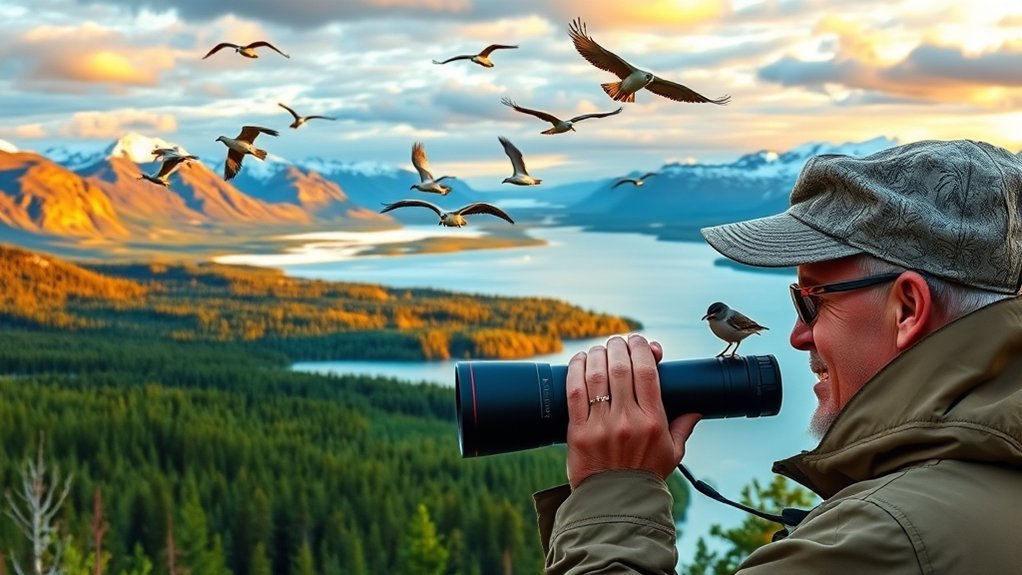
Alaska can reward you with unforgettable bird sightings, but the best month depends on the birds and habitats you want to see. Early May brings huge shorebird gatherings to the Copper River Delta, late May and June are best for migration around Nome, and June through July offer nesting seabirds, tundra birds, eagles, and forest songbirds.
Quick Answer
For the widest mix of species, plan Alaska birding from mid-May through June. Early May is best for the Copper River Delta shorebird migration, early June is prime around Nome, and June through July suits nesting seabirds near Seward, Homer, Kodiak, Prince William Sound, and the Pribilofs.
What’s in This Article
- The Best Time to Visit Alaska for Bird Watching
- Kenai Peninsula: Wetlands, Forests, and Seabirds
- Kodiak Island: Bald Eagles and Coastal Birds
- Nome: A Gateway to Migratory Birds
- Cordova and the Copper River Delta
- Seward: Coastal Birding Hotspot
- Denali: Tundra, Taiga, and Alpine Birds
- Anchorage: Urban Bird-Watching Opportunities
- Prince William Sound: Scenic Birding Adventures
- Pribilof Islands: Major Seabird Colonies
- Travel, Tide, and Access Planning
- What to Pack for an Alaska Bird-Watching Trip
- Tips for Successful Bird Watching in Alaska
- Frequently Asked Questions
Key Takeaways
- Choose early May for the Copper River Delta, late May through mid-June for Nome, and June or July for most seabird trips.
- Use Seward, Homer, Kodiak, Prince William Sound, or the Pribilofs for puffins, murres, kittiwakes, eagles, and other coastal birds.
- Check tides, road conditions, boat schedules, and local bird reports shortly before each outing.
- Pack waterproof layers, insect protection, steady optics, offline maps, and enough food and water for delays.
- Stay away from nests and colonies, follow closures, and use wildlife-safe behavior in bear and moose habitat.
The Best Time to Visit Alaska for Bird Watching
Alaska’s main birding season runs from spring breakup through early fall, but each part of that season offers something different. Migration usually provides the greatest variety, while summer gives you better access to nesting seabirds and tundra habitats.
| Period | Best For | Good Destinations | What to Expect |
|---|---|---|---|
| Late April to early May | Early migration and large shorebird gatherings | Cordova, Copper River Delta, Anchorage wetlands, Homer | Cold mornings, wet ground, changing ice conditions, and weather delays |
| Mid-May to mid-June | Peak migration, courtship, and newly arrived breeders | Nome, Kenai Peninsula, Anchorage, Denali, Kodiak | Long daylight, active birds, muddy roads, and rapidly changing weather |
| Mid-June to July | Nesting seabirds, tundra birds, forest songbirds, and family groups | Seward, Prince William Sound, Pribilofs, Kodiak, Denali | Good access and long days, but more insects and increased nest sensitivity |
| August to early October | Southbound shorebirds, cranes, waterfowl, and mixed flocks | Anchorage, Kenai Peninsula, Nome, Interior wetlands | Shorter days, cooler temperatures, and fewer nesting seabirds |
| Late fall through winter | Resident birds, sea ducks, ptarmigan, ravens, and occasional owls | Kodiak, Anchorage, coastal harbors, Interior forests | Limited daylight, snow, severe weather, and fewer available tours |
Spring migration begins at different times across the state. Coastal Southcentral Alaska can become active in late April and early May, while breakup arrives later around Nome. The Alaska Department of Fish and Game identifies approximately May 15 through June 15 as a particularly productive period around Nome.
Late June through July works well if your priority is nesting puffins, murres, kittiwakes, terns, and other seabirds. Young birds may also become visible, but nesting adults are especially sensitive to disturbance during this period.
Tens of millions of seabirds nest along Alaska’s coast each summer, supported by productive marine waters, islands, and protected cliffs.
The scale of Alaska’s seabird season is documented by the U.S. Fish and Wildlife Service. Sightings still vary from day to day because wind, fog, food movements, tides, and sea conditions affect where birds gather.
Kenai Peninsula: Wetlands, Forests, and Seabirds
The Kenai Peninsula stands out as one of Alaska’s most varied bird-watching regions. Coastal wetlands, spruce forests, rivers, beaches, bays, and alpine areas support shorebirds, waterfowl, forest songbirds, raptors, and seabirds.
Useful birding areas include Kachemak Bay, Homer Spit, the Kenai River flats, Anchor Point, and coastal areas around Seward. Depending on the season and exact location, you may find loons, gulls, shorebirds, bald eagles, murrelets, puffins, and many songbirds.
May is productive for shorebird migration around Homer and Kachemak Bay. June and July are better for many boat-based seabird trips, while late August and September can bring southbound shorebirds and waterfowl.
Pro Tip: Do not assume that the lowest tide always gives the closest shorebird views. Low tide opens more feeding habitat and may spread birds far across the flats. Check local guidance and try arriving before an incoming or high tide pushes feeding birds toward accessible shorelines.
Bring binoculars for moving birds and a spotting scope for mudflats, bays, and offshore rocks. Never walk onto unfamiliar tidal flats without understanding the tide, channels, and local access rules.
Kodiak Island: Bald Eagles and Coastal Birds
Kodiak Island gives you excellent chances to see bald eagles near harbors, shorelines, rivers, salmon streams, and forest edges. Eagles commonly perch in spruce trees, circle over beaches, and search for fish and other food along the coast.
Spring and summer bring nesting activity and visiting seabirds. Kodiak also has strong winter birding. The Kodiak National Wildlife Refuge reports that the archipelago supports important winter habitat for sea ducks and other aquatic migratory birds.
Use a long lens, binoculars, or a scope instead of approaching eagle nests. In Alaska, the U.S. Fish and Wildlife Service treats March 1 through August 31 as the bald eagle nesting season for disturbance-planning purposes.
Warning: Never move closer after an eagle begins calling repeatedly, changing posture, leaving a perch, or circling because of your presence. Back away if a bird reacts to you, and follow all refuge, harbor, and landowner restrictions.
Nome: A Gateway to Migratory Birds
Nome becomes one of Alaska’s most exciting birding areas during late spring. Its road system gives visitors unusual access to tundra, coastal lagoons, wetlands, river mouths, willow scrub, rocky uplands, and Bering Sea shoreline.
You may find Arctic Terns, Pacific Golden-Plovers, red-throated loons, long-tailed ducks, jaegers, buntings, and many shorebirds. Changing weather can also bring rare migrants from Asia, but these sightings are unpredictable and should be treated as a bonus rather than an expectation.
The strongest period often runs from late May into the first half of June. Breakup, remaining snow, flooding, and washouts can affect gravel-road access, so check local conditions each day.
Reserve lodging and a suitable rental vehicle early. Birding groups often fill rooms and vehicles during the short peak season. Carry a full-size spare tire if the rental company permits travel on the roads you plan to use, and confirm all road restrictions in writing.
Note: Nome’s weather can change from calm sunshine to cold wind, fog, rain, or wet snow within the same outing. Carry extra layers, food, water, and offline navigation even when you plan to remain near the road system.
Cordova and the Copper River Delta
The Copper River Delta near Cordova is one of Alaska’s most important spring birding destinations. The U.S. Fish and Wildlife Service estimates that roughly five to eight million shorebirds use the delta during spring migration.
Early May is the key period. Large groups of Western Sandpipers, Dunlin, dowitchers, plovers, and other shorebirds stop to rest and feed before continuing toward northern breeding grounds. Waterfowl, eagles, raptors, and newly arriving songbirds add variety.
Birding locations around Cordova include Hartney Bay, Alaganik Slough, the Copper River Highway corridor, forest edges, and wetlands near town. Tide timing strongly affects where shorebirds gather, so use current local advice rather than relying on a general high-tide or low-tide rule.
Cordova is not connected to Alaska’s main road system. Most visitors arrive by air, while ferry availability can vary. Book transport and lodging well ahead of the early-May migration period.
Seward: Coastal Birding Hotspot
Seward offers easy access to coastal birding along Resurrection Bay and nearby Kenai Fjords waters. Forests, harbor water, beaches, cliffs, islands, and open sea create several birding options within a compact area.
Use these locations and methods to improve your chances:
- Harbor viewing: Scan the Seward Small Boat Harbor for gulls, ducks, cormorants, murrelets, and other coastal birds.
- Wildlife cruises: Take a boat trip for better chances of seeing puffins, murres, kittiwakes, and birds associated with offshore cliffs and islands.
- Shoreline stops: Watch beaches and rocky edges for shorebirds, bald eagles, gulls, and diving birds.
- Forest trails: Search nearby wooded areas for chickadees, thrushes, warblers, woodpeckers, and other forest birds.
According to the National Park Service, tufted puffins generally return to Kenai Fjords nesting areas around mid-May, with horned puffins following soon afterward. June and July are normally stronger than early spring for puffin-focused cruises.
Fog, rain, wind, and rough water can affect visibility or cancel trips. Leave room in your itinerary to move a boat outing to another day.
Denali National Park: Tundra, Taiga, and Alpine Birds
Denali National Park gives you a different birding experience from Alaska’s coast. You can search boreal forest, willow scrub, open tundra, river bars, rocky slopes, and alpine ridges for birds adapted to cold, wind, and long seasonal changes.
Move slowly and listen for calls. Many tundra and alpine birds blend into rocks, brush, gravel, and old snowfields. Scanning one area for several minutes often works better than walking quickly from stop to stop.
Birds to Watch
- Golden Eagle: Scan cliffs, ridgelines, and open tundra for soaring or hunting birds.
- Willow Ptarmigan: Look in wet tundra and willow scrub, especially around open valleys.
- White-tailed Ptarmigan: Search higher rocky areas and slopes near lingering snow patches.
- American Pipit: Watch open alpine ground for small birds walking and feeding.
- Canada Jay: Check boreal forest and campground edges for this year-round resident formerly called the Gray Jay.
- Redpoll: Look for small, active finch flocks around seed-producing shrubs and trees. Common and Hoary Redpoll were combined into one species in 2024.
Viewing Locations and 2026 Access
Accessible birding areas can include the park entrance, Triple Lakes Trail, Horseshoe Lake, Savage River, roadside tundra, river corridors, and authorized bus stops along the park road. Private-vehicle access is limited on much of the road during the main visitor season.
Note: As of July 23, 2026, the Denali Park Road remains closed at Mile 43 because of the Pretty Rocks landslide. Check the National Park Service current-conditions page before booking a bus or planning access beyond the park entrance area.
Early morning can provide active birds and calmer wind, but Alaska’s long summer daylight means productive observation can continue well into the evening. Keep enough distance from all wildlife and use designated pullouts without blocking traffic.
Seasonal Patterns
Bird activity rises as snow retreats and insects become available. Migratory birds arrive during spring, nest through the short summer, and depart before severe autumn weather.
- Spring: Listen for ptarmigan calls and watch for returning raptors and songbirds.
- Early summer: Search taiga and willow habitat for nesting songbirds while scanning cliffs for eagles.
- Late summer: Watch for family groups and early southbound movement.
- Winter: Expect fewer species, but look for ptarmigan, ravens, Canada Jays, grosbeaks, and occasional northern raptors.
Anchorage: Urban Bird-Watching Opportunities
Anchorage gives you productive birding without requiring a long drive or boat trip. Wetlands, coastal trails, lagoons, lakes, parks, and wooded green spaces attract resident and migratory birds.
This makes Anchorage a useful base for new birders, short visits, weather backup days, and travelers who want to bird before or after a flight.
Parks, Wetlands, and Green Spaces
- Potter Marsh: Use the boardwalk and viewing areas for waterfowl, shorebirds, gulls, terns, eagles, and wetland songbirds.
- Kincaid Park: Search forest edges, coastal viewpoints, and open areas for songbirds, raptors, and shoreline movement.
- Westchester Lagoon: Watch for ducks, geese, gulls, grebes, and migrating waterbirds.
- Russian Jack Springs Park: Look for chickadees, woodpeckers, ravens, thrushes, and other forest birds.
- Earthquake Park: Scan Cook Inlet and coastal habitat for gulls, eagles, waterfowl, and seasonal movement.
- Campbell Tract: Walk forest trails for boreal species while remaining alert for moose and bears.
Birds You May See
| Bird | Notable Features | Where to Look |
|---|---|---|
| Common Raven | Large black bird with a heavy bill, wedge-shaped tail, and varied calls | Parks, coastlines, parking areas, and forest edges |
| American Robin | Orange breast, gray-brown back, and clear musical song | Lawns, open woodland, trails, and neighborhood parks |
| Black-capped Chickadee | Small bird with a black cap, pale cheeks, and bold call | Deciduous woods, mixed forest, and brushy park edges |
| Downy Woodpecker | Small woodpecker with a short bill and white-spotted wings | Wooded parks, forest edges, and mature neighborhood trees |
| Northern Flicker | Large brown woodpecker often seen feeding on the ground | Open woods, lawns, trail edges, and parks |
| Bald Eagle | Large raptor; adults have a white head and tail | Cook Inlet, wetlands, lagoons, rivers, and tall shoreline trees |
Keep your binoculars ready near water, brush, and transitions between forest and open habitat. Birds often move between these areas while feeding.
Seasonal Birding Calendar
- April and May: Watch for returning waterfowl, shorebirds, raptors, and songbirds as wetlands open.
- June and July: Look for breeding birds and family groups while avoiding nests and territorial adults.
- August through October: Scan coastal wetlands and lagoons for southbound migrants.
- Winter: Look for ravens, chickadees, woodpeckers, waxwings, grosbeaks, and other hardy residents or seasonal visitors.
Local nature centers, bird clubs, and public agencies may offer walks, festivals, talks, and seasonal count events. Check current schedules rather than relying on past-year event dates.
Prince William Sound: Scenic Birding Adventures
Prince William Sound combines deep fjords, sheltered bays, tidewater glaciers, islands, forests, and productive marine water. This mix supports seabirds, shorebirds, waterfowl, raptors, and forest birds.
During the warmer months, you may see puffins, murres, kittiwakes, gulls, cormorants, murrelets, and Arctic Terns. Bald eagles also patrol shorelines and forest edges throughout much of the region.
Boat-based birding often gives you the best access because many cliffs, islands, and remote shorelines cannot be reached by road. Departures commonly operate from communities such as Whittier, Valdez, and Cordova, but routes and schedules vary.
Warning: Never ask a boat operator to approach a nesting colony more closely. A sudden flush can expose eggs or chicks to cold, predators, or falls from crowded ledges.
Pribilof Islands: Major Seabird Colonies
The Pribilof Islands in the Bering Sea offer some of Alaska’s most dramatic seabird viewing. St. Paul and St. George support nesting murres, auklets, puffins, fulmars, cormorants, and kittiwakes.
St. George is especially important. The U.S. Fish and Wildlife Service reports that its cliffs host more than two million birds and one of the largest seabird colonies in the Northern Hemisphere. The Pribilofs are also a key destination for the range-restricted Red-legged Kittiwake.
Summer is the main colony-viewing season. Spring and fall can also produce migrants and occasional birds arriving from Asia. Conditions may include dense fog, wind, rain, cold temperatures, and flight delays.
Access requires more planning than a road-system destination. Arrange flights, lodging, local transportation, and guided viewing well in advance, and build spare time into both ends of the trip.
Travel, Tide, and Access Planning
Distances between Alaska birding regions are large. Nome, Kodiak, Cordova, and the Pribilofs require flights or marine transport from the main road system, while Seward, Homer, Anchorage, and Denali can be combined more easily by road and rail.
- Book peak-season services early: Flights, rental vehicles, lodging, wildlife cruises, and guides can sell out during migration and summer.
- Confirm rental restrictions: Some companies prohibit travel on specific gravel roads or require additional insurance.
- Check tides by location: The ideal stage varies by mudflat, lagoon, beach, and viewpoint.
- Watch marine forecasts: Fog, wind, and rough water may delay or cancel boat trips.
- Check current road conditions: Snow, flooding, washouts, landslides, and construction can change access.
- Save information offline: Download maps, booking details, refuge rules, emergency contacts, and bird resources before leaving reliable service.
- Carry a flexible itinerary: Give important boat trips or remote flights at least one backup day when possible.
What to Pack for an Alaska Bird-Watching Trip
The right equipment can make an Alaska birding trip safer, warmer, and more productive. Pack for rain, wind, mud, insects, and colder temperatures than the forecast may suggest.
- Waterproof binoculars: An 8×42 model is a versatile choice for most birders because it balances brightness, field of view, and hand stability. A 10x model can help with distant birds but is harder to hold steady.
- Spotting scope and tripod: Bring them for mudflats, offshore birds, open tundra, and distant ridgelines.
- Layered clothing: Pack a moisture-managing base layer, warm midlayer, waterproof shell, gloves, and a warm hat.
- Waterproof footwear: Wear boots that can handle mud, wet vegetation, rain, and rocky shorelines.
- Insect protection: Carry repellent and consider a head net for tundra, wetlands, and calm summer days.
- Field guide or identification app: Download Alaska birds to Merlin’s offline content before departure.
- Offline maps: Save road routes, trail maps, tide information, and meeting points before losing service.
- Notebook or checklist: Record the date, location, habitat, number of birds, and observed behavior.
- Dry bags and lens cloths: Protect electronics and clean spray or rain from optics without scratching the glass.
- Food and water: Carry more than you expect to need when traveling on remote roads or boats.
- Wildlife deterrent where appropriate: Learn local bear-safety guidance and keep any deterrent immediately accessible rather than buried in a pack.
Tips for Successful Bird Watching in Alaska
Bird watching in Alaska becomes easier when you slow down, match your destination to the season, and leave room for weather changes. A simple regional plan usually works better than trying to cover several distant areas in one short trip.
- Start early when practical: Many songbirds sing and feed actively during quieter morning conditions.
- Revisit good habitat: Weather, tides, and bird movement can make the same location look completely different several hours later.
- Use optics instead of approaching: Binoculars, scopes, and long camera lenses reduce disturbance.
- Stay quiet near birds: Avoid playback around nests or territorial birds, and never surround a bird with a group.
- Match birds to habitat: Search shorelines, wetlands, tundra, forests, cliffs, rivers, and open water separately.
- Use recent reports carefully: A report shows where a bird was observed, not where it will remain.
- Watch for alarm behavior: Repeated calling, distraction displays, circling, diving, or a bird refusing to return may mean you are too close.
- Respect closures and private land: Do not cross barriers, enter colonies, or assume every road or shoreline is public.
Give yourself extra time at each stop. Many memorable sightings happen after you remain still and allow feeding or calling birds to resume normal behavior.
Note: Alaska’s daylight changes sharply by season and latitude. Check local sunrise, sunset, and civil-twilight times instead of assuming the schedule will match Anchorage or another part of the state.
Wildlife Safety While Birding
Quiet birding can bring you into bear or moose habitat without much warning. Stay alert, avoid wearing earbuds, and make your presence known when walking through thick brush, beside noisy streams, or around blind corners.
The National Park Service Alaska wildlife-safety guidance advises visitors not to approach or follow wildlife. It recommends staying at least 300 yards from bears and at least 25 yards from other animals, dens, and nests in national park areas unless a site requires more distance.
Warning: Never move closer to a bear for a photograph, and never run during a bear encounter. Learn how to respond before your trip, keep food secured, and follow the instructions of rangers, refuge staff, and trained guides.
Frequently Asked Questions
What is the best month for bird watching in Alaska?
June is the best all-around month for many visitors because migration is still active in northern areas, breeding birds have returned, daylight is long, and most seasonal transport is operating. Choose early May instead for the Copper River Delta shorebird migration.
What types of binoculars are best for bird watching in Alaska?
Choose waterproof binoculars with a comfortable grip and bright optics. An 8×42 pair works well for most birders because it provides a useful balance of magnification, brightness, field of view, and hand stability.
Do I need a spotting scope?
A scope is not required for forest trails or close harbor birds, but it can greatly improve viewing on mudflats, tundra, offshore rocks, broad valleys, and distant seabird colonies. Use a stable tripod and avoid blocking public walkways.
Are bird-watching tours available in Alaska?
Yes. Coastal tours often focus on seabirds and marine wildlife, while inland guides may visit tundra, forest, river, and wetland habitats. Book early for Nome, the Pribilofs, Kodiak, Cordova, Seward, Homer, and Prince William Sound.
What clothing is recommended for bird watching in Alaska?
Wear layers, a waterproof and wind-resistant jacket, warm socks, and sturdy waterproof footwear. Pack gloves and a hat even in summer, and add insect repellent or a head net for wetlands, tundra, and calm days.
Can I spot rare birds during my Alaska visit?
Yes, especially along western migration routes near Nome, the Pribilofs, and the Aleutians. Rare sightings depend on winds, storms, season, habitat, and luck, so use current reports without treating any individual bird as guaranteed.
Which bird-watching apps work well in Alaska?
Merlin Bird ID and eBird are useful for identification, checklists, hotspots, and recent reports. Download Merlin’s Alaska content, save maps, and review recent eBird observations before entering remote areas with weak or unavailable service.
How close can I get to a nest or seabird colony?
There is no single safe distance for every species and location. Obey posted buffers and guide instructions, use optics, and back away immediately if a bird changes behavior because of you. Never enter a colony or move closer to obtain a photograph.
Alaska bird watching works best when you match your timing to migration, nesting activity, habitat, and access. Start with one or two compatible regions rather than rushing between distant destinations. Pack for wet and windy weather, prepare for limited service, keep a safe distance from wildlife, and give each stop enough time to reveal its birds.
Sources
- Alaska Department of Fish and Game: Top Birding Hotspots — regional destinations, migration windows, and habitat information
- U.S. Fish and Wildlife Service: Shorebirds of Alaska — shorebird populations and Copper River Delta migration
- U.S. Fish and Wildlife Service: Seabirds of Alaska — coastal colonies and statewide seabird abundance
- National Park Service: Tufted and Horned Puffins — Kenai Fjords puffin timing and nesting areas
- National Park Service: Denali Current Conditions — current park-road access and the Pretty Rocks closure
- National Park Service: Alaska Wildlife Safety — wildlife distances and bear-safety guidance