
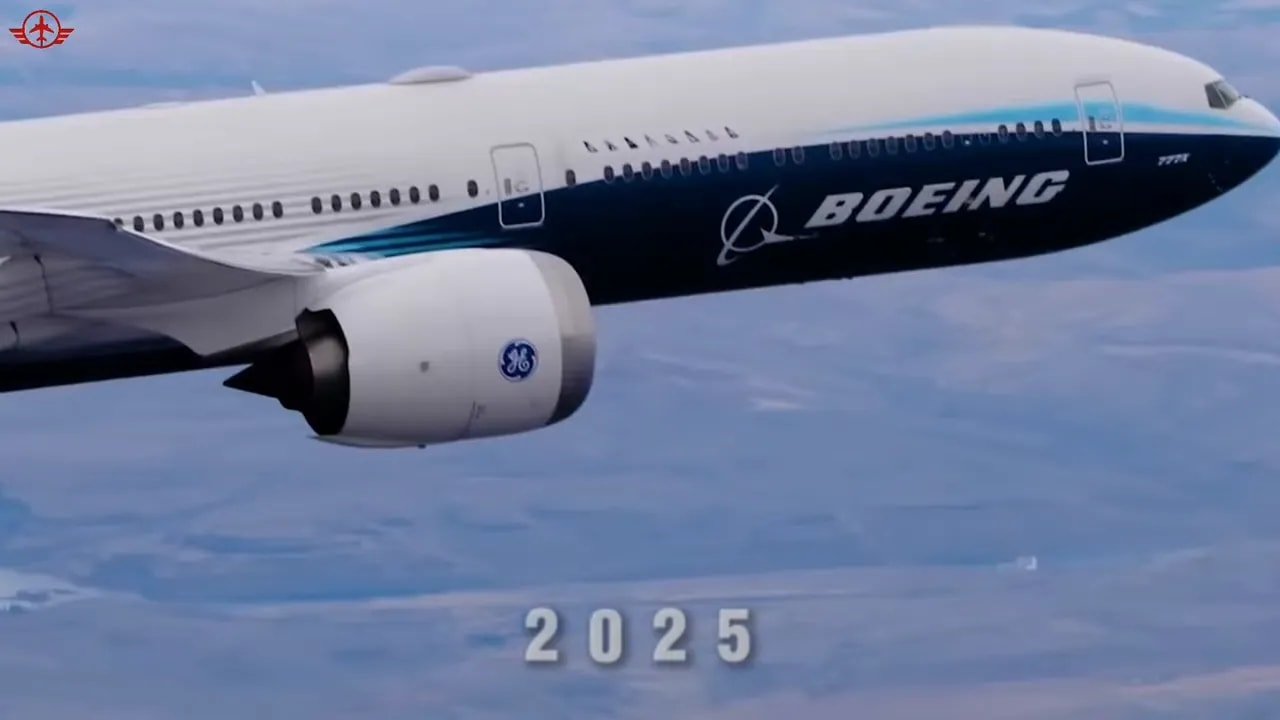
The Boeing 777X delays have turned what was meant to be the next step in the successful 777 family into one of aviation’s longest-running certification stories. The aircraft combines a new composite wing, folding wingtips, and the huge GE9X engine, but its path to airline service has included structural findings, engine durability work, flight-test interruptions, and much tighter regulatory scrutiny. The key question is not whether one test finding proves the jet unsafe, but what actually happened and what still has to be completed.
Quick Answer
The Boeing 777X is delayed because several issues accumulated: a 2019 structural test failure, early GE9X durability work, a 2024 thrust-link failure, tighter post-MAX certification scrutiny, and a 2026 GE9X mid-seal certification issue tied to ETOPS. Boeing still expects the first 777-9 delivery in 2027.
Last checked: September 30, 2026. Dates and figures were verified against official sources.
Key Takeaways
- Boeing originally targeted the first 777X delivery for 2020; its current expectation is 2027.
- The widely reported 2019 structural event occurred during an extreme static-load test, not a normal repeated cabin-pressure cycle.
- The GE9X has passed FAA engine certification, but later durability findings have required additional work.
- The FAA has a Technical Advisory Board in place for the 777X and now applies certification reforms introduced after the 737 MAX crisis.
- None of these findings, by itself, proves the 777X is unsafe for airline service; certification exists to resolve such findings before passengers are carried.
✈️ What the 777X was supposed to be
The 777X was designed to keep the strengths of Boeing’s established 777 family while making a major jump in wing and engine technology. It is more than a simple stretch or refresh of the older 777.
The original Boeing 777 entered airline service in the 1990s and became a major long-haul twin-engine aircraft. Later, newer widebodies such as the Airbus A350 increased competitive pressure by offering newer aerodynamics, structures, engines, and cabin technology.
Boeing formally launched the 777X in November 2013. In Boeing’s original 777X launch announcement, the company highlighted its new composite wing, folding raked wingtips, and GE9X engines. At that time, Boeing targeted the first delivery for 2020.
- The 777 fuselage family provides the basic platform.
- A much larger composite wing improves aerodynamic efficiency.
- Folding wingtips reduce the wingspan while the aircraft is on the ground.
- The GE9X was developed specifically to power the 777X family.
- The design aims to combine high capacity with lower fuel use than the aircraft it replaces.
The folding wingtip is especially important. The 777X can use a very large wing in flight, then fold the tips after landing so its ground footprint fits more easily within existing airport infrastructure.
The GE9X is equally ambitious. Its front fan is about 134 inches across, making it the largest fan developed for a commercial aircraft engine. That combination of a very large wing and a new-generation engine is central to the 777X’s promised efficiency, but it also means the certification program has had to validate substantial new technology.
🧱 What actually happened in the 2019 777X structural test?
The 2019 structural event was serious, but it is often described incorrectly. It did not happen during a routine repeated cabin-pressure durability test in which a cargo door simply blew out.
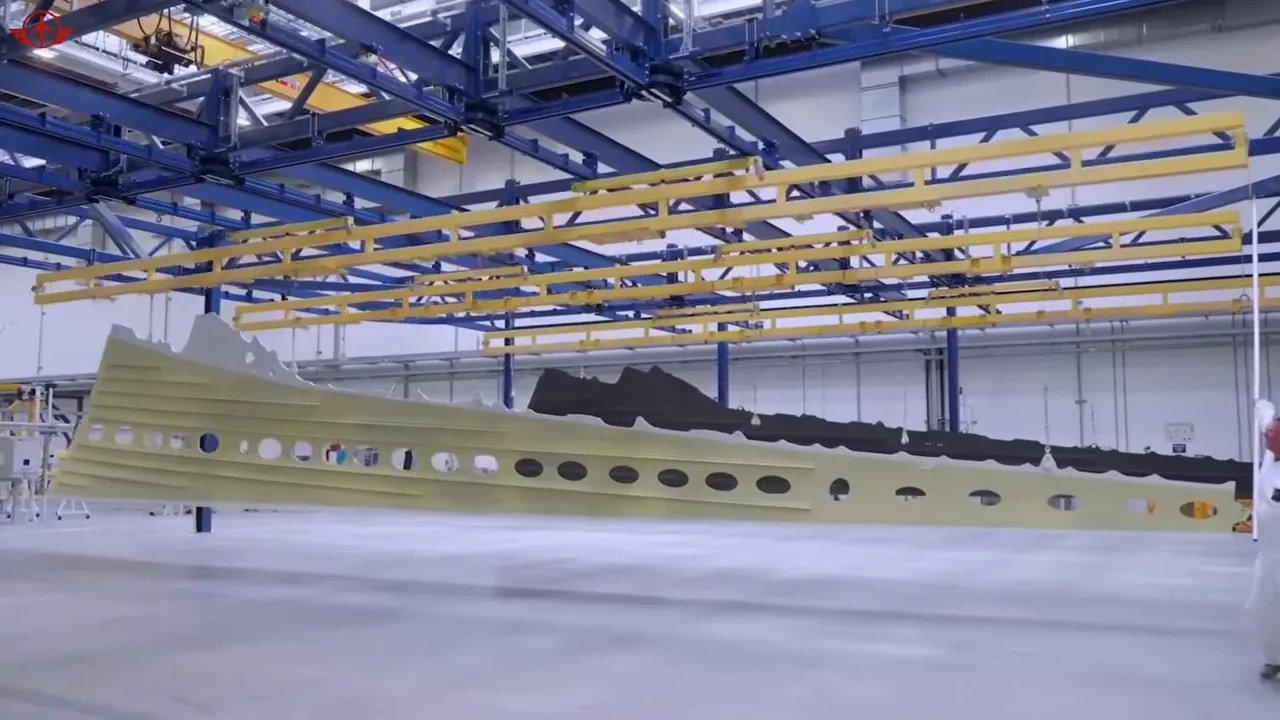
On September 5, 2019, Boeing was conducting final load testing on a dedicated 777X static test aircraft. In Boeing’s statement about the 777X load test, the company said the issue occurred at approximately 99% of the final test loads and involved depressurization of the aft fuselage.
A static-load test deliberately pushes an aircraft structure far beyond the forces expected in ordinary airline operation. Engineers load the wings and fuselage to demonstrate that the structure can withstand the required extreme conditions.
That distinction matters. The event was still a structural test failure that required investigation and design work, but it did not mean a passenger aircraft failed under normal operating loads.
Testing is designed to expose weaknesses before an aircraft enters service. Finding a problem on a ground-test airframe gives engineers a chance to understand the failure, change the design where necessary, and demonstrate compliance before certification.
At the same time, an issue appearing so close to the intended final test load is not meaningless. It becomes part of the evidence regulators must review before deciding whether the aircraft meets structural requirements.
🛂 Why is the FAA scrutinizing the 777X more closely?
The 777X entered its certification campaign during a major change in the relationship between Boeing and the FAA. After the two 737 MAX crashes and the investigations that followed, U.S. aircraft certification oversight became more intensive.
The FAA says its reforms include delegating less responsibility to manufacturers, increasing oversight, reviewing system interactions in greater detail, and using independent safety experts more widely. The agency’s aircraft certification reform guidance specifically says a Technical Advisory Board, or TAB, is in place for the Boeing 777X certification review.
A TAB brings specialists who are independent of the certification project into the review. They can examine new technology, major safety issues, whether appropriate FAA specialists were involved, and whether the certification team adequately addressed significant concerns.
This does not mean the FAA has already concluded that the 777X is unsafe. It means Boeing has to supply evidence that satisfies a certification process shaped by lessons from the MAX investigations and later regulatory reforms.
That difference is important. More scrutiny can extend a schedule, but the purpose of the extra scrutiny is to identify and resolve risk before the aircraft enters airline service.
⚙️ What problems has the GE9X engine had?
The GE9X has achieved its basic FAA engine certification, but its development has not been free of durability findings. Two different issues are especially relevant to the 777X timeline: compressor-stator wear during development and the more recent mid-seal durability issue.
Premature compressor-stator wear delayed testing in 2019
In June 2019, GE disclosed unexpected premature wear in a compressor stator in the GE9X. The problem required redesign and additional testing and contributed to a delay in the 777X’s first-flight schedule, according to a Reuters report on the GE9X compressor-stator issue.
This is different from the claim that GE found low-pressure turbine blade cracking in 2020. The documented development problem that affected the 777X schedule in 2019 involved premature wear in a stationary compressor component.
The GE9X received FAA certification in 2020
GE9X engine certification itself was an important milestone. GE Aerospace announced FAA certification of the GE9X on September 28, 2020.
GE said nine test engines were involved in the Part 33 certification program. The test engines had accumulated just under 5,000 hours and 8,000 cycles by that point.
Engine certification, however, is not the same thing as completing certification of the entire 777X aircraft. The airplane, propulsion installation, systems, operating limitations, and extended-operation requirements still have their own certification work.
A new mid-seal durability issue emerged before service
In 2026, GE publicly discussed a durability issue involving the GE9X mid-seal, a component connecting the front and rear sections of the engine. GE said testing showed the original seal was not as durable as expected and developed a redesigned part.
The redesigned component began going into newly produced engines in 2026. It also entered a separate FAA certification process.
As of September 2026, GE said the existing seal could still be used for certification work, including approvals required before Boeing starts ETOPS testing. That distinction matters because a durability finding can require corrective work without automatically invalidating every earlier certification result.
🔩 The 2024 thrust-link finding caused another flight-test interruption
The engine itself has not been the only propulsion-related issue. In August 2024, Boeing paused 777X flight testing after finding a failure in a key part of the engine-mounting structure on a test aircraft.
Reuters reported the 777X test-fleet grounding after inspection revealed the failure. The affected component was described as part of the structure connecting the engine to the aircraft.
This was another pre-service discovery, not an accident involving an airline passenger flight. Even so, it added inspection, engineering, and validation work to an already delayed program.
The pattern matters more than any single event. The 777X program has had to absorb structural findings, propulsion-system durability work, interrupted flight testing, and added certification scrutiny over several years.
🤝 What do airline orders actually tell us about the 777X?
Airline orders show that the 777X still has substantial commercial backing. They do not tell us what individual airline engineering teams privately think about every certification finding.
As of June 30, 2026, Boeing’s SEC filing reported 591 undelivered 777X aircraft under firm orders. That is a much more useful measure than assigning an unverified dollar value to the program’s order book.
The same filing also warns that delays to entry into service can affect backlog, customer negotiations, delivery timing, and program economics. In other words, a large order book and a difficult development program can exist at the same time.
Public airline confidence should also be interpreted carefully. Airlines have commercial reasons to maintain working relationships with manufacturers and to avoid speculating publicly about an aircraft that is still in certification.
But the reverse assumption is also unsupported. A calm public statement does not prove an airline is hiding a safety concern. Without documentary evidence, claims about what airline engineers are secretly saying remain speculation.

The useful evidence is public and measurable: orders, contractual changes, certification progress, technical findings, delivery schedules, and eventually the aircraft’s operational record.
📅 Why have the Boeing 777X delays stretched from 2020 to 2027?
The delay is no longer a small schedule slip. Boeing originally targeted first delivery in 2020, while its current planning calls for first 777-9 delivery in 2027.
No single event explains that seven-year gap. The schedule has absorbed engine development issues, the 2019 static-test finding, pandemic disruption, post-MAX certification changes, additional flight-test discoveries, the 2024 thrust-link problem, and the continuing GE9X durability work.
| Period | Key 777X development | Why it mattered |
|---|---|---|
| 2013 | Boeing launched the 777X and targeted first delivery for 2020. | This established the original schedule. |
| 2019 | GE9X compressor-stator wear required redesign work, and the 777X static-test aircraft suffered an aft-fuselage depressurization near final test load. | Both findings added engineering and test work before service. |
| 2020 | The GE9X received FAA engine certification. | It cleared a major propulsion milestone, but aircraft certification still remained. |
| 2024 | A failed thrust-link component prompted a pause in 777X flight testing. | Boeing needed inspections and engineering work before continuing the test campaign. |
| 2026 | GE advanced a redesigned GE9X mid-seal while 777X certification work continued. | The engine durability issue remained one of the items connected to later certification work. |
| 2027 | Boeing’s current expected first-delivery year for the 777-9. | The final timing still depends on completing certification and regulator approval. |
The pandemic unquestionably affected aerospace testing, travel, supply chains, and staffing. But it cannot explain the entire delay because important technical problems had already appeared in 2019.
Likewise, tougher FAA oversight is part of the story, but calling regulation the sole cause would miss the engineering findings that required additional work. Certification became harder at the same time that Boeing and its suppliers were working through real technical issues.
The latest engine issue also needs context. In September 2026, GE said it had redesigned the GE9X mid-seal and was confident the issue would not delay the 777X’s planned entry into service in 2027. Reuters reported that the redesigned seal was undergoing FAA certification while the existing seal could support certification work already underway.
That is encouraging for the schedule, but it is still a plan rather than a completed aircraft certification. Boeing’s own SEC filing says the ultimate timing will be determined by regulators.
🏭 How does Boeing’s wider safety history affect the 777X story?
The 777X cannot be separated completely from the regulatory changes that followed the 737 MAX crisis. Those events changed how Boeing’s certification work is reviewed and how much independent scrutiny major new programs receive.
It is reasonable to examine Boeing’s processes more closely because the FAA itself changed its oversight system after the MAX investigations. It is not reasonable, however, to assume that the 777X contains an equivalent design flaw simply because both aircraft were developed by Boeing.
The evidence should stay program-specific. For the 777X, that means looking at its static-test finding, GE9X development issues, flight-test discoveries, FAA review, corrective actions, and remaining certification tasks.
This distinction prevents two opposite mistakes. One is treating every development problem as proof of an unsafe airplane. The other is dismissing significant findings simply because they happened during testing.
A certification program is supposed to identify hazards, force corrective work, and require evidence that the final design complies with applicable standards. The quality of that process matters more than whether development was perfectly smooth.
Note: For operational or maintenance safety decisions, rely on current FAA requirements, approved aircraft documentation, airline procedures, and qualified aviation professionals rather than commentary about an aircraft still in certification.
🧭 Is the Boeing 777X unsafe?
Current evidence does not justify declaring the Boeing 777X unsafe for airline service. The aircraft has not yet entered routine passenger service, and the point of the ongoing certification program is to resolve findings before it does.
That does not mean the program’s technical problems should be minimized. The 2019 static-test event, engine development issues, 2024 thrust-link failure, and current certification work are legitimate reasons for close scrutiny.
The most useful distinction is between a development finding and an unresolved safety defect in an approved airline aircraft. They are not the same thing.
Development and certification programs deliberately subject aircraft to extreme conditions and detailed inspections. Problems discovered there can lead to redesigns, new inspections, extra testing, operating limitations, or other corrective measures before approval.
The final 777X type-certification decision will depend on whether regulators determine that the completed aircraft complies with applicable requirements. After entry into service, airlines, regulators, Boeing, and GE will gain something certification testing cannot fully reproduce: large amounts of real-world dispatch, maintenance, component, and reliability data.
Until then, the strongest position is neither panic nor automatic confidence. It is to follow the documented findings, corrective actions, certification milestones, and regulator decisions as they happen.
Frequently Asked Questions
Why has the Boeing 777X been delayed so long?
The Boeing 777X has been delayed by a combination of technical findings, engine development work, interrupted testing, pandemic disruption, and a more demanding certification environment. Boeing originally targeted first delivery for 2020 and now expects the first 777-9 delivery in 2027, subject to regulator approval.
Did the Boeing 777X fail a structural test?
Yes. During final static-load testing in September 2019, Boeing reported an aft-fuselage depressurization at approximately 99% of the final test loads. The event happened while a dedicated test airframe was being pushed far beyond normal commercial-service loads, not during an ordinary passenger flight.
Is the Boeing 777X unsafe?
There is not enough evidence to label the Boeing 777X unsafe for airline service. It is still completing certification, and significant findings have been discovered and addressed during development. Regulators must decide whether the final configuration meets the required standards before airlines can put it into passenger service.
What problems has the GE9X engine had?
The GE9X encountered premature compressor-stator wear during development in 2019, which required redesign and testing. The engine received FAA certification in 2020. More recently, GE identified a durability issue involving the mid-seal and developed a redesigned part that is going through additional certification work.
When will the Boeing 777X enter service?
Boeing currently expects the first 777-9 delivery in 2027. That date is not guaranteed because the aircraft still has certification work to complete, and Boeing states that the ultimate timing is determined by regulators. The original first-delivery target announced in 2013 was 2020.
What is ETOPS and why does it matter to the 777X?
ETOPS approval supports extended operations on routes where a twin-engine aircraft may be far from a suitable diversion airport. It requires additional evidence covering areas such as propulsion reliability and operating procedures. Boeing still has ETOPS-related certification work to complete before the 777X enters long-range airline service.
How is the FAA treating the 777X differently after the 737 MAX?
The FAA has strengthened aircraft-certification oversight since the 737 MAX crisis. Its reforms include less manufacturer delegation in some areas, more detailed reviews, and greater use of independent experts. The FAA specifically has a Technical Advisory Board in place for the Boeing 777X certification review.
What do airline orders say about confidence in the 777X?
The order book shows substantial commercial demand, but it is not a safety verdict. Boeing reported 591 undelivered 777X aircraft under firm orders as of June 30, 2026. Orders show that customers still see commercial value in the program while certification and delivery risks remain.
Sources
- Boeing 777X launch announcement: Original 2013 program concept, folding-wing design, and 2020 first-delivery target.
- Boeing statement on 777X load testing: September 2019 static-load test and aft-fuselage depressurization.
- Federal Aviation Administration certification reform: Post-MAX oversight reforms and the Technical Advisory Board for the 777X.
- Reuters report on GE9X development: 2019 premature compressor-stator wear and redesign work.
- GE Aerospace GE9X certification announcement: September 2020 FAA certification and certification-test totals.
- Reuters report on the 777X thrust-link finding: August 2024 interruption to flight testing.
- Boeing June 30, 2026 SEC filing: 777X firm orders, certification progress, engine durability work, and the expected 2027 first 777-9 delivery.
- Reuters report on the GE9X mid-seal: September 2026 status of the redesigned seal, FAA certification, ETOPS-related work, and planned 777X entry into service.