Chiricahua National Monument Camping Guide: Bonita Canyon, Nearby Sites, Weather, and Safety
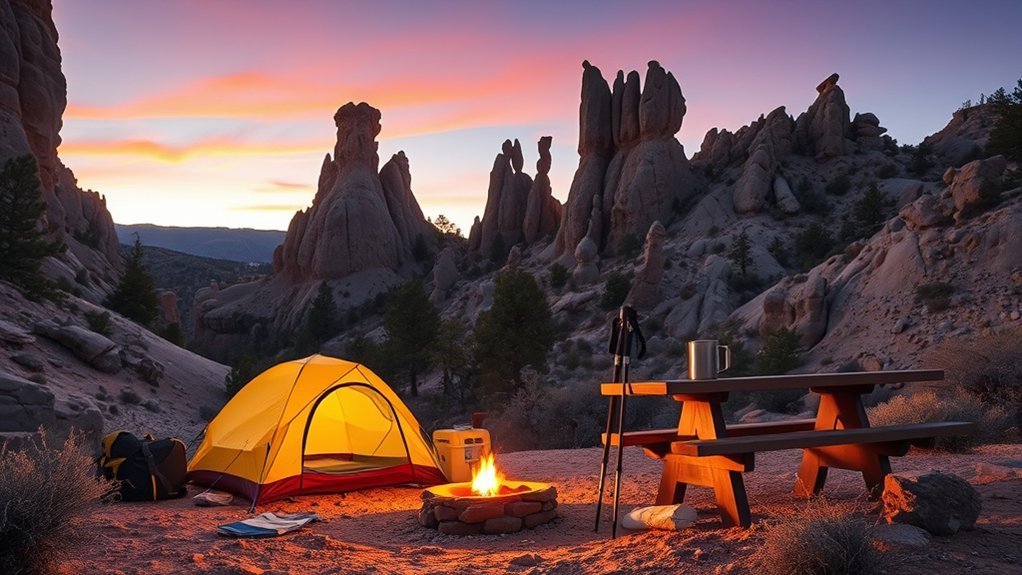
If you’re planning to camp in Chiricahua National Monument, your best in-park option is Bonita Canyon Campground. It gives you shade, drinking water, flush toilets, and quick access to trails, but it stays small, reservation-only, and better suited to tents and small vehicles than large RVs.
You can also camp nearby on Coronado National Forest land if you want more space and fewer neighbors. This guide shows you where to stay, how to handle rough roads, what to expect during monsoon season, and how to pack for heat, cold nights, wildlife, and sudden storms.
Quick Answer: Where Should You Camp at Chiricahua?
Choose Bonita Canyon Campground if you want the easiest in-park camping experience, restrooms, drinking water, food storage boxes, and direct access to the monument. Choose nearby Coronado National Forest dispersed camping if Bonita Canyon is full, your vehicle can handle gravel roads, and you are ready to bring your own water, toilet plan, and trash system.
Key Takeaways
- Bonita Canyon Campground is reservation-only, so check Recreation.gov before planning your dates.
- Large RVs and trailers are a poor fit because many campground sites are small and the road has vehicle limits.
- Nearby Forest Service camping can work well, but Pinery Canyon Road and other dirt roads can become difficult after rain or snow.
- Monsoon season runs June 15 through September 30, with lightning, flash flooding, and flooded washes as real risks.
- Pets are allowed only in limited areas, so hikers who want to use the higher rock trails may want to leave dogs at home.
Chiricahua Camping Options at a Glance
| Camping Option | Best For | What You Get | Main Caution |
|---|---|---|---|
| Bonita Canyon standard sites | Tent campers, small trailers, small RVs | Drinking water, flush toilets, sinks, picnic table, raised grill, food storage box, tent pad | Reservation required, no hookups, no showers, tight vehicle limits |
| Bonita Canyon Site 26 group site | Groups of 9 to 24 tent campers | Group tent area with access to campground amenities | No RVs or trailers, limited parking, creek crossing may affect access |
| Coronado National Forest dispersed camping | Self-sufficient campers who want solitude | More space and flexibility outside the monument | Bring water, check road conditions, follow Forest Service rules |
| Private campgrounds near Willcox or Sunizona | Larger RVs, hookups, showers, dump stations | More services than the monument campground | You will drive 30 to 40 miles to reach the monument |
Why Chiricahua National Monument Is a Unique Camping Destination
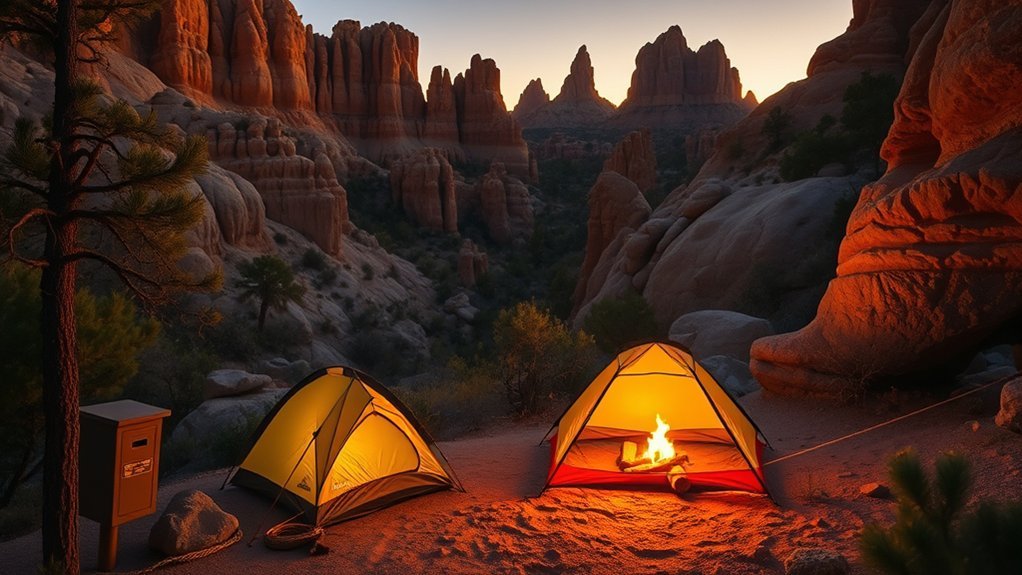
Chiricahua National Monument protects 12,025 acres of rhyolite pinnacles, balanced rocks, canyon forests, dark skies, and wildlife habitat in southeastern Arizona. The National Park Service calls the monument “A Wonderland of Rocks”, and the name fits once you see the stone columns rising above the trees.
Camping here feels different from a large national park campground. Bonita Canyon is small, shaded, and quiet, with quick access to scenic drives and trails. You can spend one morning on lower trails near Faraway Ranch, then use a shuttle or trailhead drive to reach higher rock formations when conditions allow.
The monument also sits where desert and mountain ecosystems meet. That means warm days, cool nights, active wildlife, and fast-changing weather. You should plan your campsite, hikes, and gear around that mix instead of treating this as a simple desert campground.
Getting There and Road Conditions to Know
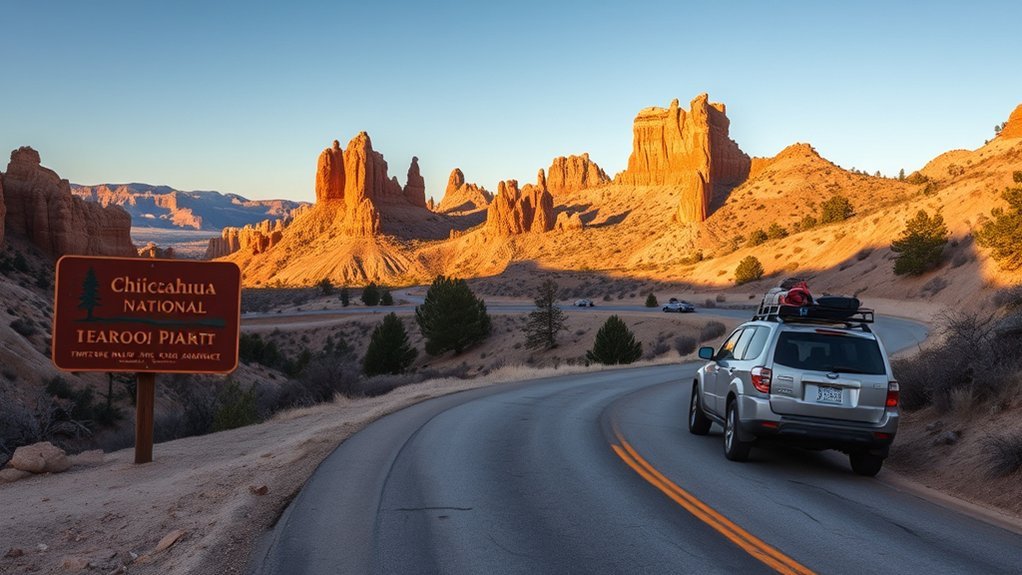
Chiricahua National Monument has one main public entrance. From Tucson, the drive usually takes about two hours. From Phoenix, plan closer to three and a half to four hours, depending on traffic, stops, and your route. Willcox is the key supply town, about 37 miles from the monument.
Get gas, groceries, ice, and vehicle charging before you leave Willcox or Sunizona. The park does not have food service, gas, ice, or charging. Cell service can also drop near the monument, so download maps before you arrive.
If you want to stay on pavement, use Highway 186 from Willcox or Highway 181 from the southwest. Pinery Canyon Road (Forest Road 42) and Apache Pass are winding, rocky dirt roads. They can become impassable after rain or snow, and high clearance or four-wheel drive is recommended for Pinery Canyon Road.
- Use Willcox or Sunizona for fuel and supplies.
- Download offline maps before you enter the area.
- Check NPS alerts before driving during monsoon season.
- Avoid dirt roads after heavy rain unless your vehicle is suitable.
- Do not assume the paved park road continues through the mountains. It ends at Massai Point.
Bonita Canyon Campground: Sites, Amenities, and Reservations
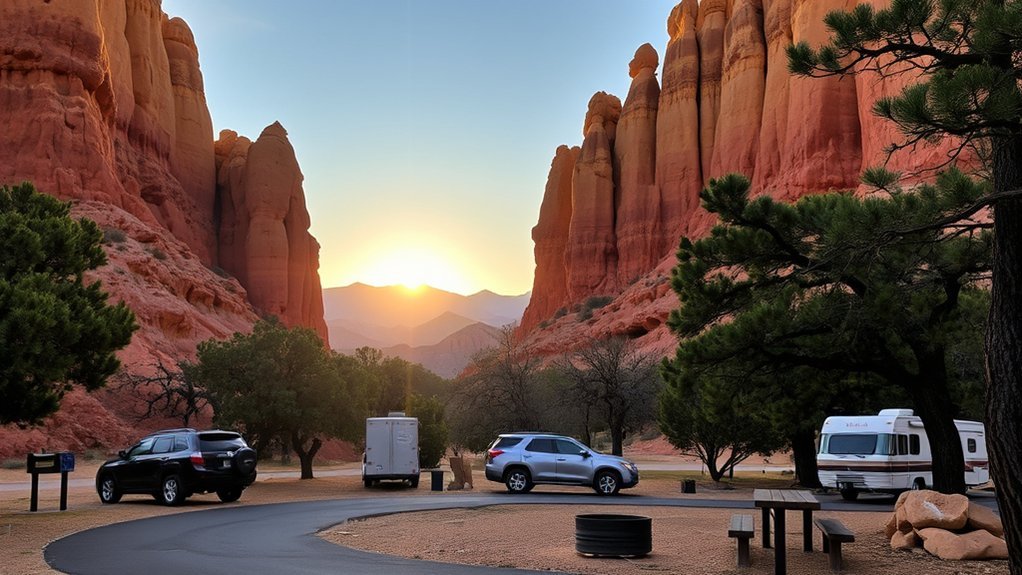
Bonita Canyon Campground is the only developed campground inside Chiricahua National Monument. Recreation.gov lists standard nonelectric sites and Site 26, the group tent-only area. All sites should be reserved through Recreation.gov before your trip.
Standard sites work best for tents, truck campers, small trailers, and small RVs that fit the site details. Each standard campsite allows up to 8 people, 2 vehicles, and 2 tents. A trailer counts as a vehicle, and your setup must fit inside your reserved site.
The campground has drinking water faucets, flush toilets, sinks, picnic tables, raised grills, food storage boxes, and tent pads. It does not have showers, electric hookups, sewer hookups, a dump station, food service, gas, ice, or vehicle charging.
- Reserve your site through Recreation.gov before you go.
- Read the driveway length and site notes before booking.
- Keep all food, cookware, coolers, trash, pet food, and toiletries in the food storage box or a closed vehicle.
- Use only designated grills when fires are allowed.
- Do not tie hammocks, tarps, showers, or pet leashes to trees.
- Follow quiet hours from 8:00 pm to 8:00 am.
Booking Tip
Before you reserve, check three details: site length, vehicle limit, and allowed equipment. The campground road has a dip that can damage oversized vehicles, and many sites are too small or uneven for trailers.
Group Camping at Site 26: What to Expect
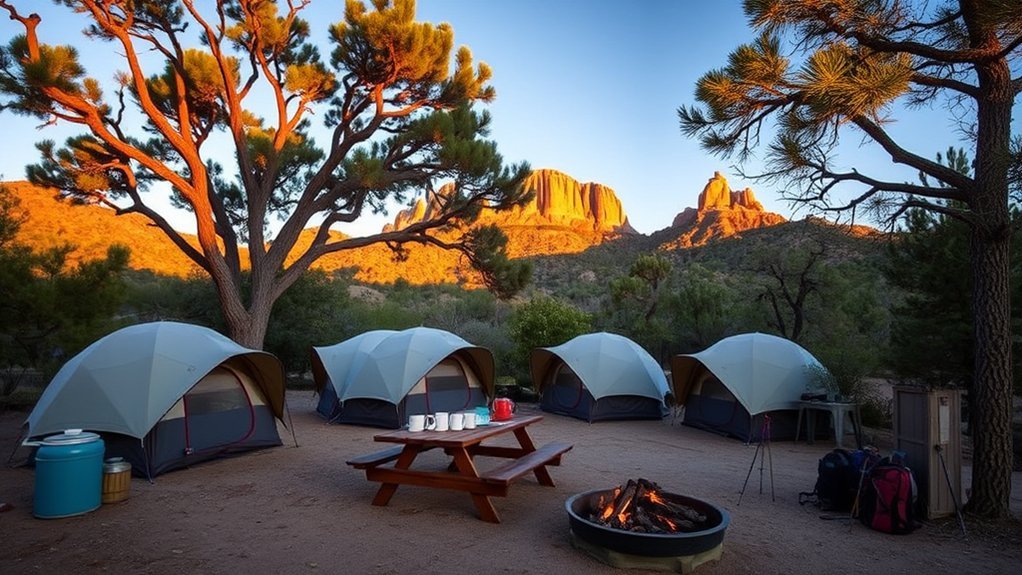
Site 26 is the group tent-only site at Bonita Canyon Campground. It is designed for groups of 9 to 24 people, with parking limited to 5 small vehicles. RVs, trailers, oversized vehicles, and tow vehicles are not suitable for this site.
You should also plan for a short walk. Recreation.gov notes that campers must walk about 100 feet and cross Bonita Creek, which is usually dry. If Bonita Creek is flowing, the site may close unexpectedly.
Use Site 26 for scout trips, extended family trips, school groups, or friends who can follow shared quiet hours and food storage rules. Assign one person to manage reservation details, one person to check weather, and one person to check group gear before arrival.
- Confirm the current group fee on Recreation.gov before booking.
- Keep vehicles within the posted limit.
- Bring wagons or easy-carry bags for the walk from parking.
- Review food storage rules with everyone in the group.
- Prepare a backup plan in case creek flow or storms affect access.
Dispersed Camping and Nearby Forest Service Options
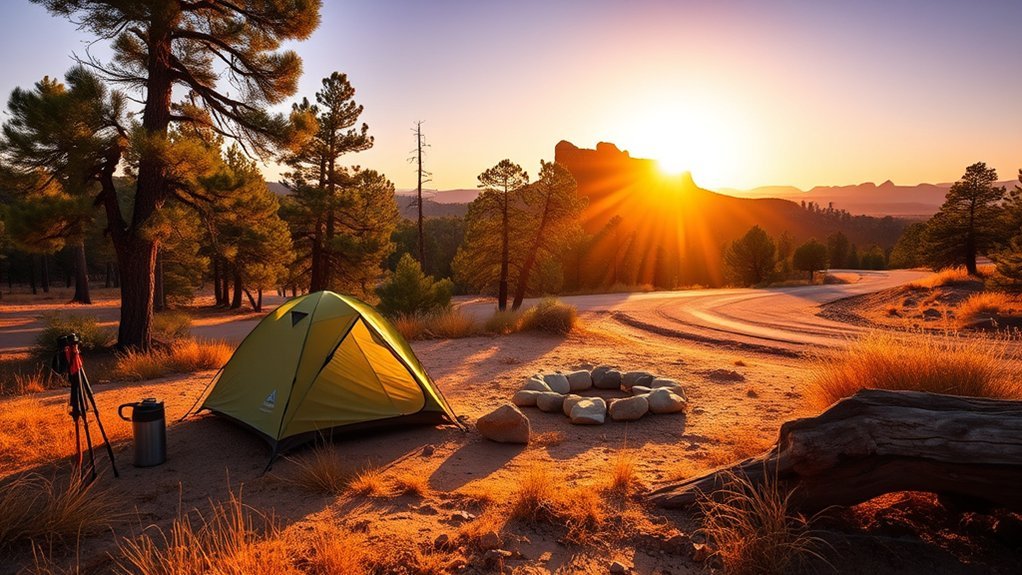
You cannot dispersed camp inside Chiricahua National Monument. If Bonita Canyon is full, or if you want a more remote setup, look at nearby Coronado National Forest options instead. The National Park Service specifically points campers toward public land camping on Pinery Canyon Road, about 6 miles along a gravel road.
Dispersed camping gives you more space, but it also gives you fewer services. You should bring drinking water, a toilet plan, trash bags, a stove, fire information, and enough recovery gear for your vehicle. Dirt roads can become slick or impassable after rain or snow.
- Call or check the Douglas Ranger District for current Forest Service conditions.
- Use already disturbed campsites where camping is allowed.
- Pack out all trash, food waste, and micro-trash.
- Do not camp in washes, low spots, or cultural resource areas.
- Follow current fire restrictions and use a camp stove when fire risk is high.
- Bring extra water because dispersed sites do not have campground faucets.
Weather, Monsoon Risks, and When to Plan Your Trip
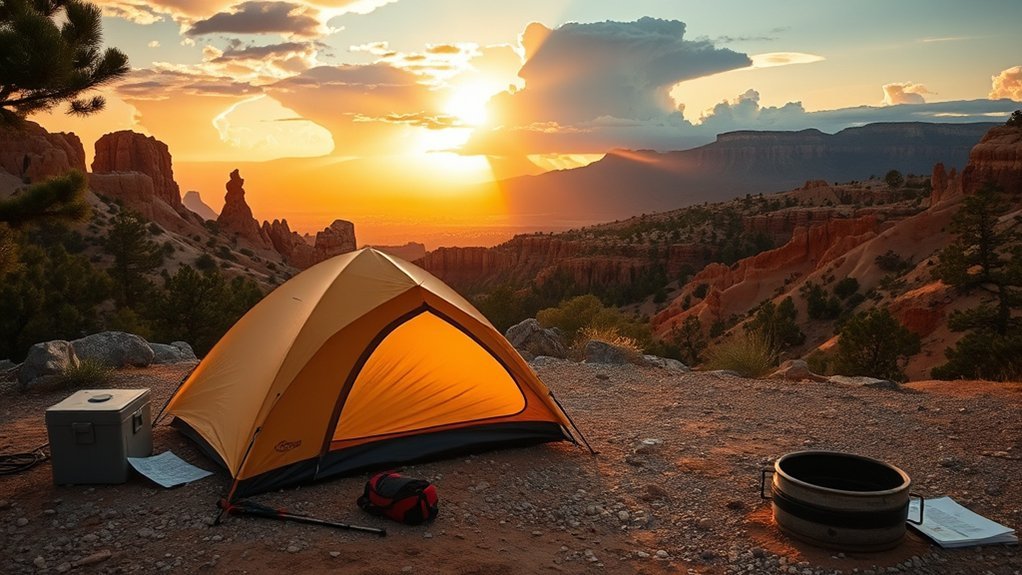
The safest camping months for many visitors are spring and fall. You get milder hiking weather, more comfortable nights, and fewer storm disruptions than you often see in midsummer. Winter can also work, but cold nights and occasional snow can affect roads and trails.
Summer requires extra caution. The park lists monsoon season as June 15 through September 30. During this window, storms can bring lightning, heavy rain, flash flooding, hail, and flooded washes. A sunny morning can still turn into a dangerous afternoon.
Monsoon Season Timing
During monsoon season, plan your hikes early and keep afternoons flexible. The National Park Service warns that summer storms can cause flash flooding and brief flooding on Highway 186 between Willcox and the park. Highway 181 south of the park can also hold flooded washes for long periods, depending on seasonal rain.
- Start hikes at dawn or early morning.
- Check the NPS alerts page before driving.
- Check a current weather forecast before leaving camp.
- Avoid washes, streambeds, and low campsites when storms build.
- Keep a backup lodging plan if heavy rain is forecast for several days.
Thunderstorm Hazards
Lightning is one of the biggest summer hazards on exposed trails and rock formations. If thunder starts, move away from ridges, isolated trees, open rock, and high points. Turn around early instead of trying to finish a loop during building storms.
Heavy rain can also create fast runoff in desert washes. Never drive into flooded water on Highway 186, Highway 181, dirt roads, or campground access roads. Wait for water to drop or choose a safer route.
Cooler Morning Windows
Morning is usually the best time to hike during warm months. Trails are cooler, light is better for photos, and storms are less likely than later in the day. Plan bigger hikes before noon, then use afternoons for rest, short walks, visitor center stops, or scenic pullouts if the weather stays calm.
- Start major hikes before noon.
- Carry more water than you think you need.
- Bring electrolytes and salty snacks.
- Pack a rain jacket and dry bag during monsoon season.
- Carry warm layers because nights can cool down quickly.
Hiking From Camp: Trails, Difficulty, and Timing
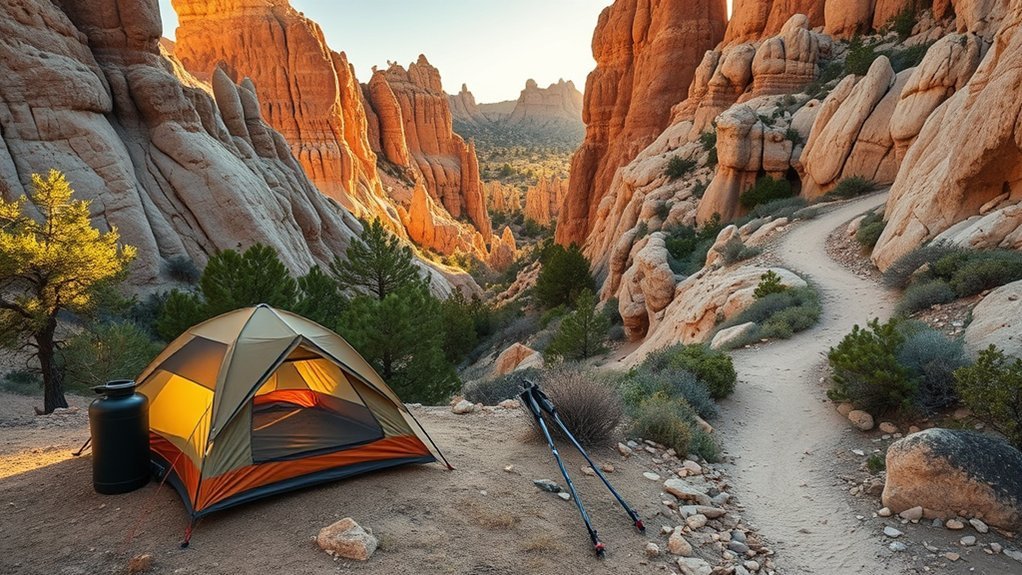
Chiricahua has about 17 miles of day hiking trails, ranging from easier lower-elevation walks to steep, rocky routes through the pinnacles. If you are camping at Bonita Canyon, you can start with lower trails first, then use higher trailheads when weather, time, and fitness line up.
Do not judge hikes by mileage alone. Elevation, sun, rocky footing, and thin air can make a short trail feel harder than expected. The NPS hiking page advises visitors to bring plenty of water, electrolytes, salty snacks, sun protection, and proper hiking gear.
Trail Difficulty Levels
Use easier trails for warm afternoons, families, or pet-limited plans. Save rock formation trails for mornings when temperatures are lower and storms are less likely. Echo Canyon Loop is one of the best-known moderate hikes, with about 3.3 miles through rock formations, narrow passages, and canyon views.
- Choose trails based on heat, elevation, and available daylight.
- Wear shoes with grip for stone steps and loose gravel.
- Carry a paper or offline map because service can be limited.
- Check trail and shuttle status before you count on a specific route.
- Turn around early if storms, heat, or fatigue build.
Best Times to Hike
For most campers, the best hiking windows are early morning and late afternoon. Early morning gives you cooler air and lower storm risk. Late afternoon can be good for short lower trails, but stay weather-aware during monsoon season.
| Trail or Area | Best Use | Best Time |
|---|---|---|
| Echo Canyon Loop | Moderate rock formation hike | Early morning |
| Silver Spur Meadow area | Lower, easier walking and pet-friendly planning | Morning or calm evening |
| Faraway Ranch area | History, lower trails, lighter activity | Morning or late afternoon |
| Heart of Rocks routes | Longer, harder hiking days | Early start only |
Wildlife, Pets, and Safety Precautions
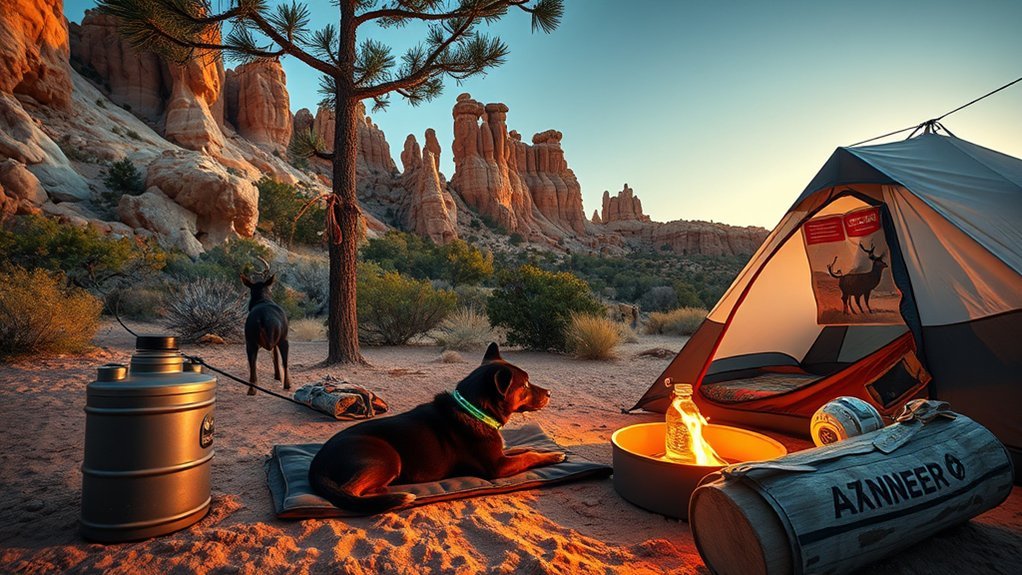
Chiricahua supports rich wildlife because desert, mountain, and woodland habitats meet here. The National Park Service lists 71 mammal species, 46 reptile species, 8 amphibian species, and 171 bird species that regularly occur in the monument.
That wildlife diversity is one reason food storage matters. Bears, mountain lions, bobcats, skunks, coatis, rodents, snakes, and other animals live in and around the campground. Do not feed animals, leave coolers out, or let crumbs collect around your site.
Pets are allowed only in limited areas. Leashed or carried pets are permitted in the campground, paved parking lots, and lower trails between the campground and entrance area. Pets are not allowed on many higher trails above 5,500 feet, including Echo Canyon, Heart of Rocks, Natural Bridge, Sugarloaf, and Massai Point Nature trails.
- Keep pets on a leash no longer than 6 feet.
- Do not leave pets unattended at camp or in vehicles.
- Keep dogs away from bees, snakes, and holes.
- Watch where you place hands and feet on rocky trails.
- Use binoculars instead of approaching wildlife.
- Store all food, trash, cookware, coolers, pet food, and toiletries correctly.
Safety Note
If you see a bear or mountain lion, do not run. Stay calm, make yourself look larger, and give the animal space. Report serious wildlife encounters to park staff.
Packing Essentials and Camp Setup Tips (Water, Shelter, and Food)
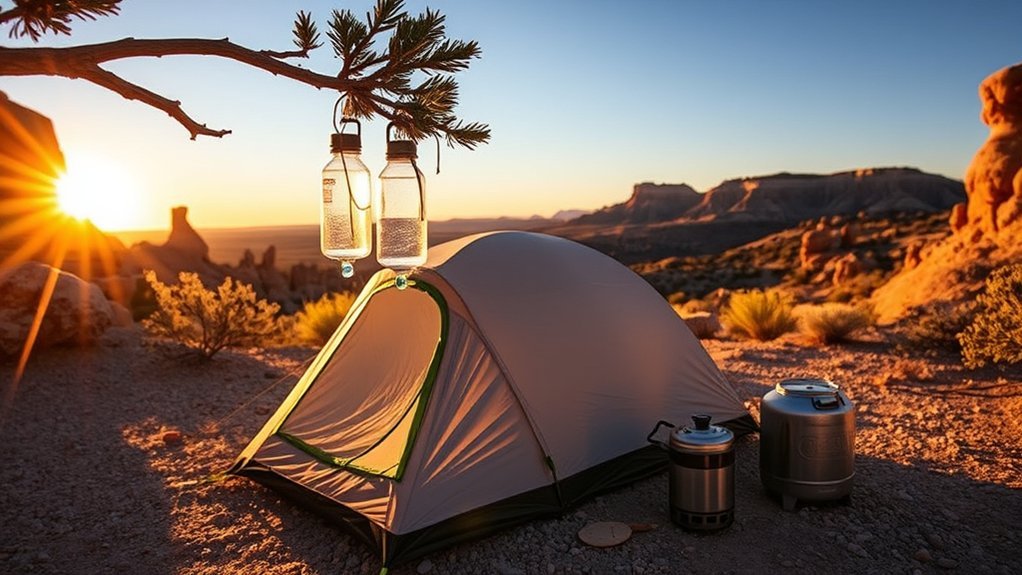
Pack for a campground that has basic services, not full services. Bonita Canyon has drinking water and restrooms, but it does not have showers, hookups, food, ice, gas, or charging. Nearby dispersed sites may have no services at all.
Your core kit should cover four needs: water, shade, storm protection, and wildlife-safe food storage. A simple setup works well if it handles hot sun, cold nights, wind, rain, and strict food storage rules.
Water: Carry and Conserve
Bring enough water containers for camp and trail use. At Bonita Canyon, drinking water faucets are located throughout the campground, but hose connections and tank filling are prohibited. For dispersed camping, bring all the water you need.
- Refill containers before trailheads and before bedtime.
- Carry extra water for hot hikes.
- Use electrolytes and salty snacks during warm weather.
- Use minimal water for dishwashing.
- Dispose of gray water only where allowed.
Shelter: Weatherproof Your Site
Use a tent with a full rainfly, sealed seams, and good stakes. During monsoon season, add a ground tarp and dry bags for clothes, bedding, and electronics. Choose higher ground and avoid any site or dispersed area that drains like a wash.
At Bonita Canyon, do not tie tarps, hammocks, showers, or any other items to trees. The park prohibits tying items to trees and vegetation to protect them from damage.
Food: Safe Storage Practices
Food storage is not optional. Store food, cookware, trash, coolers, pet food, bird seed, toiletries, and scented items in the provided food storage box or inside a closed vehicle. Never keep food in your tent.
- Use airtight containers to reduce odors.
- Clean tables and grills after meals.
- Cook away from your sleeping area when possible.
- Do not burn trash or leave micro-trash at camp.
- Follow fire restrictions before using charcoal or wood.
Permits, Fees, Rules, and Leave No Trace Practices
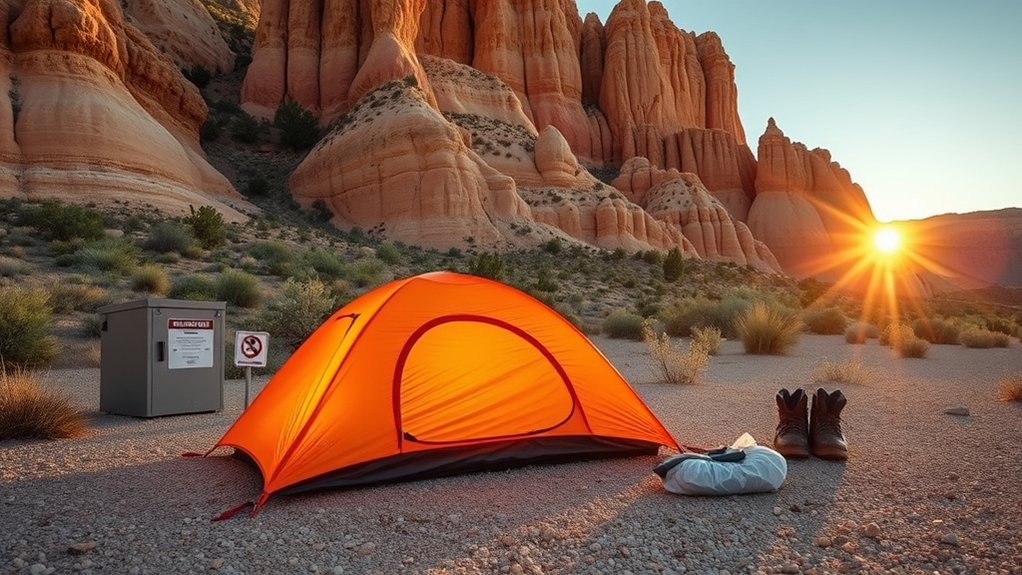
You do not need an entrance pass to visit Chiricahua National Monument. The monument does not charge an entrance or parking fee. Camping fees still apply at Bonita Canyon Campground, and you should check Recreation.gov for current campsite prices before booking.
Camp only in your reserved Bonita Canyon campsite inside the monument. For dispersed camping outside the monument, follow Coronado National Forest rules and any posted fire restrictions. Some areas may have seasonal closures, road damage, or access limits after storms.
Follow Leave No Trace principles every day. Pack out trash, respect wildlife, keep noise low, protect vegetation, avoid cultural sites, and leave rocks, artifacts, plants, and historic objects where you find them.
- Book Bonita Canyon through Recreation.gov.
- Confirm current campground fees before checkout.
- Stay within campsite capacity limits.
- Use only legal fire methods and approved fuels.
- Never collect firewood inside the monument.
- Keep pets leashed and only in allowed areas.
- Check alerts for flood, fire, road, and weather updates.
Sample 2-Day Chiricahua Camping Plan
Use this simple plan if you want a balanced first trip without rushing. Adjust it based on weather, campsite check-in time, and your fitness level.
- Day 1 afternoon: Arrive with fuel, water, food, and ice already handled in Willcox or Sunizona.
- Day 1 evening: Set up camp, secure food, walk a lower trail, and watch sunset light on the canyon walls.
- Day 2 morning: Start early for Echo Canyon Loop or another higher trail that matches your ability.
- Day 2 afternoon: Rest during heat or storms, visit Faraway Ranch, or drive the scenic road if conditions are safe.
- Day 2 night: Keep lights low, secure food again, and enjoy the dark sky without disturbing nearby campers.
Official Sources and Planning Links
Use these official pages before you finalize your trip. Conditions, fees, closures, fire restrictions, shuttle service, and campsite availability can change.
- NPS Bonita Canyon Campground
- Recreation.gov Bonita Canyon Campground Reservations
- NPS Directions and Transportation
- NPS Alerts and Current Conditions
- NPS Pet Rules
- NPS Hiking Information
- NPS Fees and Passes
- National Weather Service Monsoon Safety
Frequently Asked Questions
What Is the Best Time of Year to Visit Chiricahua National Monument?
Spring and fall are usually the best times to camp at Chiricahua National Monument. You get milder hiking weather, more comfortable nights, and fewer storm disruptions than midsummer. Winter can be quiet and beautiful, but pack for cold nights and possible snow.
What Is the Difference Between Camping and Backcountry Camping?
Camping usually means staying at a developed site with road access and basic amenities. Backcountry camping means carrying gear away from developed areas and relying on your own water, navigation, shelter, and waste plan. Chiricahua does not offer general backcountry camping inside the monument.
Can You Camp in the Chiricahua Mountains?
Yes, you can camp in the Chiricahua Mountains area. Inside Chiricahua National Monument, use Bonita Canyon Campground. Outside the monument, nearby Coronado National Forest may offer dispersed camping and public campgrounds, depending on road conditions, fire restrictions, and current Forest Service rules.
Are There Hiking Trails in Chiricahua?
Yes. Chiricahua National Monument has about 17 miles of day hiking trails. Routes range from easier lower trails to strenuous rock formation hikes. Check the current NPS hiking page before your trip because weather, staffing, shuttle service, and trail conditions can change.
Do You Need Reservations for Bonita Canyon Campground?
Yes. Bonita Canyon Campground is reservation-only. Book through Recreation.gov and read the full site details before checkout. Pay close attention to vehicle length, tent limits, driveway size, and campground rules because many sites are small.
Can Large RVs Camp at Bonita Canyon?
Large RVs are not a good fit for Bonita Canyon. Recreation.gov lists a 29-foot maximum vehicle length for the campground, and vehicles over 24 feet are not allowed past the campground on the scenic drive. Larger rigs should consider private campgrounds near Willcox or Sunizona.
Is Dispersed Camping Allowed Inside the Monument?
No. Dispersed camping is not allowed inside Chiricahua National Monument. You must use Bonita Canyon Campground inside the park. For dispersed camping, look outside the monument on nearby Coronado National Forest land and confirm current rules with the Forest Service.
Are Dogs Allowed on Echo Canyon Trail?
No. The NPS pet rules prohibit pets on many higher trails through the rock formations, including Echo Canyon Trail. Pets are allowed in the campground, paved parking lots, and certain lower trails between the campground and entrance area, but they must stay leashed.
Does the Park Have Food, Gas, or Ice?
No. Chiricahua National Monument does not have food service, gas, ice, or vehicle charging. Get supplies in Willcox or Sunizona before you enter the park. Bring enough food, water containers, and fuel for your full stay.
What Is the Main Safety Risk When Camping in Summer?
Summer campers need to plan for heat, lightning, and flash flooding. Monsoon storms can build quickly from June 15 through September 30. Start hikes early, avoid washes during storms, check NPS alerts, and never drive through flooded water.
Conclusion
Camping at Chiricahua National Monument works best when you keep the plan simple and realistic. Reserve Bonita Canyon if you want the easiest in-park stay, or use nearby Coronado National Forest only if you are ready for rougher roads and fewer services.
Before you leave, confirm your campsite, check NPS alerts, fill your fuel tank, download maps, and pack for sun, cold nights, wildlife, and sudden storms. Do that, and you can enjoy the rocks, trails, dark sky, and quiet camp without avoidable problems.