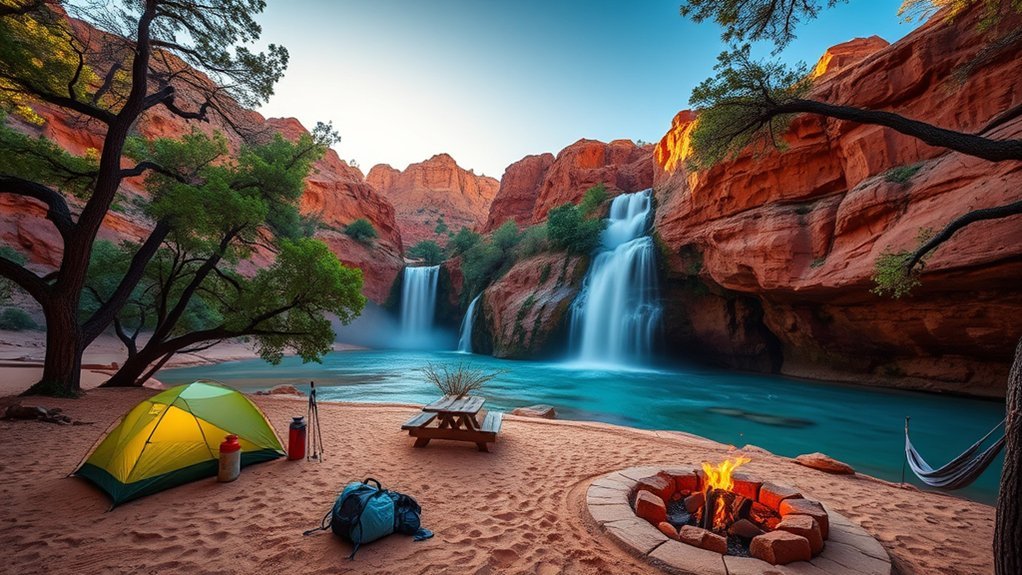
Camping at Havasupai takes more preparation than an ordinary campground trip. You need a valid reservation before entering Havasupai lands, you must complete the required check-in process, and you should be prepared to hike your own gear through remote desert terrain. Knowing the current permit rules, water situation, campsite setup, and emergency risks will make the trip safer and much easier to manage.
Quick Answer
To camp at Havasupai in 2026, you need a reservation before arrival. Campground bookings are fixed at 4 days and 3 nights and cost $455 per person. After completing the required check-in, expect an 8-mile hike to Supai Village and roughly 2 more miles to the campground.
Key Takeaways
- All visitors need a valid advance booking. Day hiking into Havasupai is not allowed.
- For 2026, campground permits cost $455 per person for a fixed 4-day, 3-night visit.
- Check-in procedures can change. August 2026 permit holders are directed to Grand Canyon Caverns & Inn before driving to Hualapai Hilltop.
- There is no water along the trail from Hilltop, so begin the hike with enough water for the conditions and carry a filter.
- Flash floods, extreme heat, difficult terrain, limited communications, and slow emergency response are serious backcountry risks.
At a Glance
| Time Required | 4 days / 3 nights for a standard 2026 campground booking |
| Difficulty | Strenuous remote desert backpacking with roughly 10 miles of hiking to the campground |
| Tools Needed | Permit and wristband, photo ID, backpacking gear, adequate water, food storage, water filter, sun protection, headlamp, first-aid supplies, and weather layers |
| Cost | $455 per person for a 2026 campground permit; optional transportation and other services cost extra |
Planning Your Havasupai Permit and Reservation Timeline
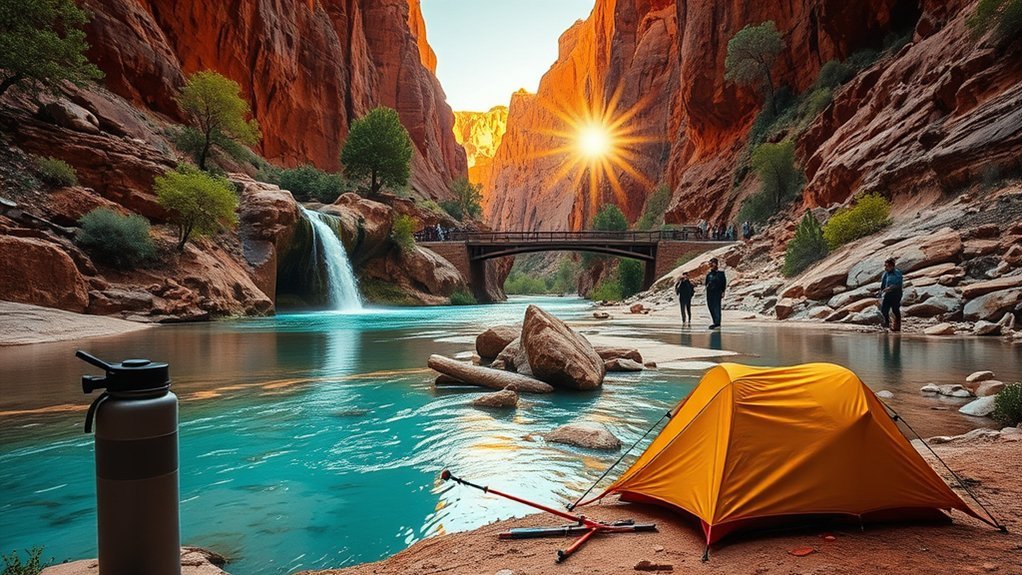
Every visitor must have a booking before arriving on the Havasupai Reservation, and day hiking is not allowed. According to the National Park Service Havasupai information page, early access for 2026 permits ran from January 21 through January 31, followed by the regular on-sale date on February 1, 2026, at 8:00 a.m. Arizona time.
For 2026, a campground booking is a fixed 4-day, 3-night stay. The official Havasupai reservations FAQ lists the campground permit at $455 per person, with up to 12 campground permits allowed in a booking. Prices and procedures can change from year to year, so future visitors should use the Tribe’s current reservation site rather than assuming the 2026 dates or price will remain the same.
When making the booking, name one or two Potential Alternate Trip Leaders (PATLs) if possible. The original Trip Leader or one of those named PATLs must be present at check-in with valid photo identification. PATLs cannot be added or changed after the booking is completed.
Understand the Cancellation Rules Before Paying
Havasupai bookings are paid in full when booked. Under the current 2026 policy, a cancellation made at least 90 days before the first day of the booking may qualify for a 50% refund of the permit fee, excluding any early-access fee. Cancellations within 90 days are non-refundable. Public resale or transfer of bookings is prohibited, so confirm your dates and group size carefully before purchasing.
Pro Tip: Name one or two reliable PATLs when you make the reservation. If the original Trip Leader cannot travel, a PATL already listed on the booking can complete check-in instead.
Getting to the Trailhead and Check-In Requirements
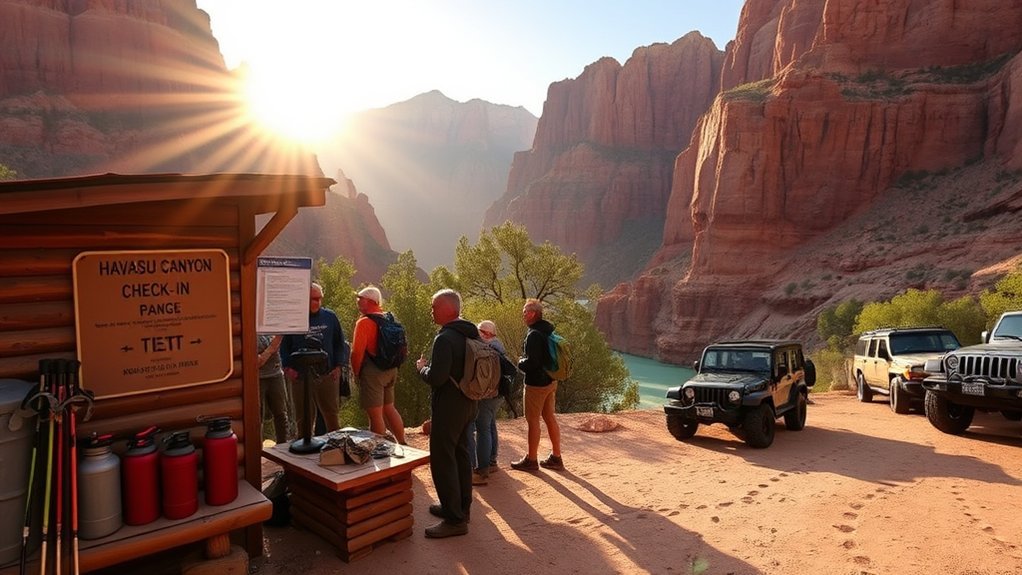
Do not drive directly to Hualapai Hilltop without completing the check-in process required for your permit dates. Check-in locations and hours can change. For August 1 through August 31, 2026, the official Havasupai tourism website directs permit holders to check in at Grand Canyon Caverns & Inn between 6:00 a.m. and 6:00 p.m. Permit holders may check in on the permit start date or one day before it.
The original Trip Leader or a named PATL should bring a valid government-issued photo ID. You will also need the license plate number for any vehicle that will be parked at Hualapai Hilltop so that the vehicle can be registered and a parking pass issued. Each visitor must wear the wristband provided during check-in for the duration of the visit.
After check-in, drive toward Hualapai Hilltop using Indian Road 18. The Hilltop trailhead is approximately 60 miles from Route 66, and current tribal guidance recommends allowing at least 1.5 hours for this section because the road crosses open range where livestock and wildlife may be present.
Parking at Hualapai Hilltop is limited, with additional visitor parking available along Indian Road 18 when necessary. Do not block the road or park in areas reserved for tribal members. Camping at Hilltop, including sleeping in your vehicle, is prohibited.
There are no gas or food services at Hualapai Hilltop. The Tribe recommends beginning the Indian Road 18 drive with enough fuel for at least 200 miles. Cell coverage along the route and in much of the Reservation is limited and unreliable.
From Hualapai Hilltop, the main trail descends about 8 miles to Supai Village. The campground is roughly 2 additional miles beyond Supai. There is no drinking water available along the Hilltop-to-Supai trail, so start with enough water for the hike and current weather conditions.
Note: Havasupai rules, check-in hours, closures, and access procedures can change with weather, staffing, repairs, or Tribal orders. The official reservation site should be your final authority immediately before travel.
Havasupai Campground Layout, Amenities, and Rules
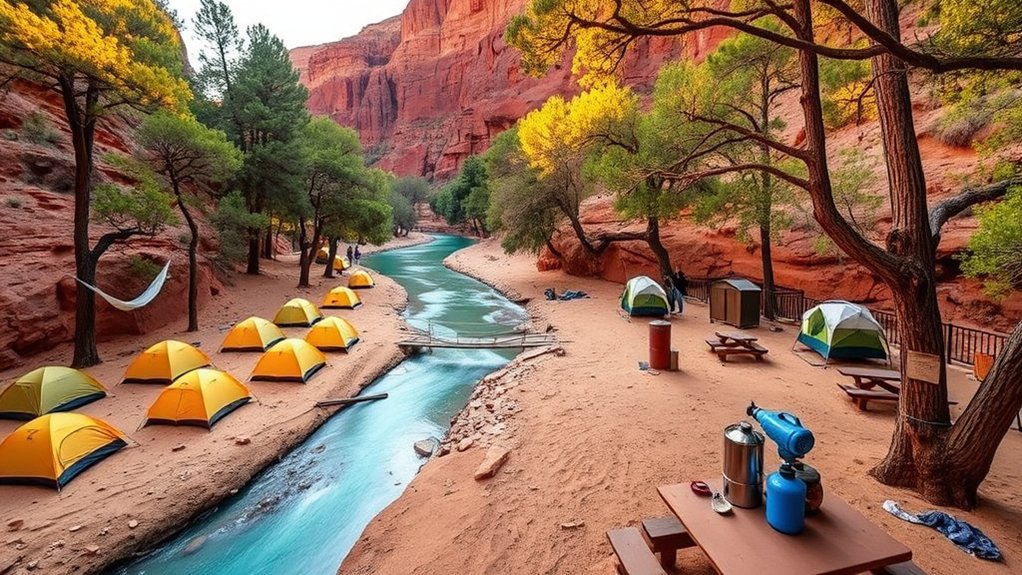
The Havasupai Campground occupies a designated camping area along Havasu Creek. Individual campsites are not reserved in advance. Under the current Havasupai Entrance Permit Rules and Regulations, campground spots are available on a first-come, first-served basis, so you choose an available site after reaching the campground.
Campground Layout Map
Rather than expecting a numbered campsite map, think of the campground as a long designated camping area along the creek. When choosing a spot, balance shade, access to facilities, privacy, and elevation above the water. Avoid low areas, washes, or places showing evidence of previous high water because flash flooding can occur with little warning.
You do not need to rush dangerously down the trail to compete for a campsite. Hike at a safe pace, especially in heat, and choose the best suitable open location after arrival. If conditions change during your stay, move to safer high ground whenever necessary.
Rules and Amenities
Campground visitors should expect basic backcountry facilities rather than a developed car campground. Restrooms and picnic-table areas are available, but there is no campground electricity. Drinking water is available in Supai Village and from a freshwater spring in the campground.
The Tribe recommends filtering creek or spring water before drinking or using it for food and suggests considering filtration even when using the campground spring. Carry a reliable water filter or treatment method rather than assuming every untreated source is safe.
Important campground and Reservation rules include:
- Pack out all trash and gear that you bring into the canyon.
- No campfires.
- No alcohol, illegal drugs, marijuana, or THC products.
- No drones or commercial filming.
- Camp only in designated camping areas.
- Attach required permit tags to your daypack or tent as instructed.
- Respect Tribal residents, homes, burial areas, sacred places, and community privacy.
- Do not photograph or record tribal members, homes, buildings, burial grounds, or sacred sites.
Choosing and Securing the Best Campsite for Your Group
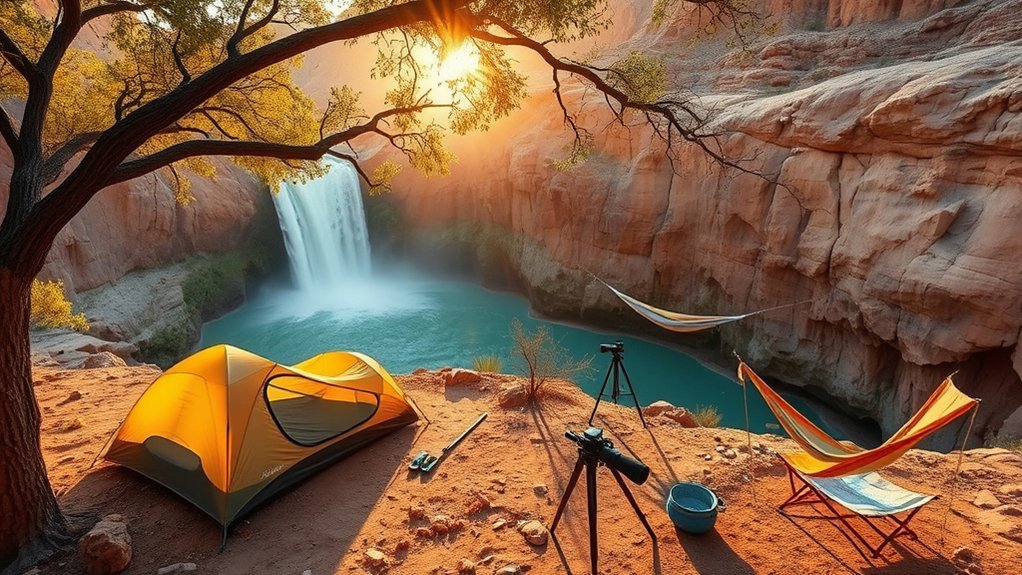
Because sites are first-come, first-served, your exact campsite will depend on what is open when you arrive. A scenic creekside location can be appealing, but flood safety should come before the view. Look for established camping space on higher ground rather than pitching a tent in a low channel, wash, or immediately beside an area that could carry rising water.
- Prioritize higher ground: Flash floods can raise creek levels rapidly.
- Keep trails clear: Avoid setting up where hikers, staff, or emergency personnel need to pass.
- Consider shade: Canyon temperatures can exceed 100°F during warmer months.
- Think about water access: The campground freshwater spring is useful, but you should still carry a filter.
- Consider restroom access: A closer site can be convenient at night, while a more distant site may feel quieter.
- Secure food and trash: Small animals can chew through backpacks, food bags, and tents.
If weather deteriorates or you see, hear, or receive warning of approaching floodwater, campsite convenience no longer matters. Move to high ground immediately and follow Tribal instructions.
Packing List and Safety Tips for the Havasupai Backcountry
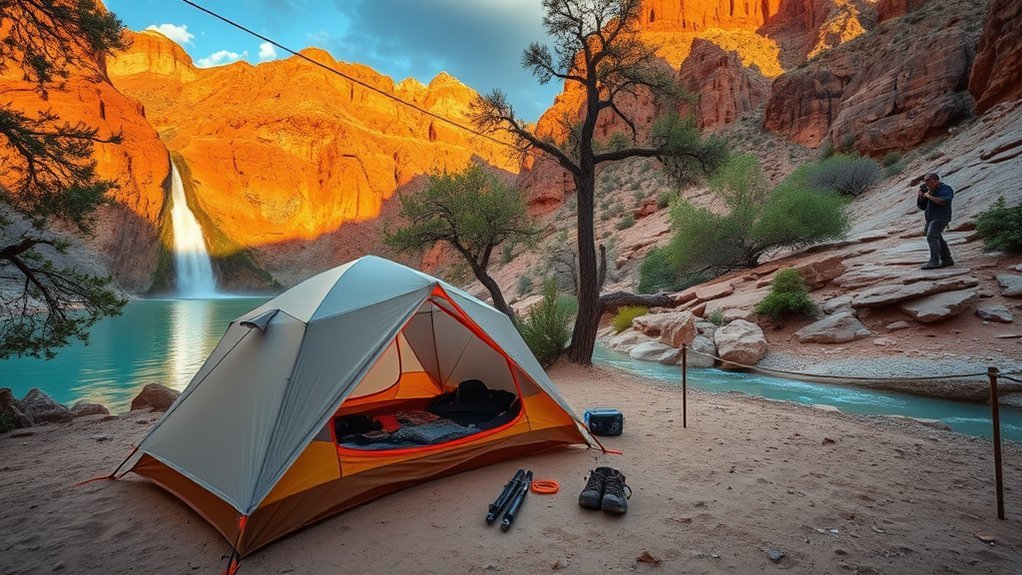
Havasupai is remote backpacking terrain, so pack light enough to carry comfortably while still being prepared for heat, cold, storms, darkness, minor injuries, and limited communications. The Tribe expects visitors to be capable of hiking in and out with their own necessary gear and supplies even if they plan to use optional transportation services.
Essentials to Pack
There is no water available along the trail between Hualapai Hilltop and Supai Village. Carry enough water for the full hike based on the temperature, your pace, your physical needs, and current guidance. Once in Supai or the campground, refill only from appropriate sources and use a water filter or treatment method as recommended.
- A properly fitted backpack
- Lightweight tent or hammock and sleeping setup
- Sleeping bag or quilt appropriate for expected temperatures
- Adequate food for the full trip
- Water bottles or hydration reservoir
- Water filter or other reliable treatment method
- Odor-resistant and rodent-resistant food and trash storage
- Sun hat, sunscreen, protective clothing, and sunglasses
- Rain protection and extra layers
- Headlamp and spare power or batteries
- Phone battery pack or solar charger because the campground has no electricity
- Basic first-aid supplies
- Trekking poles if you find them useful on steep terrain
- Trash bags for carrying all waste and gear back out
- Water shoes if you expect approved creek crossings or time in the water
A bear canister can work well as secure food storage, but the concern at Havasupai is primarily smaller animals such as mice and squirrels. The Tribe specifically notes that bears are not present in Supai.
Backcountry Safety Tips
Warning: Flash floods can occur with little warning, including when rain falls upstream rather than directly over your campsite. If floodwater approaches or you are caught in a storm, move to high ground immediately. Do not enter narrow canyon areas during rain or flooding, and do not continue below Mooney Falls when conditions are unsafe.
Heat is another major hazard. Much of the approach trail has limited shade, and warm-season temperatures can exceed 100°F. Plan strenuous hiking for the coolest practical part of the day, protect yourself from the sun, drink regularly, and turn back or seek help if someone develops concerning heat-illness symptoms.
Emergency assistance should not be treated as readily available. The Havasupai Tribe states that there are no public healthcare facilities in Supai Village. Medical treatment or transportation out of the canyon may take many hours, may be unavailable under some conditions, and can be expensive.
Cell phone service and internet access are limited and unreliable across much of the Reservation. Share your itinerary with someone before leaving and do not depend on your phone as your only navigation, communication, or emergency plan.
Other important trail and waterfall rules include:
- Stay on prescribed trails and do not explore restricted side canyons.
- Yield to horses and riders at all times.
- Do not climb waterfalls or canyon walls.
- Do not dive or jump from Havasu Falls, Mooney Falls, walls, or cliffs.
- The descent below Mooney Falls is considered extremely treacherous and is not recommended for children or adults with physical limitations.
- Trails and areas beyond Mooney Falls are available only during daylight hours.
- Do not continue into narrow canyon terrain during rain or flooding.
Itineraries and Activities: Waterfalls, Hikes, and Relaxation
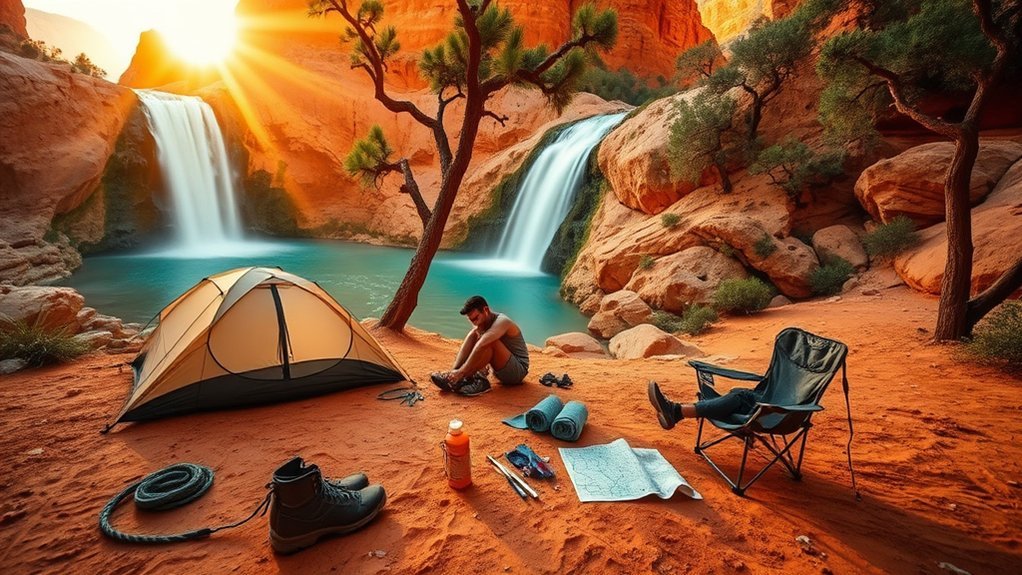
A 2026 campground reservation gives you four days and three nights, so you do not need to squeeze every waterfall into one exhausting day. The Tribe’s own suggested itinerary separates the hike in and out from your main waterfall-exploration days.
Day 0: Arrive Near the Trailhead
If your schedule allows, arrive in the area the day before your permit begins. Grand Canyon Caverns & Inn is the lodging location recommended by the Tribe and is also being used for the August 2026 permit check-in process. Completing check-in the day before your permit begins, when permitted for your dates, can simplify an early start the following morning.
Day 1: Hike to Supai and the Campground
Drive to Hualapai Hilltop after completing check-in. Hike approximately 8 miles to Supai Village and then roughly 2 more miles to the campground. Set up camp, hydrate, eat, and give yourself time to recover rather than immediately committing to another long hike.
Day 2: Havasu, Mooney, and Beaver Falls
Use your first full day for the lower-waterfall area if trail, weather, and current Tribal conditions allow. Havasu Falls is the most accessible major waterfall from camp. Mooney Falls requires a much more difficult descent, and the Tribe describes the terrain below it as extremely treacherous. Beaver Falls requires additional travel beyond Mooney, so allow enough daylight for the complete return.
Swimming and relaxing near the water can be part of the experience, but obey posted closures and safety signs. Never jump or dive from cliffs or waterfalls.
Day 3: Upper Waterfalls and a Slower Day
Consider spending your second full day around the upper falls and Havasu Falls, with time for rest, photography of the natural landscape, and a less demanding pace before the hike out. Stay on prescribed visitor trails and respect the privacy of Supai Village and its residents.
The often-discussed Colorado River confluence route should not be treated as a default addition to your itinerary. Current Tribal rules direct tourists to prescribed trails and restrict travel beyond Mooney Falls to daylight hours. Follow current closures, signs, and staff instructions rather than relying on an old route description.
Day 4: Hike Out
Pack every item and all trash out of the campground. Start the climb back toward Hualapai Hilltop during the coolest practical part of the day and leave enough time for the long ascent. Do not assume a helicopter will be available as a backup if you become tired or run late.
Frequently Asked Questions
How hard is it to get a Havasupai permit?
Demand is high and there are more reservation requests than available spaces. For 2026, early access ran January 21–31 and the regular sale opened February 1 at 8:00 a.m. Arizona time. Create the required reservation account in advance and use the official Havasupai reservation system for current availability.
Where should you sleep the night before hiking to Havasupai?
The Havasupai Tribe recommends Grand Canyon Caverns & Inn near Route 66. It also serves as the official permit check-in location under the current August 2026 instructions, making it especially convenient for an early departure toward Hualapai Hilltop.
How much does it cost to camp at Havasupai Campground?
For 2026, a Havasupai campground permit costs $455 per person and covers a fixed three-night stay. Optional services such as pack mules or helicopter transportation cost extra and should not be assumed to be available unless confirmed under current Tribal or operator rules.
How do you make Havasupai campground reservations?
Use the official Havasupai reservation website and create the required account before booking. Select your dates carefully, add the number of campground permits needed, and name one or two Potential Alternate Trip Leaders during checkout if possible. PATLs cannot be added after the reservation is completed.
Can you day hike to Havasu Falls without camping?
No. The Havasupai Tribe does not allow tourist day hiking into the Reservation. Visitors must have a valid advance booking before entering.
Is drinking water available at Havasupai Campground?
Drinking water is available in Supai Village and from a freshwater spring in the campground. The Tribe advises filtering creek or spring water and recommends considering filtration of all water for additional safety. There is no water along the trail between Hualapai Hilltop and Supai.
Do children need Havasupai permits?
Under the current 2026 rules, children age 6 and younger do not require a paid permit when accompanying a valid permit holder, while children age 7 and older require a paid permit. The Tribe does not recommend bringing young children because of the distance, rugged terrain, heat, water hazards, remoteness, and lack of public medical facilities.
What should you do if a flash flood threatens the campground?
Move to high ground immediately and remain there until conditions are safe. Do not enter narrow canyon areas during rain or flooding, and do not continue below Mooney Falls when dangerous weather is developing. Flooding can occur even when it is not raining directly over your location.
Conclusion
A Havasupai campground trip is much easier to enjoy when the logistics are settled before you reach the canyon. Secure the correct permit, understand the fixed 4-day/3-night schedule, complete check-in at the location specified for your dates, and arrive at Hualapai Hilltop with enough fuel, water, food, and backpacking equipment for a remote trip.
Once in the canyon, choose a campsite with flood safety in mind, filter your water, pack out everything you bring in, and follow Tribal rules around trails, waterfalls, photography, alcohol, fires, and drones. Most importantly, treat heat, flash floods, difficult terrain, and limited emergency response as real hazards rather than inconveniences.
Sources
- Havasupai Tribe Official Tourism Permits — current permit-holder notices, August 2026 check-in information, Hilltop access, parking, and visitor requirements.
- Havasupai Reservations FAQ — 2026 permit price, booking length, PATL rules, cancellation policy, children, water, lodging, transportation, and trip planning.
- Havasupai Entrance Permit Rules and Regulations — trail rules, campfires, prohibited items, flash floods, Mooney Falls safety, communications, and emergency limitations.
- Havasupai Reservation Support: What to Bring — official packing, water, food-storage, power, and backpacking guidance.
- Grand Canyon National Park: Havasupai Tribe Reservation — 2026 sale dates, distances, access restrictions, heat, and general Havasupai travel information.