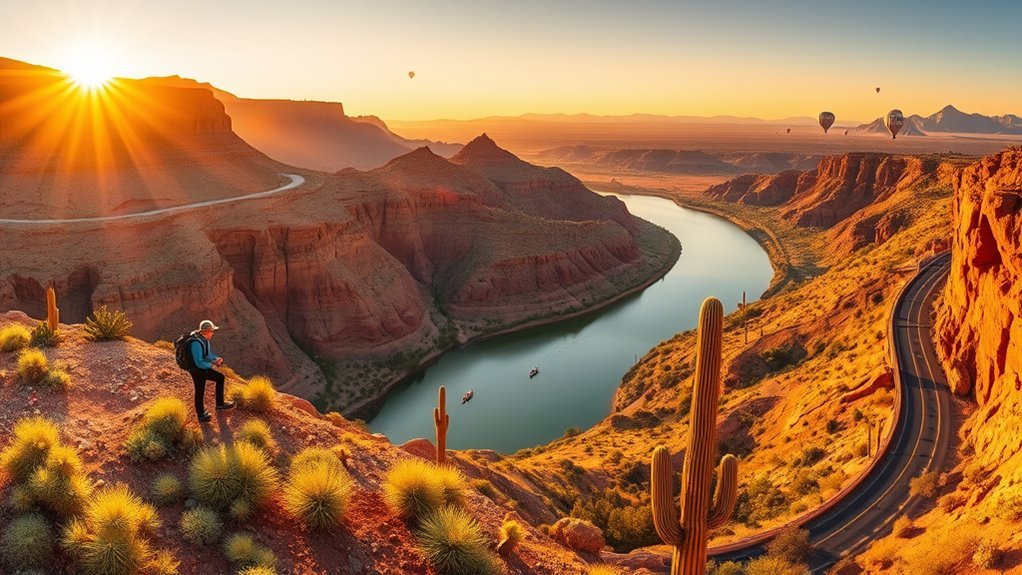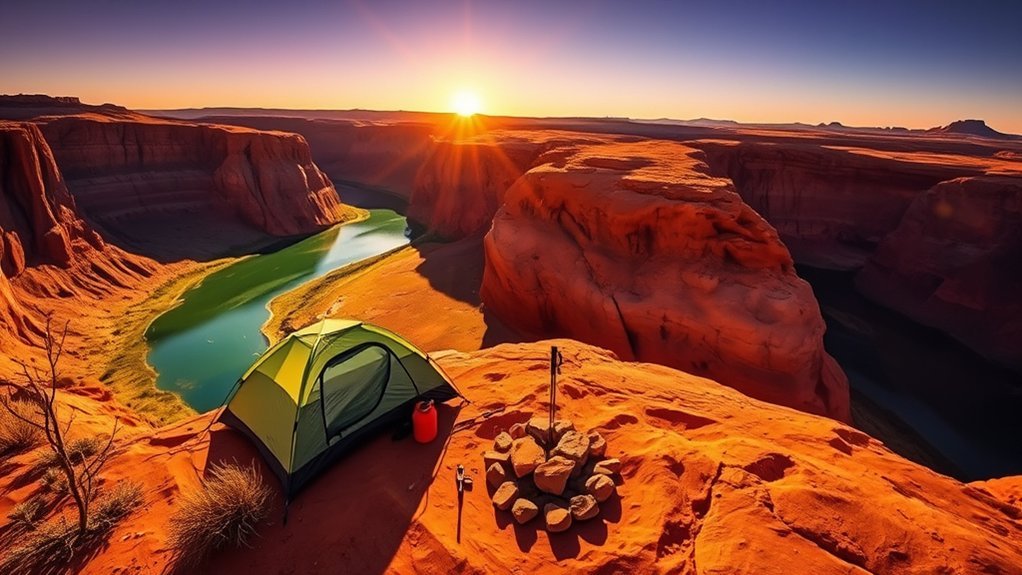
Camping at Horseshoe Bend gives you a very different experience from simply viewing the famous bend from the overlook. The practical way to do it is by paddling the Colorado River between Glen Canyon Dam and Lees Ferry and using one of the designated river camping areas. You will need to plan your route, obtain the free river permit, arrange a backhaul or upstream paddle, carry proper cold-water safety gear, and be ready for primitive camps with limited services.
Quick Answer
Camping at Horseshoe Bend by kayak means using one of five designated first-come, first-served Colorado River camping areas between Glen Canyon Dam and Lees Ferry, not camping at the overlook. Every paddling group needs a free Lees Ferry Backcountry River Permit. River campsites are free, but Glen Canyon entrance fees and optional backhaul costs still apply.
Key Takeaways
- The river reach between Glen Canyon Dam and Lees Ferry is about 15 miles, and a backhaul lets you start upriver and paddle downstream.
- One free Lees Ferry Backcountry River Permit is required per paddling group, even for a day trip.
- There are five designated river camping areas. They are first-come, first-served and cannot be reserved through the free river permit.
- U.S. Coast Guard-approved life jackets are mandatory for paddlecraft operators and passengers while underway on this section of the Colorado River.
- The river remains cold enough for hypothermia to be a serious risk, even when the air temperature is hot.
- Summer heat, spring wind, changing dam releases, and sudden storms can all affect the trip, so check conditions shortly before launching.
At a Glance
| Time Required | Plan a full day for the complete river route, or 1–2 nights if you want to camp and explore slowly. |
| Difficulty | Moderate. The reach is commonly paddled, but cold water, current, wind, heat, boat traffic, and remoteness require preparation. |
| Tools Needed | Suitable paddlecraft, paddle, U.S. Coast Guard-approved PFD, dry bags, drinking water, sun protection, insulating layers, first-aid kit, repair gear, and camping equipment for overnight trips. |
| Cost | The river permit and designated upriver campsites are free. Glen Canyon currently charges $30 for a private vehicle entrance pass. Backhaul, rentals, and developed campground fees are extra. |
Trip Overview and Route Details
If you are planning a Horseshoe Bend kayaking trip, the main river route runs about 15 miles from just below Glen Canyon Dam downstream to Lees Ferry. The National Park Service describes Lees Ferry as the primary public access point for this stretch of the Colorado River. You can paddle upstream from Lees Ferry and return with the current, but many paddlers arrange an authorized backhaul service that carries them and their boats upriver before they paddle downstream.
The full route passes high sandstone walls, Horseshoe Bend, beaches, short hiking opportunities, and the five designated camping areas. How long the trip takes depends on your launch point, river release, wind, paddling speed, meal breaks, hikes, photography stops, and whether you camp overnight. Instead of relying on a fixed 9- or 10-hour estimate, treat the full route as a full-day outing and build in extra daylight.
Pro Tip: If you want more time for hikes, photography, and a relaxed camp, turn the trip into an overnight paddle rather than trying to cover every stop in one long day.
Day Trip vs. Overnight Trip
- Day trip: Use a backhaul or choose a shorter drop point, carry only essential gear, and leave enough time to reach Lees Ferry before dark.
- One-night trip: Gives you more flexibility for hiking, fishing, photography, and waiting out strong wind.
- Multi-night trip: Allows a slower pace, but you still must use designated river camping areas and follow the National Park Service camping limit.
Before launching, read the current National Park Service Lees Ferry information. River users should also remember that Lees Ferry marks the transition toward Grand Canyon National Park. Do not continue downstream past the restricted area below the Lees Ferry launch unless you have the appropriate Grand Canyon authorization for that separate river section.
Best Time to Visit and Weather Considerations
Weather drives both comfort and safety in Glen Canyon. April and May can offer comfortable air temperatures, but spring weather is variable and the National Park Service warns that extended windy periods can occur. September and October are often more comfortable than midsummer and are generally better choices if avoiding extreme heat is a priority.
Summer requires extra caution. The National Park Service says temperatures in Glen Canyon can reach around 110°F in June and July, with very little shade in exposed areas. Northern Arizona’s summer monsoon pattern can also produce thunderstorms, lightning, sudden wind, and flash flooding. Winter brings quieter conditions but cold nights and possible freezing temperatures.
Do not assume spring automatically means higher river flow. Glen Canyon Dam controls much of the flow in this reach. Before leaving, check the current Bureau of Reclamation Glen Canyon Dam release data. Higher releases mean faster water, while lower releases can change shoreline access and expose obstacles.
The air can feel like midsummer while the Colorado River remains dangerously cold. Dress for both the weather above the water and the consequences of an unexpected swim.
The National Park Service reports that water below Glen Canyon Dam has historically averaged about 46°F (7°C), although actual temperatures can vary. Cold-water immersion can quickly reduce your ability to swim or perform a self-rescue. Check the Glen Canyon weather guidance and current forecast immediately before departure.
Backhaul Services, Parking, and Nearby Lodging
Backhaul services simplify the trip by carrying paddlers and their watercraft upstream from Lees Ferry so they can paddle downstream with the current. The National Park Service maintains a list of authorized paddlecraft and backhaul operators. Reserve in advance because departure schedules, boat capacity, seasonal operations, and rates vary.
Do not treat “about $75 per person” as a universal current price. For example, as checked in August 2026, NPS-authorized concessioner Wilderness River Adventures lists a base charge of $45 per person plus $35 per boat, with a separate gear charge for some loads. Other operators can charge differently, so verify the full cost before booking.
Lees Ferry is inside Glen Canyon National Recreation Area. The current standard Glen Canyon entrance fee is $30 for a private non-commercial vehicle. Think of this as a park entrance fee rather than simply a parking charge. Parking at the separate Horseshoe Bend overlook near Page is managed separately by the City of Page and is not covered by the Glen Canyon pass.
Note: As of August 2026, the National Park Service says the upper loop of Lees Ferry Campground is closed for renovations through September 30, 2026, while the lower loop remains open. Check NPS alerts shortly before your trip because construction conditions can change.
If you prefer a developed campsite before or after the river trip, Lees Ferry Campground is separate from the primitive river camping areas. The developed campground currently charges $26 per site per night and does not take conventional campsite reservations. Lodging is also available around Marble Canyon and Page if you want a bed, shower, and easier gear organization before launching.
| Item | Current Planning Tip |
|---|---|
| Backhaul service | Reserve ahead and confirm the total passenger, boat, and gear charge with an NPS-authorized operator. |
| Glen Canyon entrance | $30 for one private non-commercial vehicle at the current standard rate. |
| River permit | Free, but required for each watercraft group traveling between Glen Canyon Dam and Lees Ferry. |
| River campsites | Five designated camping areas, free and first-come, first-served. |
Campsites, Rules, and Permit Information
One of the most important details to understand is the difference between the river permit and the camping areas. Every group using watercraft between Glen Canyon Dam and Lees Ferry must obtain a free Lees Ferry Backcountry River Permit. One permit is required per group, and permits are available through the self-service system near the Lees Ferry launch area. The permit does not reserve a campsite.
For overnight camping along this river reach, the National Park Service allows camping only in five designated areas. They are marked, available on a first-come, first-served basis, and equipped with toilets and fire pits. There is no separate fee for these upriver camping areas.
The camps are above the river and require a short walk from your boat. This protects campsites from changing river releases. Do not count on abundant shade, a shower, trash service, electricity, or other developed-campground amenities.
Important Camping Rules
- Camp only in the designated river camping areas.
- Camping in Glen Canyon is generally limited to 14 consecutive days.
- Use provided fireplaces or an appropriate portable fire pan. Ground fires are not allowed in these river camps.
- Do not collect wood. If you use a portable fire pan, carry burned charcoal and fire debris out.
- Pack out litter and garbage because there is no regular upriver trash collection.
- Store food, pet food, garbage, and related supplies so birds and other wildlife cannot get into them.
- Do not disturb archaeological sites, historic structures, plants, rocks, or wildlife.
- Check current fire restrictions before relying on any campfire.
Warning: Do not paddle below the cable downstream from the Lees Ferry launch ramp as if it were simply a continuation of this trip. Dangerous rapids and a different Grand Canyon National Park permitting system begin downstream.
Review the current National Park Service Glen Canyon camping rules before every overnight trip because closures and fire restrictions can change.
What to Pack and How to Secure Your Gear
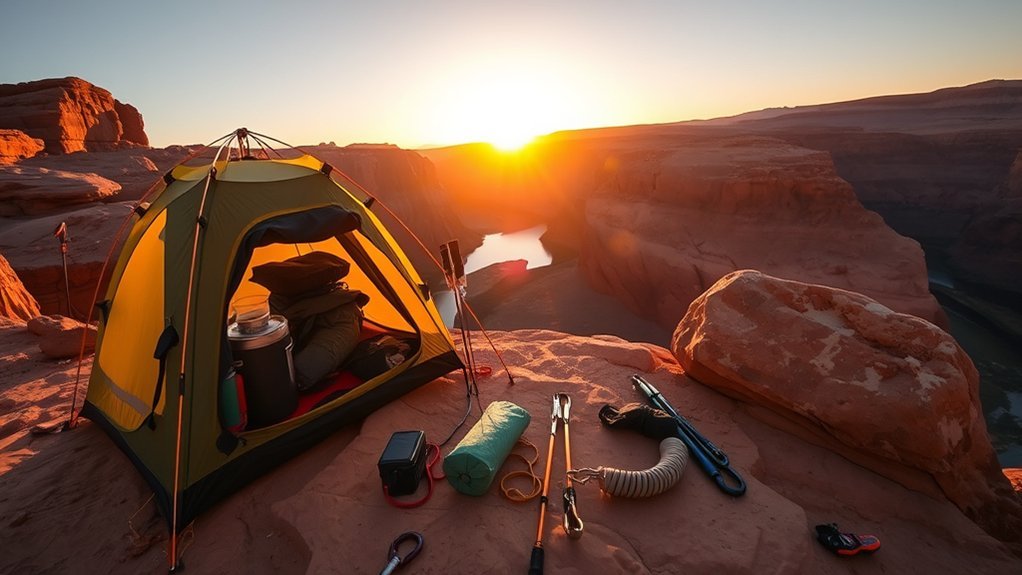
Use several dry bags instead of putting all your equipment in one large bag. Separate sleeping gear, clothing, cooking supplies, electronics, food, and emergency equipment so a single leak or lost bag does not compromise your entire trip.
Secure larger bags with dependable straps and attach smaller equipment so it cannot wash away after a capsize. If you use rigid storage products such as G.O.A.T Totes, treat them as optional organizational gear rather than a trip requirement, and make sure they can be firmly secured to your craft without creating an entanglement hazard. Keep electronics and emergency communication equipment inside a dedicated waterproof case.
Core Packing Checklist
- U.S. Coast Guard-approved PFD sized correctly for each paddler
- Primary paddle and, where practical, a spare paddle
- Dry bags and waterproof electronics case
- Enough drinking water for the trip plus a reserve
- High-energy food and snacks
- Sun hat, sunglasses, sunscreen, and lightweight sun-protective clothing
- Insulating layers appropriate for cold-water exposure
- Rain and wind protection
- First-aid kit and personal medications
- Repair kit suitable for your kayak, canoe, SUP, or inflatable craft
- Emergency blanket
- Walking shoes for shoreline stops and short hikes
- Headlamp with spare power
- Camping shelter, sleeping system, cooking equipment, and food storage for overnight trips
- Navigation information and emergency-contact plan
Practice loading the boat before leaving home. Weight should be balanced so the craft remains predictable in current and wind. Keep emergency items accessible rather than burying them beneath camping gear.
Safety, Leave No Trace, and River Etiquette
Safety begins before you launch. On the Colorado River between Glen Canyon Dam and Lees Ferry, paddlecraft operators and passengers are required to wear a U.S. Coast Guard-approved PFD while underway. The National Park Service also recommends checking current river outflow and weather, practicing self-rescue beforehand, and telling someone where you are going and when you expect to return.
The cold water is one of the most serious hazards. Even on a hot afternoon, prolonged immersion can cause hypothermia and rapidly reduce strength and coordination. Know how to re-enter your craft from the water and how to get yourself or another paddler safely to shore.
Wind is another major consideration. Canyon conditions can change quickly, and strong wind can make progress slow or force you to wait onshore. Leave enough time and food to handle an unexpected delay rather than committing to a rigid arrival schedule.
Follow Leave No Trace principles throughout the trip. Pack out garbage, use existing camps, keep fires within the allowed systems, avoid creating new paths, and leave rocks, vegetation, cultural resources, and historical objects untouched.
Wildlife sightings are possible, including desert bighorn sheep and a variety of birds. Observe animals from a distance, keep food secured, never feed wildlife, and avoid blocking an animal’s route to water.
Keep voices, speakers, and campsite noise low. Glen Canyon’s walls carry sound surprisingly well, and quiet river etiquette improves the experience for other paddlers and reduces disturbance to wildlife.
Emergency Planning: Leave a float plan with someone who is not on the trip. Include your route, group size, boat description, planned campsite or campsites, backhaul operator if applicable, and expected return time. For emergencies in Glen Canyon, call 911 when service is available or hail the National Park Service on Marine Band 16 if you carry a marine radio.
For the latest requirements, read the National Park Service Glen Canyon safety guidance before departure.
Frequently Asked Questions
What is the difference between camping and backcountry camping here?
The Colorado River camps between Glen Canyon Dam and Lees Ferry are primitive designated camping areas reached by boat. They are different from the developed Lees Ferry Campground and from dispersed land-based backcountry camping elsewhere in Glen Canyon. On this river trip, you must camp in one of the five designated river camping areas.
Is kayaking Horseshoe Bend worth it?
Yes, if you are comfortable with the trip’s safety and logistics. Paddling lets you experience Horseshoe Bend from river level and spend much more time inside Glen Canyon than you get from the overlook. A backhaul can make the downstream journey easier, but cold water, wind, heat, and changing flows still require preparation.
Do the Horseshoe Bend river campsites have showers?
No. Do not plan on showers at the primitive river camping areas. The National Park Service lists toilets and fire pits at the upriver camps, but these are primitive sites without the full amenities of a developed campground.
Do I need a permit to kayak Horseshoe Bend?
Yes. Every group using watercraft on the Colorado River between Glen Canyon Dam and Lees Ferry must obtain a free Lees Ferry Backcountry River Permit. One permit is required per group, including day-use paddlers. The permit does not reserve a campsite.
How many camping areas are along the river?
The National Park Service currently lists five designated camping areas between Glen Canyon Dam and Lees Ferry. They are first-come, first-served and marked along the river.
Can I camp anywhere along the Colorado River near Horseshoe Bend?
No. On the Glen Canyon reach between the dam and Lees Ferry, camping is permitted only in the designated camping areas. Do not create a new beach campsite simply because a shoreline spot looks suitable.
How long does the Glen Canyon Dam to Lees Ferry paddle take?
There is no single reliable time for everyone. The complete route is about 15 miles, so plan it as a full-day paddle unless you are camping overnight. Current, wind, launch location, skill, hikes, photography stops, and meal breaks can change the total time substantially.
Do I really have to wear a life jacket?
Yes. Paddlecraft operators and passengers on the Colorado River between Glen Canyon Dam and Lees Ferry must wear U.S. Coast Guard-approved life jackets while underway. This rule is especially important because the river is cold enough for an unexpected swim to become dangerous quickly.
Sources
- National Park Service: Lees Ferry — river permit, PFD requirement, access, launch information, and upstream camping.
- National Park Service: Glen Canyon Camping — five designated river camping areas, fire rules, camping limits, facilities, and current Lees Ferry Campground conditions.
- National Park Service: Fees & Passes — current Glen Canyon entrance fees and pass information.
- National Park Service: Glen Canyon Safety — cold-water hazards, self-rescue, river-flow checks, weather, and required safety equipment.
- National Park Service: Glen Canyon Weather — seasonal heat, wind, cold, and weather-planning guidance.
- U.S. Bureau of Reclamation: Glen Canyon Dam Data — current dam-release and reservoir information for pre-trip river-condition checks.
Conclusion
Camping at Horseshoe Bend is best treated as a real river trip rather than a casual extension of the overlook visit. Get your free Lees Ferry Backcountry River Permit, use only the five designated camping areas, reserve any backhaul well ahead of time, and wear your required PFD whenever you are underway. Pack for desert heat and cold water at the same time, check weather and dam releases before launching, secure your gear, and leave enough schedule flexibility for wind or changing conditions. Follow the river and camping rules, practice Leave No Trace, and you can enjoy Horseshoe Bend from a perspective that most overlook visitors never experience.