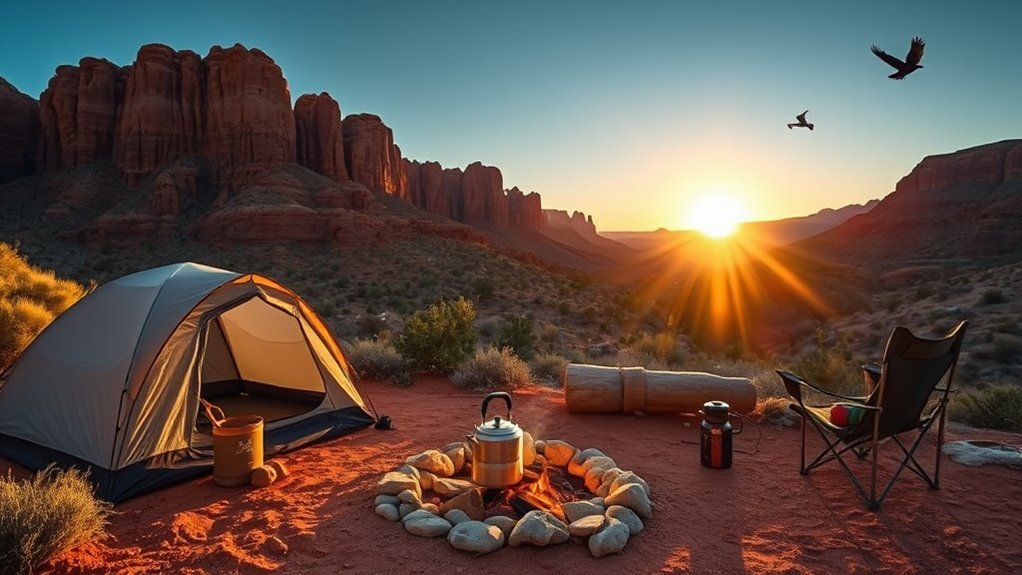
Planning to camp near Red Rock State Park in Sedona, Arizona? Start with one important fact: Red Rock State Park has no overnight campsites. Visit the conservation park during posted daytime hours, then stay at a legal campground, RV park, or designated dispersed campsite outside the park.
Quick Answer
You cannot camp inside Red Rock State Park in Sedona. Use the park for daytime hiking, picnicking, wildlife viewing, and programs, then stay at a developed campground such as Dead Horse Ranch or Cave Spring, a private RV park, or a legal West Sedona designated dispersed campsite.
Key Takeaways
- Overnight camping and vehicle sleeping are not allowed inside Red Rock State Park.
- Nearby developed choices include Dead Horse Ranch State Park, Cave Spring Campground, and Manzanita Campground.
- West Sedona dispersed camping is limited to eight designated areas with roughly 200 sites; camping outside those areas is prohibited.
- West Sedona sites are free, first-come, first-served, have no potable water, and have a 14-day stay limit.
- Wood and charcoal fires are banned year-round in West Sedona designated dispersed camping areas. Use only an allowed on/off LPG stove or grill and follow any stricter temporary order.
- Red Rock State Park protects sensitive habitat: pets are limited to ADA service animals, swimming and wading are prohibited, and visitors must stay on designated trails.
At a Glance
| Time Required | About 30–60 minutes to compare rules and reserve a developed site; allow a full day for Red Rock State Park if you plan to hike, picnic, and visit the Miller Visitor Center. |
| Difficulty | Easy at developed campgrounds; moderate at dispersed sites because you must carry water, manage waste, navigate forest roads, and follow changing closures and fire rules. |
| Tools Needed | Reservation confirmation, offline maps, current rule pages, water containers, sealed food storage, LPG stove, trash bags, first-aid kit, sun protection, headlamp, and layered clothing. |
| Cost | Plan for Red Rock State Park day-use admission plus your overnight site. West Sedona designated dispersed camping is free; developed campground and RV park prices vary by site, hookups, and season. |
Note: This guide covers Red Rock State Park in Sedona, Arizona. It is not Red Rock Canyon State Park in California or Red Rock Canyon National Conservation Area near Las Vegas, which have different camping systems and rules.
Camping Is Not Allowed Inside Red Rock State Park
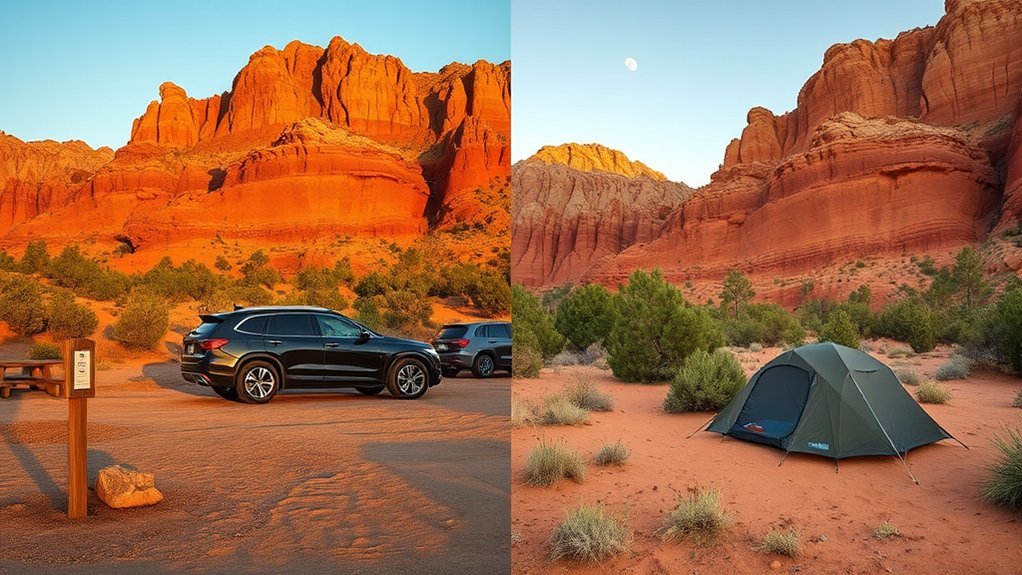
Red Rock State Park is a day-use conservation park, not an overnight base camp. Its facilities center on the Miller Visitor Center, marked trails, picnic areas, restrooms, wildlife viewing, and environmental education. The official Arizona State Parks listing does not show campsites or camping reservations for this park.
Your overnight choice must therefore be outside the park. A developed campground gives you a defined site and may provide drinking water, restrooms, showers, or electrical service. Designated dispersed camping costs less but requires more self-reliance, and you must use only the sites and access routes that the Forest Service allows.
Best Camping Options Near Red Rock State Park
| Overnight Option | Best For | What to Know |
|---|---|---|
| Dead Horse Ranch State Park | Families, RVs, tent campers, and travelers who want reliable facilities. | Located in Cottonwood. It has more than 100 RV sites, a tent-only loop, potable water, accessible restrooms, hot showers, and electric or non-electric choices. Reserve early for spring and fall. |
| Cave Spring Campground | Campers who want shade, Oak Creek access, and a developed forest campground. | In Oak Creek Canyon north of Sedona. It has 84 sites, drinking water, vault toilets, token showers, and no hookups. Check vehicle-length limits and seasonal availability before booking. |
| Manzanita Campground | Tent campers who prefer a small creekside campground. | Tent-only and close to Oak Creek. Sites fill quickly, parking is limited, and RVs, trailers, and oversized vehicles are not allowed. |
| West Sedona designated dispersed camping | Self-sufficient campers who want a free, first-come site. | Eight designated areas offer roughly 200 sites. Bring all water, expect no hookups, follow a 14-day limit, and never camp outside the designated areas. |
| Private RV park or campground | Travelers who need full hookups, laundry, showers, or easy access to shops. | Rules vary by property. Confirm pet limits, rig length, generator use, check-in time, cancellation terms, and whether the quoted rate includes taxes or extra vehicles. |
Permits, Reservations, and Park Regulations
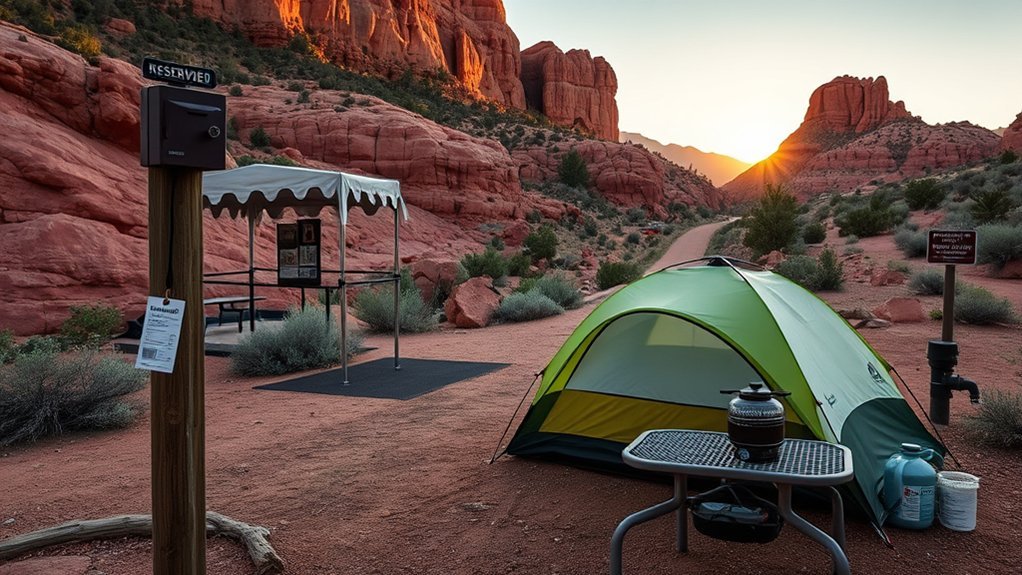
Split your plan into two bookings or decisions: day use inside Red Rock State Park and overnight camping outside it. Red Rock State Park charges day-use admission, follows posted operating hours, and closes to ordinary visitors overnight. Check the official Red Rock State Park page shortly before your trip because hours, fees, fire notices, events, and temporary access limits can change.
Group facilities at Red Rock State Park are for day use, not camping. Organized events, commercial photography, filming, weddings, or large group activities may require advance approval or a permit. Do not assume that paying the day-use fee authorizes an event or an overnight stay.
Reserve or identify your legal overnight site first. Then build your Red Rock State Park visit around the park’s current opening, last-entry, and closing times.
- Use the Red Rock State Park facility information page for park-specific restrictions.
- Use the official campground reservation page for developed sites and save the confirmation offline.
- Use the Forest Service West Sedona page for designated-area rules and stay limits.
- Check Coconino National Forest alerts for closures, road restrictions, and emergency orders.
- Download maps before leaving town because coverage can weaken on forest roads and in canyon areas.
Warning: Do not pitch a tent, remain in a vehicle overnight, or sleep in a parking area inside Red Rock State Park. Use a legal overnight site managed by Arizona State Parks, the Forest Service, or a private campground.
Selecting a Legal Campsite for Views, Shade, and Privacy
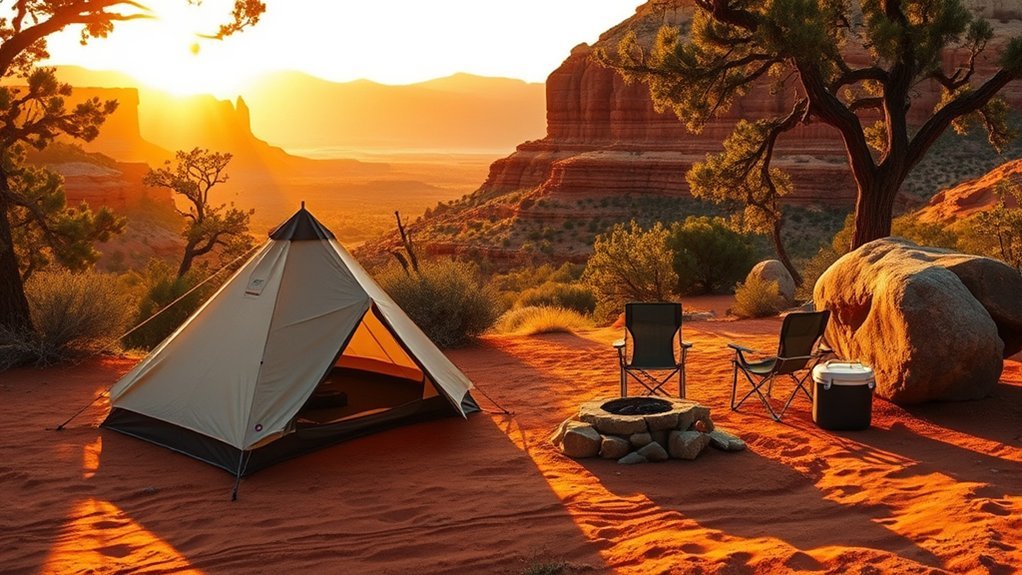
Legality comes before scenery. In a developed campground, remain within your assigned site. In West Sedona dispersed areas, use only a signed or designated campsite. Do not create a new pullout, drive across vegetation, move barriers, or widen a hardened site to improve the view.
After confirming that a site is legal, inspect it for safe access and drainage. Look for firm, previously disturbed ground, a level tent area, enough clearance for your vehicle, and no obvious wash or low channel crossing the sleeping area. Flash floods can move through dry-looking drainages even when rain falls several miles away.
Check Road and Vehicle Fit
Forest roads can become rough, muddy, deeply rutted, or temporarily closed. Check current alerts and use a current Motor Vehicle Use Map where applicable. A campsite that works for a high-clearance vehicle may not suit a low car, long trailer, or large motorhome. Turn around before a road becomes too narrow or damaged to exit safely.
- Park only where motor vehicles are allowed, with all tires on the road, parking pad, or hardened spur.
- Choose a durable surface rather than vegetation or biological soil crust.
- Avoid dead trees, hanging branches, cliff edges, washes, and low spots that collect runoff.
- Leave enough space to exit without backing into brush or blocking another camper.
- Keep voices, music, and generators within the rules because sound travels across open desert terrain.
Pro Tip: Save your campsite coordinates before dark, then calculate the drive to Red Rock State Park. Arrive after the park opens and well before its last-entry time so traffic or a slow forest road does not cut short your hike.
Water, Waste, Food Storage, and Wildlife Safety
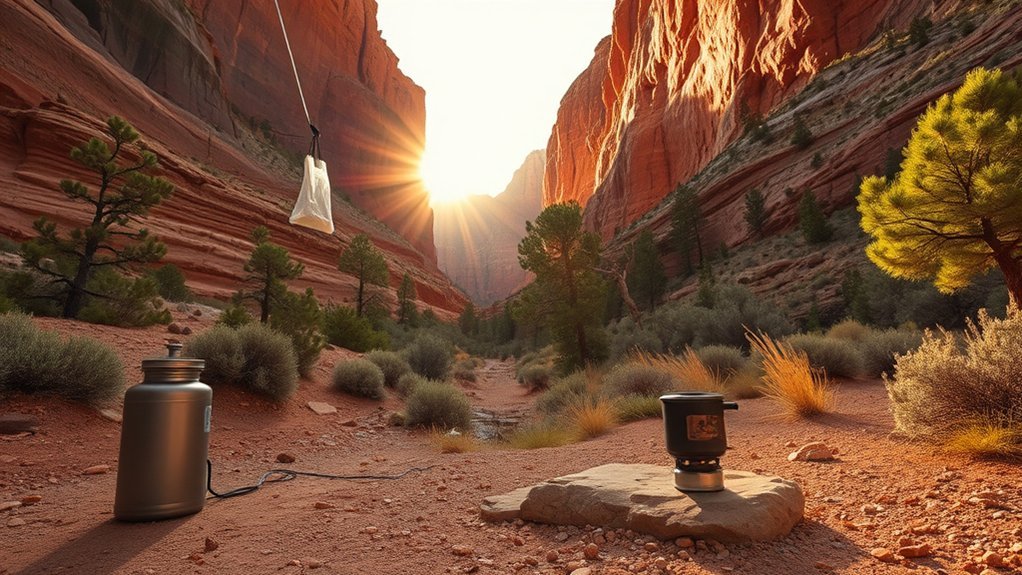
Water planning is essential around Sedona. Developed campgrounds may provide potable water, but the West Sedona designated dispersed camping areas do not. Carry enough for drinking, cooking, handwashing, dish cleanup, pets staying outside the park, and an unexpected delay. Do not depend on creeks, tanks, or seasonal pools.
Keep a clean camp. Store food, coolers, trash, cooking oil, toiletries, sunscreen, and other scented items in sealed containers or a locked hard-sided vehicle where permitted. Never leave food loose on a table, in a tent vestibule, or beside a stove overnight.
Do not assume a dispersed site has a toilet or trash service. Confirm facilities before arrival. Where no toilet is provided, follow the land manager’s current waste rules and use an approved pack-out system when required. Never leave toilet paper, wipes, food scraps, or bags beside a campsite.
- Bring more water than your planned daily use, especially from late spring through early fall.
- Label drinking-water and gray-water containers so they cannot be confused.
- Wash dishes away from streams and drainages, strain the water, and pack out food particles.
- Pack out all trash from dispersed campsites and Red Rock State Park day-use areas.
- Observe wildlife from a distance and never feed animals, even with fruit peels or other “natural” food.
Fire Rules, Stove Use, and Responsible Cooking
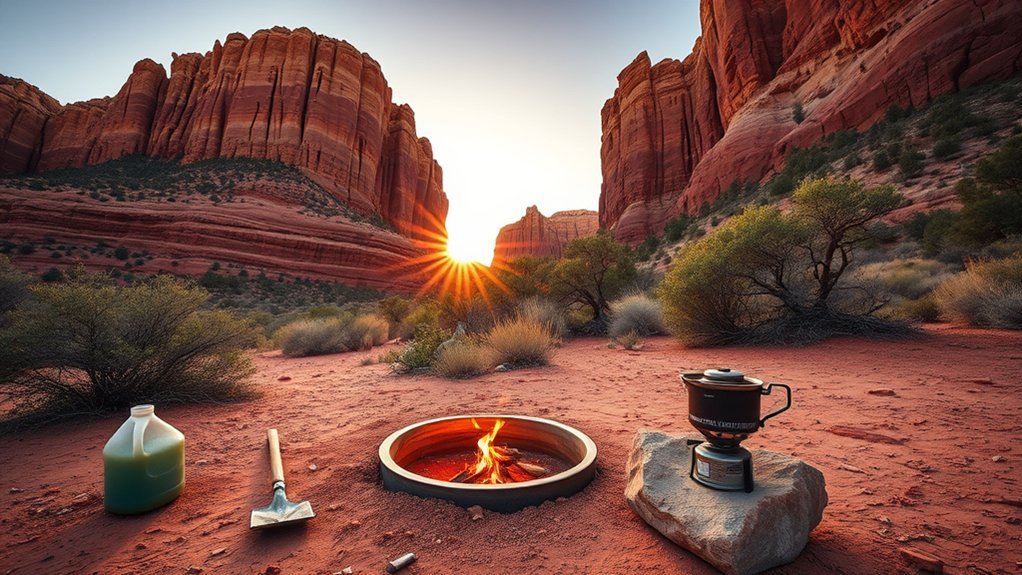
Fire rules can differ between Red Rock State Park, developed forest campgrounds, private properties, and West Sedona dispersed areas. At West Sedona designated dispersed campsites, wood and charcoal campfires are prohibited at all times. A stove or grill fueled solely by liquefied petroleum gas and capable of being turned on and off is allowed under the site’s standing rule, unless a stricter temporary restriction or closure suspends that use.
Before cooking, check the Coconino National Forest fire restrictions page, current forest alerts, and any notices posted by your campground or Arizona State Parks. Do not rely on a previous trip or an older blog post.
| Item | Safe Practice |
|---|---|
| LPG stove or grill | Use a stable on/off appliance on bare or cleared ground, away from tents, dry grass, leaves, and vehicle fuel. |
| Wood and charcoal | Never use them at West Sedona designated dispersed campsites. At developed sites, use them only when the current land-manager rules expressly allow them. |
| Wind | Do not cook where gusts can tip the stove, spread heat, or carry sparks into vegetation. |
| Emergency control | Keep water and an appropriate fire extinguisher nearby, and know how to shut off the fuel immediately. |
| Cleanup | Let equipment cool, close fuel valves, and pack out foil, scraps, used canisters, and all cooking waste. |
Warning: A low fire-danger rating does not cancel permanent site rules. West Sedona’s wood-and-charcoal ban still applies, and temporary restrictions can become stricter without much notice.
Route-Finding, Trail Etiquette, and Day-Use Navigation
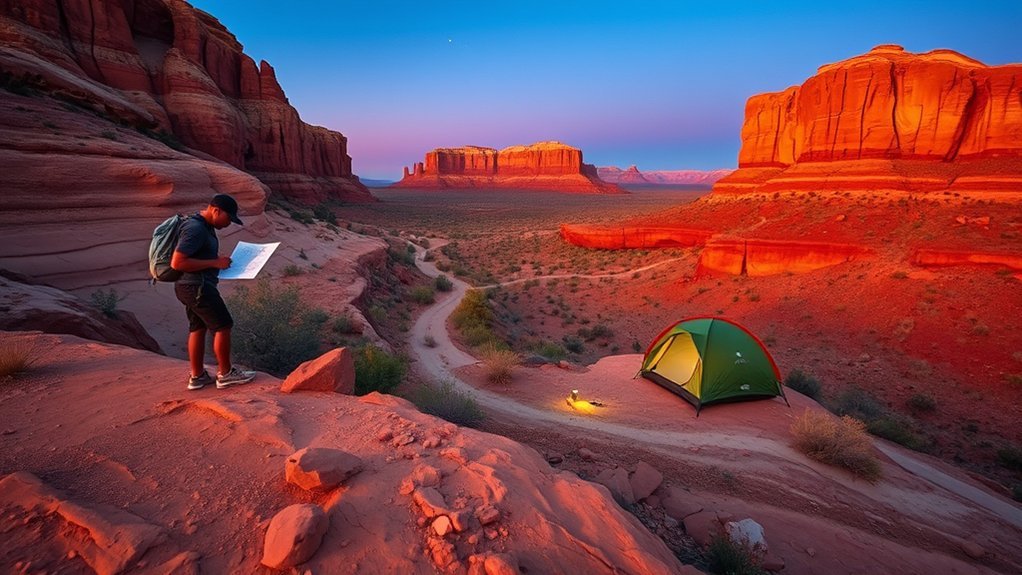
Red Rock State Park has interconnecting trails through high-desert and Oak Creek riparian habitat. Download or print the official park map, note the visitor center and trail junctions, and check posted hours before starting. Staying on designated trails protects plants, wildlife habitat, archaeological resources, and creek banks.
Use basic trail courtesy: yield when appropriate, keep noise low, avoid shortcuts, and let faster visitors pass at a safe spot. Bikes and horses are allowed only on designated routes. Rules change when you leave the state park and enter national forest land, so verify the land manager for each trailhead and parking area.
- Check the marker at every junction and compare it with your map.
- Carry a headlamp even on a day hike in case delays push your return toward closing time.
- Save maps offline rather than depending on mobile service.
- Tell someone your campsite, planned route, vehicle description, and return time.
- Turn around early when heat, lightning, smoke, flooding, fatigue, or route confusion increases.
Essential Gear and Clothing for Desert Temperature Swings
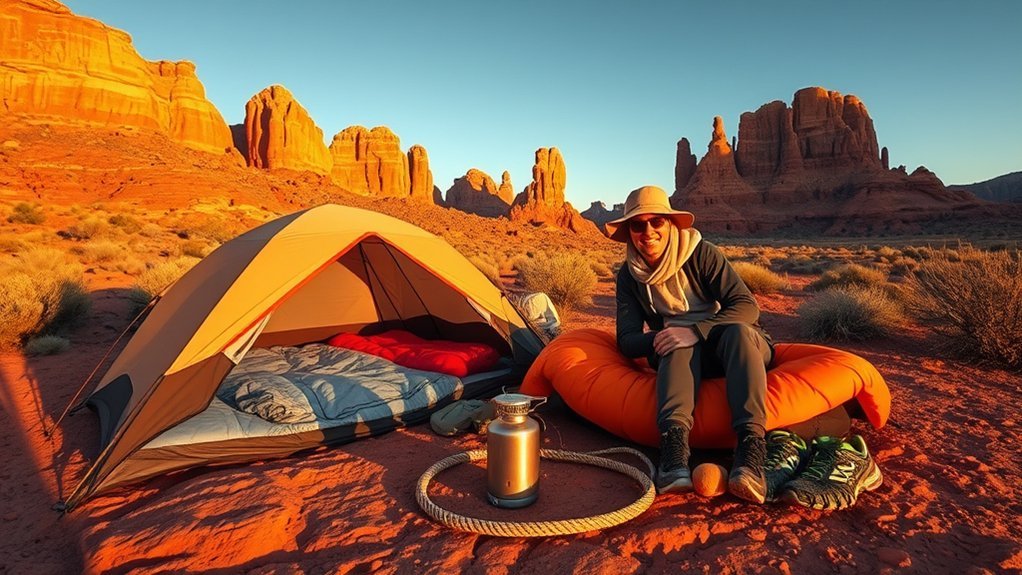
Sedona weather can shift from strong sun to cool evenings, wind, or sudden storms. Wear a moisture-wicking base layer, breathable sun shirt, insulating midlayer, and light wind or rain shell. Add a wide-brim hat, sunglasses, sunscreen, and sturdy footwear with reliable traction.
Developed campgrounds reduce some logistics, but dispersed camping requires greater backup capacity. Bring water containers, a reliable stove, trash bags, first-aid supplies, paper and offline maps, a tire-pressure gauge, basic vehicle recovery items suitable for your vehicle, and warm sleeping layers.
Heat and Monsoon Safety
Summer heat increases water needs and can make exposed trails unsafe by midday. During the Southwest monsoon season, thunderstorms can produce lightning, strong wind, and flash flooding. Check the forecast for both your campsite and hiking area, avoid washes and low crossings when storms are possible, and move away from exposed ridges when thunder is heard.
- Use wool or synthetic socks to reduce blister risk and retain warmth when damp.
- Pack a warm hat and light gloves outside the hottest part of summer.
- Carry extra water and electrolytes for warm-weather hiking.
- Secure tents, shade structures, and loose gear before wind arrives.
- Never drive through moving floodwater or camp in a drainage channel.
Frequently Asked Questions
Can you camp inside Red Rock State Park?
No. Red Rock State Park in Sedona is a day-use conservation park with no campground, RV sites, or overnight vehicle sleeping. Visit during posted hours, then stay at a legal campsite outside the park.
Where should I camp near Red Rock State Park?
Choose Dead Horse Ranch State Park for developed tent or RV camping, Cave Spring for a larger forest campground in Oak Creek Canyon, Manzanita for tent-only creekside camping, or West Sedona designated dispersed camping if you are fully self-sufficient.
Do I need a reservation?
Reserve developed campgrounds whenever the booking system allows it, especially for spring, fall, holidays, and weekends. West Sedona designated dispersed campsites are free and first-come, first-served, so arrival does not guarantee an open site.
How long can I stay at West Sedona dispersed campsites?
The Forest Service lists a 14-day stay limit for the West Sedona designated dispersed camping areas. Separate developed campgrounds may have different limits, so check the rules for the exact site you book.
Are campfires allowed at West Sedona dispersed campsites?
Wood and charcoal campfires are prohibited at all times. An on/off stove or grill fueled solely by liquefied petroleum gas is allowed under the standing site rule unless a stricter temporary restriction or closure says otherwise.
Are dogs allowed in Red Rock State Park?
The park limits animal access to ADA service animals. Travelers with pets should choose a pet-friendly campground and trail outside the park, then confirm leash, waste, heat-safety, and unattended-animal rules.
Are there RV or trailer hookups inside Red Rock State Park?
No. Red Rock State Park has no campsites or hookups. Dead Horse Ranch State Park has developed RV sites, while Cave Spring has no hookups and Manzanita is tent-only.
Is water available at dispersed campsites west of Sedona?
No potable water is available at the West Sedona designated dispersed camping areas. Bring enough for drinking, cooking, washing, and emergencies, and do not depend on natural water sources.
Can you fish, swim, wade, or collect natural items inside Red Rock State Park?
Swimming and wading in Oak Creek are prohibited inside Red Rock State Park. Do not remove plants, wildlife, rocks, or artifacts. For fishing or swimming elsewhere in the Sedona area, use a location where the activity is specifically allowed and follow the responsible agency’s rules.
Are alcohol and glass containers permitted at campsites?
Red Rock State Park has no campsites, so the rules depend on your overnight location. Check the campground, private property, or Forest Service order for alcohol, glass, quiet hours, and possession restrictions before packing.
Conclusion
A successful Red Rock State Park camping trip has two parts: visit the park during the day, then camp legally outside it. Choose a developed campground for defined sites and services, or use West Sedona designated dispersed camping only when you can bring water, manage all waste, navigate approved roads, and follow permanent and temporary fire restrictions.
Confirm your overnight site, park hours, alerts, road access, and weather before leaving. Pack secure food storage, an approved stove, offline maps, sun protection, and warm layers. That preparation protects Sedona’s sensitive landscape and makes the trip safer and easier.
Sources
- Arizona State Parks — Red Rock State Park — official park overview, visitor information, hours, fees, and alerts.
- Arizona State Parks — Red Rock Facility Information — facilities, conservation rules, animal restrictions, and creek-use restrictions.
- Arizona State Parks — Camping at Dead Horse Ranch — nearby developed tent and RV camping facilities, fees, and stay limits.
- Recreation.gov — Cave Spring Campground — campsite count, facilities, vehicle limits, and campground notices.
- USDA Forest Service — West Sedona Designated Dispersed Camping Area — designated areas, campsite estimate, water, stay limit, and permanent fire rules.
- USDA Forest Service — Coconino National Forest Fire Restrictions — restriction stages, permanent fire restrictions, and current-check guidance.