

Nestled within the heart of the Swiss Alps, Trummelbach Falls is a breathtaking natural wonder that captivates visitors with its dramatic cascades and thundering waters.
The falls are fed by the melting glaciers of the Eiger, Mönch, and Jungfrau peaks, which contribute to their powerful flow.
As one of the most visited attractions in Switzerland, Trummelbach Falls showcases the raw beauty of nature, drawing photographers and nature enthusiasts alike to witness its splendor. The falls consist of ten distinct cascades, each with its own character and charm. Visitors can explore the falls via a series of tunnels and walkways that allow for close-up views of the rushing water.
The sound of the water crashing against the rocks creates a symphony of nature that resonates throughout the valley. The sheer force of the water, combined with the stunning alpine backdrop, makes Trummelbach Falls a prime location for photography. Capturing the essence of this natural spectacle requires an understanding of both the landscape and the techniques that can best convey its beauty.
Key Takeaways
- Trummelbach Falls is a series of impressive waterfalls located in the Lauterbrunnen Valley in Switzerland, offering a unique and powerful photography opportunity.
- Finding the best viewpoint for photographing Trummelbach Falls involves exploring different vantage points along the designated walking paths and platforms within the mountain.
- To capture the power and movement of the falls, use a fast shutter speed to freeze the action of the cascading water and consider incorporating elements such as rocks or trees for scale and context.
- Utilize long exposure techniques to create stunning water effects, such as silky smooth water flow and misty, ethereal effects, by using a tripod and neutral density filters.
- Sunrise and sunset offer ideal lighting conditions for photographing Trummelbach Falls, providing warm, golden light and long shadows that enhance the drama and beauty of the scene.
Finding the Best Viewpoint
To truly appreciate the magnificence of Trummelbach Falls, it is essential to identify the best viewpoints from which to capture its beauty. The falls are accessible through a well-maintained path that leads visitors through various observation points. Each viewpoint offers a unique perspective, allowing photographers to experiment with different angles and compositions.
The first major viewpoint is located near the entrance, where visitors can see the initial cascade tumbling down the rocky cliffs. This vantage point is ideal for wide-angle shots that capture the grandeur of the falls in relation to their surroundings. As one ventures deeper into the site, additional viewpoints reveal themselves, each offering a different aspect of the falls.
For instance, one can find a viewpoint that allows for a closer look at the water as it crashes into the rocks below, creating a misty spray that adds an ethereal quality to photographs. Another notable spot is located further up the path, where visitors can capture the falls from above, showcasing the intricate patterns formed by the water as it flows downwards. By exploring these various viewpoints, photographers can create a diverse portfolio that highlights the multifaceted nature of Trummelbach Falls.
Tips for Capturing the Power and Movement of the Falls
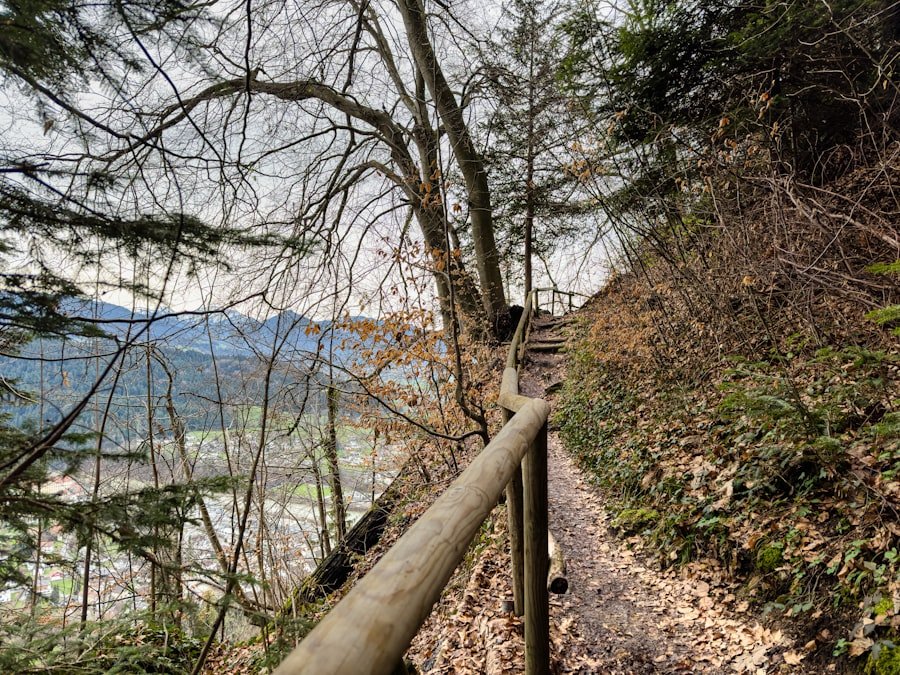
When photographing Trummelbach Falls, it is crucial to convey the power and movement of the water. One effective way to achieve this is by using fast shutter speeds to freeze the action, allowing for sharp details in the cascading water. This technique can highlight individual droplets as they leap from the surface or create a sense of dynamism as water crashes against rocks.
Alternatively, capturing movement can also be achieved through slower shutter speeds, which create a sense of fluidity and grace in the water. This approach allows for a more artistic interpretation of the falls, emphasizing their continuous motion.
To achieve this effect, photographers may want to experiment with shutter speeds ranging from 1/30th to 1/2 second, depending on lighting conditions and desired outcomes. Using a tripod is essential when employing slower shutter speeds to ensure stability and prevent camera shake. By mastering these techniques, photographers can effectively convey both the power and beauty of Trummelbach Falls.
Using Long Exposure Techniques for Stunning Water Effects
| Technique | Effect |
|---|---|
| Long Exposure | Smooth and silky water |
| Neutral Density Filter | Reduces light for longer exposure |
| Shutter Speed | Slower speed for blurred water |
| Composition | Consider foreground and background elements |
Long exposure photography is particularly effective for capturing waterfalls like Trummelbach Falls, as it allows for stunning visual effects that highlight the smoothness and flow of water. By using a neutral density (ND) filter, photographers can reduce the amount of light entering the lens, enabling longer exposure times without overexposing the image. This technique is especially useful during bright daylight hours when achieving slow shutter speeds can be challenging.
To create captivating long exposure images at Trummelbach Falls, photographers should aim for exposure times ranging from 1 to several seconds. This duration will allow for a silky-smooth appearance in the water while still retaining some texture in areas where it crashes against rocks. It’s important to experiment with different exposure times to find the right balance between smoothness and detail.
Additionally, incorporating foreground elements such as rocks or foliage can add depth to long exposure shots, creating a more immersive experience for viewers.
Sunrise and Sunset Photography at Trummelbach Falls
The golden hours of sunrise and sunset present unique opportunities for capturing Trummelbach Falls in a different light. During these times, the soft, warm hues of sunlight illuminate the landscape, creating a magical atmosphere that enhances the natural beauty of the falls. Photographers should arrive early to set up their equipment and scout potential compositions before the sun rises or sets.
At sunrise, the first light often casts a gentle glow on the surrounding cliffs and vegetation, providing an excellent opportunity to capture reflections in any pools formed by the falls. The mist rising from the water can also catch the light beautifully, adding an ethereal quality to images. Conversely, during sunset, photographers can take advantage of dramatic skies filled with vibrant colors that contrast against the cool tones of the water and rocks.
This interplay between light and shadow can create striking images that evoke emotion and wonder.
Dealing with Challenging Lighting Conditions
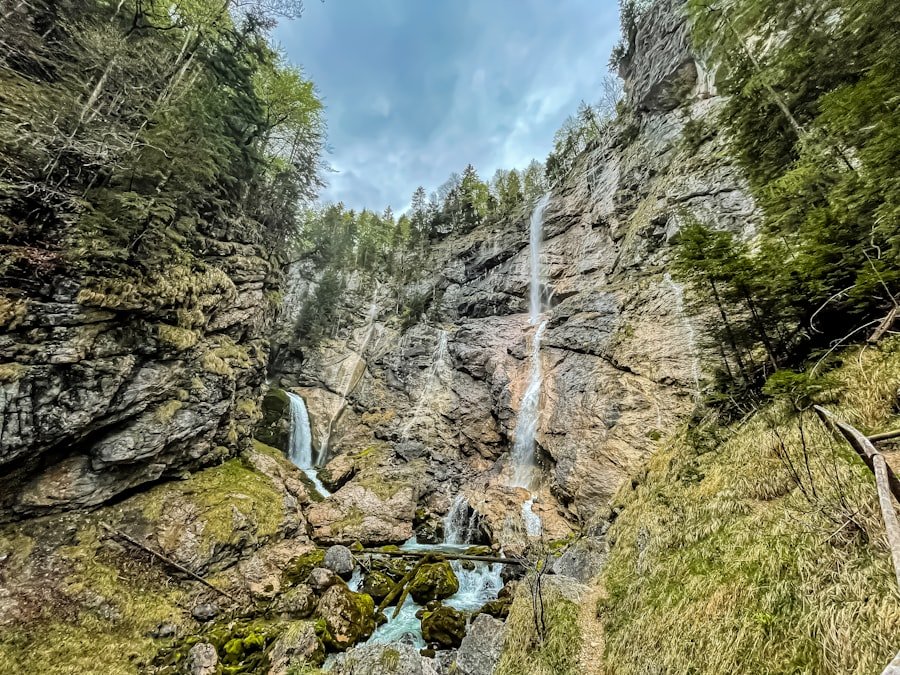
Photographing waterfalls often presents challenges related to lighting conditions, particularly at Trummelbach Falls where shadows and bright highlights can coexist in close proximity. To navigate these challenges effectively, photographers should consider using graduated neutral density filters (GND) to balance exposure between bright areas and darker shadows. These filters help to even out light levels across an image, ensuring that both highlights and shadows are well-exposed.
In addition to using filters, adjusting camera settings can also help manage challenging lighting conditions. Utilizing manual mode allows photographers to fine-tune exposure settings based on specific lighting scenarios. For instance, when shooting in bright conditions, increasing shutter speed or reducing ISO can prevent overexposure while maintaining detail in both highlights and shadows.
Conversely, in low-light situations such as early morning or late evening, increasing ISO or opening up the aperture can help capture more light without sacrificing image quality.
Composition and Framing Tips for Photographing Trummelbach Falls
Effective composition is key to creating compelling photographs of Trummelbach Falls. One fundamental principle is to use leading lines to draw viewers’ eyes toward the falls. Natural lines created by rocks or pathways can guide attention to focal points within an image.
Additionally, incorporating foreground elements such as boulders or lush vegetation can add depth and context to photographs while framing the falls themselves. Another important aspect of composition is considering different aspect ratios and orientations. While landscape orientation is often favored for wide shots that encompass more of the scene, portrait orientation can be effective for capturing vertical cascades or isolating specific sections of the falls.
Experimenting with various angles—such as shooting from low angles or elevated viewpoints—can also yield unique perspectives that set images apart from typical tourist snapshots.
Post-Processing Tips for Enhancing Your Trummelbach Falls Photos
Post-processing plays a crucial role in enhancing photographs taken at Trummelbach Falls. Software such as Adobe Lightroom or Photoshop provides tools for adjusting exposure, contrast, saturation, and sharpness—elements that can significantly impact an image’s final appearance. When editing waterfall photos, it’s essential to maintain a natural look while enhancing colors and details.
One effective technique is to use local adjustments to bring out textures in both water and rocks without overdoing it on global adjustments that might affect other areas negatively. For instance, selectively increasing clarity on rocky surfaces can enhance their ruggedness while keeping water smooth and soft through careful adjustments in contrast and highlights. Additionally, applying subtle vignette effects can help draw attention toward the center of an image where the falls are located.
By mastering these post-processing techniques alongside effective shooting strategies, photographers can create stunning images that truly reflect the beauty and power of Trummelbach Falls—a testament to nature’s artistry in one of Switzerland’s most picturesque locations.
Trummelbach Falls, nestled in the heart of the Swiss Alps, offers a breathtaking viewpoint that is a paradise for photographers. The cascading waters, set against a backdrop of rugged cliffs and lush greenery, provide a dynamic subject for capturing the raw beauty of nature. When photographing Trummelbach Falls, consider using a slow shutter speed to create a silky effect on the water, and experiment with different angles to capture the grandeur of the falls. For those interested in exploring more natural wonders, you might find inspiration in the article about the delightful world of Asian melon, which delves into the unique characteristics and beauty of this fruit. Check it out here.
FAQs
What are the Trummelbach Falls?
Trummelbach Falls are a series of impressive waterfalls located in the Lauterbrunnen Valley in Switzerland. They are unique in that they are inside a mountain and are fed by the melting snow and ice from the surrounding glaciers.
Where is the viewpoint for Trummelbach Falls?
The viewpoint for Trummelbach Falls is located inside the mountain, allowing visitors to get up close and personal with the powerful cascades. There are also several viewing platforms and walkways that provide different vantage points for capturing the falls.
What are some photography tips for capturing Trummelbach Falls?
When photographing Trummelbach Falls, it’s important to use a tripod to ensure sharp images, especially in the low light conditions inside the mountain. Additionally, using a slower shutter speed can help capture the movement of the water, while a wide-angle lens can showcase the grandeur of the falls and the surrounding rock formations.
Are there any restrictions on photography at Trummelbach Falls?
Visitors are generally allowed to take photographs at Trummelbach Falls for personal use. However, commercial photography and the use of drones may be subject to restrictions and require special permits. It’s always best to check with the local authorities or the attraction’s website for any specific photography guidelines.