

Quick Answer
To make homemade cottage cheese, heat 1 gallon of pasteurized skim milk to 120°F, stir in 3/4 cup white vinegar, rest 30 minutes, drain and rinse the curds, then mix in salt. Add half-and-half or heavy cream just before serving for the familiar creamy texture.
At a Glance
| Time Required | About 50 minutes after the milk reaches 120°F, plus heating time |
| Tools Needed | Large saucepan, food thermometer, colander, cheesecloth, mixing bowl |
What Is Homemade Cottage Cheese?
Cottage cheese is a soft, uncured fresh cheese made from curds separated from whey. The term began appearing in the United States around 1830 for simple fresh cheeses made in farmhouses, according to the University of Wisconsin Center for Dairy Research.
The quick home version in this guide uses vinegar to set the curds. Commercial cottage cheese is commonly made with pasteurized milk, cultures, and enzymes; the curds are then cooked and often blended with a cream dressing, as Illinois Extension explains. That is why homemade acid-set curds can taste slightly tangier or feel firmer than a store-bought tub.
Benefits of Making Homemade Cottage Cheese
Making cottage cheese at home gives you direct control over the milk, salt, and cream. You can make the curds drier or creamier, keep the seasoning simple, and avoid stabilizers or flavorings you do not want.
Freshness is another advantage. You can eat the cheese soon after making it, when the curds are clean-tasting and tender. Homemade cheese also lets you change the final texture without changing the basic process: drain longer for firmer curds, or add cream before serving for a softer result.
Homemade is not automatically more nutritious than every store-bought option. Nutrition depends on the milk, how much whey is removed, how much salt is added, and whether you add cream.
Ingredients for Homemade Cottage Cheese

For consistent results, this recipe follows the quantities in the Illinois Extension home-made cottage cheese method. Use pasteurized skim milk for this specific formula; changing the milk can change curd yield and texture.
| Ingredients | Amount |
|---|---|
| Pasteurized skim milk | 1 gallon |
| White vinegar | 3/4 cup |
| Kosher salt | 1 1/2 teaspoons |
| Half-and-half or heavy cream | 1/2 cup |
| Cheesecloth | 1 piece |
| Large saucepan | 1 |
You will also need a food thermometer, a colander, a mixing bowl, and cold running water for rinsing the curds. The thermometer matters because the recipe is built around a specific milk temperature rather than visual guessing.
Step-by-Step Instructions for Making Homemade Cottage Cheese
The process is simple, but temperature, resting time, and gentle handling affect the curds. Have the colander and cheesecloth ready before you acidify the milk so you can work without rushing.
Warning: Use pasteurized milk. The FDA warns that raw milk can carry harmful bacteria, and fresh cheese does not have a long aging step to provide another safety barrier.
- Wash your hands and clean the equipment. Set the cheesecloth in the colander and place the colander over a bowl or in a clean sink.
- Heat the milk to 120°F. Pour 1 gallon of pasteurized skim milk into the large saucepan. Warm it over medium heat and stir gently so the bottom does not scorch.
- Add the vinegar. Remove the pan from the heat. Slowly pour in 3/4 cup white vinegar while stirring gently for 1 to 2 minutes.
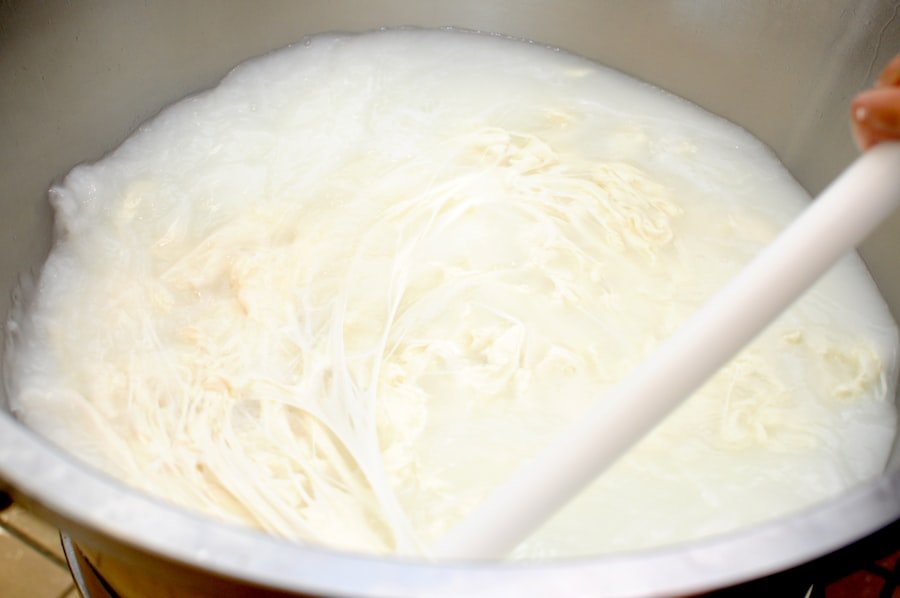
- Let the curds form. Cover the pan and leave it at room temperature for 30 minutes. The milk should separate into white curds and a more translucent liquid whey.
- Drain the curds. Pour the mixture into the cheesecloth-lined colander. Let the whey drain for about 15 minutes.
- Rinse and cool. Gather the edges of the cheesecloth and rinse the curds under cold running water for about 3 minutes, moving and gently squeezing the curds until they are fully cool.
- Season the curds. Squeeze out excess water, transfer the curds to a bowl, and stir in 1 1/2 teaspoons kosher salt while breaking the curds into bite-size pieces.
- Make it creamy. If serving right away, fold in 1/2 cup half-and-half or heavy cream. If serving later, refrigerate the dry curds in a sealed container and add the cream shortly before serving.
You will know the process worked when distinct white curds have separated from the whey and hold together well enough to drain. If the milk still looks mostly uniform after the resting period, check that the milk reached the target temperature and that you used the measured amount of vinegar before trying to alter the batch.
Tips for the Best Homemade Cottage Cheese
The best texture comes from controlled heating and gentle handling. Cottage cheese curds can turn small and crumbly if you stir aggressively, while poor draining can leave the finished cheese watery.
- Use a thermometer. Do not rely only on steam, bubbles, or touch to judge milk temperature.
- Stir gently after adding vinegar. You want to distribute the acid without smashing the forming curds.
- Drain before adding cream. Creaming wet curds can make the final cheese loose and soupy.
- Rinse thoroughly. Cooling and rinsing helps remove some residual acidity and gives the curds a milder flavor.
- Add cream at the end. This keeps you in control of the final consistency.
If you prefer a drier cheese for baking or stuffing, use the drained curds with little or no added cream. For a spoonable breakfast-style cottage cheese, add the cream and fold gently.
Ways to Enjoy Cottage Cheese
Cottage cheese works in both sweet and savory meals because its flavor is mild. You can eat it plain, pair it with fruit, or use it as a creamy protein-rich ingredient in cooked dishes.
- Serve it with berries, peaches, pineapple, or sliced banana.
- Add cucumber, tomato, herbs, and black pepper for a savory bowl.
- Spoon it onto toast, pancakes, baked potatoes, or crackers.
- Blend it into dips, sauces, or smoothies when you want a smoother texture.
- Use it in pasta fillings, casseroles, or baked goods that call for a soft fresh cheese.
Because homemade curds can be firmer than commercial cottage cheese, you may need a little extra cream or milk in recipes that depend on a very wet, creamy texture.
Nutritional Value of Cottage Cheese
Cottage cheese is known for protein, calcium, phosphorus, and vitamin B12, but the exact numbers vary by recipe and brand. Harvard’s Nutrition Source lists about 14 grams of protein, 120 calories, and 80 milligrams of calcium in a 1/2-cup serving of 4% full-fat cottage cheese.
Your homemade batch will not have the same nutrition profile automatically. Skim milk, the amount of whey removed, added salt, and the amount of cream all change the final values. If you track calories, sodium, protein, or fat closely, calculate from the exact ingredients you use rather than copying a store-bought label.
Note: If you need to limit sodium, saturated fat, or dairy for a medical reason, follow the advice of your doctor or registered dietitian and adjust the salt and cream accordingly.
Homemade vs Store-Bought Cottage Cheese
The main difference is control. Homemade cottage cheese lets you decide exactly how salty, dry, or creamy it will be, while store-bought products are designed for consistent texture, flavor, and shelf life.
| Feature | Homemade | Store-Bought |
|---|---|---|
| Ingredients | You choose the milk, acid, salt, and cream | Varies by brand and style |
| Texture | Can be firmer and adjusted by draining or adding cream | Usually more uniform from container to container |
| Salt | Easy to adjust during mixing | Set by the manufacturer |
| Convenience | Requires heating, resting, draining, and rinsing | Ready to eat |
Homemade is useful when you value ingredient control or enjoy making fresh cheese. Store-bought is more practical when convenience, a standardized nutrition label, or a very consistent texture matters most.
Storage and Shelf Life of Homemade Cottage Cheese
Keep homemade cottage cheese refrigerated in a clean, airtight container at 40°F or below. USDA storage guidance gives soft cheeses such as cottage cheese about one week in the refrigerator.
Do not rely only on the calendar. Discard the cheese if it develops mold, an unusual odor, discoloration, or other clear signs of spoilage. Use clean utensils when serving so you do not introduce extra contamination into the container.
Freezing is possible in a practical sense, but USDA notes that cottage cheese does not freeze well. The curds can become grainy or watery after thawing, so refrigeration is the better choice when texture matters.
Flavor Variations for Homemade Cottage Cheese
Once the basic curds are made, you can change the flavor without changing the cheesemaking process. Add seasonings only after draining and rinsing so they do not interfere with curd formation.
- Herb: Mix in chopped chives, dill, parsley, or another mild fresh herb.
- Savory: Add black pepper, garlic, or a small amount of your favorite spice blend.
- Sweet: Serve plain cottage cheese with cinnamon, fruit, or a drizzle of honey.
- Extra creamy: Fold in a little more cream at serving time until the texture suits you.
Keep add-ins clean and refrigerated, especially fresh herbs or cut fruit. If you mix in wet ingredients, make only the amount you expect to eat soon so the base batch stays as fresh as possible.
Key Takeaways
- Use pasteurized milk and a thermometer for a more controlled, safer process.
- The verified home method uses 120°F milk, 3/4 cup white vinegar, and a 30-minute rest.
- Drain and rinse the curds before adding salt and cream.
- Keep homemade cottage cheese refrigerated and plan to use it within about one week.
- Nutrition varies with the milk, draining, salt, and cream you use.
Frequently Asked Questions
What is homemade cottage cheese?
Homemade cottage cheese is a fresh, unripened cheese made by separating milk into solid curds and liquid whey. In this quick version, vinegar acidifies the warmed milk so curds form. The curds are drained, rinsed, salted, and optionally mixed with cream for a softer texture.
How is homemade cottage cheese made?
Homemade cottage cheese is made by warming pasteurized milk, adding an acid to form curds, resting the mixture, and draining away the whey. The curds are then rinsed under cold water, squeezed dry, seasoned with salt, and mixed with cream if you want a classic creamy consistency.
What ingredients do you need to make homemade cottage cheese?
For the method in this guide, you need pasteurized skim milk, white vinegar, kosher salt, and half-and-half or heavy cream. You also need cheesecloth and basic kitchen equipment. The cream is added after the curds are made, so you can leave the curds drier if preferred.
What are the benefits of making cottage cheese at home?
Making cottage cheese at home gives you control over the milk, salt, cream, texture, and flavor. You can serve it very fresh and adjust the curds for different recipes. It is not automatically healthier than every commercial option, because nutrition depends on the ingredients and portions you use.
How long does homemade cottage cheese last?
Homemade cottage cheese should be kept refrigerated at 40°F or below and used within about one week. Store it in a clean, airtight container and use clean utensils when serving. Discard it sooner if you notice mold, discoloration, an unusual odor, or other clear spoilage.
Can homemade cottage cheese be used in recipes?
Yes, homemade cottage cheese can be used in salads, dips, smoothies, pasta dishes, casseroles, baked goods, and toppings. Because acid-set homemade curds may be firmer than some store-bought cottage cheese, add a little cream or milk when a recipe needs a looser, creamier consistency.
Final Thoughts on Homemade Cottage Cheese
Homemade cottage cheese is easiest when you treat it as a measured process: use pasteurized milk, hit the target temperature, give the curds time to form, and drain them before seasoning. Once you have the basic curds, you can keep them dry for cooking or add cream for a softer, spoonable cheese.
Sources
- Illinois Extension: Home-Made Cottage Cheese: Recipe quantities, 120°F heating temperature, resting, draining, rinsing, and creaming steps.
- U.S. Food and Drug Administration: Food Safety and Raw Milk: Why pasteurized milk is the safer choice for fresh cheese.
- USDA: Dairy Product Refrigerator Storage: Approximate one-week refrigerator storage for soft cheeses and freezing-quality guidance.
- Illinois Extension: What Are Curds and Whey?: How commercial cottage cheese curds are formed, cooked, and creamed.
- Harvard T.H. Chan School of Public Health: Cheese: Example nutrition values for full-fat cottage cheese and general cheese nutrition context.
- University of Wisconsin Center for Dairy Research: Historical context for the term cottage cheese in the United States.
”’
import re, json, html as htmllib
# word count rough
text_only=re.sub(‘<[^>]+>’,’ ‘,html)
words=re.findall(r”\b[\w’’-]+\b”,text_only)
print(“words”,len(words),”imgs”,html.count(“




[…] homemade cottage cheese into your meals along the way. Check out this simple and healthy recipe here to add a tasty twist to your […]
[…] high quality of life, including the safety of its drinking water. According to a recent article on Tagline Today, the country’s strict regulations and rigorous testing ensure that the water supply is safe […]
[…] One helpful article that provides tips on how to validate the Swiss Travel Pass can be found here. By following the steps outlined in the article, you can make the most of your pass and enjoy all […]
[…] it is important to familiarize yourself with the visa requirements. You can check out this Switzerland visa requirements guide to ensure you have all the necessary documentation for your trip. Additionally, if you are a music […]
[…] important to know how to use Swiss ATMs. One helpful article you might want to check out is “Delicious Homemade Cottage Cheese: A Simple and Healthy Recipe”. Just like making your own cottage cheese at home can be a rewarding experience, learning how to […]
[…] requirements in order to ensure a smooth and stress-free vacation. According to a recent article on Tagline Today, having the right travel insurance coverage can provide peace of mind and financial protection in […]
[…] important to be aware of the customs and duty rules in place. One helpful article to check out is Delicious Homemade Cottage Cheese: A Simple and Healthy Recipe, which provides insight into the culinary delights of Switzerland and the importance of following […]
[…] your journey. For more details on how to make this delicious treat, check out this related article: Delicious Homemade Cottage Cheese: A Simple and Healthy Recipe. This recipe not only provides a healthy option but also adds a touch of homemade goodness to your […]
[…] addition to your winter meals. You can find a great recipe to try out by checking out this article: Delicious Homemade Cottage Cheese: A Simple and Healthy Recipe. This could be a perfect way to bring a taste of home to your Swiss […]
[…] Homemade Cottage Cheese: A Simple and Healthy Recipe.” You can find this delightful article here. This piece provides a straightforward guide to creating a nutritious and tasty addition to your […]
[…] addition to your travel experience. For instance, you might find inspiration in this article on delicious homemade cottage cheese, which is a simple and healthy option to enjoy during your Swiss […]
[…] interested in trying their hand at making cheese, you might find inspiration in this article on delicious homemade cottage cheese. This simple and healthy recipe could be a perfect way to bring a taste of Switzerland back home […]
[…] original article also linked to exploring the delightful world of Asian melon, a simple and healthy cottage cheese recipe, and an article about Ozzy Osbourne. These topics are unrelated to Amalfi Coast transport, so they […]
[…] original article also linked to other site topics, including the delightful world of Asian melon, a homemade cottage cheese recipe, and an Ozzy Osbourne article. These are general site links rather than resources for planning a […]
[…] olives, and other simple meals. If you are cooking rather than eating every meal outside, this homemade cottage cheese recipe is one inexpensive kitchen project you can prepare when suitable ingredients and cooking facilities […]
[…] from TaglineToday: Read about the delightful world of Asian melon, try a simple homemade cottage cheese recipe, or read the site’s report on rock legend Ozzy […]
[…] Elsewhere on the site, readers can browse Exploring the Delightful World of Asian Melon, a Simple and Healthy Cottage Cheese Recipe, and the site’s report on rock legend Ozzy […]
[…] Tagline Today, you can also explore Exploring the Delightful World of Asian Melon, this guide to delicious homemade cottage cheese, and the site’s article about rock legend Ozzy […]
[…] If browsing the produce and food stalls inspires more food exploration at home, the site also has guides to Asian melon and homemade cottage cheese. […]
[…] you prefer to prepare a snack for the journey, you can also read this recipe for homemade cottage cheese before you […]
[…] other reading on Tagline Today, you can also explore Exploring the Delightful World of Asian Melon, Delicious Homemade Cottage Cheese: A Simple and Healthy Recipe, and the site’s article about the life and legacy of rock musician Ozzy Osbourne at Rock […]
[…] simply looking for some interesting reads, these articles have something for everyone. Asian melon, homemade cottage cheese, Ozzy […]
[…] you’re looking for more reading from the site, see this article on Asian melon, this homemade cottage cheese recipe, and this article about Ozzy […]
[…] If you are also browsing Tagline Today’s food content, the existing links from this post include a guide to Asian melon and a homemade cottage cheese recipe. […]
[…] If you’re also browsing Tagline Today, you can read this guide to exploring Asian melon or try this homemade cottage cheese recipe. […]