Switzerland’s castles range from lakeside Savoy strongholds to hilltop museums and UNESCO-listed fortifications. The best choices are not all alike: Chillon combines history with Lake Geneva scenery, Gruyères sits inside a medieval hill town, Bellinzona offers an entire defensive system, and castles such as Lenzburg and Kyburg focus strongly on everyday life and regional history.
Quick Answer
The best castles in Switzerland include Chillon, Gruyères, Lenzburg, Kyburg, Thun, Aigle, Aarburg Fortress, and the three UNESCO-listed castles of Bellinzona. Chillon is the strongest choice for a first visit, while Bellinzona is best for major fortifications, Gruyères for medieval atmosphere, and Lenzburg for families.
Key Takeaways
- Chillon Castle is the classic first choice for history, Lake Geneva scenery, and the story that inspired Lord Byron.
- Gruyères Castle combines a 13th-century castle with one of Switzerland’s most atmospheric historic towns.
- Bellinzona has three castles and associated fortifications protected together as a UNESCO World Heritage property.
- Lenzburg and Kyburg are especially good for museum-style visits focused on medieval society and castle life.
- Aarburg Fortress is not freely accessible. Its current use as a cantonal youth home means visitors normally need to join an official scheduled tour.
- Opening periods vary widely. Some castles operate all year, while others close for much of the winter, so check the official site before traveling.
Best Castles in Switzerland at a Glance
| Castle | Region | Best For | Important Access Note |
| Chillon Castle | Vaud, near Montreux | First-time visitors and lake scenery | Open year-round except December 25 and January 1; seasonal hours apply. |
| Gruyères Castle | Fribourg | Medieval town atmosphere and art | Open daily, but interior accessibility is limited by stairs. |
| Aarburg Fortress | Aargau | Fortification history | Not freely accessible; official public tours are the main way to enter. |
| Lenzburg Castle | Aargau | Families and interactive history | Seasonal museum; many exhibition areas are not wheelchair accessible. |
| Kyburg Castle | Zurich | Medieval society and castle life | Museum season runs mainly from April through October. |
| Thun Castle | Bern | High-medieval architecture and Alpine views | Open almost year-round with significantly different seasonal hours. |
| Bellinzona Fortresses | Ticino | UNESCO fortifications and a longer castle day | All three are fully open during the main season; winter access is reduced. |
| Aigle Castle | Vaud | Wine culture and vineyard scenery | The castle admission includes its Vine, Wine and Wine Label Museum. |
Chillon Castle: A Historical Gem on Lake Geneva
Chillon Castle stands on the eastern shore of Lake Geneva near Montreux and Veytaux. Rather than belonging to one simple construction date, the complex developed over centuries. Its official history records the first written mention in 1150, when the castle belonged to the Counts of Savoy.
The position was crucial. Chillon occupied the narrow corridor between the lake and the mountains on an important north-south route. Under Savoy rule, the castle helped control movement along this route and evolved into both a defensive site and an elite residence. Peter II of Savoy made major changes during the 13th century.
Inside, visitors move through courtyards, underground chambers, state rooms, defensive spaces, bedrooms, halls, and the private areas used by the Counts and Dukes of Savoy. The surviving architecture shows how Chillon combined administration, defense, residence, storage, and imprisonment within one compact complex.
Chillon’s fame is tied not only to its medieval architecture but also to François Bonivard, whose imprisonment inspired Lord Byron’s 1816 poem The Prisoner of Chillon.
Byron visited Chillon in 1816 and transformed Bonivard’s story into one of the castle’s best-known literary associations. That combination of documented history, preserved interiors, mountain views, and literary fame makes Chillon one of the easiest Swiss castles to recommend to a first-time visitor.
Pro Tip: Allow roughly one to two hours for Chillon if you want to explore the rooms without rushing. The official visitor information lists longer opening hours in spring and summer and shorter hours in winter.
Gruyères Castle: A Fairytale Setting in the Swiss Alps
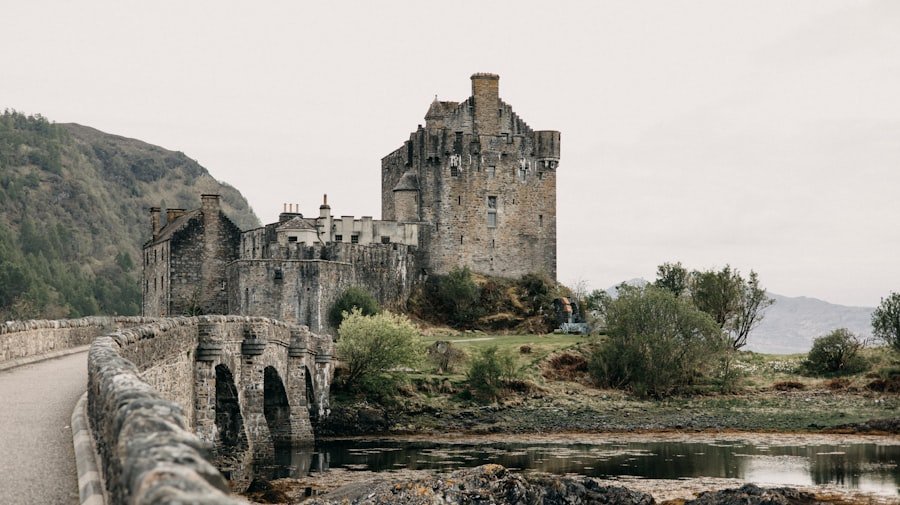
Gruyères Castle rises above the medieval town of Gruyères in the canton of Fribourg. According to the castle’s official history, it appears in surviving records in 1244 and was built in the 13th century as the principal home of the Counts of Gruyère.
The original complex followed a fortified design influenced by the House of Savoy. Its role changed over time. In the 15th century, major reconstruction under Count Louis transformed parts of the stronghold into a more comfortable stately residence, adding stone galleries, larger windows, a staircase tower, and a chapel.
The interiors now tell a much broader story than medieval warfare alone. After the counts, the castle served Fribourg bailiffs. In the 19th century it passed into private hands and became associated with an artists’ colony. Rooms and collections therefore reflect several periods rather than attempting to recreate a single medieval moment.
One especially significant feature is the Chapel of St. John the Baptist. The castle’s collection records stained-glass windows made in 1482, along with later artworks, furnishings, wall decoration, and objects representing centuries of occupation.
The setting adds to the experience. The historic town is closed to normal visitor traffic, so arriving by train, bus, or car still involves a walk through Gruyères before reaching the castle. That makes the castle and town work naturally as one combined visit.
Note: Gruyères Castle is open throughout the year, but the historic building contains many stairs. The official visitor information states that wheelchair users can access the esplanade, courtyard and, depending on the season, part of the garden, but not the upper castle rooms.
Aarburg Castle: A Medieval Fortress with Panoramic Views
| Location | Aarburg, Canton of Aargau |
| Origins | Traditionally dated to around 1123; exact foundation records do not survive |
| Later Development | Expanded into a major Bernese artillery fortress, particularly in the 17th century |
| Present Use | Cantonal youth home |
| 2026 Public Access | Scheduled public fortress tours on Saturdays from April 4 to October 31, 2026 |
Aarburg Fortress dominates the bend of the Aare River above the historic town of Aarburg. The municipality describes it as one of Switzerland’s most important architectural monuments and places its traditional foundation around 1123, although no surviving document establishes an exact construction year.
The complex changed dramatically after its medieval beginnings. Under Bernese rule it developed into a much larger artillery fortress, with major work carried out in the 17th century. Later uses included an arsenal, barracks, and prison before the site became an institution for young people in 1893.
Warning: Aarburg is different from a normal castle museum. Because the fortress still houses a cantonal youth home, the complex is not freely accessible to sightseeing visitors.
For 2026, the municipality of Aarburg lists public fortress tours every Saturday from April 4 through October 31 at 2:00 p.m. The tours last about 1.5 to 2 hours. This controlled access makes Aarburg more suitable for travelers who can plan around a fixed tour time than for someone making an unplanned stop.
The reward is a closer look at a fortress whose development reflects several layers of Swiss political and military history. Its elevated position above the Aare also makes the exterior and old-town setting impressive even when a tour does not fit your schedule.
Lenzburg Castle: A Well-Preserved Hilltop Stronghold
Lenzburg Castle stands above the town of Lenzburg in Aargau. The site has almost a thousand years of documented castle history: the castle is first mentioned in 1077, while the oldest surviving residential tower was constructed by the Counts of Lenzburg around 1100.
Later owners changed the complex repeatedly. The Habsburgs added major buildings, Bernese bailiffs expanded the administrative and defensive functions, and private owners modernized the residence during the 19th and early 20th centuries. This layered construction history is one reason the site is more interesting than a castle reconstructed to represent only one era.
Lenzburg Castle works especially well for families because its museum combines architecture and political history with exhibitions designed to make past castle life easier to understand.
The exhibitions cover subjects including knighthood, nobility, domestic life, childhood, and the castle’s changing residents. Museum Aargau also runs events, workshops, and guided activities throughout its operating season.
For 2026, Museum Aargau lists the castle as open from April 1 to November 1, normally Tuesday through Sunday from 10:00 a.m. to 5:00 p.m. It is generally closed on Mondays, with listed holiday exceptions.
Visitors with reduced mobility should plan carefully. The museum states that its exhibition rooms are not suitable for wheelchair users, although parts of the property, including the bistro, have better access and special arrival arrangements may be possible.
Kyburg Castle: A Picturesque Castle with Stunning Surroundings
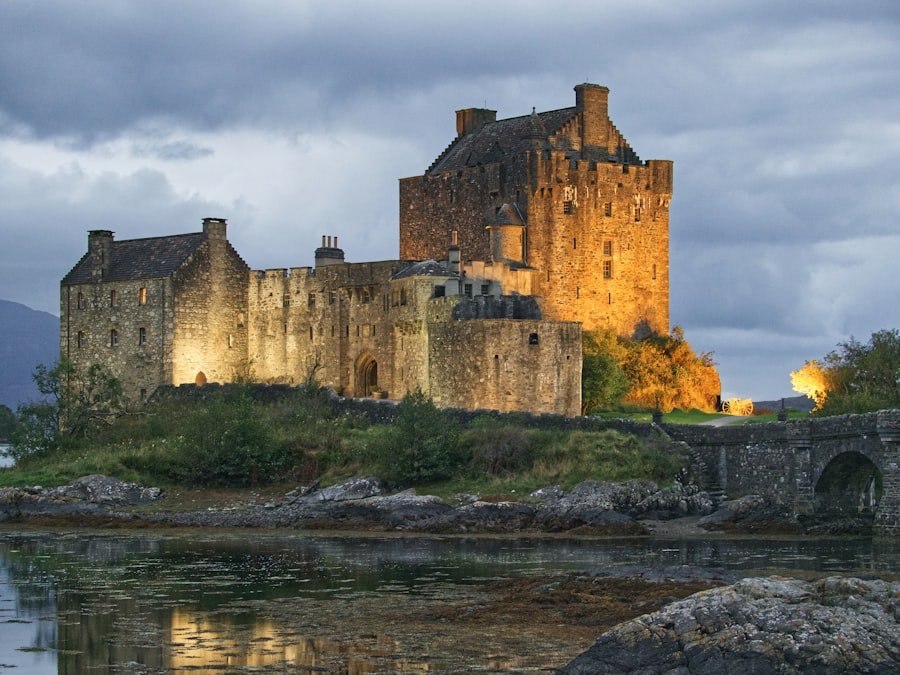
Kyburg Castle stands on a steep hill above the Töss River near Winterthur. The castle was first recorded in 1079 and later became closely associated with the Counts of Kyburg, one of the important noble families of the medieval Swiss Plateau.
After the Kyburg line ended in the 13th century, the property passed to the Habsburgs. Zurich later acquired the county and castle, using Kyburg as the seat of bailiffs who administered the surrounding territory, collected taxes, and presided over courts.
Kyburg also has an important place in Swiss museum history. In 1865, Matthäus Pfau opened it to the public as a castle and art museum. The official castle history describes it as Switzerland’s first castle museum.
Today the permanent exhibition focuses on the castle, its rulers, the exercise of power, and everyday life. Visitors can explore rooms linked to different functions of the complex rather than simply walking through empty stone chambers. The surrounding ring-wall route also helps explain how the residential and defensive sides of the castle fit together.
Kyburg is seasonal. The museum lists opening from April 1 through October 31, Tuesday to Sunday from 10:00 a.m. to 5:30 p.m. This makes it a better spring-to-autumn choice than a winter castle destination.
Thun Castle: A Majestic Fortress Overlooking the Alps
Thun Castle rises above the old town of Thun at the gateway to the Bernese Oberland. Its monumental keep dates to the late 12th century and is closely associated with Duke Berthold V of Zähringen.
One of its strongest architectural features is the high-medieval Knights’ Hall, which remains a central part of the castle museum. Rather than focusing on one collection alone, the permanent exhibition spreads across seven levels and follows the history of Thun, its rulers, the castle, and the surrounding region.
Displays include historical objects, weapons, tapestries, heraldic material, and material connected with the town’s development. Higher levels explain the castle’s roof structure and later uses, while the towers provide broad views across Thun, the lake, and the surrounding mountains.
The official Thun Castle museum describes the Knights’ Hall as a uniquely preserved high-medieval ceremonial hall in Switzerland, making the interior architecture as important as the panorama outside.
Unlike several seasonal castles, Thun operates through most of the year, but the hours change considerably by season. Summer has the longest daily schedule, while winter access is much more limited. Check the official opening calendar for the exact day you intend to visit.
Bellinzona: Switzerland’s UNESCO Castle Fortress
Travelers looking for large-scale medieval fortifications should put Bellinzona near the top of the list. The UNESCO World Heritage property includes Castelgrande, Montebello, Sasso Corbaro, and their associated defensive walls and ramparts.
The importance of Bellinzona comes from geography. The fortifications controlled a strategic point in the Ticino Valley on routes connecting northern Europe with important Alpine passes and northern Italy. UNESCO describes the surviving system as an outstanding fortified ensemble occupying a key strategic position.
Bellinzona also differs from a single-building visit. You can move between multiple castles and experience different elevations and perspectives over the city. Castelgrande anchors the system close to the historic center, while Montebello and Sasso Corbaro rise higher on the slopes.
The official Bellinzona Fortress visitor information lists all three castles as fully open from March 28 to November 8, 2026, from 10:00 a.m. to 6:00 p.m. From November 9, 2026 to March 18, 2027, Castelgrande remains open on a reduced schedule, while Montebello and Sasso Corbaro have limited courtyard access.
Pro Tip: Bellinzona deserves more time than a single compact castle. If the three fortresses are a priority, treat the visit as a half-day or longer rather than trying to squeeze it between distant attractions.
Aigle Castle: Medieval Walls in the Vineyards
Aigle Castle offers a different reason to visit a Swiss stronghold. Located in the vineyards of the Vaud Alps region, the castle combines medieval architecture with the history of Swiss viticulture.
The site dates from the end of the 12th century. It later became associated with Bernese governors and eventually passed to the municipality of Aigle. Today it houses the Vine, Wine and Wine Label Museum, which is included with castle admission.
The museum uses the historic setting to explore grape growing, wine production, vineyard landscapes, tools, labels, biodiversity, economics, and local traditions. Its collections contain thousands of objects related to viticulture, giving Aigle a clearer specialist theme than many general castle museums.
This makes Aigle especially useful for travelers who want to combine history with regional food and wine culture. The vineyard setting also provides a strong visual contrast to the lakeside atmosphere of Chillon or the urban fortress system at Bellinzona.
How to Choose the Right Swiss Castle
You do not need to see every castle to get a good sense of Switzerland’s fortified heritage. Choose based on what interests you most:
- Best first castle: Chillon for its combination of preserved rooms, history, lake scenery, and easy pairing with Montreux.
- Best medieval town experience: Gruyères, because the walk through the historic town forms part of the visit.
- Best major fortification system: Bellinzona, where three castles and defensive walls form one UNESCO-listed ensemble.
- Best for families: Lenzburg, thanks to its museum programming and family-focused interpretation.
- Best for medieval social history: Kyburg, where exhibitions focus on rulers, power, and everyday castle life.
- Best for Alpine views: Thun, with its towers overlooking the town, lake, and Bernese Oberland.
- Best for military-fortress enthusiasts: Aarburg, provided you can join an official scheduled tour.
- Best for wine culture: Aigle, where the castle houses a specialist museum dedicated to vines and wine.
Planning a Castle Trip in Switzerland
Check the Season Before You Travel
Do not assume every castle follows the same calendar. Chillon and Gruyères are reliable year-round options, while Lenzburg and Kyburg operate mainly during the warmer months. Bellinzona also reduces access to two of its three castles during winter. Aarburg requires even more planning because normal sightseeing access is restricted.
Use Public Transport Where It Makes Sense
Many Swiss castles work well without a car. Chillon can be combined with Montreux and the Lake Geneva transport network. Gruyères is reachable by public transport followed by a walk through the historic town. Lenzburg can be reached from Lenzburg railway station on foot or by local bus, and Thun Castle is above a major rail-connected town.
Walking is often part of the experience, but hilltop locations mean that the last section may involve slopes, cobblestones, or stairs.
Do Not Assume Historic Buildings Are Fully Accessible
Accessibility varies significantly. Spiral stairs, narrow passages, historic floor levels, and protected architecture can prevent full step-free access. Gruyères limits wheelchair access mainly to exterior areas, while Lenzburg states that its museum exhibition rooms are not suitable for wheelchair users.
Travelers with mobility needs should check the individual castle’s accessibility page rather than relying on a general statement about Swiss museums.
Check Pass Benefits Individually
Some Swiss castles accept museum, rail, tourism, or membership passes, but participation differs by site and can change. Chillon, Gruyères, Lenzburg, and Kyburg each publish their accepted passes and discounts on their official visitor pages. Confirm the current terms before buying a separate admission ticket.
Note: Opening hours, admission prices, special exhibitions, tours, and pass benefits can change after publication. For a time-sensitive visit, use the official castle website as the final source before departure.
Exploring the Rich History and Beauty of Swiss Castles
Switzerland’s castles are valuable because no two tell exactly the same story. Chillon explains Savoy power and the importance of Lake Geneva routes. Gruyères shows the transition from fortified noble residence to administrative center and later artistic home. Lenzburg and Kyburg reveal how castles changed with new dynasties and new political systems.
Thun preserves monumental high-medieval architecture in a city that remains easy to reach. Aarburg demonstrates how a medieval castle could evolve into a much larger artillery fortress and eventually take on a modern institutional role. Bellinzona shows defensive planning on a scale that no single castle in this list can match, while Aigle connects architecture with the vineyard culture around it.
The best approach is therefore not simply to rank the castles by appearance. Choose one or two that fit your route and interests, then leave enough time to explore the rooms, town, landscape, or fortifications around them. A well-planned castle visit can explain far more about Swiss regional history than a quick photo stop outside the walls.
Sources
- Chillon Castle Foundation — official history of Chillon, Savoy rule, Bonivard, and the castle’s development.
- Gruyères Castle — official history covering its 13th-century construction, counts, bailiffs, and later owners.
- Municipality of Aarburg — current fortress access and 2026 public-tour information.
- Museum Aargau: Lenzburg Castle — construction history, owners, museum history, and visitor information.
- Museum Schloss Kyburg — official castle history and its development as Switzerland’s first castle museum.
- Thun Castle — official museum guide to the castle, Knights’ Hall, towers, collections, and permanent exhibition.
Frequently Asked Questions
What are some of the best castles in Switzerland?
Strong choices include Chillon Castle, Gruyères Castle, Lenzburg Castle, Kyburg Castle, Thun Castle, Aigle Castle, Aarburg Fortress, and the three-castle fortress system of Bellinzona. The best one depends on whether you prefer scenery, museum exhibits, military architecture, medieval towns, or specialist themes such as wine.
Which Swiss castle is best for a first-time visitor?
Chillon is one of the easiest choices for a first visit because it combines a substantial historic interior, Savoy history, the story of François Bonivard and Lord Byron, and a memorable location directly beside Lake Geneva near Montreux.
Which castles in Switzerland are UNESCO World Heritage Sites?
The three castles of Bellinzona, Castelgrande, Montebello, and Sasso Corbaro, are included with their defensive walls and ramparts in a UNESCO World Heritage property. They form one of Switzerland’s most important surviving fortified ensembles.
Are Swiss castles open to the public?
Many are, but access varies. Chillon, Gruyères, Thun, Lenzburg, Kyburg, Aigle, and the Bellinzona castles operate as visitor attractions or museums. Aarburg is an important exception because the fortress houses a cantonal youth home and is not freely accessible; visitors normally enter on scheduled official tours.
Can I visit Swiss castles by train?
Yes. Many major castles are practical by public transport. Chillon is close to the Montreux area, Gruyères is reached by train or bus followed by a walk, Lenzburg has rail and local bus connections, and Thun Castle sits above a major railway town. Expect some uphill walking at many historic sites.
What is the best time of year to visit castles in Switzerland?
April through October gives you the widest choice because seasonal castles such as Lenzburg and Kyburg are operating and all three Bellinzona castles normally have full visitor access. Chillon and Gruyères are also useful winter choices because they remain open through most or all of the year.
Can visitors access every part of the castles?
Not always. Historic staircases, narrow passages, restoration work, museum rules, and modern uses can limit access. Gruyères has restricted wheelchair access to its upper rooms, Lenzburg’s exhibition rooms are not wheelchair suitable, and Aarburg is only accessible under controlled conditions.
Do Swiss castles hold special events and activities?
Yes, although programs differ by castle and season. Depending on the site, you may find guided tours, workshops, temporary exhibitions, concerts, family programs, historical events, or food and wine experiences. Check the individual castle’s current calendar before planning around a specific event.