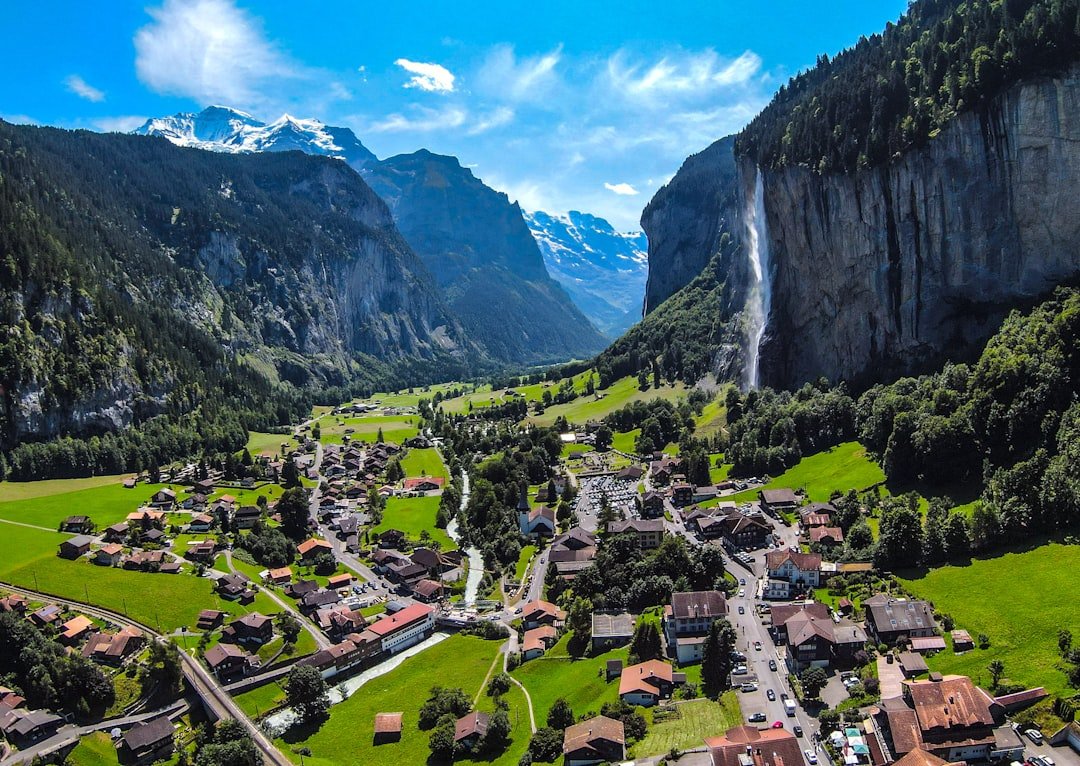
Lauterbrunnen, nestled in a dramatic U-shaped glacial valley in the Swiss Alps, is famously known as the “Valley of 72 Waterfalls.” Towering vertical limestone cliffs rise up to 300 meters above the valley floor, framing traditional timber chalets, emerald meadows, and cascading glacier-fed falls. Whether you visit for alpine hiking, scenic rail journeys, or quiet mountain walks, Lauterbrunnen serves as the quintessential base for exploring the Jungfrau Region.
Quick Answer
Lauterbrunnen is best known for Staubbach Falls and the underground Trümmelbach Falls. Visitors spend 2 to 3 days exploring valley-floor walks, ascending by cable car to car-free alpine villages like Mürren and Wengen, and connecting toward Jungfraujoch or Schilthorn via the Bernese Oberland railway and cableway network.
Key Takeaways
- Waterfalls: Staubbach Falls is free and visible from the village center, while Trümmelbach Falls provides subterranean access to 10 glacial falls inside the mountain.
- Hiking: Options range from flat, paved paths along the valley floor to Stechelberg (suitable for all fitness levels) to steep mountain ascents toward Mürren and Wengen.
- Transit Hub: Lauterbrunnen station directly connects regional trains from Interlaken Ost with cogwheel railways to Wengen and cable cars to Grütschalp.
- Seasonality: May to October delivers full trail and lift operations, while winter transforms the upper valley slopes into ski areas linked to the Jungfrau Ski Region.
Iconic Waterfalls of Lauterbrunnen Valley
The geography of the Lauterbrunnen Valley features steep vertical walls carved by ancient glaciers, allowing runoff from high alpine glaciers to plunge directly over sheer cliffs. Among the 72 distinct falls documented along the valley, two stand out for their accessibility and geological importance.
Staubbach Falls drops roughly 297 meters from an overhanging cliff face directly behind the village. During late spring and early summer, the volume peaks with snowmelt from higher elevations. In breezy conditions, the cascading stream atomizes into a delicate curtain of mist before reaching the ground. A paved trail allows visitors to ascend to a rock gallery behind the roaring falls between May and October.
The Trümmelbach Falls drain glacier meltwater from the Eiger, Mönch, and Jungfrau massifs, carrying an estimated volume of up to 20,000 liters of water per second during peak summer flow.
Located roughly 3 kilometers down the valley toward Stechelberg, Trümmelbach Falls comprises 10 subterranean glacial waterfalls cutting through limestone ravines. Accessible via a tunnel-funicular lift, paved galleries, and illuminated stairs, the site is open daily from April through early November. Standard adult admission is CHF 16.00, and sturdy walking shoes are advised due to damp gallery surfaces.
Hiking Trails for All Levels in Lauterbrunnen
Hiking in Lauterbrunnen caters to casual walkers and experienced alpine trekkers alike. The valley network connects smoothly to cog railways and aerial cableways, allowing hikers to customize route difficulty and elevation change.
For a scenic, family-friendly outing, the valley floor trail stretches 4.7 kilometers from Lauterbrunnen railway station to Stechelberg. The path follows the Weisse Lütschine river along a wide, paved, mostly level grade. Walkers pass traditional farmhouses, grazing cattle, and multiple waterfalls before reaching the Stechelberg bus stop or cable car station, where PostBus Route 141 offers a return ride back to town.
More demanding day routes ascend the valley walls toward mountain summits:
- Lauterbrunnen to Mürren: A strenuous footpath climbing roughly 800 vertical meters through mountain forests and pastures, leading into the car-free cliffside village of Mürren.
- Mürren to Schilthorn / Piz Gloria: From Mürren, seasoned alpine hikers can tackle the steep trail to the 2,970-meter summit of the Schilthorn, or ride the panoramic Schilthorn Cableway to visit the revolving restaurant and Spy World exhibition.
- Panoramaweg (Grütschalp to Mürren): An easy, high-altitude balcony path of 4.3 kilometers offering sweeping panoramic views across the valley toward the Eiger, Mönch, and Jungfrau peaks with negligible elevation gain.
Adventure Activities in Lauterbrunnen
Beyond walking trails, the vertical topography makes Lauterbrunnen a premier international destination for air and water adventure sports.

Tandem paragliding is one of the valley’s most sought-after excursions. Flights routinely launch from high launch pads above Mürren or Wengen, gliding past cascading water and landing softly in the fields near Stechelberg or Lauterbrunnen. Local certified operators provide equipment, safety gear, and qualified pilots for year-round flights.
During the warmer months from June to September, canyoning tours navigate the gorges of the Bernese Oberland. Participants rappel down waterfalls, jump into natural rock pools, and negotiate stone chutes under the supervision of certified mountain guides. Other regional activities include rock climbing along fixed via ferratas, skydiving over the alpine peaks, and mountain biking along designated valley tracks.
The Charming Village of Lauterbrunnen
Lauterbrunnen village serves as the logistical center and cultural heart of the valley. Despite its international popularity, the settlement retains its heritage of timber chalets, window flower boxes, and dairy farming.
| Metric | Value |
|---|---|
| Cantonal Location | Canton of Bern, Bernese Oberland |
| Village Elevation | 795 m (2,608 ft) |
| Permanent Population | Approximately 2,400 across the municipality |
| Primary Landmarks | Staubbach Falls, Protestant Parish Church (1488), Trümmelbach Gorge |
The compact main street features bakeries, gear rental shops, alpine cafés, and small grocery outlets. The historic church, constructed in 1488, stands on an elevated terrace near the base of Staubbach Falls. Its picturesque spire and adjacent cemetery provide the classic vantage point photographed on postcards worldwide.
Local Cuisine and Dining in Lauterbrunnen
Dining in Lauterbrunnen highlights Bernese alpine comfort food designed to refuel hikers and skiers. Most village restaurants emphasize regional dairy products, cured meats, and local root vegetables.
Classic Swiss cheese fondue—a hot blend of Gruyère and Emmental or regional mountain cheese melted with white wine and kirsch—is served with crusty bread cubes and boiled potatoes. Raclette is another regional staple, featuring melted alpine cheese scraped over jacket potatoes, gherkins, and pickled onions.
Crispy rösti, a traditional Swiss skillet-fried grated potato pancake, is served across mountain gasthauses as an accompaniment or standalone dish. Popular varieties include Berner Rösti (topped with diced bacon), melted mountain cheese, or a fried egg. In warmer weather, travelers can dine on outdoor terraces facing the cliff walls and waterfall spray.
Accommodation Options in Lauterbrunnen
Lauterbrunnen provides varied lodging accommodations suited to luxury travelers, families, backpackers, and campers.

Mid-range and boutique alpine hotels line the valley road and hillside terraces, featuring timber-clad rooms, balconies with waterfall views, and on-site Swiss restaurants. For budget-conscious visitors, the village hosts well-maintained youth hostels and guesthouses equipped with dormitory options, shared kitchens, and communal lounges.
Camping is exceptionally popular in the valley. Dedicated campsites, such as Camping Jungfrau at the base of the cliffs, offer tent pitches, camper van hookups, and wooden bungalows with immediate access to hiking trails and shared amenities.
Pro Tip: Accommodations inside the Lauterbrunnen Valley book up months in advance for July and August. If valley-floor hotels are full, check available rooms in nearby Wengen or Mürren, which sit on the cliffs directly above and connect via frequent transit.
Exploring the Surrounding Areas of Lauterbrunnen
Lauterbrunnen serves as the primary gateway to the Jungfrau Region, linking lower rail corridors to world-famous alpine mountain tops and neighboring valleys.
Directly above Lauterbrunnen sit the car-free mountain resort villages of Wengen (reachable by the Wengernalpbahn cogwheel train in 12 minutes) and Mürren (accessible by the Grütschalp cable car and connecting rail). Both villages provide immediate access to winter ski pistes and summer mountain walking routes.
From Lauterbrunnen or Wengen, trains climb via Kleine Scheidegg toward Jungfraujoch – Top of Europe, the highest railway station in Europe at 3,454 meters. Visitors can tour the Ice Palace, step onto the Aletsch Glacier plateau, and visit high-alpine research exhibits year-round.
In winter, neighboring Grindelwald and Wengen merge into extensive ski resorts, providing over 200 kilometers of groomed winter runs facing the dramatic north face of the Eiger.
To the north, a 20-minute train ride connects Lauterbrunnen to Interlaken, the adventure hub situated between Lake Thun and Lake Brienz. Passengers can board scenic paddle steamers or explore medieval castles surrounding the lakes.
Tips for Planning Your Visit to Lauterbrunnen
Planning transport, timing, and gear in advance ensures a smooth trip through the Bernese Oberland.
- Best Timing: July and August offer warm daytime temperatures and open high-elevation trails, though visitor volume is highest. June brings heavy waterfall runoff from melting snow, while September through early October provides clear skies and cooler hiking conditions.
- Public Transport Passes: The Swiss Travel Pass covers all national trains and PostBuses into Lauterbrunnen, as well as transit up to Mürren and Wengen, with discounts (typically 25% to 50%) on higher excursions like Jungfraujoch and Schilthorn.
- Essential Gear: Sturdy hiking shoes with grip soles are critical on damp trail sections and underground waterfall ramps. Pack a lightweight waterproof shell, as alpine weather can shift rapidly within the valley.
If you are planning your itinerary and looking for additional guidelines, you can review our privacy policy to see how our travel portal manages user data and reader inquiries.
Frequently Asked Questions
What are the top things to do in Lauterbrunnen?
The top activities include viewing Staubbach Falls, walking through the glacial caverns at Trümmelbach Falls, strolling the flat valley floor to Stechelberg, taking the cable car up to Mürren, and taking regional railways toward Jungfraujoch.
How much time should you spend in Lauterbrunnen?
A stay of two to three full days allows you to explore the valley floor waterfalls, visit nearby car-free villages like Mürren and Wengen, and take at least one high-mountain excursion to Jungfraujoch or Schilthorn.
Is Staubbach Falls free to visit?
Yes, Staubbach Falls is completely free to view from the village paths, and access to the elevated rock gallery behind the waterfall is also free during the open summer season.
Does the Swiss Travel Pass work in Lauterbrunnen?
Yes, the Swiss Travel Pass provides free unlimited rail travel to Lauterbrunnen station and covers connecting mountain routes up to Wengen and Mürren, along with discounts on higher mountain railways.
Can you drive into Lauterbrunnen village?
Yes, Lauterbrunnen village is accessible by road with parking garages available near the train station, though neighboring villages like Wengen and Mürren are strictly car-free and only reachable by public transit.
Sources
- Schilthorn Piz Gloria Cableway: Official timetable, tariff, and Mürren transit information
- Jungfrau Railways: Official excursion, mountain train, and Jungfraujoch route data
- Swiss Travel System: Official Swiss Travel Pass route coverage and network discounts