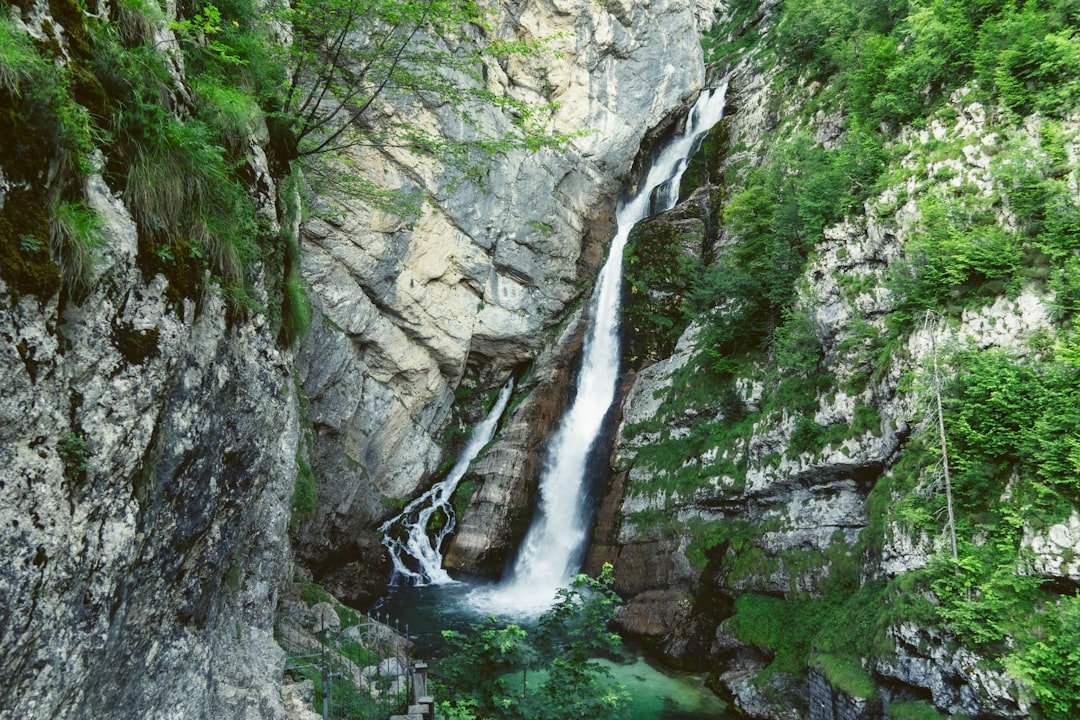
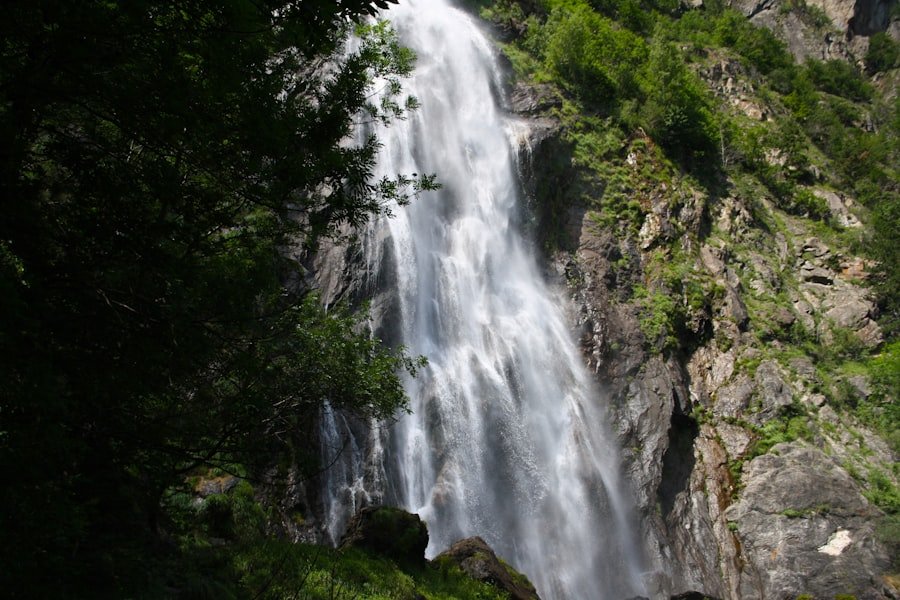
Giessbach Falls is one of the most memorable natural sights around Lake Brienz in Switzerland’s Bernese Oberland. The Giessbach stream descends in 14 tiers for about 400 metres toward the lake, passing beside the historic Grandhotel Giessbach. Visitors can combine the waterfalls with a boat ride, the 19th-century funicular, short walking trails, or a longer lakeside hike.
Quick Answer
Giessbach Falls is easiest to reach by train to Brienz or Interlaken Ost, then a BLS boat to Giessbach See and the historic funicular or a steep walk uphill. The falls have 14 tiers and drop about 400 metres toward Lake Brienz. Spring snowmelt and recent rain usually create the strongest flow.
Key Takeaways
- Giessbach Falls descends in 14 tiers for about 400 metres beside Lake Brienz.
- A scenic public-transport route combines train travel, a BLS boat to Giessbach See, and the historic Giessbach funicular.
- The short waterfall circuit takes about 20 minutes and includes a memorable section behind one of the cascades.
- Spring snowmelt and periods after rainfall usually produce the most powerful waterfall flow.
- Day visitors arriving by car must reserve a parking/access ticket online before reaching the Giessbach Nature Park barrier.
- The funicular is not wheelchair-accessible, so visitors with mobility needs should plan an alternative arrival route.
At a Glance
| Typical Visit | About 1-3 hours for the falls, hotel surroundings, viewpoints, and breaks; longer if you add a boat trip or lakeside hike. |
| Walking Difficulty | Easy to moderate around the main waterfall circuit, with steps, slopes, and potentially wet or slippery surfaces. |
| Main Transport | Train to Brienz or Interlaken Ost, BLS boat to Giessbach See, then funicular or walking path. Driving and PostBus are alternatives. |
| 2026 Key Costs | Adult funicular CHF 7 one way or CHF 14 return. Children 6-16: CHF 3.50 one way or CHF 7 return. Summer day parking: CHF 15 per vehicle. Boat fares vary by route and ticket type. |
History and Significance of Giessbach Falls
Giessbach has attracted travelers for more than two centuries. According to the official Giessbach history, Brienz schoolmaster Johannes Kehrli made the site more accessible to early visitors around 1817 by creating a path from the lake. By the middle of the 19th century, Giessbach was already developing into a well-known tourism destination.
The Hauser family of hoteliers commissioned architect Horace Edouard Davinet to develop the Grandhotel Giessbach during 1873-1875. The building became closely linked with the waterfall landscape and the growth of Alpine tourism. Painters, photographers, poets, writers, and musicians also depicted or praised the Giessbach scenery.
Another major development came in 1879. The Giessbachbahn entered service on July 21 of that year, making the climb between the lake landing stage and hotel much easier for arriving guests. The historic funicular remains an important part of a visit today.
Giessbach Falls descends past the Grandhotel in 14 tiers, dropping about 400 metres toward Lake Brienz.
The area’s cultural significance therefore comes from more than scenery alone. Giessbach combines a dramatic Alpine waterfall, early Swiss tourism history, Belle Époque architecture, historic transport, parkland, and long-established walking routes.
How to Get to Giessbach Falls
You can reach Giessbach Falls by boat and funicular, by car, by PostBus and walking, or as part of a longer hike. For many visitors, the boat-and-funicular combination is the most scenic option.
By Train, Boat, and Funicular
Travel by train to Brienz or Interlaken Ost. The boat stations are close to the railway stations, and BLS boats serve the Giessbach See landing stage on Lake Brienz.
For 2026, BLS lists Lake Brienz boat service from April 3 to December 6. Individual departure times vary during the season, so the official timetable is the best source for a specific travel day.
From Giessbach See, the historic funicular climbs roughly 100 metres to the Grandhotel Giessbach. You can also walk uphill instead of taking the railway, but the route is steeper than riding the funicular.
2026 Giessbach Funicular Prices
| Passenger | One Way | Return |
|---|---|---|
| Adult | CHF 7 | CHF 14 |
| Child age 6-16 | CHF 3.50 | CHF 7 |
| Child age 0-5 | Free | Free |
These prices come from the official 2026 Giessbachbahn timetable and tariff. Transport schedules and fares can change between seasons, so the current official timetable should take priority if your visit falls outside 2026.
By Car
Drivers should take the A8 exit marked Brienz-Giessbach and follow signs toward Giessbach/Axalp. The mountain approach is narrow, and parking inside Giessbach Nature Park is limited.
Note: Day visitors arriving by car must purchase their Giessbach parking/access ticket online before arrival. The barrier cannot be passed without a valid ticket. In the April-October summer period, the official 2026 day-parking price is CHF 15 per vehicle; an evening ticket costs CHF 10.
Parking rules and current purchase information are available on the official Giessbach arrival page.
By PostBus
The PostBus toward Axalp stops at Giessbach Junction. According to the official Giessbach visitor information, the hotel area is about a 15-minute walk from that stop, with the route passing the waterfalls.
Hiking from Iseltwald
For a longer approach, BLS recommends the lakeside trail from Iseltwald to Giessbach. The route follows Lake Brienz through forest and takes roughly 1.5 hours. This is a good option if you want the journey itself to be part of the day’s hike rather than simply using transport to reach the falls.
Pro Tip: A satisfying one-way itinerary is to hike from Iseltwald to Giessbach, explore the waterfall circuit, then leave by funicular and boat. Check the last boat before starting so you have enough time at the falls.
Best Times to Visit Giessbach Falls
Giessbach has a different character in each season. There is no single perfect month for everyone. The better choice depends on whether you care most about strong waterfall flow, long daylight, autumn color, fewer visitors, or easy public-transport connections.
| Period | What to Expect | Planning Note |
|---|---|---|
| Spring | Snowmelt and rain can make the waterfall especially powerful. | Excellent for strong flow, but wet paths may be slippery. |
| Summer | Longer days make it easy to combine the falls with boat trips, hiking, Brienz, or Iseltwald. | Allow extra time around popular viewpoints and transport connections. |
| Early Autumn | Forest color adds another layer to the waterfall scenery. | Check seasonal boat and funicular timetables before traveling. |
| Late Autumn and Winter | The landscape can be quieter and more wintry, but transport and trail conditions are more limited. | Do not assume summer boat or funicular frequency; check current conditions and operating dates. |
The official Giessbach waterfall information specifically notes that melting snow and rainfall can swell the stream, making spring and periods after rain particularly impressive. Autumn is also highlighted for its forest colors.
Walking Around Giessbach Falls
You do not need a long hike to enjoy the main waterfall. According to Interlaken Tourism, a roughly 20-minute circular trail leads around the falls from the Grandhotel area.
One of the most memorable parts of the route passes behind one of the cascades. From this section, you can look outward through the falling water toward the surrounding forest, hotel, lake, and mountains.
Other paths continue through the surrounding wooded slopes and connect Giessbach with longer hiking routes. Because the terrain changes quickly from paved hotel areas to forest paths, footwear with useful grip is preferable to smooth-soled shoes.
Warning: Spray and rain can make steps, rocks, and paths around the cascades slippery. Wear shoes with good grip, stay on marked paths, respect barriers, and take extra care with children near steep or wet sections.
Activities and Attractions Near Giessbach Falls
Giessbach works well as either a short stop or part of a full day around Lake Brienz. The main nearby experiences include the waterfall paths, Grandhotel Giessbach, lake cruises, Brienz, Iseltwald, and longer hiking routes.
Explore Grandhotel Giessbach and the Park
The historic Grandhotel sits directly beside the falls and is closely tied to the area’s tourism history. Even if you are not staying overnight, the surrounding park, terraces, viewpoints, and historic funicular make the hotel area part of the Giessbach experience.
Visit Brienz
Brienz is known for traditional woodworking as well as its lakeside setting. Visitors interested in the region’s craft history can explore the Swiss Woodcarving Museum and spend time along the village’s waterfront before or after a Giessbach excursion.
Take a Lake Brienz Boat Trip
The boat journey is more than transportation. It provides broad views across Lake Brienz and makes it easy to connect Giessbach with Brienz, Interlaken Ost, Iseltwald, and other stops around the lake during the navigation season.
Walk Between Iseltwald and Giessbach
If you want a longer outdoor activity, the roughly 1.5-hour lakeside route from Iseltwald approaches Giessbach through forest beside the lake. You can then return by boat rather than retracing the same route, subject to the day’s timetable.
Tips for Visiting Giessbach Falls
- Wear shoes with grip: Spray from the waterfalls can leave parts of the path wet even when the wider area is dry.
- Allow more time than the short loop requires: The main circuit may take only about 20 minutes, but viewpoints, photographs, the hotel grounds, and transport connections can easily turn the stop into a 1-3 hour visit.
- Check your return transport first: Boat and funicular service is seasonal, and service frequency can change during spring and autumn.
- Bring a light waterproof layer: Waterfall spray can be noticeable close to the cascades.
- Carry drinking water: This is particularly useful if you are hiking from Iseltwald or exploring longer trails.
- Arrive earlier if driving: Parking capacity is controlled, and a pre-purchased online ticket is required for day visitors.
- Protect your camera or phone: The behind-the-waterfall section and nearby viewpoints can be damp from spray.
Accessibility and Strollers
The historic Giessbach funicular is not wheelchair-accessible because of the station layout and steps. The operator recommends that wheelchair users consider taking a taxi from Brienz railway station instead.
Strollers can be transported on the funicular, but space is limited and transport is not guaranteed on every journey. Large strollers may be difficult to accommodate. Families should also expect steps and wet sections on parts of the waterfall paths.
Accommodation Options Near Giessbach Falls
The most distinctive place to stay is the Grandhotel Giessbach, which sits directly beside the waterfalls above Lake Brienz. Staying here provides immediate access to the park and trails and removes the need to make the full return journey on the same day.
For a wider choice of accommodation and easier connections to trains and boats, Brienz is a practical base. Hotels and guesthouses in and around the village let you combine Giessbach with other Lake Brienz attractions while remaining close to public transport.
Staying in Brienz can be more convenient if your priority is flexible train and boat access, while staying at Grandhotel Giessbach gives you the most immediate waterfall setting.
Travelers planning several days around the lake can also compare accommodation in Interlaken or Iseltwald. The best base depends on whether you want nightlife and transport connections, a quieter lakeside village, or direct access to Giessbach itself.
Sustainable Travel Options to Giessbach Falls
Giessbach is particularly well suited to a car-free visit. Switzerland’s rail network connects with boat services at Brienz and Interlaken Ost, allowing travelers to reach Giessbach See without driving the narrow approach road or using one of the limited parking spaces.
A low-car itinerary can combine train, boat, walking, and the historic funicular. Another option is to travel to Iseltwald, hike the lakeside path to Giessbach, then continue by boat after visiting the falls.
While exploring the area, stay on established paths, avoid damaging plants beside the trail, and carry your rubbish out with you. These simple habits help protect the wooded slopes and heavily visited waterfall viewpoints.
Before traveling, check the current Giessbach arrival information and BLS Lake Brienz timetable. This is more useful than relying on a generic travel link because transport frequencies, seasonal services, and parking rules can change.
Frequently Asked Questions
What are Giessbach Falls?
Giessbach Falls is a series of 14 waterfall tiers near Lake Brienz in Switzerland’s Bernese Oberland. The Giessbach stream descends about 400 metres past Grandhotel Giessbach toward the lake.
How do I get to Giessbach Falls?
A popular route is to take a train to Brienz or Interlaken Ost, then a BLS boat to Giessbach See. From the landing stage, take the historic funicular to Grandhotel Giessbach or walk uphill. You can also arrive by car with a pre-booked parking ticket, use the PostBus toward Axalp, or hike from Iseltwald.
Is there an entrance fee to visit Giessbach Falls?
There is no separate waterfall admission price listed by the official attraction. However, your journey may involve paid boat tickets, funicular tickets, or parking. Day visitors arriving by car must reserve and pay for vehicle access in advance.
How much is the Giessbach funicular in 2026?
The official 2026 tariff lists adult tickets at CHF 7 one way or CHF 14 return. Children aged 6-16 pay CHF 3.50 one way or CHF 7 return, while children aged 0-5 travel free.
What is the best time of year to visit Giessbach Falls?
Spring is an excellent choice if you want powerful waterfall flow because snowmelt and rain can swell the Giessbach stream. Summer gives you long days and convenient sightseeing combinations, while early autumn adds colorful forest scenery. Transport service becomes more limited outside the main season.
Can you walk behind Giessbach Falls?
Yes. The short circular waterfall trail includes a section that passes behind one of the cascades. Expect spray and wet surfaces, especially when the stream is carrying a lot of water.
How long do you need at Giessbach Falls?
The main circular waterfall trail takes roughly 20 minutes, but most visitors will benefit from allowing about 1-3 hours for viewpoints, photographs, the Grandhotel surroundings, breaks, and transport connections. Add more time if you hike from Iseltwald or combine the trip with a Lake Brienz cruise.
Do I need to reserve parking at Giessbach Falls?
Yes, if you are a day visitor arriving by car. Giessbach requires an online parking/access ticket before arrival, and the barrier cannot be passed without a valid ticket. Summer 2026 day parking is CHF 15 per vehicle.
Is Giessbach Falls wheelchair-accessible?
The historic Giessbach funicular is not wheelchair-accessible. The operator recommends taking a taxi from Brienz railway station for visitors who cannot use the funicular. Individual waterfall paths also contain slopes, steps, and uneven or wet surfaces.
Sources
- Grandhotel Giessbach – Waterfall – waterfall height, 14 tiers, seasonal flow, and waterfall setting.
- Grandhotel Giessbach – History – early tourism, Grandhotel development, and 1879 funicular history.
- Grandhotel Giessbach – Visit and Arrival – car access, parking, public transport, PostBus, and accessibility information.
- Giessbachbahn – 2026 Timetable and Prices – current funicular fares and operating information.
- BLS – Lake Brienz Boat Trips – 2026 boat season, transport connections, and Iseltwald-Giessbach hike.
- Interlaken Tourism – Giessbach Falls – waterfall circuit, behind-the-waterfall section, footwear advice, and visitor planning.