Disclosure: As an Amazon Associate, we earn from qualifying purchases. If you click a link on this page and make a purchase, we may receive a small commission at no extra cost to you.
Rough idle, rising oil use, vacuum problems, and PCV-related trouble codes can point to a linked failure on certain GM 1.4L Ecotec engines. The Dorman 615-380KIT combines the intake manifold, valve cover, and PCV tube assembly so you can replace the connected parts in one repair. This review explains the exact applications, what the redesigned manifold changes, what installation involves, and when the kit is worth buying. Its complete three-part approach is the main strength, but fitment and diagnosis must be confirmed before you order.
Quick Verdict
Rating: 8/10, recommended with caveats
Best For: Owners repairing a confirmed PCV, intake manifold, or valve cover failure on a listed Buick or Chevrolet with the compatible 1.4L Ecotec setup.
Bottom Line: The Dorman 615-380KIT gives you the three major assemblies commonly affected by this failure pattern, including a redesigned OE FIX intake manifold. The tradeoff is a vehicle-specific installation that requires accurate fitment, careful diagnosis, and more mechanical skill than a basic bolt-on accessory.
| Specification | Detail |
|---|---|
| Brand | Dorman OE Solutions |
| Model | 615-380KIT |
| Product type | Intake manifold and valve cover repair kit |
| Design | Patented OE FIX design with a redesigned intake manifold |
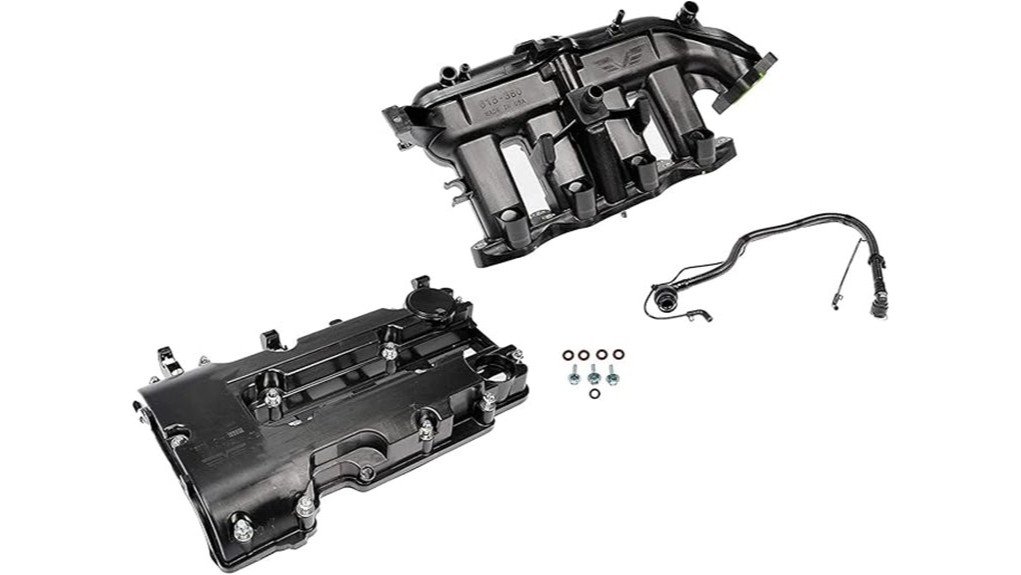
| Package contents | 1 intake manifold, 1 valve cover, and 1 PCV tube assembly |
| Primary engine family | Select General Motors 1.4L Ecotec applications |
| Listed applications | Buick Encore 2013–2021; Chevrolet Cruze 2011–2016; Cruze Limited 2016; Sonic 2012–2020; Tracker 2013–2015; Trax 2013–2021 |
| Material | Plastic |
| Mount type | Bolt-on, vehicle-specific replacement |
| Hose connectors | 2 |
| Inlet and outlet diameter | 0.88 in |
| Inside diameter | 0.6 in |
| Item grade | Standard replacement |
| Manufacturer warranty | Limited lifetime, subject to current Dorman terms and seller conditions |
| Best use | A complete repair when the manifold, valve cover, and PCV tube are part of the diagnosed failure |
Before You Buy: Do not rely on the vehicle badge or 1.4L engine size alone. Confirm the exact year, engine code, trim, intake layout, and MAP sensor port configuration with the Amazon garage tool or Dorman fitment catalog.
Key Takeaways
- The kit contains three major assemblies: the intake manifold, valve cover, and PCV tube assembly.
- Dorman designed the manifold to correct a frequent PCV valve failure in the original equipment design.
- The repair targets symptoms such as excessive oil consumption, irregular vacuum pressure, rough idle, and related trouble codes when a failed PCV system is the confirmed cause.
- Fitment is limited to specific GM 1.4L Ecotec applications and model years.
- The job is realistic for an experienced DIY mechanic, but beginners may be better served by professional installation.
What Is the Dorman 615-380KIT?
The Dorman 615-380KIT is a vehicle-specific repair package for a known chain of failures on certain GM 1.4L Ecotec engines. The original intake manifold’s internal PCV valve can fail, which may create abnormal crankcase vacuum and damage the valve cover’s PCV diaphragm. The PCV tube can also break during removal, so replacing only one part may leave another weak or damaged component in service.
Dorman packages the redesigned intake manifold, valve cover, and PCV tube assembly together to address that full repair path. The manifold uses Dorman’s OE FIX approach rather than simply copying the original failure-prone design. This makes the kit most useful when diagnosis shows that the PCV system failure has affected more than one connected assembly.
Who Should Buy It?
Best For
- Owners with a listed Buick or Chevrolet and a confirmed intake manifold, valve cover, or PCV system failure.
- Experienced DIY mechanics who can remove intake components, clean sealing surfaces, and follow a vehicle-specific torque sequence.
- Buyers who prefer one coordinated repair kit instead of sourcing the three major assemblies separately.
Skip If
- Your exact engine and intake configuration do not appear in Dorman’s fitment data.
- You have not confirmed that the PCV, manifold, or valve cover is causing the symptoms.
- You are not comfortable working around fuel injectors, vacuum connections, electrical connectors, and open intake ports.
Fit and Compatibility
Dorman lists the 615-380KIT for the Buick Encore from 2013 through 2021, Chevrolet Cruze from 2011 through 2016, Cruze Limited for 2016, Sonic from 2012 through 2020, Tracker from 2013 through 2015, and Trax from 2013 through 2021. These year ranges are useful starting points, not permission to skip a full fitment check.
The kit is built around select GM 1.4L Ecotec applications. Some catalogs also specify a single MAP sensor port, which is a critical detail because similar-looking intake manifolds can use different sensor arrangements. Confirm the engine code, emissions configuration, and sensor-port layout before disassembly.
Dorman publishes several General Motors cross-reference numbers for the kit, including 25193343, 25198498, 25198874, 25198877, 25200449, 55573746, 55577314, and 55581014. Cross-reference numbers help during research, but the final decision should still come from a year, make, model, engine, and configuration lookup.
What the Three-Piece Kit Changes
Redesigned OE FIX Intake Manifold
The intake manifold is the main reason to consider this kit instead of a basic direct-copy replacement. Dorman redesigned the manifold to correct the frequent internal PCV valve failure found in the original equipment design. On the related 615-380 manifold, Dorman uses a retaining feature to help keep the internal valve in place.
This design matters because a dislodged PCV valve can create excessive crankcase vacuum. That condition can contribute to oil consumption, rough running, trouble codes, and damage to the valve cover diaphragm. The revised manifold targets the failure point rather than only replacing the housing around it.
Valve Cover and PCV Tube Assembly
The valve cover is included because manifold failure can damage the PCV diaphragm integrated into the cover. Installing a new manifold while leaving a failed diaphragm in place may not resolve the vacuum leak or rough idle. Replacing both parts supports a more complete repair when diagnosis confirms damage to each component.
The PCV tube assembly completes the three-part package. Dorman notes that this tube can break during removal, especially after years of heat exposure. Having the replacement tube ready helps you avoid stopping the repair to source a brittle connector or hose after the engine is already apart.
Package and Build Details
Dorman lists the kit as a standard-replacement, bolt-on product made primarily from plastic. The package contains one intake manifold, one valve cover, and one PCV tube assembly. The manufacturer also lists two hose connectors, 0.88-inch inlet and outlet diameters, a 0.6-inch inside diameter, and a 6 mm thread diameter.
Those measurements should not replace a fitment lookup. They are useful for identifying the listed assembly, but engine application and sensor layout remain the deciding factors.
What to Expect During Installation
This is a repair job, not a quick accessory installation. You must remove or move intake plumbing, electrical connectors, vacuum lines, the fuel rail or related components as required by your vehicle, and the old manifold and valve cover. The exact sequence varies by model year and engine configuration, so use instructions written for your vehicle.
A basic tool list may include a socket set, extensions, a torque wrench, trim or connector tools, a gasket scraper or plastic cleaning tool, clean shop towels, and labels for hoses and connectors. You may also need replacement fluids, seals, or small hardware depending on the repair procedure and the condition of the removed parts.
Clean sealing surfaces without dropping debris into the cylinder-head ports. Follow the specified tightening order and torque values. Uneven or excessive torque can damage plastic parts, distort sealing surfaces, or create a new vacuum or oil leak.
Pro Tip: Photograph every hose, connector, bracket, and fastener group before removal. Label the PCV and vacuum connections, then compare the old and new manifold sensor-port layouts before transferring any parts.
Installation Safety and Diagnostic Checks
Let the engine cool fully before you begin. Disconnect the battery when required by the repair manual, relieve fuel-system pressure before opening the fuel side, and keep all open intake ports covered. Work in a ventilated area away from sparks, flame, and smoking materials.
Do not replace the kit only because the engine has a rough idle or uses oil. Similar symptoms can come from ignition coils, spark plugs, injector problems, damaged vacuum hoses, turbocharger issues, worn piston rings, low compression, or faulty sensors. Check diagnostic trouble codes, crankcase vacuum behavior, the valve cover diaphragm, and the manifold’s PCV port before buying parts.
After installation, inspect for fuel, oil, and vacuum leaks before a road test. Clear codes only after recording them, then confirm that fuel trims, idle quality, and crankcase vacuum return to the expected range for your vehicle. Seek professional help if the engine still runs poorly or if you are unsure about the diagnosis.
How It Performs in Real Use
For Rough Idle and Vacuum Problems
When the original PCV valve and valve cover diaphragm are the true cause, replacing the connected assemblies can remove the unintended air path that disrupts idle. You should judge the repair by stable idle, corrected vacuum behavior, and normal fuel-trim readings, not by the presence of new parts alone.
For PCV-Related Oil Consumption
Dorman specifically lists excessive oil consumption among the problems caused by the failed PCV design. The kit may reduce oil use when abnormal crankcase vacuum is pulling oil through the intake system. It will not repair oil consumption caused by worn rings, cylinder wear, valve seals, turbocharger leakage, or other internal faults.
For Trouble Codes and Drivability
A failed PCV system can contribute to lean-condition, airflow, and idle-related codes. The kit addresses the mechanical failure path, but code diagnosis still matters. A successful repair should be followed by leak checks and scan-data review so you can confirm that no separate sensor, hose, ignition, or fuel fault remains.
For Long-Term Repair Value
The kit’s value comes from replacing the manifold, valve cover, and PCV tube in one planned job. That approach can reduce repeat labor when all three components are damaged or likely to be disturbed. Long-term results still depend on correct fitment, clean installation, proper torque, and an accurate original diagnosis.
Common Mistakes to Avoid
- Ordering by model name alone: Check the exact engine, year, trim, and MAP sensor port arrangement.
- Skipping diagnosis: Confirm the PCV and manifold failure pattern before replacing expensive assemblies.
- Assuming every seal and fastener is included: Compare the package contents with the repair manual and listing before the vehicle is disabled.
- Using guesswork for torque: Follow the correct tightening sequence and specifications for your engine.
- Leaving intake ports open: Cover them immediately to keep dirt, gasket debris, and hardware out of the engine.
- Ignoring post-repair checks: Inspect for leaks, review codes and fuel trims, and verify stable crankcase vacuum.
Pros and Cons
Pros
- Includes the intake manifold, valve cover, and PCV tube assembly in one package.
- Uses a redesigned OE FIX manifold aimed at the original PCV valve failure.
- Addresses the connected parts that can be damaged during the same failure and repair.
- Fits a documented range of Buick and Chevrolet 1.4L Ecotec applications.
- Backed by Dorman support documents and a listed limited lifetime manufacturer warranty.
Cons
- Strict fitment, including engine and sensor-port details, makes ordering mistakes possible.
- Installation is too involved for many first-time DIY users.
- The kit cannot correct oil use, rough idle, or trouble codes caused by unrelated engine faults.
Is It Worth the Price?
The Dorman 615-380KIT offers strong value when your diagnosis shows that the intake manifold, valve cover, and PCV tube all belong in the repair. Buying the coordinated kit can be simpler than matching three separate assemblies, and the redesigned manifold adds value over a replacement that only copies the original PCV arrangement.
You get the most value if you can perform the work correctly or if combining parts reduces paid labor and repeat disassembly. It is not a smart buy when fitment is uncertain or when the symptoms have not been traced to the PCV system. In that situation, diagnosis is more valuable than a larger parts order.
How It Compares to Alternatives
The Dorman 615-380 manifold-only option may make sense when the valve cover and PCV tube have been tested and are still serviceable. The Dorman 264-968 valve cover is also available separately for repairs that do not require a manifold. Buying individual parts can cost less when only one assembly has failed, but it can create repeat labor if another connected part is already damaged.
OEM General Motors parts may appeal to buyers who prefer factory-branded components and dealer catalog support. Lower-cost generic three-piece kits may reduce the initial parts cost, but they may not offer Dorman’s documented OE FIX manifold design or the same manufacturer support. The 615-380KIT makes the most sense when you want a complete, brand-matched repair package for the known failure pattern.
Frequently Asked Questions
What is the Dorman 615-380KIT used for?
It is a three-piece repair kit for specific GM 1.4L Ecotec applications with a failed intake manifold PCV valve, damaged valve cover diaphragm, or broken PCV tube. Dorman designed the kit to address the linked failure path rather than replacing only one affected assembly.
Which vehicles are listed for the 615-380KIT?
Dorman lists Buick Encore 2013–2021; Chevrolet Cruze 2011–2016; Cruze Limited 2016; Sonic 2012–2020; Tracker 2013–2015; and Trax 2013–2021. You must still confirm the exact engine, trim, and intake configuration before ordering.
Does it fit every GM vehicle with a 1.4L engine?
No. Engine displacement alone is not enough to confirm fit. Check the model year, engine code, trim, emissions setup, and MAP sensor port arrangement through the manufacturer or retailer fitment tool.
What comes in the box?
Dorman lists one intake manifold, one valve cover, and one PCV tube assembly. Check the current package listing and your repair manual for any gaskets, seals, fluids, clips, or fasteners that may also be needed for your vehicle.
Can the kit reduce excessive oil consumption?
It may reduce oil consumption caused by the failed PCV design and abnormal crankcase vacuum. It will not repair oil use caused by worn piston rings, valve seals, turbocharger leakage, cylinder wear, or another internal engine problem.
Can a beginner install the Dorman 615-380KIT?
A careful, experienced DIY mechanic may be able to complete the repair with the correct manual, tools, torque specifications, and workspace. Beginners should consider professional installation because the job involves fuel, vacuum, electrical, sealing, and intake-system work.
What symptoms should be diagnosed before buying?
Common symptoms include rough idle, irregular or excessive crankcase vacuum, oil consumption, whistling from the valve cover area, and PCV or lean-condition trouble codes. Because other faults can create similar symptoms, inspect and test the system before ordering the kit.
What warranty does the Dorman 615-380KIT have?
The Amazon product details list a limited lifetime manufacturer warranty. Review the current Dorman warranty terms and seller conditions before purchase because coverage, required proof, labor exclusions, and claim procedures can change.
The Bottom Line
The Dorman 615-380KIT is a practical choice for a confirmed PCV-related manifold and valve cover failure on a compatible GM 1.4L Ecotec vehicle. Its main strength is the complete three-piece OE FIX approach, while its main limitation is strict fitment and an installation that demands accurate diagnosis and careful mechanical work.
Buy it when your vehicle matches Dorman’s application data and testing shows that these connected parts need replacement. Skip it when the engine configuration is uncertain or the symptoms may come from an unrelated ignition, fuel, turbocharger, sensor, or internal engine fault.
Ready to Buy?
Confirm fitment, then check the latest product details before you decide.