Bern offers enough free sights to fill a full day, from its UNESCO-listed Old City and historic fountains to river walks, hilltop viewpoints, gardens, and wildlife areas. A few well-known attractions are only partly free, however, so it helps to know where reservations, transportation tickets, or museum admission charges apply.
Quick Answer
The best free things to do in Bern include walking through the UNESCO Old City, watching the Zytglogge clock show, visiting BearPark and the Rose Garden, following the Aare River, touring Parliament with a reservation, exploring the Botanical Garden, and hiking on Gurten.
Key Takeaways
- Bern’s Old City, BearPark, Rose Garden, Botanical Garden, river paths, fountains, and several viewpoints are free to visit.
- Free Parliament tours require a reservation and are not offered when Parliament is in session.
- The Gurten funicular is included for eligible Bern Ticket holders, but it is not free for every visitor.
- Watching the Zytglogge figures from the street is free; entering the tower on a guided tour normally costs extra.
- Most major museums charge admission except during promotions, with passes, or under specific free-entry rules.
Note: Prices, opening hours, exhibitions, and temporary promotions were checked on July 23, 2026. Confirm time-sensitive details on the linked official websites before your visit.
What Is Actually Free?
| Always free | Old City streets and arcades, Aare walks, BearPark, Rose Garden, Botanical Garden, historic fountains, and the exterior Zytglogge show |
| Free with a reservation | Guided visits inside the Parliament Building when tours are available |
| Free with a Bern Ticket | Public transportation in zones 100 and 101 for eligible overnight guests, including the Gurten and Marzili funiculars |
| Usually paid | Bern History Museum, Einstein Museum, Museum of Communication, Zytglogge interior tours, Minster tower, and the Gurten funicular without a valid pass |
Explore Bern’s UNESCO Old City for Free
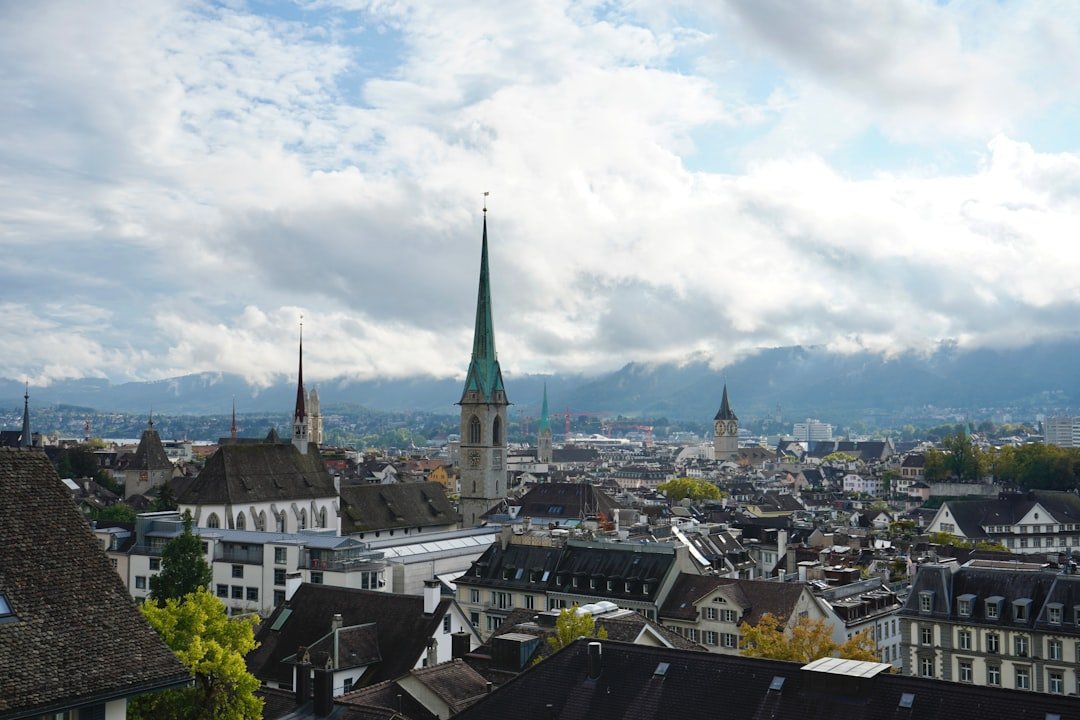
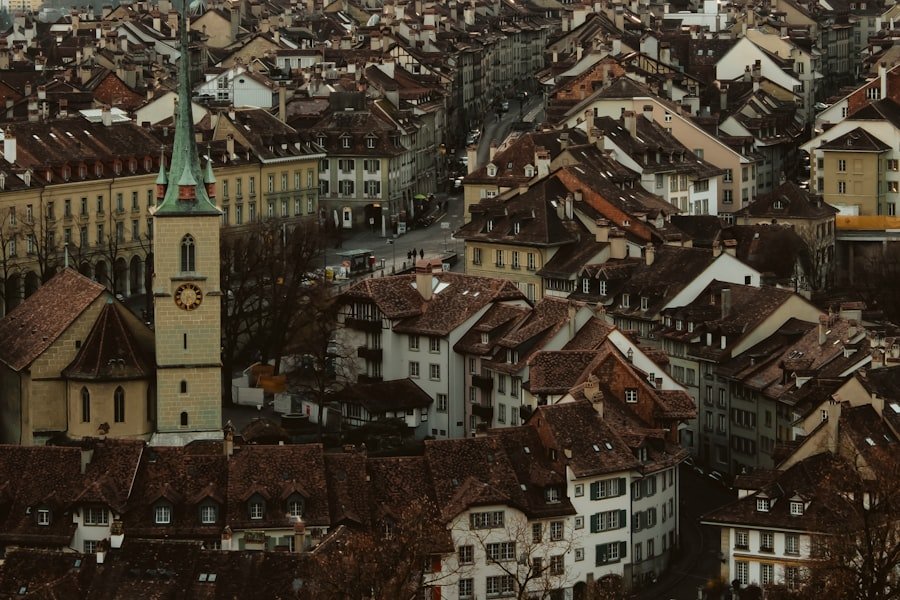
Bern’s Old City is the best place to begin a free walking tour. The city was traditionally founded in 1191 by Berchtold V, Duke of Zähringen, on a peninsula enclosed by a bend in the Aare River. Its medieval street plan, sandstone buildings, arcades, fountains, bridges, and later civic buildings helped it earn UNESCO World Heritage status in 1983.
Walking through the Old City costs nothing. Start near Bern railway station and follow Spitalgasse and Marktgasse toward the Zytglogge. Continue through Kramgasse to Nydegg, stopping beneath the covered arcades when you want shade or protection from rain.
Look for the colorful Renaissance fountains placed along the main streets. The Kindlifresserbrunnen, often translated as the “Child Eater Fountain,” is the most unsettling and frequently discussed example. Its exact meaning remains uncertain, so treat the dramatic interpretations surrounding it as theories rather than established history.
The Old City is not an open-air museum frozen in time. Residents, shops, markets, cafés, government offices, and public transportation all share the historic streets. That mix of everyday life and preserved architecture is a major part of its appeal.
Bern’s Old City preserves its medieval street plan while continuing to function as the center of a modern capital.
Take a Stroll Along the Aare River
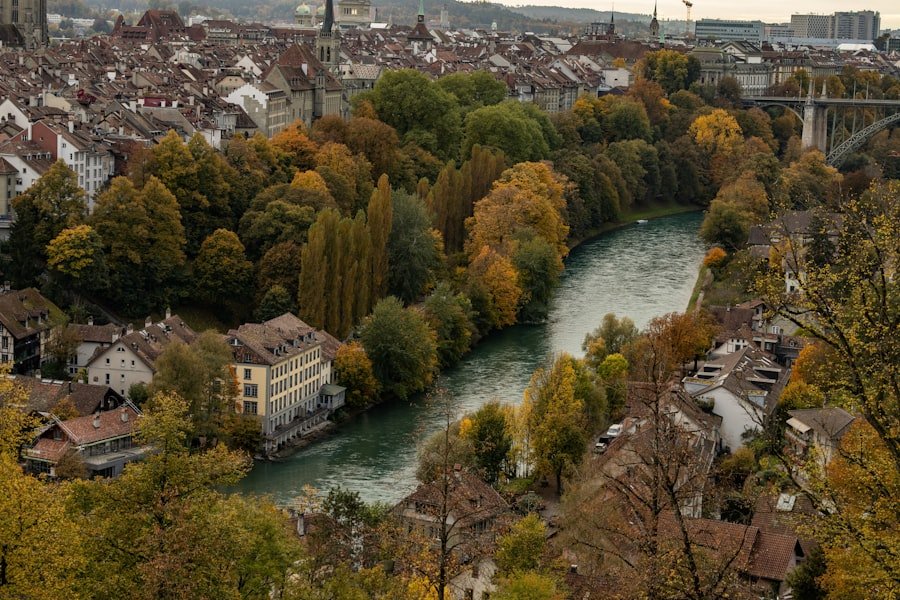
The Aare River wraps around the Old City and offers some of Bern’s most peaceful free walking routes. Paths near Matte, Marzili, Lorraine, BearPark, and Dählhölzli provide views of the turquoise water, wooded banks, bridges, and sandstone skyline.
You can combine an Aare walk with several other free attractions. One convenient route leads from the Old City to Nydegg Bridge, down toward BearPark, and then along the river before climbing to the Rose Garden.
During warm weather, you may see experienced locals swimming with the current. Kayaking, inflatable boating, and stand-up paddleboarding also take place on suitable sections of the river. These activities require preparation and should not be treated like swimming in a calm lake or supervised pool.
Warning: The Aare has strong currents and no general lifeguard service. River swimming is recommended only for experienced, sober swimmers who know the entry and exit points, check the weather and water conditions, and go with another person. Read the official Aare safety guidance before entering the water. Call 112 or 144 in an emergency.
If you are not a confident river swimmer, stay on the walking paths or use one of Bern’s public swimming pools. You can still enjoy the river scenery without entering the water.
Visit BearPark
BearPark sits beside the Aare at the eastern end of Bern’s Old City. Admission is free, and the public viewing areas are open around the clock throughout the year. The landscaped enclosure extends from the former bear pit down the wooded riverbank.
Viewing platforms and paths allow you to look into the enclosure without entering an animal area. A free inclined lift, known as the BäreBähnli, connects the upper area with the lower Aare promenade during its operating hours and improves access for visitors with limited mobility or a stroller.
The bears may be climbing, foraging, bathing, resting behind vegetation, or staying in private areas. A visit never guarantees a close sighting. They are also much less active and may be difficult to see during their winter dormancy, generally from November through March.
Information displays explain Bern’s long association with bears, modern animal care, and the history of the former bear pit. Rangers are present during set daytime hours to answer visitor questions.
Pro Tip: Combine BearPark with an Aare walk and the Rose Garden. The climb from the river to the garden is short but steep, so allow extra time if you have mobility limitations.
Warning: Never feed the bears. Visitor feeding is prohibited because unsuitable food can harm the animals and interfere with their natural foraging behavior.
Explore the Rose Garden
The Rose Garden, or Rosengarten, is a free public park on a hill above the Old City. It is one of Bern’s best viewpoints, with a broad panorama over the tiled roofs, Bern Minster, the Aare bend, Gurten, and the Alps in clear weather.
| Admission | Free |
| Plant collection | Around 250 rose varieties in summer, with more than 400 rose and iris types combined and 28 rhododendron types |
| Public park since | 1913 |
| Best seasonal displays | Cherry blossoms around late March or early April, followed by roses in late spring and summer |
The land served as a cemetery for the Lower Old City from 1765 to 1877 before it was gradually transformed into a public park. Today it includes lawns, flower beds, a pond, benches, a playground, a restaurant, and seasonal reading areas.
Late spring and early summer provide the strongest rose displays, but the park is worth visiting throughout the year. Japanese cherry trees create a brief pink display in early spring, while autumn brings colorful foliage.
Sunset is popular because the elevated position faces across the Old City. Arrive before the light fades if you want time to walk through the garden and choose a viewpoint.
Tour the Parliament Building for Free
The Federal Palace, or Bundeshaus, houses Switzerland’s Federal Assembly and Federal Council. Its dome, ceremonial hall, council chambers, murals, and sculptures reflect the development of the Swiss federal state.
When Parliament is not in session, the building can be entered only as part of an authorized guided tour. Tours are free, generally last up to 60 minutes, and are normally offered from Tuesday through Saturday in languages that vary by day.
Individual visitors and groups of up to nine people can normally reserve online no earlier than three days before the visit. Space is limited, and the absence of bookable times may mean tours are unavailable. Parliament does not offer regular guided tours while the chambers are in session.
Arrive at the visitors’ entrance on Bundesterrasse at least 20 minutes before the tour. Visitors aged 16 and older must deposit an accepted official identity document with security. Expect airport-style screening and follow the photography rules inside.
Check the official Parliament tour page before planning your visit. On session days, reserved public-gallery access may be available instead of a standard building tour.
Pro Tip: If the interior tour is full, you can still walk around Parliament Square, view the exterior, and use the free Federal BE audio-tour app to learn about the surrounding government buildings.
Enjoy the Views from Gurten
Gurten is Bern’s local mountain and rises to about 858 meters above sea level. Its meadows, forest paths, viewpoints, picnic spaces, and many playground features are free to use.
You can reach the summit by hiking from Wabern or by taking the Gurten funicular. The hike is free but involves a sustained climb. The funicular normally requires a ticket unless it is covered by your transportation pass.
Eligible guests staying in recognized accommodation in the municipality of Bern receive a Bern Ticket. It covers public transportation in zones 100 and 101 and includes the Gurten funicular for the duration of the qualifying stay.
At the top, clear weather can reveal the city, the winding Aare, and the peaks of the Bernese Oberland. Walking routes range from short paved paths to longer forest trails. Families can use the large play area, though a few rides and seasonal attractions may charge separately.
Gurten also hosts concerts, festivals, astronomical activities, and seasonal events. Event admission is separate from the free public landscape, so check the schedule if you are visiting on a busy date.
Watch the Zytglogge Clock Show
The Zytglogge is one of Bern’s most recognizable landmarks. The tower began as a city gate in the early 13th century and later served several civic functions before becoming famous for its astronomical clock and mechanical figures.
Watching the exterior figures from the street is free. A few minutes before each hour, visitors gather on Kramgasse to see the rooster, bears, jester, Cronos, and other figures move as the clock marks the change of hour.
Stand on the side of the street facing the astronomical dial and arrive at least five minutes early. Crowds may block the closest viewing area during busy periods.
The tower’s musical mechanism and astronomical clock date from the 16th century. Paid guided tours enter the tower, explain the clockwork, and climb roughly 130 steps to an upper viewpoint. The interior should therefore not be described as a free attraction, even though viewing the exterior show costs nothing.
Current tour details are available from the official Zytglogge visitor page.
Explore the Bern History Museum on a Free-Admission Day
The Bern History Museum is an important cultural-history museum with collections covering Bern, archaeology, ethnography, art, and historical objects from different periods and regions. Its integrated Einstein Museum examines Albert Einstein’s life and work within the wider history of the 20th century.
The museum is not normally free. As of July 23, 2026, the standard basic admission listed by Bern Museum Quarter is CHF 16 for adults and CHF 8 for children aged 6 to 16. An Einstein Plus ticket and a ticket for the entire venue cost more. Pass holders and certain eligible visitor groups may receive free admission.
Bern’s 2026 “Free Museum” campaign provides a temporary opportunity to visit participating institutions without paying. The listed free Saturdays are August 8, 15, 22, and 29, 2026. The Bern History Museum and Einstein House are among the participating institutions, but programs and opening arrangements should be confirmed before travel.
Note: The Museum of Communication is also normally paid. Its regular adult admission was CHF 18 when checked in July 2026. Free entry applies only to qualifying passes, visitor categories, promotions, or special events.
Visitors who miss a free date can compare the Bern Museum Card, the Museumsquartier Pass, the Swiss Museum Pass, or other accepted passes against the cost of individual tickets. See the current Bern History Museum information before choosing a ticket.
Visit Bern Minster and Minster Terrace
Bern Minster, or Berner Münster, is Switzerland’s tallest church and one of the defining landmarks of the Old City. Entering the main church is generally free, although donations are welcome and access can be limited during services, concerts, or special events.
Take time to examine the Last Judgment sculptures above the main entrance, the stained glass, vaulted interior, choir, and organ. Climbing the tower is a separate paid activity and requires hundreds of steps.
Behind the church, Minster Terrace provides a free elevated view over the Matte district, Aare River, and surrounding hills. The terrace has benches, trees, open space, and play areas, making it a useful rest stop during an Old City walk.
Browse the Botanical Garden
Bern’s Botanical Garden is a free attraction within walking distance of the railway station and Old City. Its outdoor gardens and greenhouses contain thousands of plants from Alpine, Mediterranean, desert, subtropical, and tropical environments.
The garden works well on a rainy or cool day because several collections are indoors. Outside, paths descend through planted slopes toward the Aare. Seasonal flowers, medicinal plants, mountain species, succulents, orchids, palms, and food plants provide variety throughout the year.
Opening times can differ between the outdoor grounds and individual greenhouses. Check the current schedule before making it the first or final stop of the day.
See the Free Animal Enclosures at Dählhölzli
Bern Animal Park includes a paid zoo area and free public animal areas along the Aare. The free riverside section features mainly native or regional animals and can be combined with a river walk, picnic, or BearPark visit.
The main Dählhölzli Zoo, vivarium, and many exotic-animal enclosures require admission. Do not assume that every part of the animal park is free simply because the riverside route is open without a ticket.
The forest setting, children’s zoo areas, riverbank, and walking paths make the free section a practical option for families. Follow posted barriers and feeding rules, and keep children away from the fast-moving river.
Follow Bern’s Historic Fountains
Bern has more than 100 public fountains, including a series of colorful historic fountains in the Old City. A self-guided fountain walk costs nothing and adds an easy theme to a walking route.
Notable examples include the Zähringerbrunnen, Simsonbrunnen, Gerechtigkeitsbrunnen, Mosesbrunnen, Anna-Seiler-Brunnen, and Kindlifresserbrunnen. The 16th-century figure fountains reflect religious stories, civic values, local legends, military history, and Bern’s bear symbol.
Many public fountains provide drinking water unless a sign states otherwise. Carrying a refillable bottle can reduce the cost of drinks during a long walking day.
Plan a Free One-Day Bern Itinerary
Morning: Old City, Zytglogge, and Fountains
Begin at Bern railway station and walk through Spitalgasse and Marktgasse. Follow the historic fountains to the Zytglogge and arrive shortly before the hour for the free mechanical show. Continue along Kramgasse toward the lower Old City.
Late Morning: Minster and Parliament
Visit Bern Minster and step onto Minster Terrace for an Aare view. Walk toward Parliament Square and explore the exterior of the Federal Palace. Use a reserved free tour here if you secured a place.
Afternoon: Aare, BearPark, and Rose Garden
Walk downhill toward Nydegg and BearPark. Continue along the Aare promenade, then climb or take public transportation to the Rose Garden. Allow time for the viewpoint, lawns, flowers, and playground.
Evening: Gurten or a Sunset View
Travel to Gurten if you have enough time and a Bern Ticket covering the funicular, or hike if daylight and fitness allow. For a simpler ending, stay at the Rose Garden for sunset or return to the Old City for an evening walk beneath the arcades.
Budget and Practical Tips
- Use the Bern Ticket correctly: It is issued to qualifying overnight guests staying in recognized accommodation in the municipality of Bern. It is not a general free pass for every day visitor.
- Reserve Parliament early: Individual reservations usually open only a few days before the tour, and spaces can disappear quickly.
- Wear suitable shoes: Cobblestones, slopes, river paths, and the climb to the Rose Garden can be tiring in thin or slippery footwear.
- Prepare for hills: Bern’s center is walkable, but routes between the Aare, BearPark, Rose Garden, and upper streets include steep sections.
- Carry water: Refill your bottle at suitable public fountains unless they are marked as non-potable.
- Pack food: A homemade picnic, sandwiches, fruit, bread, or a simple snack such as cottage cheese in a secure chilled container can keep the day inexpensive.
- Check seasonal visibility: Bears may be difficult to see in winter, roses are seasonal, and Alpine views depend on cloud and haze.
- Separate free access from paid extras: Tower climbs, interior clock tours, special rides, museums, events, and restaurant purchases may cost money even when the surrounding attraction is free.
Frequently Asked Questions
What are the best free things to do in Bern?
Top free activities include walking through the UNESCO Old City, watching the exterior Zytglogge show, visiting BearPark and the Rose Garden, following the Aare, exploring the Botanical Garden, entering Bern Minster’s main church, viewing historic fountains, and using the free sections of Dählhölzli Animal Park.
Is public transportation free for visitors in Bern?
Eligible guests staying in recognized accommodation in the municipality of Bern receive a Bern Ticket for their stay. It covers buses, trams, and trains in zones 100 and 101 and includes the Gurten and Marzili funiculars. Day visitors without the ticket must buy normal transportation tickets.
Are museums in Bern free?
Most major museums are not always free. Some institutions and exhibitions offer free entry, while museum passes, age rules, and special visitor categories may provide free admission. In 2026, participating museums are offering free admission on August 8, 15, 22, and 29.
Can I visit the Federal Palace for free?
Yes. Guided tours are free when Parliament is not in session, but advance reservations, security screening, and an accepted identity document for visitors aged 16 and older are required. Availability and languages vary by date.
Is the Zytglogge Clock Tower free?
Watching the mechanical figures from the street is free. Guided tours inside the tower, including the clock mechanism and upper viewpoint, normally require a paid ticket.
Is Gurten free to visit?
The walking trails, viewpoints, meadows, picnic areas, and many playground features are free. Hiking to the summit costs nothing. The funicular and some rides or events may cost extra, although the funicular is included with a valid Bern Ticket.
Can beginners swim in the Aare River?
No. The Aare has a strong current and is recommended only for experienced swimmers who understand the route, marked exits, weather, and water conditions. Beginners should remain on the riverbank or use a public swimming pool.
What free outdoor activities are available in Bern?
Free outdoor options include Old City walks, Aare riverside paths, BearPark, the Rose Garden, Gurten hiking, Minster Terrace, the Botanical Garden grounds, historic fountain routes, parks, playgrounds, and the free riverside animal enclosures at Dählhölzli.
Sources
- UNESCO World Heritage Centre: Old City of Berne — World Heritage status, urban history, arcades, fountains, and preservation.
- Bern Welcome: The Best Free Activities in Bern — free attractions, gardens, Minster access, fountains, Gurten, and cultural activities.
- Bern Welcome: Aare Safety Tips — river-swimming requirements, exit planning, conditions, and emergency guidance.
- Tierpark Bern: BearPark Opening Hours — free admission, year-round access, winter visibility, feeding rules, and ranger information.
- Swiss Parliament: Guided Tours of the Parliament Building — free tours, reservations, schedules, security, and identification requirements.
- Bern Museum Quarter: Bern History Museum and Einstein Museum — collections, admission rates, opening hours, and free-entry categories.