Whittier may be small, but you can fill several hours near the cruise port without buying an excursion. The best free activities include walking around the harbor, following the town’s historical signs, visiting City Park or Lu Young Park, watching for wildlife, and hiking a nearby trail. You only need to separate genuinely free stops from attractions that charge admission or require transportation.
Quick Answer
Free things to do near Whittier Cruise Port include walking the waterfront and small-boat harbor, following the self-guided historical route, visiting City Park and Lu Young Park, seeing local monuments, watching harbor wildlife, and hiking Whittier Creek, Horsetail Falls, Emerald Cove, or Portage Pass.
Key Takeaways
- The harbor, waterfront, historical walking route, monuments, City Park, and Lu Young Park can be explored without an admission charge.
- Whittier has several free trails, but their length and difficulty vary considerably.
- The Alaska Wildlife Conservation Center, Begich, Boggs exhibits, fishing charters, kayak rentals, and most boat tours are not normally free.
- Pedestrians and bicycles cannot enter the Anton Anderson Memorial Tunnel.
- Allow extra time for cruise security, changing weather, trail conditions, and your ship’s all-aboard deadline.
What Counts as Free in Whittier?
The outdoor places in this guide do not normally charge admission. However, “free” does not always mean that the entire visit costs nothing. You may still pay for transportation, parking, food, equipment, or the Anton Anderson Memorial Tunnel if you arrive in a private vehicle.
Cruise passengers who begin and end at the terminal can usually explore the central harbor and town on foot. Walking distances depend on your assigned terminal or dock, so use the official 2026 Whittier visitor map before choosing a route.
Note: Whittier receives substantial rain and rapidly changing coastal weather. Bring a waterproof outer layer even if the sky looks clear when you leave the ship.
Free Activities Near Whittier Cruise Port
| Activity | Best For | What to Know |
|---|---|---|
| Waterfront and harbor walk | Views, photography, boats | Stay on public walkways and working-harbor areas open to visitors. |
| Self-guided historical walk | World War II and Cold War history | Follow the numbered stops and signs on the official visitor map. |
| City Park and Lu Young Park | Rest breaks and families | Facilities and ground conditions may vary by season. |
| Whittier Creek Trail | A short, easy nature walk | The chamber map lists the trail as 0.5 mile and easy. |
| Horsetail Falls Trail | Waterfalls and a longer walk | The chamber map lists it as 1 mile and moderately strenuous. |
| Portage Pass Trail | Experienced hikers with enough time | Two miles one way, steep and rocky, with about 800 feet of elevation gain. |
Walk Along the Waterfront
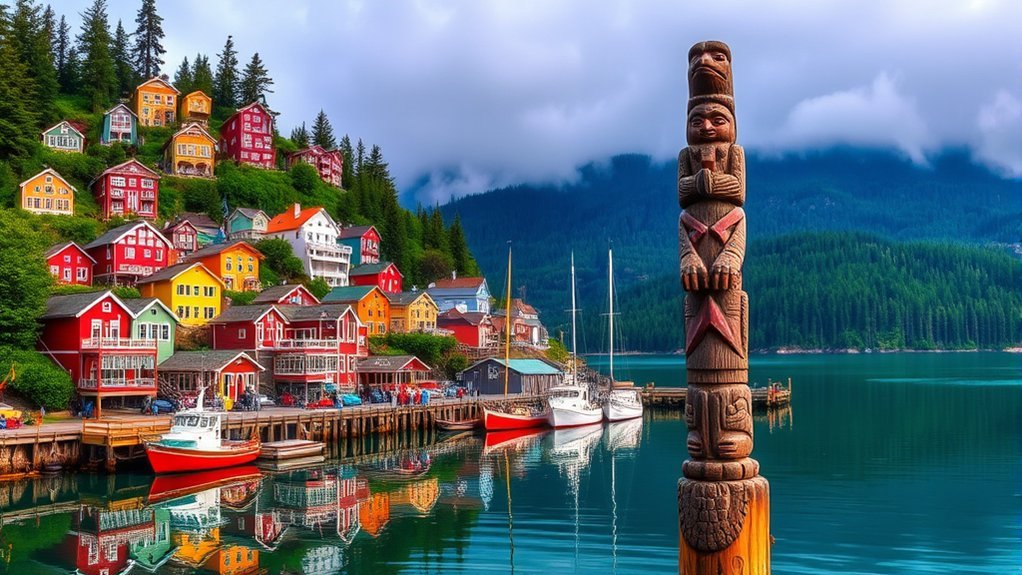
A waterfront walk is the easiest free activity for most cruise passengers. From public areas near the harbor, you can see Passage Canal, steep mountains, working boats, waterfalls after rain, and the changing light on Prince William Sound.
Walk only on marked roads, sidewalks, and public waterfront areas. Whittier is an active port, so do not cross gates, enter loading zones, block ramps, or wander onto private docks. Wet boards, rails, and painted surfaces can also be slippery.
The scenery changes as you move around the harbor. One direction may give you a broad view down Passage Canal, while another frames fishing boats against the mountains. Low clouds are common, but they can create dramatic photographs rather than ruin the visit.
Whittier’s best free attraction is the setting itself: a working harbor surrounded by waterfalls, forested slopes, glaciers, and the waters of Passage Canal.
Explore Whittier Harbor
Whittier Harbor is a full-service, year-round harbor with hundreds of slips. Watching boats arrive, crews prepare equipment, and anglers return from Prince William Sound does not cost anything when viewed from public areas.
Look for Wildlife Without Expecting a Guaranteed Sighting
Bring binoculars and scan pilings, breakwaters, open water, and the sky. You may see bald eagles, gulls, ducks, other seabirds, seals, or sea otters. Larger marine animals, including whales, occur in Prince William Sound, but seeing one from the harbor is a matter of luck.
Keep a respectful distance from every animal. Do not feed wildlife or move closer for a photograph. If an animal changes direction, stops feeding, watches you closely, or tries to leave, give it more space.
Watch Fishing and Boating Activity
You can enjoy the working-harbor atmosphere for free, but participating usually costs money. Fishing charters, sightseeing cruises, water taxis, kayak rentals, guided paddles, and boat rentals are commercial services.
Shore fishing may also require equipment and an Alaska sport-fishing license. Check current rules before casting a line rather than assuming that fishing beside the harbor is unrestricted.
Note: If your budget is zero, enjoy the boats from shore. Treat any charter, cruise, rental, water taxi, or guided tour as a paid upgrade.
Relax at City Park or Lu Young Park
Whittier’s official visitor map identifies two central green spaces: City Park and Lu Young Park. They offer simple places to pause, eat a packed snack, and give children a break from continuous walking.
These are small-town parks rather than large landscaped attractions. Conditions and available facilities can change with weather, maintenance, and season, so carry out your trash and do not depend on the parks for shelter.
Simple Family Activities
- Have a picnic with food brought from the ship or purchased in town.
- Look for waterfalls on the surrounding slopes.
- Let children sketch the harbor, boats, or mountains.
- Use binoculars for a wildlife-spotting challenge without approaching animals.
- Follow part of the historical route and read the outdoor signs together.
Follow Whittier’s Self-Guided Historical Walk
Whittier was developed as a military port during World War II, and the railroad reached the community in 1943. The official visitor map marks a free self-guided route with signs attached to concrete buildings and monuments connected to the town’s World War II, Cold War, railroad, and earthquake history.
Marked points include former military support buildings, the Hodge Building—now Begich Towers—the Buckner Building, a 1943 railroad monument, and a monument connected to the 1964 Alaska earthquake. You can follow all or part of the route depending on your available time.
View Begich Towers Respectfully
Begich Towers is a residential building and home to many Whittier residents. It is not an unrestricted tourist attraction. The 2026 chamber map asks visitors who enter to remain in public areas on the first floor, avoid photographing residents without permission, and never photograph children.
See the Buckner Building From Outside
The abandoned Buckner Building is an important part of Whittier’s military-era landscape, but it is deteriorated and unsafe. View and photograph it from a legal public location. Do not enter the structure, cross barriers, or climb on any part of it.
Warning: Do not enter the abandoned Buckner Building or any fenced, posted, unstable, or private structure. Falling material, damaged floors, sharp objects, and hidden openings can cause serious injury.
Notice Local Design and Community Details
You do not need a formal exhibition to appreciate Whittier’s visual character. The town’s memorials, historical signs, harbor equipment, weathered concrete buildings, mountain backdrop, and working waterfront offer plenty to observe and photograph.
Do not depend on the Community Center having public art exhibitions, workshops, or markets unless a current local notice confirms an event. Community facilities may be in use for local programs and are not automatically open sightseeing spaces.
Pro Tip: Download the official Whittier map before leaving the ship. It marks the historical route, parks, trailheads, harbor facilities, and cruise terminals in one place.
Hike a Free Trail Near Whittier
Whittier has free hiking choices ranging from a short creek walk to a steep half-day route. A trail has no admission charge, but you still need suitable clothing, water, and enough time to return well before your ship departs.
Whittier Creek Trail
The 2026 chamber map lists Whittier Creek Trail as an easy 0.5-mile route. It is the most practical trail choice for visitors who want a short nature walk without using most of their port time.
Horsetail Falls Trail
The chamber map lists Horsetail Falls as a 1-mile, moderately strenuous and hilly trail. The waterfall can be especially striking after rain, but wet roots, rocks, and wooden surfaces may be slippery.
Emerald Cove Trail
Emerald Cove Trail is listed as 2 miles with moderate, rolling terrain. It requires more time than the shorter creek and waterfall walks. Confirm your turnaround time before starting, especially if you must walk back to the cruise terminal.
Portage Pass Trail
Portage Pass provides broad views of Passage Canal, surrounding mountains, and Portage Glacier, but it is not a casual harbor stroll. The U.S. Forest Service rates it “More Difficult” and lists it as 2 miles one way, about two hours, with approximately 800 feet of elevation gain. The route includes a steep climb and rocky tread.
Reaching the pass and returning is shorter than hiking the full trail to Portage Lake and back. Cruise passengers should turn around early if weather worsens or their time margin becomes tight.
Warning: Carry water, wear shoes with traction, dress for wind and rain, and remain alert for wildlife. Never approach a bear or mountain goat. Portage Pass is not suitable for a rushed visit or an uncertain return schedule.
Go Birdwatching Along the Waterfront
You do not need to find a formally named estuary to watch birds near Whittier. Scan the harbor, shoreline, creek mouths, open water, and nearby slopes from public areas. Eagles, gulls, ducks, and other coastal birds may appear at any time.
Early morning can be quieter, but weather, tides, season, food, and human activity influence bird movement. The original claims that bald eagles are best in the morning, Arctic terns in late afternoon, and common loons at dusk are not reliable rules.
Use binoculars instead of walking onto sensitive shoreline areas. Avoid nests, do not play bird calls repeatedly, and keep food secured so you do not attract birds or other wildlife.
View the Whittier Tunnel Safely
The Anton Anderson Memorial Tunnel is a combined railroad and highway tunnel through Maynard Mountain. Its portals, staging system, and history make it an interesting engineering sight, but the tunnel is not a pedestrian attraction.
The Alaska Department of Transportation and Public Facilities states that pedestrians and bicycles are prohibited. Cars and trains take turns using the single-lane tunnel, and highway traffic enters during scheduled openings.
If you arrived by cruise ship, view the Whittier-side portal only from a legal public location. Do not walk along the approach road, enter staging lanes, or attempt to step inside. If you drive, consult the current tunnel schedule, arrive at the staging area early, obey staff instructions, and allow for train delays.
Driving through is not free. Alaska DOT’s toll page lists a $13 round-trip ticket for a standard passenger vehicle or motorcycle at the time of this update, but rates can change.
Popular Nearby Attractions That Are Not Normally Free
Alaska Wildlife Conservation Center
The Alaska Wildlife Conservation Center is a nonprofit wildlife sanctuary in Portage Valley, outside Whittier on the other side of the tunnel. It offers wildlife viewing around a 1.5-mile loop, but it charges admission.
As checked September 3, 2026, the official AWCC visitor page lists general admission at $30 for ages 13 and older and $26 for ages 4–12. Children 3 and younger are free. Special promotions may apply on selected dates, but they should not be assumed.
Begich, Boggs Visitor Center
The Begich, Boggs Visitor Center is in Portage Valley, not beside the Whittier cruise terminal. Visiting it from Whittier requires transportation through the scheduled tunnel.
When the center is open, the U.S. Forest Service charges $5 for adults to access the film and exhibits. Children 15 and younger are free, and qualifying federal recreation passes may cover the cardholder and guests under the center’s current rules.
Fishing, Kayaking, and Boat Trips
Fishing charters, kayak rentals, guided paddles, sightseeing cruises, water taxis, jet-ski tours, and boat rentals are paid services. They can provide closer access to glaciers and marine wildlife, but they do not belong on a list of completely free activities.
A Free Half-Day Plan From the Cruise Port
- Walk the harbor and waterfront for 45–60 minutes. Photograph Passage Canal, mountains, waterfalls, and boats from public areas.
- Follow part of the historical route for 45–60 minutes. Read the outdoor signs and see the railroad and earthquake monuments.
- Stop at City Park or Lu Young Park for 20–30 minutes. Eat a packed snack and check your remaining time.
- Choose one short trail for 45–90 minutes. Whittier Creek is the simplest option; use Horsetail Falls only if conditions and time allow.
- Return early. Leave a generous margin for walking, port security, crowds, and your ship’s stated all-aboard time.
Attempt Portage Pass only when you have several clear hours, suitable gear, good weather, and a firm turnaround time. It should replace the shorter town activities rather than be added to a crowded itinerary.
Practical Planning Tips
- Check your terminal: Whittier has more than one passenger or cruise facility, so walking times are not identical for every ship.
- Save the map offline: Mobile data and Wi-Fi may not be dependable everywhere.
- Carry rain protection: A waterproof jacket is more useful than an umbrella in wind.
- Wear secure shoes: Harbor surfaces and trails can remain wet and slippery.
- Respect residents: Begich Towers is a home, not an open museum.
- Watch the clock: Follow your cruise line’s all-aboard time, not the published sailing time.
- Have a backup: If heavy rain makes trails unpleasant, use the waterfront, parks, monuments, and historical signs instead.
Frequently Asked Questions
Are there public restrooms near Whittier Cruise Port?
Restrooms may be available inside your cruise terminal and at harbor facilities. Access and operating hours can vary, so use the terminal restroom before leaving and ask port staff to identify the nearest currently open public facility.
What is the best time to visit Whittier for sightseeing?
Summer offers the longest daylight, the widest range of visitor services, and the main cruise season. Rain, wind, and low clouds are possible even in summer, so choose activities according to the day’s conditions rather than expecting consistently clear weather.
Is public transportation available from the cruise port?
Do not expect a frequent local fixed-route bus. Whittier has commercial cruise transfers, scheduled coaches, rail service, tours, and rental options, but these should normally be reserved and are not free. Central Whittier is compact enough for many passengers to explore on foot.
Are there local shops or markets near the port?
Yes. Whittier has seasonal cafés, gift shops, food businesses, and stores around the harbor and central town. Opening hours can depend on the season and cruise schedule, so a particular business may not be open throughout your visit.
Can I find free Wi-Fi near Whittier Cruise Port?
Your cruise terminal or an individual café may offer Wi-Fi, but public access, passwords, speed, and hours can change. Download maps, tickets, and ship information before leaving the vessel instead of depending on a connection in town.
Can I walk through the Anton Anderson Memorial Tunnel?
No. Alaska DOT prohibits pedestrians and bicycles inside the tunnel. Use an authorized vehicle, train, or booked transfer to travel between Whittier and Portage Valley.
Is Portage Pass Trail suitable for a short cruise stop?
Only if you have enough time, suitable footwear, and good weather. The trail is 2 miles one way with a steep climb and about 800 feet of elevation gain. Whittier Creek or part of Horsetail Falls is safer for a shorter visit.
Conclusion
You do not need an expensive excursion to enjoy Whittier. Start with the waterfront and harbor, add part of the self-guided historical walk, rest at City Park or Lu Young Park, and choose a trail that matches your time and ability. The result can be a memorable free port day—as long as you respect working areas, private homes, wildlife, weather, and your ship’s return deadline.
Sources
- Greater Whittier Chamber of Commerce 2026 visitor map — parks, trails, terminals, historical-tour stops, services, and visitor conduct.
- U.S. Forest Service: Portage Pass Trail — trail length, elevation gain, difficulty, terrain, and preparation.
- Alaska DOT: Whittier Tunnel FAQ — pedestrian restrictions, operating system, safety, and travel time.
- Alaska DOT: Tunnel schedule — seasonal hours, timed openings, staging, and possible train delays.
- Alaska Wildlife Conservation Center — location, admission prices, hours, and visitor information.
- U.S. Forest Service: Begich, Boggs Visitor Center — admission fee, exhibits, passes, and operating information.