Alaska’s hidden gems range from small historic communities to roadless national parks, glacier-filled fjords, Indigenous cultural centers, and remote hot springs. Some are easy day trips, while others require boats, small aircraft, guides, or serious backcountry skills. Knowing the difference is the key to planning an Alaska trip that is memorable, realistic, and safe.
Quick Answer
Some of Alaska’s most rewarding places include Talkeetna, Gates of the Arctic National Park, Kenai Fjords, Kodiak Island, Mendenhall Glacier, Wrangell-St. Elias, Sitka, Prince William Sound, and Chena Hot Springs. Choose based on access, season, experience level, and whether you want wildlife, culture, glaciers, wilderness, or northern lights.
Key Takeaways
- Talkeetna, Sitka, Mendenhall Glacier, and Chena Hot Springs are relatively straightforward additions to a broader Alaska itinerary.
- Gates of the Arctic is true remote wilderness with no roads, established trails, cell service, or normal visitor services inside the park.
- Kodiak is especially rewarding when you approach its Alutiiq/Sugpiaq culture through community-led museums, programs, and artists.
- Glacier, wildlife, boating, and backcountry conditions change quickly, so check official alerts shortly before each outing.
- Summer offers the widest selection of tours and hiking, while darker fall and winter nights are better for northern-lights trips.
How to Choose Among Alaska’s Hidden Gems
These destinations are spread across a huge state, so it is better to build a trip around one or two regions than to treat the entire list as a single driving itinerary. Your best choice depends on the experience you want and how much logistical planning you are comfortable doing.
| Destination | Best For | Access | Good Time to Visit |
|---|---|---|---|
| Talkeetna | Small-town atmosphere, river trips, flightseeing | Road and Alaska Railroad | Summer for tours; winter for snow activities |
| Gates of the Arctic | Expert-level remote wilderness | Primarily small aircraft or extended backcountry travel | Typically summer for recreational backcountry trips |
| Kenai Fjords | Glaciers, boat tours, kayaking, hiking | Seward plus road, boat, or guided water access | Late spring through early fall for widest activity choice |
| Kodiak Island | Alutiiq culture, coastal scenery, wildlife | Air or marine transportation | Summer and early fall for broadest options |
| Mendenhall Glacier | Accessible glacier scenery near Juneau | Road from Juneau | Summer for easiest trail and visitor-service access |
| Wrangell-St. Elias | Huge landscapes, mining history, backcountry | Road, shuttle, air, and backcountry routes depending on area | Summer for most visitor services |
| Sitka | Tlingit culture, Russian-American history, coastal scenery | Air or marine transportation | Late spring through early fall for the widest visitor services |
| Prince William Sound | Sea kayaking, glaciers, marine scenery | Boat-centered access from coastal gateways | Summer for most paddling and boating trips |
| Chena Hot Springs | Hot springs, ice museum, northern lights | Road from the Fairbanks area | Year-round; darker months for aurora viewing |
Note: Alaska weather, roads, trails, glacier conditions, flights, ferries, and tours can change quickly. Recheck official alerts and your transportation provider shortly before traveling rather than relying only on an itinerary prepared months earlier.
The Charming Town of Talkeetna
Talkeetna combines a small historic downtown with easy access to the rivers and mountains of Southcentral Alaska. Wooden buildings, independent shops, galleries, cafes, and local restaurants give the community much of its familiar rustic character.
The town is also a practical adventure base. According to Travel Alaska, local operators offer flightseeing, riverboat trips, rafting, hiking, biking, and other guided activities. The Alaska Railroad also stops in Talkeetna.
If river scenery interests you, guided trips explore waterways including the Talkeetna, Susitna, and Chulitna. Options range from calmer floats to more demanding excursions, so match the trip to your experience and comfort level.
Talkeetna works especially well when you want a small-town Alaska experience without giving up easy access to guided outdoor adventures.
Winter changes the experience rather than shutting it down completely. Cross-country skiing, snowshoeing, fat-tire biking, dog-sled activities, and winter events may be available, although schedules vary from year to year.
Exploring Gates of the Arctic National Park
Gates of the Arctic National Park and Preserve is not a conventional sightseeing stop. It protects a vast portion of Alaska’s central Brooks Range and offers genuine wilderness with almost none of the infrastructure travelers associate with a normal national-park visit.
Remote Wilderness Experience
The National Park Service states that there are no normal visitor services or cell coverage inside this remote landscape. There are also no established trail systems leading you from attraction to attraction. Most recreational visitors enter by small aircraft or undertake significant backcountry travel.
That freedom is exactly what attracts experienced backpackers, paddlers, and wilderness travelers, but it also means you must be ready to manage navigation, river crossings, weather delays, food storage, emergency communications, and self-rescue.
Warning: Gates of the Arctic should not be treated as a casual day-hiking park. NPS advises visitors to be self-reliant, and bear-resistant food containers are required for overnight visits. Weather can also delay small-aircraft pickups, so backcountry parties should plan conservatively.
Four reasons experienced wilderness travelers seek it out include:
- Vast landscapes: The Brooks Range, tundra, valleys, and rivers extend far beyond developed visitor corridors.
- Solitude: The absence of roads and normal park infrastructure produces an uncommon sense of remoteness.
- Dark skies: Away from communities and artificial lighting, clear nights can offer outstanding views of the sky.
- Self-directed adventure: Experienced visitors may backpack, float rivers, or travel cross-country rather than following a maintained trail network.
Unique Wildlife Encounters
Wildlife is part of the park’s functioning Arctic ecosystem. Depending on location, season, and luck, you may see animals such as caribou, grizzly bears, foxes, birds of prey, and other Arctic species.
Observe animals without approaching or altering their behavior. Carrying proper food-storage equipment and knowing bear-safety practices is much more important here than trying to get close enough for a dramatic photograph.
Breathtaking Scenic Landscapes
The landscape is the main attraction. Mountain ridges rise above broad valleys, rivers cut through the wilderness, and tundra vegetation changes dramatically across the short growing season.
Summer can bring long daylight and wildflowers, while late-season darkness changes both the atmosphere and travel demands. Conditions can shift rapidly even when the calendar suggests favorable weather.
The Serene Beauty of Kenai Fjords National Park
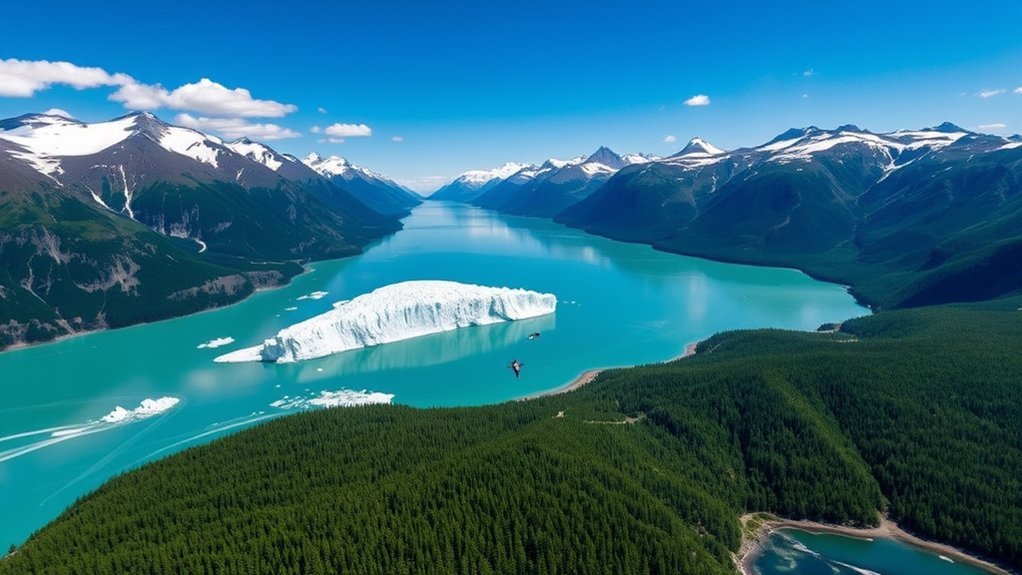
Kenai Fjords National Park brings together mountains, ocean, glaciers, forests, and marine wildlife. Seward is the main gateway for many visitors, and the Exit Glacier area is the only part of the park reached by road.
The National Park Service highlights boat tours, kayaking, ranger programs, flightseeing, the Exit Glacier area, and the strenuous Harding Icefield Trail among the park’s major experiences.
Boat trips are a practical way to see the park’s rugged coastline and search for marine wildlife from an appropriate distance. Sea otters, seals, seabirds, whales, and other animals may be seen, but sightings vary with season and conditions.
Hikers can explore the maintained trails around Exit Glacier. The Harding Icefield Trail climbs from the Exit Glacier area toward sweeping views of the icefield and requires substantially more effort than the shorter frontcountry walks.
Pro Tip: If you have only one day in Seward, choose your priority before booking: a marine boat tour emphasizes coastline, glaciers, and wildlife, while the Harding Icefield Trail emphasizes a demanding land-based hiking experience.
Kayaking can offer a quieter perspective, but cold water, tides, weather, remote shorelines, and floating ice deserve respect. Travelers without strong coastal-paddling experience should consider an authorized guide rather than treating the fjords like a sheltered recreational lake.
Discovering the Unique Culture of Kodiak Island
Kodiak Island is known for dramatic coastal landscapes and wildlife, but its cultural depth deserves equal attention. The Kodiak Archipelago is home to a living Alutiiq/Sugpiaq culture with traditions that continue through language, art, subsistence, storytelling, education, and community life.
Indigenous Heritage and Traditions
A strong starting point is the Alutiiq Museum in Kodiak. The community-governed museum presents thousands of years of Alutiiq/Sugpiaq heritage through artifacts, exhibitions, language resources, cultural programs, and contemporary work.
Important parts of this living heritage include:
- Storytelling: Traditional and contemporary stories preserve knowledge, values, history, and relationships with the natural world.
- Language: Sugt’stun, also called Alutiit’stun, remains a major focus of documentation, teaching, and revitalization.
- Subsistence practices: Fishing, gathering, hunting, and food traditions reflect long relationships with Kodiak’s land and sea.
- Community traditions: Dance, music, art, gatherings, and cultural education continue to connect generations.
Visitors get a more accurate experience by learning from museums, Tribal and cultural organizations, local educators, and artists rather than treating Indigenous culture as a collection of generic Alaska symbols.
Local Arts and Crafts
Kodiak’s Alutiiq artists work in forms that include carving, masks, weaving, beading, graphic arts, sewing, jewelry, and other contemporary and traditional media. The Alutiiq Museum’s art resources provide useful context for understanding how these practices connect to cultural identity.
Local workshops, exhibitions, open houses, arts camps, and other events can provide opportunities to meet artists or learn directly from cultural educators. Event calendars change, so check current museum and community listings instead of assuming a particular festival will occur during your visit.
Buying directly from local artists and community-run institutions can also help support the people whose work you are learning about.
The Enchanting Mendenhall Glacier
Mendenhall Glacier near Juneau offers one of Southeast Alaska’s more accessible glacier landscapes. The USDA Forest Service manages the recreation area, where visitors can use viewpoints and trails to see the glacier, lake, waterfalls, forest, and surrounding mountains.
Useful ways to experience the area include:
- Glacier viewpoints: See Mendenhall Glacier and the lake from established visitor areas and trails.
- Wildlife watching: Depending on the season, you may see birds and other wildlife. Observe from a safe distance and follow posted closures.
- Hiking: Trails around the recreation area provide different perspectives on the glacier landscape.
- Guided paddling or glacier trips: Qualified operators may offer water or glacier experiences when conditions allow.
Warning: Do not plan on casually walking into a Mendenhall ice cave. The USDA Forest Service notes that guided operators may reach glacier features when conditions allow. Glacier surfaces, caves, ice, water levels, and access routes change, so professional guidance and current local information are essential.
Even without entering an ice cave, Mendenhall provides a memorable view of an active glacial landscape and is much easier to incorporate into a Juneau visit than Alaska’s remote backcountry glaciers.
Unraveling the Mysteries of Wrangell-St. Elias National Park
Wrangell-St. Elias National Park and Preserve is America’s largest national park, encompassing enormous mountain ranges, glaciers, river valleys, historic sites, and roadless wilderness.
One of its most fascinating cultural destinations is Kennecott Mines National Historic Landmark. Its surviving buildings preserve an important chapter of early-20th-century copper mining and show how an industrial community operated in a remarkably isolated setting.
Road-accessible portions of Wrangell-St. Elias can introduce you to the park without a full expedition, while backcountry routes offer much more serious adventures. Hiking, camping, flightseeing, glacier travel, and wilderness trips require very different levels of preparation.
Wildlife may include bears, foxes, moose, Dall sheep, birds, and other species depending on where you travel. Never count on a specific sighting, and keep food and attractants secured.
Note: Trail, road, bridge, rockfall, river, and glacier conditions can change within Wrangell-St. Elias. Check the current NPS conditions and alerts before setting out.
The Coastal City of Sitka
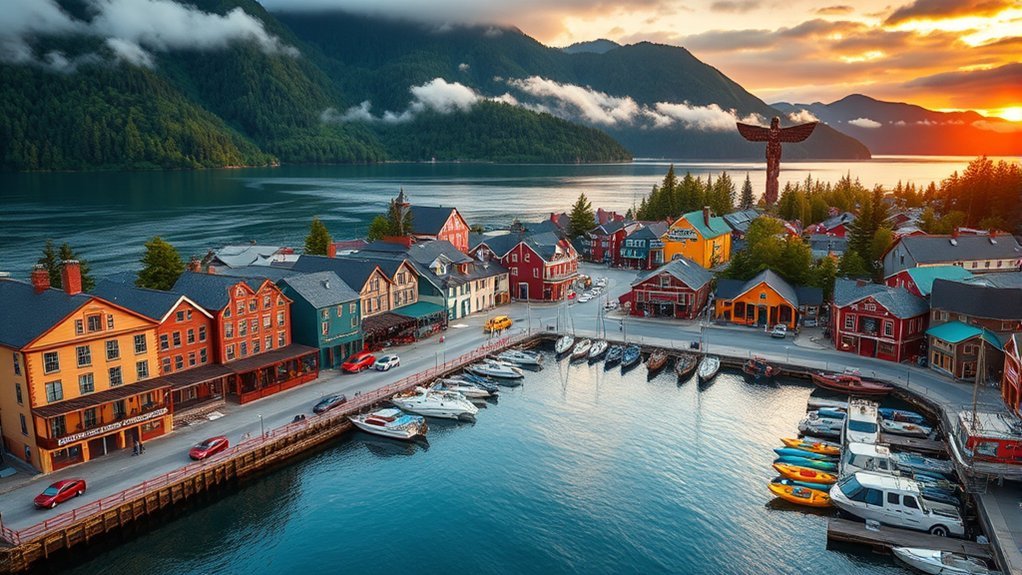
Sitka combines coastal scenery with layers of Tlingit and Russian-American history. It is a city and borough rather than a small village, but its compact central area makes many cultural stops easy to combine.
Sitka National Historical Park preserves the site associated with the 1804 conflict between Kiks.ádi Tlingit and Russian forces. Its coastal trail includes Tlingit and Haida totem poles, while the visitor center interprets Indigenous culture and history.
Four worthwhile experiences include:
- Sitka National Historical Park: Walk forest and coastal trails while learning about Tlingit history and the Battle of 1804.
- Russian-American history: Visit sites such as the Russian Bishop’s House and learn about Alaska’s colonial period.
- Marine wildlife tours: Boat operators may offer opportunities to look for sea otters, whales, seabirds, and other marine animals.
- Local art: Galleries and cultural organizations provide a chance to see work from Southeast Alaska artists.
Sitka is particularly rewarding when you treat its scenery and cultural history as connected rather than seeing it only as a picturesque coastal stop.
The Majestic Beauty of Prince William Sound
Prince William Sound is a maze of mountains, islands, fjords, forests, sheltered coves, and tidewater glaciers. The Chugach National Forest identifies boating, kayaking, glacier viewing, marine-life viewing, and hiking among the region’s major recreation opportunities.
Sea kayaking is one of the most intimate ways to explore the sound. Depending on your route, you may see seals, sea otters, eagles, seabirds, or other wildlife while moving among forested shorelines and glacial scenery.
Established hiking trails are limited in many parts of the sound, which is one reason boats and kayaks play such a large role in backcountry travel.
Summer vegetation and wildflowers can add vivid color to the coastline, while glaciers and snow-covered peaks create a striking contrast throughout much of the year.
Warning: Prince William Sound is cold-water coastal wilderness. Wind, waves, rain, tides, water temperature, floating ice, and long distances between safe landing points can turn a simple-looking paddle into a serious trip. Use appropriate cold-water gear and consider a guide if you lack sea-kayaking experience.
The Hidden Hot Springs of Chena
Chena Hot Springs Resort, reached by road from the Fairbanks area, combines geothermal soaking with Interior Alaska scenery and several year-round activities.
Highlights can include:
- Geothermal soaking: The resort’s naturally heated water provides a warm contrast to Alaska’s colder seasons.
- Northern-lights viewing: Dark winter nights can provide good opportunities when skies are clear and auroral activity cooperates.
- Aurora Ice Museum: The resort operates a year-round ice museum with sculptures and other ice features.
- Additional resort activities: Tours, winter experiences, geothermal programs, and spa or wellness services may be available depending on the current schedule.
The resort’s current aurora guidance identifies September through March as its main aurora season because nights are dark enough for viewing. Even then, northern lights are a natural phenomenon and cannot be guaranteed.
If the aurora is a major reason for your trip, give yourself more than one night whenever possible. Clouds on a single evening can hide an otherwise active display.
Planning a Trip to Alaska’s Hidden Gems
Group Destinations by Region
Alaska’s size makes regional planning important. Talkeetna and Prince William Sound fit naturally into many Southcentral itineraries, while Kenai Fjords is usually approached through Seward. Mendenhall Glacier and Sitka are in Southeast Alaska. Kodiak requires separate air or marine transportation, and Gates of the Arctic belongs in an entirely different category of remote Interior and Arctic travel.
Focusing on fewer places usually gives you more time outdoors and reduces the amount of your vacation spent transferring between regions.
Match the Season to Your Priorities
Late spring through summer generally provides the widest range of boat tours, road access, hiking, visitor services, and long daylight. Fall can bring fewer crowds, autumn colors, and returning darkness. Winter is best suited to snow activities, hot-spring trips, and northern-lights travel in appropriate regions.
There is no single perfect month for every destination on this list.
Prepare for Wildlife and Changing Conditions
Seeing wildlife can be a highlight, but animals should never be approached for a photograph. The National Park Service’s Alaska wildlife guidance advises visitors to keep substantial distance from wild animals, avoid feeding them, and increase distance whenever an animal reacts to your presence.
Bear country also requires proper food and attractant storage. Requirements vary by park and location, so check the rules for the specific public land you are visiting.
Respect Alaska’s Cultural and Natural Landscapes
Many places that visitors describe as wilderness have been homelands and travel corridors for Alaska Native peoples for thousands of years. Learn local place names and history where interpretation is available, follow rules on Tribal and private land, and support community-led cultural organizations.
In the backcountry, minimize your impact by packing out waste, avoiding damage to fragile vegetation, respecting wildlife, and following the land manager’s current Leave No Trace and camping guidance.
Frequently Asked Questions
What is the best time to visit Alaska’s hidden gems?
For the widest selection of hiking, road trips, boat tours, and visitor services, late spring through summer is usually the easiest period. Fall offers changing colors and increasing darkness, while winter is better for snow activities, hot springs, and northern lights. The best month depends on the destination and activity.
Are there unique local foods to try in Alaska?
Yes. Depending on where you travel, you may find Alaska salmon, halibut, king crab, locally harvested berries, sourdough specialties, and reindeer sausage. Availability varies by region and season, and Indigenous food traditions are best understood through local cultural programs rather than treating them as tourist novelties.
How do I get to these hidden gems in Alaska?
Access varies dramatically. Talkeetna, Mendenhall Glacier, and Chena Hot Springs have road access. Sitka and Kodiak generally require air or marine transportation. Much of Prince William Sound is explored by boat, while Gates of the Arctic has no road access into the park and commonly requires a small-aircraft or serious backcountry approach.
What wildlife can I expect to see in Alaska?
Depending on the region and season, you may see bears, moose, caribou, sea otters, seals, whales, eagles, seabirds, and other wildlife. No sighting is guaranteed. Watch from a safe distance, never feed animals, and follow the specific wildlife rules for the park or public land you are visiting.
Are outdoor activities available year-round in Alaska?
Yes, but the activity changes with the season and region. Summer favors hiking, paddling, boat tours, and flightseeing. Winter can bring cross-country skiing, snowshoeing, dog sledding, fat-tire biking, hot-spring visits, and aurora viewing. Some trails, roads, tours, and visitor facilities operate only seasonally.
Are all of these places really hidden gems?
Not literally. Places such as Mendenhall Glacier and Kenai Fjords are well-known attractions, while Gates of the Arctic is genuinely remote. The value of this list is the variety: it mixes accessible favorites with destinations that receive fewer casual visitors because they require more time, transportation, or preparation.
Can I visit all of these Alaska destinations on one trip?
You could on a long trip with multiple flights and transfers, but it is rarely the most efficient plan. Alaska is enormous, and several destinations require air or marine travel. Most visitors will have a better experience by choosing one or two regions and spending more time exploring each place.
Conclusion
Alaska’s most rewarding places are not defined only by how few people visit them. Talkeetna offers an inviting small-town base, Kodiak and Sitka reveal living cultures and layered histories, Kenai Fjords and Prince William Sound bring you close to dramatic coastal landscapes, and Gates of the Arctic offers wilderness on an entirely different scale.
The best trip is the one that matches your time, experience, season, and transportation. Build in room for changing weather, respect wildlife and local communities, and check current conditions before heading into remote country. Those practical choices leave you more freedom to enjoy the quiet moments that often become the strongest memories of Alaska.
Sources
- National Park Service — Gates of the Arctic Basic Information — wilderness access, communications, food storage, and safety.
- National Park Service — Kenai Fjords Things to Do — Exit Glacier, hiking, kayaking, boat tours, and backcountry recreation.
- USDA Forest Service — Mendenhall Glacier Visitor Center Area — glacier recreation, visitor access, and condition-dependent guided glacier experiences.
- Alutiiq Museum and Archaeological Repository — Alutiiq/Sugpiaq history, language, art, and living culture on Kodiak.
- National Park Service — Kennecott Mines National Historic Landmark — Wrangell-St. Elias mining history and cultural resources.
- National Park Service — Sitka National Historical Park — Tlingit history, Russian-American history, coastal trails, and cultural interpretation.