Disclosure: As an Amazon Associate, we earn from qualifying purchases. If you click a link on this page and make a purchase, we may receive a small commission at no extra cost to you.
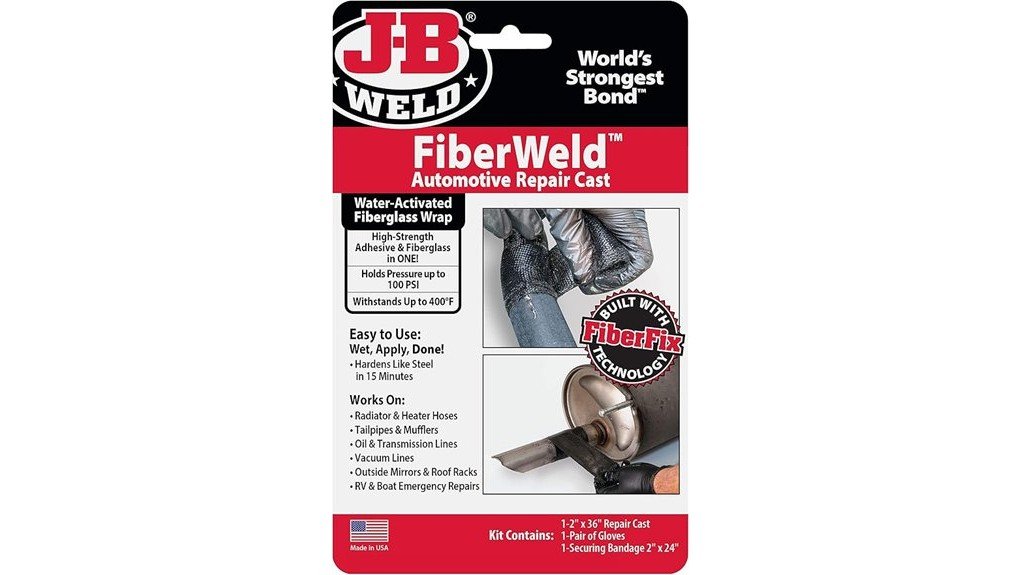
A split hose or damaged pipe can turn a small vehicle problem into a leak, breakdown, or towing bill. The J-B Weld 38237 FiberWeld Automotive Repair Cast Kit gives you a water-activated fiberglass wrap for fast repairs on compatible round or curved parts. Its main strengths are the short working process, resistance up to 400°F, and ability to hold water pressure up to 100 PSI after curing. The tradeoff is simple: it only works well when you can clean, reach, and tightly wrap the damaged area, and it should not replace a safety-critical part that needs proper replacement.
Quick Verdict
Rating: 8/10, Recommended with caveats
Best For: Emergency or targeted repairs on compatible radiator hoses, heater hoses, tailpipes, mufflers, pipes, and similar wrap-friendly parts.
Bottom Line: FiberWeld is useful when you need a rigid, fast-curing wrap instead of a soft tape patch. It is less suitable for flexible plastic, flat surfaces, badly damaged parts, or repairs that carry major safety loads.
Key Takeaways
- The kit contains one black 2-inch by 36-inch fiberglass repair wrap, gloves, and a securing bandage.
- You activate the wrap by dipping it in water for 5 to 7 seconds, then work within about 5 minutes.
- The wrap hardens in about 15 minutes and reaches full strength in about 2 hours.
- After curing, it resists temperatures up to 400°F and water pressure up to 100 PSI.
- It works best on parts you can wrap tightly, such as hoses, pipes, tailpipes, and muffler sections.
- It is not a substitute for replacement on brakes, steering, fuel-system parts, severely damaged hoses, or other safety-critical components.
| Specification | Detail |
|---|---|
| Brand | J-B Weld |
| Model | 38237 FiberWeld |
| Product type | Automotive repair cast kit |
| Wrap size | 2 inches wide by 36 inches long |
| Material | Fiberglass wrap impregnated with resin |
| Dry color | Black |
| Activation | Dip in water for 5 to 7 seconds |
| Working time | About 5 minutes |
| Hardening time | About 15 minutes |
| Full strength | About 2 hours |
| Temperature resistance | Up to 400°F after curing |
| Water-pressure resistance | Up to 100 PSI after curing |
| Included items | One repair wrap, one pair of gloves, and one securing bandage |
| Finish after cure | Sandable and paintable |
| Best use | Small emergency or targeted repairs on compatible wrap-friendly automotive parts |
What Is the J-B Weld 38237 FiberWeld?
The J-B Weld 38237 FiberWeld is a fiberglass repair wrap with water-activated resin. You soak the wrap, wind it around a damaged area, and let it harden into a rigid cast. This design gives you reinforcement around a curved part instead of placing adhesive only over the crack or leak.
The 2-inch width and 36-inch length make it suitable for small repair points where several tight overlaps are possible. J-B Weld lists uses such as radiator and heater hoses, tailpipes and mufflers, oil and transmission lines, vacuum lines, outside mirrors, and emergency repairs on RVs or boats. You still need to judge the condition and safety role of the damaged part before relying on a wrap repair.
Before You Buy: This kit needs room for multiple tight wraps around the damaged area. Skip it when the part is badly split, cannot be cleaned, cannot be reached from all sides, or should be replaced for safety.
Who Should Buy It?
Best For
- DIY users who want an emergency wrap for a compatible hose, pipe, tailpipe, or muffler section.
- Vehicle owners who can fully clean, dry, and wrap the repair point before activation.
- Buyers who prefer a hard cast-like repair over a flexible tape-style patch.
Skip If
- You are repairing brakes, steering, fuel-system parts, load-bearing mounts, or another safety-critical component.
- The surface stays oily, flexes heavily, has missing material, or cannot hold a tight overlap.
- You need a repair on an exhaust manifold, catalytic converter, or another area that may exceed the 400°F limit.
Materials and Build Quality
FiberWeld uses a fiberglass base impregnated with resin. Water starts the curing process, and the wrap hardens around the part rather than remaining soft or stretchy. That rigid finish can reinforce a small damaged area, but it also means the product is not ideal where normal operation requires frequent flexing.
The cured wrap is black, sandable, and paintable. Sanding can smooth high spots after full strength is reached, while paint can help the repair blend with nearby surfaces. Neither step improves a poor bond, so surface preparation and overlap matter more than the final appearance.
Fit and Compatibility
The best repair points are round, curved, or narrow enough for the wrap to circle the part several times. Radiator hoses, heater hoses, pipes, tailpipe sections, and muffler areas fit that basic shape. Flat cracks, hidden leaks, tight corners, and large missing sections are much harder to reinforce correctly.
Material alone does not decide compatibility. A rigid plastic part that can accept a tight wrap may perform differently from a flexible plastic hose that bends and expands. Before applying the kit, check the product label and make sure the repaired part will stay below the stated heat and pressure limits.
How to Use the FiberWeld Kit Effectively
Prepare everything before adding water. Let the part cool, shut down the vehicle or equipment, relieve system pressure when appropriate, and clean away grease, dirt, rust flakes, coolant residue, and loose material. The surface should be dry before the activated wrap touches it.
Plan the wrap direction and coverage before opening the working window. Dip the fiberglass wrap in water for 5 to 7 seconds, then wind it firmly around the repair area within about 5 minutes. Keep the layers smooth and overlapping so the cast can build even thickness around the damaged section.
The wrap hardens in about 15 minutes, but it reaches full strength in about 2 hours. Do not expose the repair to pressure, high heat, vibration, sanding, or painting until the full-strength period has passed.
Pro Tip: Dry-fit the wrap with the vehicle off before dipping it in water. Mark the start point and confirm that the full 36-inch length will cover the damage with several overlaps.
Installation and Application Tips
Clean and Dry the Surface
Oil, coolant, soot, dirt, and loose rust can block contact between the resin and the part. Clean the full overlap area, not only the visible crack. A wider clean zone helps each layer sit directly against the surface or the layer beneath it.
Activate Only When Ready
The working time is short. Keep the gloves, water, wrap, securing bandage, and any basic tools within reach before activation. Do not stop halfway through to search for supplies.
Keep the Overlap Tight and Even
Loose layers, wrinkles, and gaps can create weak spots. Pull the wrap snugly without shifting the damaged part, and use consistent overlap across the full repair area.
Inspect Before Returning to Service
After the 2-hour full-strength period, inspect the cast for soft areas, gaps, lifting edges, or movement. Test the system cautiously and watch for leaks, odor, smoke, heat damage, or pressure loss. Stop using the repaired part if any warning sign appears.
How It Performs in Real Use
For Radiator and Heater Hose Repairs
The wrap can reinforce a small damaged section because it circles the hose and hardens around it. The 100 PSI rating is relevant for water pressure, but the hose still expands, heats, cools, and vibrates during driving. Treat the repair as a reason to inspect closely and plan replacement when the hose condition is poor.
For Tailpipe and Muffler Repairs
The 400°F limit makes FiberWeld more suitable for certain downstream exhaust repairs than for hotter upstream components. Let the exhaust cool fully before touching it, and do not use the wrap on manifolds, catalytic converters, or any area that may exceed the stated limit.
For RV, Boat, and Roadside Emergencies
The compact kit can be useful in a garage or emergency box because it includes the wrap, gloves, and securing bandage. You still need clean water, access around the part, and enough time for the repair to reach full strength before use.
For Long-Term Use
Long-term performance depends on heat cycles, pressure, vibration, surface cleanliness, and how tightly you applied the wrap. Check the repair often. A part that continues to crack, soften, corrode, or move should be replaced instead of receiving another layer.
Safety and Handling Notes
Wear the included gloves and use eye protection. Work in a ventilated area, keep the resin away from skin and eyes, and follow all label instructions. Do not apply the wrap to a hot, moving, energized, or pressurized part.
Do not use a quick wrap to repair brakes, steering, fuel lines, high-load suspension points, seat-belt anchors, or load-bearing roof-rack hardware. A failure in those areas can create a serious safety risk. Use the correct replacement part or ask a qualified technician to inspect the damage.
What Buyer Feedback Suggests
Positive feedback commonly focuses on the fast setup, rigid cured finish, and usefulness for small emergency repairs. The product is easiest to use when the surface is accessible and the installer prepares the wrap path before activation.
Critical feedback tends to involve poor adhesion, awkward placement, or repairs that did not last under movement, heat, or pressure. Those results support the same buying rule: choose FiberWeld for a compatible wrap-style repair, not as a universal answer for every crack or leak.
Pros and Cons
Pros
- The 2-inch by 36-inch wrap can build several reinforcing layers around small parts.
- Water activation takes only 5 to 7 seconds.
- It hardens in about 15 minutes and reaches full strength in about 2 hours.
- The cured repair resists up to 400°F and holds water pressure up to 100 PSI.
- The kit includes gloves and a securing bandage, and the cured surface can be sanded or painted.
Cons
- The short working window leaves little time to correct poor placement.
- It needs full access around the part and may not suit flexible, oily, flat, or badly damaged surfaces.
- It should not replace a safety-critical component or a part exposed beyond the stated heat or pressure limits.
Is It Worth the Price?
FiberWeld offers strong value for the price when you need a compact emergency repair wrap and the damage matches its design. The package includes the main supplies, the activation process is simple, and the short hardening time can help you stabilize a small problem without waiting overnight.
You get less value when the part cannot be wrapped, needs constant flexibility, or should be replaced immediately. In those cases, buying the correct hose, pipe, clamp, exhaust section, or professional repair is the better use of your money.
How It Compares to Alternatives
Compared with self-fusing silicone tape, FiberWeld cures into a harder cast and adds more rigid reinforcement. Silicone tape stays flexible and may be easier to remove, so it can suit temporary sealing jobs where movement is expected.
Compared with epoxy putty, FiberWeld covers a larger curved area and builds strength through multiple wraps. Putty may be easier on a small flat crack or a point that cannot be wrapped. For exhaust work, a dedicated high-temperature exhaust wrap or replacement section may be better when the expected temperature is above 400°F.
Frequently Asked Questions
What size is the J-B Weld 38237 FiberWeld wrap?
The main fiberglass wrap is 2 inches wide and 36 inches long. The length lets you build several overlapping layers around a small hose, pipe, tailpipe, or similar part.
What comes in the kit?
The package includes one 2-inch by 36-inch repair wrap, one pair of gloves, and one securing bandage. You also need clean water and a prepared, dry repair surface.
How long does FiberWeld take to cure?
The wrap hardens in about 15 minutes and reaches full strength in about 2 hours. Wait for the full-strength period before adding pressure, heat, vibration, paint, or sanding.
Can FiberWeld be used on plastic?
Compatibility depends on the shape, rigidity, temperature, pressure, and movement of the plastic part. A rigid wrap-friendly surface may be more suitable than a flexible plastic section that bends or expands during use.
Can it repair a radiator or heater hose?
J-B Weld lists radiator and heater hoses among the intended applications. The hose must be cool, depressurized, clean, dry, and in a condition that can accept a tight wrap. Replace a severely aged, swollen, or split hose.
Can it be used on an exhaust?
The product is listed for tailpipe and muffler repairs and has a 400°F temperature limit. Do not use it on a manifold, catalytic converter, or another exhaust area that may run hotter than that limit.
Can the cured wrap be sanded or painted?
Yes. The cured black wrap can be sanded and painted after it reaches full strength. Finishing improves appearance, but it does not correct gaps, loose layers, or poor surface preparation.
Who should skip this product?
Skip it when the damaged part carries a major safety load, cannot be wrapped from all sides, stays contaminated, or operates beyond the stated limits. Brakes, steering, fuel systems, load-bearing mounts, and badly damaged parts need proper replacement or professional repair.
The Bottom Line
The J-B Weld 38237 FiberWeld is a practical 8/10 choice for small, compatible automotive repairs that need a rigid wrap, fast hardening, and resistance to moderate heat and water pressure. Buy it for a prepared hose, pipe, tailpipe, or muffler repair, but skip it when the part is safety-critical, heavily damaged, too hot, too flexible, or impossible to wrap tightly.