Disclosure: As an Amazon Associate, we earn from qualifying purchases. If you click a link on this page and make a purchase, we may receive a small commission at no extra cost to you.
Editorial note: This review is based on the current Kidde product page, user guide, and Amazon listing. We did not conduct a controlled fire test.
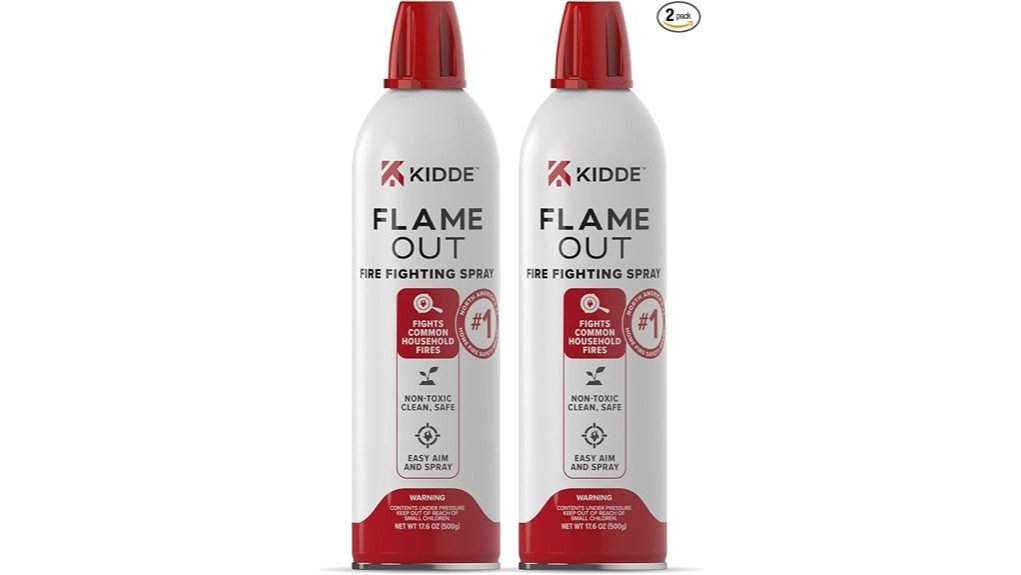
A small flame can become dangerous within seconds, so a fire-response tool must be easy to reach and simple to operate. The Kidde Flame Out Fire Fighting Spray, model KAP-14K, is a compact, single-use aerosol designed for early-stage household fires involving grease, wood, paper, and trash. This review explains what the verified two-pack includes, how the spray is intended to be used, and why it belongs beside, not in place of, a properly rated fire extinguisher. Its strongest points are quick aim-and-spray operation and easier cleanup, while its limits include single-use cans, a narrow intended use, and state sales restrictions listed by Kidde.
Quick Verdict
Rating: 8.2/10, Recommended with caveats
Best For: Households, apartments, dorm rooms, and cooking areas that need a compact supplemental fire-response option.
Bottom Line: Kidde Flame Out is easy to store, simple to operate, and less messy than a dry-chemical extinguisher for the small fires named on its label. Each can is single-use, and the product does not replace an NFPA 10-compliant extinguisher, working alarms, or an escape plan.
| Specification | Verified Detail |
|---|---|
| Brand | Kidde |
| Model | KAP-14K |
| Product type | Single-use aerosol fire-fighting spray |
| Amazon package | 2 cans |
| Unit weight per can | 17.6 oz (500 g) |
| Net agent per can | 14 fl oz wet chemical solution |
| Can dimensions | About 2.59 × 2.59 × 9.91 inches |
| Listed fire types | Small, early-stage fires involving grease, wood, paper, and trash |
| Distance guidance | Guide text says only fight a fire safely reachable from 3 to 4 feet; the data sheet lists a 5 to 6-foot discharge range |
| Discharge time | 30 ± 5 seconds |
| Operation | Pull tab, remove cap, aim at the base, keep upright, and press to spray |
| Compliance noted in guide | Tested for compliance with UL 711A |
| Storage range | 0°F to 120°F (-17.8°C to 48.9°C) |
| Warranty | 3 years |
| Expiration | Printed on the base of each can |
| Sales restriction | Kidde states that this model must not be marketed, distributed, or sold in California, New York, or Nevada |
What Is the Kidde Flame Out Fire Fighting Spray?
Kidde Flame Out KAP-14K is a compact wet-chemical aerosol for small household fires. The linked Amazon listing is the two-pack version, with two 17.6 oz cans rather than one. Each can is ready to use without assembly and must be replaced after any use.
Kidde lists grease, wood, paper, and trash as the intended fire sources. The water-based agent is designed to wipe away without the powdery residue left by many dry-chemical extinguishers, and Kidde states that it is safe to use around food, children, and pets when used as directed.
The spray is a supplemental tool. Kidde’s guide says it is not intended to replace an NFPA 10-compliant extinguisher. Your home safety setup should still include working smoke alarms, suitable extinguishers, and a practiced escape plan.
Before You Buy: The linked ASIN is a two-pack, and Kidde lists sales restrictions in California, New York, and Nevada. Check the current listing, local rules, and the label before ordering or relying on the product.
Who Should Buy It?
Best For
- Households that want a quick-access supplement near a kitchen or living area.
- Renters and dorm residents who need a compact can that fits in limited storage.
- Buyers who prefer a water-based agent that wipes away more easily than dry chemical powder.
Skip If
- You need a primary, rechargeable, or code-compliant fire extinguisher.
- You need verified coverage for electrical equipment, gas grills, or fires not named on the label.
- You live where the KAP-14K sales restriction applies.
Compact Design and Two-Pack Value
Each KAP-14K can measures about 2.59 inches across and 9.91 inches tall. That slim shape can fit on a pantry shelf, in an accessible cabinet, or near an exit from a cooking area. The package gives you two cans, so you can place them in separate locations instead of moving one unit between rooms.
The small format is easier to handle than a full-size cylinder, but the tradeoff is capacity and reuse. Each can is a single-use device. Kidde instructs you to empty the contents during use and replace the can afterward.
Ease of Use
The KAP-14K uses a four-step process: pull the tab, remove the cap, aim at the base of the fire, and keep the can upright while pressing the spray button. The U.S. guide says to use it only on a small fire you can safely fight from 3 to 4 feet away, while the product data sheet lists a 5 to 6-foot discharge range. Follow the current directions printed on your can.
This setup avoids a hose, pressure gauge, and pull pin, which may feel more familiar to people who have used aerosol cans. You should still read the label before an emergency. A simple design does not remove the need to understand the intended fire types, storage limits, and escape rules.
Pro Tip: Use the two-pack to cover separate areas, but store each can along an exit route, not beside the burner or appliance most likely to catch fire. You should be able to reach the spray without moving toward flames.
Fire Types and Realistic Limits
Kidde names small fires involving grease, wood, paper, and trash. Those uses cover many common early-stage incidents, such as a contained pan flare-up, a wastebasket fire, or a small piece of burning paper. The label does not give you permission to approach a growing fire, dense smoke, or flames spreading beyond the original object.
The KAP-14K guide says to call 911 first. U.S. Fire Administration guidance also recommends using a fire extinguisher only when the fire is small and contained, you are safe from toxic smoke, and you have a clear escape route. When any of those conditions are missing, get out and call emergency services.
Water-Based Agent and Cleanup
The can contains a wet chemical solution in a water-based aerosol. Kidde says the agent is non-toxic, safe around food, children, and pets, and designed not to damage appliances or countertops when used as directed. It also wipes clean, which can reduce the cleanup burden after a minor incident.
Those claims do not make the can harmless. It is a pressurized fire-safety product and should stay inaccessible to small children. Do not puncture or incinerate it, and replace it if it is dropped, damaged, expired, or has a broken pull tab.
Storage, Expiration, and Maintenance
Kidde lists a storage range of 0°F to 120°F. Keep each can in a clean, dry, accessible location away from direct heat, open flame, and places where it may be crushed or punctured. The expiration date is printed on the base, so you can check it without guessing from the purchase date.
This is not a refillable or rechargeable product. Inspect the can periodically for dents, corrosion, a damaged cap, or a broken pull tab. Replace it after use, after expiration, or whenever damage makes its condition uncertain.
How It Performs in Real Use
For a Small Cooking Flare-Up
The compact can is easy to keep near, but not directly beside, the kitchen. The directed spray and water-based cleanup are useful advantages for an early-stage grease fire named on the label. Never carry a burning pan, and do not use this product on a fire that has reached cabinets, curtains, or other surfaces.
For Paper or Wastebasket Fires
Paper and trash are listed uses, so an office, bedroom, or craft area can be a sensible location for the second can. It is most useful when flames remain contained in one small object and your exit stays open.
For Dorms and Apartments
The slim can requires little shelf space and may be easier to store than another full-size extinguisher. It does not replace building-provided fire equipment or local requirements, so renters and students should follow property rules and keep exits clear.
For Charcoal Grills and Wood Smokers
Kidde’s Amazon materials show Flame Out as a nearby backup for charcoal grills and wood smokers. The same materials say not to use it on propane or liquid-gas grills. Outdoor users should keep the can within its stated storage temperature range and follow the label rather than assuming it covers every grill fuel.
How to Use It Correctly
- Call 911 and alert others: Do this before attempting to control the fire.
- Confirm that escape is possible: Keep a clear exit behind you and do not enter smoke.
- Pull the tab and remove the cap: Discard the can if the pull tab was already broken.
- Use the label distance: Kidde’s documents include 3 to 4-foot safe-fighting language and a 5 to 6-foot discharge range, so follow the current can label.
- Aim at the base: Keep the can upright and press to spray.
- Use the full contents: The device is single-use and must be replaced afterward.
- Leave if the fire is not controlled: Do not stay to keep trying as heat, smoke, or flames grow.
Common Mistakes to Avoid
- Treating it as your only extinguisher: Kidde states that it is an addition to a fire-safety kit, not a replacement for an NFPA 10-compliant extinguisher.
- Storing it beside the hazard: Flames can block access if the can is next to a stove, heater, grill, or hot tool.
- Using it on an unlisted hazard: Follow the label for fire types and never assume coverage for electrical equipment or gas-fueled grills.
- Keeping a used can: Replace the unit after any discharge, even when some agent appears to remain.
- Ignoring the base date: Replace an expired unit because Kidde warns that it may not operate after expiration.
- Fighting through smoke: Smoke, blocked exits, or a spreading fire are signals to leave immediately.
Pros and Cons
Pros
- Two 17.6 oz cans let you cover separate areas.
- Compact 2.59 × 2.59 × 9.91-inch format stores easily.
- Four-step aim-and-spray operation is straightforward.
- Water-based wet chemical wipes away without dry powder residue.
- Three-year warranty and base-printed expiration date support routine replacement planning.
Cons
- Each can is single-use and must be replaced after discharge.
- It covers only the small, early-stage household fires named by Kidde.
- Kidde lists sales restrictions in California, New York, and Nevada.
Check Current Price on Amazon →
Is It Worth the Price?
Kidde Flame Out offers strong value when you want a compact supplement that is easy to place in two different rooms. The two-pack is especially practical for a kitchen plus a second living area, office, dorm room, or workshop.
The value comes from convenience, fast access, and easier cleanup, not from replacing a standard extinguisher. It is a smart buy for layered home preparedness, but it is not the best fit if you need rechargeable equipment, broad fire-class coverage, or a product accepted for sale in every state.
How It Compares to Alternatives
A standard 2-A:10-B:C dry-chemical extinguisher offers broader primary protection and is the better foundation for a home fire-safety plan, but it is larger and leaves powder residue. A kitchen-rated extinguisher may be a better choice when you want equipment specifically labeled for cooking hazards.
A fire blanket has no pressurized can or expiration-based agent, but it requires close placement over a contained flame and is not interchangeable with a spray. Kidde Flame Out makes the most sense when you want a small, directed, easy-clean supplemental option for the exact household fire types on its label.
Frequently Asked Questions
Does the linked Amazon listing include one can or two?
It is the two-pack listing. Each can weighs 17.6 oz (500 g) and contains 14 fl oz of wet chemical solution, so you can place the two units in separate locations.
Can Kidde Flame Out replace a regular fire extinguisher?
No. Kidde says the KAP-14K is not intended to replace an NFPA 10-compliant extinguisher. Use it as one layer in a plan that also includes alarms, suitable extinguishers, and an escape route.
What fires is the KAP-14K designed for?
Kidde lists small, early-stage fires involving grease, wood, paper, and trash. Do not extend that claim to hazards or fuels that are not named on the current label.
How far should you stand from the fire?
Kidde’s guide text says only to fight a small fire that is safely reachable from 3 to 4 feet, while the data sheet lists a 5 to 6-foot discharge range. Follow the current can label, keep an exit behind you, and leave if smoke, heat, or flames increase.
Can you use Kidde Flame Out on an electrical fire?
The verified KAP-14K materials reviewed here name grease, wood, paper, and trash, but they do not give a clear electrical-fire claim for this U.S. model. Use a product specifically labeled for energized electrical equipment instead of assuming compatibility.
Is Kidde Flame Out reusable or refillable?
No. It is a single-use device, and Kidde instructs you to empty the contents during use and replace the can afterward. It is not designed for refilling or recharging.
Where is the expiration date?
The expiration date is printed on the base of the canister. Check it during routine smoke-alarm and extinguisher inspections, and replace the can if it is expired or damaged.
Can it be stored in a garage or vehicle?
Only when the location stays within the listed 0°F to 120°F storage range and protects the pressurized can from damage and direct heat. Many parked vehicles exceed safe storage temperatures, so an indoor location is usually more dependable.
The Bottom Line
Kidde Flame Out KAP-14K is a practical two-pack for buyers who want compact, easy-clean backup coverage for small fires involving grease, wood, paper, and trash. Buy it as a supplement for kitchens, dorms, apartments, or living areas, but skip it if you need a primary extinguisher, reusable equipment, or verified coverage beyond the listed fire types.
Its main strength is simple, accessible operation. Its main limitation is equally clear: each can is single-use and does not replace a compliant extinguisher or a fast evacuation when conditions are unsafe.
Ready to Buy?
Check the latest product details, local sales rules, and price before you decide.