Disclosure: As an Amazon Associate, we earn from qualifying purchases. If you click a link on this page and make a purchase, we may receive a small commission at no extra cost to you.
Oil vapor in the intake system can leave deposits, reduce efficiency, and make long-term engine care harder than it needs to be. The K&N Air Oil Separator is built for Ford F150 owners who want a cleaner crankcase ventilation setup without a complicated install. This review explains what it does, who it fits, how it installs, and where its limits are. It looks like a smart add-on if your truck matches the supported fitment, but you should confirm your exact year and engine before buying.
Quick Verdict
Rating: 8.4/10, Recommended with caveats
Best For: Ford F150 and F150 Raptor owners who want a vehicle-specific oil vapor separator with a simple installation process.
Bottom Line: The K&N Air Oil Separator is a useful upgrade if you want to reduce oil vapor entering the intake path. Its main limitation is compatibility, so it only makes sense if your truck falls within the supported model range.
| Specification | Detail |
|---|---|
| Brand | K&N |
| Product type | Air oil separator / oil vapor separator |
| Vehicle fitment noted in article | 2011 to 2023 Ford F150 and 2017 to 2023 Ford F150 Raptor |
| Dimensions | 13.4 x 7 x 3.1 inches |
| Weight | 2.5 pounds |
| Connection style | OEM-style / factory-style hose connections |
| Install time noted in article | Approximately 30 minutes with basic tools |
| Tools noted in article | Socket set, pliers, and screwdriver |
| Warranty note | No-Hassle Lifetime Limited Warranty noted in the source article |
| Best use | Reducing oil vapor contamination in the intake system on supported Ford trucks |
What Is the K&N Air Oil Separator?
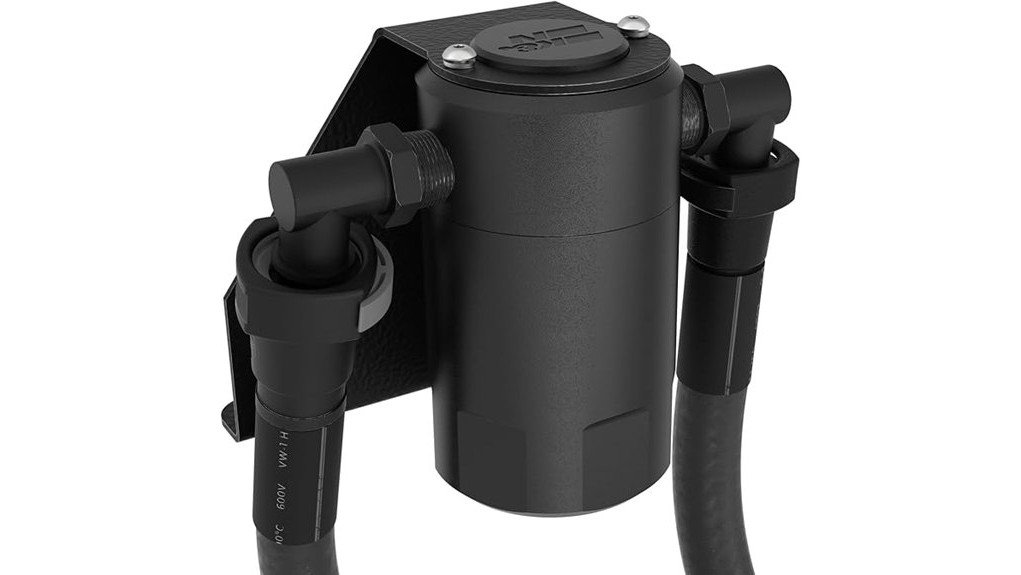
The K&N Air Oil Separator is an under-hood add-on designed to capture oil vapor before it can travel through the intake system. Instead of letting that vapor recirculate freely, the separator helps collect it so your engine can run with less oil contamination in the intake path.
This unit is presented as a vehicle-specific fit for Ford F150 models from 2011 to 2023 and Ford F150 Raptor models from 2017 to 2023. It weighs 2.5 pounds, measures 13.4 x 7 x 3.1 inches, and uses factory-style hose connections to make installation more approachable for many truck owners.
The main reason to consider it is simple: cleaner airflow can support more consistent combustion and better long-term intake cleanliness. It will not replace normal maintenance, but it can help reduce one common source of deposits.
Who Should Buy It?
Best For
- Ford F150 owners with a supported 2011 to 2023 model year.
- Ford F150 Raptor owners with a supported 2017 to 2023 model year.
- Drivers who want a bolt-on style oil vapor separator with factory-style hose connections.
Skip If
- Your truck is outside the supported Ford F150 or F150 Raptor fitment range.
- You want a universal catch can that can be adapted across several vehicles.
- You are not comfortable checking hose routing and connections after installation.
Before You Buy: Confirm your exact model year, engine, and fitment before ordering. The article-supported fitment is limited to 2011 to 2023 Ford F150 models and 2017 to 2023 Ford F150 Raptor models.
Fit and Compatibility
Fitment is the first thing you should check because this product is not described as a universal separator. The article supports compatibility with Ford F150 models from 2011 to 2023 and Ford F150 Raptor models from 2017 to 2023.
The factory-style hose connections are the strongest fit-related feature here. They help reduce guesswork during installation because you are not trying to build a custom hose setup from scratch.
Still, you should not assume every trim or engine setup fits just because the truck falls within a broad year range. Use Amazon’s fitment checker, the product listing, or K&N’s fitment information before you install it.
Materials and Build Quality
The source article highlights a robust design, premium components, and OEM-quality connection points. Those details matter because an air oil separator sits in the engine bay, where heat, vibration, and hose tension can expose weak fittings quickly.
At 2.5 pounds, the separator has more substance than a very small inline accessory. The 13.4 x 7 x 3.1-inch size also suggests you should plan the install space before starting, especially if your truck already has aftermarket parts under the hood.
How the K&N Air Oil Separator Improves Engine Performance
The K&N Air Oil Separator is designed to capture oil vapor and contaminants that can move through the crankcase ventilation system. By reducing oil vapor in the intake path, it may help keep airflow cleaner and support more consistent combustion.
The practical benefit is not about adding instant horsepower. It is more about protecting intake components from oil residue, reducing contamination, and helping your engine stay cleaner over time.
The article also notes that customers report less oil contamination after installation. That kind of feedback is useful, but results can vary by engine condition, mileage, driving style, and maintenance habits.
Installation and Setup
Installation is one of the main reasons this K&N unit stands out. The article notes an estimated install time of about 30 minutes with basic tools, including a socket set, pliers, and a screwdriver.
The basic process starts with removing the factory line from the crankcase area, then installing the separator with the factory-style hose connections. Because the product is compact, it should be easier to position than a larger custom catch can kit.
Work carefully around hoses and fittings. Let the engine cool first, keep the area clean, and make sure every connection is fully seated before you start the truck.
Pro Tip: After your first few drives, pop the hood and recheck every hose connection. A quick inspection helps you catch a loose fitting before it becomes an oil vapor or vacuum-related issue.
Maintenance and Long-Term Use
An air oil separator is not a set-and-forget replacement for regular service. You still need oil changes, filter service, and normal engine inspections on schedule.
Because the separator collects oil vapor, you should inspect it as part of your routine maintenance. Follow the product instructions for service intervals, emptying, and cleaning because overfilling or neglect can reduce its effectiveness.
The warranty note in the source article adds confidence for long-term ownership. The product is described as backed by a No-Hassle Lifetime Limited Warranty, plus support resources for installation and product questions.
How It Performs in Real Use
For Daily Driving
In normal commuting and errands, the separator’s job is simple: reduce oil vapor entering the intake system. You may not feel a dramatic change from the driver’s seat, but cleaner intake airflow is the main long-term benefit.
For Trucks With Higher Mileage
Higher-mileage engines can produce more blowby than newer engines. If your supported F150 already has intake residue concerns, an air oil separator may help limit additional buildup, although it will not undo past neglect.
For Towing or Harder Use
When the engine works harder, crankcase ventilation becomes more important. This separator can be a useful supporting upgrade for owners who tow, haul, or drive their truck under load, but it should not be treated as a fix for mechanical problems.
For Long-Term Engine Care
The strongest use case is prevention. By collecting oil vapor before it reaches the intake path, the K&N Air Oil Separator can support cleaner operation across many miles when installed and maintained correctly.
Common Mistakes to Avoid
Do not buy this part based only on the F150 name. Check your exact year and engine fitment first, then confirm the hose routing before you start the install.
Do not overtighten fittings or force hoses into place. Factory-style connectors should feel secure without needing aggressive pressure that could damage a clip, hose, or fitting.
Do not ignore maintenance after installation. If the separator needs emptying or inspection, skipping that step can reduce the benefit you bought it for.
Compatibility and Safety Notes
Any under-hood accessory should be installed with care. Work on a cool engine, keep loose clothing away from moving parts, and avoid routing hoses near sharp edges or high-heat areas.
If you are unsure about crankcase ventilation routing, have a qualified mechanic inspect the setup. This is especially important if your truck has other aftermarket intake, tune, or emissions-related modifications.
Aftermarket parts can raise warranty questions if a failure is linked to the installation or part. Keep your purchase record and installation notes, and ask your dealer or mechanic if you have concerns about coverage.
Pros and Cons
Pros
- Designed for specific Ford F150 and F150 Raptor model ranges.
- Captures oil vapor to help reduce intake contamination.
- Uses factory-style hose connections for a cleaner installation process.
- Article-supported install time is about 30 minutes with basic tools.
- Backed by a No-Hassle Lifetime Limited Warranty according to the source article.
Cons
- Limited to supported Ford F150 and F150 Raptor applications.
- Requires routine inspection and service after installation.
- May not solve oil contamination issues caused by worn engine components.
Is It Worth the Price?
The K&N Air Oil Separator is worth considering if you plan to keep your supported F150 for a long time and want to reduce oil vapor in the intake path. It fits best as a mid-range to premium supporting upgrade because it focuses on fit, cleaner installation, and long-term engine care.
You get the most value if you care about vehicle-specific fitment and prefer OEM-style hose connections over a universal setup. The main limitation is that the product only makes sense for compatible trucks, so fitment matters more than price alone.
How It Compares to Alternatives
Compared with universal catch can kits, the K&N Air Oil Separator should be easier to approach because the article notes factory-style connections and a truck-specific design. Universal kits may offer more flexibility, but they can require more planning, hose routing, and mounting work.
Compared with larger serviceable separator setups, this K&N option makes the most sense if you want a cleaner, simpler installation on a supported F150. If you want maximum customization, a universal system may be worth comparing before you buy.
Warranty and Support
The source article states that the K&N Air Oil Separator is backed by a No-Hassle Lifetime Limited Warranty. It also mentions a 30-day return policy and support for installation questions.
Warranty terms can vary by seller, region, and purchase channel, so review the live listing and manufacturer warranty details before ordering. Keep your receipt because warranty support often depends on proof of purchase.
Frequently Asked Questions
What does the K&N Air Oil Separator do?
It captures oil vapor before it can travel through the intake system. This helps reduce oil contamination and can support cleaner airflow over time.
Which Ford trucks does it fit?
The article supports fitment for 2011 to 2023 Ford F150 models and 2017 to 2023 Ford F150 Raptor models. Always confirm your exact year, trim, and engine before ordering.
Is the K&N Air Oil Separator hard to install?
The article notes an estimated installation time of about 30 minutes with basic tools. The factory-style hose connections should make the process easier than a universal catch can setup.
Does it require vehicle modifications?
The source article says it uses factory-style hose connections, so major modification is not presented as part of the installation. You should still follow the product instructions and avoid forcing hoses or fittings.
Will it fix existing engine problems?
No. An air oil separator can help reduce oil vapor contamination, but it will not fix worn parts, poor maintenance, leaks, or mechanical faults.
Can it affect my vehicle warranty?
Aftermarket parts can raise warranty questions if a problem is linked to the part or installation. Check with your dealer or mechanic if warranty coverage is a major concern.
How often should you inspect it?
Inspect it after the first few drives and then during regular maintenance. Follow the product instructions for emptying, cleaning, and service intervals.
Who should skip this oil separator?
Skip it if your truck is outside the supported fitment range or if you want a universal kit for several vehicles. You should also skip DIY installation if you are unsure about crankcase ventilation routing.
The Bottom Line
The K&N Air Oil Separator is a strong fit for supported Ford F150 and F150 Raptor owners who want to reduce oil vapor contamination with a vehicle-specific setup. Its biggest strengths are factory-style hose connections, compact sizing, and a straightforward installation process. Skip it if your truck is outside the fitment range or if you want a universal separator for multiple vehicles.