Disclosure: As an Amazon Associate, we earn from qualifying purchases. If you click a link on this page and make a purchase, we may receive a small commission at no extra cost to you.
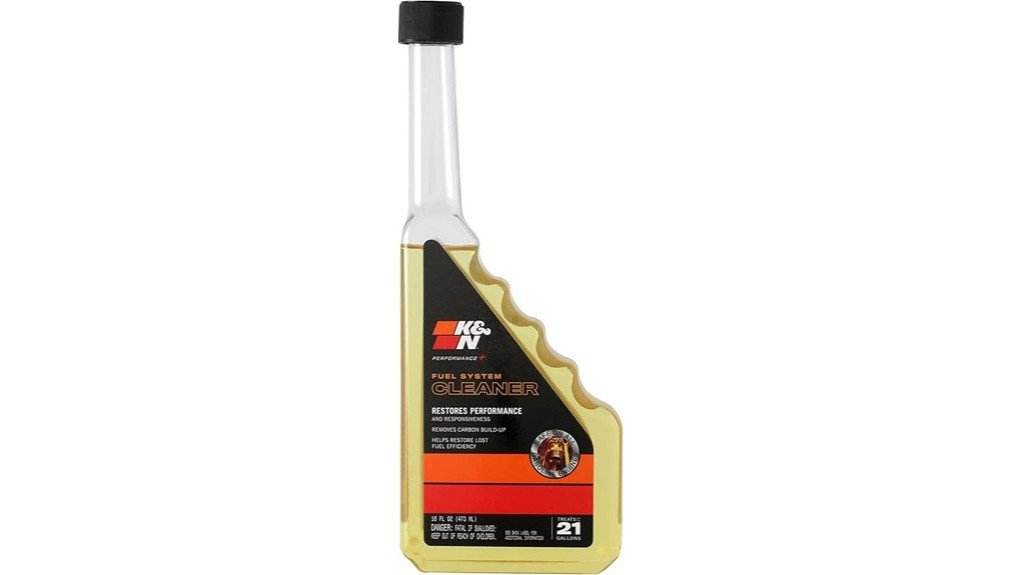
Carbon buildup can contribute to sluggish response, but a bottle of cleaner cannot solve every engine problem. The K&N Performance+ Fuel System Cleaner 99-2050 is a 16-ounce gasoline additive made to clean fuel-system deposits and help restore lost response. Its main advantages are simple dosing, compatibility with direct and traditional fuel-injected gasoline engines, and enough product to treat up to 21 gallons. Its main limitation is equally important: it is a maintenance cleaner, not a repair for failed injectors, ignition faults, or intake-valve deposits that fuel never touches in many direct-injection engines.
Quick Verdict
Rating: Recommended with caveats
Best For: Gasoline-vehicle owners who want a simple, full-tank fuel-system cleaning treatment
Bottom Line: K&N 99-2050 offers a convenient 16-ounce treatment for up to 21 gallons and is suitable for direct or traditional fuel injection. It is worth considering for routine deposit control, but you should not expect it to repair mechanical faults or clean the backs of intake valves in a typical gasoline direct-injection system.
| Specification | Detail |
|---|---|
| Brand | K&N |
| Model | 99-2050 |
| Product type | Gasoline fuel-system cleaner and fuel additive |
| Fluid capacity | 16 fl oz (473 ml) |
| Treatment capacity | Up to 21 gallons of gasoline |
| Engine compatibility | Direct-injected and traditional fuel-injected gasoline engines |
| Claimed purpose | Helps remove fuel-system carbon buildup and restore lost acceleration and throttle response |
| Product weight | 0.9 lb (0.4 kg) |
| Package dimensions | 9.75 × 3.87 × 2.15 inches |
| Manufacturing note | Made in the USA |
| Safety note | Combustible liquid. Use only as directed and keep away from heat, flames, and children. |
Key Takeaways
- One 16-ounce bottle is formulated to treat up to 21 gallons of gasoline.
- K&N lists model 99-2050 for direct-injected and traditional fuel-injected gasoline engines.
- The product is intended to remove fuel-system deposits that may reduce power, acceleration, or throttle response.
- Results depend on the cause of the symptom. A cleaner cannot fix worn parts, electrical faults, vacuum leaks, or damaged injectors.
- In many direct-injection engines, fuel does not wash over the backs of the intake valves, so a tank additive is not a complete solution for intake-valve carbon buildup.
What Is K&N Fuel System Cleaner and How Does It Work?
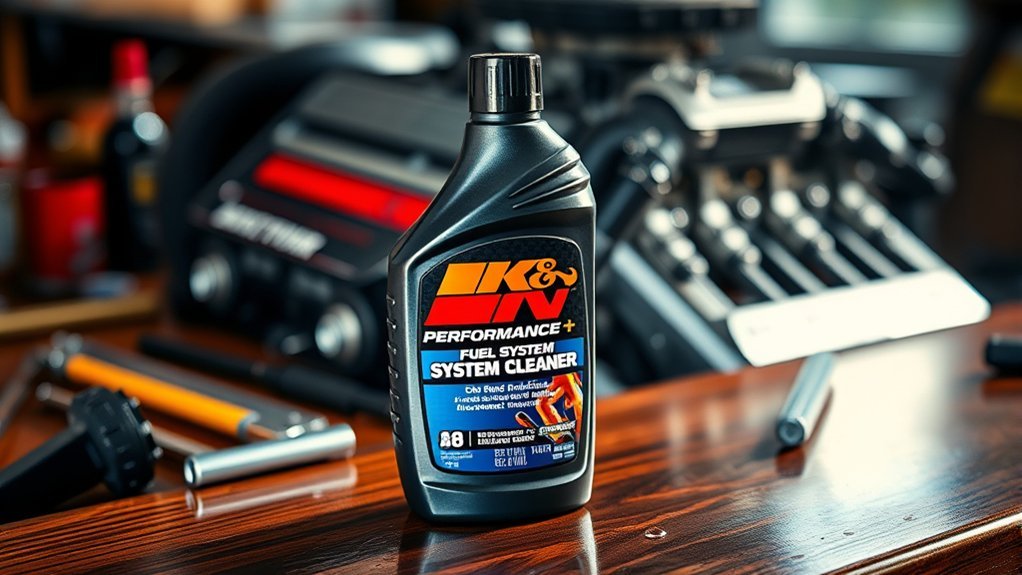
K&N Performance+ Fuel System Cleaner 99-2050 is a liquid additive for gasoline fuel systems. You add it to the fuel tank, where it mixes with the gasoline and passes through fuel lines, the pump, and injectors during normal engine operation. K&N says the formula cleans the entire fuel system and helps remove carbon buildup that can reduce responsiveness.
The bottle holds 16 fluid ounces and is formulated for a tank containing up to 21 gallons of gasoline. That capacity covers many passenger cars, SUVs, and light trucks with one bottle, but you should confirm your tank size and follow the directions printed on the current bottle.
This is not an octane booster or diesel treatment. K&N sells those as separate products. Model 99-2050 is specifically presented as a gasoline fuel-system cleaner.
Who Should Buy It?
Best For
- Gasoline vehicles with direct or traditional fuel injection
- Owners who want a simple full-tank maintenance treatment
- Vehicles with mild deposit-related hesitation or reduced response, after basic mechanical issues have been ruled out
Skip If
- You need a diesel-specific additive
- Your vehicle has a persistent warning light, misfire, fuel leak, or major drivability problem
- You expect a tank additive to remove heavy intake-valve deposits in a direct-injection engine
Fuel-System Cleaning Performance
K&N positions this cleaner as a deposit-removal treatment for the full gasoline fuel system. The most relevant parts are the fuel injectors and other fuel-wetted components. Cleaner injectors may help restore a more consistent spray pattern when deposits are the cause of reduced response.
The wording matters. The product is designed to help restore lost power and acceleration. It does not add permanent horsepower, and it cannot improve an engine that is already clean and operating correctly. You may notice a smoother response when deposits were affecting fuel delivery, but another vehicle may show little or no noticeable change.
Direct-Injection Compatibility
K&N states that 99-2050 is safe for direct-injected gasoline engines. In those engines, the cleaner can travel through the high-pressure fuel system and injectors because those parts carry treated gasoline.
However, direct injection sprays fuel into the combustion chamber instead of onto the back of each intake valve. That means a tank additive usually cannot wash away deposits on that dry side of the valve. Heavy intake-valve buildup may require a different service method and proper diagnosis.
Before You Buy: Do not use this product as a substitute for diagnosis. If your check-engine light is flashing, the engine is misfiring, you smell fuel, or the vehicle loses power suddenly, stop driving when safe and seek professional help.
How to Use K&N Performance+ Fuel System Cleaner Effectively
Start by checking the fuel-tank capacity in your owner’s manual. One 16-ounce bottle treats up to 21 gallons of gasoline. Do not assume that more cleaner will produce a better result, and do not exceed the directions on the bottle.
- Park in a well-ventilated area away from sparks, flames, hot surfaces, and smoking.
- Read the current bottle label before opening it.
- Confirm that the vehicle uses gasoline and has a compatible fuel-injection system.
- Add the cleaner to the fuel tank as directed. Adding it before refueling can help it mix through the tank.
- Refuel without exceeding the product’s stated 21-gallon treatment limit, then drive normally.
The original article recommended use every 3,000 miles, but K&N’s current public product page does not state that fixed interval. Follow the bottle label and your vehicle manufacturer’s guidance instead of adopting a universal schedule.
Pro Tip: Record the date, mileage, fuel level, and symptom before treatment. That gives you a clearer way to judge whether idle quality, hesitation, or throttle response actually changes over the treated tank.
Compatibility and Safety
Use K&N 99-2050 only as a gasoline fuel additive and only as directed. The safety data sheet classifies it as a combustible liquid and an aspiration hazard. Avoid breathing vapor or mist, prevent skin and eye contact, and wash your hands after handling it.
Keep the container tightly closed in a cool, dry, well-ventilated place. Store it away from heat, sparks, flames, and other ignition sources, and keep it out of children’s reach. Do not reuse the empty container.
If the product is swallowed, do not induce vomiting. Contact a doctor or poison-control service immediately because liquid entering the lungs can cause serious harm. For a spill, exposure, or disposal question, follow the bottle label and the manufacturer’s current safety data sheet.
How It Performs in Real Use
For Routine Maintenance
The one-bottle treatment is straightforward for a gasoline vehicle with a tank of 21 gallons or less. There is no tool-based installation, and the additive works while you use the treated fuel. This makes it convenient for owners who prefer a basic maintenance step between shop visits.
For Mild Hesitation or Sluggish Response
If deposits are affecting injector flow, a cleaner may help the engine respond more consistently. Improvement may appear gradually during the treated tank rather than immediately. No change can also be useful information because it suggests the symptom may have another cause.
For High-Mileage Vehicles
A high-mileage engine may have deposits, but it may also have worn ignition parts, aging sensors, low compression, vacuum leaks, or mechanical wear. This cleaner is a low-effort first maintenance step, not proof that the fuel system caused the problem.
For Direct-Injection Engines
The product can treat fuel-wetted parts and direct injectors. It should not be expected to clean the backs of intake valves that gasoline does not contact. If a direct-injection engine has confirmed intake-valve carbon buildup, ask a qualified technician about the correct cleaning method.
What Do Customers Think About K&N Fuel System Cleaner?
K&N 99-2050 is consistently well-reviewed across major retail listings. Positive reports often focus on ease of use and perceived improvements in smoothness or throttle response. Those reports are useful context, but they do not prove that every engine will respond in the same way.
The original article included precise percentages for performance, ease of use, value, carbon removal, and overall satisfaction. Those percentages were not tied to a verifiable survey or review-analysis source, so they have been removed. Treat customer comments as individual experiences, not measured performance data.
Pros and Cons
Pros
- One 16-ounce bottle treats up to 21 gallons of gasoline
- Compatible with direct and traditional fuel-injected gasoline engines
- Simple tank-additive application with no special tools
- Targets deposits that may reduce injector performance and response
- Manufacturer provides a product page and safety data sheet
Cons
- Cannot repair mechanical or electrical faults
- Will not fully address dry-side intake-valve deposits in many direct-injection engines
- The public product page does not publish a fixed maintenance interval or clearly name the detergent chemistry
Is It Worth the Price?
K&N 99-2050 can offer strong value when you want a simple, single-tank maintenance treatment. It costs far less than professional diagnosis or mechanical cleaning, although it is not equivalent to either service.
You get the most value when your vehicle is compatible, your tank is within the 21-gallon limit, and you have realistic expectations. It is less compelling if you need a diesel additive, a named detergent chemistry, or a solution for confirmed intake-valve carbon buildup.
How It Compares to Alternatives
Chevron Techron Complete Fuel System Cleaner, Gumout Regane Complete Fuel System Cleaner, and Red Line SI-1 are common alternatives in the same category. Compare the treatment capacity, gasoline compatibility, label instructions, published detergent information, and cost per treated gallon rather than choosing only by brand name.
K&N makes the most sense when you want a 16-ounce treatment for up to 21 gallons and prefer the K&N product line. Another cleaner may be a better fit when your vehicle manufacturer recommends a specific product or when you want a different treatment rate.
Frequently Asked Questions
Does K&N 99-2050 work with direct-injection engines?
Yes. K&N lists it for direct-injected gasoline engines, so it can pass through and clean fuel-wetted components and injectors. It generally cannot wash the backs of intake valves in an engine where fuel is sprayed directly into the combustion chamber.
Can I use it in a diesel engine?
No. Model 99-2050 is formulated to treat gasoline. Choose a diesel-specific additive that matches your engine and follow the vehicle manufacturer’s instructions.
How much gasoline does one bottle treat?
The 16-ounce bottle is formulated for up to 21 gallons of gasoline. Check your tank capacity before use and do not assume that extra cleaner will improve the result.
How often should I use K&N Fuel System Cleaner?
Follow the current bottle label and your owner’s manual. K&N’s public product page confirms the treatment capacity but does not publish a universal 3,000-mile or 5,000-mile interval.
Can it fix a rough idle or check-engine light?
It may help only when fuel-system deposits contribute to the symptom. A rough idle or warning light can have many causes, so persistent, severe, or flashing-light problems need proper diagnosis.
Should I add it before refueling?
Adding a tank cleaner before refueling can help distribute it through the gasoline. Read and follow the directions on the current bottle because label instructions take priority.
Will it improve fuel economy?
It may help restore efficiency when deposits were affecting fuel delivery, but no fuel-economy gain is guaranteed. Driving conditions, tire pressure, maintenance, weather, and engine health can have a larger effect.
How should I store the bottle?
Keep it tightly closed in a cool, dry, well-ventilated place. Store it away from heat, sparks, open flames, and children, and follow local rules for disposing of unused product or the empty container.
The Bottom Line
K&N Performance+ Fuel System Cleaner 99-2050 is worth considering when you want a simple gasoline fuel-system treatment for a tank of up to 21 gallons. Buy it for convenient deposit-control maintenance, but skip it when you need diesel compatibility, a mechanical repair, or a direct-injection intake-valve cleaning service.