Disclosure: As an Amazon Associate, we earn from qualifying purchases. If you click a link on this page and make a purchase, we may receive a small commission at no extra cost to you.
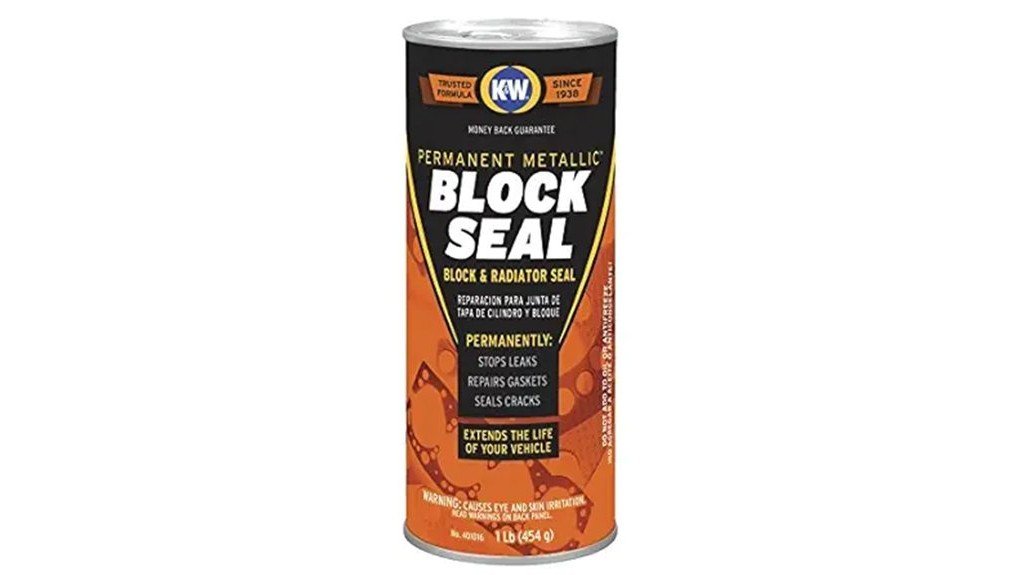
A cooling-system leak can leave you choosing between an expensive mechanical repair and a lower-cost sealing treatment. K&W 401016 Permanent Metallic Block Seal is a 16-ounce formula made for certain cracks and holes in water-cooled gasoline and diesel engines. It covers more leak areas than a basic radiator stop-leak, but its drain, flush, circulation, and 24-hour curing process takes time. This review explains its verified uses, application demands, limitations, and the situations where you should skip a chemical sealer and call a mechanic.
Quick Verdict
Rating: Recommended with caveats, 7.5/10
Best For: Experienced DIY users treating a confirmed, repairable cooling-system leak in an older water-cooled vehicle.
Bottom Line: K&W 401016 targets engine blocks, head gaskets, freeze plugs, radiators, and heater cores with a heat-cured sealing formula. Its main drawback is the demanding preparation process, and it is not appropriate for a badly overheating engine, failed cooling-system components, or major internal damage.
| Specification | Detail |
|---|---|
| Brand | K&W, a CRC Industries brand |
| Model / Item Number | 401016 |
| Amazon ASIN | B000CIPV5E |
| Product Type | Permanent Metallic block seal and head-gasket repair formula |
| Net Fill | 16 wt oz |
| Vehicle Compatibility | Water-cooled gasoline and diesel vehicles |
| Supported Leak Areas | Engine blocks, cylinder heads, head gaskets, freeze plugs, radiators, heater cores, and related cooling-system areas |
| Supported Materials | Cast iron and aluminum blocks; copper, aluminum, bi-material, metal, and plastic radiators |
| Formula Notes | Reddish-brown liquid, plastic safe, zero VOC |
| Claimed Test Standard | Amazon listing states the formula exceeds ASTM D6107 for cooling-system leak sealing |
| Curing Time | 24 hours after circulation and draining |
| Preparation Level | Advanced DIY: antifreeze removal, flushing, circulation, draining, curing, and coolant refill |
| Product Status | CRC lists item 401016 as discontinued, although the exact Amazon ASIN remained active during this review |
What Is the K&W 401016 Block Seal?
K&W 401016 is a concentrated cooling-system sealer sold as Permanent Metallic Block Seal Head Gasket Repair. The formula is meant to circulate through a water-cooled engine and reach certain cracks or holes in blocks, cylinder heads, head-gasket areas, freeze plugs, radiators, and heater cores.
The manufacturer describes the cured repair as a molecular bond that can withstand cooling-system heat and pressure without washing away. That is a manufacturer claim, not a guarantee that every leak will seal. Results depend on the leak size, the surface condition, coolant circulation, and whether you complete every preparation and curing step correctly.
This is not a pour-and-go emergency additive. The published process requires you to remove antifreeze, flush the system, circulate the treatment, drain it, leave the system open to cure for 24 hours, flush again, and refill with the correct coolant mixture. That workload makes it better suited to a capable DIY user or a repair shop than someone stranded on the roadside.
Who Should Buy It?
Best For
- Owners of older gasoline or diesel vehicles with a confirmed cooling-system leak.
- DIY users who can drain, flush, refill, and safely monitor a cooling system.
- Drivers who accept a chemical repair attempt before paying for major engine work.
Skip If
- Your engine overheats rapidly, runs rough, hydrolocks, or has heavy coolant contamination in the oil.
- A failed water pump, thermostat, hose, radiator cap, fan, or clogged radiator is causing the problem.
- You cannot leave the vehicle parked with the drained system curing for 24 hours.
Before You Buy: CRC currently marks model 401016 as discontinued, even though the exact ASIN is still listed on Amazon. Confirm that you are receiving a sealed, usable 16-ounce can, and read the current label before starting because older inventory and revised packaging may show different instructions.
Fit and Compatibility
K&W 401016 is a universal cooling-system treatment rather than a vehicle-specific part. Its listing covers water-cooled gasoline and diesel vehicles, but universal does not mean suitable for every engine condition or cooling-system layout.
The stated applications include aluminum and cast iron engine blocks, cylinder heads, head gaskets, freeze plugs, heater cores, water pumps, and metal or plastic radiators. It is not made for engine-oil leaks, fuel leaks, transmission leaks, power-steering leaks, or air-cooled engines.
Before use, check your service manual for the radiator-cap location, thermostat access, coolant capacity, bleeding procedure, and coolant specification. Some modern vehicles have pressurized expansion tanks, complex bleeding routines, electric water pumps, or manufacturer warnings about stop-leak products. In those cases, professional guidance is safer than adapting generic directions.
Formula and Sealing Performance
The manufacturer lists the formula as a reddish-brown, plastic-safe liquid with zero VOC content. It is designed to leave a heat-cured deposit at a cooling-system leak path. Amazon also states that the formula exceeds ASTM D6107, a cooling-system sealing test standard.
The strongest product claim is that the cured bond will not break away or wash out under normal cooling-system pressure and temperature. Your real result will depend on whether the leak is small enough for the formula to bridge, whether the system is clean, and whether the treatment reaches the damaged area before the engine overheats.
Oil contamination, residual antifreeze, rust, old stop-leak deposits, poor coolant flow, or a large structural break can prevent a reliable seal. A chemical treatment also cannot restore a warped cylinder head, damaged bearing, failed water pump, stuck thermostat, or clogged radiator.
Installation and Application
K&W 401016 requires more preparation than most modern pour-and-go sealers. Published directions for this formula warn that it is not compatible with antifreeze during treatment. You need a cool engine, a drain pan, fresh water, the correct replacement coolant, basic hand tools, and a safe place where the vehicle can remain for at least 24 hours.
Preparation
Start by confirming the leak source. Inspect the radiator cap, hoses, clamps, radiator seams, thermostat housing, water pump area, reservoir, heater-core connections, and visible engine surfaces. Repair a loose clamp, split hose, failed cap, or leaking component directly instead of adding sealer.
Next, follow the label to remove the existing antifreeze and flush the system until the drain water is clear. The published procedure may require thermostat removal so the treatment can circulate. Because thermostat access and cooling-system layouts vary, do not improvise if you are unsure how to drain, refill, or bleed your vehicle.
Circulation and Curing
The published method describes shaking the can thoroughly, mixing the product with hot water, and adding it through the radiator rather than the overflow bottle. You then run the engine at idle so the mixture reaches operating temperature and circulates through the leak area. Do not rev or drive the vehicle during this stage, and shut the engine down if the temperature rises beyond its normal range.
After the specified circulation period, let the engine cool and drain the treatment without immediately flushing it away. Leave the radiator cap and drain open while the system cures for 24 hours. After curing, flush the system with clean water, reinstall any parts removed for the procedure, and refill with the correct antifreeze-and-water mixture.
Pro Tip: Photograph hose routing and thermostat parts before disassembly, label removed hardware, and measure the coolant you drain. These simple steps can reduce refill mistakes and help you confirm the system is close to its specified capacity.
How It Performs in Real Use
For a Slow External Seep
A small crack or seep that loses coolant gradually is the best-case scenario. The formula has time to reach the leak and build a deposit without the system emptying first. You should still pressure-test the system when possible, because a hose, cap, or radiator seam may have a simpler mechanical fix.
For a Suspected Head-Gasket Leak
The listing includes head-gasket applications, but the phrase covers a wide range of failures. A minor combustion-to-coolant leak may be a possible candidate, while severe overheating, low compression, coolant-filled cylinders, or large amounts of coolant in the oil point to damage that needs mechanical diagnosis.
For an Older High-Mileage Vehicle
This product can make financial sense when the vehicle still drives normally and the cost of removing a cylinder head or replacing an engine exceeds the vehicle’s practical value. You are trading repair certainty for a lower-cost attempt, so keep checking coolant level, temperature, exhaust smoke, oil condition, and cabin heat after treatment.
For Emergency or Roadside Use
K&W 401016 is a poor roadside choice because the full process includes draining antifreeze, flushing, idling, draining again, and a 24-hour cure. A pour-and-go product may be more convenient for temporary transport, but any rising temperature gauge or rapid coolant loss means you should stop driving and arrange a tow.
Common Mistakes to Avoid
- Adding it to antifreeze: The published treatment process requires antifreeze removal and a clean water flush first.
- Pouring it into the overflow bottle: Follow the label’s specified fill point so the mixture enters the circulating system.
- Skipping the 24-hour cure: The manufacturer lists a 24-hour curing time, so rushing the refill can weaken the result.
- Driving or revving during circulation: The procedure calls for controlled idling and temperature monitoring.
- Treating a flow problem: A clogged radiator, stuck thermostat, failed fan, or weak water pump must be repaired first.
- Assuming every head-gasket failure is sealable: A warped head, damaged cylinder, or large breach needs mechanical repair.
Compatibility and Safety
Never open a hot, pressurized cooling system. Let the engine cool fully, wear eye and skin protection, keep children and pets away, and collect drained coolant in a suitable container. Antifreeze is toxic, so follow local disposal rules and never pour it onto the ground or into a drain.
Work in a ventilated area and keep hands, clothing, and tools away from belts, fans, and pulleys while the engine runs. Electric cooling fans can start without warning. Amazon also displays a California Proposition 65 warning for this product, so read the current label and safety data sheet before handling it.
If you cannot safely remove the thermostat, flush the system, disable an affected cylinder when required by the label, or bleed the cooling system after refilling, ask a mechanic to apply the product. A professional can also confirm whether the leak is small enough for a sealer attempt.
Pros and Cons
Pros
- Targets blocks, head gaskets, freeze plugs, radiators, and heater cores.
- Supports cast iron and aluminum engine blocks.
- Listed for water-cooled gasoline and diesel vehicles.
- Plastic-safe, zero-VOC formula with a 24-hour heat-cured repair process.
- Can offer a lower-cost repair attempt for an older vehicle with a suitable leak.
Cons
- Requires draining, thorough flushing, controlled circulation, and a 24-hour cure.
- Cannot repair warped parts, failed pumps, blocked radiators, or major structural damage.
- CRC marks model 401016 discontinued, so long-term supply and inventory age may vary.
Is It Worth the Price?
K&W 401016 can be a strong value when you have already identified a suitable cooling-system leak and the alternative is major engine work on an older vehicle. The 16-ounce can covers a wide range of cooling-system leak areas, and the treatment costs far less than cylinder-head removal or engine replacement.
The real cost includes more than the can. You may also need flush, coolant, distilled water, a thermostat gasket, drain containers, and several hours of hands-on work across two days. The product offers less value when you must pay a shop for extensive diagnosis and preparation before anyone knows whether the leak can seal.
It is not the best fit when you need a guaranteed repair, immediate roadside use, or a solution for severe internal damage. In those cases, spend the money on diagnosis first.
How It Compares to Alternatives
K-Seal ST5516 and Bar’s Leaks 1109 are easier pour-and-go options for buyers who prioritize convenience and antifreeze compatibility. Their simpler application can suit a temporary or lower-effort repair attempt, but they do not use the same drain, flush, dry-cure process as K&W Permanent Metallic.
K&W FiberLock 401224 is a larger, newer same-brand head-gasket and block-repair option that is easier to find. The 401016 formula makes the most sense when you specifically want the original Permanent Metallic process and are prepared to follow its detailed directions. Compare the current labels before choosing because the application methods are not interchangeable.
Troubleshooting: Common Issues With K&W Block Seal
| Issue | Likely Cause | What to Do |
|---|---|---|
| Mixture thickens or circulates poorly | Residual antifreeze, old sealant, or a dirty cooling system | Stop the process, let the engine cool, and review the flush and label directions |
| Leak improves but returns | Leak is too large, surface is damaged, or cure was incomplete | Pressure-test the system and get a mechanical diagnosis before repeating treatment |
| Engine overheats while idling | Low water level, trapped air, failed fan, pump problem, or blocked flow | Shut the engine off, allow it to cool, and repair the circulation problem |
| No cabin heat after refill | Air pocket, low coolant, or restricted heater-core flow | Follow the vehicle-specific bleeding procedure and recheck coolant level when cold |
| Coolant still enters oil or cylinder | Major head-gasket, cylinder-head, or block damage | Stop driving and arrange professional engine testing and repair |
Frequently Asked Questions
Can K&W 401016 fix a head-gasket leak?
The product is listed for head-gasket leak areas, but it cannot fix every type of failure. A minor leak may respond, while a warped head, badly damaged gasket, low compression, hydrolock, or heavy coolant contamination usually needs mechanical repair.
Can you add K&W 401016 directly to antifreeze?
No. Published directions for this formula require you to drain the antifreeze and flush the cooling system with water before treatment. Follow the current can label exactly, because residual coolant can interfere with circulation and curing.
How long does K&W Permanent Metallic Block Seal take to cure?
CRC lists a 24-hour curing time. The process includes circulating the treatment, draining the system, leaving it open to cure, then flushing and refilling with the correct coolant mixture.
Does it work with aluminum engine blocks and plastic radiators?
Yes, the manufacturer lists aluminum and cast iron blocks among the applications and marks the formula plastic safe. It also lists metal and plastic radiators, but you should still check your vehicle manual for stop-leak restrictions.
Can you pour it into the coolant overflow tank?
The published procedure directs you to add the prepared mixture through the radiator, not the overflow bottle. Vehicles without a conventional radiator cap may need a different access method, so follow the label or ask a mechanic.
Is K&W 401016 a permanent repair?
K&W markets the cured bond as permanent and resistant to cooling-system heat and pressure. Treat that as a product claim, not a guarantee, because leak size, surface damage, preparation, and engine condition determine the result.
Why does CRC call it discontinued when Amazon still lists it?
Manufacturers can stop producing a part while retailers continue selling remaining inventory. Confirm the model number, container condition, seller details, and current instructions before buying older stock.
What symptoms mean you should skip a block sealer?
Skip it when the engine overheats rapidly, loses coolant as fast as you add it, runs with very low compression, fills a cylinder with coolant, or has heavy coolant contamination in the oil. Stop driving and get the engine and cooling system tested.
The Bottom Line
K&W 401016 is worth considering when you have a confirmed, moderate cooling-system leak and the skills to complete its full drain, flush, circulation, and 24-hour curing process. Its broad material and leak-area compatibility is the main strength, while the demanding application and uncertain results on major damage are the main limitations. Buy it for a carefully diagnosed older vehicle, but skip it when the engine overheats badly, loses coolant rapidly, or needs a mechanical repair.
Ready to Buy?
Check the latest price, seller details, and current product instructions before you decide.