Disclosure: As an Amazon Associate, we earn from qualifying purchases. If you click a link on this page and make a purchase, we may receive a small commission at no extra cost to you.
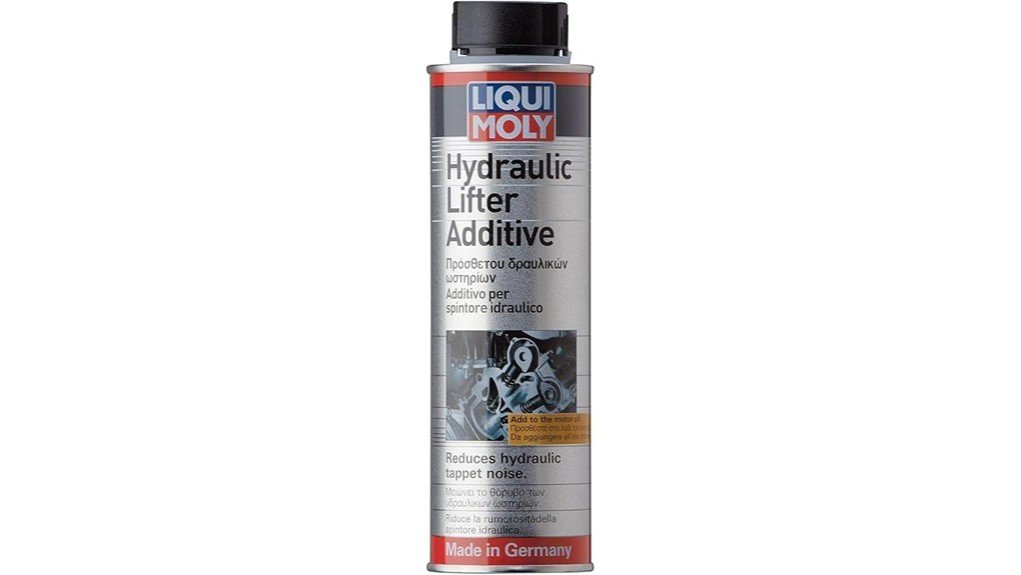
A light hydraulic lifter tick can make an otherwise smooth engine sound worn, but an oil additive is only useful when restricted oil flow or sticky lifters are part of the problem. Liqui Moly 20004 Hydraulic Lifter Additive is a 300 ml engine-oil treatment designed to clean small oil passages, improve lubrication, and reduce noise from hydraulic lifters. This review explains the correct dosage, engine compatibility, realistic results, and the warning signs that call for mechanical diagnosis instead. Its main strength is simple use with many gasoline and diesel engines, while its limit is clear: it cannot repair a collapsed lifter, worn camshaft, or low-oil-pressure problem.
Quick Verdict
Rating: Recommended with caveats, 8/10
Best For: Drivers with mild hydraulic lifter ticking linked to deposits, restricted oil passages, or sticky lifters.
Bottom Line: Liqui Moly 20004 offers a low-effort way to clean lifter oil passages and support quieter operation. It is not a substitute for diagnosis when noise is loud, constant, or paired with low oil pressure, warning lights, misfires, or power loss.
| Specification | Detail |
|---|---|
| Brand | LIQUI MOLY |
| Part number | 20004 |
| Product type | Hydraulic lifter engine-oil additive |
| Container | 300 ml sheet-metal can |
| Amazon package note | The linked listing is presented as a 2-pack. Check the seller and quantity before ordering. |
| Treatment ratio | One full 300 ml can for 3–6 liters (3.2–6.4 U.S. quarts) of motor oil |
| Engine compatibility | 4-stroke gasoline and diesel engines, with or without turbochargers |
| Oil compatibility | Compatible with most commercially available motor oils |
| Emissions-system compatibility | Suitable for catalytic converters and gasoline or diesel particulate filters (GPF/DPF) |
| Belt-in-oil systems | Manufacturer states compatibility with belt-in-oil systems |
| Important exclusion | Not suitable for motorcycles with wet clutches |
What Is Liqui Moly 20004 Hydraulic Lifter Additive?
Liqui Moly 20004 is an oil additive made for hydraulic lifters, also called hydraulic tappets. These components use engine-oil pressure to maintain valve-train clearance. When narrow oil passages collect sludge or varnish, a lifter may fill slowly and produce a ticking or clattering sound.
The additive circulates with your motor oil. Its intended jobs are to clean oil passages, improve the oil’s lubricating action around the lifter system, and help restore normal hydraulic lifter movement. It is self-mixing, so you do not need special equipment beyond a safe way to check and control the crankcase oil level.
This is a symptom-focused maintenance product, not a general engine repair. It makes the most sense when the tick is mild and the engine otherwise has normal oil pressure and performance.
Who Should Buy It?
Best For
- Drivers with mild ticking from hydraulic lifters, especially at startup or idle.
- Gasoline or diesel engines where deposits or restricted oil flow may be making a lifter stick.
- Owners who want a simple maintenance step during an oil change before paying for valve-train disassembly.
Skip If
- Your engine has severe knocking, low oil pressure, misfires, overheating, or a warning light.
- Your engine does not use hydraulic lifters, or your owner’s manual prohibits aftermarket oil additives.
- You have a motorcycle with a wet clutch or an oil capacity outside the stated 3–6 liter treatment range.
Before You Buy: Confirm that the noise actually comes from hydraulic lifters. Injector ticking, timing-chain noise, exhaust leaks, low oil pressure, worn bearings, and damaged valve-train parts can sound similar but need different repairs.
How It Works
Hydraulic lifters contain small oil chambers and passages. Clean oil must reach these areas at the correct pressure. When deposits restrict the flow, a lifter may not hold pressure as designed, which can create ticking during startup, idle, or warm operation.
Liqui Moly 20004 is designed to clean those passages and improve lubrication. This can help a contaminated or sticky lifter move more freely. The manufacturer also states that the additive can support oil-pressure-operated timing-chain tensioners, although it should not be treated as a fix for a stretched chain, failed guide, or damaged tensioner.
Results depend on the cause of the sound. A deposit-related tick may improve after the additive circulates. Mechanical wear will remain until the faulty part is repaired or replaced.
Noise Reduction and Daily Driving
Noise reduction is the main reason to buy this product. The most suitable case is a light, rhythmic tick that appears when the engine is cold and softens as oil reaches the top of the engine. In that situation, cleaning narrow oil passages may help the lifter fill faster.
Do not expect every engine to respond at the same speed. Some may sound better after warming up, while a dirty system may need more normal driving before you can judge the result. A tick that stays loud after the engine reaches operating temperature deserves inspection rather than repeated doses.
The additive may also improve perceived smoothness if sticky lifters are affecting valve-train operation. It should not be credited for changes that are not tied to lifter function, and it is not an octane booster, oil thickener, or engine rebuild treatment.
Engine and Oil Compatibility
The manufacturer approves Liqui Moly 20004 for 4-stroke gasoline and diesel engines, with or without turbochargers. It is also listed as safe for catalytic converters and gasoline or diesel particulate filters. Compatibility with most commercially available motor oils means it can generally be used with common conventional, synthetic-blend, and synthetic oils, provided your vehicle manual allows supplemental oil additives.
One full 300 ml can is intended for an engine holding 3–6 liters of motor oil. That ratio matters. A small sump below 3 liters or a large sump above 6 liters does not match the stated treatment range, so do not guess at a dose without guidance from the product label or a qualified mechanic.
The product is not suitable for motorcycles with wet clutches because the engine oil also serves the clutch. It is also unnecessary for engines that use solid or mechanical lifters when the sound is not related to a hydraulic component.
Cleaning and Lubrication
Hydraulic lifters rely on narrow oil routes, so overdue oil changes, sludge, varnish, or a poor filter can restrict operation. Liqui Moly 20004 targets those deposits while improving lubrication around the lifter system.
The additive works best as part of normal maintenance. Use the correct oil viscosity and specification, replace the filter on schedule, and fix any cause of oil contamination. Adding treatment to badly degraded oil does not replace an overdue oil and filter change.
For high-mileage engines, the cleaning action may help when parts are sticky but still serviceable. An engine with heavy sludge, blocked pickup screens, bearing wear, or unstable oil pressure needs a more complete inspection because loosening deposits does not correct the underlying damage.
How It Performs in Real Use
For Cold-Start Ticking
This is the strongest use case. When ticking fades as oil pressure builds, restricted lifter passages or slow filling may be involved. Add the product correctly, warm the engine, and compare the sound over several normal starts rather than judging it in the first few seconds.
For Warm-Idle Noise
A mild tick at warm idle may improve if a lifter is sticky. Constant or increasing noise after warm-up is less promising because it can point to wear, low pressure, or another valve-train fault. Stop treating the sound as a maintenance issue if it becomes louder or affects performance.
For High-Mileage Engines
Older engines often have more varnish and deposit buildup, so they may benefit from the cleaning action. They also have a higher chance of worn lifters, cam lobes, rocker components, or chain hardware. That means the product can be a reasonable first step, but the result is less predictable than it is with a simply contaminated lifter.
For Routine Oil-Change Maintenance
The manufacturer says the additive can be added at any time and recommends using it with each oil change for lasting effect. Adding it during an oil change makes oil-level control easier because you can account for the full 300 ml before filling the crankcase to the correct mark.
How to Use Liqui Moly 20004 Correctly
- Confirm the diagnosis: Make sure your engine uses hydraulic lifters and that there are no serious warning signs.
- Check oil capacity: One full 300 ml can is intended for 3–6 liters (3.2–6.4 U.S. quarts) of motor oil.
- Check the dipstick: Leave enough room for the additive so the final oil level does not exceed the full mark.
- Shake the can: Follow the manufacturer’s instruction to shake well before use.
- Add it to the engine oil: The product is self-mixing and can be added at any time.
- Warm the engine: Let the engine reach normal operating temperature, then drive normally and monitor the sound.
- Recheck the level: Park on level ground, follow your vehicle’s oil-check procedure, and confirm the level remains correct.
Pro Tip: During an oil change, count the 300 ml additive as part of the engine’s total fill volume. This reduces the risk of overfilling and gives the treatment fresh oil and a clean filter to circulate through.
Compatibility and Safety
Do not use this product to cover up a red oil-pressure light, severe knocking, overheating, repeated misfires, or sudden power loss. Shut the engine down when the owner’s manual calls for it and have the cause diagnosed. Continuing to drive with low oil pressure can damage bearings, camshafts, lifters, and other lubricated parts.
Check your warranty and maintenance requirements before adding any aftermarket oil treatment. Some vehicles require a specific oil approval and may discourage extra additives even when the product itself is compatible with common motor oils.
Keep the can away from children, avoid skin and eye contact, and follow the label for handling and disposal. Do not pour it into the fuel tank, transmission, coolant reservoir, or any system other than the engine oil.
Common Mistakes to Avoid
- Overfilling the crankcase: The 300 ml treatment raises the oil level and must fit within the engine’s stated capacity.
- Using it for the wrong noise: Rod knock, piston slap, injector noise, chain rattle, and exhaust leaks require different checks.
- Changing oil viscosity to chase the sound: Stay within the viscosity and oil specification approved for your engine.
- Adding repeated doses: More product is not a substitute for diagnosis and can upset the intended oil volume.
- Ignoring maintenance: A dirty filter or overdue oil change can continue restricting flow even after an additive is used.
Pros and Cons
Pros
- Targets restricted lifter oil passages and mild hydraulic lifter noise.
- Works with 4-stroke gasoline and diesel engines, including turbocharged applications.
- Compatible with most motor oils, catalytic converters, GPF/DPF systems, and belt-in-oil designs.
- Self-mixing formula can be added during an oil change or between services.
- Clear one-can treatment range for 3–6 liters of motor oil.
Cons
- Cannot repair worn, collapsed, cracked, or mechanically damaged lifters.
- The full-can dosage does not neatly fit engines outside the 3–6 liter oil-capacity range.
- Not suitable for motorcycles with wet clutches, and some vehicle makers discourage oil additives.
Is It Worth the Price?
Liqui Moly 20004 offers strong value for the price when you have mild lifter ticking and want a measured first step before paying for valve-train labor. The 300 ml can has a clear treatment range, and the formula covers many common gasoline and diesel applications.
The best value goes to a driver who already needs an oil change, has normal oil pressure, and suspects sticky lifters or dirty passages. It is poor value when the engine has a confirmed failed lifter, damaged camshaft, stretched timing chain, worn bearing, or another mechanical fault.
Think of the product as a targeted maintenance treatment. If the noise remains after correct use and normal driving, put the next dollar toward diagnosis instead of another dose.
How It Compares to Alternatives
A fresh oil and filter change is the first alternative when service is overdue. It restores the correct oil condition without introducing an extra treatment, but it may not clean stubborn deposits inside narrow lifter passages as directly.
A general engine flush is broader and is normally used before draining old oil, while Liqui Moly 20004 stays in the crankcase and focuses on lifter operation. Mechanical inspection costs more, but it is the correct choice for constant noise, low oil pressure, metal debris, misfires, or known valve-train damage.
Frequently Asked Questions
Can Liqui Moly 20004 fix a bad hydraulic lifter?
It may help a sticky lifter when deposits or restricted oil flow cause the noise. It cannot rebuild a collapsed, cracked, or worn lifter, and it will not repair damaged camshaft or rocker components.
How much Liqui Moly 20004 should you use?
Use one full 300 ml can with 3–6 liters (3.2–6.4 U.S. quarts) of motor oil. Do not overfill the crankcase, and do not guess at a partial or extra dose for an engine outside that range.
Can you add it between oil changes?
Yes. The manufacturer says it is self-mixing and can be added at any time. Check the oil level first because the full 300 ml must fit without pushing the level above the full mark.
Can you use it with synthetic oil?
The manufacturer lists compatibility with most commercially available motor oils, which generally includes synthetic oil. Your owner’s manual still takes priority when it limits aftermarket additives or requires a specific oil approval.
Is Liqui Moly 20004 safe for diesel engines and DPF systems?
Yes, the manufacturer lists it for 4-stroke diesel engines with or without turbochargers and for engines with particulate filters. Use the correct dose and confirm that your vehicle maker permits supplemental oil additives.
How long does it take to reduce lifter noise?
The product must circulate and the engine should reach operating temperature before you judge it. Improvement may be gradual, but loud or constant noise after normal use should lead to inspection rather than another dose.
Can you use it at every oil change?
The manufacturer recommends use with every oil change for a lasting effect. Repeated use only makes sense when your vehicle allows additives and the engine does not have an unresolved mechanical problem.
Why is it not suitable for wet-clutch motorcycles?
A wet motorcycle clutch shares the engine oil, so extra friction-modifying chemistry can affect clutch operation. The manufacturer specifically excludes motorcycles with wet clutches.
The Bottom Line
Liqui Moly 20004 Hydraulic Lifter Additive is worth considering when your engine has mild hydraulic lifter ticking, normal oil pressure, and a 3–6 liter oil capacity. Its strength is a verified cleaning and lubrication formula for many gasoline and diesel engines, but it cannot repair worn parts or replace diagnosis for serious noise.
Buy it for a careful maintenance attempt on sticky or contaminated lifters. Skip it and arrange an inspection when the noise is loud, sudden, constant, or linked to warning lights, low oil pressure, misfires, overheating, or power loss.
Ready to Buy?
Check the current package quantity, seller details, and price before you decide.