

London’s weather is a captivating tapestry woven from maritime influences, urban geography, and seasonal shifts. The city experiences a temperate maritime climate with mild temperatures and moderate rainfall throughout the year, shaped in part by its proximity to the Atlantic and prevailing south-westerlies. As a result, conditions can change quickly within a day—part of both the charm and the challenge of life here.
Key Takeaways
- London’s climate is temperate and changeable; pack layers and a light waterproof year-round.
- Winter brings chilly, damp days; average January mean temperature is about 5 °C, while July averages about 19 °C (1991–2020 normals) [3].
- Rain is fairly evenly distributed; November is typically the wettest month and March often the driest near central London (Heathrow) [3][2].
- Daylight swings from roughly 7½–8 hours in December to about 16¾ hours near the June solstice [4][5].
- Major annual events align with the seasons: Lunar New Year (late Jan/Feb), RHS Chelsea Flower Show (May), the King’s Birthday Parade (June), Wimbledon (early July), and Notting Hill Carnival (late August) [6][8][12].
January: Winter Chills and Rainy Days
January in London is often marked by a distinct chill as winter holds firm. Average daily highs/ lows are around 8 °C / 3 °C (mean ~5 °C). Rainfall averages about 59 mm, and the days are short with roughly eight hours of daylight [3][4]. It’s a quieter month for museums and theatre—often with post-holiday discounts.
February: Cold Temperatures and Occasional Snow
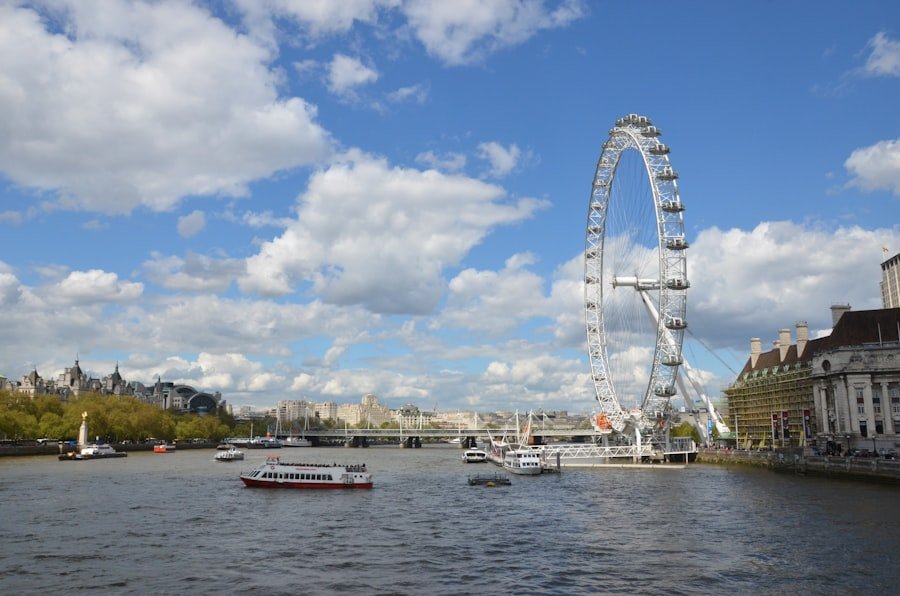
February remains cold (highs ~9 °C, lows ~3 °C). Light snow is possible but uncommon and tends to melt quickly in central areas. Early spring flowers—snowdrops and crocuses—start appearing. London also hosts Lunar/Chinese New Year celebrations in and around Chinatown (dates vary; in 2025 the parade was on 2 Feb) [11][10].
March: Transition to Spring with Increasing Daylight
March brings longer days and a noticeable lift in temperatures (highs ~12 °C, lows ~4 °C). Weather can swing from sunny to showery or even hail within hours. Parks awaken, and Kew Gardens bursts into colour. Note: the RHS Chelsea Flower Show takes place in late May (not March), but many spring garden events ramp up this month.
April: Mild Temperatures and Showers
April is pleasantly cool to mild (highs ~15 °C, lows ~6 °C) and known for quick, passing “April showers.” It’s also one of the relatively drier months compared with late autumn, though rainfall still averages around the high-30s to low-40s mm near Heathrow [3]. Blossoms in Hyde Park and St James’s Park make for great strolls, and Easter often brings outdoor markets and family activities.
May: Warmer Weather and Longer Days
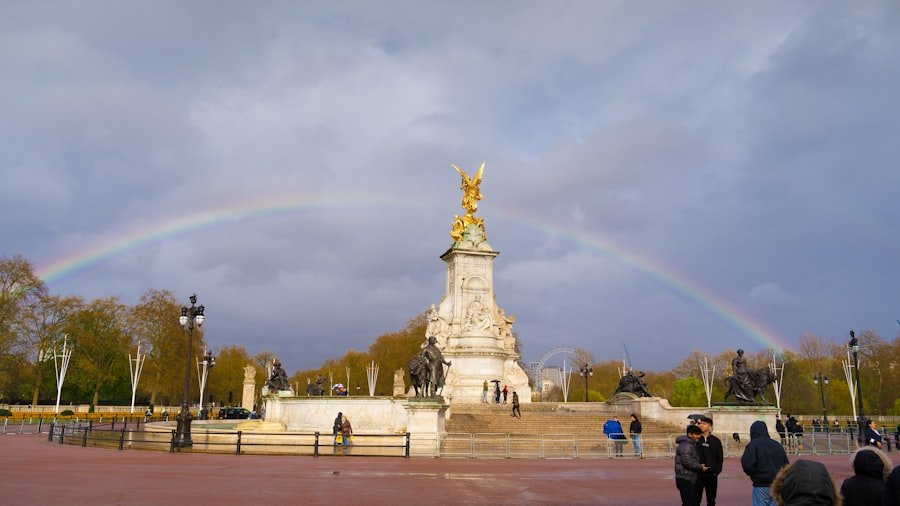
May feels springlike (highs ~19 °C, lows ~9 °C) with long evenings. The RHS Chelsea Flower Show anchors the month, and cafés spill onto pavements. Picnics and canal walks are in full swing.
June: Pleasant Temperatures, Long Days and Summer Sunshine
June ushers in summer (highs ~22 °C, lows ~12 °C) and the year’s longest days—up to about 16¾ hours of daylight near the solstice [5]. It’s also the month of the King’s Birthday Parade (Trooping the Colour), a spectacular display of pageantry in central London [6][7]. Outdoor theatre and open-air cinemas start their seasons.
July: Summer Heat and Big Events
July is typically London’s warmest month (highs ~24 °C, lows ~14 °C; mean ~19 °C) [3]. It’s a prime time for Wimbledon (late June into early/mid-July) and major concerts like BST Hyde Park across late June/early July weekends [8][9]. Showers can pop up, but long sunny intervals are common.
August: Warm Days with the Year’s Biggest Street Party
August remains warm (highs ~23 °C, lows ~14 °C) with long evenings and the occasional thundery shower. The highlight is Notting Hill Carnival over the August Bank Holiday, drawing around two million people—one of Europe’s largest street festivals [12][13].
September: Cooling Down with Autumnal Showers
Early September can feel like an encore of summer before cooler, showery conditions return later in the month. Parks start to hint at autumn colour.
October: Fall Weather and Shorter Days
October fully embraces autumn (highs ~16 °C, lows ~9 °C). Rainfall picks up again, and leaf colour peaks later in the month—great for park walks and photography. Halloween events pop up citywide.
FAQs
What is the average temperature in London by month?
The monthly mean temperature (1991–2020 normals near central London) ranges from about 5 °C in January to about 19 °C in July (the warmest month). Daily highs/lows typically span ~8/3 °C in January and ~24/14 °C in July [3][1].
How much rainfall can be expected in London by month?
Rain is fairly even across the year. November is usually the wettest month (≈66–68 mm), while March is often the driest (≈39–49 mm) based on 1991–2020 averages at Heathrow (a common London climate reference) [3][2].
How many hours of daylight can be expected in London by month?
London sees ~7½–8 hours of daylight on the shortest days in December and up to ~16¾ hours around the June solstice. Exact values vary by date within each month [4][5].
References
- Met Office — Location-specific long-term averages (1991–2020): metoffice.gov.uk
- Met Office Climate Data Portal — Monthly temperature & precipitation datasets (HadUK 1991–2020): temperature | precipitation
- ExtremeWeatherWatch (NOAA 1991–2020) — Heathrow monthly normals: temperature | rainfall
- timeanddate.com — London sunrise/sunset & daylength (December view): timeanddate.com
- sunrise-sunset.org — London longest day (June solstice, 2025): sunrise-sunset.org
- Royal.uk — Trooping the Colour (King’s Birthday Parade) 2025: royal.uk
- British Army — Trooping the Colour (event information): army.mod.uk
- Wimbledon (official) — Future dates: wimbledon.com
- BST Hyde Park (official) — Festival info and dates: bst-hydepark.com
- Chinatown London — Chinese New Year 2025 overview: chinatown.co.uk
- Time Out London — Lunar New Year parade 2025 details: timeout.com
- Royal Borough of Kensington & Chelsea — Notting Hill Carnival by the numbers: rbkc.gov.uk
- Wikipedia — Notting Hill Carnival (context/attendance): en.wikipedia.org