Disclosure: As an Amazon Associate, we earn from qualifying purchases. If you click a link on this page and make a purchase, we may receive a small commission at no extra cost to you.
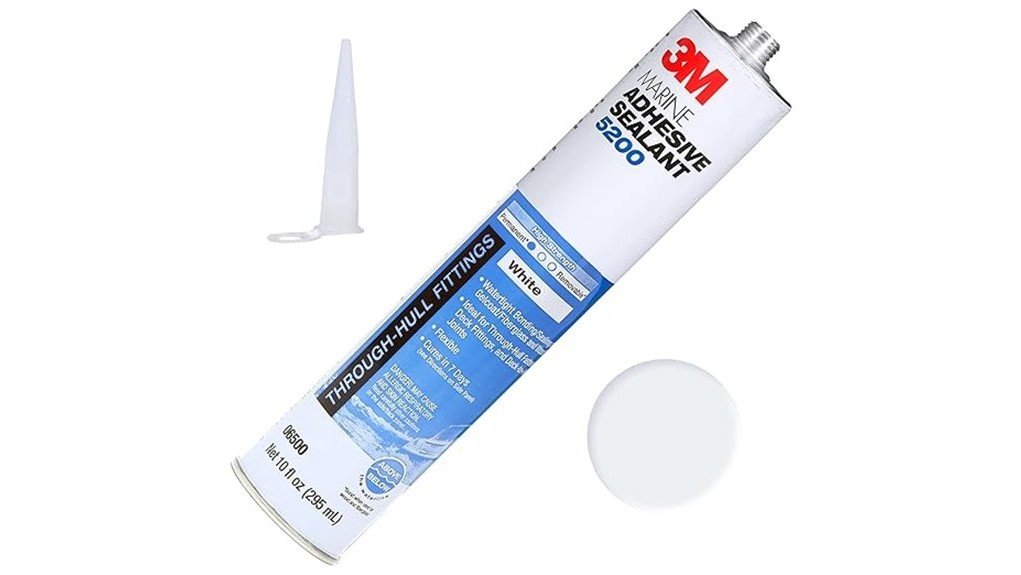
A leaking fitting or loose deck component needs more than ordinary caulk, but a permanent adhesive can create a new problem if you later need to remove the part. 3M Marine Adhesive Sealant 5200 is built for high-strength, waterproof marine bonding above and below the waterline. This review explains where the white 10 fl oz cartridge works best, how long the standard formula needs to cure, and why its permanent bond is both its biggest advantage and its main limitation. It is a strong choice for trained users who need lasting adhesion, but it is not the right sealant for every maintenance job.
Quick Verdict
Rating: 8.6/10, Recommended with caveats
Best For: Trained marine professionals who need a permanent, flexible bond on critical boat hardware and structural joints.
Bottom Line: Standard 3M 5200 provides a strong waterproof bond that handles vibration and movement. The tradeoff is a slow cure and difficult future disassembly, so you should reserve it for parts you do not expect to remove.
| Specification | Detail |
|---|---|
| Brand | 3M |
| Model | Marine Adhesive Sealant 5200, part 06500 |
| Product type | One-component, moisture-curing polyurethane adhesive sealant |
| Package | One white 10 fl oz cartridge |
| Bond type | Permanent, waterproof, flexible elastomeric bond |
| Compatible surfaces | Wood, fiberglass, gelcoat, plastics, and metals, subject to surface-specific preparation and testing |
| Waterline use | Above and below the waterline |
| Handling strength | About 48 hours |
| Full cure | Up to 4 days for the standard formula |
| Application | Dispensed with a compatible cartridge caulking gun, with no mixing required |
| Important safety note | 3M labels this product for industrial or occupational use by trained users |
Key Takeaways
- Standard 3M 5200 is a permanent marine adhesive sealant, not a removable bedding compound.
- It bonds common marine substrates and resists saltwater and weathering above and below the waterline.
- Its flexible polyurethane bond absorbs vibration, shock, swelling, and shrinking.
- It reaches handling strength in about 48 hours and may take up to four days to fully cure.
- Surface preparation, joint design, and following the product label are essential for a reliable result.
Key Features and Benefits of 3M Marine Adhesive Sealant 5200
What Is the 3M Marine Adhesive Sealant 5200?
3M 5200 is a one-part polyurethane adhesive sealant made for permanent marine bonding. The white 06500 version in this review comes in a 10 fl oz cartridge and applies through a compatible caulking gun without mixing.
The formula reacts with moisture as it cures. Once cured, it forms a firm, rubbery, waterproof seal that can remain flexible as a boat moves, vibrates, swells, or shrinks. That combination makes it useful for joints where water resistance and long-term bond strength matter more than easy removal.
Permanent Bonding Strength
The main reason to choose 5200 is its high-strength, permanent adhesion. It is suited to wood, fiberglass, gelcoat, many plastics, and metals, but you should still confirm the exact substrate and preparation requirements before applying it.
This strength is valuable around critical hardware and structural joints. It is also the reason you should not use 5200 as a default sealant on every fitting. Removing a cured part can take substantial effort and may damage the surrounding surface.
Waterproof Flexibility
5200 is designed for use above and below the waterline. Its elastomeric bond stays flexible enough to absorb vibration, shock, swelling, and shrinking rather than forming a hard, brittle joint.
That flexibility helps maintain a uniform seal on moving marine assemblies. It does not replace correct fastening, sound laminate, or proper joint design, but it can support those systems with a durable waterproof bond.
Long Working and Cure Time
The standard formula gives you more working time than a fast-cure sealant. That can help when you need to position a fitting, tool a bead, or complete a large assembly carefully.
The tradeoff is speed. 3M states that it reaches handling strength in about 48 hours and can take up to four days to fully cure. Do not confuse standard 5200 with 5200 Fast Cure, which is a separate product.
Who Should Buy It?
Best For
- Trained marine professionals bonding parts intended to stay in place
- Through-hull, deck-to-hull, transom, and deck-housing work that needs a waterproof seal
- Projects where vibration resistance and structural movement matter
Skip If
- You are a casual consumer without the training required by the product label
- You expect to remove or service the hardware later
- You need a one-day cure or a cosmetic seal with stronger UV and paintability features
Before You Buy: 3M describes 5200 as a permanent adhesive and labels it for industrial or occupational use by trained users. Choose a serviceable, medium-strength sealant when you may need to remove the part later.
Top Applications for 3M Marine Adhesive Sealant 5200
3M lists 5200 for demanding marine joints such as fiberglass deck-to-hull bonding, through-hull fittings, wood-to-fiberglass assemblies, portholes, deck fittings, motors on fiberglass transoms, underside moldings, hull seams, and deck housings.
The common thread is permanence. The product makes the most sense when the joint must resist water and movement for the long term. It is less suitable for trim, inspection plates, or hardware that needs routine removal.
How It Performs in Real Use
Through-Hull and Below-Waterline Work
For a correctly designed through-hull installation, 5200 adds a waterproof, flexible seal around the fitting. Its resistance to saltwater and weathering suits this environment, but you must follow the fitting maker’s installation method and 3M’s preparation instructions.
Deck Hardware and Portholes
On deck fittings and porthole mounts, the long working time gives you room to position hardware and tool the bead. The permanent bond can be excessive for hardware that may need future rebedding, so consider service needs before choosing it.
Deck-to-Hull and Transom Assemblies
These applications benefit from high strength plus flexibility. The cured sealant can absorb vibration and structural movement, but it should be part of a properly engineered assembly rather than a substitute for required mechanical fasteners.
Repairs With Tight Deadlines
Standard 5200 is not the best choice when the boat must return to service quickly. Its 48-hour handling time and multi-day full cure require planning. 5200 Fast Cure provides a similar permanent-bond concept with a shorter cure schedule.
Applying 3M Marine Adhesive Sealant 5200: A Step-by-Step Guide
- Confirm the application. Make sure a permanent adhesive is appropriate and that the substrate is listed or approved for your project.
- Read the label and safety data. Follow current 3M instructions, workplace safety rules, ventilation requirements, and personal protective equipment guidance.
- Prepare the surfaces. Remove old sealant, contamination, loose coatings, moisture, and debris using methods approved for each substrate.
- Dry-fit the parts. Check alignment and fastener access before opening the cartridge because repositioning becomes harder after assembly.
- Apply a continuous bead. Use a compatible caulking gun and enough sealant to fill the joint without leaving gaps.
- Assemble and tool promptly. Position the parts within the product’s working time and avoid squeezing all sealant out of the joint.
- Allow a complete cure. Protect the joint from movement and service loads while the standard formula develops handling strength and full cure.
Pro Tip: Mask both sides of the joint before applying the bead. Remove the tape while the sealant is still workable so you get a cleaner edge without spreading residue across the surrounding gelcoat or metal.
Compatibility and Safety
3M lists wood, fiberglass, gelcoat, plastics, and metals among the compatible material groups. That does not guarantee equal adhesion to every coating, alloy, or plastic type. Test a small area or obtain substrate-specific guidance when the material is unusual, painted, flexible, or chemically sensitive.
The manufacturer labels this product for industrial or occupational use by trained users. Follow the current package instructions and safety data sheet, use the required protective equipment, and provide the ventilation specified for your workplace. Do not rely on general internet cleanup or solvent advice when the official instructions for your exact product and substrate are available.
Troubleshooting Common Issues With 3M Marine Adhesive Sealant 5200
| Issue | Likely Cause | What to Do |
|---|---|---|
| Weak bond | Contamination, moisture, poor preparation, or incompatible surface | Stop and review the preparation method and substrate guidance before reapplying |
| Sealant still soft | The standard formula has not completed its cure | Allow the full cure period stated by 3M and protect the joint from movement |
| Messy squeeze-out | Too much material or late tooling | Mask the joint, tool within the working time, and follow approved uncured-cleanup guidance |
| Part will not release | 5200 was used where future disassembly was needed | Expect difficult removal and seek professional methods that will not damage the substrate |
Pros and Cons
Pros
- Permanent high-strength bond for critical marine assemblies
- Waterproof use above and below the waterline
- Flexible bond absorbs vibration, shock, swelling, and shrinking
- Works across common marine substrates, including wood, gelcoat, fiberglass, plastics, and metals
- Long working time supports careful positioning and tooling
Cons
- Permanent bond makes later disassembly difficult
- Standard formula needs about 48 hours for handling strength and up to four days for full cure
- Labeled for trained industrial or occupational users, not general consumer use
What Buyers Commonly Notice
Buyer feedback often centers on the same qualities that define the product: strong adhesion, dependable waterproof sealing, and a bond that is hard to undo. That makes 5200 appealing for permanent repairs and frustrating when it is applied to hardware that later needs service.
Application control is another common theme. The long working time helps with positioning, but the paste can create difficult cleanup if it spreads beyond the joint. Careful masking, dry fitting, and immediate attention to squeeze-out can make the job more manageable.
Is It Worth the Price?
3M 5200 sits in the premium, professional end of marine sealants because you are paying for permanent bond strength, water resistance, and flexibility under movement. It offers strong value when failure or leakage would be costly and the bonded part is intended to remain in place.
It is not the best value for routine rebedding, removable hardware, or quick turnaround. In those cases, a medium-strength or fast-cure alternative may save time and reduce the risk of damaging parts during future service.
How It Compares to Alternatives
3M 5200 Fast Cure keeps the permanent high-strength concept but reaches full cure in about 48 hours, making it better when you cannot wait several days. 3M 4200FC is a medium-strength option that cures faster and still allows disassembly, so it better suits serviceable deck fittings and hardware.
3M 4000 UV is also medium strength and offers stronger UV and color stability for exposed cosmetic joints. Standard 5200 makes the most sense when permanent strength is more important than speed, easy removal, or paintability.
Frequently Asked Questions
How long does standard 3M 5200 take to cure?
It reaches handling strength in about 48 hours and may take up to four days to fully cure. Do not confuse it with 5200 Fast Cure, which has a shorter cure schedule.
Can you use 3M 5200 below the waterline?
Yes. 3M specifies the product for marine applications above and below the waterline, including through-hull fittings and hull seams.
Is 3M 5200 removable after it cures?
It is designed as a permanent adhesive, so removal can be difficult and may damage the bonded surface. Use a serviceable sealant such as a medium-strength alternative when you expect future disassembly.
Does 3M 5200 work on plastic?
3M lists plastics among the material groups it can bond. Because plastic chemistry and coatings vary, confirm compatibility and test the exact surface before a critical application.
Can you paint over 3M 5200?
The current 3M product page does not present paintability as a main feature of standard 5200. Check both the coating maker’s instructions and 3M guidance, then test compatibility before painting a visible or critical joint.
What is the difference between 5200 and 5200 Fast Cure?
Both are high-strength permanent marine adhesive sealants. Standard 5200 offers extended working time and may take up to four days to cure, while 5200 Fast Cure is designed to cure fully in about 48 hours.
What is the biggest application mistake?
The biggest mistake is using a permanent adhesive on a part that needs future service. Poor surface preparation and disturbing the joint before cure are also common causes of weak or messy results.
Who should not use this product?
3M labels it for industrial or occupational use by trained users. Anyone without the required training, safety controls, or project-specific guidance should choose an appropriate consumer product or hire a qualified marine professional.
The Bottom Line
3M Marine Adhesive Sealant 5200 is a strong choice for trained users who need a permanent waterproof bond that can handle vibration and structural movement. Skip it when you need quick curing, easy disassembly, or a general-purpose consumer sealant. Its greatest strength is durability, and its greatest limitation is that the bond is intentionally difficult to undo.
Ready to Buy?
Check the latest product details and confirm that a permanent marine adhesive is right for your application.