Disclosure: As an Amazon Associate, we earn from qualifying purchases. If you click a link on this page and make a purchase, we may receive a small commission at no extra cost to you.
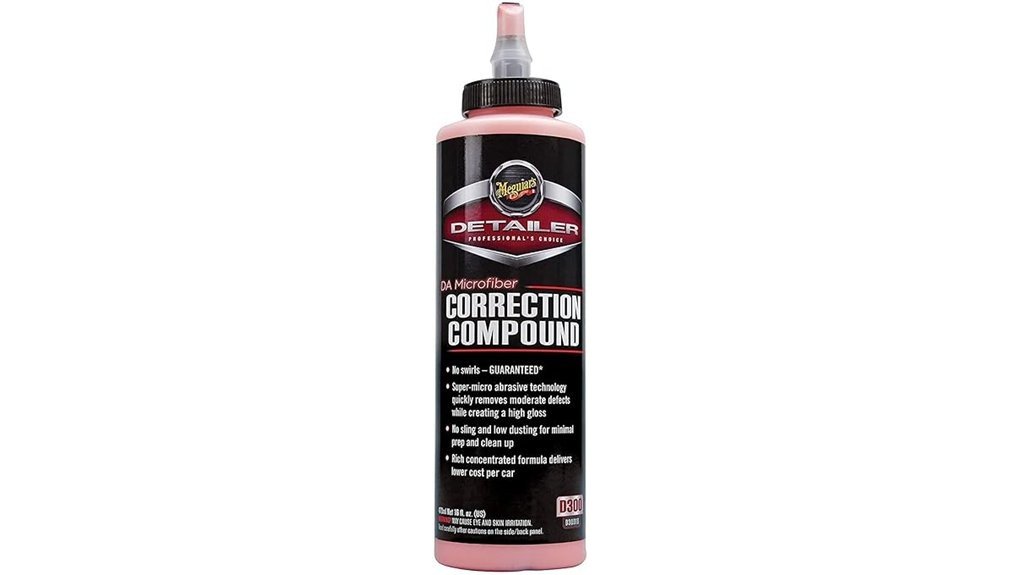
Swirls, water spots, oxidation, and light scratches can make clean paint look tired, but an overly aggressive compound can remove more clear coat than necessary. Meguiar’s DA Microfiber Correction Compound D30016 is a 16-ounce, ready-to-use compound made for factory paint, a dual-action polisher, and a microfiber cutting disc. It offers useful correction power with low dust and little sling, but the result still depends on your pad choice, machine control, and paint condition. This review explains where D30016 fits, how to use it, and when a milder or stronger option makes more sense.
Quick Verdict
Rating: 8.5/10, recommended with caveats
Best For: DIY enthusiasts and professional detailers correcting light to moderate defects on factory paint with a dual-action polisher.
Bottom Line: D30016 combines useful cutting ability with a low-dust, low-sling formula and can finish glossier than many heavy compounds. It is not a hand-polish substitute, and it requires the correct microfiber disc, a test spot, and careful pad cleaning.
Key Takeaways
- D30016 is a 16-fluid-ounce, ready-to-use compound for light to moderate defects on factory automotive paint.
- Meguiar’s designed it for a dual-action polisher and its DMC3, DMC5, or DMC6 microfiber cutting discs.
- The formula uses Super-Micro Abrasive Technology and is designed for low dust, low sling, and a high-gloss result.
- It can reduce scratches, swirls, holograms, oxidation, water spots, acid-rain marks, and similar surface defects.
- You still need to wash, decontaminate, test, inspect, and protect the paint after correction.
| Specification | Detail |
|---|---|
| Brand | Meguiar’s |
| Model | D30016 |
| Product Type | DA microfiber paint-correction compound |
| Container Size | 16 fluid ounces |
| Formula | Ready to use, concentrated, Super-Micro Abrasive Technology |
| Paint Compatibility | Factory or OEM automotive paint in stable condition |
| Defect Range | Light to moderate scratches, swirls, holograms, oxidation, water spots, stains, and acid-rain marks |
| Recommended Machine | Dual-action polisher, including the Meguiar’s MT300 |
| Recommended Discs | DMC3, DMC5, or DMC6; DMX5 or DMX6 when more cut is needed |
| Working Area | About 2 feet by 2 feet per section |
| Finish Behavior | Low sling, low dust, high-gloss correction |
| Next Step | Inspect, refine if needed, then apply wax, sealant, or another paint protectant |
What Is Meguiar’s DA Microfiber Correction Compound?
Meguiar’s D30016 is the 16-ounce version of the brand’s DA Microfiber Correction Compound. It is made to level a very small amount of damaged or uneven paint surface so light reflects more evenly. That is how it reduces visible swirls, holograms, oxidation, water spots, and other light to moderate defects.
The compound is part of Meguiar’s DA Microfiber Correction System. It is optimized for a dual-action polisher, a matching backing plate, and a microfiber cutting disc. This system gives you more correction than a mild finishing polish while remaining less aggressive than a rotary-buffer process aimed at heavier defects.
D30016 does not add lasting protection by itself. After correction, inspect the finish and follow with a finishing polish when needed, then apply wax, sealant, or another suitable protectant.
Before You Buy: D30016 is designed around machine correction on stable factory paint. It cannot repair peeling clear coat, exposed base coat, deep scratches, or paint failure, and repeated compounding removes additional clear coat.
Who Should Buy It?
Best For
- You have a DA polisher and want to correct visible wash swirls, oxidation, water spots, or light scratches.
- You prefer a low-dust compound that is easier to clean from trim and panel gaps.
- You want a correction step that can finish with useful gloss before final polishing or protection.
Skip If
- You need a simple hand-applied polish or an all-in-one cleaner wax.
- Your paint has peeling clear coat, burn-through, deep chips, or scratches below the clear coat.
- You cannot inspect the paint under strong light or keep the microfiber disc clean during use.
Correction Power and Finish Quality
D30016 targets light to moderate defects rather than severe sanding marks or major paint damage. Its Super-Micro Abrasive Technology gives the microfiber disc enough bite to reduce wash swirls, holograms, stains, oxidation, etched water spots, and similar defects on OEM paint.
The finish can look glossy after compounding, which may reduce the amount of refining needed on harder or lighter-colored paint. Softer clear coats and dark colors can still show haze under direct light, so a finishing polish may be necessary before protection.
Polisher, Pad, and Paint Compatibility
Meguiar’s pairs D300 with its MT300 dual-action polisher and DMC3, DMC5, or DMC6 microfiber cutting discs. The disc size should match your backing plate. A 3-inch setup helps on pillars and tight curves, while 5-inch and 6-inch systems cover larger panels more efficiently.
For more cutting ability, Meguiar’s lists the DMX5 and DMX6 Xtra Cutting Discs. More cut also raises the need for careful inspection. Start with the least aggressive combination that produces an acceptable result on your test spot.
The manufacturer positions D300 for factory paint. Repainted panels can vary in hardness, thickness, cure, and previous repair quality, so treat unknown paint history with extra caution.
Dusting, Sling, and Workability
Heavy compound dust can settle into badges, trim, seals, and panel gaps. D30016 is formulated for low dust and low sling, which makes the work area easier to manage when you use a thin, even amount and keep the disc flat.
Low dust does not mean no cleanup. Overloading the disc, working too large an area, letting residue dry, or using a clogged pad can still create stubborn residue. Wipe each section before the compound dries and use a clean microfiber towel for inspection.
Ease of Use and Learning Curve
D30016 is straightforward for someone who already understands dual-action polishing, but it is not completely beginner-proof. You need to prime the microfiber fibers, hold the disc flat, control your arm speed, monitor pad rotation, and stop often enough to inspect your progress.
The product is ready to use, so you do not need to dilute it. The main learning curve comes from choosing the correct disc, amount of product, pressure, number of passes, and follow-up step for your paint.
Pro Tip: Mark the backing plate with a short line. The line makes pad rotation easier to see, so you can reduce pressure or adjust your angle if the disc stops rotating.
How It Performs in Real Use
Daily Driver Wash Swirls
On a daily driver with circular wash marks and dullness, D30016 can restore clearer reflections without starting with a heavy rotary compound. A microfiber cutting disc provides the mechanical cut, while the compound helps keep the process controlled and relatively clean.
Oxidation and Water Spots
Surface oxidation and etched water spots can respond well when the damage remains within the correctable paint layer. Wash and decontaminate first so bonded dirt does not clog the pad or create new marks. Deep mineral etching may need more than one careful cycle, and some damage may remain.
Spot Correction on One Panel
D30016 works well when one hood section, door, or trunk lid looks worse than the rest of the vehicle. Correcting only the affected area can preserve more clear coat than compounding every panel. Blend your work carefully and inspect the transition under strong light.
Repeated or Multi-Vehicle Use
The concentrated 16-ounce bottle can support multiple sessions because each section needs only a small amount after the disc is primed. Your actual coverage depends on vehicle size, paint condition, disc size, and how often you repeat a section. Using too much product lowers cut and increases cleanup rather than improving the result.
How to Use It Correctly
- Work cool and in the shade. Hot paint can make the compound dry too quickly and become harder to remove.
- Wash and dry the vehicle. Remove loose dirt before any machine polishing.
- Decontaminate when needed. Use a suitable clay or decontamination process if the paint still feels rough after washing.
- Inspect and tape sensitive areas. Check for failing paint, thin edges, raised body lines, textured trim, and previous repairs.
- Prime the microfiber disc. Spread a thin, even layer of D300 across the full working face of the clean disc.
- Work a test area. Meguiar’s recommends about a 2-foot-by-2-foot section and lists 4,800 orbits per minute as a starting process for its system.
- Use controlled passes. Make two or three passes with moderate pressure, followed by two or three lighter passes while keeping the disc flat.
- Wipe before it dries. Remove residue with a clean microfiber towel and inspect under direct, color-revealing light.
- Clean the disc often. Use compressed air or a suitable pad brush between sections so the fibers stay open.
- Refine and protect. Polish if the paint needs more clarity, then apply wax, sealant, or another compatible protectant.
Common Mistakes to Avoid
- Do not compound dirty or contaminated paint.
- Do not overload the disc after it has been primed.
- Do not tilt the polisher or hold it in one place.
- Do not chase a deep scratch until the surrounding clear coat becomes unsafe.
- Do not assume every panel has the same paint thickness or hardness.
Compatibility and Safety
Paint correction is an abrasive process. Use the product only as directed, work in a ventilated area, avoid skin and eye contact, and follow the current label and safety data sheet for handling and first-aid instructions. Keep the bottle closed when not in use and away from children.
Mask delicate edges and textured trim when needed. Clear coat is often thinner on sharp edges and raised body lines, where heat and pressure concentrate more quickly. A paint-thickness gauge can add useful context, but it does not replace experience or confirm every layer separately.
Stop if you see color transfer that suggests single-stage paint, unexpected haze, sticky residue, rapid heat buildup, or signs of clear-coat failure. A professional detailer or paint shop is the safer choice when the finish is thin, repainted, peeling, or difficult to identify.
Care After Paint Correction
D30016 corrects defects but does not serve as the final protective layer. After the finish meets your goal, remove polishing oils as required by your chosen protectant and apply a compatible wax, sealant, or coating.
Use a gentle wash method, clean mitts, and soft drying towels to reduce the chance of putting fresh swirls into the corrected paint. Store D30016 tightly sealed in a cool, dry place and protect it from freezing or excessive heat.
Is It Worth the Price?
D30016 offers strong value for the price when you already own a dual-action polisher, backing plate, and microfiber discs. The ready-to-use formula, low dust, and concentrated application can make each correction session more efficient than a compound that creates heavy residue or requires frequent cleanup.
The total setup cost matters. A first-time buyer may also need a polisher, several clean discs, microfiber towels, inspection lighting, tape, decontamination supplies, and paint protection. It is not the best fit when your only goal is a quick hand-applied shine.
Pros and Cons
Pros
- Corrects a useful range of light to moderate defects on OEM paint.
- Low-dust and low-sling behavior reduces cleanup around trim and gaps.
- Can leave enough gloss to limit extra refining on some paint systems.
- Works with 3-inch, 5-inch, and 6-inch Meguiar’s microfiber cutting discs.
- Ready-to-use, concentrated formula supports controlled product use.
Cons
- Requires a DA polisher and suitable microfiber disc for intended performance.
- May leave haze on soft or dark paint and need a separate finishing step.
- Cannot safely remove every deep scratch, etching mark, or paint failure.
How It Compares to Alternatives
Meguiar’s Ultimate Compound is easier to consider when you want a product that can also be applied by hand. D30016 makes more sense when you already use a DA microfiber system and want stronger, more repeatable correction on factory paint.
Meguiar’s M105 Ultra-Cut Compound is the better comparison for heavier defect removal, but it is a more aggressive choice and can require more refining. D30016 sits between a mild consumer compound and a heavier professional cutting process. After D300, Meguiar’s D302 finishing polish or D301 finishing wax can refine the surface, depending on whether you want a dedicated polish or a finishing-and-protection step.
Frequently Asked Questions
Can Meguiar’s D30016 be used by hand?
D30016 is optimized for a dual-action polisher and microfiber cutting disc. Hand application will not reproduce the pad movement or correction rate of the intended system, so Meguiar’s Ultimate Compound is easier to compare for hand use.
Which pad should you use with D300?
Meguiar’s recommends its DMC3, DMC5, or DMC6 microfiber cutting discs for normal correction. The DMX5 or DMX6 Xtra Cutting Disc adds more cut when the test spot shows that the standard disc is not enough.
Will D30016 remove deep scratches?
It can reduce some scratches that remain within the correctable paint layer. A scratch that catches your fingernail, exposes color or primer, or passes through the clear coat may need touch-up paint or professional repair instead.
Should you polish after using D300?
Inspect the corrected area under direct light. If you see haze or want more clarity, use a finishing polish and a suitable finishing pad before applying protection. Some harder or lighter-colored paints may look acceptable after D300 alone.
Does D30016 contain wax or lasting protection?
Treat D30016 as the correction step, not the final protection step. Once correction and any finishing polish are complete, apply a compatible wax, sealant, or coating.
Can it be used on repainted panels?
The product is positioned for factory paint. A repainted panel may have different hardness, thickness, cure, or previous repair work, so test an inconspicuous area and ask the painter or a professional detailer when the paint history is uncertain.
How often should you clean the microfiber disc?
Clean it after each small section or whenever the fibers look matted and loaded with residue. Compressed air or a suitable pad brush helps restore the fibers and keeps cutting performance more consistent.
How should you store the compound?
Wipe the cap, close the bottle tightly, and store it upright in a cool, dry place away from children. Protect it from freezing, excessive heat, and contamination from dirty pads or towels.
The Bottom Line
Meguiar’s D30016 is a strong choice when you want controlled light-to-moderate correction on factory paint with a DA microfiber setup. Buy it for its useful cut, low dust, and glossy finish potential. Skip it when you need hand application, your paint is failing, or you expect one compound to erase deep damage without removing too much clear coat.