Meguiar’s M205 Review: Ultra Finishing Polish for Gloss and Light Defect Removal
Light swirls, polishing haze, and dull reflections can make otherwise healthy paint look tired. Meguiar’s M205 Mirror Glaze Ultra Finishing Polish is designed for that final refinement stage, especially after compounding or when your paint needs only mild correction. This review explains what M205 can realistically remove, how to apply it, and when a stronger product makes more sense. Its main strength is a clear, glossy finish, but it is not built for deep scratches or severe oxidation.
Quick Verdict
Editorial Rating: 8.6/10
Best For: Light swirl removal, post-compound refinement, and gloss enhancement on glossy automotive paint.
Bottom Line: Meguiar’s M205 is recommended with caveats. It offers flexible application and a refined finish, but heavier defects usually require a cutting compound first.
Key Specifications
| Specification | Detail |
|---|---|
| Brand | Meguiar’s |
| Model | M20508 |
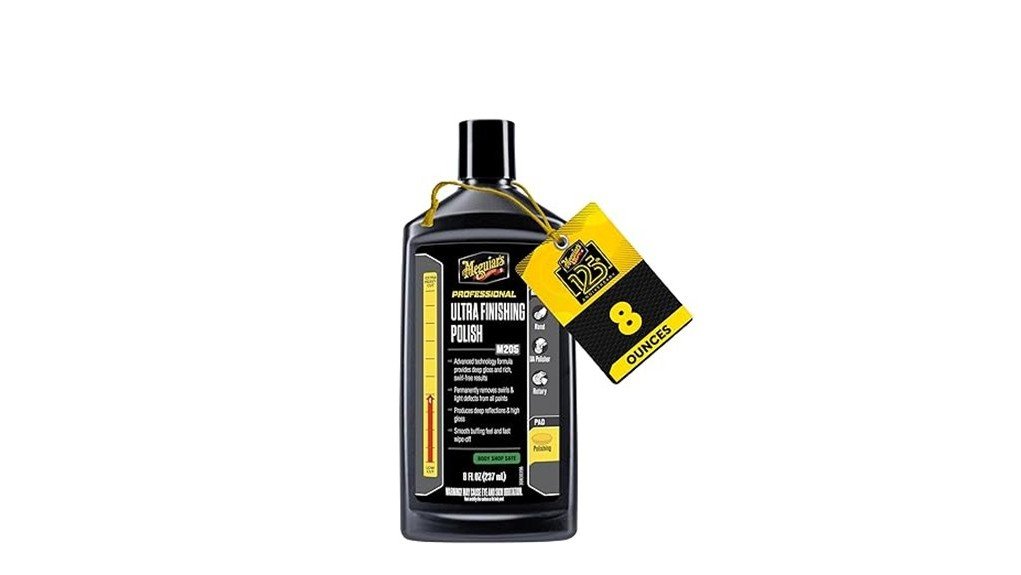
| Product Name | Mirror Glaze Ultra Finishing Polish M205 |
| ASIN | B003LMJP4Q |
| Product Type | Professional-grade automotive finishing polish |
| Container Size | 8 fl oz (about 237 mL) |
| Product Form | Liquid |
| Abrasive | Alumina, also listed as aluminum oxide |
| Compatible Finish | Glossy automotive paint, including clear coats |
| Application Methods | Hand, dual-action polisher, or rotary buffer |
| Formula Notes | Micro-abrasive, non-gumming, easy-wipe formula with extended working time |
| Body Shop Use | Listed by Meguiar’s as body shop safe |
| Best Use | Final polishing, light defect removal, hologram refinement, and gloss enhancement |
What Is Meguiar’s M205 and How Does It Work?
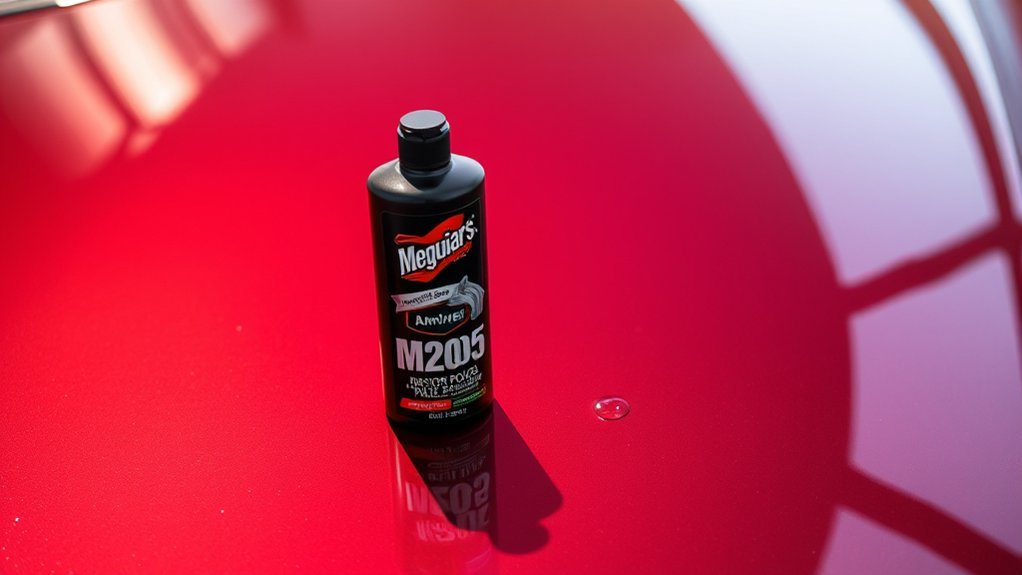
Meguiar’s M205 Mirror Glaze Ultra Finishing Polish is a liquid paint-refinement product for glossy automotive finishes, including clear coats. It uses a fine alumina abrasive to level very small surface defects that scatter light and reduce clarity.
The product sits near the finishing end of the paint-correction process. You can use it after a more aggressive compound to reduce compounding haze, buffer swirls, or holograms. You can also use it as a mild one-step polish when the paint has light swirls and does not need heavy cutting.
M205 is available in several container sizes, but the Amazon link in this article points to the M20508 8-ounce bottle. That smaller size suits occasional corrections, spot polishing, or buyers who want to test the product before purchasing a larger container.
Who Should Buy It?
Best For
- Owners correcting light swirls, haze, or mild wash marks.
- Detailers refining paint after a cutting compound.
- Buyers who want one finishing polish for hand, DA, or rotary use.
Skip If
- Your paint has deep scratches, severe oxidation, or heavy sanding marks.
- You want an all-in-one polish that also leaves wax or sealant protection.
- You do not have time to wash, decontaminate, test, and protect the paint correctly.
Before You Buy: M205 is a finishing polish, not a heavy-cut compound. Deep scratches, severe oxidation, and major sanding defects may need a stronger correction step or professional paint assessment first.
Finish Quality and Defect Removal
M205 focuses on clarity rather than maximum cut. On paint with light swirls, faint haze, or holograms from a prior polishing step, it can improve reflections without the aggressive action of a compound.
The exact correction level depends on your paint, pad, machine, pressure, and technique. A polishing pad can increase defect removal, while a softer finishing pad places more emphasis on gloss. This flexibility is useful, but it also means you should not expect the same result on every vehicle.
The non-gumming formula gives you enough working time to make controlled passes before wiping the residue. That can make the final polishing stage easier, especially when you are trying to finish without leaving fresh haze.
Application Methods and Pad Choice
Applying M205 by Hand
Hand application works for small areas, spot correction, and buyers without a machine polisher. Use a clean foam applicator and work a small section with overlapping passes. Hand polishing gives you the least cutting power, so it is best for very mild defects or gloss enhancement.
Using a Dual-Action Polisher
A dual-action polisher gives most home users a practical balance of speed, control, and correction. Pair M205 with a clean foam polishing pad when you need more defect removal, or use a finishing pad when the surface already looks good and needs extra clarity.
Start with moderate pressure for the first passes, then reduce pressure for the final passes. Keep the pad flat, use overlapping movements, and inspect your test area before polishing the rest of the panel.
Using a Rotary Buffer
M205 also works with a rotary buffer, but rotary tools require more skill. Excess heat, poor pad control, or holding the machine in one place can damage paint or create holograms. A dual-action machine is the safer choice when you are still learning paint correction.
Pro Tip: Make one test spot with the least aggressive pad and method likely to work. Check the result under strong lighting before changing pads, pressure, or machine speed.
How It Performs in Real Use
After a Cutting Compound
This is where M205 makes the most sense. A compound can remove heavier defects but may leave light haze or rotary marks. M205 can refine that surface, improve clarity, and prepare the paint for wax, sealant, or coating.
On Light Daily-Use Swirls
For a vehicle with light wash marks and mild dullness, M205 may provide enough correction without a separate heavy compound. Results depend on paint hardness and pad choice, so test first rather than polishing the entire vehicle with an unproven combination.
For Spot Correction
The 8-ounce bottle is convenient for correcting a small panel, pillar, trunk lid, or isolated hazy area. Clean and inspect the area first. Polishing over bonded contamination can load the pad and create new marks.
On Dark or Sensitive Paint
Dark paint shows haze and fine swirls more easily. M205 can finish clearly, but soft paint may respond differently to pressure and pad choice. Use a clean finishing pad, short working cycles, and careful inspection to reduce the chance of micro-marring.
How to Apply Meguiar’s M205
- Wash and dry the vehicle. Remove loose dirt before touching the paint with a polishing pad.
- Decontaminate when needed. If the surface feels rough after washing, remove bonded contamination with a suitable paint-safe process before polishing.
- Work on cool, properly cured paint. Avoid direct sun and hot panels.
- Mask sensitive trim and edges. Protect textured plastic and areas where residue may collect.
- Choose a clean foam pad. Match the pad to your goal, polishing for more correction or finishing for maximum gloss.
- Apply a small amount. Spread it over a small section before making controlled, overlapping passes.
- Reduce pressure on the final passes. This helps refine the finish rather than continuing to chase more cut.
- Wipe residue promptly. Use a clean microfiber towel and inspect the section under bright, direct lighting.
- Repeat only when needed. More passes remove more clear coat, so use the least correction needed for the result.
- Add protection. Apply a compatible wax, sealant, or coating after the polishing oils and residue are handled according to the protection product’s instructions.
Compatibility and Paint Safety
M205 is made for glossy automotive paint, including clear-coated finishes. It is not a general-purpose cleaner for every vehicle surface. Keep it off unpainted textured trim unless the product label confirms compatibility, and do not assume it is suitable for matte or satin paint.
Always test a small hidden or low-risk area first. Older paint, repainted panels, thin clear coat, sharp body lines, and panel edges deserve extra caution because they may have less material available for correction.
Use clean pads and towels throughout the job. A dirty pad can reduce cut, make residue harder to remove, and drag trapped debris across the paint. Follow the bottle label and current safety data sheet for handling, storage, and personal protection guidance.
How to Keep Your Vehicle Shiny After Polishing
Polishing improves the surface, but it does not replace paint protection. Apply a compatible wax, sealant, or coating after correction to help shield the finish from water, road film, and routine washing.
Use pH-balanced car soap, clean wash media, and soft microfiber drying towels. Avoid harsh brush washes and dirty towels, since both can add fresh swirls to the finish you just refined.
For maintenance, inspect the paint before polishing again. A light maintenance product or careful wash process may be enough. Repeated machine polishing removes a small amount of paint each time, so correction should solve a real defect rather than become part of every wash.
Pros and Cons
Pros
- Targets light swirls, haze, and holograms without the heavy cut of a compound.
- Works by hand, dual-action polisher, or rotary buffer.
- Can follow a compound or serve as a mild one-step polish.
- Non-gumming formula offers useful working time and easy wipe-off.
- The 8-ounce bottle is manageable for spot work and occasional detailing.
Cons
- It is not aggressive enough for deep scratches, severe oxidation, or heavy sanding defects.
- Pad choice and paint hardness can change the result, so some trial and error is normal.
- It leaves no lasting wax or sealant protection, so you need a separate protection step.
Is It Worth the Price?
M205 is worth considering when you need a dedicated finishing polish rather than an all-in-one cleaner and protectant. Its value comes from flexible application, clear finishing ability, and compatibility with both occasional hand work and machine polishing.
The 8-ounce bottle offers the most value for spot correction, one-vehicle projects, or buyers testing a pad-and-polish combination. Frequent detailers may get better practical value from a larger size, but the correct choice depends on how often you polish and how much product you actually use.
It is not the best value when your vehicle needs heavy correction from the start. In that case, you may need to buy a compound as well, use M205 only for refinement, and then add a separate paint-protection product.
How It Compares to Alternatives
Meguiar’s M210 Ultra Pro Finishing Polish is worth comparing when you want another professional Meguiar’s option focused on fine finishing. Sonax Perfect Finish may appeal to buyers seeking a polish known for combining light correction with a refined finish.
3D One Hybrid Compound and Polish makes more sense when you prefer one product whose cut changes more noticeably with pad choice. M205 remains a strong fit when your priority is predictable final refinement after compounding or mild correction on paint that already looks fairly good.
Frequently Asked Questions
Can Meguiar’s M205 remove scratches?
It can reduce very light defects that sit near the paint surface, including fine swirls and mild haze. Deep scratches, severe oxidation, and major sanding marks usually need a more aggressive compound or professional correction.
Can I use M205 without a machine polisher?
Yes. Meguiar’s lists hand application as a supported method. Hand polishing is slower and provides less correction than a machine, so it works best for small areas, mild haze, and gloss improvement.
Which pad should I use with M205?
Use a clean foam polishing pad when you need more light-defect removal. Choose a softer finishing pad when the paint already looks good and your main goal is clarity and gloss. Always confirm the combination with a test spot.
Is M205 safe for clear coat?
Meguiar’s describes M205 as suitable for glossy paints, including clear coats. Polishing still removes a small amount of material, so use the least aggressive method that corrects the defect and take extra care on thin, old, or repainted surfaces.
Does M205 contain wax or paint protection?
M205 is a finishing polish, not your final protection layer. After polishing, apply a compatible wax, sealant, or coating according to that product’s preparation instructions.
Can I use M205 on chrome, matte paint, or plastic trim?
This review and the verified product guidance focus on glossy automotive paint. Do not assume it is suitable for matte paint, textured plastic, chrome, or other specialty surfaces. Check the current label and test a hidden area before broader use.
How much M205 should I use?
Use only enough product to keep the pad working smoothly over a small section. Too much polish can saturate the pad, slow correction, and make residue harder to remove. Clean or change the pad when it becomes loaded.
How should I store Meguiar’s M205?
Keep the bottle tightly closed and store it according to the current product label and safety data sheet. Protect it from freezing, excessive heat, and contamination from dirty pads or applicators.
The Bottom Line
Meguiar’s M205 is a strong finishing polish for owners and detailers who need light correction, post-compound refinement, and improved gloss on glossy automotive paint. Buy it when your paint needs clarity more than heavy cutting. Skip it as a stand-alone solution for deep scratches or severe oxidation, and plan to apply separate protection after polishing.