Mendenhall Glacier is one of Juneau’s easiest major natural attractions to reach, but the experience has changed as the glacier continues to retreat. You can still enjoy wide glacier views, Mendenhall Lake, Nugget Falls, rainforest trails, wildlife viewing, and the Forest Service visitor center. A little planning helps because transportation, fees, weather, trail difficulty, and seasonal wildlife activity vary throughout the year.
Quick Answer
Mendenhall Glacier is about 12 miles from downtown Juneau and is easiest to visit from May through September. Plan at least two hours at the recreation area, wear layers and waterproof shoes, and allow much longer if you use the city bus because its closest stop is 1.5 miles from the visitor center.
Key Takeaways
- May through September offers the easiest access, longest operating hours, and widest choice of tours.
- The Mendenhall Glacier Visitor Center is about 12 miles from downtown Juneau.
- Capital Transit does not drive to the visitor center; its closest stop requires a 1.5-mile walk each way.
- Nugget Falls is the most popular moderate walk, while East Glacier Trail is longer and more demanding.
- Do not walk onto glacier ice or enter ice caves as an ordinary self-guided activity. Conditions can change quickly.
- Late summer is especially good for salmon and black-bear viewing around Steep Creek.
At a Glance
| Typical Visit | About 2–3 hours on site; roughly 4–5 hours total from downtown when using public transit and walking |
| Difficulty | Easy sightseeing to challenging hiking, depending on the trail |
| What to Bring | Waterproof shell, warm layers, sturdy shoes, water, camera, and binoculars |
| Summer Fee | $5 for visitors age 16 and older in the visitor-center fee area from May 1 through September 30; ages 15 and younger are free. Transportation and guided tours cost extra. |
Overview of Mendenhall Glacier
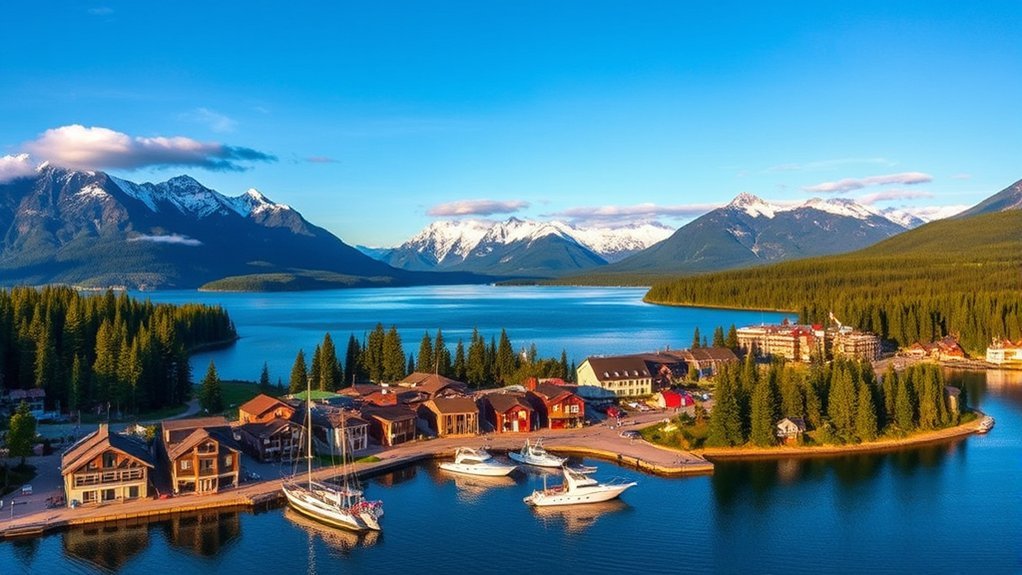
Mendenhall Glacier flows for roughly 13 miles from the Juneau Icefield through the mountains above the Mendenhall Valley. The glacier, lake, waterfalls, rainforest, and surrounding mountains form one of Juneau’s best-known landscapes.
The glacier is part of the Tongass National Forest, and the developed visitor area gives you several ways to explore without stepping onto the ice. You can walk paved viewpoints, hike forest trails, visit Nugget Falls, watch salmon and bears around Steep Creek, or learn about glacial change inside the visitor center.
The landscape is also changing quickly. Mendenhall has been retreating for centuries, and by late November 2025 scientists reported that its terminus had functionally pulled away from Mendenhall Lake. Seasonal changes in lake level and ice movement can sometimes bring water and ice back into temporary contact, but the long-term trend remains retreat.
You can read more about that recent change in KTOO’s November 2025 report featuring University of Alaska Southeast glacier scientists.
Mendenhall is not a static attraction. The glacier, lake edge, trails, wildlife activity, and even the best viewing angles continue to change as the ice retreats.
The surrounding Tongass National Forest provides a striking contrast to the ice, with temperate rainforest, salmon streams, wetlands, mountain slopes, and a wide range of wildlife. Whether you have one hour or most of a day, the developed recreation area gives you several ways to experience the landscape safely.
Best Times to Visit
For most first-time visitors, May through September is the easiest period to visit Mendenhall Glacier. Visitor services are most available during these months, days are longer, and hiking conditions are generally better than in winter. Juneau is a temperate-rainforest climate, however, so rain, wind, and fast weather changes are possible even in midsummer.
| Month | What to Expect |
|---|---|
| May | Summer visitor services begin, vegetation greens up, and crowds are often lighter than midsummer. |
| June | Very long daylight hours make it easy to combine glacier viewpoints, Nugget Falls, and other Juneau activities. |
| July | Mild summer conditions and busy visitor traffic. Rain remains possible, so waterproof clothing is still useful. |
| August | A strong month for salmon and black-bear viewing around Steep Creek, with increasingly wet weather possible. |
| September | Salmon and bear activity can continue, fall colors begin appearing, days shorten, and visitor numbers may ease later in the month. |
If wildlife is your priority, late summer can be especially rewarding. Alaska Department of Fish and Game notes that salmon draw bears to the Steep Creek area, with some of the most accessible bear viewing occurring in August and September.
Pro Tip: Pack for rain even when the morning forecast looks good. A waterproof outer layer, warm mid-layer, and shoes with good grip are more useful in Juneau than relying on a clear-sky forecast.
Getting There
Mendenhall Glacier Visitor Center is at 6000 Glacier Spur Road, about 12 miles from downtown Juneau. You can reach the area by rental car, taxi, commercial shuttle, guided tour, bicycle, or a combination of public transit and walking.
Transportation Options Available
A rental car or taxi gives you the most flexibility because you can travel directly to the visitor area and leave when you are ready. Commercial glacier shuttles and tours are also convenient for cruise passengers because transportation is usually built around a fixed schedule.
Public transit is cheaper, but it is important to understand that Capital Transit buses do not stop at the Mendenhall Glacier Visitor Center. The closest stop is at Dredge Lake Road, approximately 1.5 miles away. From there, you follow a paved route for about 30 minutes to reach the visitor center.
Capital Transit lists Routes 3, 4, and 8 for the Dredge Lake Road stop, with Route 8 generally providing the fastest service. The entire one-way trip from downtown can take up to about 1.5 hours once the bus ride and walk are included. See the current instructions on the Capital Transit Mendenhall Glacier page.
If you enjoy cycling, biking to the recreation area can be an option, but Juneau weather can change quickly. Use established roads and bicycle routes, carry rain protection, and leave enough time for the return trip.
Note: Cruise passengers using public transit should leave a large time buffer. A glacier visit by city bus can require roughly four to five hours round trip once bus travel, walking, waiting, and sightseeing are combined.
Best Time to Visit
Early morning and later afternoon can feel quieter than the busiest midday period, particularly when several cruise ships are in Juneau. However, choose your arrival time around the current visitor-center hours and your transportation schedule rather than assuming the site will remain staffed late into the evening.
Long summer daylight gives you flexibility for outdoor trails even outside the busiest part of the day. Weather matters more than the clock for longer hikes, so turn back if heavy rain, strong wind, flooding, or trail closures make conditions unsafe.
Accessing Park Facilities
For the 2026 summer season, Travel Juneau lists the Mendenhall Glacier Visitor Center as open daily from 9:00 a.m. to 6:00 p.m. from May through September. The surrounding grounds are listed as open from 6:00 a.m. to midnight year-round. Winter visitor-center operations are more limited.
During the summer fee season from May 1 through September 30, the visitor-center fee area costs $5 for visitors age 16 and older; visitors age 15 and younger are free. Current visitor information is available from Travel Juneau’s Mendenhall Glacier Visitor Center listing.
The visitor center provides glacier views, interpretive exhibits, staff information, a short educational film, a bookstore, and nearby restroom facilities. Capital Transit also confirms that restrooms are available at the visitor-center area but not along the 1.5-mile walk between its Dredge Lake Road stop and the glacier.
Hiking Trails and Scenic Views
The Mendenhall Glacier Recreation Area has trails for quick sightseeing as well as longer forest hikes. You do not need to walk onto glacier ice to enjoy excellent views.
| Trail | Distance | Approx. Time | Difficulty |
|---|---|---|---|
| Photo Point | 0.3 mile / 0.5 km round trip | About 15 minutes | Easy; paved |
| Nugget Falls | 2 miles / 3.2 km round trip | About 1–1.25 hours | Moderate; gravel |
| Trail of Time | 1 mile / 1.6 km loop | About 30 minutes | Moderate; paved and gravel |
| Steep Creek | 0.25 mile / 0.4 km loop | About 20 minutes | Easy; paved and raised boardwalk |
| East Glacier | 3.5 miles / 5.6 km loop | About 2.5 hours | Challenging; gravel, rock, and stairs |
The Forest Service publishes a Mendenhall Glacier trail brochure and map with these routes and visitor-area information.
Nugget Falls is the classic choice if you want a relatively short hike with a dramatic waterfall. East Glacier Trail is much more demanding and climbs through rainforest terrain, so allow extra time and carry appropriate rain gear.
Wildlife can appear on or beside these trails. Stay aware of your surroundings, follow temporary closures, and do not leave established paths to approach an animal or obtain a photograph.
Guided Tours and Activities
Guided tours can add experiences that are not appropriate for an ordinary self-guided visit. Depending on the operator and conditions, options can include nature walks, paddling on Mendenhall Lake, flightseeing over the Juneau Icefield, and specialized glacier travel.
Kayaking can provide a different perspective on the landscape, but Mendenhall Lake is cold and can become windy. Conditions can change quickly, so guided paddling is a better choice for visitors who do not already have cold-water experience and suitable equipment.
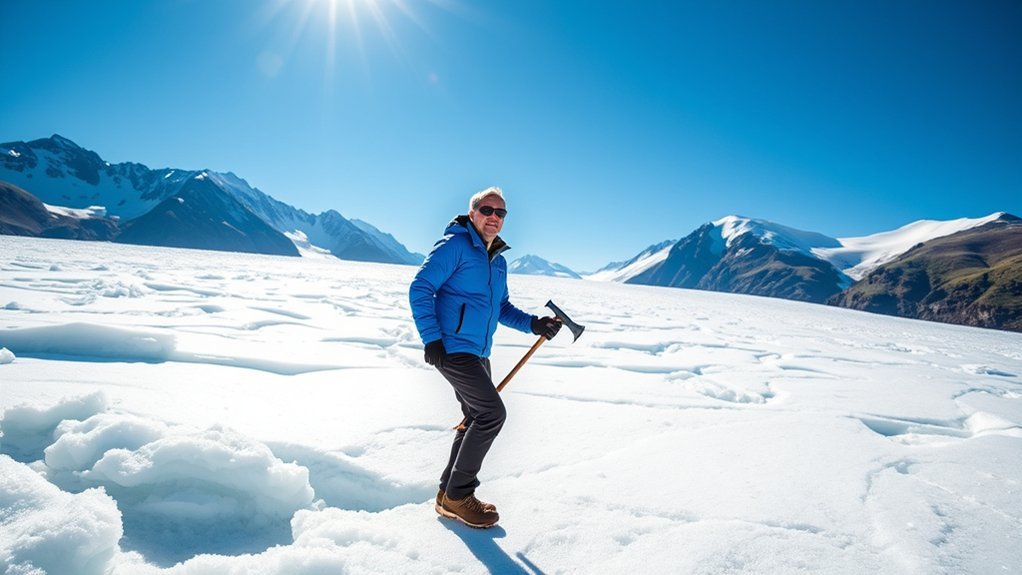
Ice climbing and glacier travel are technical activities. Glacier surfaces can contain crevasses, moulins, unstable ice, meltwater, and rapidly changing routes. Crampons and other glacier equipment are appropriate for properly planned technical excursions, not for ordinary walking around the visitor center.
Warning: Do not treat glacier ice or an ice cave as a normal self-guided trail. Ice caves change, collapse, and disappear as the glacier moves and melts. If you want to travel onto the glacier, use a qualified operator and follow current Forest Service conditions and closures.
Wildlife Viewing Opportunities
The Mendenhall area supports much more than glacier scenery. Alaska Department of Fish and Game highlights black bears, occasional brown bears, mountain goats, beavers, terns, salmon, and a wide range of other birds around the recreation area.
Common Wildlife Species
Black bears are the wildlife most visitors hope to see, particularly when salmon return to Steep Creek. Bears may feed close to the elevated viewing areas, but they remain wild animals and need space.
Mountain goats can sometimes be spotted high on the surrounding slopes. Beavers live around ponds and streams, while bald eagles and other birds are common in Southeast Alaska. Arctic terns also use the Mendenhall area seasonally.
The easiest way to improve your chances of seeing wildlife is to slow down, use binoculars, and spend time around designated viewing areas rather than chasing animals away from the trail.
Best Viewing Seasons
Spring and early summer bring active birdlife and long daylight hours. During summer, vegetation fills out around ponds, streams, and forest edges.
Salmon return to Steep Creek from roughly July through September. Their arrival attracts bears, with August and September particularly well known for accessible black-bear viewing.
Winter is much quieter around the visitor facilities, but mountain goats and resident birds can still be present. Snow, ice, shorter daylight, and limited visitor-center hours make winter a different experience from a summer visit.
Responsible Wildlife Observation
Watching wildlife is one of the highlights of Mendenhall Glacier, but your behavior affects both the animals and other visitors.
- Keep your distance: Use binoculars or a zoom lens instead of approaching wildlife.
- Stay on designated trails: This protects habitat and gives bears predictable space.
- Never run from a bear: Stay calm and follow posted Forest Service or ranger instructions.
- Keep food controlled: Follow all posted restrictions around Steep Creek and bear-viewing areas.
- Keep dogs leashed: Forest Service guidance requires dogs to remain on leash.
- Keep noise low: Quiet observation gives you a better wildlife experience and reduces disturbance.
For current species and viewing guidance, see the Alaska Department of Fish and Game Mendenhall Glacier wildlife page.
Safety Tips for Glacier Exploration
Mendenhall is easy to reach compared with many Alaska glaciers, but that does not make every part of the landscape safe. Normal visitor-center sightseeing and technical glacier travel are very different activities.
For ordinary hiking, wear sturdy shoes with good traction, dress in layers, and carry a waterproof outer layer. Stay on marked trails and respect closure signs. You normally do not need crampons for the developed visitor trails.
If your trip involves Mendenhall Lake, remember that glacial water is extremely cold and winds can rise quickly. Use an appropriate personal flotation device and suitable cold-water equipment, preferably as part of a professionally guided excursion.
Bear safety also matters. Stay on trails, avoid approaching wildlife, control food and flavored drinks where required, and never run from a bear.
A separate seasonal hazard is glacial lake outburst flooding from Suicide Basin. These releases can raise Mendenhall Lake and River rapidly and have forced closures in recent years, including during August 2026. The U.S. Geological Survey maintains Mendenhall glacial-outburst-flood monitoring information.
Warning: Never cross flooded trails, approach unstable riverbanks, or ignore a recreation-area closure. Glacier-related flooding can change conditions rapidly and may affect trails near Mendenhall Lake as well as roads and facilities elsewhere in the valley.
Nearby Attractions and Amenities
After viewing Mendenhall Glacier, you can spend several more hours exploring the same recreation area without traveling far.
- Mendenhall Lake: Walk the shoreline and enjoy wide views toward the glacier and surrounding mountains.
- Nugget Falls: Follow the approximately 2-mile round-trip trail to the powerful waterfall near the lake.
- Steep Creek: Visit the boardwalk and viewing area for salmon and seasonal bear activity.
- Trail of Time and East Glacier Trail: Explore the temperate rainforest and land uncovered by the retreating glacier.
- Juneau Icefield: For a wider aerial perspective, permitted flightseeing and guided excursions can reveal the much larger icefield feeding Mendenhall and neighboring glaciers.
The visitor-center area also provides restrooms, interpretive information, viewing areas, and seasonal services. If you plan a longer hike, carry water and anything else you need rather than assuming food or supplies will be available along the trail.
Frequently Asked Questions
Are there age restrictions for glacier tours?
There is no general minimum age for visiting the Mendenhall Glacier recreation area or walking its public trails. Guided kayaking, helicopter, glacier trekking, and ice-climbing operators may set their own minimum ages, fitness requirements, or weight restrictions, so requirements depend on the activity.
Can I bring my pet to Mendenhall Glacier?
Yes. Forest Service guidance allows dogs in the recreation area but requires them to remain on leash. Keep pets close around bears, salmon streams, crowds, and other wildlife, and follow any posted restrictions at specific facilities.
Is there an entrance fee for Mendenhall Glacier?
During the 2026 summer season, the visitor-center fee area costs $5 for visitors age 16 and older from May 1 through September 30. Visitors age 15 and younger are free. Transportation, commercial shuttles, and guided tours have separate charges.
What should I wear for glacier activities?
For visitor-center trails, wear comfortable hiking shoes, moisture-managing layers, and a waterproof jacket. Bring a warmer layer even in summer. Technical glacier trips require specialized equipment supplied or specified by the tour operator; ordinary visitors do not need crampons for standard recreation-area trails.
Are restrooms available near the glacier?
Yes. Restrooms are available in the Mendenhall Glacier Visitor Center area. If you use Capital Transit, remember that there are no restrooms along the approximately 1.5-mile walk between the Dredge Lake Road bus stop and the visitor center.
How long should I spend at Mendenhall Glacier?
Allow about two to three hours for the visitor center, viewpoints, and Nugget Falls. A longer trail can turn the visit into a half-day outing. If you travel from downtown on Capital Transit, plan roughly four to five hours overall because of the bus ride and 1.5-mile walk each way.
Does the Juneau city bus go directly to Mendenhall Glacier?
No. Capital Transit buses stop at Dredge Lake Road, about 1.5 miles from the visitor center. Routes 3, 4, and 8 serve the area, and you then walk approximately 30 minutes along a paved route to the glacier visitor area.
Can I walk onto Mendenhall Glacier or visit an ice cave on my own?
You should not treat glacier travel or ice caves as ordinary self-guided sightseeing. Glacier ice can contain hidden crevasses, moulins, unstable cave roofs, meltwater, and rapidly changing routes. Use a qualified guide for technical glacier access and follow current Forest Service conditions and closures.
Conclusion
Mendenhall Glacier remains one of Juneau’s most rewarding places to experience Alaska’s ice, rainforest, waterfalls, and wildlife in one trip. The best visit is not about getting as close to the ice as possible. Give yourself enough time to enjoy the viewpoints, walk to Nugget Falls, watch for salmon and bears, and understand how quickly this landscape is changing. With realistic transportation planning, waterproof clothing, and respect for trail, wildlife, glacier, and flood warnings, you can enjoy Mendenhall safely while seeing one of Southeast Alaska’s most dynamic natural areas.
Sources
- USDA Forest Service — Mendenhall Glacier Visitor Center Brochure and Map — trail distances, recreation-area rules, dogs, bear safety, and visitor facilities.
- Travel Juneau — Mendenhall Glacier Visitor Center — 2026 visitor-center hours, grounds hours, location, and summer fee.
- Capital Transit — How to Ride to the Mendenhall Glacier Visitor Center — current routes, bus-stop distance, walking time, restrooms, and travel time.
- Alaska Department of Fish and Game — Mendenhall Glacier Wildlife Viewing — bears, salmon, mountain goats, beavers, terns, and wildlife seasons.
- KTOO — Mendenhall Glacier Receded From Mendenhall Lake — November 2025 glacier-status update featuring University of Alaska Southeast scientists.
- U.S. Geological Survey — Mendenhall Glacial Outburst Flood Monitoring — current flood science and safety context.