Disclosure: As an Amazon Associate, we earn from qualifying purchases. If you click a link on this page and make a purchase, we may receive a small commission at no extra cost to you.
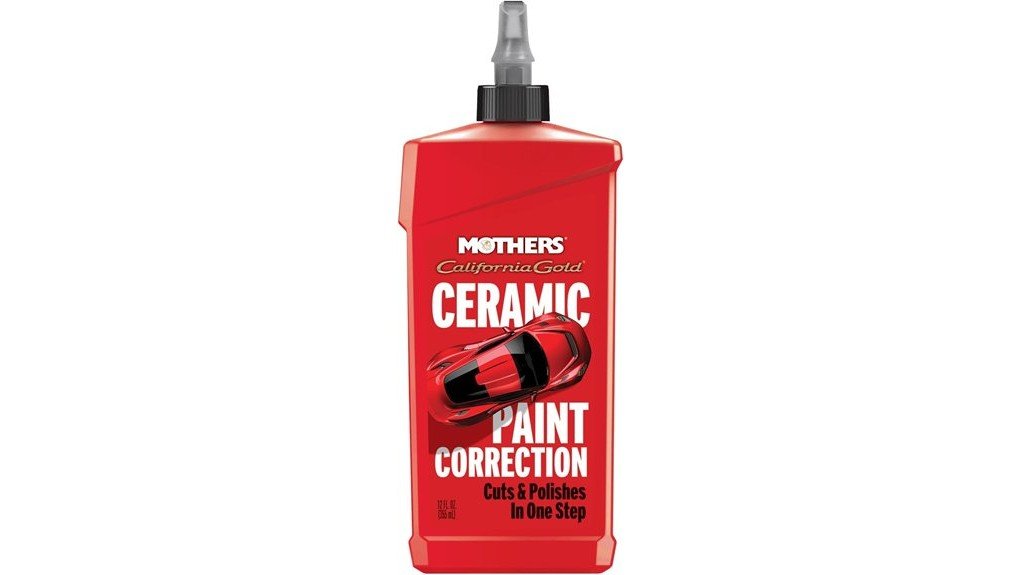
Swirl marks, water spots, light scratches, and oxidation can make otherwise healthy paint look tired. Mothers California Gold Ceramic Paint Correction 01712 is a 12 fl. oz. one-step correction product made to cut and polish automotive paint before you add wax, sealant, or a ceramic coating. It can improve clarity and gloss when the defects are within the upper paint or clear-coat surface, but it cannot replace missing paint or repair failed clear coat. This review explains what it can correct, how to use it safely, and when a different repair method makes more sense.
Quick Verdict
Rating: 8/10, recommended with caveats
Best For: DIY detailers who want one product for light-to-moderate swirls, oxidation, water spots, hazing, and pre-coating paint refinement.
Bottom Line: The medium-cut formula and hand-or-machine application make model 01712 flexible for correcting intact glossy paint. The tradeoff is that you must work in small sections, remove it while wet, and accept that deep scratches or damaged clear coat need more than polishing.
Key Takeaways
- The verified product is Mothers California Gold Ceramic Paint Correction, model 01712, supplied in one 12 fl. oz. bottle.
- It combines cutting and polishing in one correction step for defects such as swirls, oxidation, water spots, towel marks, hazing, and holograms.
- You can apply it by hand or with a polishing machine, but a machine is usually more consistent across full panels.
- The label directions call for a clean, dry, cool surface and small working areas of about 1 to 2 square feet.
- You should remove the residue while it is still wet. Do not wait 15 to 30 minutes or let the product dry on the paint.
- It is a paint-correction product, not a replacement for touch-up paint, clear-coat repair, or a dedicated long-term ceramic coating.
| Specification | Verified Detail |
|---|---|
| Brand | Mothers |
| Product name | California Gold Ceramic Paint Correction |
| Model / product number | 01712 |
| ASIN | B0DMQM3ZYQ |
| Net content | 12 fl. oz. / 355 mL |
| Product type | One-step automotive cutting and polishing compound |
| Grit type | Medium |
| Compatible material | Automotive paint |
| Application | By hand or polishing machine with a clean microfiber, buffer pad, or suitable applicator |
| Working area | About 1 to 2 square feet at a time |
| Surface condition | Clean, dry, and cool |
| Residue removal | Remove while wet with a clean, dry microfiber towel |
| Target defects | Scratches, swirls, oxidation, water spots, towel marks, hazing, holograms, and similar paint imperfections |
| Best follow-up | Wax, sealant, or ceramic coating after the corrected paint is clean and residue-free |
| Package contents | One 12 fl. oz. bottle; pads and towels are not listed as included |
Before You Buy: Check the scratch with a clean fingernail. If it catches sharply, shows primer or bare metal, or sits beside peeling clear coat, this product may only soften its appearance. Touch-up paint, sanding by an experienced detailer, clear-coat repair, or bodywork may be required.
What Is Mothers California Gold Ceramic Paint Correction?
Mothers California Gold Ceramic Paint Correction 01712 is a medium-grit liquid compound that cuts and polishes in one working step. Mothers positions it for removing or reducing common defects while restoring color, gloss, depth, and clarity to automotive paint.
It also prepares paint for wax, sealant, or ceramic protection. The correction step improves the visible surface, but this bottle is not a replacement for a dedicated coating.
The formula includes polishing agents such as alumina, calcined kaolin, and silicon dioxide, along with water, solvents, mineral oil, cleaning agents, thickeners, and a preservative. Those ingredients support cutting, polishing, lubrication, and product stability, but they also mean you should follow the label rather than assuming the formula is chemical-free.
Who Should Buy It?
Best For
- DIY detailers correcting light-to-moderate swirls, oxidation, water spots, hazing, or towel marks on intact glossy paint.
- Car owners preparing paint before applying a separate wax, sealant, or ceramic coating.
- Enthusiasts who want the flexibility to correct small spots by hand and larger panels with a machine.
Skip If
- Your vehicle has peeling clear coat, exposed primer, bare metal, rust, or scratches that need paint repair.
- You have matte paint, vinyl wrap, paint protection film, or a specialty finish without confirmation that abrasive correction is safe.
- You only want a wipe-on gloss booster and do not want to wash, inspect, polish, and remove residue section by section.
Correction Performance and Finish Quality
The product’s main advantage is its combined cutting and finishing action. A medium-grit correction liquid can level fine surface defects more effectively than a wax that mainly adds gloss or temporarily fills marks. Mothers lists swirls, oxidation, water spots, towel marks, hazing, holograms, and scratches among the defects it targets.
Results depend on defect depth, paint hardness, pad choice, pressure, passes, and lighting. Stop when the test area meets your goal because correction removes a small amount of the upper surface. If careful passes do not create a safe improvement, seek professional inspection.
Ceramic Finish and Protection Expectations
The product name emphasizes a ceramic finish and preparation for ceramic protection. Buy it first for correction and gloss, not as a substitute for a coating with its own curing and durability instructions. Before adding protection, complete any panel-prep step required by that product.
Application by Hand or Machine
Hand Application
Hand application is practical for small scratches, isolated water spots, areas around door handles, narrow pillars, or a test spot. Use a soft, clean microfiber or suitable applicator, work with overlapping motions, and keep the section within the label’s 1-to-2-square-foot guidance.
Hand work takes more effort and can finish unevenly across large panels.
Machine Application
A dual-action or orbital polisher can provide more even coverage on larger panels. Start with a clean pad and conservative speed and pressure, keep the pad flat, and avoid dry edges and body lines. No single machine setting suits every tool and clear coat.
Pro Tip: Make a test spot of about 1 square foot under strong inspection lighting. Use the least aggressive pad and process that gives an acceptable result, then repeat that combination across the rest of the panel.
Paint Compatibility and Surface Fit
The listing identifies automotive paint as compatible, but pad choice, pressure, and passes still depend on the finish. Test older paint, repainted panels, thin edges, unknown finishes, and heavy oxidation first.
Do not polish matte or satin paint without manufacturer approval because abrasion can create a glossy patch. Vinyl wrap and paint protection film also require product-specific confirmation.
Surface Preparation Before Correction
Wash and dry the vehicle, then inspect for tar, sap, iron fallout, overspray, or other bonded contamination. Decontaminate rough paint before polishing. Work on a cool panel out of direct sun, mask delicate trim when needed, and use clean pads and towels.
How It Performs in Real Use
For Daily Driver Swirls
On a daily driver with wash-induced swirls and light haze, the one-step cut-and-polish format can improve reflection without requiring separate compound and finishing-polish bottles. A machine may give the most even result across doors, hood, and trunk, while a hand test spot can show how the clear coat responds.
For Water Spots and Towel Marks
Mothers lists water spots and towel marks among the intended defects. The product may correct marks that sit within the polishable surface, but it cannot guarantee removal of deep mineral etching. If a careful test pass leaves a sharp outline, stop before over-polishing and consider professional evaluation.
For Older or Oxidized Paint
Light or moderate oxidation can respond with improved color and clarity when healthy paint remains. Severe chalking, thin single-stage paint, or clear-coat failure requires more caution. A test spot is essential because older surfaces can transfer color, heat quickly, or reveal damage that gloss products had hidden.
For Pre-Coating Detailing
Before applying a ceramic coating, this product can reduce visible swirls and haze that the coating would otherwise lock in. Remove the correction residue fully, inspect under strong light, and complete any panel-prep process required by the coating manufacturer before application.
How to Use It Correctly
- Wash and dry the vehicle: Remove loose dirt and road film, then deal with bonded contamination when necessary.
- Cool the surface: Work out of direct sunlight on paint that is clean, dry, and cool.
- Shake the bottle: Shake well before and during use so the polishing ingredients stay evenly mixed.
- Prepare a test spot: Put a small amount on a clean microfiber, buffer pad, or suitable applicator.
- Work a small section: Polish about 1 to 2 square feet with overlapping motions until the surface looks clean and clear.
- Remove it while wet: Wipe the product off with a clean, dry microfiber towel. Do not let it dry on the paint.
- Inspect the result: Check from several angles under good lighting before deciding whether another careful pass is needed.
- Add protection: Once the surface meets the follow-up product’s prep requirements, apply your chosen wax, sealant, or ceramic coating.
Common Mistakes to Avoid
- Polishing dirty paint: Grit can create fresh scratches and contaminate your pad.
- Working in direct sun: A hot panel shortens working time and can make residue harder to control.
- Letting the product dry: The verified directions say to remove it while wet.
- Starting too aggressively: A hard pad, excessive pressure, or repeated passes can remove more clear coat than needed.
- Using one dirty towel or pad for the whole car: Loaded material reduces consistency and can drag contamination across the finish.
- Expecting paint repair: Compounding can reduce surface defects, but it cannot replace missing color coat or clear coat.
Safety and Material Notes
The ingredient disclosure lists water, polishing agents, solvents, mineral oil, surfactants, thickeners, and a preservative. This does not support calling the product free from harmful chemicals or VOCs.
Follow the bottle and Safety Data Sheet. Use ventilation, avoid eye contact and prolonged skin contact, wash after use, and keep it away from children and pets. Store it closed and labeled, and clean correction towels and pads separately.
Pros and Cons
Pros
- Combines medium cutting and polishing in one correction product.
- Targets several common defects, including swirls, oxidation, water spots, hazing, and towel marks.
- Works by hand for spot correction or by machine for larger panels.
- Provides clear label guidance for small working sections and wet residue removal.
- Prepares intact paint for a separate wax, sealant, or ceramic coating.
Cons
- Cannot repair deep scratches, missing paint, rust, peeling clear coat, or body damage.
- Requires clean pads, good lighting, small sections, and careful technique for even results.
- The package is a single bottle; applicators, machine pads, inspection lights, and towels may be separate purchases.
Is It Worth the Price?
It offers practical value when you want one DIY product for cutting, polishing, and preparing intact paint for protection. The 12 fl. oz. bottle suits spot work, test sections, or a controlled vehicle correction when you already own suitable towels and applicators.
It offers less value when the paint needs repair, you must buy a full polishing setup for one scratch, or you expect a lasting ceramic coating from the correction step.
How It Compares to Alternatives
Mothers California Gold Scratch Remover 08408 is the simpler comparison for isolated light scratches and scuffs. Model 01712 makes more sense when you also want broader swirl, oxidation, water-spot, and pre-coating correction across larger painted areas.
Chemical Guys VSS Scratch & Swirl Remover is another one-step compound-and-polish option aimed at light-to-moderate defects. Compare bottle size, machine guidance, finish goals, and your preferred detailing system. For severe defects, a dedicated compound-and-polish process or professional paint measurement offers more control than either one-step product.
Frequently Asked Questions
Is Mothers California Gold Ceramic Paint Correction safe for every paint finish?
The listing identifies automotive paint as the compatible material, but abrasive correction is not automatically suitable for every finish. Test intact glossy paint first, and get specific approval before using it on matte paint, wraps, paint protection film, repainted panels, or unknown coatings.
Can you apply model 01712 by hand?
Yes. The verified directions permit hand or machine use. Hand application is best for a test spot or small area, while a dual-action or orbital machine is usually more consistent across full panels.
How long should the product dry before you wipe it off?
It should not dry on the paint. Work one 1-to-2-square-foot section until the surface looks clean and clear, then remove the product while wet with a clean, dry microfiber towel.
Can it remove a scratch that catches your fingernail?
It may reduce the contrast around a deeper scratch, but a sharp fingernail catch often means the damage extends too far for safe polishing alone. Stop if primer, bare metal, or failed clear coat is visible and consider touch-up or professional repair.
Should you use it before or after a ceramic coating?
Use it before the coating to correct visible defects and refine the paint. After correction, follow the coating maker’s panel-prep instructions so polishing residue does not interfere with bonding.
How often should you correct the paint?
There is no verified fixed six-month schedule for this product. Correct only when the paint condition justifies it, use the least aggressive effective process, and avoid repeated polishing when simple washing or protection maintenance will solve the problem.
Do you need to clay the paint first?
Not every vehicle needs clay, but bonded contamination should be removed before polishing. After washing, inspect and feel the paint through a clean plastic bag; if it remains rough, use a suitable decontamination method before correction.
What comes in the package?
The verified listing includes one 12 fl. oz. bottle of Mothers California Gold Ceramic Paint Correction. It does not list microfiber towels, hand applicators, machine pads, or a polisher as included components.
The Bottom Line
Mothers California Gold Ceramic Paint Correction 01712 is a strong one-step option for owners of intact glossy paint who want to reduce common surface defects and prepare the finish for protection. Its flexible hand-or-machine use and clear small-section directions are useful, but it cannot repair deep scratches, specialty finishes, or failed clear coat.
Buy it for controlled DIY correction of swirls, oxidation, water spots, haze, and similar defects. Skip it when the paint needs touch-up, repainting, film-specific care, or professional restoration.
Ready to Buy?
Check the latest price, seller, package details, and label directions before you decide.