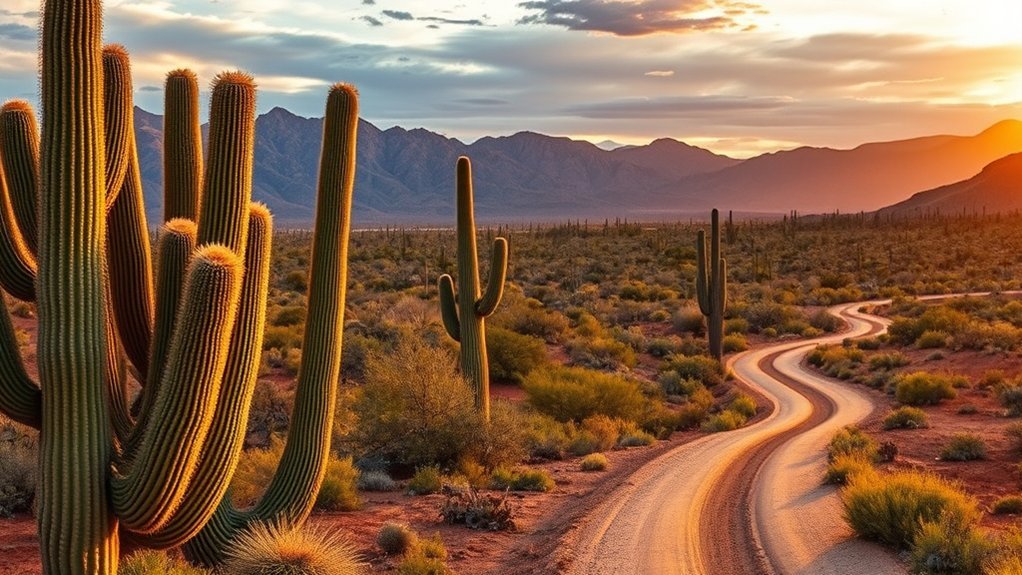
Visiting Organ Pipe Cactus National Monument takes you into the heart of the Sonoran Desert, where massive multi-branched cacti rise against rugged volcanic mountains. Located in southern Arizona along the international border, this remote preserve offers scenic loop drives, uncrowded wilderness trails, exceptional dark-sky stargazing, and rare plant communities found nowhere else in the United States. This complete visitor guide covers everything you need to know about fees, camping, scenic drives, top hikes, desert safety, and nearby gateway services in Ajo.
Quick Answer
The best time to visit Organ Pipe Cactus National Monument is from December through March, when daytime temperatures hover in the comfortable 60s to 70s Fahrenheit. Standard entry costs $25 per vehicle (valid for 7 days) or is free with an America the Beautiful Interagency Pass. Must-see highlights include driving the 21-mile Ajo Mountain Drive, hiking the Bull Pasture Trail, and exploring the rare desert oasis at Quitobaquito Springs.
Key Takeaways
- Peak Season: Winter and early spring bring mild hiking conditions; March offers desert wildflowers, while May and June bring night-blooming organ pipe cactus flowers.
- Camping Choices: Twin Peaks Campground offers 208 developed sites with restrooms and solar showers (reservable on Recreation.gov), while Alamo Canyon provides 4 primitive, dry tent sites.
- Scenic Drives: The 21-mile Ajo Mountain Drive is accessible to most passenger vehicles, whereas portions of the 37-mile Puerto Blanco Drive require high clearance.
- Border Safety: The monument borders Mexico; stay on official trails, carry government ID for the northbound State Route 85 Border Patrol checkpoint, and pack at least one gallon of water per person per day.
How Big Is Organ Pipe Cactus National Monument?
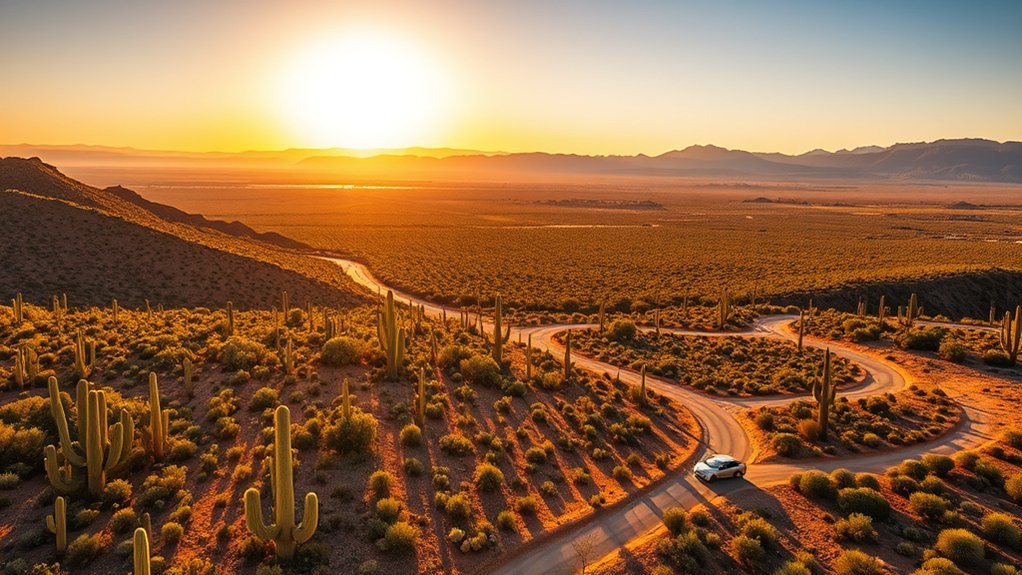
Covering roughly 516 square miles (330,689 acres) of pristine Sonoran Desert terrain, Organ Pipe Cactus National Monument protects an immense, rugged ecosystem established as a national monument in 1937. More than 95% of the park is federally designated wilderness, preserving sweeping desert expanses, bajadas, and volcanic mountain ranges in an undisturbed natural state.
In recognition of its unique ecological value, the monument was designated an International Biosphere Reserve by UNESCO in 1976. The monument shelters over 650 vascular plant species, roughly 270 to 300 bird species, and diverse desert wildlife. It remains the only place in the United States where wild populations of the organ pipe cactus (Stenocereus thurberi) grow in significant abundance alongside towering saguaros and rare senita cacti.
When to Visit and Weather Considerations
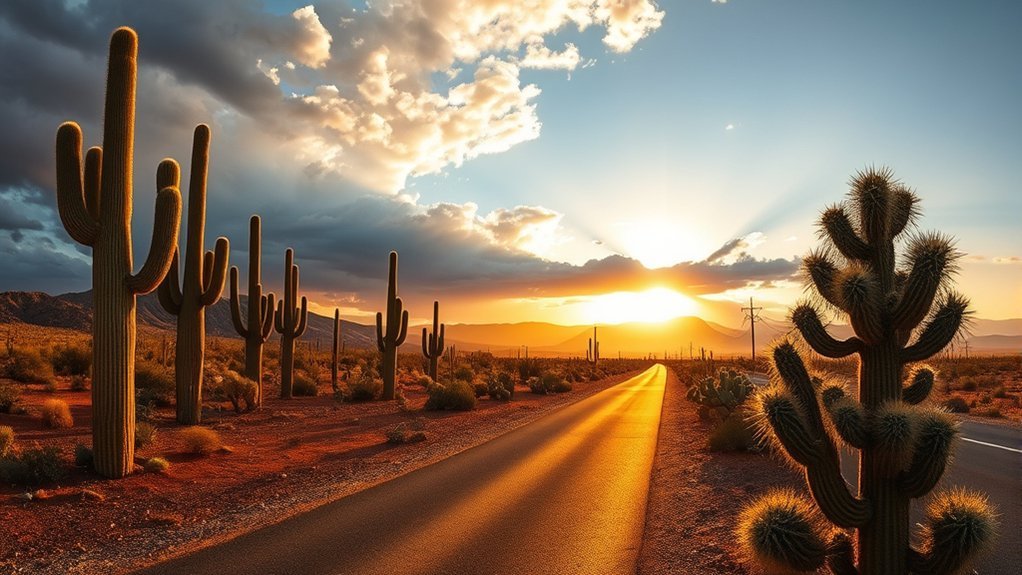
Weather dictates the safety and enjoyment of any trip to the Sonoran Desert. Understanding seasonal shifts and daily temperature swings ensures you pack properly and choose the right activities for each time of year.
Best Months to Go
The premier window for hiking, sightseeing, and camping is December through March. Daytime temperatures during these months are comfortably mild, generally averaging between 65°F and 75°F. Winter offers clear skies, low humidity, and minimal heat risks.
- Winter (December–February): Prime hiking season with comfortable afternoon temperatures, crisp mornings, and excellent stargazing.
- Spring (March–April): Peak wildflower blooms blanket desert washes in March; daytime highs climb into the 80s and low 90s.
- Cactus Bloom Season (May–June): Organ pipe and saguaro cacti bloom with dramatic night-opening flowers, but daytime highs consistently surpass 100°F.
- Summer Monsoon (July–September): Dangerous heat regularly exceeds 105°F to 110°F, accompanied by localized afternoon lightning storms and flash flooding.
Daytime vs. Nighttime Temperatures
Desert air holds very little humidity, causing rapid radiational cooling once the sun dips below the horizon. While winter daytime highs reach the upper 60s or low 70s, nighttime temperatures routinely plunge into the 40s and occasionally dip into the 30s. Visitors should dress in breathable layers during the day and keep warm fleece jackets, beanies, and insulated sleeping gear ready for evening campfires and astronomy sessions.
Weather Hazards and Desert Safety
The Sonoran Desert environment demands respect. Summer heat-related illnesses like heat exhaustion and heat stroke can develop rapidly during strenuous physical activity. During the summer monsoon season (July through September), sudden downpours can transform dry washes into violent torrents within minutes, cutting off unpaved access roads.
Warning: Carry a minimum of one gallon (4 liters) of drinking water per person per day. Never enter running washes or flooded dips in the road during monsoon storms—turn around, don’t drown.
How Much Does It Cost to Visit Organ Pipe?
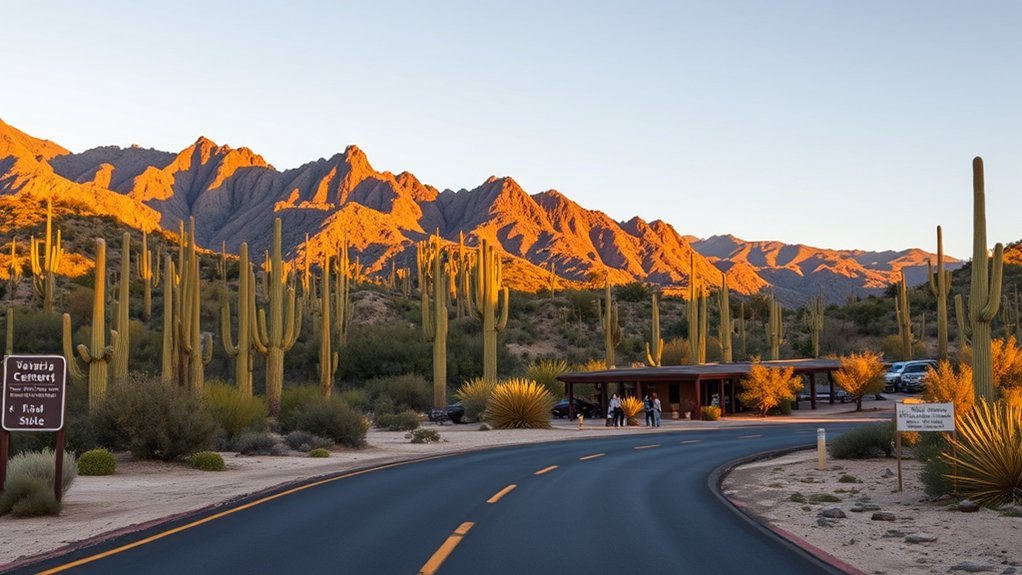
Visiting Organ Pipe Cactus National Monument requires a standard recreation entrance fee or a valid federal interagency pass:
- Private Vehicle Pass ($25): Valid for 7 consecutive days for all passengers in a single non-commercial vehicle.
- Motorcycle Pass ($20): Valid for 7 consecutive days for individuals on a motorcycle.
- Individual / Pedestrian Pass ($15): For visitors arriving on foot or bicycle.
- America the Beautiful Interagency Pass ($80 annually): Grants unlimited entrance to Organ Pipe and over 2,000 federal recreation sites nationwide. Senior, Military, Access, and 4th Grade passes are also honored.
Fees can be paid at the Kris Eggle Visitor Center or purchased in advance online through Recreation.gov.
Camping and Overnight Options
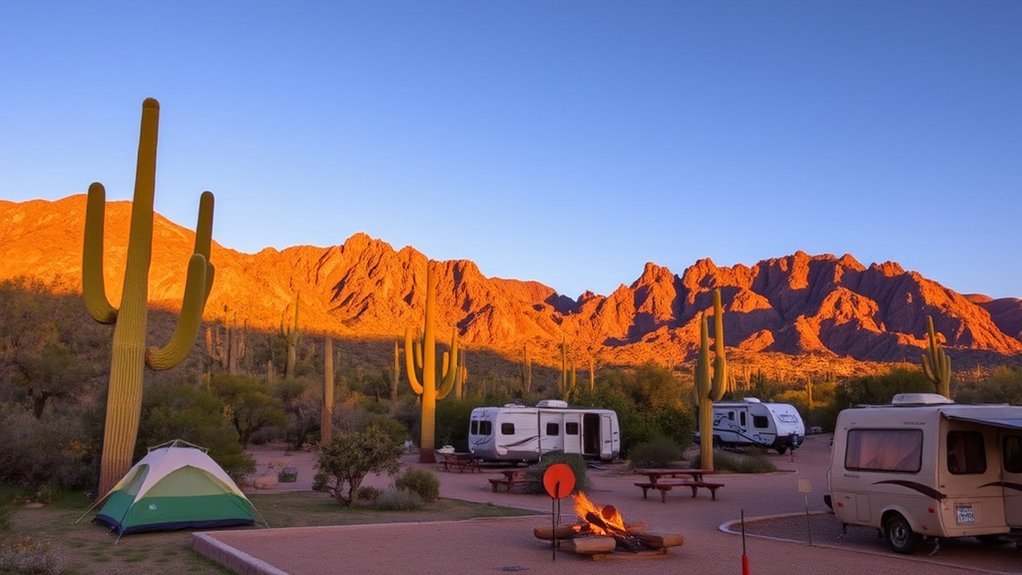
There are two established campgrounds within the monument, offering distinct experiences depending on your vehicle setup and preference for amenities.
| Campground | Sites & Fee | Key Amenities | Reservations |
|---|---|---|---|
| Twin Peaks Campground | 208 sites (174 RV, 34 tent-only) $20/night |
Restrooms with flush toilets, solar showers, potable water, RV dump station, grills (no electric hookups). | Reservations required during peak winter/spring via Recreation.gov. |
| Alamo Canyon Campground | 4 primitive tent-only sites $12/night |
Vault toilet, picnic tables, trash cans. NO water or showers. Pack-it-in, pack-it-out. | Reserve online via Recreation.gov. |
Pro Tip: For free dispersed camping, head just north of the monument boundary to Bureau of Land Management (BLM) land at Gunsight Wash or Darby Well Road near Why and Ajo. These primitive BLM sites allow up to 14 days of free dry camping.
Scenic Drives and Best Routes
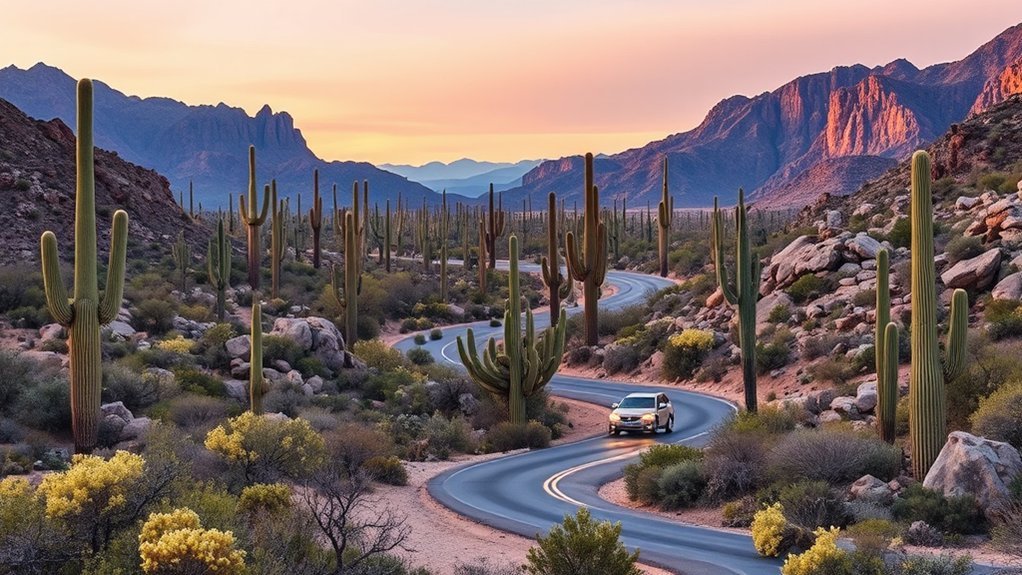
Driving the monument’s maintained backroads provides an intimate look at dramatic desert topography, rare vegetation, and historic mining remains. Before setting out, stop by the Kris Eggle Visitor Center for current road condition reports and interpretive route guides.
Ajo Mountain Drive (21 Miles)
The Ajo Mountain Drive is the premier scenic loop in the monument. This 21-mile, one-way gravel road hugs the base of the towering Ajo Range, winding through dense stands of saguaros, organ pipe cacti, and ocotillos. Standard passenger cars and minivans can easily negotiate this graded road under dry conditions, though RVs over 25 feet and trailers are prohibited due to tight switchbacks and deep dips.
- Time Commitment: 2 to 3 hours at a leisurely sightseeing pace.
- Highlights: Numbered interpretive pullouts, Diablo Canyon, and trailheads for Arch Canyon and Estes Canyon.
- Best Light: Morning light illuminates the red volcanic cliffs of the Ajo Mountains beautifully for landscape photography.
Puerto Blanco Drive and Quitobaquito Springs (37 Miles)
The 37-mile Puerto Blanco Drive provides a deeper backcountry experience encircling the Puerto Blanco Mountains. The route is divided into two distinct halves:
- South Puerto Blanco Drive: A two-way, graded gravel road suitable for standard passenger vehicles that leads to the historic oasis at Quitobaquito Springs near the international border.
- North Puerto Blanco Loop: A rugged, one-way backcountry section featuring deep sand, rocky ledges, and wash crossings where a high-clearance vehicle is strongly recommended.
Note on Quitobaquito Springs: Fed by natural desert springs along the El Camino del Diablo route, Quitobaquito Pond sustains lush cottonwoods and two critically endangered species: the Sonoran mud turtle and the tiny Quitobaquito pupfish (Cyprinodon eremus).
Hiking Trails and Desert Preparation Tips
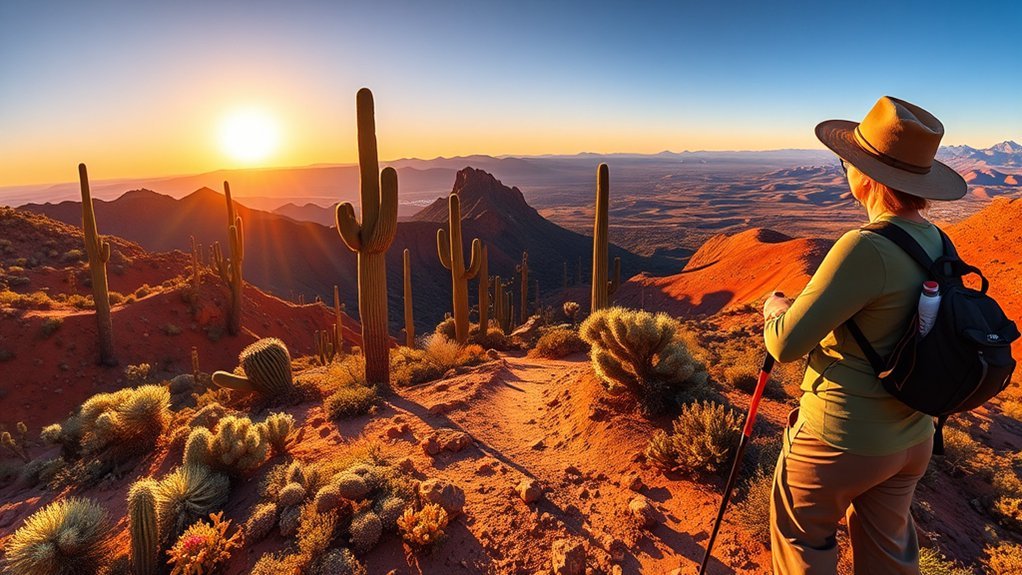
Hiking trails in Organ Pipe range from short, level nature walks to demanding mountain ascents with expansive panoramas over the desert basin.
| Trail Name | Distance & Difficulty | Highlights |
|---|---|---|
| Desert View Trail | 1.2-mile loop Easy |
Departs directly from Twin Peaks Campground; scenic ridgeline benches with panoramic sunset views. |
| Arch Canyon Trail | 1.2 miles round-trip Moderate |
Ascends into an oak-lined canyon on Ajo Mountain Drive to view a dramatic natural rhyolite stone arch. |
| Estes Canyon / Bull Pasture Loop | 3.7 to 4.1-mile loop Strenuous |
Climbs roughly 1,000 feet of rocky switchbacks into a high plateau used by historic cattle rustlers, with sweeping views toward Mexico. |
| Victoria Mine Trail | 4.2 miles round-trip Easy to Moderate |
Rolling path from Twin Peaks Campground leading to the historic stone storehouse and ruins of one of the area’s oldest silver and gold mines. |
“In the Sonoran Desert, your hydration strategy begins before you step on the trail. Drink water continuously, protect your skin from the intense sun, and turn around when half your water supply is gone.”
Wildlife, Plants, and Notable Natural Features
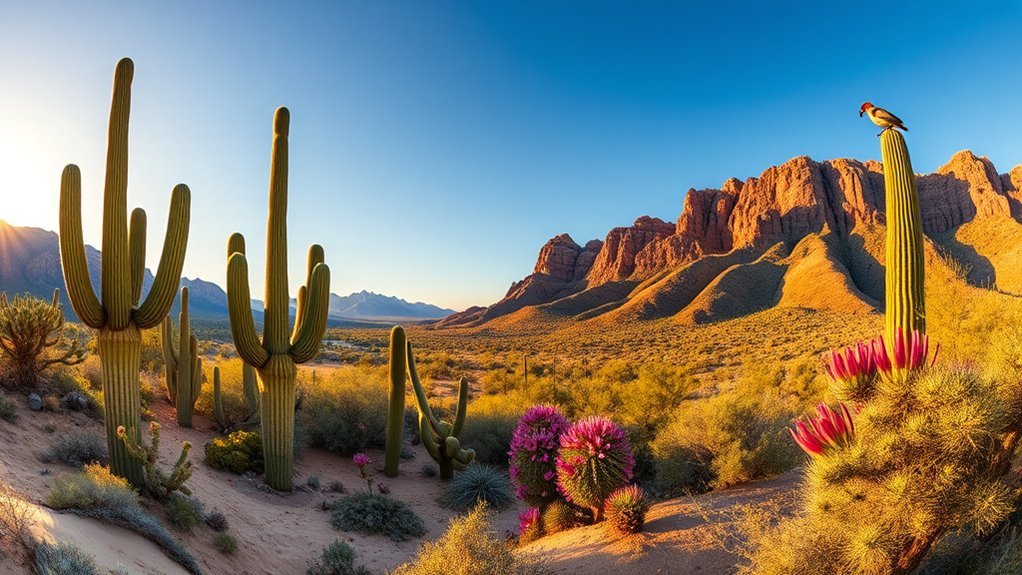
Organ Pipe Cactus National Monument sits in a unique botanical transition zone where five distinct desert plant communities converge. The monument gets its name from the organ pipe cactus, whose slender, ribbed columns branch upward from a single base near the ground, reaching heights of up to 25 feet and living over 150 years.
- Desert Flora: In addition to organ pipes, you will encounter ancient saguaros, chain-fruit chollas, teddy bear chollas, barrel cacti, ironwood trees, and ocotillos.
- Mammals and Reptiles: The backcountry provides refuge for desert bighorn sheep, javelinas (collared peccaries), coyotes, kit foxes, venomous Gila monsters, and Sonoran desert tortoises.
- Night-Flying Pollinators: During early summer, the endangered Lesser Long-nosed Bat (Leptonycteris yerbabuenae) migrates north to feed on nectar and pollinate nocturnal organ pipe and saguaro flowers.
- Certified International Dark Sky Park: Certified in 2019 by DarkSky International, the monument features virtually zero artificial light pollution, making it one of the premier destinations in North America for viewing the Milky Way and seasonal meteor showers.
Visiting Ajo and Nearby Gateway Services
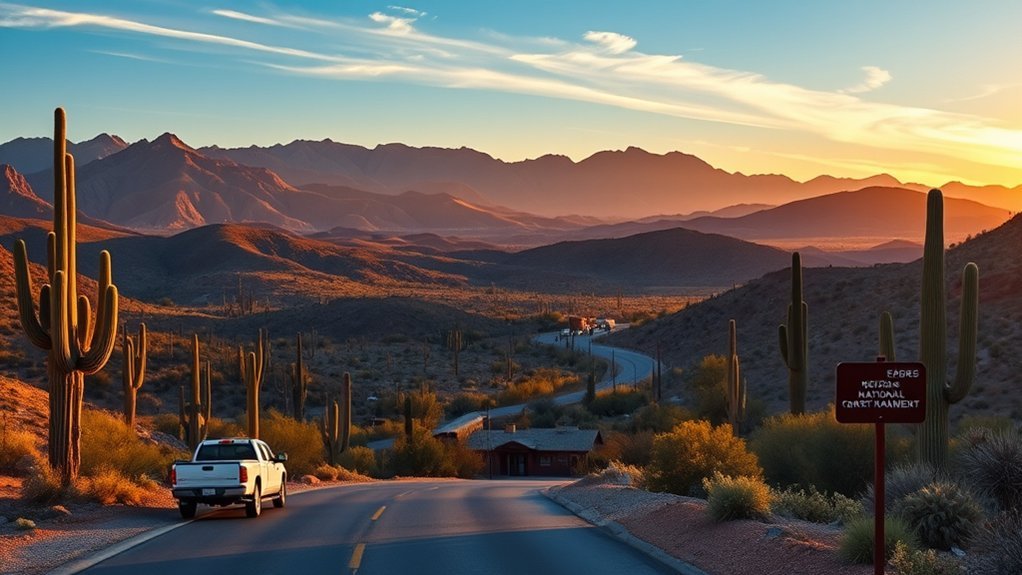
Organ Pipe is remote, with no fuel, lodging, or grocery stores located inside the monument boundaries. The historic mining town of Ajo, located 30 miles (about 35 minutes) north on Arizona State Route 85, serves as the primary basecamp for visitors.
- Lodging and Dining: Ajo features boutique motels, historic bed-and-breakfasts (such as the Curley School and Sonoran Desert Inn), Mexican cafes, and local diners.
- Fuel and Supplies: Fill your gas tank and stock up on groceries, ice, and drinking water in Ajo or at the Why, Arizona highway junction (22 miles north of the visitor center).
- Cultural Attractions: Explore Ajo’s historic Spanish Colonial Revival plaza, the Ajo Historical Society Museum, and the colorful street art murals in Artist Alley.
- International Border Crossing: Five miles south of the visitor center lies Lukeville, Arizona, the port of entry leading into Sonoyta, Mexico and continuing onward to the beach resort community of Puerto Peñasco (Rocky Point).
Frequently Asked Questions
Are pets allowed on trails and in the monument?
Pets are welcome in developed areas such as campgrounds, picnic areas, and paved roadways, but they must be kept on a leash no longer than 6 feet at all times. For their safety and the protection of wildlife, pets are restricted to only two designated hiking trails: the Palo Verde Trail (linking the campground and visitor center) and the Campground Perimeter Trail. Pets are strictly prohibited on all other backcountry and wilderness hiking trails.
Is cell phone service available inside the monument?
Cellular reception is extremely limited and unreliable throughout the monument. You may receive intermittent signal near the Kris Eggle Visitor Center or along high points of State Route 85, but coverage disappears entirely along backcountry scenic drives and canyon trails. Download offline GPS maps (such as the NPS App or Gaia GPS) prior to arrival, and carry a satellite messenger or personal locator beacon (PLB) for wilderness safety.
Are there guided tours or ranger-led programs available?
Yes. From January through March, park rangers offer daily interpretive programs including patio talks at the visitor center, guided geology and birding walks, evening campground amphitheater presentations, and night-sky telescope parties. Check the program board at the Kris Eggle Visitor Center or the park’s official website for current weekly schedules.
Can I bring drones or fly model aircraft here?
No. Launching, landing, or operating unmanned aircraft (drones) is prohibited on all lands and waters administered by the National Park Service to protect wildlife from harassment and preserve the natural wilderness soundscape.
What accessibility options exist for visitors with mobility impairments?
The Kris Eggle Visitor Center, restrooms, and interpretive exhibit areas are fully ADA compliant. Twin Peaks Campground provides multiple accessible campsites near paved, wheelchair-accessible restroom facilities. The 0.1-mile nature trail behind the visitor center is paved and level, and both Ajo Mountain Drive and South Puerto Blanco Drive offer outstanding scenery directly from a vehicle.
Do I need a passport or go through a checkpoint when visiting?
You do not need a passport to visit the monument itself or travel along State Route 85. However, you must bring a passport if you plan to drive south through the Lukeville port of entry into Mexico. When driving north away from the monument toward Ajo, all vehicles must pass through a permanent U.S. Border Patrol checkpoint on Highway 85; carry valid government-issued photo identification.
Conclusion
Organ Pipe Cactus National Monument protects 516 square miles of wild, biodiverse Sonoran Desert terrain. Timing your visit between December and March guarantees pleasant temperatures for hiking rugged ridgelines, driving the 21-mile Ajo Mountain loop, and stargazing under gold-tier dark skies. By respecting desert hydration requirements, booking your campsite at Twin Peaks in advance, and taking advantage of nearby services in Ajo, you will experience one of the most striking and peaceful national park destinations in the American Southwest.
Sources
- National Park Service: Organ Pipe Cactus National Monument — Official park guidelines, trail conditions, and regulations.
- NPS Plan Your Visit: Campgrounds & Fees — Amenities, nightly rates, and reservation policies for Twin Peaks and Alamo Canyon.
- UNESCO Man and the Biosphere Programme — International Biosphere Reserve designation and Sonoran Desert ecological data.
- DarkSky International: Organ Pipe Cactus Dark Sky Park — Certification data and night sky conservation metrics.