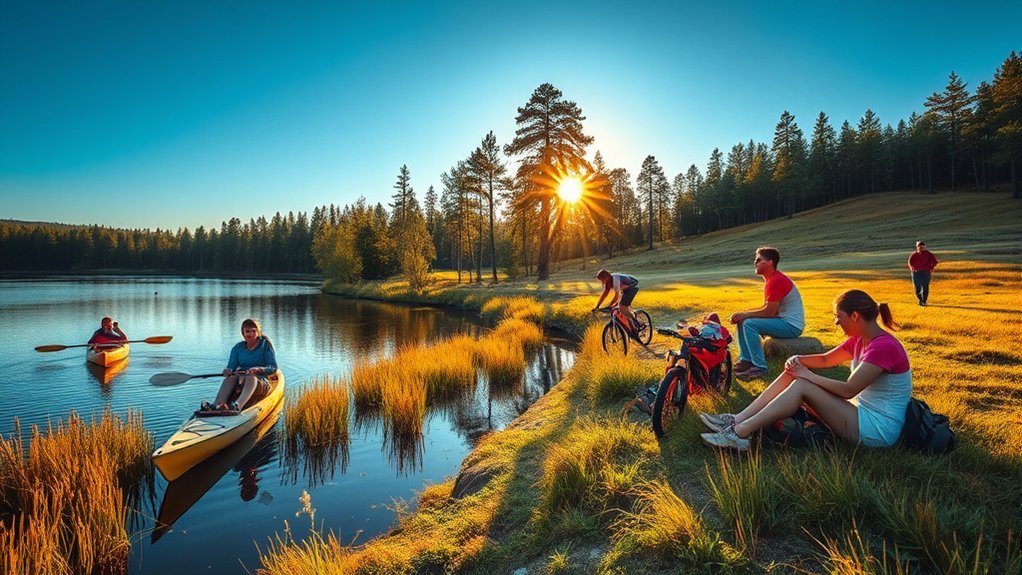
Recreation includes the activities you choose in your free time for enjoyment, relaxation, movement, learning, or connection. Recreational activities can support physical health, mental well-being, social ties, creativity, and family time, but there is no single best type. The right choice depends on your interests, abilities, budget, access, and goals.
Quick Answer
Recreation is freely chosen leisure that you do for enjoyment, relaxation, connection, learning, creativity, or physical activity. The best recreational activity is one you enjoy, can access, and can do safely enough to repeat. A balanced routine can mix movement, social time, creative or cultural interests, outdoor time, and quiet solo pursuits.
Key Takeaways
- Active recreation can count toward recommended weekly physical activity when its intensity is high enough.
- Social recreation can create opportunities for belonging, shared experiences, and stronger relationships.
- There is no universal list of exactly seven recreation types; useful categories often overlap.
- Cost, accessibility, safety, time, and personal enjoyment matter as much as the activity itself when building a routine you can maintain.
How Recreation Boosts Your Well-Being
)
Recreation can support well-being through several paths at once. Active recreation provides movement, social activities create opportunities to connect, and creative or quiet leisure can offer enjoyment and a break from daily demands. The benefit depends on the activity, your needs, and how regularly you participate.
For physical recreation, the current Physical Activity Guidelines for Americans recommend that adults get 150 to 300 minutes of moderate-intensity aerobic activity per week, or 75 to 150 minutes of vigorous activity, plus muscle-strengthening activity on two or more days. You do not have to complete the aerobic activity in one long session.
| Group | Physical activity guidance | Recreation examples |
|---|---|---|
| Adults | 150–300 minutes of moderate aerobic activity weekly, or 75–150 minutes vigorous, plus muscle strengthening on 2 or more days | Brisk walking, cycling, swimming, dancing, active sports |
| Ages 6–17 | 60 minutes or more of moderate-to-vigorous activity daily, including vigorous, muscle-strengthening, and bone-strengthening activity on at least 3 days a week | Active play, running, cycling, sports, jumping activities |
| Older adults | Adult targets plus activities that include balance training; activity should match fitness and health conditions | Walking, dancing, tai chi, swimming, gardening |
Regular physical activity is associated with lower risks of heart disease, stroke, type 2 diabetes, and several cancers. It can also improve sleep and reduce feelings of anxiety. Even a single session of moderate-to-vigorous activity can provide some immediate benefits.
Recreation does not have to involve exercise to be valuable. The CDC explains that supportive social connection is linked with better physical and mental health, stress management, sleep, and a stronger sense of belonging. Group recreation can provide a natural setting for those connections.
Cultural recreation can add another dimension. Visiting museums and theaters, attending performances, reading, making art, or exploring history can combine enjoyment with learning and curiosity.
Note: If you have a chronic condition, disability, new symptoms, or a long period of inactivity, choose activity that fits your abilities. A healthcare professional or qualified physical activity specialist can help you adjust intensity when needed.
Choosing the Right Activity for You?
The right recreational activity is one that matches what you enjoy, what you want from your free time, and what you can realistically continue. Start with your interests, then consider whether you want movement, relaxation, learning, creativity, social contact, challenge, or a mix of these.
If you enjoy gardening, dancing, sports, crafts, or walking, begin there rather than choosing an activity only because it seems popular. Enjoyment can make it easier to return to an activity consistently.
Next, consider the social setting. A sports team, walking group, exercise class, volunteer activity, or community event can suit you if connection is a priority. Solo pursuits such as reading, photography, fishing, or gardening may be better when you want quiet time.
Think about whether you want relaxation or achievement. Yoga, crafts, casual nature walks, and reading may offer a slower pace, while sports, hiking goals, dance practice, or skill-based hobbies can provide challenge and progress.
Also consider your current fitness, mobility, experience, and comfort level. Adventure activities can range from gentle sightseeing to demanding sports, so an adventure-focused day trip should still match your abilities and preparation.
Finally, look at practical limits: travel time, equipment, fees, weather, accessibility, and available facilities. A simple activity you can do regularly may be more useful than an elaborate option that rarely fits your schedule.
Types of Recreational Activities to Explore
There is no universally accepted number of recreation types. A practical way to explore your options is to group activities by what they mainly involve, while remembering that one activity can fit several categories. Dancing, for example, can be physical, creative, and social at the same time.
| Type | Examples | May suit you when you want |
|---|---|---|
| Outdoor recreation | Hiking, camping, cycling, fishing, nature walks | Movement, nature, exploration |
| Sports and fitness | Swimming, team sports, running, exercise classes | Fitness, skill, challenge |
| Creative recreation | Painting, music, writing, photography, crafts | Expression, learning, focused leisure |
| Cultural recreation | Museums, theater, concerts, heritage sites, festivals | Culture, history, entertainment |
| Social and community recreation | Clubs, volunteering, community events, group games | Connection, teamwork, belonging |
| Wellness and restorative recreation | Yoga, gentle walking, stretching, quiet gardening | A slower pace, movement, relaxation |
| Solo leisure | Reading, puzzles, collecting, solo walks, personal hobbies | Independence, quiet, personal interests |
Family-oriented recreation can cross almost every category. Camping, game nights, park visits, cultural outings, sports, and festivals create opportunities to spend time together. Travel can also expand the range of choices; for example, seasonal festivals in Interlaken can combine cultural and social recreation.
Membership Options and Access
You do not need a long-term membership to start enjoying recreation. Parks, libraries, community programs, clubs, schools, gyms, pools, and recreation centers may use different access models, so choose the one that matches how often you expect to participate.
- Full Memberships: These can make sense when you plan to use a facility regularly and want ongoing access to its included amenities or programs.
- Temporary or Day Passes: A short-term pass can help you try a facility before committing to a longer membership.
- Student or Family Memberships: Some facilities offer household, partner, student, or family access arrangements that can make shared recreation easier.
Before joining, compare what the membership actually includes, facility hours, cancellation terms, guest rules, accessibility, and whether the programs you want require separate registration. Free parks, trails, community events, and home-based hobbies can also provide recreation without a membership.
Getting Started: Essential Tips for Your Recreation Journey
Getting started is easier when you choose one clear goal and one activity that fits your current life. You do not need a complicated recreation plan. Begin with something accessible, enjoyable, and realistic enough to repeat, then expand your options as your interests develop.
Explore fitness classes, community events, hobbies, cultural activities, parks, and outdoor recreation. A trip built around hiking trails and outdoor attractions is one example of combining movement with sightseeing.
Setting Clear Goals
A clear goal helps you choose activities without turning recreation into another obligation. Decide first what you want more of: movement, social contact, outdoor time, creativity, learning, relaxation, or a new skill. Your goal can then guide the activity and the amount of structure you need.
- Identify the outcome: Decide whether your main goal is fitness, connection, relaxation, learning, family time, or enjoyment.
- Choose an activity: Pick something that genuinely interests you rather than something you feel pressured to do.
- Check practical barriers: Consider time, transportation, fees, equipment, physical demands, and accessibility before committing.
- Start at a manageable level: Give yourself enough time to learn whether the activity actually fits before adding more.
Friends or family can add motivation when you enjoy shared recreation, but they are not required. Solo activities can be equally meaningful when they match your preferences.
Exploring Available Options
Explore several ways to participate before assuming you need a full membership or expensive equipment. Community centers, parks departments, schools, libraries, clubs, and nonprofit organizations may offer classes, events, leagues, workshops, open recreation, or short-term programs.
If a facility offers an orientation, use it to learn how the space works and which programs match your interests. New students may also have access to campus recreation after activating the identification or access credentials required by their institution.
Free events and contests can help you sample activities with little commitment. If you need individualized instruction, a private lesson or qualified coach may help with technique, confidence, or adapting an activity to your abilities.
Staying Safe While Enjoying Recreation
Safe recreation starts with matching the activity to your ability, conditions, equipment, and surroundings. Higher-risk sports and outdoor activities require more planning than reading, crafts, or casual social recreation, so adjust your precautions to the activity rather than following a one-size-fits-all checklist.
- Follow facility and activity rules: Observe pool, trail, gym, field, locker-room, and equipment policies.
- Use appropriate protective gear: Helmets, flotation devices, pads, footwear, eye protection, or other equipment should match the activity and fit correctly.
- Build up gradually: Avoid suddenly jumping from little activity to a demanding workout or long outdoor trip.
- Plan for weather and hydration: Heat, cold, storms, and poor air quality can change the risk of an otherwise familiar activity.
- Know your surroundings: Follow signs, stay within your skill level, and understand the route or facility before moving into unfamiliar areas.
Warning: Exercising in hot weather increases the risk of dehydration and heat-related illness. The CDC advises stopping activity and moving to a cool place if you feel faint or weak, and seeking medical care for symptoms of heat-related illness.
Trail networks can offer anything from easy walks to demanding mountain routes. If you are considering an extensive network of trails, choose a route that matches your preparation and conditions.
How Recreation Strengthens Family Bonds
Family recreation creates time for interaction away from everyday tasks and obligations. Shared walks, games, sports, travel, cooking, camping, and cultural outings can give family members opportunities to communicate, cooperate, learn about one another, and build shared memories.
Research on family leisure, communication, and family functioning suggests that the quality and satisfaction of shared leisure can matter more than simply accumulating more hours together. In other words, an activity does not need to be elaborate to be valuable if family members actually enjoy taking part.
Simple routines can work well: a regular walk, backyard game, shared meal, board-game evening, park visit, or craft project. Larger outings can provide variety and discovery. Visiting a place such as Ascona’s Old Town, for example, can combine family time with history, art, and sightseeing.
Children can also practice cooperation, communication, decision-making, and confidence through age-appropriate shared activities. Local recreation departments and community organizations can be useful when families want structured programs without planning everything themselves.
Overcoming Barriers to Participation
Cost is only one reason people participate less in recreation than they would like. Time, transportation, social anxiety, lack of information, disability access, equipment, childcare, confidence, and unsuitable program times can all get in the way. Identifying the specific barrier makes it easier to find a realistic alternative.
- Reduce cost: Consider public parks, walking, home exercise, libraries, community events, free cultural programs, and activities using equipment you already own.
- Simplify the schedule: Choose activities close to home or combine recreation with an existing routine instead of relying only on large weekend plans.
- Start with beginner-friendly settings: Smaller groups, introductory classes, or attending with someone you know may feel more approachable.
- Ask about accessibility: Physical access is only part of inclusion. Communication formats, adapted equipment, staff support, sensory needs, and program design can also affect participation.
The National Center on Health, Physical Activity and Disability recommends considering physical, communication, programmatic, social, and behavioral access, along with individualized accommodations.
Community events can provide an easier entry point because they often combine activities, social interaction, and local culture. Events such as the community and cultural events in Biel/Bienne illustrate how recreation can extend beyond sports and exercise.
Emerging Trends in Recreation Programs
Recreation programs increasingly combine traditional in-person activities with digital access, inclusive design, and environmental responsibility. These approaches can expand participation, but each comes with practical limits. Technology needs connectivity and confidence, accessibility requires thoughtful program design, and sustainable recreation depends on participant behavior as well as facilities.
Virtual Recreation Experiences
Virtual recreation gives people another way to join exercise classes, challenges, games, instruction, or group activities from home. It can be especially useful when travel, distance, weather, or scheduling makes in-person participation difficult, although internet access and digital skills can create new barriers.
A systematic review of online exercise programs found evidence that structured online exercise can improve several measures of physical function and activity compared with no exercise. Virtual programs can also include live classes, recorded instruction, group challenges, and social features.
Gamification, such as points, streaks, progress tracking, or friendly challenges, can make some programs more engaging. However, the best format is the one you can use comfortably and safely rather than the one with the most technology.
Eco-Friendly Activity Initiatives
Eco-friendly recreation focuses on enjoying activities while reducing unnecessary impacts on natural spaces and resources. This can involve responsible trail use, waste reduction, respect for wildlife, careful campsite practices, and facilities designed to use resources more efficiently.
For outdoor recreation, the National Park Service summarizes the seven Leave No Trace principles, including planning ahead, using durable surfaces, disposing of waste properly, leaving natural and cultural objects in place, reducing campfire impacts, respecting wildlife, and considering other visitors.
Community gardening and conservation activities can combine recreation with environmental stewardship. Some recreation facilities also pursue green-building certification; LEED is a green-building rating system covering areas such as energy, water, materials, waste, and indoor environmental quality.
Inclusive Programming Strategies
Inclusive programming aims to make recreation usable and welcoming for people with different physical, sensory, intellectual, developmental, and communication needs. Good inclusion goes beyond simply providing an accessible entrance; the activity, information, equipment, staff support, and social environment may also need to work for different participants.
- Adaptive activities: Rules, equipment, instruction, or environments can be adjusted so more people can participate meaningfully.
- Multiple ways to participate: In-person and virtual choices can help when transportation, mobility, geography, or schedules create barriers.
- Community collaboration: Recreation providers can work with participants, families, disability organizations, schools, and community groups to identify needs rather than assuming one design works for everyone.
Inclusive programming can also help people with and without disabilities participate together. The goal is not simply access to the building but meaningful access to the recreational experience.
Frequently Asked Questions
What Are the 7 Types of Recreation?
There is no universal list of exactly seven types of recreation. A practical grouping is outdoor adventures, sports participation, creative arts, cultural experiences, wellness activities, community or social recreation, and solo pursuits. Many activities fit more than one group, so use categories as a planning tool rather than a strict rule.
What Are the 5 Domains of Recreation?
There is no single universally accepted five-domain model. One useful way to organize recreation is physical, social, cultural, mental or creative, and environmental. The categories overlap: hiking can be physical and environmental, while a museum visit can be cultural, social, and mentally stimulating.
What Are the 10 Characteristics of Recreation?
There is no authoritative list that every recreational activity must meet. Common characteristics can include active engagement, enjoyment, social interaction, skill development, spontaneity, freedom of choice, physical activity, variety, creativity, and personal fulfillment. Quiet or solo recreation may not include every one of these features.
What Are the 7 Components of Leisure?
There is no universal seven-component framework for leisure. A useful lens is time, activity, place, perception, social interaction, motivation, and freedom of choice. These factors help explain why the same activity can feel like recreation to one person and obligation to another.
How Much Time Should You Spend on Recreation?
Recreation has no fixed daily time requirement because it includes both active and nonphysical leisure. For health-related physical activity, U.S. guidelines recommend adults get 150 to 300 minutes of moderate aerobic activity per week, or an equivalent amount of vigorous activity, plus muscle-strengthening on two or more days.
Does Recreation Have to Be Physical?
No. Recreation can be physical, social, creative, cultural, intellectual, restorative, or a mix of these. Reading, music, crafts, museum visits, gardening, games, volunteering, hiking, and sports can all be recreational when you choose them for enjoyment or personal meaning.
Conclusion
Recreation works best when it fits your interests, abilities, resources, and reasons for taking part. You might choose active recreation for movement, group activities for connection, cultural or creative pursuits for learning and expression, or quiet leisure for a slower pace. Start with one activity you genuinely enjoy, make it easy to repeat, and adjust as your needs change.
Sources
- U.S. Office of Disease Prevention and Health Promotion: Current Physical Activity Guidelines for Americans and activity recommendations by age and ability.
- Centers for Disease Control and Prevention — Social Connection: Health and well-being benefits associated with supportive social connections.
- Leisure Time and Family Functioning: Peer-reviewed research on family leisure satisfaction, communication, and family functioning.
- National Center on Health, Physical Activity and Disability: Guidelines for accessible and inclusive programs.
- CDC — Heat and Athletes: Hydration, heat safety, and warning signs during physical activity.
- Systematic Review of Online Exercise: Evidence on virtual exercise, physical activity, and physical function.
- U.S. National Park Service — Leave No Trace: Minimum-impact principles for outdoor recreation.
- U.S. Green Building Council — LEED: Green-building certification and sustainability framework.